Almond, Oval or Squoval: A Visual Guide to Nail Shapes
Compare the outline, available length and upkeep of three nail shapes before choosing a practical salon brief.
Archive edition: 2026-06-11 · This is an editorial allocation, not the first-publication date.
Key takeaways
- Almond narrows towards a softened point; oval ends in a broader continuous curve.
- Squoval keeps a flatter front edge with rounded corners.
- Available length, daily tasks and preferred upkeep matter more than a rule about finger shape.
- Use a reference with a similar length and ask what your present nails can support.
In this guide
- Key takeaways
- Look at the outline, then separate shape from length
- Almond: a noticeable taper towards the end
- Oval: a broad, continuous curved tip
- Squoval: a flatter edge with softened corners
- Choose around the way you use your hands
- Choose an outline in three passes
- Change the brief before making a major change to the nail
- Bring a reference that answers the right question
- Common questions
- Sources and further reading
Almond, oval and squoval can look similar in a small photograph, particularly when all three are painted the same pale colour. The difference becomes clearer when you follow the outline from the sides towards the free edge. Almond tapers more noticeably, oval keeps a rounded end, and squoval combines a comparatively straight front with softened corners. Learning those three features makes it easier to explain a manicure without relying on a trend name alone.
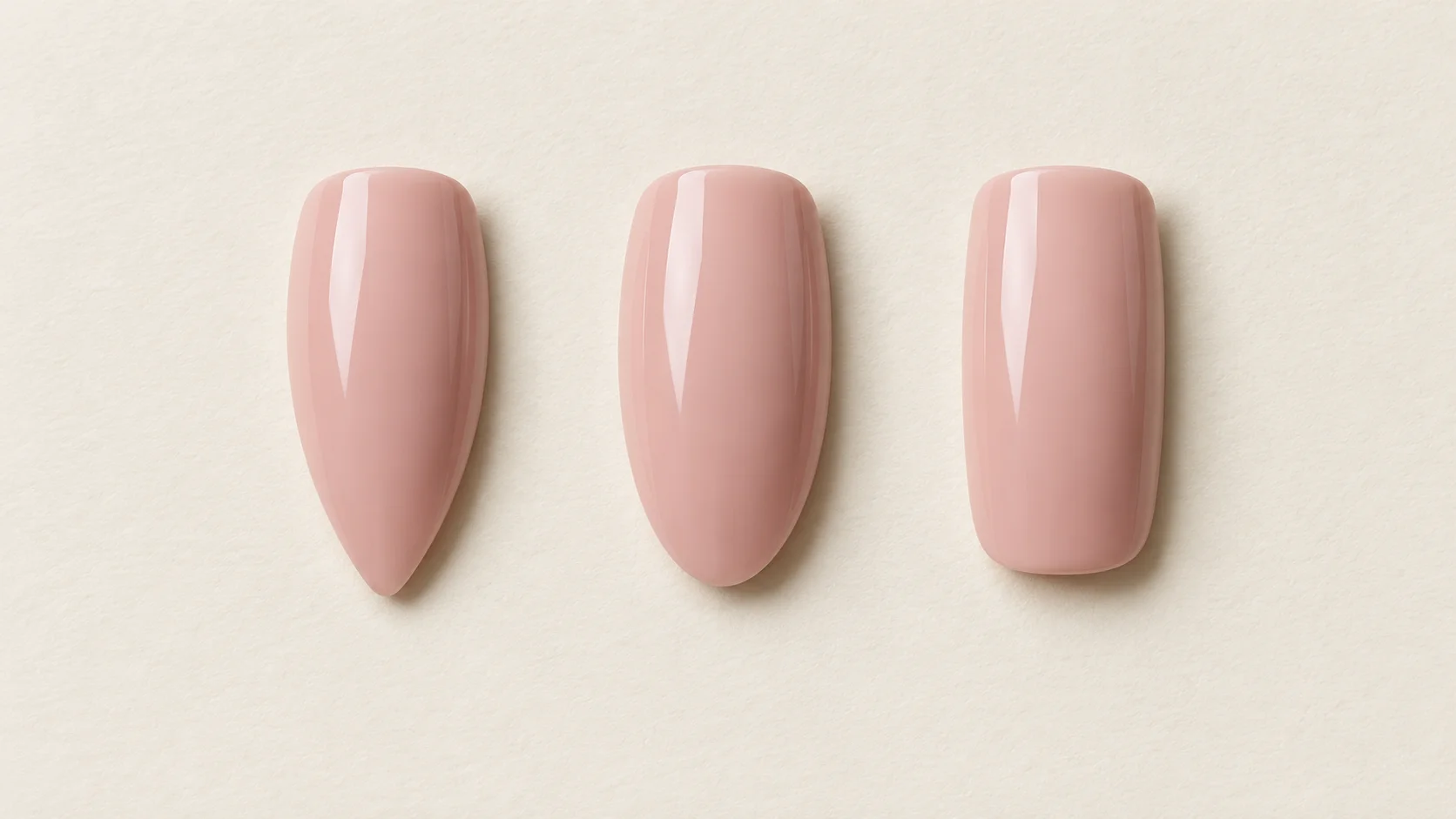
Our comparison illustration shows almond on the left, oval in the centre and squoval on the right. It is an AI-generated visual aid using artificial sample tips, not a measured diagram or evidence of how a particular natural nail will behave. The guide below is about choosing and describing an outline. It is not an instruction to remove large amounts of nail material or a tutorial for constructing extensions.
Look at the outline, then separate shape from length
A shape name describes an outline, while length describes how far the nail extends. Photographs often change both at once: a long almond sample may sit beside a short squoval one. That makes it difficult to tell whether you prefer the taper or simply the extra length. Compare references at broadly similar lengths where possible, and note which feature you actually want to change.
OPI’s shape guide distinguishes the tapered almond tip, the curved oval and the square-and-oval combination called squoval. We use those descriptive terms without adopting claims that a shape makes every hand more attractive. There is no requirement to disguise your finger length or nail-bed width before choosing a manicure you enjoy.
Almond: a noticeable taper towards the end
Follow the sides of an almond reference towards its tip and you will see them converge. The end is softened rather than the sharp point associated with a stiletto outline. That taper is the characteristic to show your nail professional. If a photograph mainly attracts you because of its colour or art, consider whether you still want the outline when it is shown as a plain silhouette.
A very short free edge may not provide room for the same taper as a long reference. Ask what can be achieved at your existing length instead of treating the photograph as a filing target. You can choose a gentler outline now and reconsider later, or discuss other options with a qualified nail professional. A specific shape is not important enough to justify making the nail uncomfortable.
Oval: a broad, continuous curved tip
Oval has a rounded end without the more pronounced convergence of almond. Look for a smooth transition from the sides into the tip rather than a distinct flat front. When explaining your preference, words such as broader curve or less tapered than this reference can be more useful than asking for an oval with no further detail. Salon terminology and individual examples may vary slightly.
Try drawing the outline over a printed reference or sketching it on paper. If your line has a clear point at the end, you may be thinking of almond. If it becomes almost straight across the front, you may be moving towards squoval. This small exercise is about recognising the boundary, not producing a technically perfect drawing or choosing one correct outline for every finger.
Squoval: a flatter edge with softened corners
Squoval retains some of a square nail’s front edge while rounding the corners. It does not need to look like a rectangle with tiny circles added at the ends; the transition can be gentle. Decide how much of the flat edge you want to keep. A reference with very softened corners may look closer to oval, so point to the part of the photograph that matters to you.
If you currently wear a square shape and mainly dislike the visual sharpness of the corners, this may be the comparison worth discussing first. It is a smaller design change than asking for a strong taper at the same time as a new length. That does not guarantee less breakage or maintenance. The useful benefit is a clearer brief about what you want the outline to look like.
| Shape | Main visual feature | Question for your appointment |
|---|---|---|
| Almond | Tapered sides leading towards a softened point | Can my current length support this degree of taper? |
| Oval | A continuous curve with a broader rounded end | How rounded should the tip be at this length? |
| Squoval | A flatter front edge with rounded corners | How much straight edge should remain visible? |
Choose around the way you use your hands
Before changing shape, think about the tasks where you notice your nails: typing, fastening jewellery, using a musical instrument, handling craft materials or putting in contact lenses. The relevant question is what length and outline feel manageable for you. If a new manicure interferes with an ordinary task, that is useful feedback for your next appointment, not evidence that you need to get used to a trend.
Essie’s shape guide includes available length, natural width, style and the level of care among the considerations. Use that as a reminder to discuss practical preferences alongside photographs. You can like the appearance of a shape without wanting the upkeep of a particular long version. Start with a change small enough that you can judge it in daily use.
Choose an outline in three passes
- Describe. Point to the taper, rounded end or flatter edge you like.
- Check. Compare the reference with your available length and everyday tasks.
- Agree. Set the intended length and corner shape before colour or decoration is added.
Change the brief before making a major change to the nail
If you are unsure between two shapes, compare sample tips or photographs first. Ask your nail professional to explain where the outlines differ and what would need to change on your own nails. Do not assume a sample can be copied simply by narrowing the sides more and more. A conservative conversation about the available nail is more useful than a rigid demand for a label.
For routine care, the American Academy of Dermatology advises smoothing snags and avoiding using nails as tools. Pain, swelling or changes in the nail merit professional assessment. A cosmetic shape guide cannot diagnose those changes or establish that a particular outline will prevent them. Keep a shaping appointment separate from any concern that needs clinical advice.
Bring a reference that answers the right question
Choose a photograph where the free edge is visible and the hand is not so angled that the outline is difficult to read. A plain colour can make the shape easier to compare than dense artwork. If the reference has much longer nails than yours, say whether the length is part of your request or whether you only like the curve. Bring one main reference rather than several contradictory examples.
A clear brief could be: keep my current short length, retain a small flat front edge and soften the corners. Another might be: a rounded oval with less taper than this almond sample. Once the outline is agreed, choose colour and art around that surface. Our nail art and trends edit offers ideas you can adapt to the shape you actually want to wear.
For the related design decisions, compare Short Nail Designs That Leave Room for Everyday Life, Micro French Nails: Choosing Tip Width, Shape and Colour and How to Build a Nail Inspiration Board Your Technician Can Use. For the practical details, use How to Trim and File Natural Nails Without Overdoing It.
Common questions
What is the main difference between almond and oval nails?
Almond has a more noticeable taper towards a softened point, while oval ends in a broader continuous curve. Compare their silhouettes at similar lengths so extra length does not confuse the decision. Point to the degree of taper you like when discussing a reference with your nail professional.
What does squoval mean?
Squoval combines a relatively flat front edge with rounded corners. It sits between a clearly square outline and a continuously curved oval, although examples vary. Explain how much flat edge you want to retain and how soft the corners should look rather than relying on the name alone.
Can I have almond nails at a very short length?
A very short free edge may not provide room for the taper seen in a longer almond reference. Ask what your present nails can support and compare a gentler outline if needed. Do not keep narrowing the sides simply to force a photograph’s shape onto a different starting point.
Which of these shapes is strongest?
This guide does not rank the shapes by strength or promise that one prevents breakage. The condition of your nails, length and how you use your hands matter to the practical choice. Discuss repeated breakage with an appropriate professional rather than treating a shape name as a repair method.
Do I have to choose a shape based on my finger length?
No. Finger-length rules are styling suggestions rather than requirements. Start with the outline you enjoy, your available nail length and the tasks you want to do comfortably. A shape should support your preferences without implying that the natural proportions of your hands need to be corrected.
How can I explain a shape without knowing its exact name?
Describe the visible boundary: more tapered, broadly rounded, flatter across the front or softer at the corners. Bring a clear reference and identify whether its length is also part of the request. Those specific details can communicate more than a label that different people interpret slightly differently.
Should I change shape and length at the same time?
You can discuss both, but separating the decisions may make the result easier to assess. First agree how much length you want to keep, then compare the outlines possible at that length. A small initial change can help you judge daily comfort before committing to a more dramatic reference.
Is the comparison image a guide for filing my own nails?
The image is an AI-generated illustration of three sample-tip outlines, not a measured filing template. Use it to recognise and discuss the differences. It cannot tell you how much material to remove from your own nails or establish whether a particular shape is appropriate for their present condition.
Sources and further reading
- OPI — How to find the best nail shape for your hands — checked 2026-10-21
- Essie UK — Best nail shapes — checked 2026-10-21
- American Academy of Dermatology — Healthy nail tips — checked 2026-10-21