Pearl and Glazed-Look Nails: Choosing a Softer Shine
Choose between a pearly colour and an effect top coat, then judge the base shade, coverage and reflection together.
Archive edition: 2026-05-13 · This is an editorial allocation, not the first-publication date.
Key takeaways
- Pearl and glazed describe an appearance; they do not identify one application system.
- A ready-made pearly colour and an effect top coat offer different ways to plan the finish.
- Judge the base colour, coverage and reflected light separately.
- Ask for a subtle sheen if that is your preference, rather than assuming the formula contains no particles.
In this guide
- Key takeaways
- Describe the reflection before using a trend name
- Choose a colour or choose an additional effect
- Let the base colour have a clear role
- Use a small comparison instead of a large shopping list
- Look at the sample three ways
- Keep the surface treatment separate from nail care
- Give the finish room to be the feature
- Leave with a description you can reuse
- Common questions
- Sources and further reading
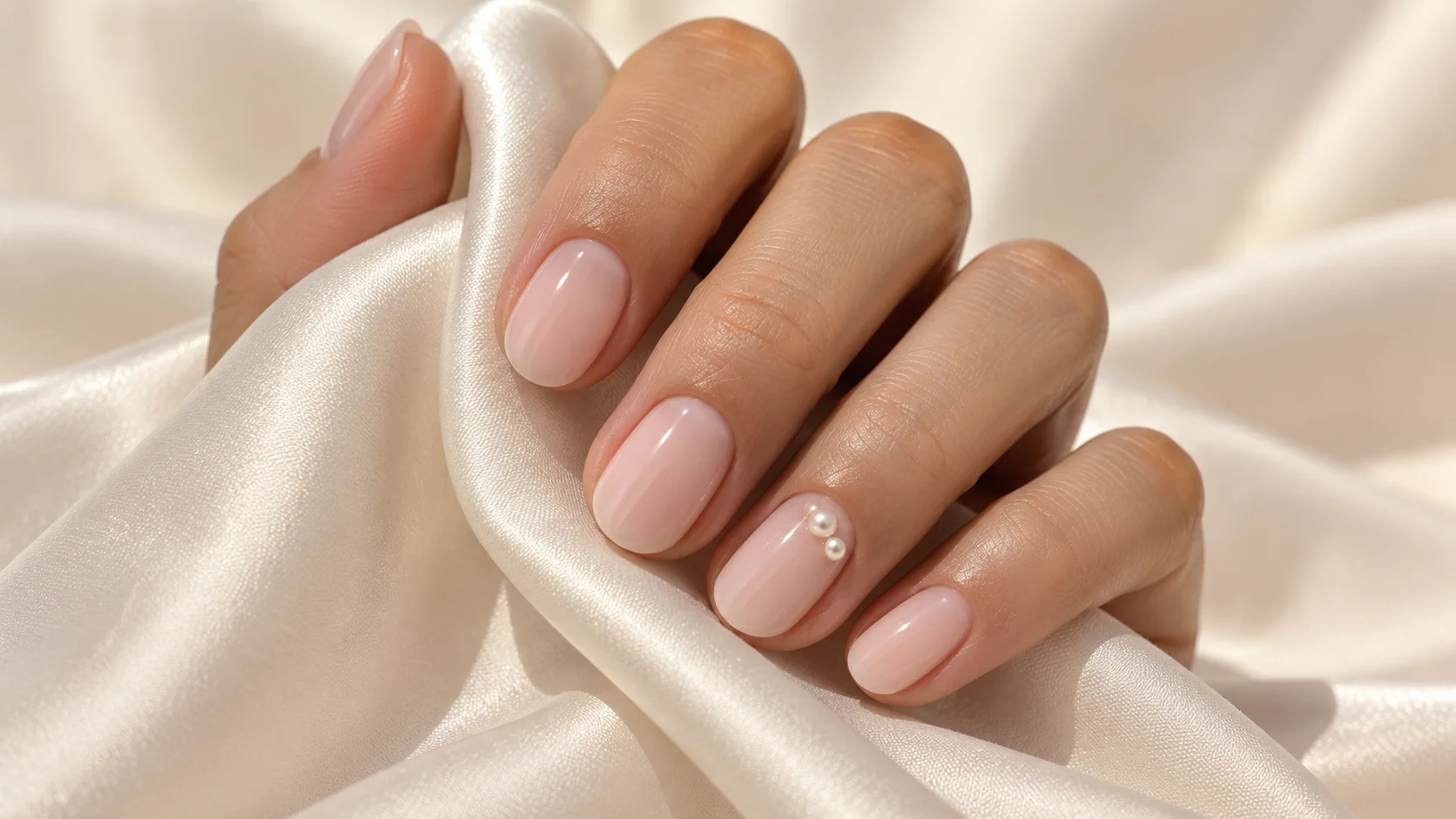
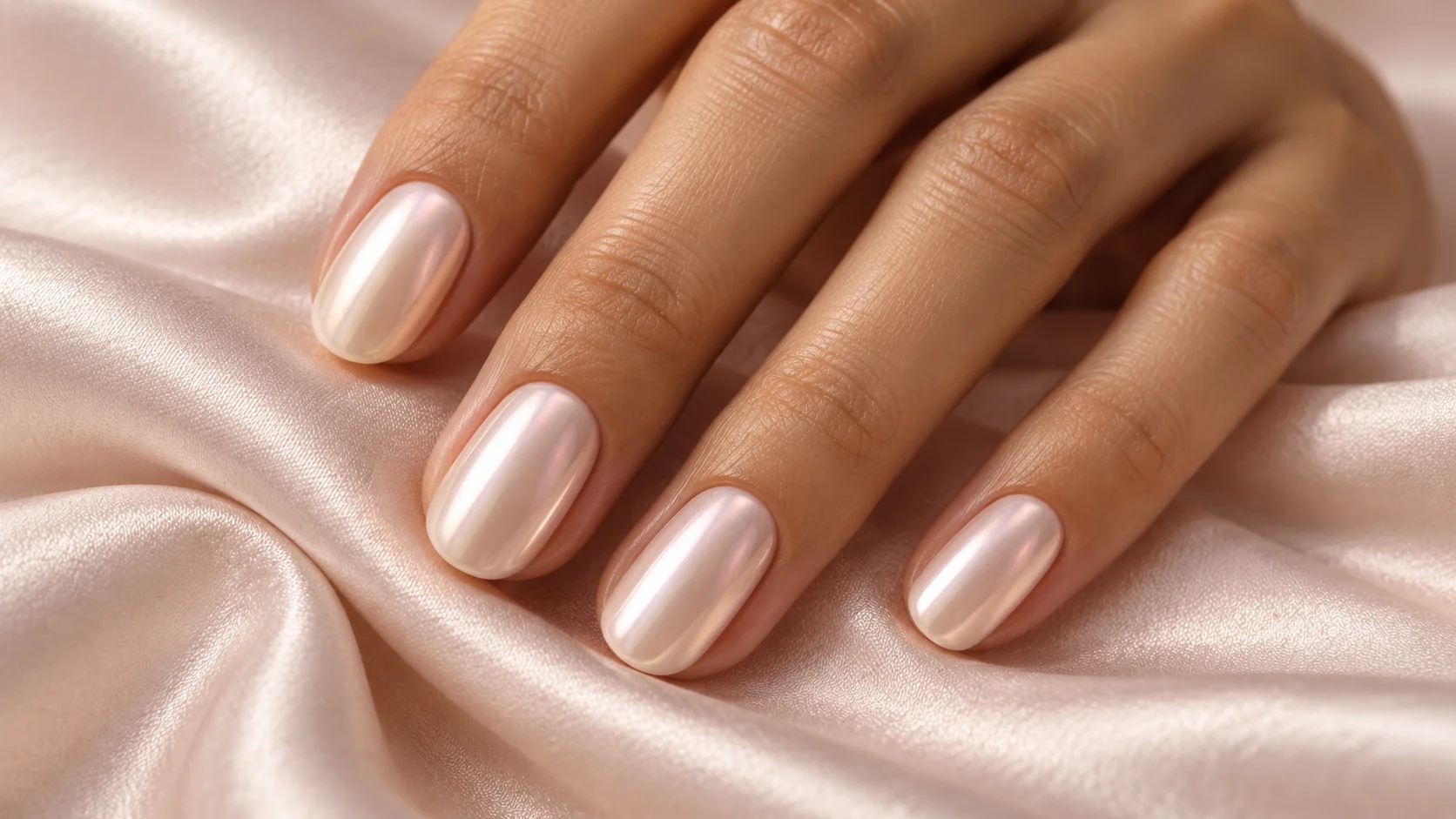
A pearl manicure can be quiet at first glance and luminous when the hand moves. If that is the effect you want, a photograph of a highly reflective silver nail may lead the conversation in the wrong direction. It helps to describe both what you want to see and how strongly you want to see it: a creamy pink base, a soft band of light and no conspicuous decorative pieces, for example.
This guide is about choosing that appearance. It compares design routes and reference images, with examples from manufacturer descriptions. It does not give a loose-powder application method, a gel-curing protocol or a product ranking. Our featured image is an original illustration of the idea, not evidence that a named polish produces exactly that colour or reflection.
Describe the reflection before using a trend name
Begin with the image in front of you. Does it show a pale surface with a soft luminous shift, sharply reflected surroundings, or distinct points of sparkle? These observations are more useful than trying to decide whether every online caption uses “glazed” correctly. A name can group very different photographs together; a description narrows the actual result you are requesting.
For this article, pearl means a soft lustrous effect rather than a clearly mirrored surface. Glazed-look is a broader styling description for a luminous finish. Those are working descriptions, not regulated categories or promises about ingredients. A smooth-looking photograph does not establish that a product is free from reflective particles, and the word “chrome” does not tell you everything about the formula inside a bottle.
For example, Essie sells Glazed Chrome as an effect top coat with a pearlescent metallic finish. Its name alone would not tell a reader that it is a bottled top coat rather than a separate powder. Read the product type and directions as well as the finish name.
Choose a colour or choose an additional effect
A ready-made pearly colour combines the intended shade and effect in one colour product. That may suit you if you want a straightforward brief: a particular pale hue with a restrained sheen. Manucurist lists Pearlescent in its Green nail-polish range, illustrating this type of option. This is a product-format example, not a claim that it will match our image or outperform another formula.
An effect top coat instead asks you to think about the colour beneath it. You may already own a base colour you like and want to change its appearance, but compatibility and the intended routine still matter. Follow the manufacturer’s instructions for the exact products involved; do not assume that any finishing product can be used over any lacquer, gel or enhancement.
For a salon service, explain the visual goal first and ask which system the professional proposes. You can request a soft pearl appearance without specifying a powder you do not know how to identify. Equally, if you want an ordinary polish manicure, make that part of the request before an appointment is booked.
| Design route | Main decision | Useful question |
|---|---|---|
| Ready-made pearl colour | Whether its combined shade and sheen suit your brief | Do I like this finish without another decorative layer? |
| Effect top coat | How the effect looks over the intended colour | Does the manufacturer support this combination? |
| Pearl accent nail | How much of the set should reflect light differently | Would one luminous nail give enough detail? |
| Professionally applied finish | The requested appearance and the service used to create it | Which system, upkeep and removal process are involved? |
The table does not compare durability or safety. Those cannot be determined from an appearance label. It is a way to decide what to ask for and which product information you need before choosing a route.
Let the base colour have a clear role
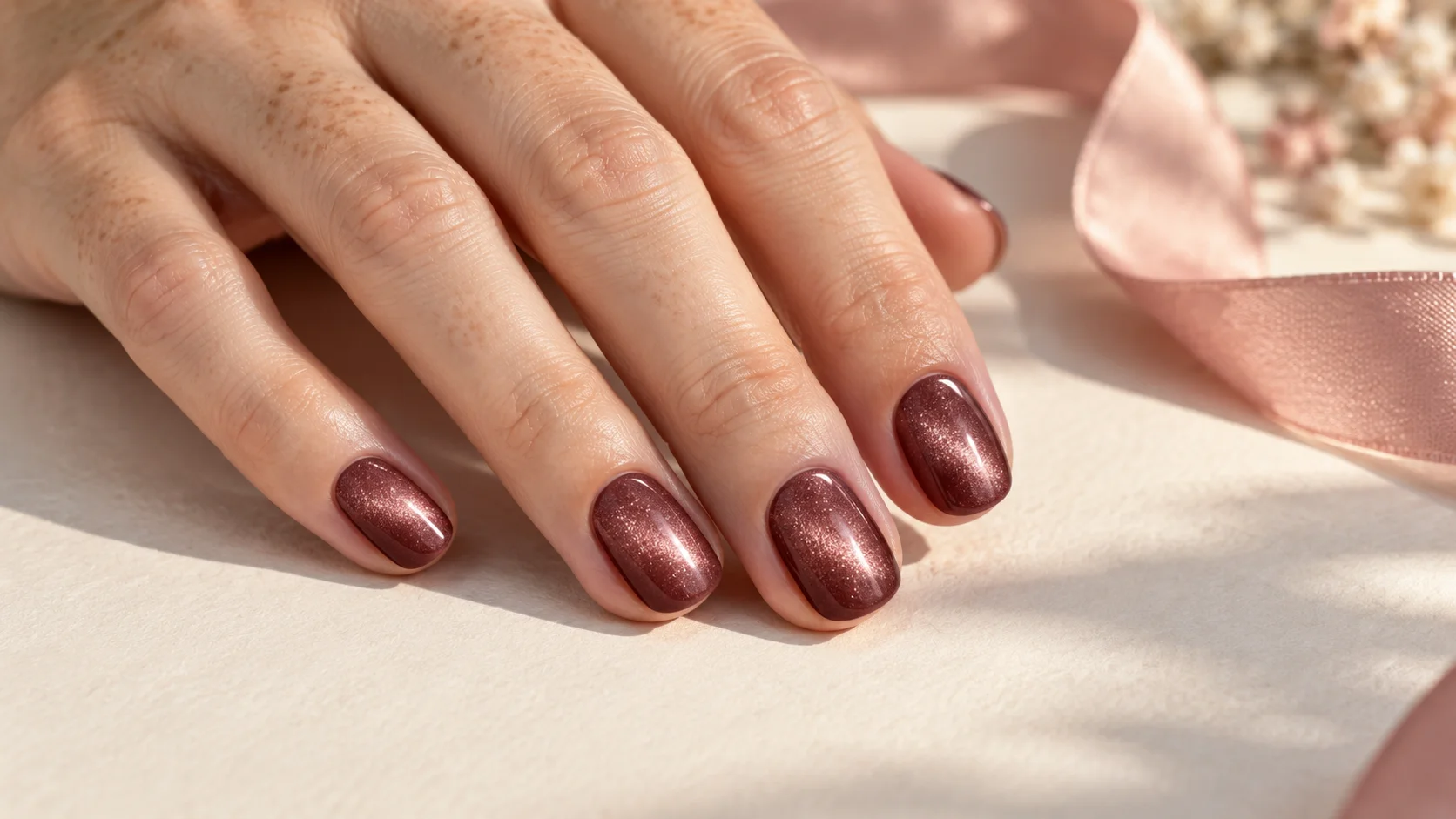
Picture a pearl effect over ivory, soft rose and a deeper neutral. Each gives you a different starting palette, even before the reflective part is considered. If your reference feels too cold, you may want to explore a warmer base rather than a stronger effect. If the design feels too sweet, a quieter neutral background may be more useful than adding a dark accent.
These are colour-planning suggestions, not guaranteed mixing results. Make a sample using the intended product routine, or ask to see a relevant sample at the salon. A swatch on a white display tip also needs interpretation: its background may differ from your natural nail. Use it to compare alternatives under the same conditions rather than treating it as a perfect prediction.
When coordinating with an outfit, decide which feature should lead. With a textured or detailed sleeve, you might prefer a simple single-colour manicure. With a plain outfit, a more noticeable luminous shift may be the detail you enjoy. Your jewellery does not require you to choose a matching metal colour; the relationship can be deliberate contrast as well as similarity.
Use a small comparison instead of a large shopping list
Choose two options that differ in one important way. You might compare a ready-made pearl colour with a compatible effect top coat over a similar base, or compare two base colours under the same effect. Avoid comparing different shapes, lengths, lighting and finishes all at once. That makes it difficult to explain why one sample appeals to you more.
Label the samples with what was actually used, including the product range. A brand may use a similar colour name across different systems, so the shade name alone is not a complete record. Keep the manufacturer’s application sequence alongside the sample if you intend to recreate it. Do not add unlabelled solvents, powders or unrelated products to improvise a finish from a photograph.
Look at the sample three ways
- At rest.
Is the underlying colour one you enjoy without a dramatic reflection? - At an angle.
Does the luminous shift look soft or stronger than you wanted? - Beside your hand.
Does the sample still fit your design brief in ordinary light?
Keep the light and background consistent between options. This is a personal comparison method, not a laboratory test.
Keep the surface treatment separate from nail care
A highly polished reference can make it tempting to pursue a completely featureless nail surface before painting. That is not the purpose of this guide. Discuss persistent texture changes with an appropriate professional instead of treating every visible feature as something to remove. The design should adapt to your nails, and an image cannot assess their condition.
For everyday care, the American Academy of Dermatology advises against removing cuticles or using nails as tools. A pearl finish does not change those basics. Nor does a glossy appearance establish stronger nails, a healthier formula or a treatment benefit.
When assessing the finished look, separate a colour decision from a care concern. “I would prefer a warmer pink” is a styling adjustment. Discomfort, irritation or a new unexplained nail change is a reason to stop treating the issue as a styling problem and seek appropriate advice. Adding another decorative layer is not a substitute for finding out what is happening.
Give the finish room to be the feature
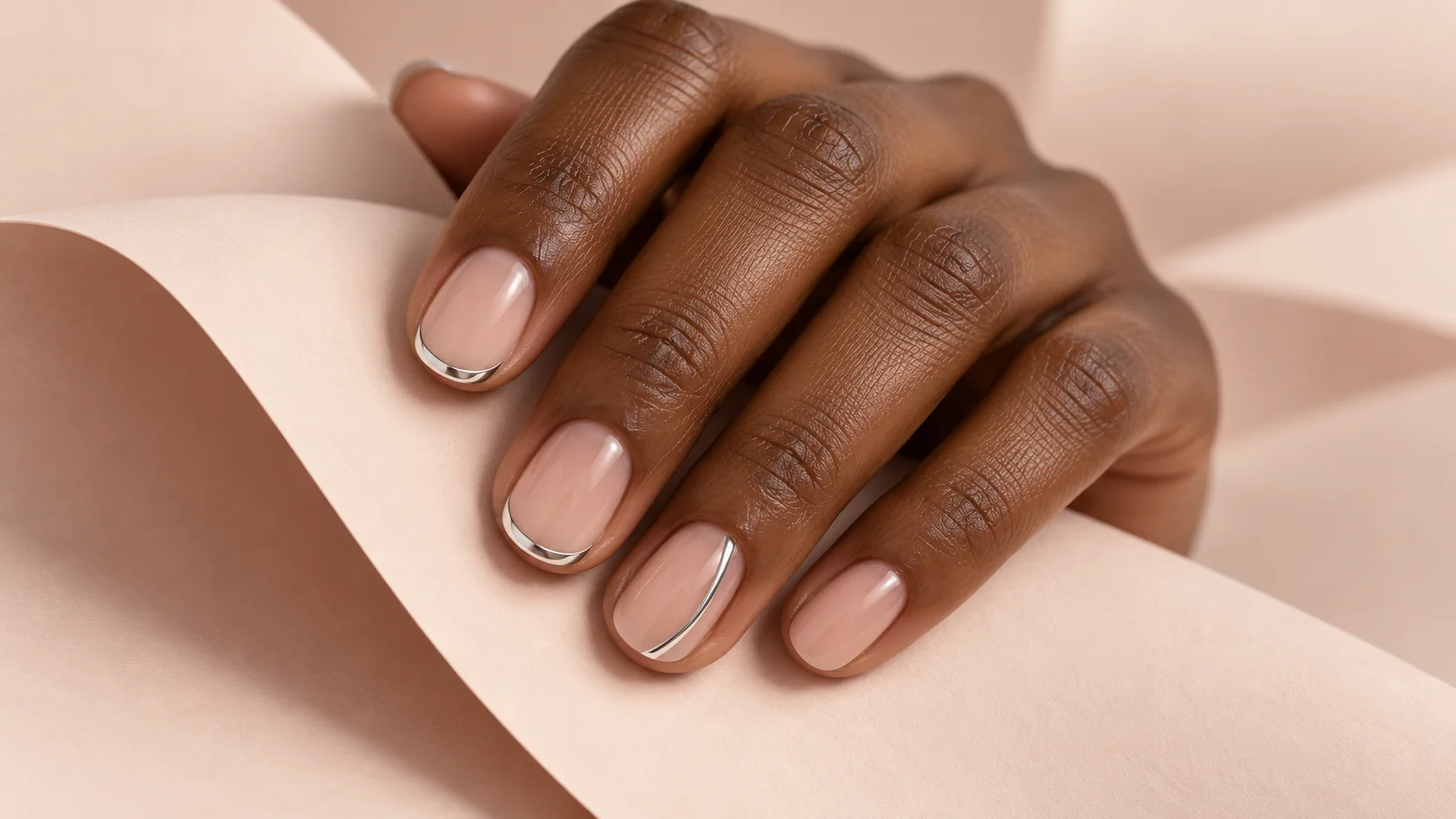
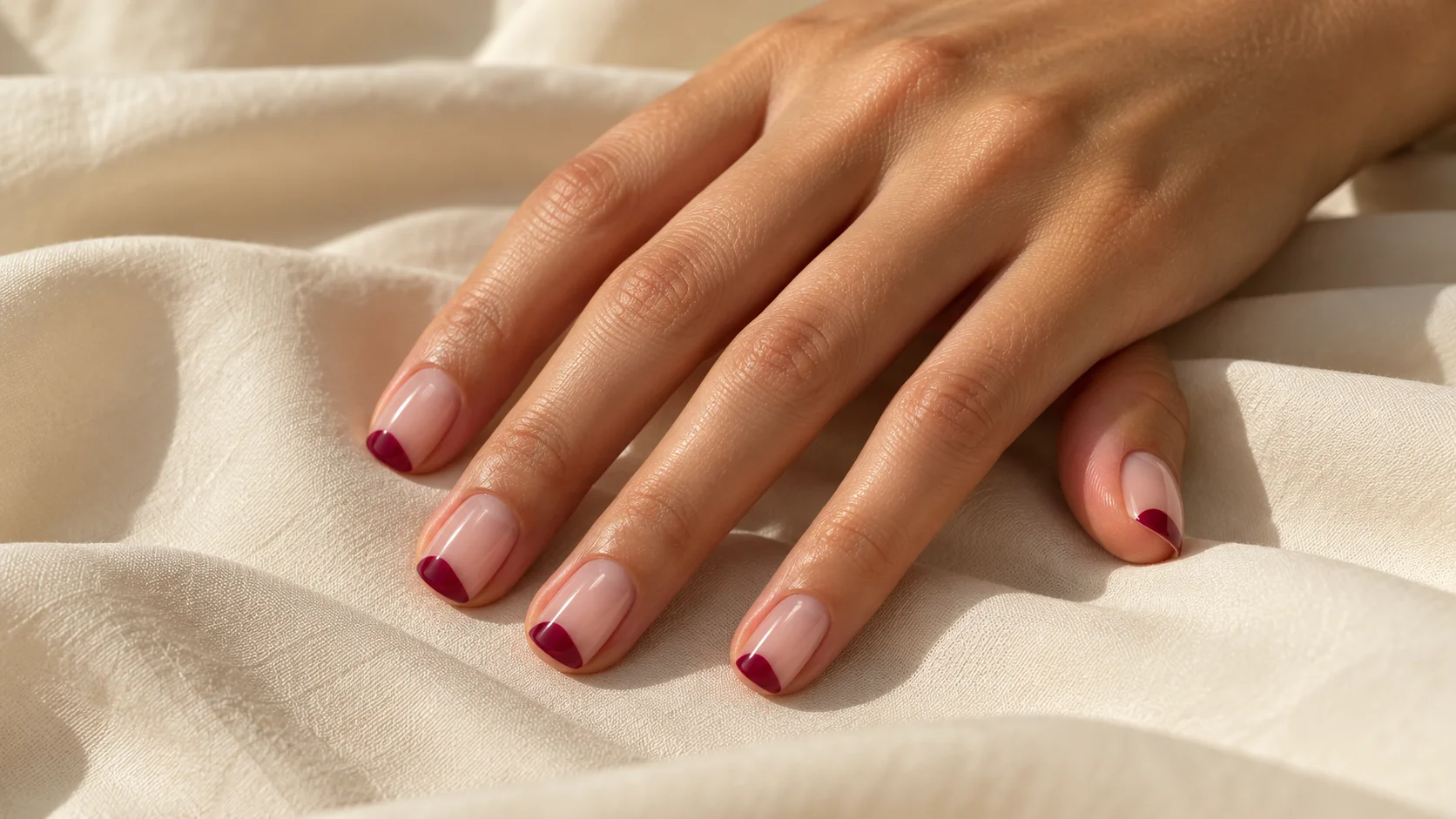
For a restrained set, start with the same pearl colour on every nail and no extra artwork. If you want more detail, add only one new decision: an accent nail, a narrow contrasting edge or a small area of plain colour. It is easier to judge whether you enjoy the luminous finish when it is not competing with several unrelated motifs.
For a softer contrast, you could alternate a plain glossy neutral with a pearly version of a similar colour. Decide the placement on paper before painting so that it feels intentional. You do not need alternating nails or a symmetrical pattern; one accent can be enough. These arrangements are editorial ideas, not evidence that particular products work together.
Leave with a description you can reuse
A useful final brief might read: “Short rounded nails, a softly covering pink-beige base, a gentle pearl reflection and no obvious glitter pieces.” Add the service or product type you want, then keep one reference for colour and one for the strength of the effect if a single image does not show both clearly.
After trying the look, note whether you would change the underlying colour, the coverage or the reflection next time. That is more actionable than deciding that all glazed nails are too much or all pearl nails are too subtle. Explore the Nail Art & Trends collection for other design approaches, and keep the version that fits your own taste rather than a label.
For the related design decisions, compare Pearl Nail Details: Placement Ideas for a Balanced Manicure, Chrome Accent Nails: Small Metallic Details with a Clean Finish and Velvet Nails Explained: What to Ask for at Your Appointment. For the practical details, use Matte vs Glossy Top Coat: How Finish Changes the Same Colour.
Common questions
Are pearl and glazed nails exactly the same finish?
People use the terms in overlapping ways. This guide uses pearl for a soft lustrous effect and glazed-look for a broader luminous appearance. Describe the reflection and underlying colour you want, because a trend name alone may lead to several different interpretations.
Can a pearl manicure be created with ordinary polish?
Manufacturers offer pearly colours and effect top coats in nail-polish ranges. Check the specific product type and directions before choosing. A finish photograph is not enough to identify the system, and this guide does not promise that any polish will reproduce the illustration.
Does a smooth pearl look mean there is no glitter or pigment?
No. A photograph cannot establish a complete ingredient composition. If your preference is visual, ask for a subtle sheen without conspicuous pieces of sparkle. If ingredients matter to your choice, check the actual label and obtain relevant product information rather than relying on appearance.
Should I choose a pearly colour or an effect top coat?
A ready-made colour lets you assess its combined shade and effect. A top coat requires you to consider the colour underneath and the manufacturer’s supported routine. Choose according to what you want to control, rather than assuming that either route is always better.
Will a pearl top coat look identical over every base?
Do not assume that it will. Compare the intended combination in a sample, following the relevant directions. Keep the light and background consistent between options so you can decide whether the base colour or the strength of the effect is what you want to change.
Why does a chrome product name not necessarily mean powder?
Finish names are also used for bottled products, including effect top coats. Look at the product format, range and instructions rather than the name in isolation. This helps avoid buying a system different from the one you intended to use.
How can I make the look feel more understated?
Start with one quiet base colour and avoid extra artwork while you assess the pearl effect itself. You could also choose a single luminous accent among plain glossy nails. These are design suggestions; they do not establish compatibility between particular products.
What should I record after trying a pearl manicure?
Note the exact range and shade, the application routine used, and whether you liked the base colour, coverage and reflection separately. A simple unedited photograph in ordinary light can support those notes. Next time, change one of those choices instead of replacing the whole idea.
Sources and further reading
- Essie — Glazed Chrome effect top coat — checked 2026-10-21
- Manucurist UK — Pearlescent, Green nail polish — checked 2026-10-21
- American Academy of Dermatology — Healthy nail tips — checked 2026-10-21