Velvet Nails Explained: What to Ask for at Your Appointment
Understand the broad magnetic glow, compare it with a defined cat-eye line and build a useful appointment brief.
Archive edition: 2026-08-09 · This is an editorial allocation, not the first-publication date.
Key takeaways
- Effect: do I want a broad glow, a defined line or a wave?
- Colour: do I like both the base and the reflected highlight?
- System: which products and service will create this look?
- Practical details: what are the appointment time, price and specific care instructions?
In this guide
- Key takeaways
- Distinguish a broad glow from a defined line
- Confirm whether the service uses gel or air-drying polish
- Choose the base colour and the reflection separately
- Use a moving reference when possible
- Consider pattern direction and consistency
- Agree the appointment details before the service
- Four questions for a clear velvet brief
- Keep a useful record for next time
- Common questions
- Sources and further reading
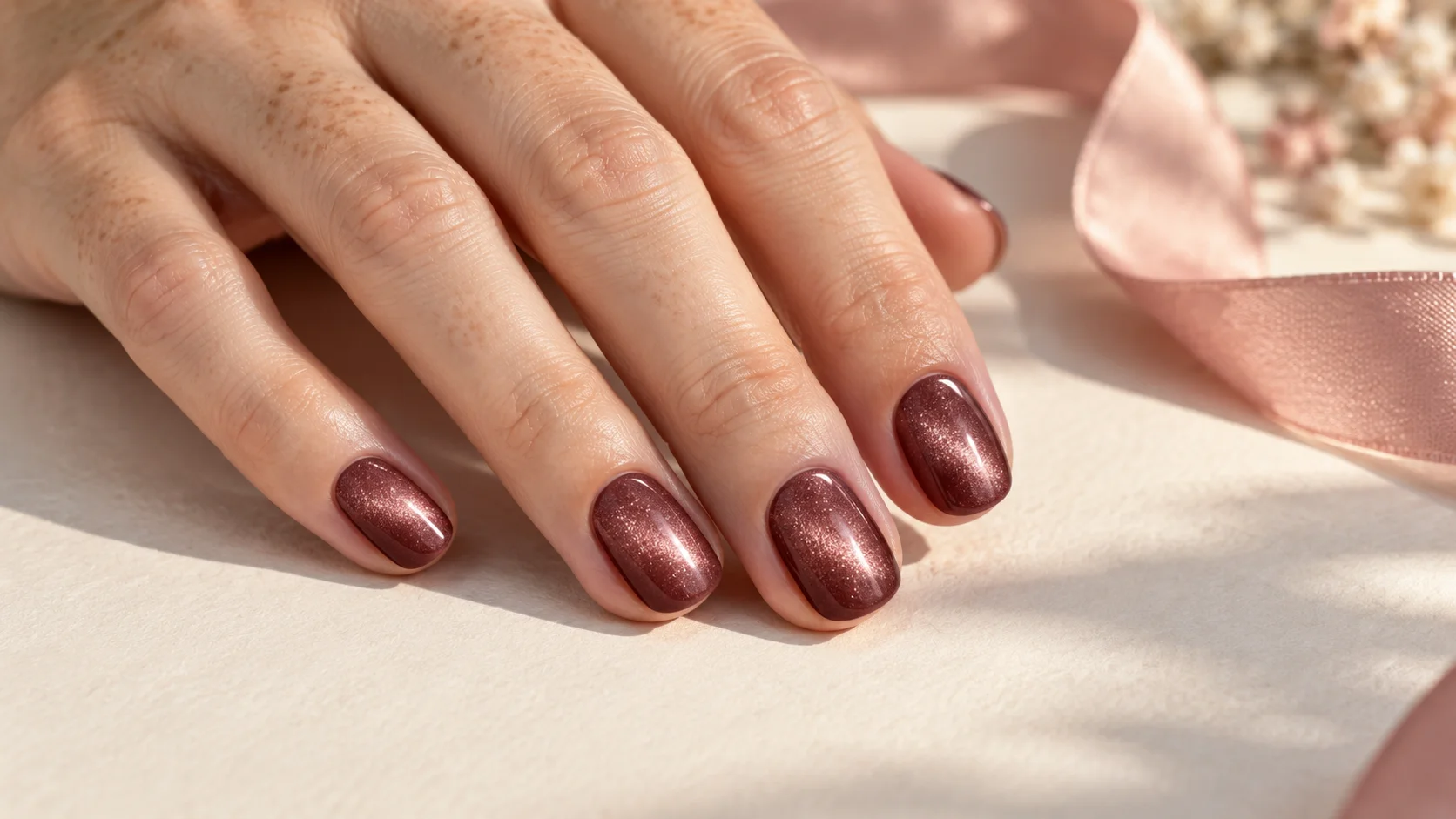
Velvet nails describe a luminous manicure effect that resembles the shifting light on velvet fabric. In the magnetic versions discussed here, reflective particles create a broad glow within the colour. The finished surface can be smooth and glossy; the word “velvet” does not mean the nails are covered in soft fabric.
At an appointment, ask to see the effect moving in ordinary light. A single photograph may capture its brightest angle without showing how it looks for the rest of the day. Your most useful decisions are the shape of the reflection, the base colour, its contrast and the product system used to create it.
Distinguish a broad glow from a defined line
A classic magnetic cat-eye reference often shows a relatively narrow, concentrated band of light. A velvet-style reference generally emphasises a broader luminous area. Salons and brands may use the terms differently, so show the effect you mean rather than relying on a name alone.
Holo Taco’s magnetic guide distinguishes a diagonal cat-eye line made with its wand from a three-dimensional velvet effect made with its Super Magnet. That is one manufacturer’s description of its own tools and polish. It helps explain why two magnetic manicures can look different without implying that every brand uses the same method.
Before choosing, compare a narrow line, a broad glow and any more complex pattern the technician offers. Decide whether you want the light to look like a distinct stripe or a softer pool across the nail. This is more precise than asking for “extra sparkle,” which could be interpreted as a different finish altogether.
Confirm whether the service uses gel or air-drying polish
Magnetic effects are not confined to one manicure system. OPI’s Velvet Vision professional guidance describes a magnetic gel service. Holo Taco’s guide describes working with wet magnetic polish and allowing it to dry. Those are different processes, even when their finished looks share reflective qualities.
Ask which product range the salon will use and what the appointment includes. Do not transfer a magnet duration, layer count or curing instruction from one brand’s demonstration to another system. Your technician should follow the directions for the products and equipment used in your service.
The distinction also matters when you discuss removal and maintenance. Request instructions for the actual manicure you receive. A visual label such as “velvet” does not by itself identify the base service, its removal method or how long it will suit your routine.
Choose the base colour and the reflection separately
A dark brown base with a pale reflection gives a different impression from a rose base with a similarly toned glow. When viewing samples, describe both parts. Ask whether you prefer a close relationship between the colour and reflection or a more obvious light-dark contrast.
For a quieter design, start by comparing samples where the glow sits close to the base colour. For a stronger effect, compare a darker background with a brighter reflective area. These are editorial starting points, not guarantees: the actual products, lighting and pattern all influence what you see.
Pay attention to the colour when the nail is turned away from its brightest reflection. You will see that quieter angle during everyday use as well. If you only like the sample under a very strong spotlight, ask to view another option in softer light before committing.
| Effect | What to look for | Question to ask |
|---|---|---|
| Defined cat-eye line | A concentrated reflective band | Can I see the line at different angles? |
| Broad velvet glow | A wider luminous area within the colour | How does this look in softer room light? |
| Wave or directional pattern | A deliberate arrangement of light across the nail | Which pattern in this reference can you reproduce with your system? |
| Subtle tonal version | Reflection and base colour appear closer together | Can I compare it with a higher-contrast sample? |
Use a moving reference when possible
A short, unfiltered video can communicate the intended effect better than a still photograph. Look for a hand that tilts slowly under one light source. Rapid cuts, strong colour filters and changing lamps make it harder to understand what belongs to the manicure and what belongs to the presentation.
If you only have a photograph, identify the feature you want to keep. You might like the broad central glow, the darker edges or the rose-brown palette. Tell the technician which of those matters most. They can then show a real sample rather than promising an exact copy of an image whose products and lighting are unknown.
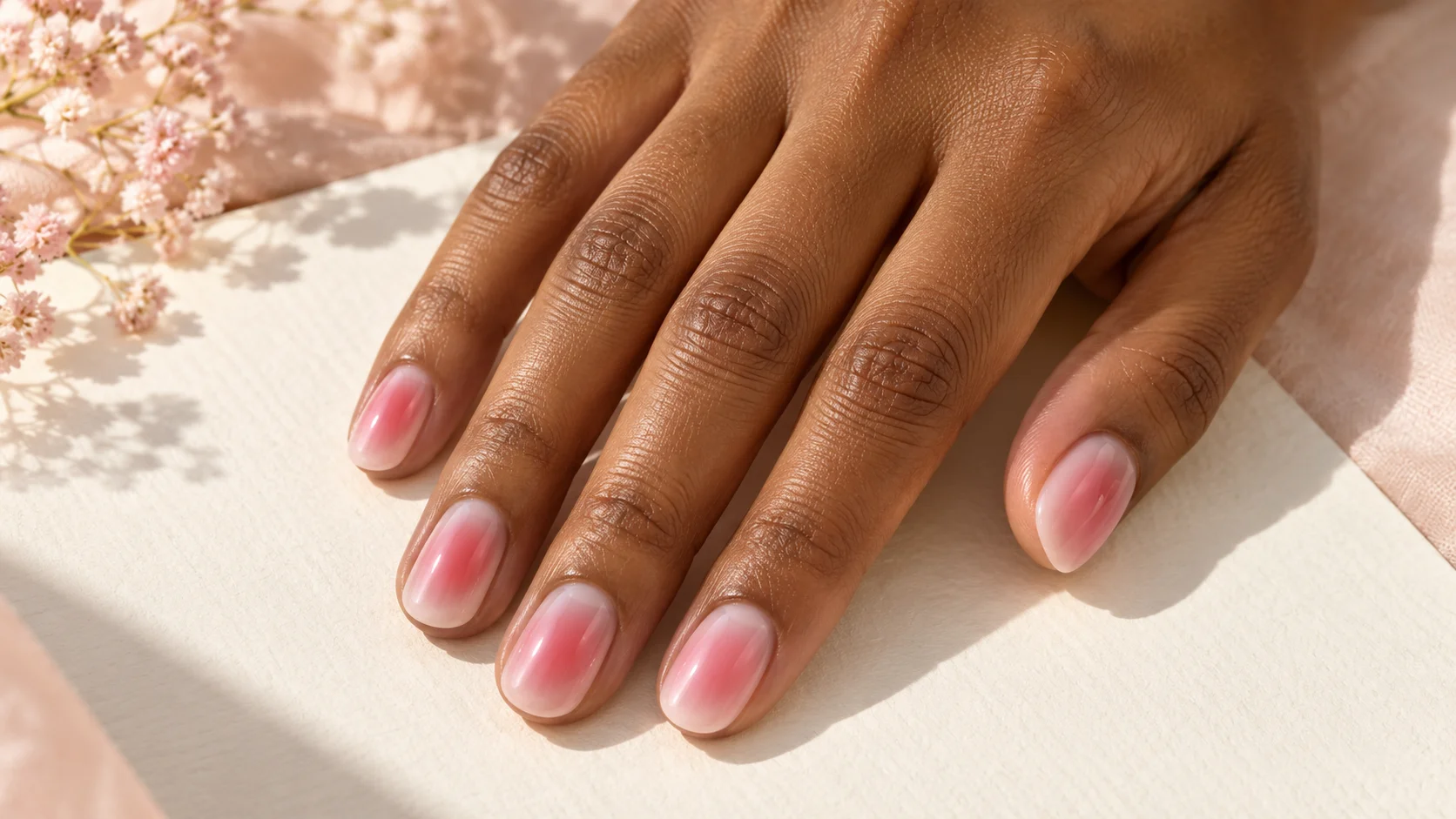
The illustration accompanying this guide is a conceptual example of a broad reflective appearance. It is not a tested swatch, evidence of a particular magnetic technique or proof of how a product moves in light. Use a physical sample or a real service demonstration for those decisions.
Consider pattern direction and consistency
Magnetic placement can be used for more than a straight diagonal line. OPI’s optical-wave examples show how directional work can create other visual patterns within its gel system. Treat those as options to discuss with a trained provider, not as universal instructions for an unfamiliar product.
For a full set, decide whether you want a similar glow on every nail or deliberate variation. A consistent colour with changing patterns can look more detailed than a simple repeated effect. Ask to see the complete-hand arrangement so you can judge that choice beyond one dramatic nail.
Your preferred length and shape also belong in the brief. A reference on long almond nails has a different area for the reflective pattern from short oval nails. Ask to see a sample close to your intended shape and let the technician explain how they would adapt the effect.
Agree the appointment details before the service
Ask whether magnetic nail art is included in the quoted service or priced separately, and whether a more complex pattern needs additional appointment time. Prices and timings vary by provider, so an exact answer should come from the salon you plan to use. Mention any existing product that needs removal when booking.
Explain whether you want the effect across every nail or only on accents. If you combine velvet nails with plain colour, compare the companion shade beside the magnetic sample. Matching the base colour and matching the brightest reflection are two different design choices.
Four questions for a clear velvet brief
- Effect: do I want a broad glow, a defined line or a wave?
- Colour: do I like both the base and the reflected highlight?
- System: which products and service will create this look?
- Practical details: what are the appointment time, price and specific care instructions?
Keep a useful record for next time
A concise brief could be: “Short oval nails with a rose-brown base, a broad soft magnetic glow and a glossy finish, repeated across the set.” Show the moving reference and compare a sample in ordinary room light. Leave room for the technician to explain what their available system can achieve.
After the appointment, save the product range, colour and a short video taken under steady lighting. Note whether you would prefer more contrast, a wider glow or a different pattern next time. That gives your next consultation a concrete starting point and avoids relying on the word “velvet” to carry every detail.
For the related design decisions, compare Chrome Accent Nails: Small Metallic Details with a Clean Finish, Aura Nails: Soft Colour Combinations and Salon Reference Tips and How to Build a Nail Inspiration Board Your Technician Can Use. For the practical details, use Gel Polish and UV Lamps: Safety Questions Worth Asking.
Common questions
Are velvet nails actually soft or covered in fabric?
The magnetic velvet effect discussed here describes an appearance created by reflected light, not fabric attached to the nail. The finish may be smooth and glossy. If a salon uses velvet to describe a different textured service, ask to see it and clarify what is included.
What is the difference between velvet and cat-eye nails?
A cat-eye reference often shows a more concentrated line of reflection, while a velvet reference usually emphasises a wider glow. Terminology varies, so compare real samples or a moving reference. Explain the shape of the light you want instead of relying only on the label.
Does a velvet manicure always require gel?
No. The sources in this guide include both a magnetic gel system and magnetic polish that dries. Ask which system your provider uses and follow its specific care and removal directions. A shared visual effect does not make application timings or product combinations interchangeable.
Why should I look at a video or moving sample?
The reflective pattern can appear different as the nail and light move relative to one another. A still image captures just one position. A slowly tilted sample under steady lighting helps you judge both the bright reflection and the quieter base colour you will also see.
Can I choose velvet nails for a short shape?
Discuss the effect at your preferred length and ask for a sample close to that shape. A long reference provides a different area for the light pattern. The important question is whether you like the adapted result, rather than whether it exactly copies the original image.
Can I use any magnet instructions with any magnetic polish?
Do not assume the directions transfer between products. The cited brands describe their own tools and systems, including different gel and drying processes. A provider should use the instructions appropriate to the products in the service rather than combining generic timings from unrelated demonstrations.
How much time and money should I allow for velvet nail art?
Ask the salon for its own quote and booking length, stating the effect, number of nails and any existing product removal. A simple repeated glow and a more complex pattern may be treated differently by the provider. This guide does not give an unverified universal price or duration.
What should I record if I want the same effect again?
Save the product range, base colour, chosen pattern and a short video in steady ordinary light. Note whether the glow was broad or concentrated and what you would change. That gives the technician a more useful reference than a single highly lit photograph or the word velvet alone.
Sources and further reading
- OPI UK — How to apply Velvet Vision magnetic gel nail polish — checked 2026-10-21
- OPI UK — Velvet nails meet optical waves — checked 2026-10-21
- Holo Taco — Magnetics guide — checked 2026-10-21