Skittle Nails: Building a Five-Colour Palette That Feels Cohesive
Give five different colours a shared direction, then arrange and compare them before painting.
Archive edition: 2026-07-11 · This is an editorial allocation, not the first-publication date.
Key takeaways
- A skittle manicure uses different colours across the nails; a five-colour set is one straightforward version.
- Give the palette one shared quality, such as muted colour, similar depth or a consistent finish.
- Arrange finished samples before deciding which colour goes on each finger.
- Change one outlying colour at a time instead of replacing the entire palette.
In this guide
- Key takeaways
- Start with a shared rule
- Use a real multicolour example without copying every shade
- Choose an anchor, then add neighbours
- Compare depth before blaming the colour family
- Arrange samples before assigning fingers
- Build, order and refine
- Decide how the two hands relate
- Keep application decisions tied to each product
- Evaluate the whole palette in everyday conditions
- Common questions
- Sources and further reading
A five-colour manicure can feel deliberate without using five versions of the same shade. The colours might share a dusty quality, a similar lightness or a plain glossy finish. What matters is choosing the relationship before painting, then checking how the colours sit next to one another across a hand. That turns a collection of attractive bottles into a palette you can explain and repeat.
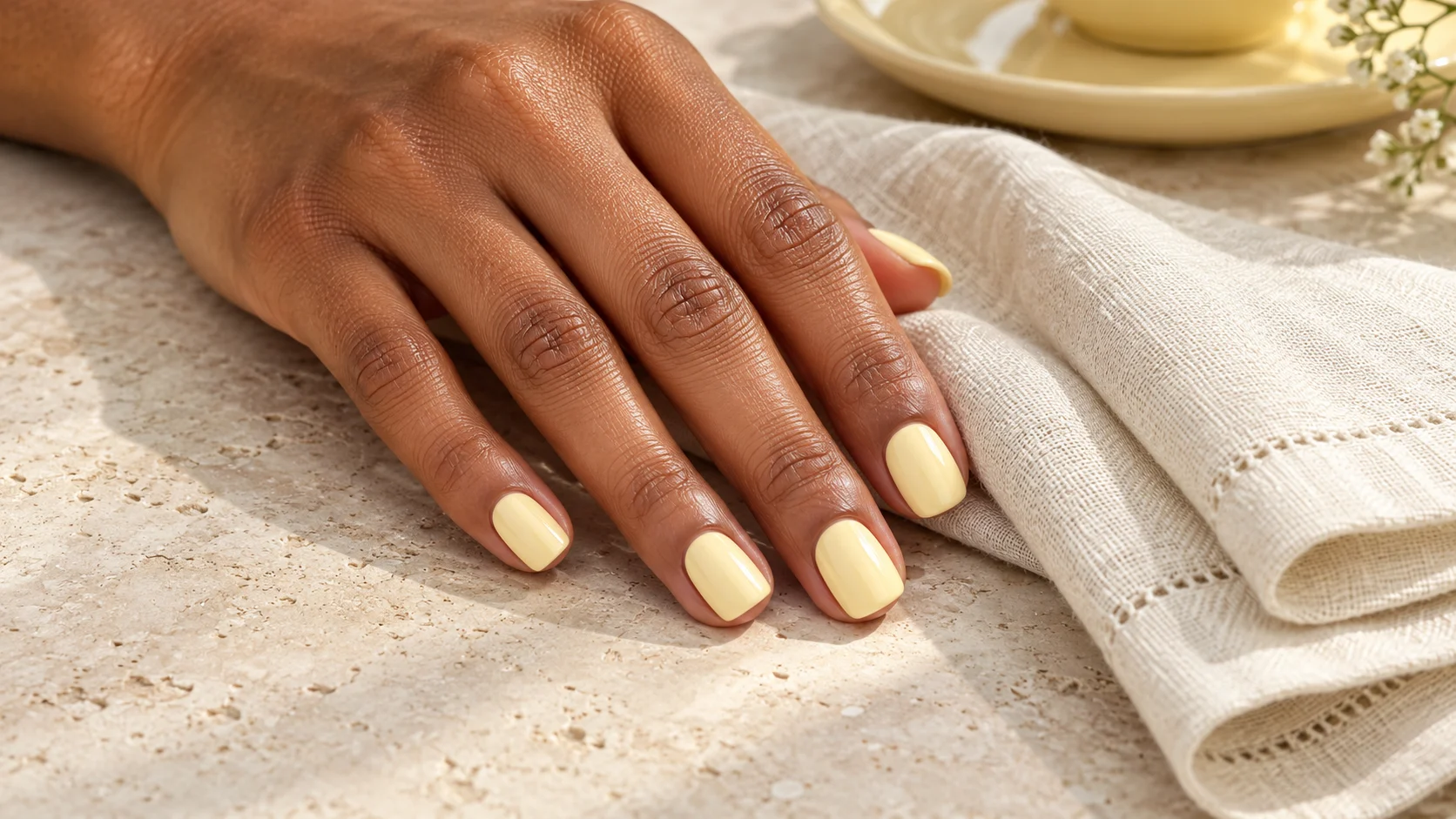
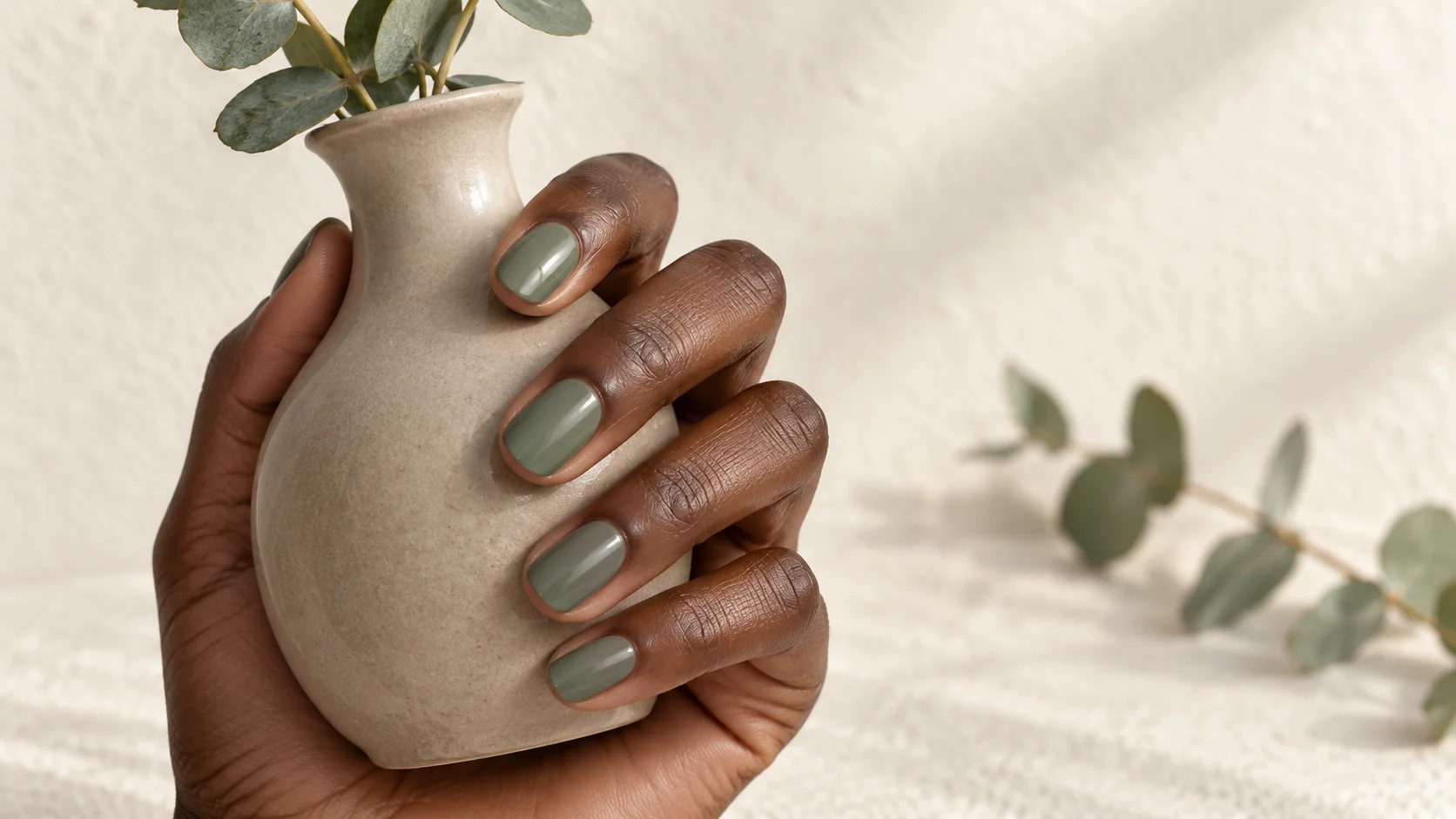
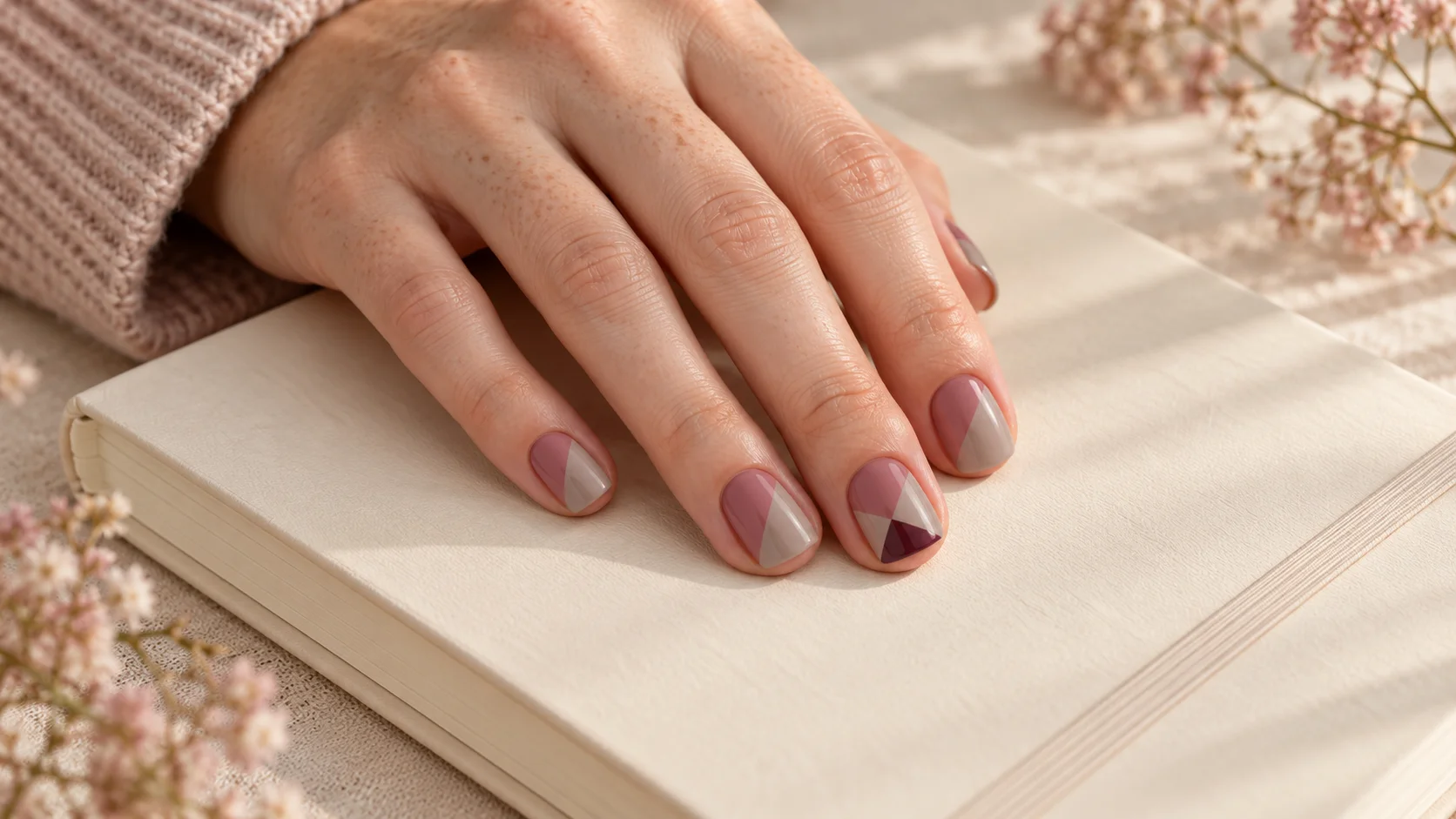
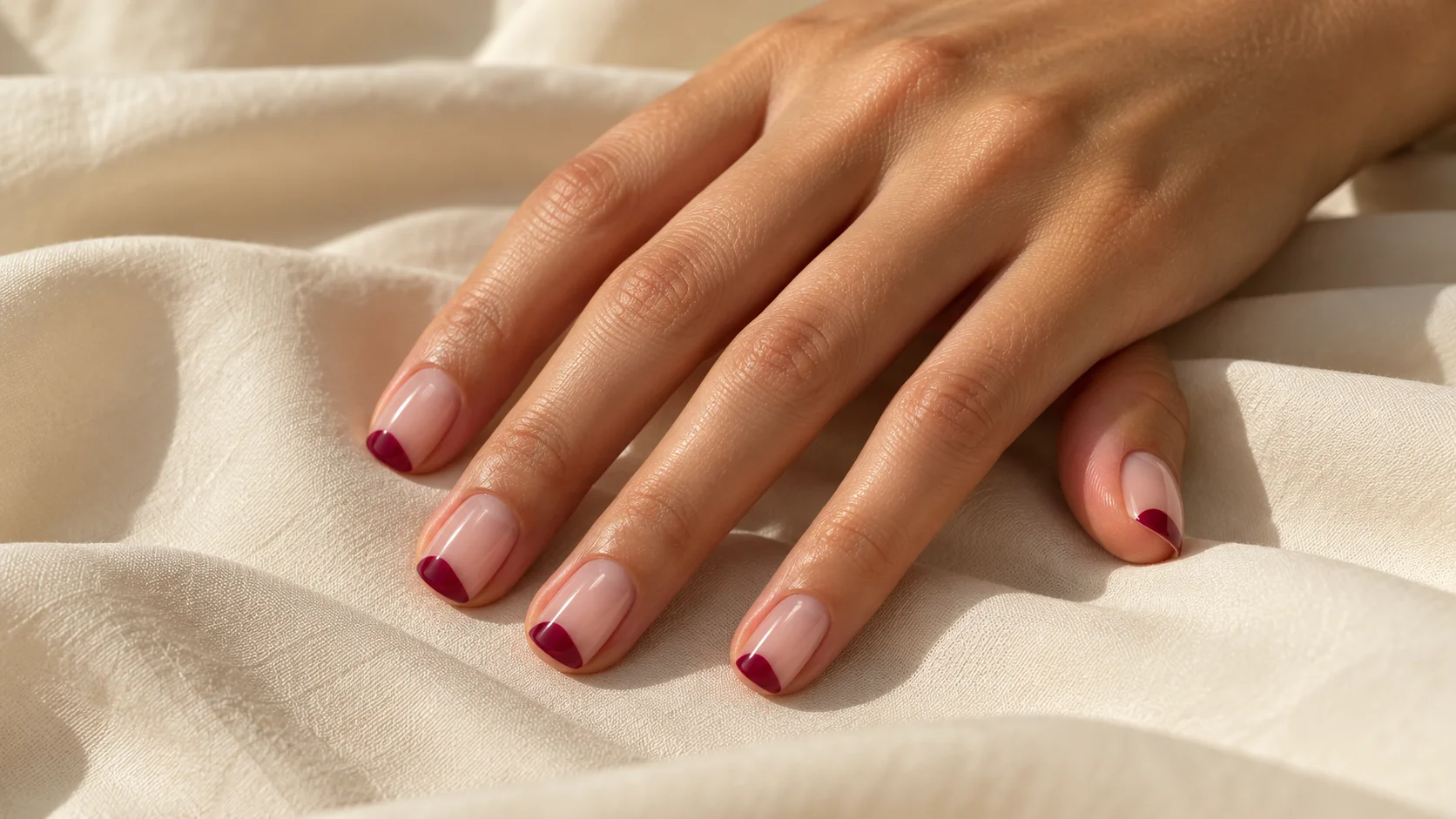
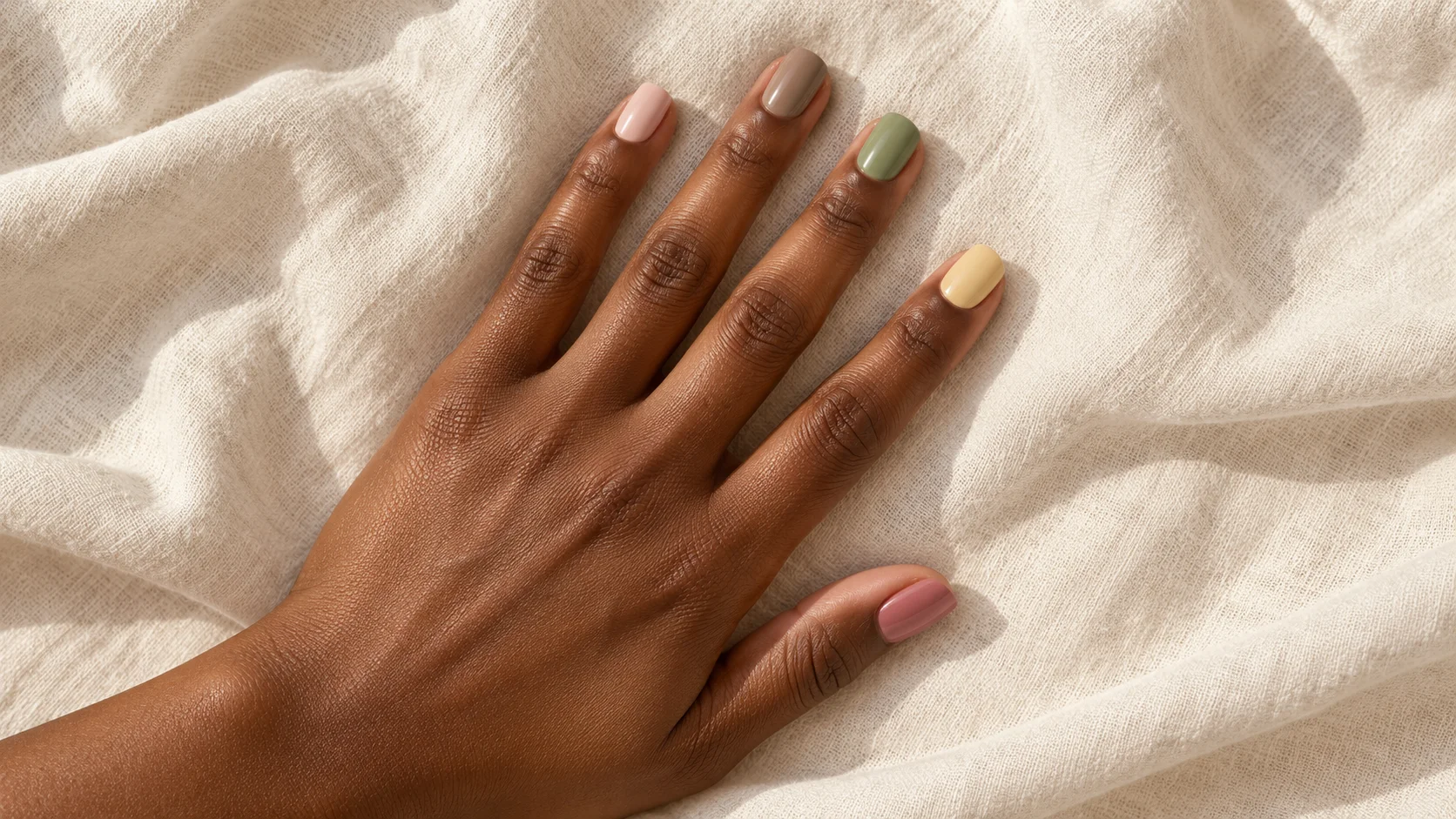
Skittle is the common design label used here for different colours on different nails. Our illustration combines dusty rose, blush, taupe, sage and pale yellow as one editorial idea. It is AI-generated and does not identify five tested products. You can use the arrangement as inspiration while choosing actual samples that fit your preferences, existing kit and manicure system.
Start with a shared rule
Choose one sentence that describes the set as a whole: five muted colours, five pale colours, or five shades moving from light to deep. This is a planning rule you can change, not a scientific test of harmony. It gives you a way to decide whether a candidate belongs in the palette beyond liking that colour on its own.
For a first attempt, keep the finish consistent as well. Five plain creamy colours make it easier to judge the colour relationships than a mixture of sheer, metallic, glitter and opaque products. Mixed finishes can be intentional, but they introduce another decision. If you want one reflective accent, give it that specific role instead of adding it only because it is the fifth bottle you found.
Use a real multicolour example without copying every shade
OPI’s Terracuddle Me tutorial gives a concrete example of a skittle layout: five named colours are applied to separate nails before a finishing step. The source is in Spanish and is used here for that layout principle. We are not treating its products as a required shopping list or its application routine as instructions for every polish range.
Look at a multicolour reference and ask what holds it together. Is it the warmth, the muted quality, the progression or the repeated finish? You can preserve that relationship while choosing different colours. Copying every bottle name is less useful if one shade is unavailable or if you do not enjoy one of the colours in ordinary wear.
Choose an anchor, then add neighbours
Pick one colour you already know you want to wear. Place two potential companions beside it, then add the remaining two only after the first group feels convincing. This makes it easier to see what each new colour changes. If you start with ten bottles and keep rearranging all of them, the comparison can become a search for a perfect set that has no clear definition.
A muted sage could be an anchor for a soft palette. Essie’s UK Bling It page describes a sage with blue undertones, which illustrates why even a broad colour name needs a more specific sample. A warmer green would create a different starting relationship with pink, taupe or yellow. This is a colour-language example, not a claim that the product matches our illustration.
| Role | What it contributes | Example direction |
|---|---|---|
| Anchor | The colour you most want to include | Muted sage |
| Light partner | A lighter pause in the arrangement | Pale blush |
| Neutral partner | A quieter colour between stronger differences | Soft taupe |
| Warm accent | A deliberate change in colour direction | Pale yellow |
| Deeper partner | More depth without changing the whole mood | Dusty rose |
Compare depth before blaming the colour family
If one shade seems to dominate, ask whether it is much darker, brighter or more reflective than the others. You might still like that colour family in a softer version. For example, a vivid yellow and a dusty pale yellow have different jobs in a muted set. Replacing the stronger sample with a quieter one can preserve the five-colour idea without abandoning yellow altogether.
Essie’s Gourmet Grocery collection includes descriptions such as dusty pale yellow, dusty seafoam green and grey beige. Those words are useful prompts when looking for less vivid companions. They do not prove that any five products will form your ideal palette, and we have not tested the collection together. Assess the actual colours side by side.
Arrange samples before assigning fingers
Make or request finished samples using the products you intend to wear. Keep the samples on the same background and arrange them in a row. Try a light-to-deep order, then a sequence that alternates quieter and more noticeable colours. Take a simple reference photo of each arrangement so you can compare them without relying on memory.
Next, consider the size and position of the nails that will carry the colours. A colour on a thumb may be seen differently from the same colour on a little finger, simply because the surface and position differ. You do not need to assign a universal best colour to each finger. Hold the samples near your hand and decide where you want the most noticeable part of the set to sit.
Build, order and refine
- Build. Choose an anchor and four colours that share your stated direction.
- Order. Compare two arrangements using finished samples, not bottle caps alone.
- Refine. Replace or reposition one distracting colour, then assess the whole set again.
Decide how the two hands relate
Repeating the same thumb-to-little-finger order on both hands is easy to record. A mirrored arrangement gives a different pattern when the hands sit together. You can also change the order deliberately while keeping the same five colours. Choose the approach before application so the second hand is not an improvised version that you would struggle to repeat later.
Write a short finger map with the exact product names, not just pink or green. If someone else is applying the manicure, show the map alongside the samples. This is especially helpful when two colours are close or when a photograph reverses the apparent order. A simple written record avoids an unnecessary correction after the colours have already been applied.
Keep application decisions tied to each product
Different colours may not give the same coverage with an identical number of coats. Follow the directions for the selected products and assess their finished appearance, rather than forcing every nail to use a matching count. For an ordinary-polish sample set, note the range, base and finishing products alongside each shade. A five-colour design is not permission to combine incompatible systems.
You also do not need to buy five new bottles to try the idea. Start by grouping colours you already own or by reviewing a salon’s available samples. If you only like four together, repeating one is a valid design choice. The purpose of the planning framework is to make the arrangement intentional, not to make the number five more important than the result.
Evaluate the whole palette in everyday conditions
Check the arrangement near a window and under your normal indoor light, then beside clothes you wear often. If one sample still distracts you, identify the specific difference: depth, brightness, finish or placement. Change that part and compare again. Avoid adding tiny artwork merely to make unrelated colours seem connected if a simpler colour substitution would solve the problem.
Keep the final map and one unfiltered reference image for the next manicure. You can change the anchor or one accent later while preserving the layout you enjoyed. Our nail art and trends edit offers more ways to adapt individual colours and simple details. A coherent skittle set begins with a relationship you can describe, then leaves room for your own preference.
For the related design decisions, compare Butter Yellow Nail Ideas for Soft, Wearable Colour, Sage Green Nails: Colour Pairings for a Muted Manicure and Colour Block Nails: Simple Layouts for Two or Three Shades. For the practical details, use Building a Small Nail Polish Collection with Versatile Colours.
Common questions
What is a skittle manicure?
In this guide, skittle describes using different colours across the nails. A five-colour set gives each finger on one hand a distinct shade, but it is only one way to use the idea. A repeated colour is still a valid choice if you prefer that arrangement.
How can five different colours look coordinated?
Give them a shared quality such as muted colour, similar depth or a consistent finish. Start with an anchor shade and add companions gradually, then compare finished samples together. This is an editorial planning method rather than a scientific rule that guarantees everyone will prefer the same palette.
Must all five colours have the same finish?
No, but matching finishes simplifies the first comparison because you can focus on colour relationships. If you introduce one shimmer or metallic shade, give it a deliberate accent role. Check whether its reflection dominates the set before deciding that the colour itself is the problem.
Which colour should go on the thumb?
There is no universal assignment. Arrange samples near your hand and decide where you want the most noticeable colour to sit. The thumb’s size and position may change your impression of the palette, so compare the whole hand instead of choosing an order from bottle names alone.
Should both hands use the same colour order?
They can repeat the same thumb-to-little-finger order, mirror one another or use an intentionally different arrangement. Decide before application and write a finger map with the exact shades. That makes the result easier to explain, reproduce and distinguish from an accidental change on the second hand.
What should I change if one colour looks out of place?
Identify whether the difference is depth, brightness, finish or placement. Try moving or replacing that single colour before changing the whole set. A softer version of the same colour family may preserve the idea you liked while bringing it closer to the shared direction of the palette.
Do I need five new polishes to try skittle nails?
No. Begin with colours you already own or a salon’s available samples. If only four work well together, repeat one rather than buying a fifth simply to satisfy a number. Choose products with appropriate directions for the intended manicure system, and compare the finished appearance.
Should every nail have the same number of colour coats?
Follow the directions for each selected product and compare the result rather than enforcing an identical count. Different colours may give different coverage. Record the base, shade, layers and finishing product for each sample so you can reproduce the palette without relying only on a photograph.
Sources and further reading
- OPI — Terracuddle Me (Spanish tutorial) — checked 2026-10-21
- Essie UK — Gourmet Grocery collection — checked 2026-10-21
- Essie UK — Bling It — checked 2026-10-21