Blue French Tips: Navy, Cobalt and Powder Blue Ideas
Choose the blue family, tip proportion and base colour for a French manicure that works as a complete set.
Archive edition: 2026-07-18 · This is an editorial allocation, not the first-publication date.
Key takeaways
- Colour: navy, cobalt or powder blue, confirmed against a sample.
- Base: sheer, lightly milky or more opaque.
- Proportion: fine outline or broader band, shown at your intended length.
- Finish: plain colour or shimmer, with any accent stated separately.
In this guide
- Key takeaways
- Choose the blue family before the details
- Check the finish as carefully as the colour
- Match the tip to the visible nail
- Use the nail shape to guide the curve
- Choose a base that supports the blue
- Plan accents without losing the French idea
- A four-part blue French brief
- Leave with a repeatable description
- Common questions
- Sources and further reading
Blue French tips keep the familiar division between a quiet base and a coloured edge, but the choice of blue changes the whole manicure. Navy can give a fine outline, cobalt makes a clearer colour statement, and powder blue offers a softer contrast. Start with the effect you want at normal hand distance, then choose the shade, tip width and base together.
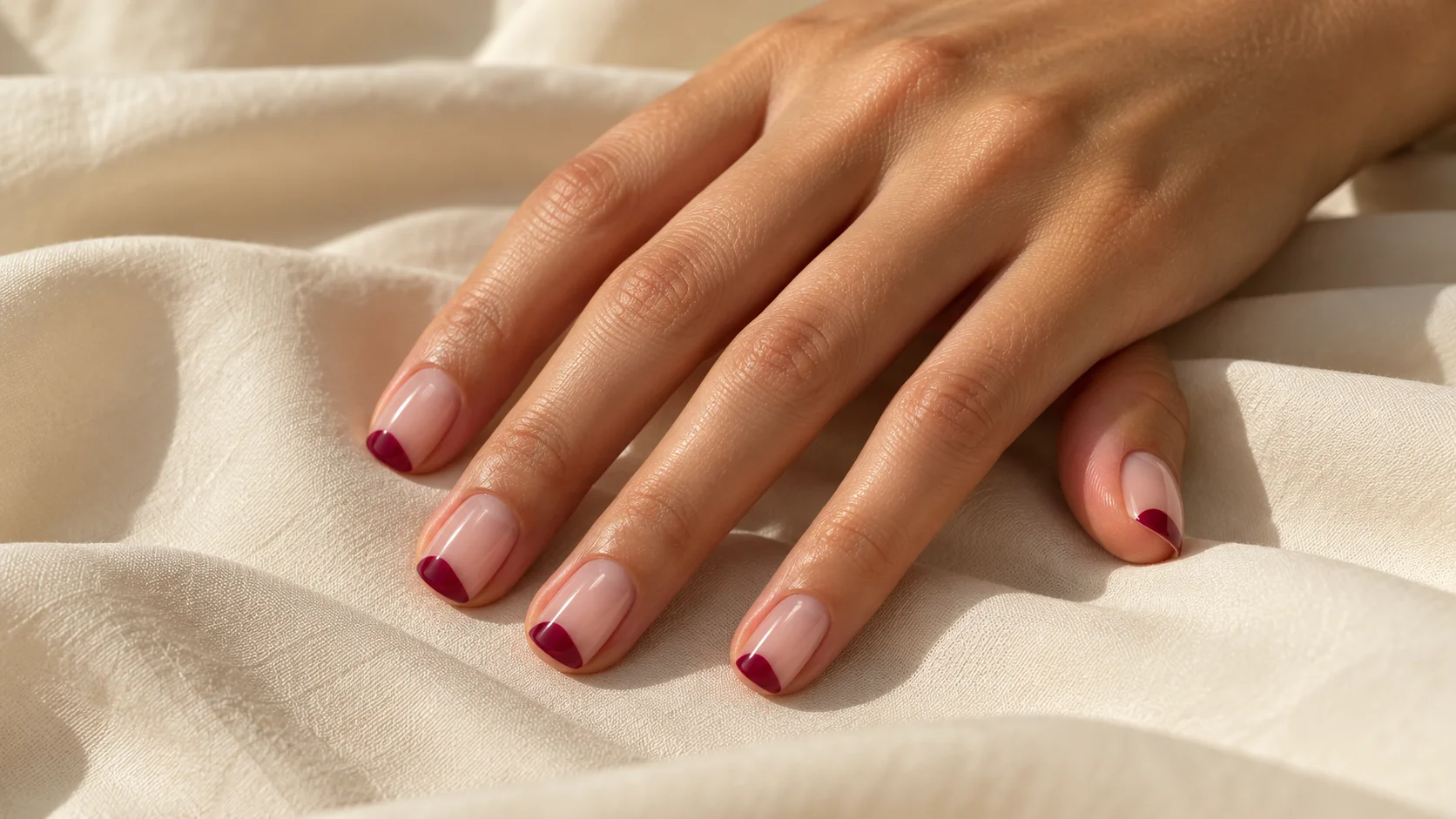
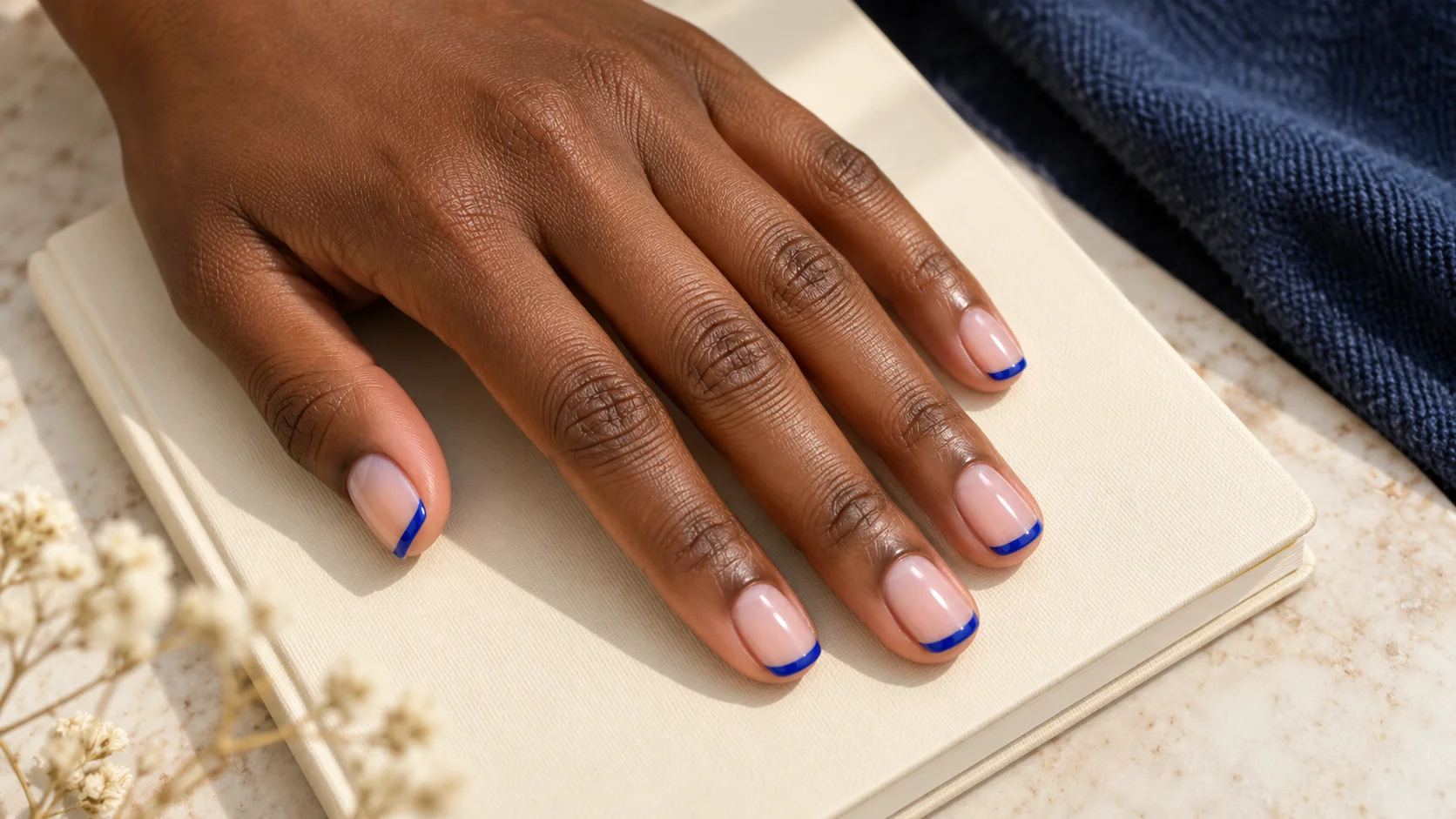
There is no single blue that every salon or brand means by these names. Use them to narrow a conversation, then compare actual samples. The ideas below are editorial styling suggestions, not tested product combinations. The featured illustration shows a possible arrangement rather than an exact polish shade.
Choose the blue family before the details
Navy is useful when you want a dark edge without choosing black. On a pale pink base, a narrow navy curve can read as a precise border. A very dark navy may look almost black indoors, so inspect the sample away from a bright display lamp before deciding. If recognising the blue matters to you, ask to compare the darkest option with a slightly lighter one.
Cobalt describes a stronger, more saturated blue direction. It can become the main detail even when the tip occupies a small area. A plain base and consistent tip shape let that colour do the work. If you also want gems, a contrasting border or several accent nails, check whether the extra details still leave the blue edge easy to see.
Powder blue gives a lighter starting point, but pale does not automatically mean subtle. An opaque pale tip on a translucent base can create a distinct division. Compare a chalkier blue with a greyer or slightly lilac version. The right choice here is the contrast you prefer, rather than a rule about which shade belongs to your skin tone.
Check the finish as carefully as the colour
Not every blue polish has a plain, uniform finish. For example, Essie describes Bikini So Teeny as a cornflower blue with shimmer. That description is useful because a small reflective detail may matter on a narrow tip. It is an example of finish vocabulary, not a recommendation based on our own wear testing.
Ask to see the proposed colour on a finished sample, including the intended top coat. A shimmer may be obvious close up but quieter at arm’s length; a glossy cream colour may show a more continuous edge. Make one decision at a time. First settle the blue, then compare the finish, instead of changing colour, width and texture in every reference photograph.
Match the tip to the visible nail
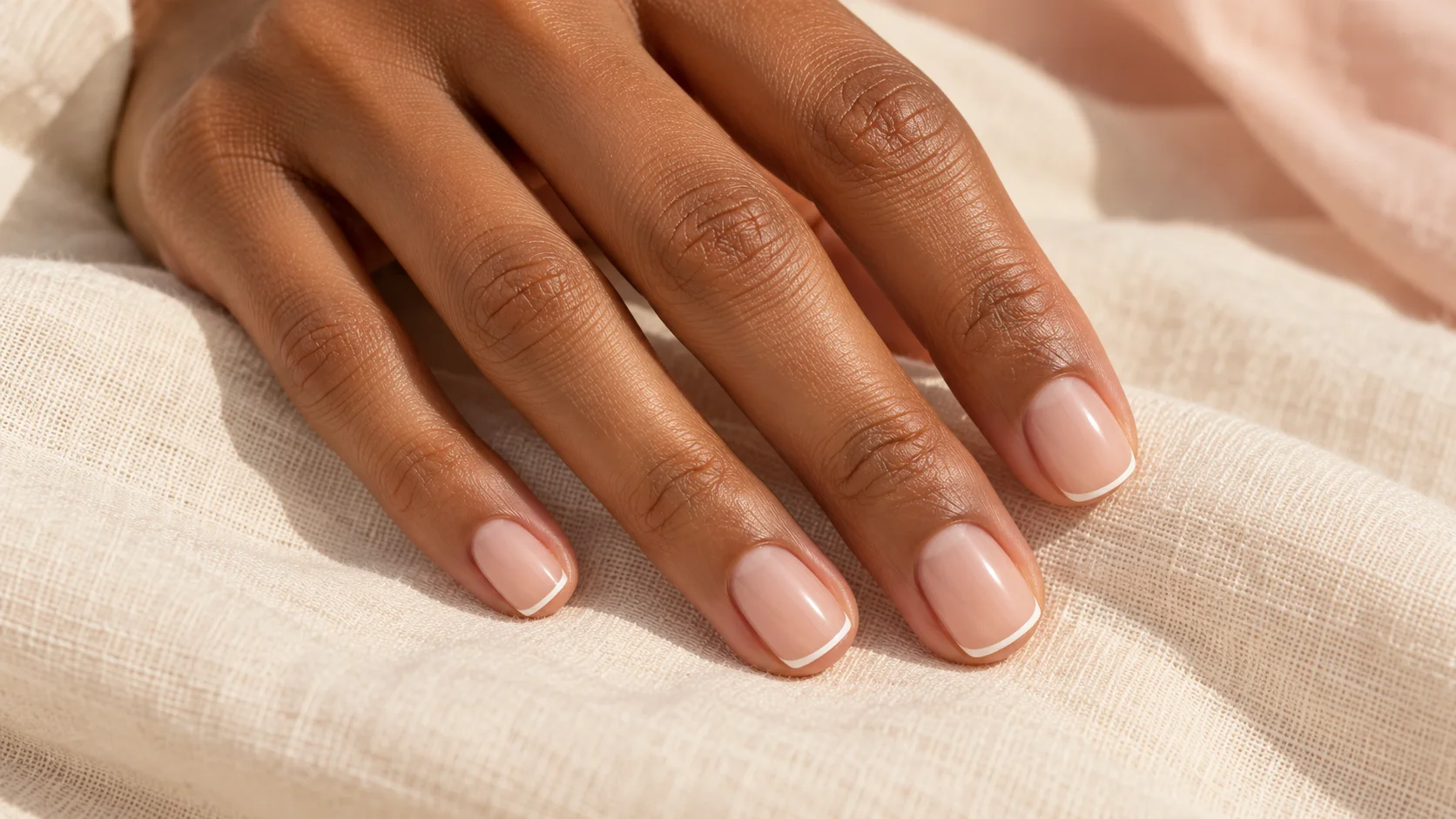
The basic French structure is a contrasting tip over a base, with a very fine edge as one possible variation, as shown in Essie’s French manicure guide. That leaves room for proportion. A wide coloured band takes up more of the visible nail; a narrow band leaves the base as the larger area.
On short nails, try a sample that preserves enough base for the division to remain clear. This is a visual preference, not a minimum length requirement. If a nail has very little visible free edge, discuss a painted curve with your technician rather than assuming the blue must follow every detail of the natural white edge.
Look at the entire hand, including the thumb. Identical measurements may not look identical on different nail widths. Ask for a consistent visual proportion and agree whether the corners should rise gently or form a more dramatic curve. A photograph of one long nail is less useful than a sample close to your actual length.
| Direction | Possible starting point | Check before choosing |
|---|---|---|
| Navy outline | Fine dark tip with a sheer pink base | Does it still read blue in ordinary room light? |
| Cobalt accent | Clear blue tip with a quiet, even base | Does the colour remain the main detail? |
| Powder blue edge | Pale blue with a translucent or lightly milky base | Is there enough separation between base and tip? |
| Shimmer blue | Reflective colour confined to the edge | Do you like the finish both close up and at arm’s length? |
Use the nail shape to guide the curve
Oval and squoval nails give different outlines to work with. OPI’s nail-shape guide is a useful reference for distinguishing curved shapes from those with a flatter edge and softened corners. Choose your preferred outline first so the blue tip can be planned around it.
A rounded French curve can echo an oval nail, while a shallower band can sit comfortably across a softly square edge. These are design options rather than obligations. If your reference uses a deep curved tip on long almond nails, ask which part you want to retain on a shorter shape: the colour, the dramatic sides or the overall delicacy.
Choose a base that supports the blue
A sheer pink base leaves more of the natural nail visible. A lightly milky base gives the set a more even-looking colour field, while a more opaque neutral changes the contrast again. Compare these beside the same blue sample. Changing the base can solve a contrast problem without requiring a different blue.
Do not choose a base from a heavily filtered photograph alone. Lighting and screen settings can shift both the pink and the blue. Where possible, look at a real sample beside your hand in ordinary light. If that is not available, ask the technician to describe the base coverage clearly and confirm whether the natural free edge will remain visible beneath it.
Plan accents without losing the French idea
For a first version, keep every tip in the same blue and use the base as the repeated element. If you want variety, change one feature: perhaps one solid blue accent nail, or a lighter blue on one tip. Adding several different widths and patterns at once can make it harder to judge which detail you actually like.
A wardrobe item can provide a starting reference without needing an exact match. Compare the blue with a denim cuff, a navy jacket or a favourite scarf, then decide whether you prefer coordination or a deliberate contrast. Bring the item or a clear photograph if the relationship matters more than a particular polish name.
A four-part blue French brief
- Colour: navy, cobalt or powder blue, confirmed against a sample.
- Base: sheer, lightly milky or more opaque.
- Proportion: fine outline or broader band, shown at your intended length.
- Finish: plain colour or shimmer, with any accent stated separately.
Leave with a repeatable description
A useful appointment brief might be: “Short squoval nails, a sheer pink base, narrow cobalt tips and a glossy finish, with no extra accents.” Show one main reference and explain which feature matters most. Ask what product system will be used, how the design affects appointment time and how the finished manicure should be removed.
After choosing, keep the colour name, base name, product system and a photograph in ordinary light together. That record is more useful for a repeat appointment than the phrase “blue French” on its own. If the result needs adjusting next time, change one element, such as a lighter blue or narrower band, so your feedback stays clear.
For the related design decisions, compare Micro French Nails: Choosing Tip Width, Shape and Colour, Colour Block Nails: Simple Layouts for Two or Three Shades and Negative Space Nail Art That Works on Short Nails. For the practical details, use Sheer White vs Opaque White Polish: Finding the Finish You Want.
Common questions
Can blue French tips work on short nails?
Yes, the design can be planned for a short nail by adjusting the coloured band and the visible base. Ask for a sample near your actual length rather than copying a long reference unchanged. Choose a proportion you like across the whole hand.
Which is subtler: navy, cobalt or powder blue?
There is no fixed ranking because contrast depends on the base, finish and tip width. A very fine navy outline can look quieter than a broad opaque powder-blue band. Compare complete samples at normal hand distance rather than judging the blue bottle alone.
Does navy always look blue indoors?
Very dark navy may appear close to black in some lighting. If seeing a recognisably blue edge matters to you, compare it with a slightly lighter option in ordinary room light. Keep the same base and width while making that comparison.
What base should I choose for blue tips?
Start by comparing sheer pink and lightly milky options beside the same blue. The sheer version leaves more natural nail visible, while the milkier version changes the colour field behind the tip. Pick the contrast you prefer and confirm the intended coverage.
Can I use shimmer for a blue French tip?
A shimmer is a possible finish, but inspect it on a completed sample. A narrow edge gives the reflective particles less space than a full-colour nail. Decide whether you like the result close up and at arm’s length before adding other decoration.
Should the blue follow my natural free edge exactly?
That is a design choice to discuss with the technician. A painted curve may be planned to create the visual proportion you want, especially where natural free edges differ. Explain whether an even-looking band or a close follow of the natural edge matters more.
Can I combine different blues in one French manicure?
Yes, but plan their order and keep another element consistent, such as the base or tip width. Start with a limited change, like one lighter accent tip. Looking at the complete arrangement makes it easier to judge than selecting several shades separately.
What should I save for a repeat appointment?
Keep the base colour, blue shade, brand and product range, along with a photograph in ordinary light. Note the nail shape and whether the band was fine or broad. That record communicates much more than the phrase blue French tips alone.
Sources and further reading
- Essie — How to do French tip nails — checked 2026-10-21
- Essie UK — Bikini So Teeny — checked 2026-10-21
- OPI — How to find the best nail shape for your hands — checked 2026-10-21