Summer Citrus Nails: Lemon, Orange and Lime Colour Combinations
Build a citrus-inspired manicure with yellow, orange or lime colour, from a small accent to a clear three-shade palette.
Archive edition: 2026-06-30 · This is an editorial allocation, not the first-publication date.
Key takeaways
- Choose yellow, orange or lime as the main colour.
- Decide how much colour you want on the hand.
- Add a second shade only where it helps.
- Choose literal fruit or a colour-only design.
- Record the final placement and product system.
In this guide
- Key takeaways
- Choose your main citrus colour
- Let one shade lead the arrangement
- Four compositions to try on a mood board
- Decide whether you want fruit or only the palette
- Keep the practical plan proportionate
- Build the citrus idea
- View the whole hand before adding another detail
- Common questions
- Sources and further reading
Citrus-inspired nails can use yellow, orange and lime as a colour palette without turning every nail into a fruit illustration. You might choose one bright shade, two alternating colours or a small painted lemon on a quiet background. Decide how much of the theme you want to carry before collecting products or saving a complicated reference.
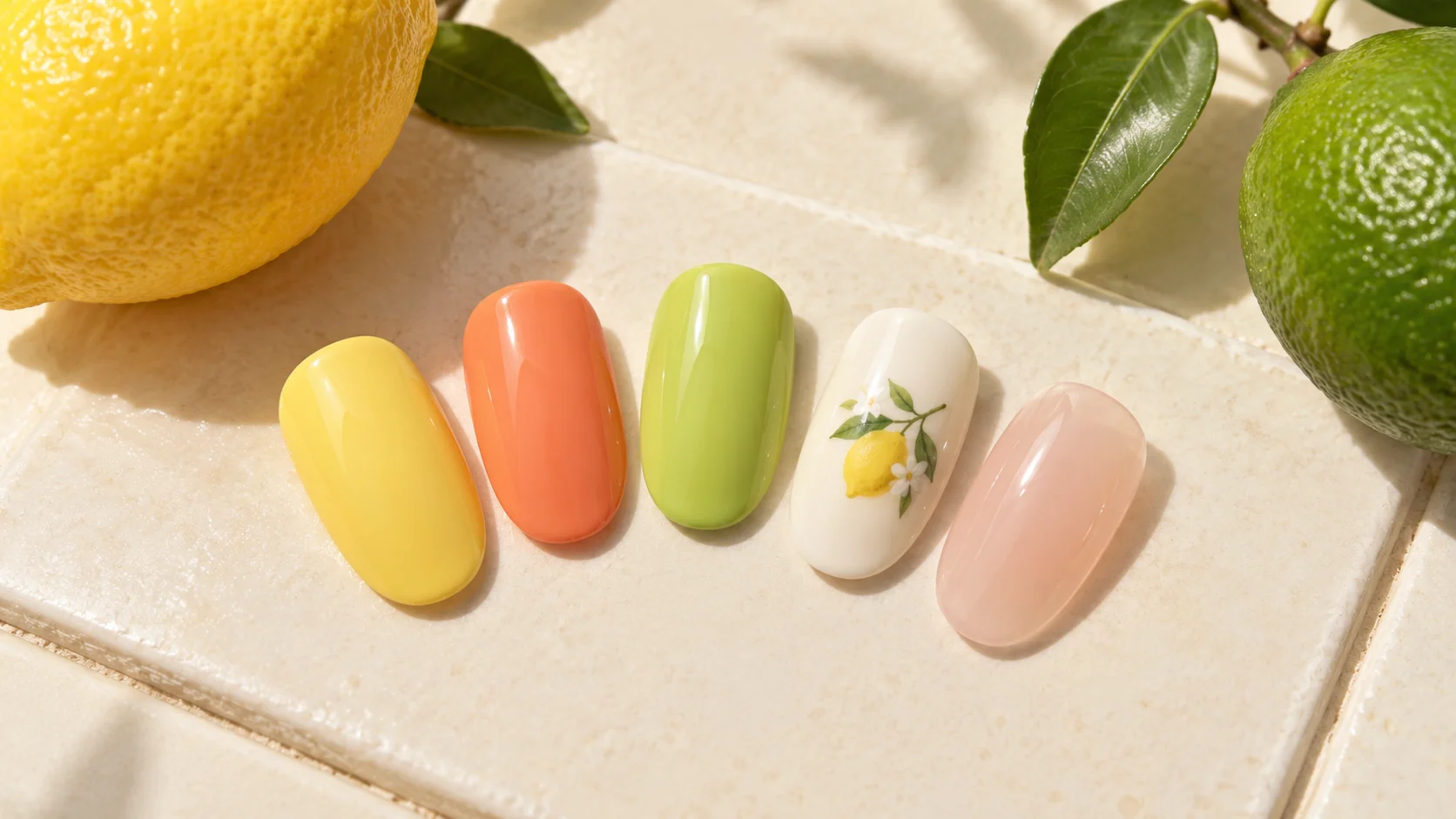
The combinations in this guide are original editorial ideas. They are not a claim that citrus nails are a measured trend, that a particular shade suits everyone or that the generated image shows tested polishes. The fruit reference is visual: it does not involve applying real juice, peel or other food ingredients to nails or skin.
Choose your main citrus colour
Start with one colour that you would enjoy wearing even without the theme. A yellow can feel cheerful and clear, an orange can provide a warmer accent, and a lime green can create a more unexpected contrast. Those are aesthetic impressions to consider, not universal emotional effects or rules about which colour belongs on which person.
For a named yellow example, OPI describes Exotic Birds Do Not Tweet as a radiant yellow crème lacquer. Use that as a reference for the colour family, then compare an actual sample if the exact shade matters. The illustration here is an imagined palette, not a product swatch.
A warmer option is illustrated by OPI’s description of Cajun Shrimp as coral-orange. It is not identical to every orange polish or to the colour of a particular fruit. Think about whether you want a redder coral, a clearer orange or a softer peach direction before choosing the bottle.
For a green reference, Essie describes Main Character Moment as bright lime green with yellow undertones. It belongs to the brand’s expressie range. The named products in this article are colour examples across different ranges, not instructions to combine their systems or an assessment of their compatibility.
Let one shade lead the arrangement
Using all three colours in equal amounts is only one option. You can make yellow the main colour and reserve green for a small leaf, or use orange across most nails with one pale accent. Deciding which shade leads gives you a clear starting point and can keep the palette from feeling busier than you intended.
A simple ratio to discuss is mostly one colour with a small amount of another. This is a design planning idea rather than an exact formula. On one hand, that might mean four plain nails and one accent; on another, it could mean a tiny green line repeated on every yellow nail. Choose the structure you like rather than treating a ratio as a rule.
If you prefer a quieter look, put the citrus colour over a pale or translucent background. A narrow orange tip or a small yellow oval can suggest the theme without creating a full bright manicure. The amount of colour can be adjusted independently from the length and shape of the nail.
Four compositions to try on a mood board
Single-colour citrus: choose yellow, orange or lime for the whole manicure. This gives the colour itself room to be the idea and avoids needing several tools or layers of artwork. Compare the shade beside the clothes you expect to wear, because a bright manicure can act like a small accessory.
Alternating pair: choose two colours and set their order before application. Yellow with lime makes a different pairing from orange with a pale background. You do not need a different shade on every finger. Repeating a clear pattern can make a small palette feel deliberate.
One painted fruit: use a simplified lemon or orange shape on an accent nail. Decide which features make the motif readable: an oval, a small leaf or a curved segment line. A short nail may need fewer marks than a close-up inspiration image. Leave enough space around the motif for its outline to remain visible.
A colour-only French edge: use a citrus shade as the tip rather than painting the whole surface. A fine line can provide a small dose of colour; a wider band produces a stronger block. Compare the width on your intended nail length and keep the application method appropriate to the product system.
| Composition | Palette plan | Detail to decide |
|---|---|---|
| Small accent | Pale background with one citrus colour | Placement and amount of open space |
| Coloured tip | Quiet base and bright edge | Width and curve of the tip |
| Alternating pair | Two repeated colours | Order across the hand |
| Painted fruit | Main colour plus a small motif palette | Which simple marks identify the fruit |
| Three-colour arrangement | Yellow, orange and lime | Which shade leads and which accents |
Decide whether you want fruit or only the palette
A yellow and green manicure can feel citrus-inspired without a literal lemon. That may suit someone who likes the colour relationship but does not enjoy characterful nail art. Equally, one small painted fruit can be the detail you want, with the rest of the manicure kept quiet. Neither interpretation is more complete.
If you are booking a technician, describe the motif and its scale rather than asking only for citrus nails. Say whether you want flat painted art, a decal or another method, and ask what the provider can achieve in the chosen system. Do not assume the reference image reveals how the result was made.
A simple sketch can help you resolve placement before the appointment. Draw the outline of a nail and mark where the accent should sit. You are not producing a technical blueprint; you are making it easier to explain whether the fruit belongs at the tip, near one side or in the centre.
Keep the practical plan proportionate
For an ordinary-polish design at home, follow the preparation, drying and finishing directions for the actual products you choose. Allow time to practise an unfamiliar motif on a suitable practice surface. Do not substitute gel curing instructions or mix application steps from unrelated systems because the colours look similar.
Consider the number of products the design requires before buying them. A single bright bottle you would wear again may be more useful than several colours purchased for one tiny detail. If you already have a pale base and a suitable accent colour, adapt the idea around those rather than assuming the pictured palette is a shopping list.
View the whole hand before adding another detail
Hold the planned colours beside the outfit and look from normal distance. A tiny motif does not have to be densely detailed to read as a lemon or orange. If the whole hand already feels clear, more leaves, dots or segment lines may not improve it. Stop when the design expresses the idea you wanted.
Explore Nail Art & Trends for ways to adapt small motifs and Seasonal & Bridal for more summer palettes. Keep the finished brief specific enough to repeat, while allowing the colour and amount of decoration to remain your own choice.
To adapt the plan to related occasions and outfits, compare Festival Nail Ideas: Colour, Small Accents and Practical Lengths, Poolside Nail Colour Ideas: Blue, White and Sunset-Inspired Pairings and Late Summer Nails: Warm Neutrals and Faded Pastels. For the underlying care, colour or service choice, see Butter Yellow Nail Ideas for Soft, Wearable Colour.
Common questions
Do citrus nails need pictures of fruit?
No. Yellow, orange and lime can form a colour-only palette, with plain nails, alternating shades or coloured tips. A small painted fruit is optional. Decide whether you enjoy the literal motif or mainly the colour relationship, then keep the design focused on that preference.
Can I use only one citrus colour?
Yes. A plain yellow, orange or lime manicure can be the complete idea without any second shade or artwork. Choose a colour you would enjoy wearing on its own, then compare it with your clothes and accessories rather than treating a three-colour illustration as a compulsory shopping list.
How can I make a citrus palette quieter?
Use a small amount of a bright shade on a pale or translucent background, such as a narrow tip or one tiny accent. You can also choose only two colours. Adjusting the amount of colour changes the design without requiring a different nail length or a more complicated service.
Are the named yellow, orange and green products a tested set?
No. They are manufacturer-described examples of colour families from different ranges. This article does not establish their compatibility, comparative wear or exact appearance together. Choose application and finishing products according to the instructions for the actual system you use, not simply the palette shown here.
Should real lemon juice or peel be used on the nails?
No. The citrus reference in this guide is visual inspiration for colour or painted artwork. It is not a treatment or an instruction to apply food ingredients to nails or skin. Use appropriate nail products and their directions to create the design you have chosen.
What is a simple fruit motif for a short nail?
Consider one small oval with a leaf or a simplified curved segment, leaving space around it. Decide which few marks make the fruit recognisable instead of copying every detail from a large close-up image. A technician can help adapt the scale to the nail you plan to wear.
Do I need a different colour on every finger?
No. Repeating one or two colours can make the arrangement clearer and reduce the number of products required. Set the order before application, or reserve the contrasting shade for one accent. Equal amounts of yellow, orange and green are only one possible interpretation of the theme.
Does the illustration show exact polish swatches?
No. It is AI-generated editorial imagery showing generic colour directions and a possible motif. The linked brand pages support their own descriptions only. Compare the real products when an exact shade matters, and do not use the illustration as evidence of coverage, compatibility or wear.
Sources and further reading
- OPI — Exotic Birds Do Not Tweet — checked 2026-10-23
- OPI — Cajun Shrimp Nail Lacquer — checked 2026-10-23
- Essie US — Main Character Moment — checked 2026-10-23