Bridesmaid Nails: Coordinating Shades Without Matching Every Hand
Coordinate a bridal party with a shared colour direction while leaving room for different budgets, nail lengths and personal choices.
Archive edition: 2026-05-05 · This is an editorial allocation, not the first-publication date.
Key takeaways
- Agree the purpose of coordinating.
- Choose one shared visual element.
- Confirm individual preferences and practical limits.
- Clarify costs and booking arrangements.
- Share the final options without adding new requirements.
In this guide
- Key takeaways
- Choose the smallest useful shared element
- Make room for each person’s actual routine
- Discuss cost and logistics before choosing detail
- Decide how much consistency photographs really need
- Use a sample to resolve uncertainty
- A flexible group brief
- Write a brief people can actually use
- Common questions
- Sources and further reading
Coordinated bridesmaid nails do not require identical bottles, nail shapes or appointments. A shared direction can bring the group together while allowing each person to choose something that suits their hands, budget and preferences. Decide what actually matters in the wedding styling before asking everyone to commit to a specific manicure.
Perhaps you want soft colours beside a set of different dresses, or you would like one recurring accent in group photographs. That is a much narrower brief than requiring matching extensions and detailed artwork. The suggestions here are editorial planning ideas, not wedding etiquette rules. Bare nails and a simple familiar manicure should remain comfortable options when the group discusses what works.
Choose the smallest useful shared element
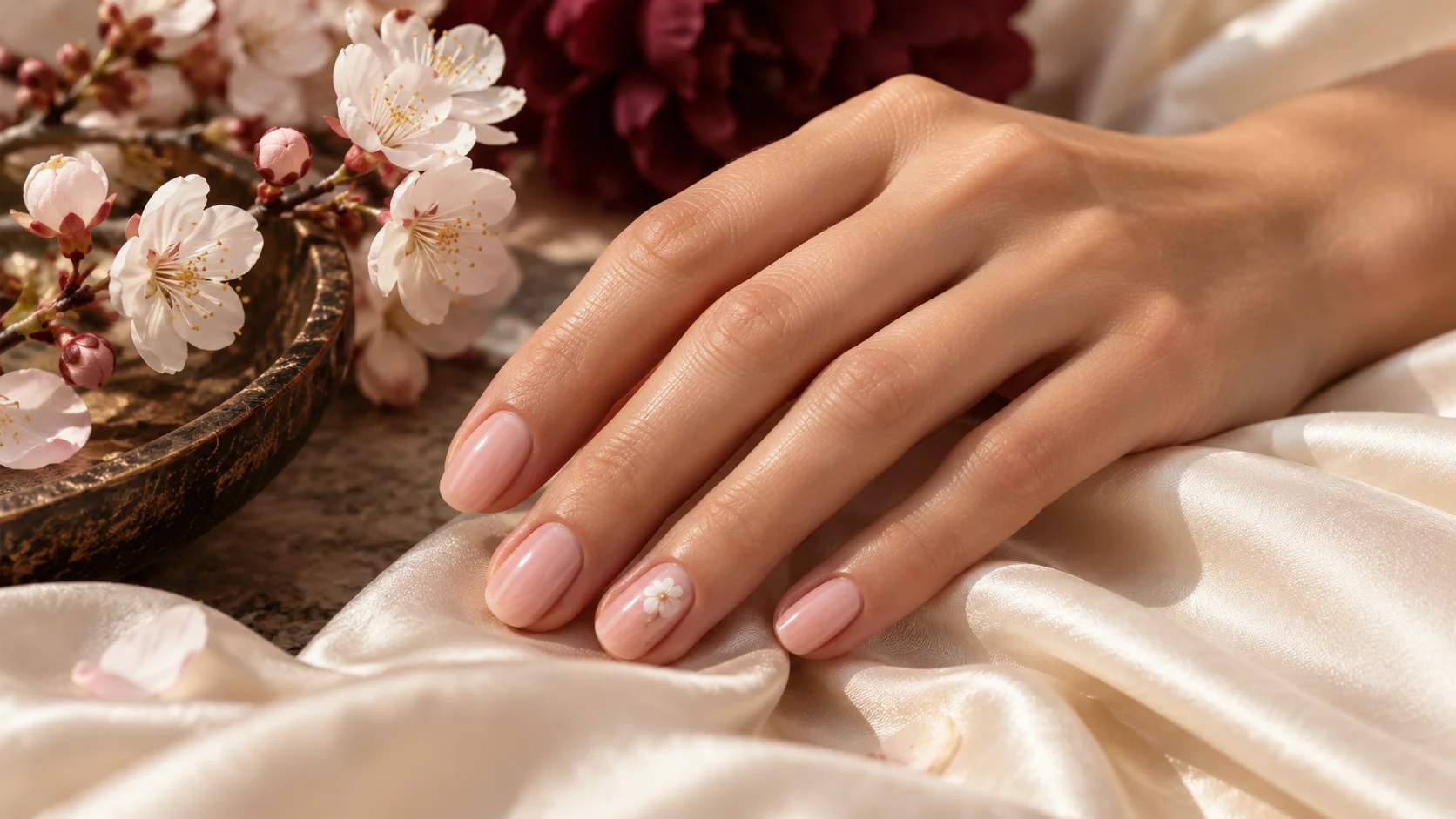
Start with one point of coordination: a colour family, a finish or a small motif. If you choose blush and rose colours, people can select different depths within that family. If you choose a glossy finish, the shades can vary more widely. If the common element is a painted dot or fine line, decide whether it is genuinely wanted before making it part of the brief.
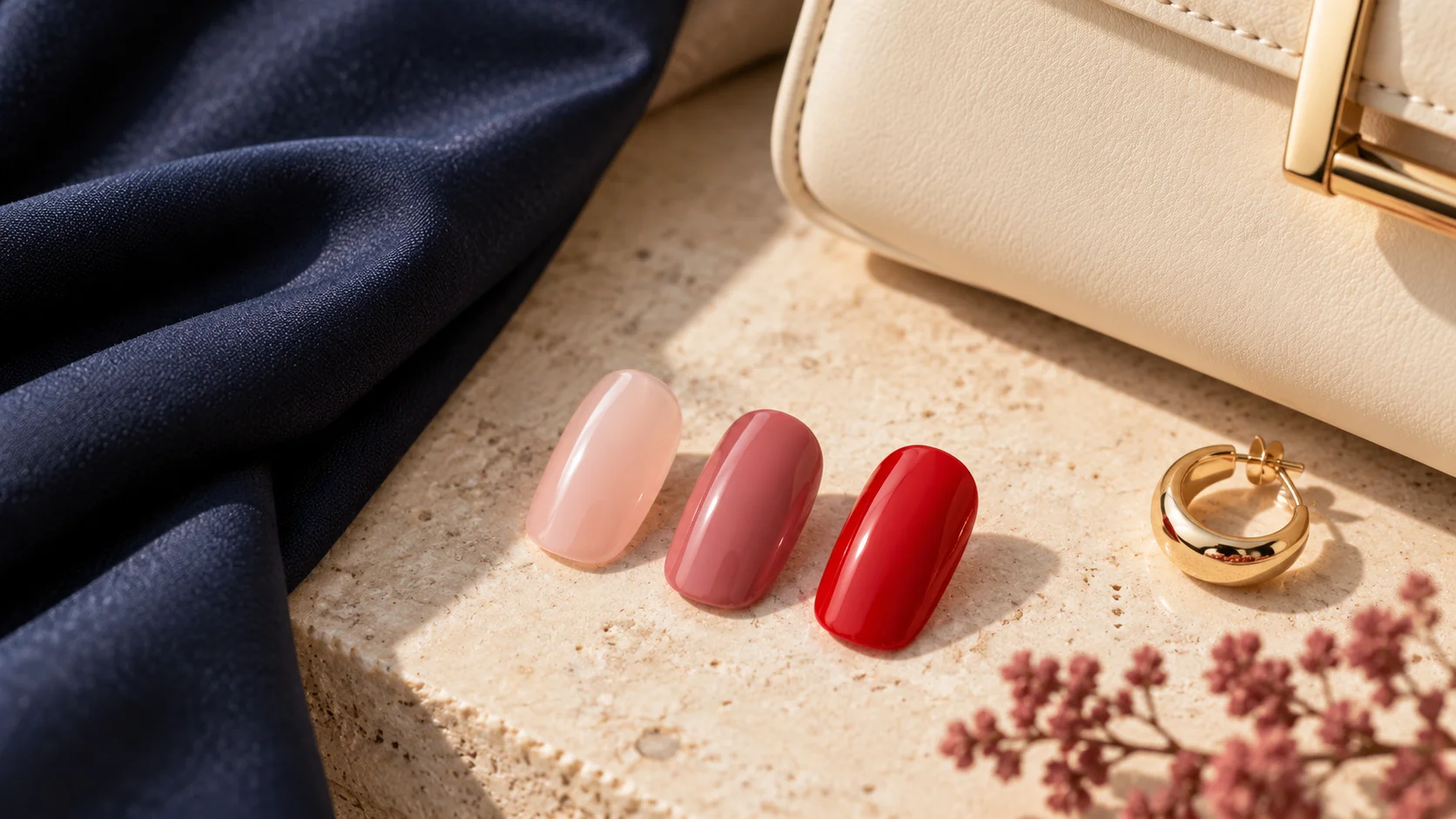
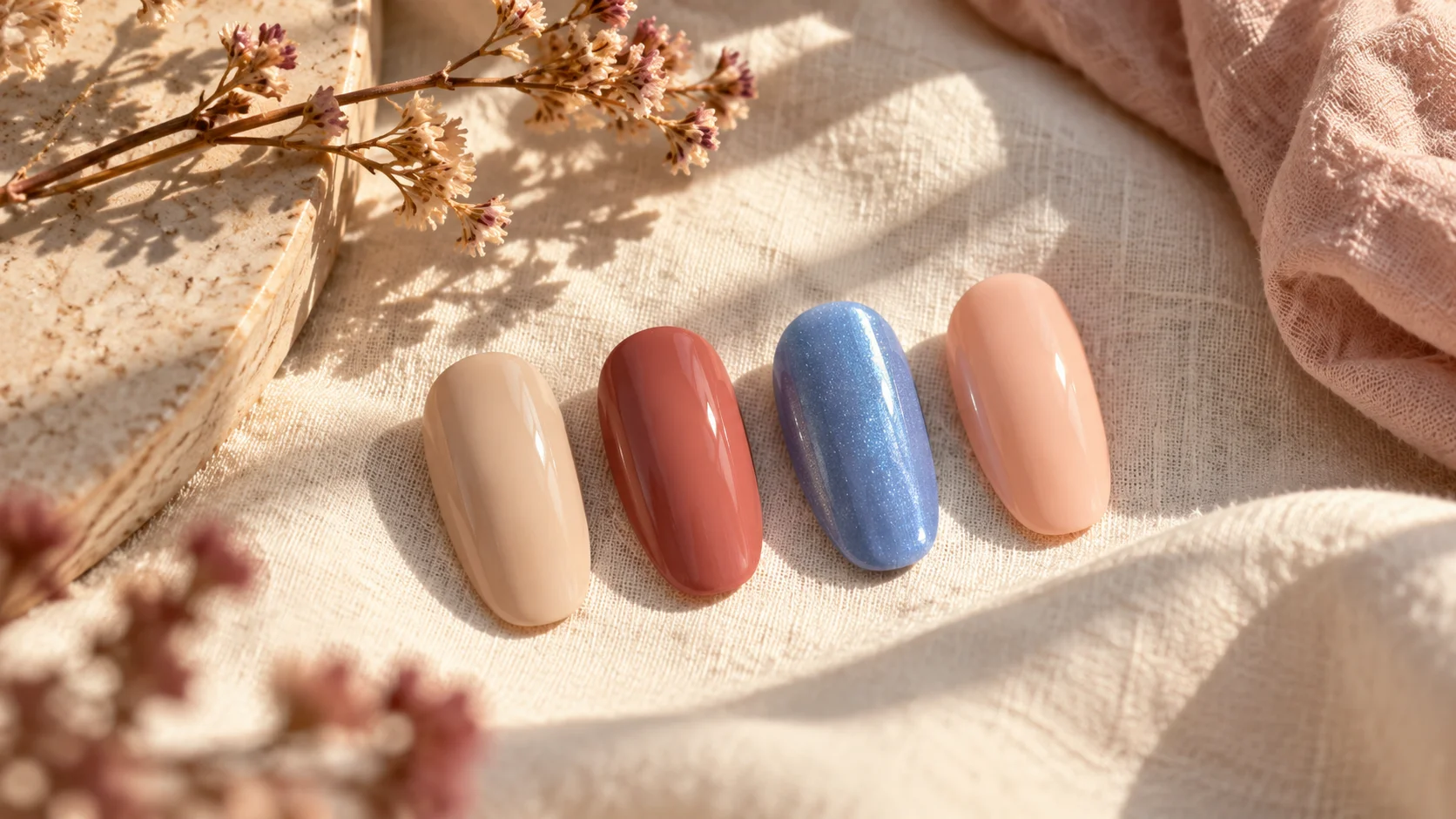
A palette of three or four broad directions is easier to communicate than a photograph of one hand that everyone is expected to reproduce. For example, sheer pink, muted rose and soft taupe can become options to discuss, with a deeper berry available for someone who prefers more contrast. These are aesthetic suggestions; none is a universal neutral or a required match for a particular skin tone.
Distinguish the colour name from the amount of coverage. OPI describes Bubble Bath Nail Lacquer as sheer light pink, illustrating how a pink can function as a translucent tint rather than a solid coat of colour. A group brief that only says pale pink may produce several quite different results. That variation may be welcome, but discuss it first.
Make room for each person’s actual routine
Ask about preferences before booking a group service. Some people may routinely wear gel or extensions; others may prefer ordinary polish, keep their nails very short for work or choose not to wear products. Matching the visual mood does not require everyone to use the same system. Keep any conversation about previous reactions or nail concerns private rather than asking for health details in a group chat.
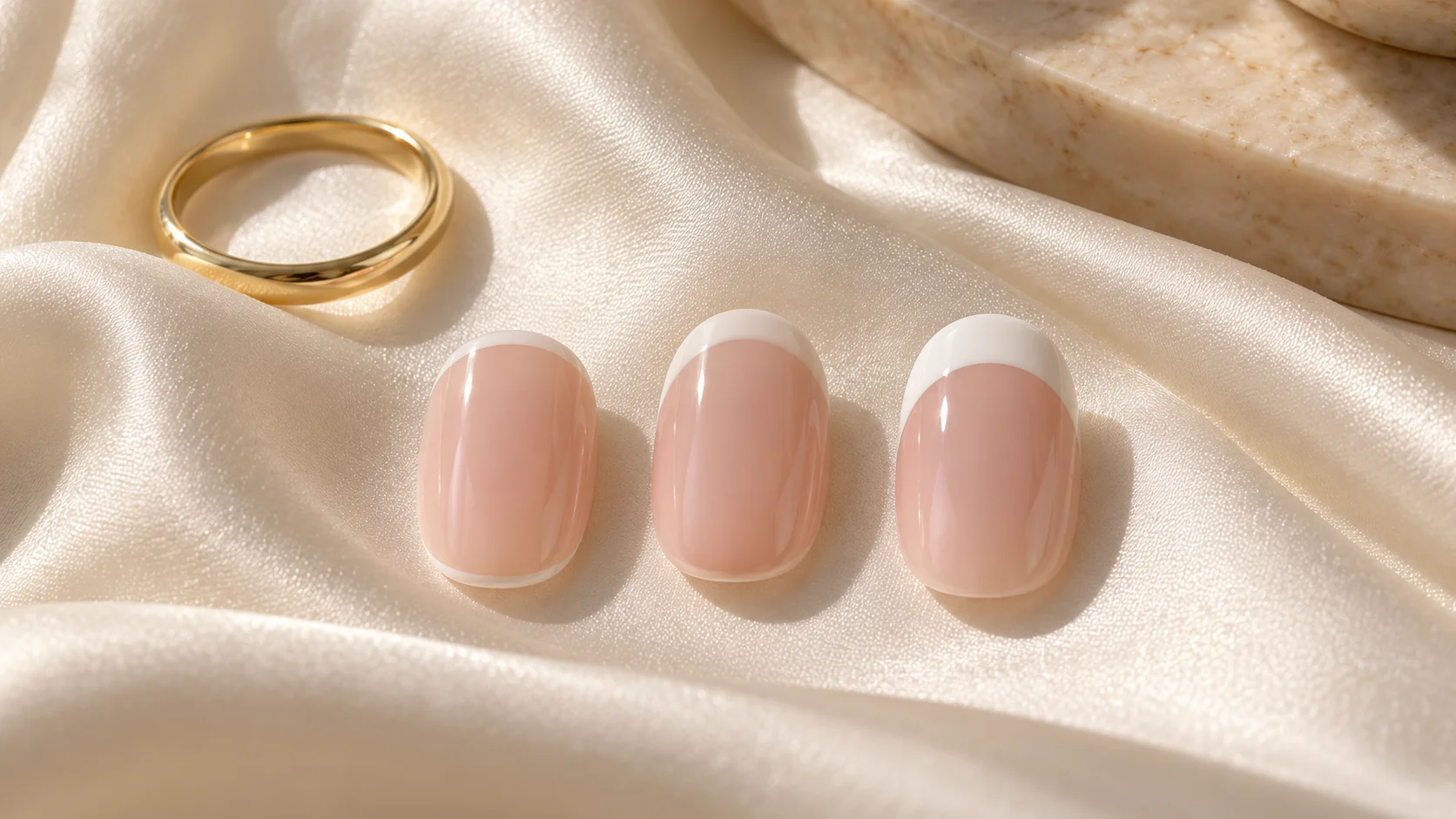
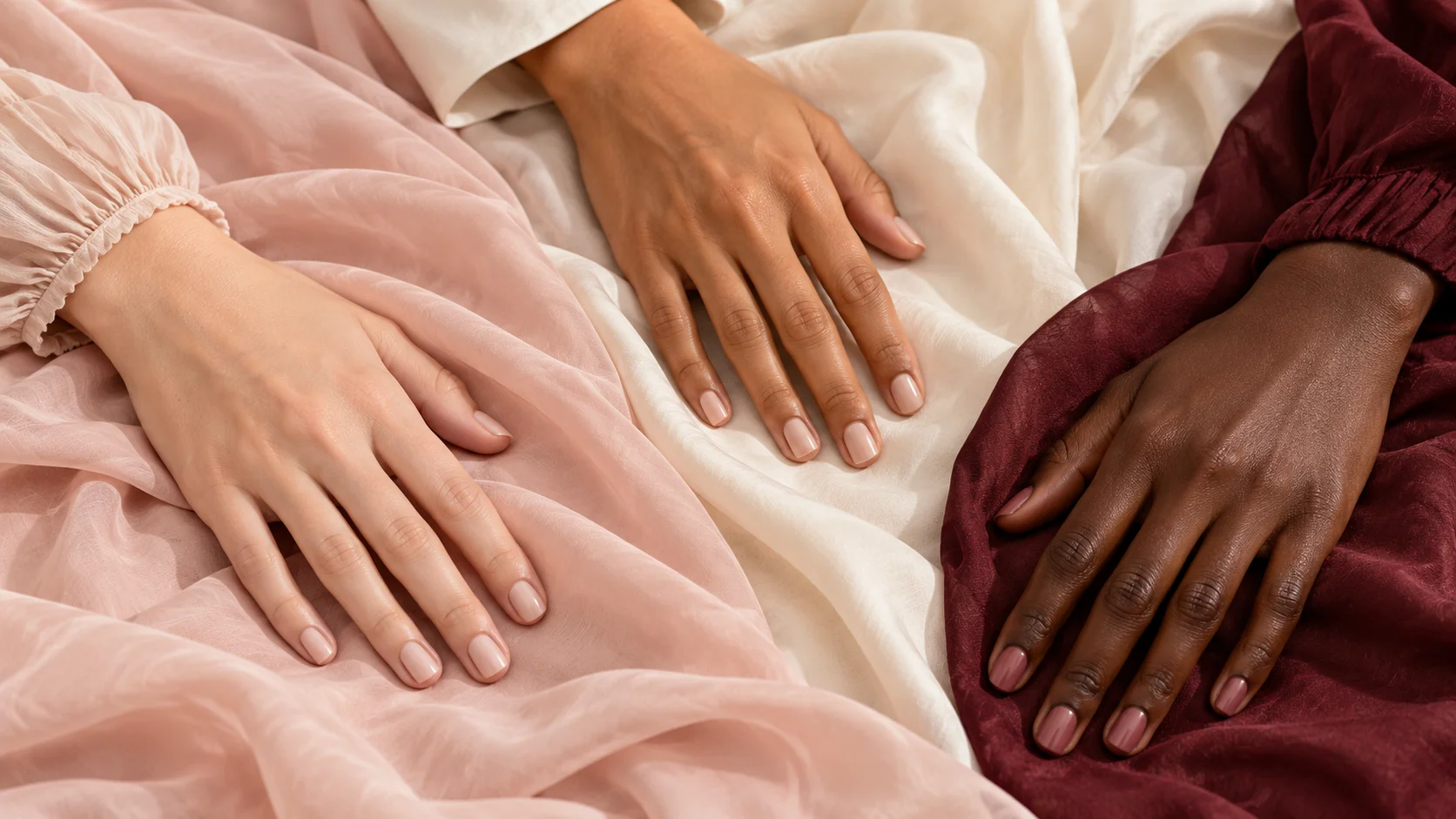
Let people retain a familiar, practical length. A shared colour can connect short rounded nails, a softly squared edge and a longer oval without requiring a uniform outline. The person wearing the manicure is best placed to judge whether it interferes with their everyday tasks. Avoid treating a longer shape as the default standard of being dressed for a wedding.
Basic preparation also does not need to become a competitive project. The American Academy of Dermatology advises leaving cuticles alone. Do not encourage extra cutting or uncomfortable preparation because a close-up photograph is planned. If someone has a concern, their care needs take priority over achieving a matching appearance.
Discuss cost and logistics before choosing detail
A detailed design can affect both price and appointment length. Ask the salon for the actual quotation and explain who is paying before anyone books. If each person is covering their own manicure, offer a direction that can be interpreted with a simple colour rather than making a specialist service an unspoken condition of joining the group.
Check whether everyone needs the same venue or whether separate appointments are more practical. People may live in different places, have different work schedules or already use a technician they trust. A group appointment can be enjoyable when it suits everyone, but it should not be the only way to participate in the visual plan. Agree a communication deadline for preferences instead of repeatedly changing the design.
Decide how much consistency photographs really need
Think about the pictures you expect to take before treating exact shade matching as essential. A close view of hands holding bouquets may show more nail detail than a group portrait taken from across a room. If a shared photograph matters to the group, compare the chosen palette with flowers and fabrics rather than judging isolated online swatches. You can plan a coherent image through those larger elements while leaving individual manicures flexible. The aim is a result everyone has agreed to wear, not a colour-matching exercise that creates extra purchases and appointments.
| Shared direction | Personal choice retained | What to communicate |
|---|---|---|
| One colour family | Depth, coverage and exact shade | A few clear colour references |
| One finish | Colour and nail length | Glossy, matte or another agreed effect |
| Small repeated motif | Base shade and shape | Placement, size and whether optional |
| Palette linked to dresses | Individual contrast preference | Fabric context and a range of options |
| Personal manicures | All styling decisions | No shared purchase or service required |
Use a sample to resolve uncertainty
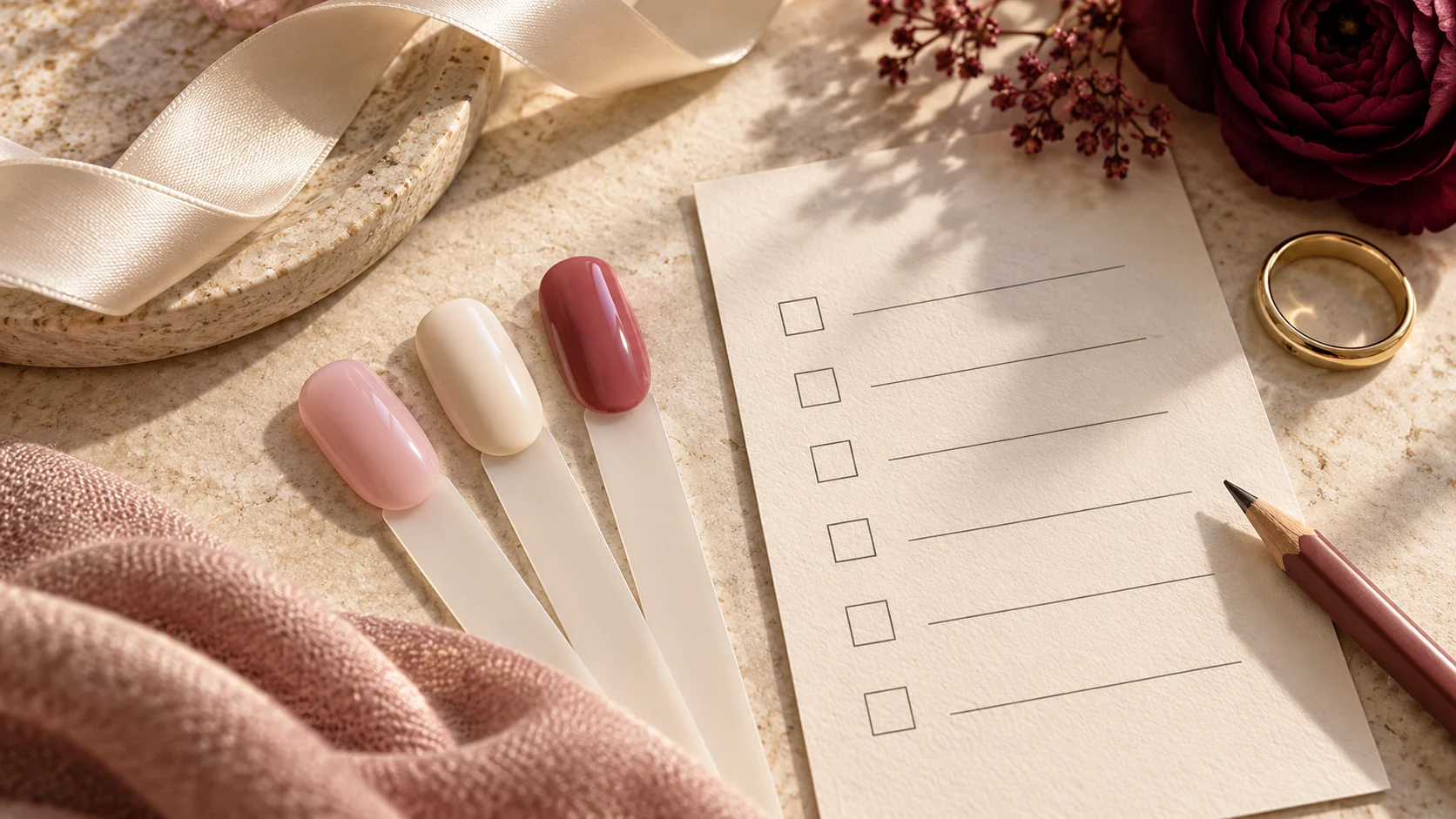
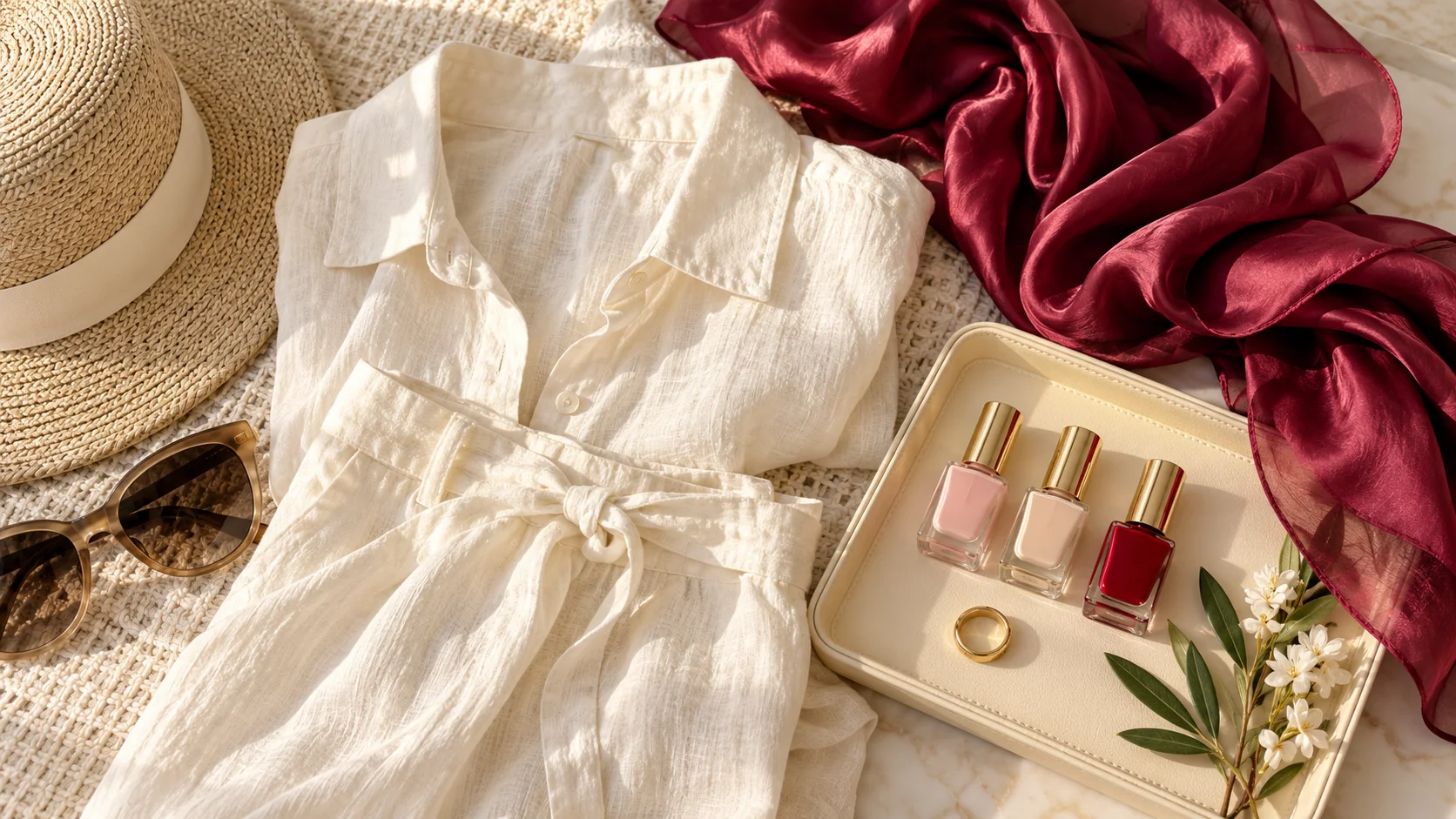
If the colour direction is important, compare a few samples beside the dress fabrics before buying products for the whole group. View them together in ordinary daylight as well as indoor lighting. Screens and photographs can shift colour, so an image is a guide rather than a guarantee that a different product will look identical.
The OPI education team’s wedding guidance supports trying a manicure before committing. Apply that idea selectively to whoever is uncertain about a new look; it does not mean every bridesmaid needs several paid trials. Someone happy with their usual colour and shape may only need to confirm how that choice fits the agreed direction.
When gathering feedback, ask a narrow question: do these colours feel compatible with the dresses, or would you prefer more contrast? Avoid ranking whose hands look best in a sample. A successful group plan accommodates differences instead of trying to erase them. If a proposed palette makes someone uncomfortable, broaden the options or make the shared detail optional.
Write a brief people can actually use
A clear message might say: choose a rose or taupe shade you like, any comfortable length, simple colour is enough, and bare nails are welcome. If the bride has a specific motif in mind, include one labelled image and explain whether it is optional. Avoid forwarding a growing mood board without stating which ideas have actually been selected.
Keep the final arrangements in one place: the agreed palette, who is booking, any appointment information and what the quoted cost includes. Check removal or travel plans individually where needed. Do not assume a group service comes with matching wear, maintenance or removal requirements just because the colours look related.
For someone wearing a patterned dress, a quieter nail colour may feel easier to combine; someone in a plain outfit may enjoy a stronger accent. Neither approach is inherently more appropriate. Explore more combinations in Seasonal & Bridal and finish explanations in Polish & Tools. Leave enough flexibility for the final choice to feel like part of the celebration rather than another obligation.
To adapt the plan to related occasions and outfits, compare Spring Wedding Nails: Soft Colour and Small Detail Ideas, Wedding Guest Nails: Choosing Colour Around Your Outfit and Bridal French Nails: Choosing a Base Shade and Tip Style. For the underlying care, colour or service choice, see Skittle Nails: Building a Five-Colour Palette That Feels Cohesive.
Common questions
Do all bridesmaids need the same nail colour?
No. A group can coordinate through a colour family, finish or optional detail while allowing different exact shades. Agree how much consistency matters before anyone buys products or books a service, and make room for people who prefer bare nails or their usual manicure.
How can different nail lengths look coordinated?
Repeat a colour direction or finish while allowing everyone to keep a comfortable shape and length. The group does not need identical outlines to share a visual theme. Describe the intended mood with a few examples rather than requiring one long-nail photograph to be reproduced on every hand.
Who should pay for a requested group manicure?
Agree that within the group before booking; this guide does not impose an etiquette rule. Make the expected cost and any requested service clear, and offer simpler options when people are paying individually. Avoid letting extra artwork or an appointment become an unspoken financial obligation.
Must everyone use the same polish system?
No. A shared colour direction can be interpreted through different familiar systems where appropriate. Discuss personal preferences and practical requirements individually, including any previous product problems. Similar-looking colours do not mean the services have identical application, maintenance, wear or removal requirements.
What if one person dislikes the proposed palette?
Ask which part is uncomfortable and whether a different depth, coverage or colour within the broader styling would work. You can also make the shared detail optional. Coordination should be a plan the group agrees to wear, rather than a reason to pressure someone into an unwanted manicure.
Should bridesmaid nails match the dresses?
They can complement the dresses without copying their exact colours. A plain outfit may invite more contrast, while a patterned dress may suit a quieter choice for its wearer. Compare the overall combination and treat those ideas as personal options, not fixed rules about appropriate wedding colours.
Does everyone need a paid nail trial?
Not automatically. A person trying an unfamiliar length or design may find a trial useful, while someone choosing a familiar manicure may need only to confirm the palette. Discuss uncertainty with the technician rather than assuming every member of the group needs the same number of appointments.
How should I share the final bridesmaid nail brief?
Send one concise description with the agreed palette, optional details, booking arrangements and costs. Include only a few clearly labelled references. State what remains each person’s choice, and avoid adding new requirements through a stream of unrelated images after people have already made their plans.
Sources and further reading
- Wella / OPI Education Team — Wedding-ready nails — checked 2026-10-23
- OPI UK — Bubble Bath Nail Lacquer — checked 2026-10-23
- American Academy of Dermatology — How to trim your nails — checked 2026-10-23