Poolside Nail Colour Ideas: Blue, White and Sunset-Inspired Pairings
Compare cool blue and white with warm coral accents for a poolside-inspired manicure, without confusing colour ideas with wear claims.
Archive edition: 2026-07-07 · This is an editorial allocation, not the first-publication date.
Key takeaways
- Let blue or coral lead.
- Decide whether white is a background or accent.
- Add the third colour only if you want it.
- Choose one small motif or keep the colours plain.
- Confirm the finish and care of the actual system.
In this guide
- Key takeaways
- Choose a cool or warm starting point
- Blue and white: choose the amount of contrast
- Add coral as an accent rather than a third obligation
- Use a small wave as a drawing, not a full scene
- Keep the finish consistent unless contrast is the point
- Choose the colour relationship
- Make a brief you can take beyond the holiday
- Common questions
- Sources and further reading
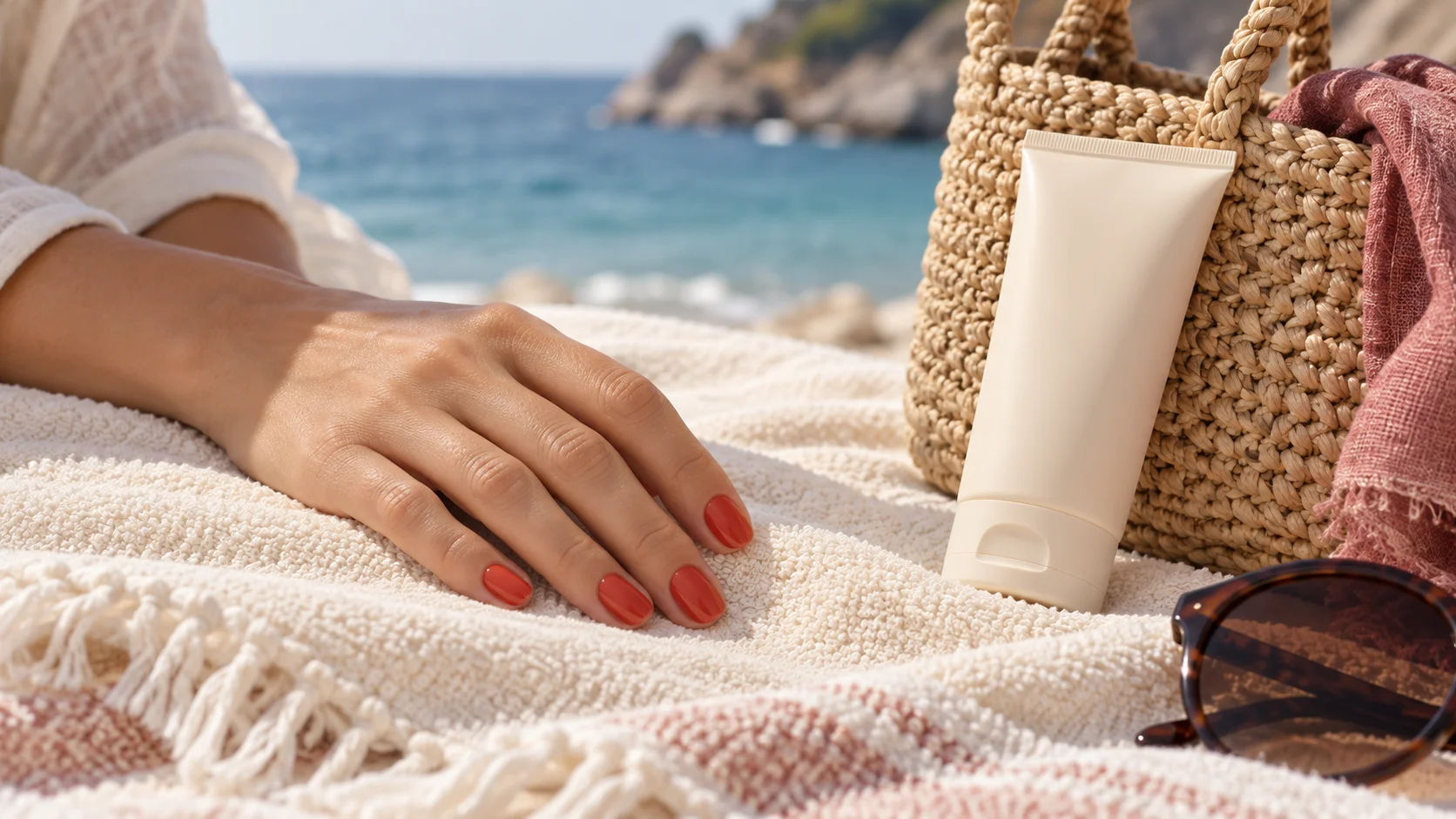
A poolside-inspired manicure can borrow the colours of blue water, pale stone and a warm evening sky without making any promise about how the polish performs in a pool. Think of the setting as a palette reference: blue and white can form a clear cool combination, while coral or pink can add a warmer accent.
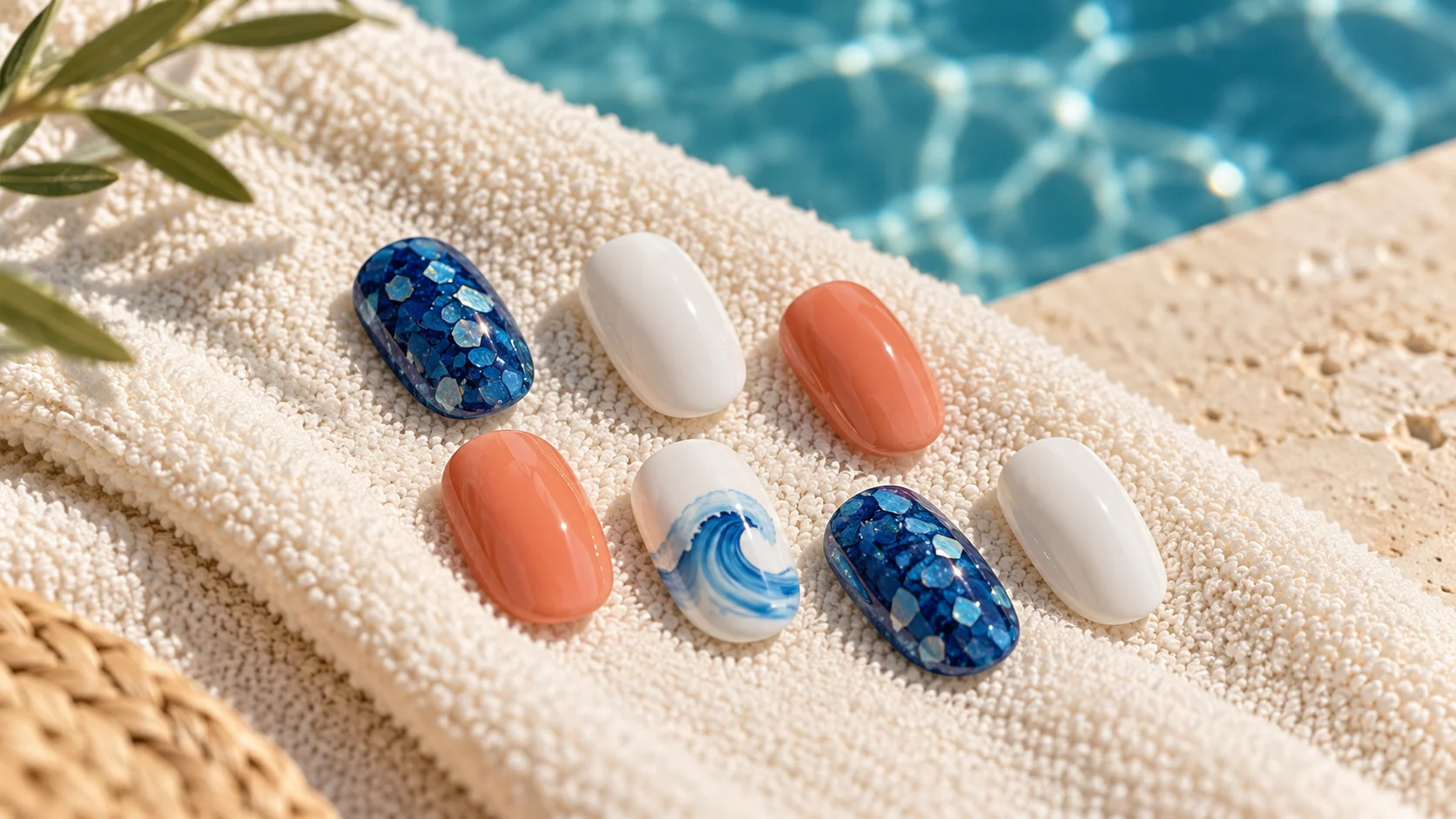
This guide focuses on colour balance and small patterns. It complements practical holiday planning rather than replacing product aftercare. The illustration is generated editorial imagery, not a photograph of named polishes, a chlorine-resistance test or evidence that any finish is waterproof. Choose a system you understand, then adapt the palette to it.
Choose a cool or warm starting point
Decide what you want to notice first. A blue-led manicure makes the cooler part of the palette prominent; a coral-led arrangement puts the warmer colour first. White can act as a background, a contrasting detail or a complete colour on its own. You do not have to use every part of the imagined poolside scene.
For a blue reference, OPI describes Tile Art to Warm Your Heart as a mosaic blue lacquer. This is a manufacturer colour description, not a statement that it will match a particular pool, outfit or image. Compare the actual shade if you have a precise colour in mind.
OPI presents Alpine Snow Nail Lacquer as a crisp white, which illustrates a more defined white direction. A sheer white would create a different effect. Keep that difference in mind if your reference looks soft and translucent rather than solid and bright.
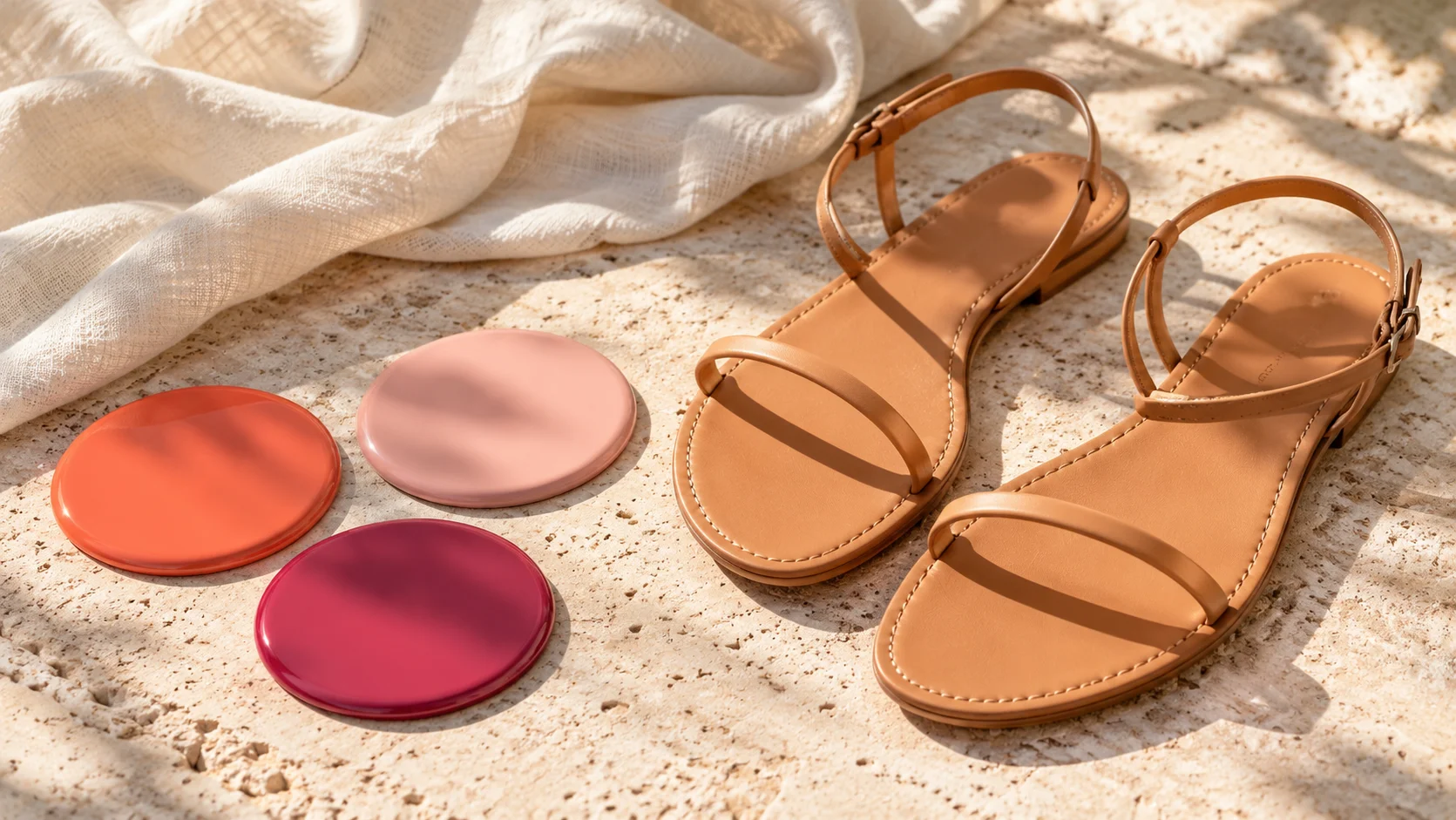
A warmer accent can be inspired by OPI’s coral-orange description of Cajun Shrimp. The named products provide examples of colour families only. They are not a ranked shopping list, a claim about UK availability or an instruction to reproduce the exact generated samples.
Blue and white: choose the amount of contrast
One straightforward option is blue on most nails with a single white accent. Another is a white background with a small blue line or wave. These use the same colours but place the emphasis differently. Decide whether you want a solid block of blue or a lighter arrangement with blue used as a detail.
A broad blue area beside a crisp white can feel more graphic than a tiny blue mark on a translucent background. If you want a quieter version, reduce the amount of colour rather than assuming you need to change the whole palette. A fine tip or a short line can keep the relationship while using less of it.
Look at the combination beside swimwear, a cover-up or a bag you already own. A patterned outfit may give you enough detail that plain blue nails feel complete. A simpler outfit may leave room for a small wave or repeated line. These are styling options, not instructions about which colours people should wear by a pool.
Add coral as an accent rather than a third obligation
A small amount of coral can change the balance of a blue-and-white design. Try one coral nail, a tiny painted dot or a narrow line on a white background. Decide what it adds before distributing it across every finger. You can keep the warm accent small if the blue remains the part you most enjoy.
If you prefer a warmer manicure overall, reverse the arrangement: use coral as the main colour and reserve blue or white for the detail. This is a different design brief, not a less accurate version of the poolside idea. The setting is inspiration rather than a colour-matching target.
Do not assume that a sunset-inspired palette needs an elaborate blended gradient. A simple alternating pair or one clear accent can express the relationship between warm and cool colours. If you want a gradient, ask how it will be created in the selected system and whether the provider can show a relevant example.
| Arrangement | Main visual role | What to specify |
|---|---|---|
| Blue with one white accent | A clear cool colour statement | Which nail carries the contrast |
| White with a small blue wave | A light background and simple motif | Wave size and placement |
| Blue, white and one coral detail | Cool palette with a warm accent | How little or much coral you want |
| Coral with a pale tip | A warmer interpretation | Tip width and strength of contrast |
| Plain blue or coral | Colour without artwork | The exact finish and coverage |
If you are comparing several possible arrangements, draw quick colour blocks on paper before booking or applying polish. This lets you decide which shade should dominate without buying every option first. Use the sketch as a placement guide, then assess actual product colours separately.
Use a small wave as a drawing, not a full scene
A short curved line can suggest water without trying to paint an entire pool on a nail. Choose one accent nail and leave space around the mark. If you want two lines, decide whether they should run together or sit apart before the artwork begins. A clear arrangement is easier to describe than a general request for beachy detail.
Adapt the size to the nail you will wear. A long flowing curve in a reference may need to become a shorter stroke on a small rounded nail. That adaptation can preserve the idea without forcing the same drawing into less space. You can also use a dot or tip if a wave is not the detail you enjoy.
If working with ordinary polish at home, use the instructions for your chosen products and allow the required drying stages. A colour mood board is not a substitute for application directions. For a salon service, ask whether the detail will be painted, transferred or produced another way so you understand the finished system.
Keep the finish consistent unless contrast is the point
Glossy, matte and shimmery colours can each change how the palette reads. You might prefer all the shades in a similar finish so the colour relationship remains the main feature. Alternatively, a deliberately different accent finish can become the detail. Make that choice explicitly rather than discovering after application that the samples have very different surfaces.
Do not confuse a glossy surface with proof of durability. The image of reflected water or bright light can make a manicure look especially smooth, but it does not demonstrate resistance to swimming, sunscreen or other products. Check the actual care instructions and ask the provider about your plans without assuming every finish behaves alike.
Make a brief you can take beyond the holiday
A clear note might say short rounded nails, plain mosaic-blue direction, one crisp-white accent with a tiny coral dot. You can keep the same structure and change the colours later, making the design useful beyond a particular trip. Save a simple whole-hand photograph rather than relying only on a close-up of one detail.
For practical travel considerations, browse Seasonal & Bridal; for understanding coverage and finishes, see Polish & Tools. Choose the arrangement that feels clear to you, with the colour idea and the product’s real care requirements treated as separate parts of the decision.
To adapt the plan to related occasions and outfits, compare Beach Holiday Nails: Practical Lengths and Bright Colour Choices, Summer Citrus Nails: Lemon, Orange and Lime Colour Combinations and Early Summer Pedicure Colours to Pair with Sandals. For the underlying care, colour or service choice, see Blue French Tips: Navy, Cobalt and Powder Blue Ideas.
Common questions
Does poolside nail colour mean the polish is waterproof?
No. Poolside describes the inspiration for the palette, not a performance claim. Blue, white or coral shades do not establish resistance to water, chlorine or other products. Follow the care instructions for the actual system and ask the provider about your planned activities.
Must I use blue in a poolside-inspired manicure?
No. You could make coral or another warm colour the main shade and use white or blue only as a small accent. The setting is a starting point for an original palette, not a requirement to copy the exact colour of water or a holiday photograph.
How can I combine blue and white simply?
Choose one as the main colour and the other for a single accent, fine tip or small line. Decide whether you want a solid graphic contrast or a lighter background with a small mark. A clear two-colour arrangement can be complete without a third shade or elaborate artwork.
What does a coral accent add to the palette?
It introduces a warmer colour beside the cooler blue-and-white direction. You can use a tiny dot, one nail or a narrow line, depending on how much contrast you want. This is a styling option rather than a rule that every poolside palette needs three colours.
Can a short nail carry a wave design?
A simple short curve or one small line can suggest a wave without needing a large illustrated scene. Adapt the scale and leave space around the detail. If the motif feels crowded, use a dot, tip or plain colour instead of forcing every element from a long-nail reference.
Should all the colours have the same finish?
They can, if you want the colour relationship to remain the main feature. A deliberately different finish on one accent is another option. Compare the surfaces before application and confirm the actual system, because glossy appearance alone does not demonstrate greater wear or resistance to swimming.
Are these exact OPI colour combinations tested together?
No. The named products illustrate manufacturer colour descriptions, while the pairings are original editorial suggestions. The image contains generic generated samples, not tested brand swatches. Inspect actual colours and follow system-specific instructions if you want to create a particular combination.
How can I reuse the idea after the holiday?
Keep the structure you liked, such as one main colour and a single contrasting accent, then change the shades for another outfit or season. Save a whole-hand photograph and clear placement notes. The design can remain useful without being tied to a specific pool or trip.
Sources and further reading
- OPI — Tile Art to Warm Your Heart — checked 2026-10-23
- OPI UK — Alpine Snow Nail Lacquer — checked 2026-10-23
- OPI — Cajun Shrimp Nail Lacquer — checked 2026-10-23