Monochrome Nails: Using One Colour in Several Finishes
Build a one-colour manicure with differences in gloss, matte appearance and shimmer while keeping the palette connected.
Key takeaways
- Base: choose a colour you enjoy without extra effects.
- Finish: compare gloss, matte appearance and optional shimmer.
- Distribution: make one finish dominant or repeat a clear sequence.
- Method: confirm the actual system and compatible products.
In this guide
- Key takeaways
- Choose a colour family you enjoy in plain form
- Separate a finish change from a shade change
- Use matte appearance as one element, not the whole plan
- Give gloss a deliberate role
- Add shimmer only if it serves the design
- Build variety within one colour family
- Make the reference specific enough to repeat
- Common questions
- Sources and further reading
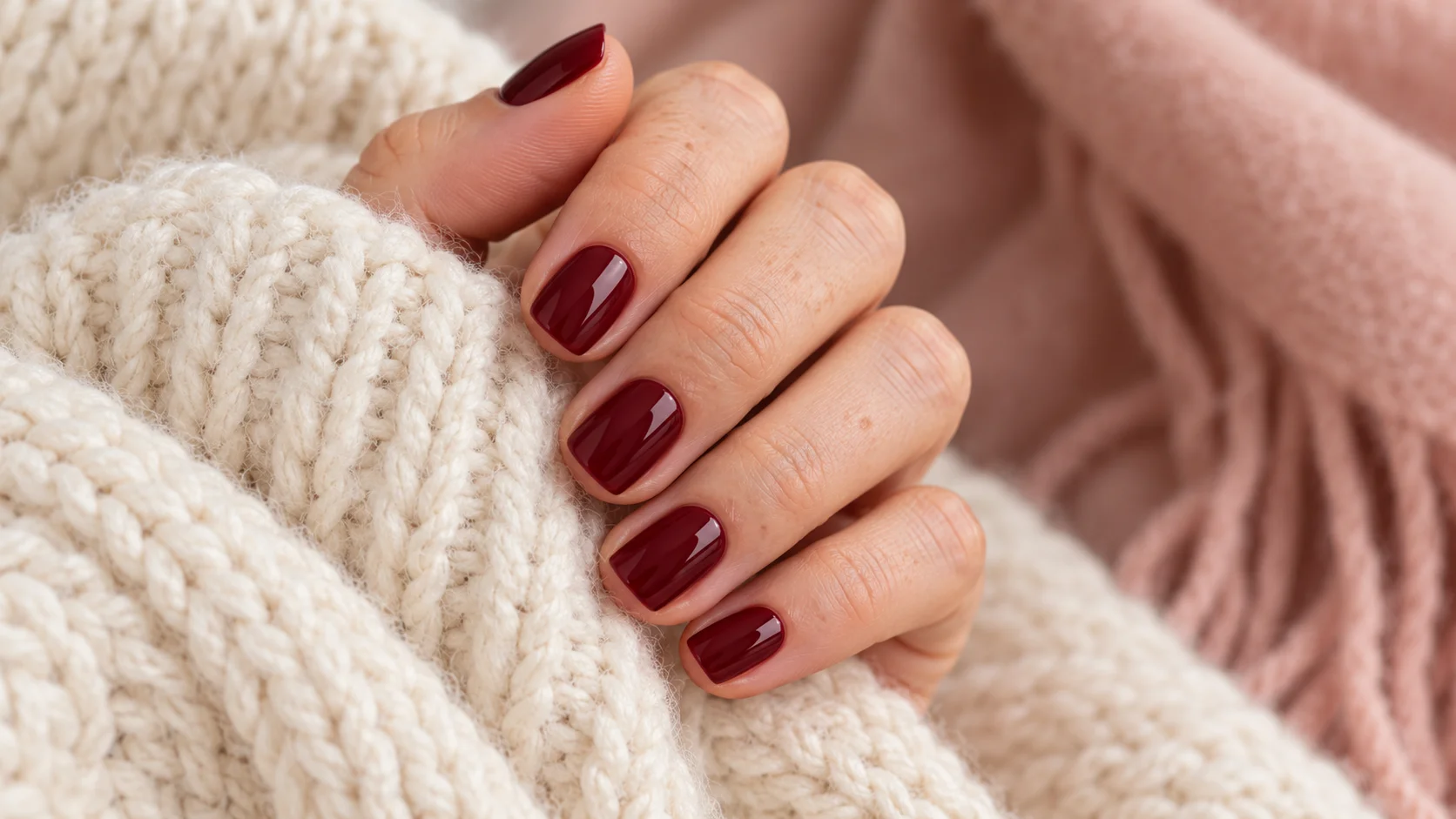
A one-colour manicure can have variety without introducing a second hue. Plain gloss, a matte-looking surface, fine shimmer or a glossy edge over a quieter base can each change how the same colour family appears. The design comes from distributing those finishes across the hand, rather than collecting several unrelated shades.
This article uses monochrome to mean a connected single-colour family, such as berry, brown or black. It offers original layout ideas rather than a product performance ranking. A finish change may alter your perception of depth and colour, so the guide does not promise that every sample will look identical. Product references are manufacturer descriptions, not our own wear tests.
Choose a colour family you enjoy in plain form
Start with a shade you would wear even if the whole set were glossy. That gives the design a stable foundation. If you dislike the base colour until several effects are added, it may be worth comparing another family before planning the arrangement of finishes.
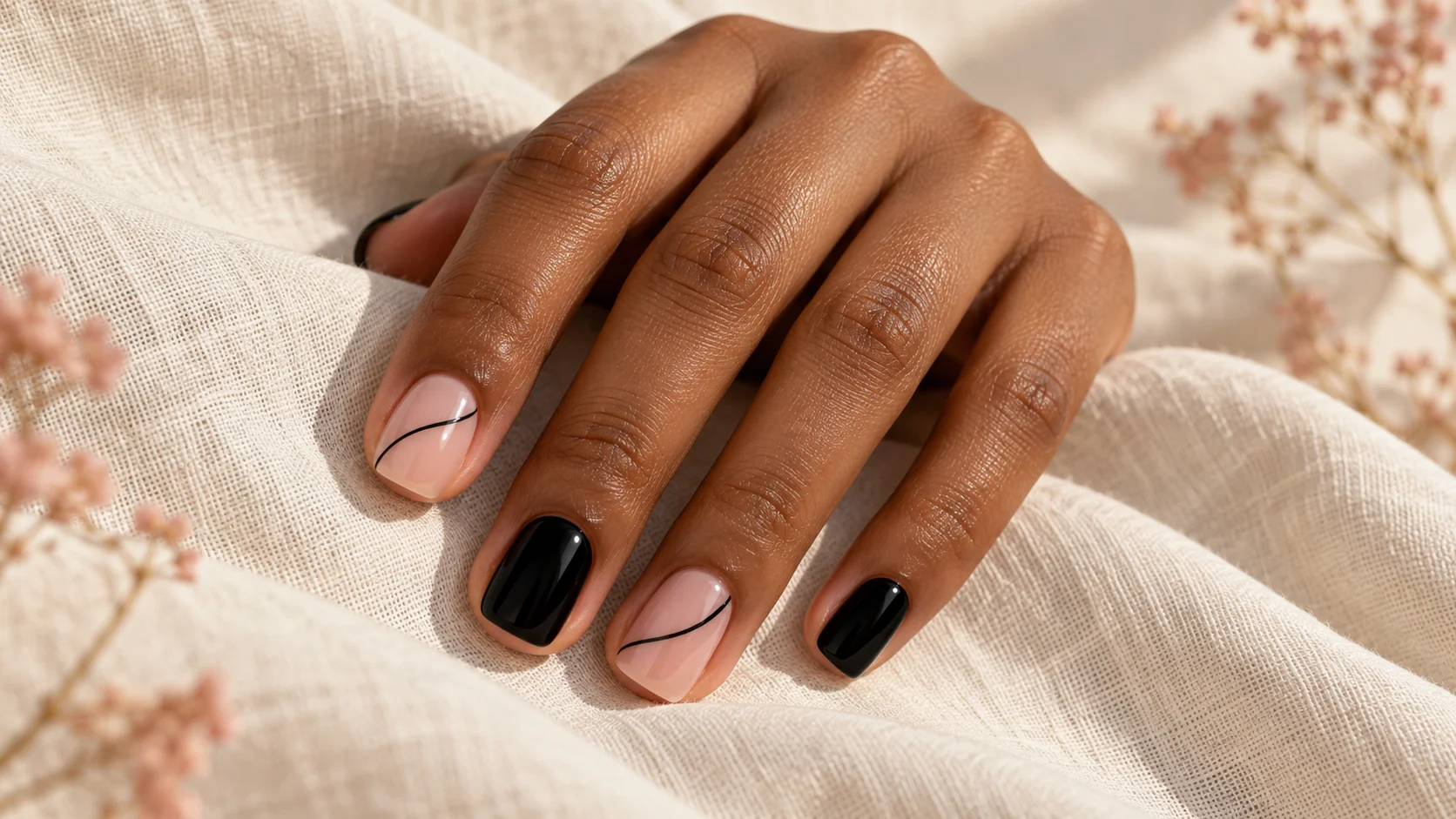
OPI’s Black Onyx provides a basic black colour reference. Black can make surface differences easy to discuss, but the concept is not limited to it. Berry, blue, brown or a pale neutral can each be explored through the same planning method.
Check the actual products or service options available. A similarly named shade in another range may not be an exact colour match or use the same application process. Decide whether you need one base product with suitable finish options or are comfortable using closely related shades within a colour family.
Separate a finish change from a shade change
A glossy highlight, a matte-looking area and a shimmer reflection can make colours appear different even when they are intended to belong together. Compare the samples in the same light before assuming the pigment has changed. Equally, do not insist that every visible difference must come from finish if different products are involved.
A useful first trial keeps the base colour constant and changes only the appropriate final finish. That makes it easier to see what the surface treatment contributes. Follow the product instructions or ask the technician about compatibility rather than applying an arbitrary top coat over an unfamiliar system.
If you prefer to combine several related products, label the samples accurately. One may be a plain berry and another a berry shimmer rather than literally the same colour with a different top coat. That can still create a connected design, provided the description and expectation remain honest.
Use matte appearance as one element, not the whole plan
OPI’s Matte Top Coat is a manufacturer example of changing the surface appearance over its lacquer. It does not establish compatibility with every gel or enhancement system, and this article does not claim a tested wear period or a universal preparation method.
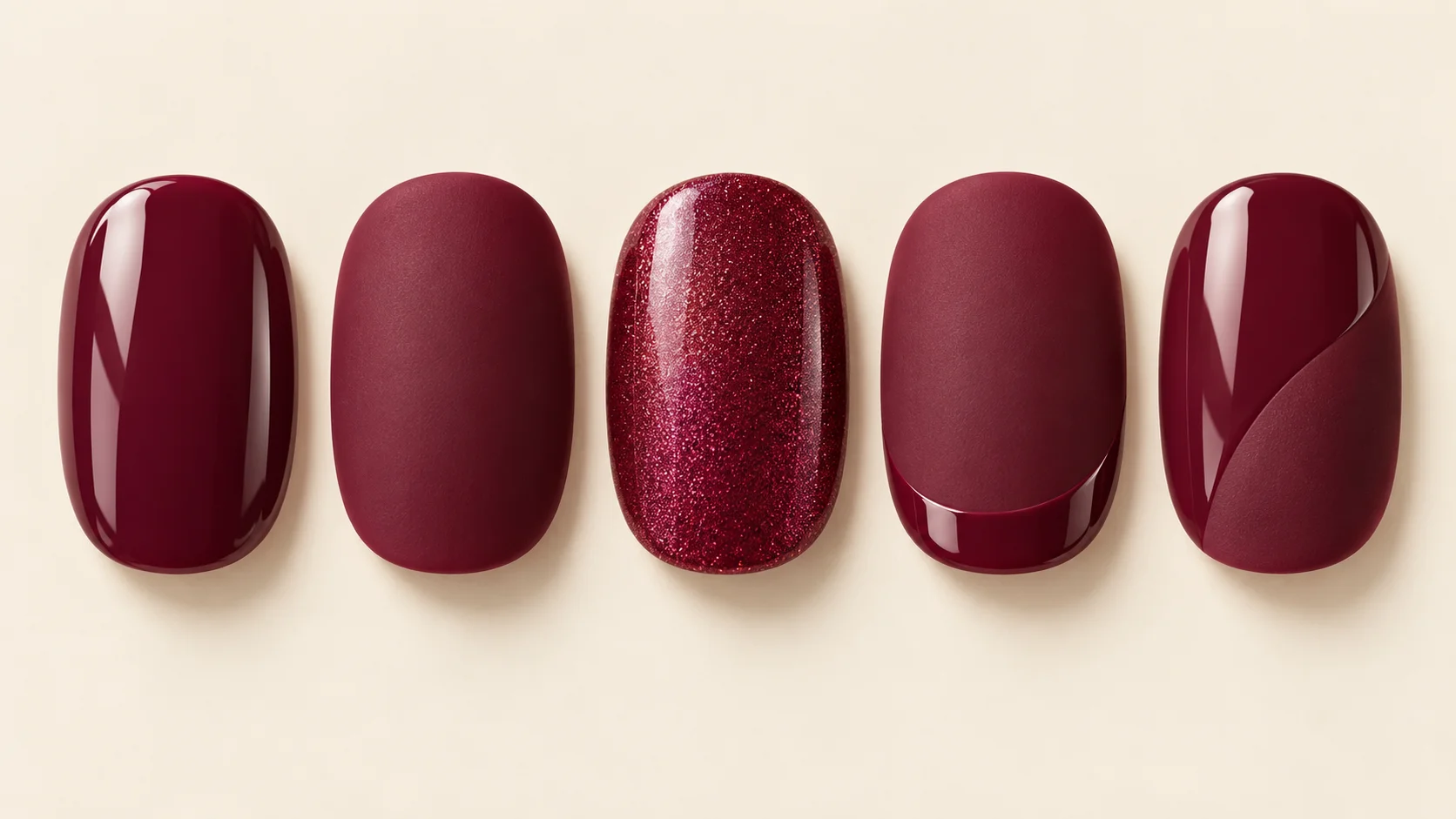
A single matte-looking nail in a glossy set creates an accent through reduced reflection. A mostly matte-looking set with one glossy nail reverses the emphasis. Compare both arrangements because the same two finishes can feel different depending on which occupies more of the hand.
Within one nail, a glossy tip over a matte-looking base can define the edge without introducing another hue. A small curved area is another option. Keep the boundary clear enough for the design you want, and avoid adding extra shapes merely to make the finish difference more obvious in a photograph.
Give gloss a deliberate role
Gloss can be the main surface or the contrasting detail. Essie’s Stay Longer is described as a top coat intended to add shine and support wear. That is product context, not an independent durability result or advice to combine it indiscriminately with another brand’s system.
When gloss is the accent, choose its area carefully. A narrow tip may provide a subtle change as the hand moves, while a full glossy nail creates a larger reflective surface. If the difference is too quiet for your preference, compare a larger area before adding another colour.
Look at the finish when the hand is still and when it moves. A design based on reflection may reveal itself gradually rather than reading as a sharp pattern at every angle. Decide whether that is part of its appeal to you or whether you would prefer a clearer colour contrast instead.
| Arrangement | Main design idea | What to compare |
|---|---|---|
| Mostly gloss, one matte-looking nail | A quieter surface as the accent | Whether the difference is visible enough in ordinary light |
| Mostly matte appearance, one glossy nail | A reflective focal point | The amount of shine across the whole hand |
| Glossy edge over a matte-looking base | A tip defined by finish | Tip width and the clarity of the boundary |
| Plain colour with one related shimmer | Small reflective particles as the variation | Whether it is a true colour match or a related shade |
| Alternating finishes | A repeated surface pattern | The order and balance on both hands |
Add shimmer only if it serves the design
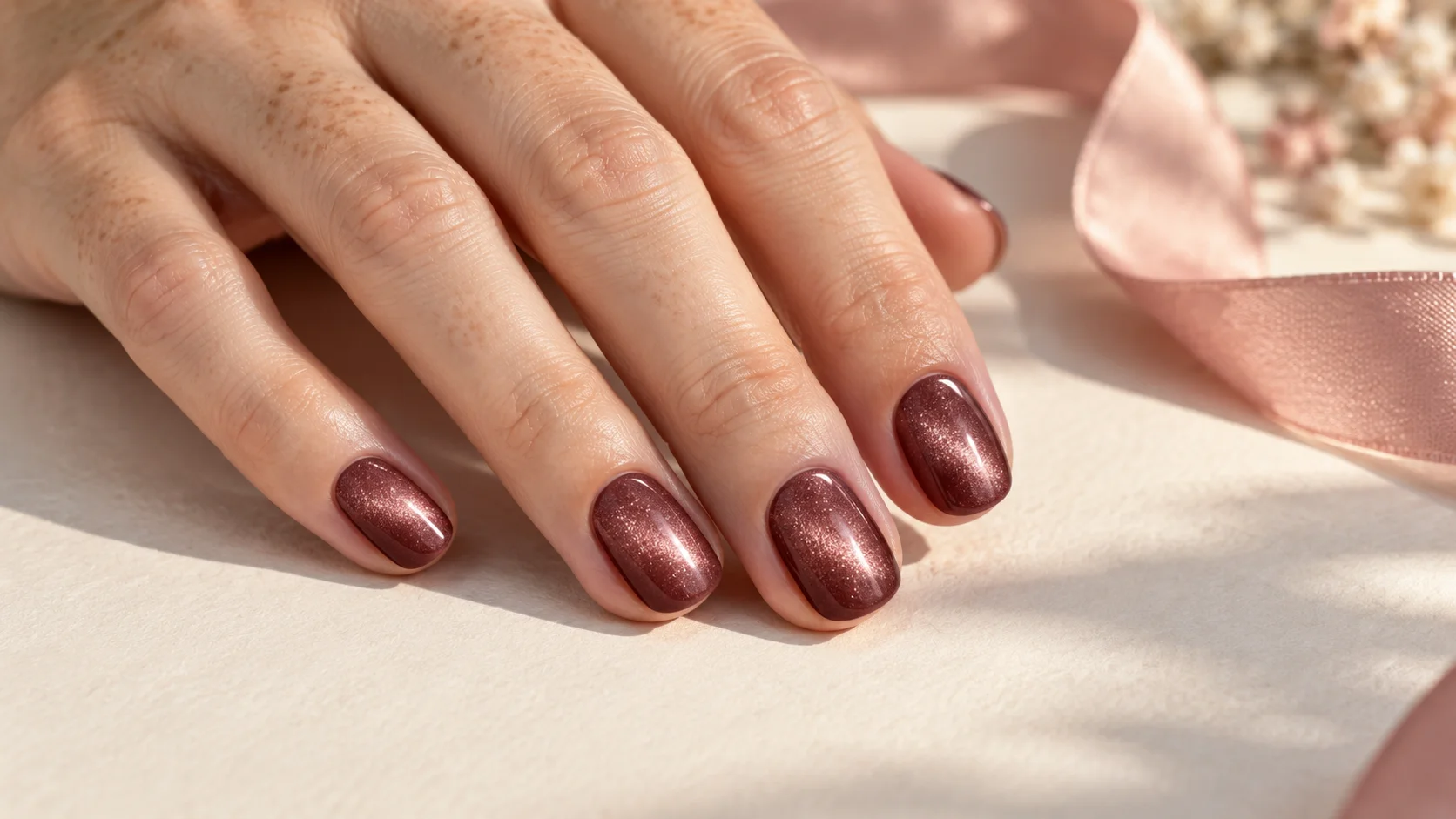
A shimmer product may introduce a different pigment mixture as well as another finish. Treat it as a related member of the colour family unless you have evidence that it is the same base with a separate effect. The generated illustration shows a berry-family concept, not identical laboratory colour samples.
One shimmer accent may be enough when gloss and matte appearance already provide contrast. If you want all three finishes, decide which should dominate. Giving each the same amount of space is an option, but it is not necessary for the design to feel balanced.
Compare the shimmer outside its brightest highlight. A finish that looks dramatic under a display lamp may appear quieter elsewhere. Choose the combination for the settings in which you will wear it, rather than judging only the most reflective photograph.
Make the reference specific enough to repeat
Write down which finish belongs on each nail or which area of a nail. Include the base product or colour family and any known difference between the shimmer and plain shades. A short map of both hands is particularly useful for alternating finishes.
Our nail-art guides explore borders and accent placement, while Polish & Tools covers product distinctions. Choose the finish arrangement as a design in its own right. A connected palette can remain interesting through reflection and space without needing a new colour on every finger.
For the related design decisions, compare Black Nail Art with Fine Lines, Gloss and Negative Space, Burgundy Nails: Finish and Shape Ideas for a Deep Red Manicure and Velvet Nails Explained: What to Ask for at Your Appointment. For the practical details, use Matte vs Glossy Top Coat: How Finish Changes the Same Colour.
Common questions
What does monochrome mean in this nail guide?
It means a connected single-colour family, such as berry, brown or black, explored through different surface appearances. It does not require every product to be an exact pigment match. Label related shimmer shades honestly and distinguish them from one base colour finished in different ways.
Will matte and glossy finishes make the same colour look identical?
Not necessarily. Reflection can change your impression of depth and colour, even when the base is intended to be the same. Compare samples in the same light, and do not assume every difference comes from finish if separate products are involved. The guide makes no exact visual-match guarantee.
Can I put any matte top coat over any manicure system?
No. A manufacturer example intended for lacquer does not establish compatibility with every gel or enhancement system. Follow the actual product requirements or ask the technician about the proposed combination. A similar-looking finish is not evidence that the application, maintenance or removal process is interchangeable.
Which finish should be the accent?
Either can lead. One matte-looking nail in a glossy set creates a quieter surface accent, while one glossy nail in a mostly matte-looking set creates a reflective focus. Compare the complete hand and decide which arrangement you enjoy, rather than assuming shine must always occupy the largest area.
Can a French tip be defined only by finish?
Yes, a glossy-looking edge over a matte-looking base is one visual idea. The clarity depends on the actual products, width and lighting. Ask how the chosen system will create the boundary, and compare it at your nail length instead of assuming a product photograph supplies a universal application method.
Does adding shimmer still count as one-colour styling?
It can remain within a connected colour family, but the shimmer product may contain a different colour mixture. Describe it as a related shade unless you know it uses the same base with a separate effect. One shimmer accent may be enough when gloss and matte appearance already provide variety.
Do I need three finishes in the same set?
No. Two finishes can provide a complete design, and one plain finish remains an option. If you use gloss, matte appearance and shimmer together, choose which should dominate and plan their distribution across both hands. More finishes do not automatically make a one-colour manicure more balanced.
What should I record to repeat a finish-based design?
Note the base product or colour family, the finish on each nail and any areas with a different surface treatment. Record whether a shimmer is a related shade rather than an exact match. A simple map of both hands is useful when the finishes alternate or the accents differ.
Sources and further reading
- Olive & June — Nail sticker guidance — checked 2026-10-23
- Seventy7 Nails — Waterslide decal guidance — checked 2026-10-23
- OPI — Black Onyx Nail Lacquer — checked 2026-10-23