Nail Art for Mixed Ring Metals: Balancing Gold, Silver and Colour
Choose a nail-art palette around the rings you already wear, using colour, reflection and placement without demanding exact metal matches.
Key takeaways
- Jewellery: identify the existing focal point on the hand.
- Base: choose a colour and coverage you like beside all the rings.
- Accent: repeat one metal colour, both or neither.
- Space: leave plain areas where they help the overall balance.
In this guide
- Key takeaways
- Look at the whole hand before adding nail detail
- Use metal colour as a visual choice, not a diagnosis
- Start with a quiet base
- Try one reflected colour before using both
- Consider a colour that does not imitate metal
- Give each element a role
- Keep jewellery care separate from polish styling
- Common questions
- Sources and further reading
When you wear rings in more than one metal colour, the manicure does not have to choose a side. It can provide a quiet background, repeat one reflective detail or add a colour that connects the whole hand. The useful starting point is the jewellery you already enjoy wearing, rather than a rule that every visible metal must match.
This article offers original styling comparisons, not jewellery valuation or advice to buy new rings. Gold-coloured and silver-coloured describe appearance where the actual material is unknown. A photograph cannot identify metal composition, plating or condition. The generated illustration is a visual arrangement, not evidence about the rings or nail products shown.
Look at the whole hand before adding nail detail
Put on the rings you expect to wear together and notice where the visual emphasis already sits. A broad band, a stone setting or several stacked rings may draw more attention than a fine plain band. That distribution can guide where you place a nail accent without requiring the jewellery itself to change.
Decide whether you want the nails to support the main ring, create a second focal point or remain mostly quiet. A plain blush manicure can leave the jewellery in focus. A small line on another finger can spread the interest. Neither arrangement is inherently more balanced; compare them against what you like seeing on your own hand.
Take account of bracelets or a watch if they are part of the usual combination. You do not need to coordinate every object exactly, but viewing them together is more useful than choosing polish beside a single ring and discovering later that the complete look feels different.
Use metal colour as a visual choice, not a diagnosis
GIA notes that gold jewellery can offer white, yellow and rose colour options, and that metal colour is a personal preference. This helps explain why a simple gold-versus-silver division is incomplete. Several rings may already contain different colour relationships within one setting.
For manicure planning, describe what you see: a warm yellow-looking band, a pale white-looking ring or a pinkish metal tone. You do not need to identify the alloy from appearance. If you need information about a ring’s material or condition, ask an appropriate jeweller rather than relying on a styling photograph.
A nail colour called gold, silver or rose gold is also an appearance description. It does not automatically contain precious metal or match a specific piece of jewellery. Compare the actual finish and avoid treating a matching name as a guarantee of a matching colour.
Start with a quiet base
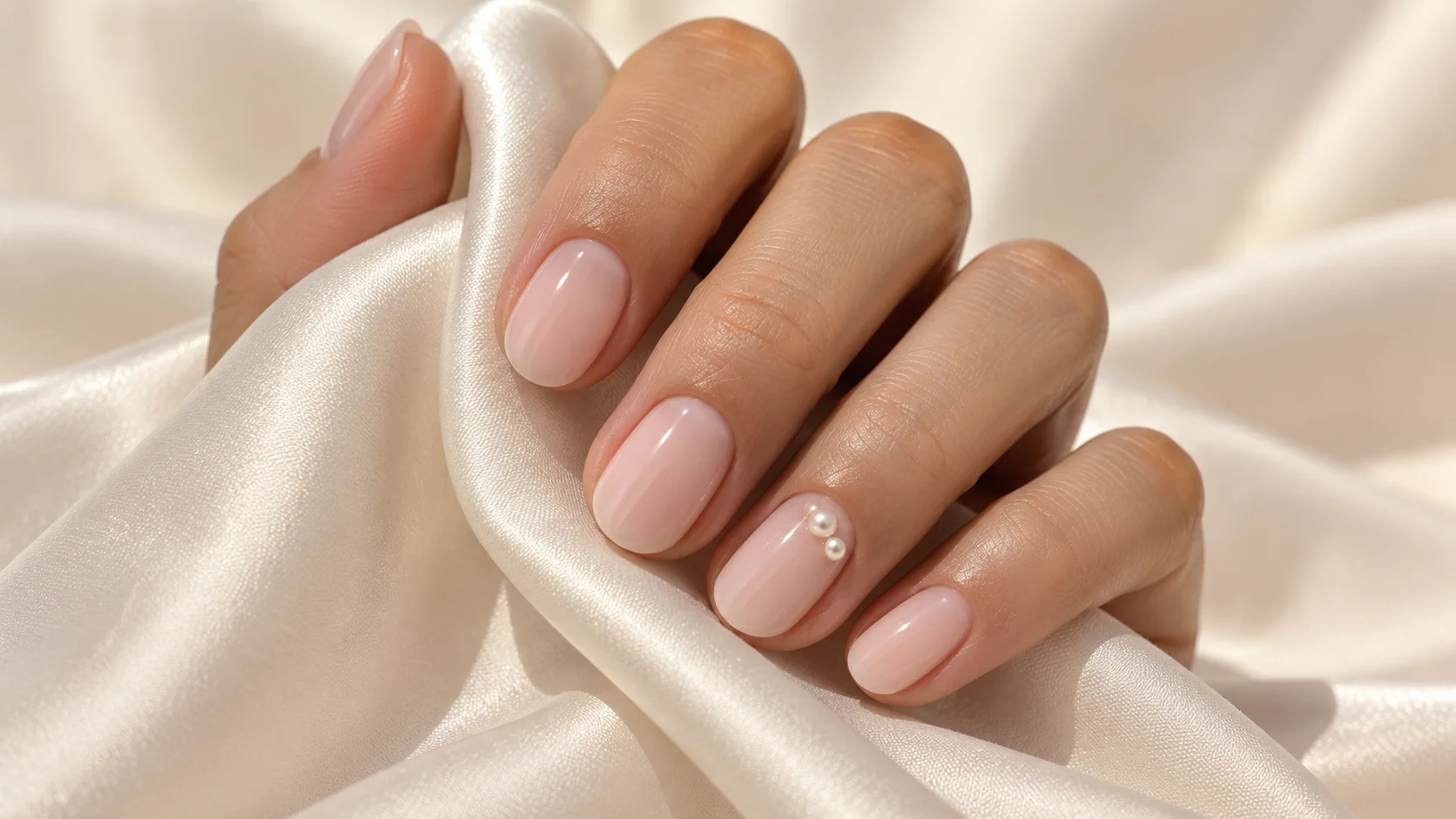
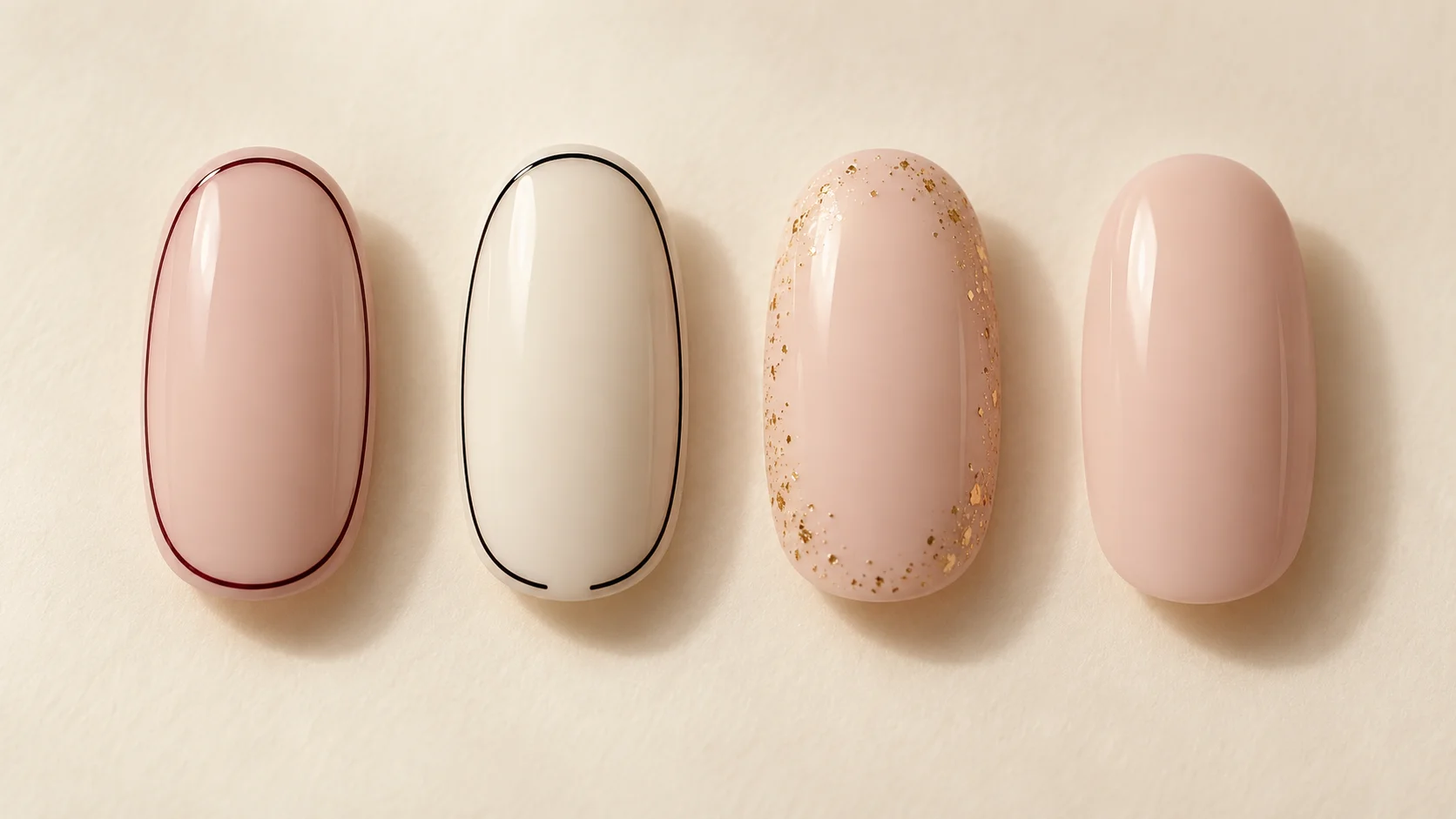
A pale pink, soft cream, taupe or another familiar neutral can provide a relatively simple background. The base need not match your skin exactly or make the rings appear a prescribed colour. Choose the coverage and depth you enjoy, then compare the jewellery against it.
The National Gallery separates colour family, lightness or darkness, and relative temperature. Those distinctions are useful when a base seems almost right. You might prefer a lighter shade, a less pink hue or a cooler-looking neutral without changing the entire design.
Plain colour is a complete option. Mixed-metal jewellery does not require mixed-metal nail art as a literal explanation. If the rings already supply the reflection you want, a smooth glossy base can leave that role with them rather than introducing another metallic surface.
Try one reflected colour before using both
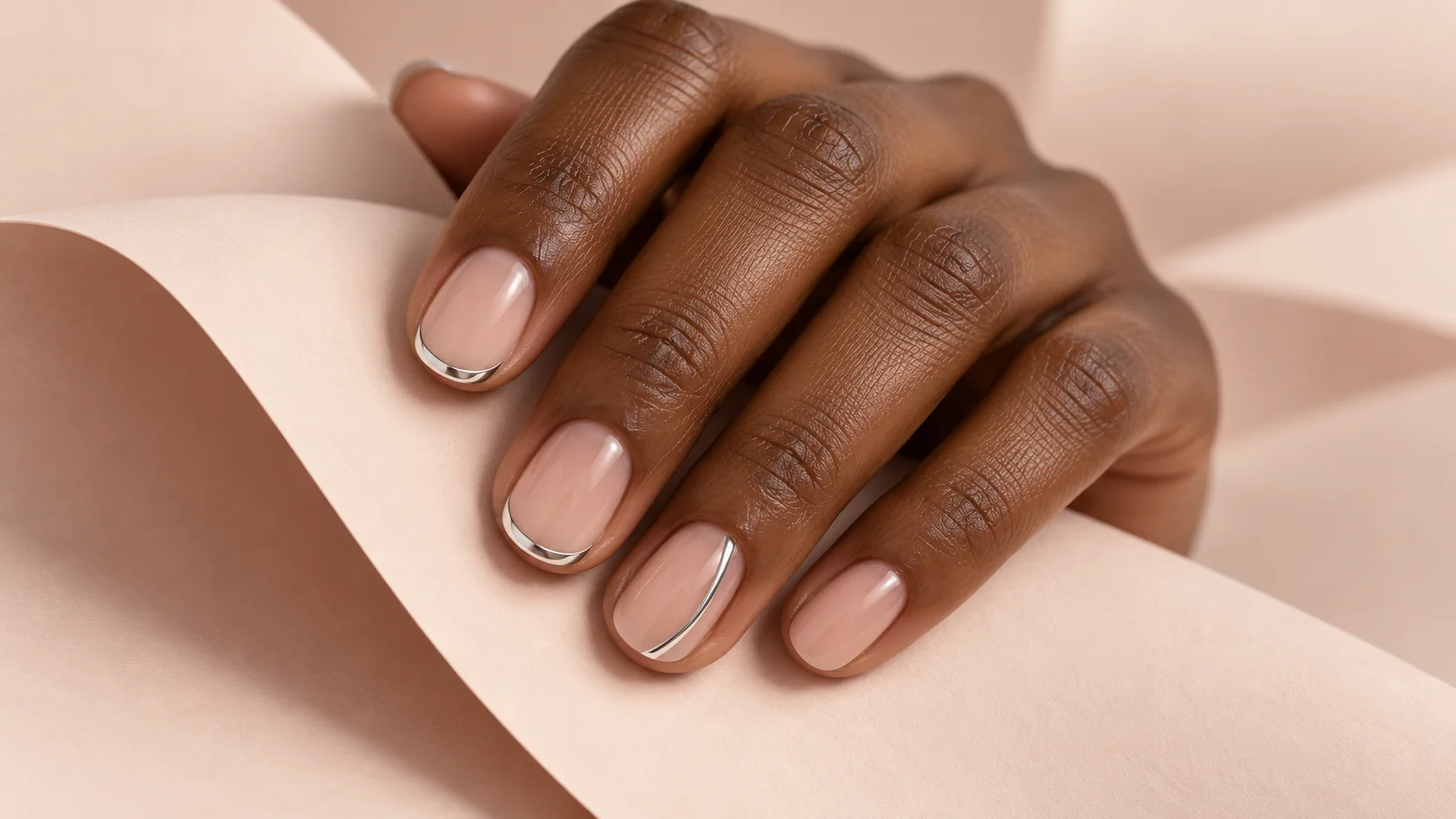
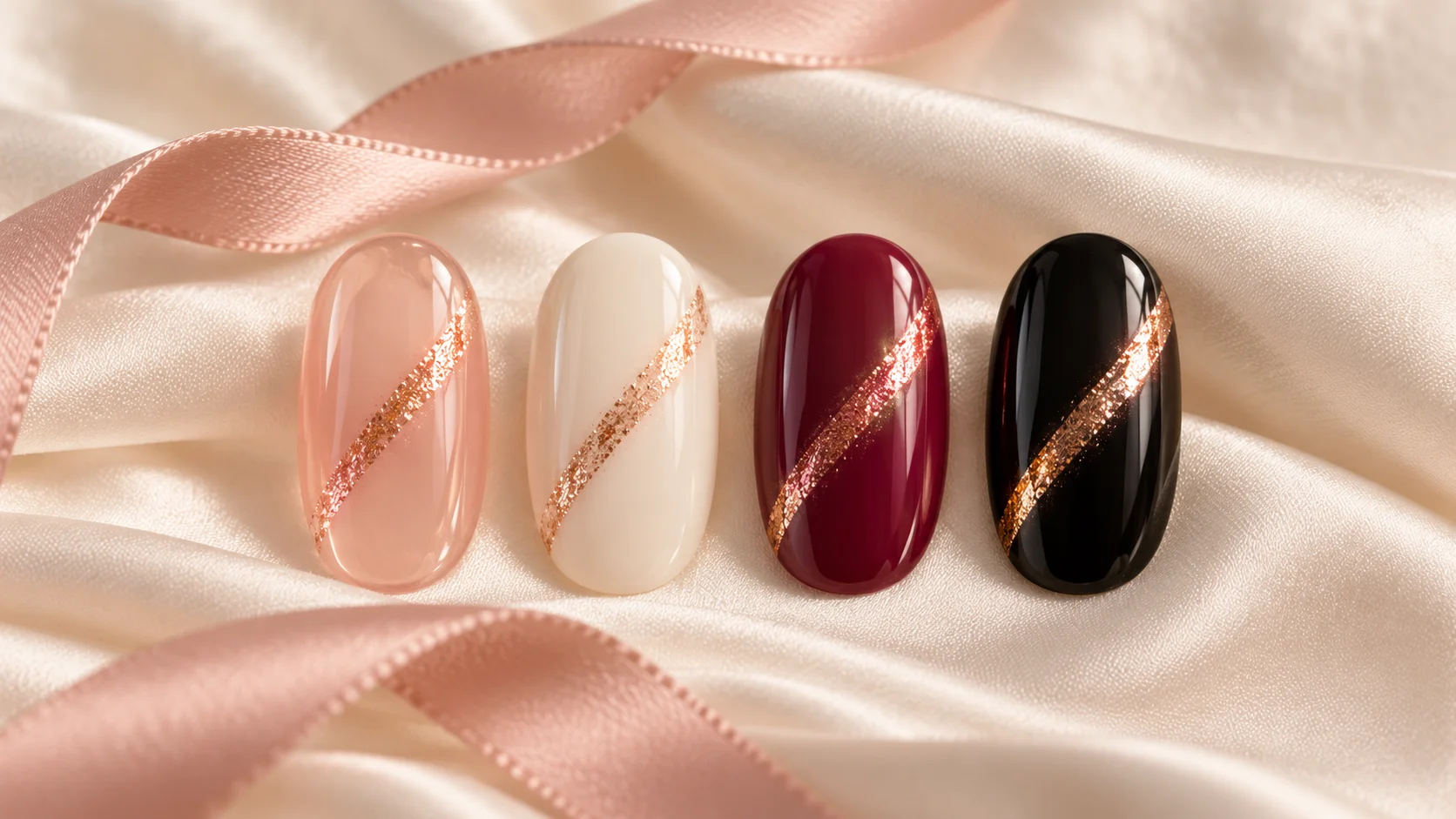
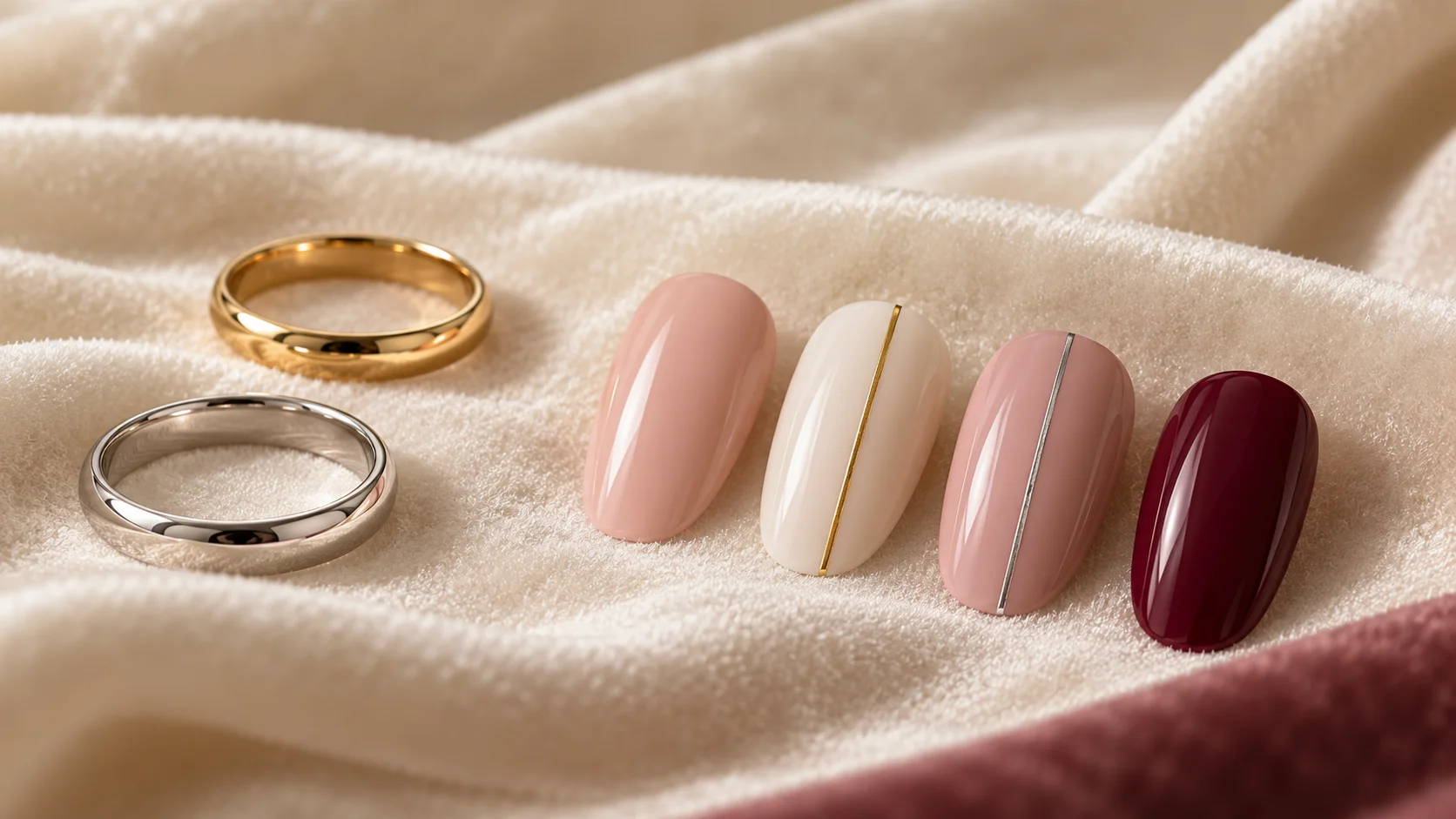
If you want nail decoration, repeat one metal colour in a small line or tip. The manicure can echo the warmer band even when you also wear a white-looking ring, or do the reverse. The unrepresented metal does not become an error simply because it is not repeated in polish.
To use both, keep the layout simple. You might place one gold-coloured line and one silver-coloured line on separate accent nails, with the same base throughout. Alternatively, a small two-tone detail could sit on one nail while the rest remain plain. Compare the total amount of reflection before repeating it across every finger.
A full metallic nail, fine shimmer and a thin painted line produce different effects. Decide which surface you mean before discussing colour. If the nail finish competes with the jewellery more than you want, reduce its area rather than assuming the metal combination itself is unsuitable.
| Approach | What the nails contribute | What to compare |
|---|---|---|
| Plain neutral base | A quiet colour background | Coverage and depth beside the complete ring combination |
| One metallic-coloured detail | An echo of one ring colour | The accent’s area and position |
| Two separate metallic accents | A deliberate link to both colour directions | Whether the shared base keeps the set clear |
| A non-metallic colour | A separate coloured focal point | How it sits beside the jewellery and clothing together |
| Mostly plain nails with one detail | Space around a chosen focus | Which finger should attract attention first |
Consider a colour that does not imitate metal
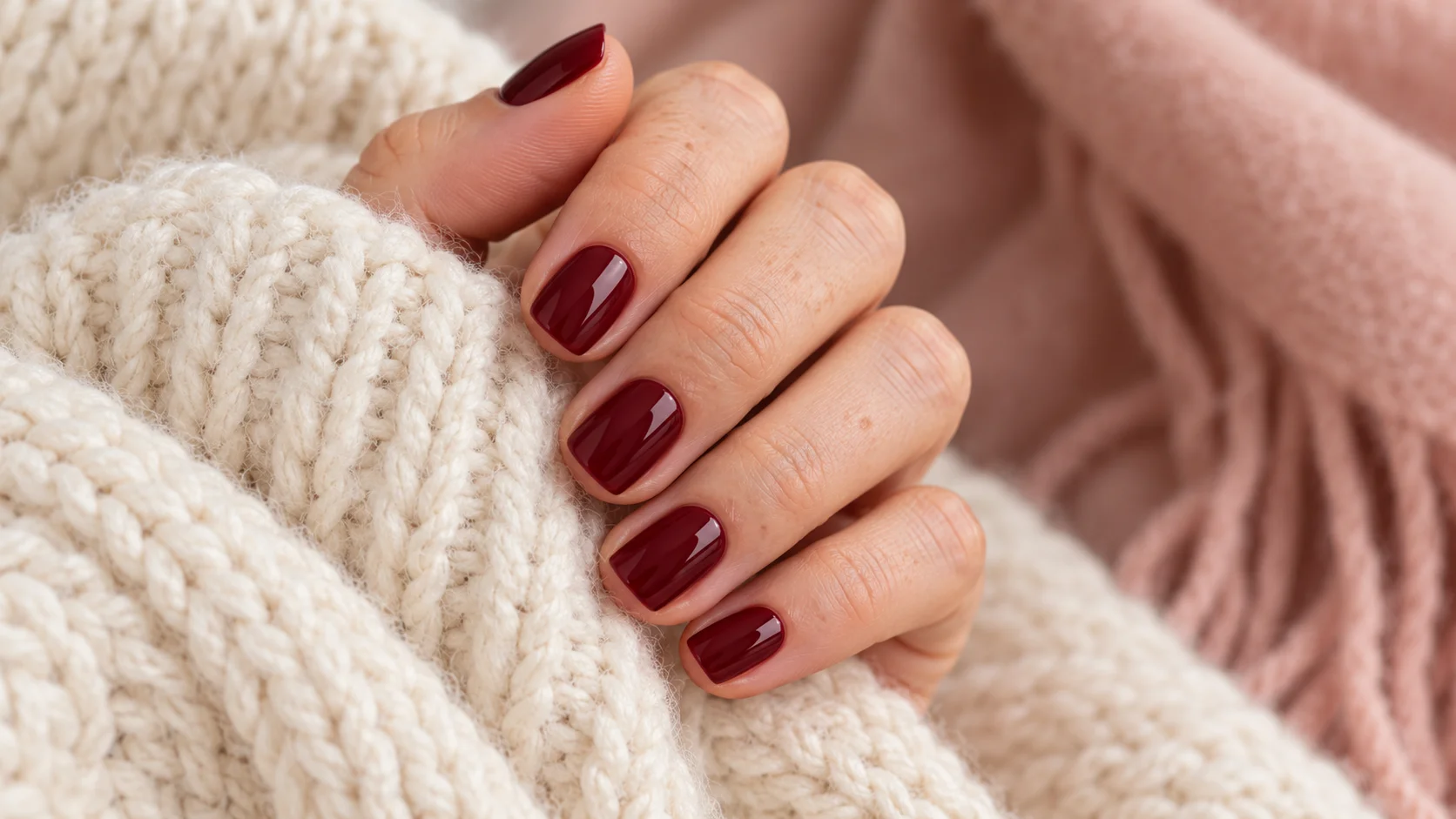
Deep berry, blue or another favourite can provide a third element without pretending to match either ring. This may be useful when you enjoy mixed jewellery but do not want the manicure to become another metallic accessory. Choose a colour you would like even without the rings.
Compare the shade with your sleeve or bag as well as the jewellery. A manicure is seen in a wider context than a tightly cropped hand photograph. A colour that looks strong beside a ring on white paper may feel more integrated when the rest of your outfit is present.
Do not interpret these comparisons as a personal colour diagnosis. There is no need to assign your skin a category or remove a favourite ring because an online rule says it belongs to another palette. The exercise is simply to find a combination you enjoy wearing.
Keep jewellery care separate from polish styling
If you remove rings during a service, arrange suitable storage rather than placing them loosely among tools. GIA advises storing diamond jewellery individually in padded boxes or pouches. The relevant principle here is careful separate storage, not a general cleaning recipe for every stone or metal.
Do not assume a nail product or remover is suitable for cleaning jewellery. Ask the service provider about handling the rings during the appointment, and ask a jeweller about material-specific care when needed. A styling guide cannot assess whether a particular setting is secure.
For small lines and accents, browse Nail Art; for finish comparisons, visit Polish & Tools. Our occasion guides offer further palette ideas. Start with the rings you already wear, then let the manicure take the supporting or leading role you prefer.
For the related design decisions, compare Pearl Nail Details: Placement Ideas for a Balanced Manicure, Chrome Accent Nails: Small Metallic Details with a Clean Finish and Burgundy Nails: Finish and Shape Ideas for a Deep Red Manicure. For the practical details, use Bridal Nail Jewellery: Keeping Rings and Manicure Details in Balance.
Common questions
Do gold-coloured and silver-coloured rings have to match the manicure?
No. The nails can repeat one metal colour, both or neither. Start with the rings you already enjoy wearing and compare a plain base before adding metallic detail. Exact matching is a personal styling preference, not a requirement established by wearing more than one ring colour.
Can a photograph tell me what metal a ring contains?
Not reliably. Appearance alone does not identify alloy, plating, gemstone setting or condition. This guide uses gold-coloured and silver-coloured when material is unknown. Ask an appropriate jeweller if you need information about composition or care rather than using a styling image as a form of assessment.
What is the simplest nail look for mixed-metal jewellery?
A plain colour you like can provide a useful starting point. Compare its coverage and depth beside the complete ring combination, then decide whether any decoration is needed. Mixed jewellery does not require a literal mixed-metal nail design, and bare or plain nails can leave the rings as the focal point.
Can I repeat only the gold-looking ring in nail art?
Yes. A small warm metallic-coloured detail can echo one ring while another ring has a different colour. The unrepresented metal is not an error. Compare the whole hand and decide whether the accent supports the existing focal point or creates a separate one you also enjoy.
How can I use both metallic colours without a busy result?
Keep one feature consistent, such as a plain base and similar line width. You could place the two colours on separate accent nails or use one small two-tone detail. Check the total amount of reflection before repeating it everywhere, and simplify the area if the jewellery already provides strong highlights.
Can a non-metallic colour work with mixed rings?
Yes. Berry, blue or another favourite can be a separate colour element rather than an imitation of metal. Compare the shade with your clothes and all the jewellery together. There is no need to diagnose a skin-tone category or replace a favourite ring to justify a combination you enjoy.
How should I store rings during a nail appointment?
Arrange suitable storage with the provider rather than placing rings loosely among tools. GIA advises individual padded storage for diamond jewellery. That is a care principle, not a universal cleaning method for every material. Ask a jeweller about the needs of a particular ring when you are unsure.
Can nail remover be used to clean my rings?
Do not assume a nail product is suitable for jewellery cleaning. Different metals, coatings, stones and settings may need different care, and this styling guide cannot assess them. Keep cosmetic styling separate from material-specific maintenance and ask a jeweller or the relevant manufacturer for appropriate care guidance.
Sources and further reading
- GIA — How to purchase the perfect diamond engagement ring — checked 2026-10-23
- GIA — How to protect your diamond engagement ring — checked 2026-10-23
- National Gallery — Colour glossary — checked 2026-10-23