Back-to-Routine Nails: Short Shapes and Easy-to-Style Colours
Plan a comfortable nail length and a simple colour rotation around typing, chores and your own preferences.
Archive edition: 2026-09-02 · This is an editorial allocation, not the first-publication date.
Key takeaways
- Task: identify the everyday movement that matters most.
- Edge: choose a comfortable length and smooth outline.
- Colour: keep one dependable option and one alternative.
- Time: plan application, maintenance and removal together.
In this guide
- Key takeaways
- Begin with the tasks, not the photograph
- Choose the shortest comfortable version of your shape
- Build a two-colour rotation
- Separate a simple look from a simple process
- Your four-decision reset
- Make a small, realistic weekly plan
- Keep the option to do less
- Common questions
- Sources and further reading
A return to a busier routine is a useful moment to choose nails around what your hands actually do. Typing, fastening jewellery, opening food containers and carrying bags can make a length that felt easy on holiday feel cumbersome on Monday. The answer is not necessarily a different manicure system. Start with comfort, then decide how much colour and maintenance you want.
This guide offers a simple way to plan short shapes and repeatable colours. It does not define what looks professional, predict how long a polish will last or override a workplace hygiene policy. The suggestions are editorial styling ideas, with basic trimming guidance drawn from the American Academy of Dermatology. Any product colours mentioned are manufacturer descriptions rather than our own wear tests.
Begin with the tasks, not the photograph
Think about three ordinary moments in your day. You might type on a laptop, put in contact lenses and button a child’s coat. Someone else might play an instrument, lift boxes or spend time gardening. A nail that catches during those tasks is giving you more useful information than a saved photograph of somebody else’s hands.
Try the motions with your current length before deciding what to change. Notice whether the free edge hits the keys, whether corners snag and whether your grip feels different. Shortening slightly may solve the problem without changing the shape completely. There is no single measurement that works for every nail bed, hand movement or job.
If your workplace specifies bare nails, limits length or excludes artificial nails, follow that policy. A discreet shade does not make an otherwise prohibited manicure acceptable. For everyone else, colour can remain a personal choice; bright nails are not inherently less organised, capable or suitable for a full week.
Choose the shortest comfortable version of your shape
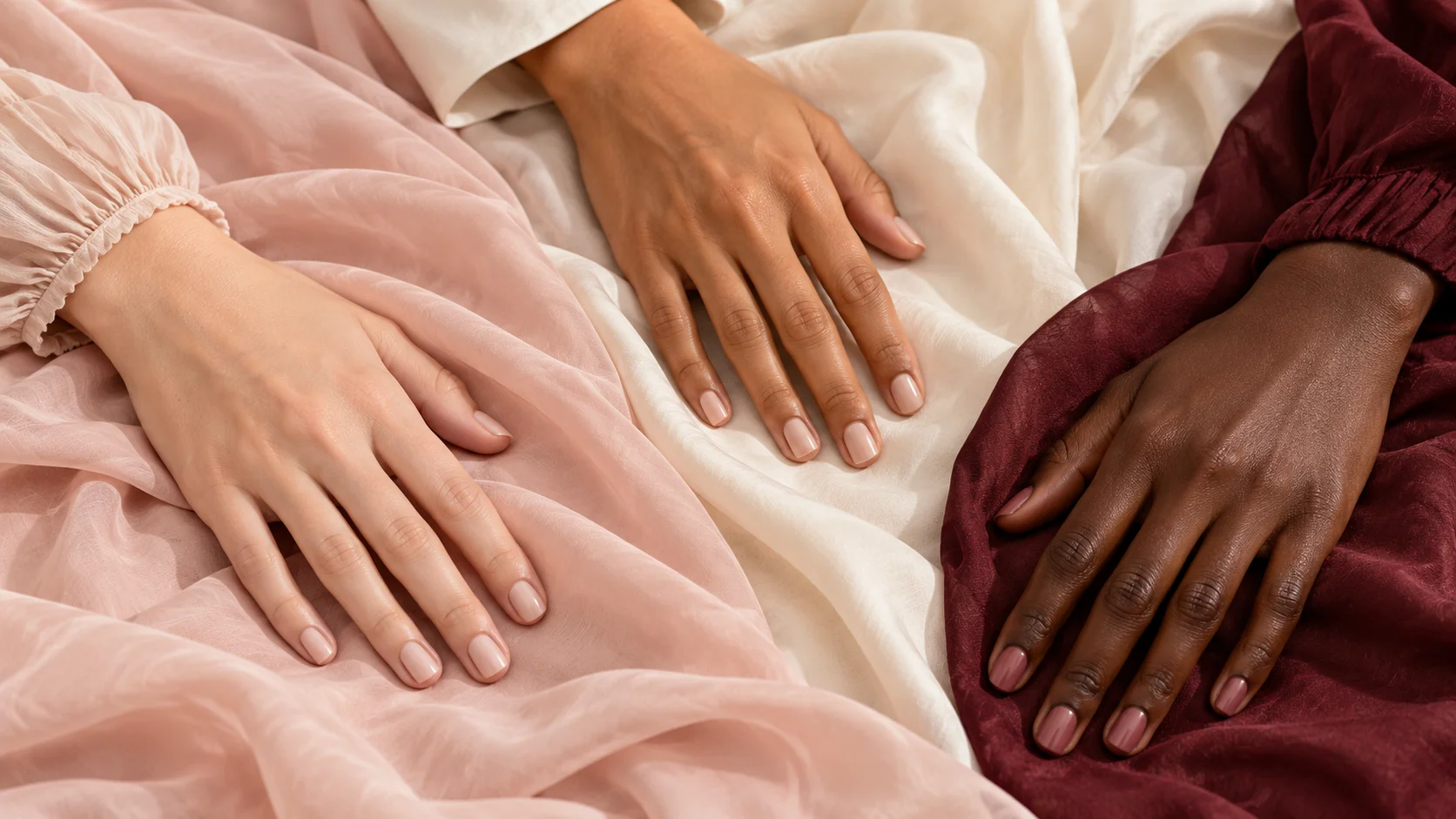
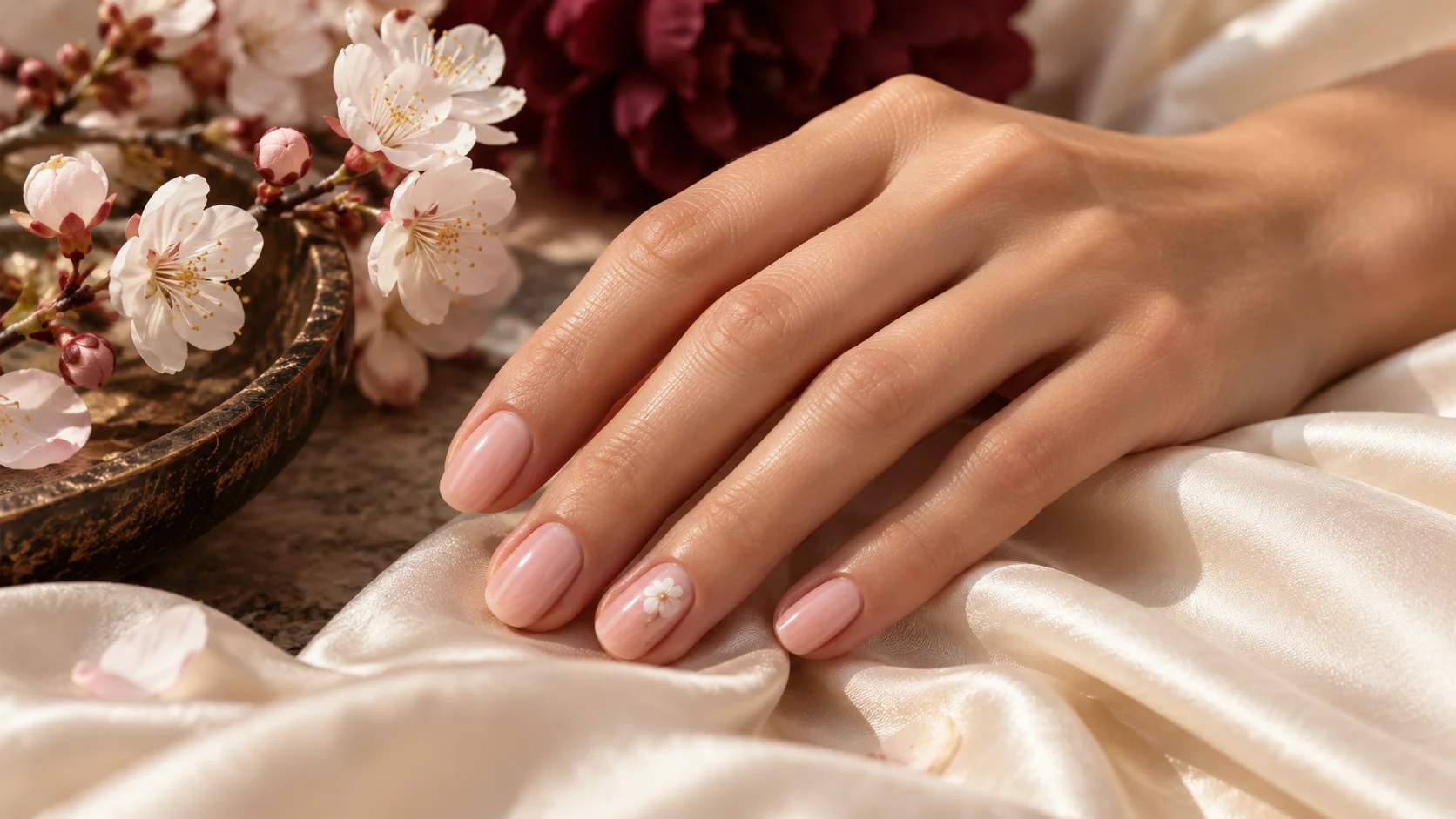
Round nails can be a straightforward option when you want an edge with no prominent corners. A softly squared shape keeps a flatter top while easing the corners. An oval requires enough free edge to form a curve; forcing an elongated outline onto very short nails can lead to unnecessary filing at the sides.
The AAD’s nail-trimming guidance recommends cutting fingernails almost straight across, rounding the edges slightly and smoothing rough spots with a file. It also advises leaving cuticles alone. Those are care principles, not a demand to create identical nails at any cost. Work within your natural outline and stop before an edge feels tender.
Compare the finished hand as a whole rather than chasing exact symmetry between individual fingers. If one nail is shorter, keeping the others comfortable and reasonably balanced may be preferable to reducing everything dramatically. More advice on gentle everyday maintenance is collected in our nail-care guides.
Build a two-colour rotation
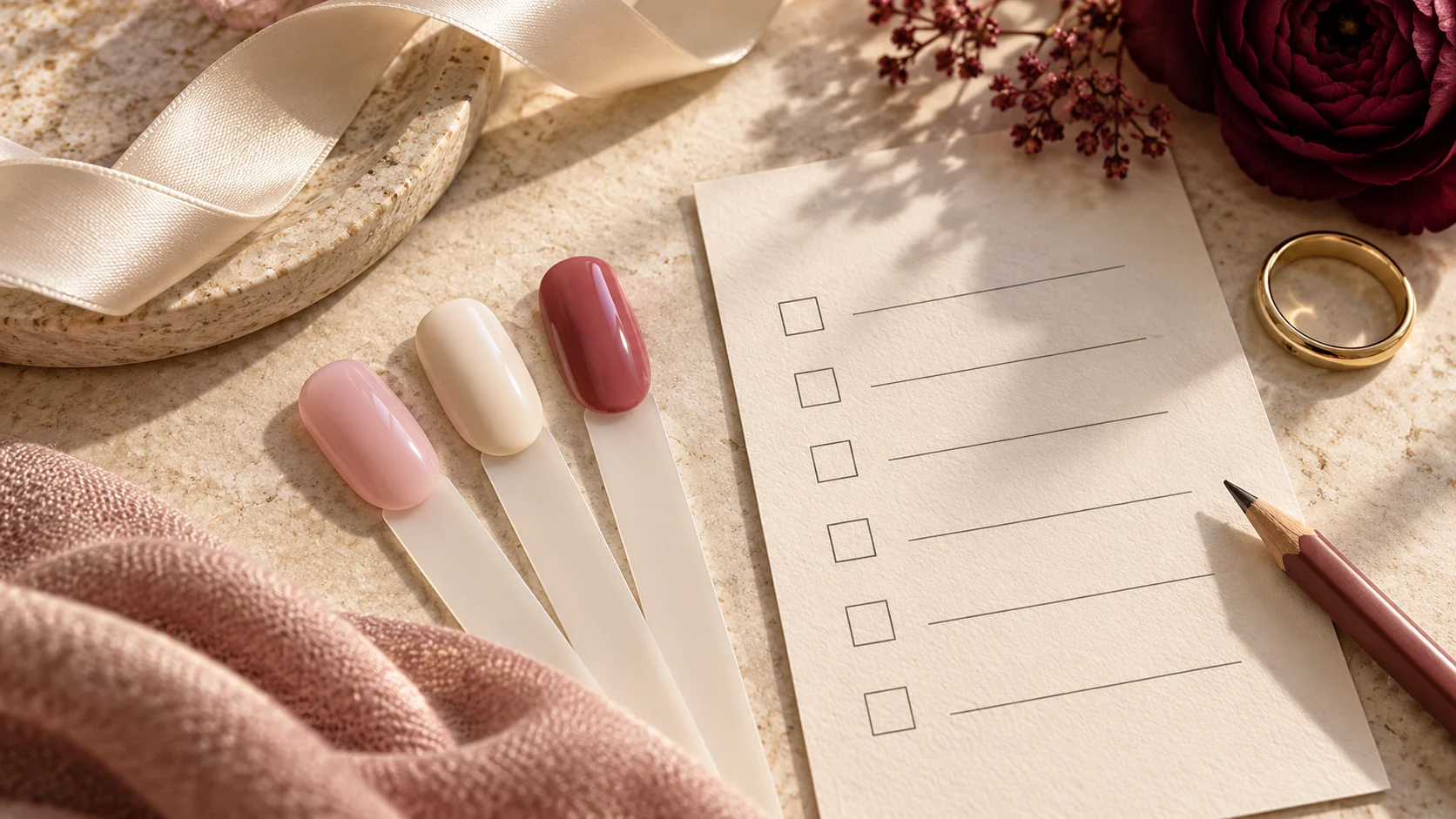
A useful routine can contain just two choices: one familiar shade and one alternative that still works with your clothes. The familiar colour removes the weekly decision. The alternative gives you a change without requiring a new collection of bottles, tools and reference pictures.
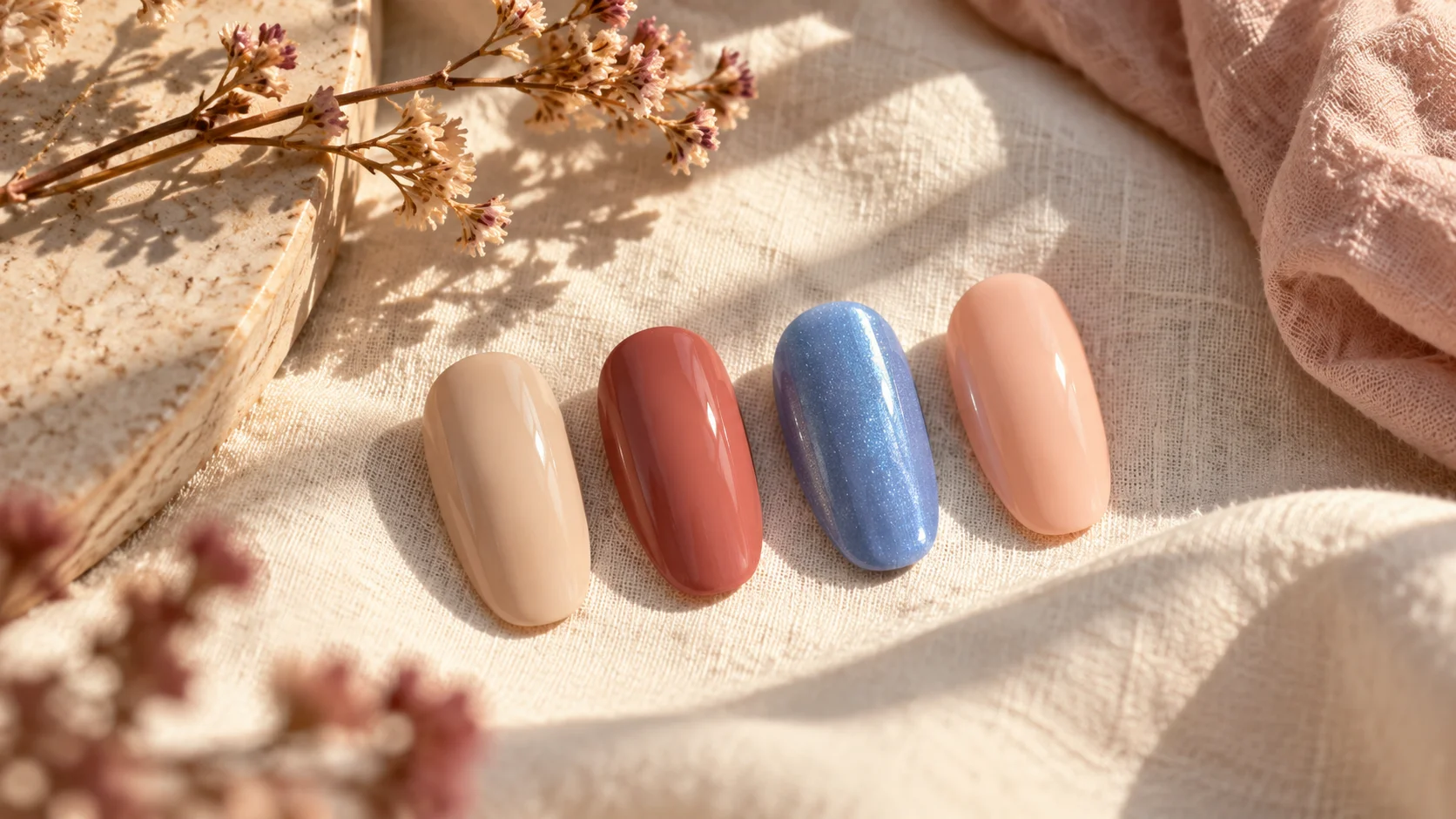
For a light option, OPI describes Bubble Bath as a sheer light pink. That illustrates a coverage category as much as a colour: the natural nail can remain visible through a sheer finish. If you prefer a completely covered appearance, ask for or choose a more opaque formula rather than assuming extra coats will reproduce a different product.
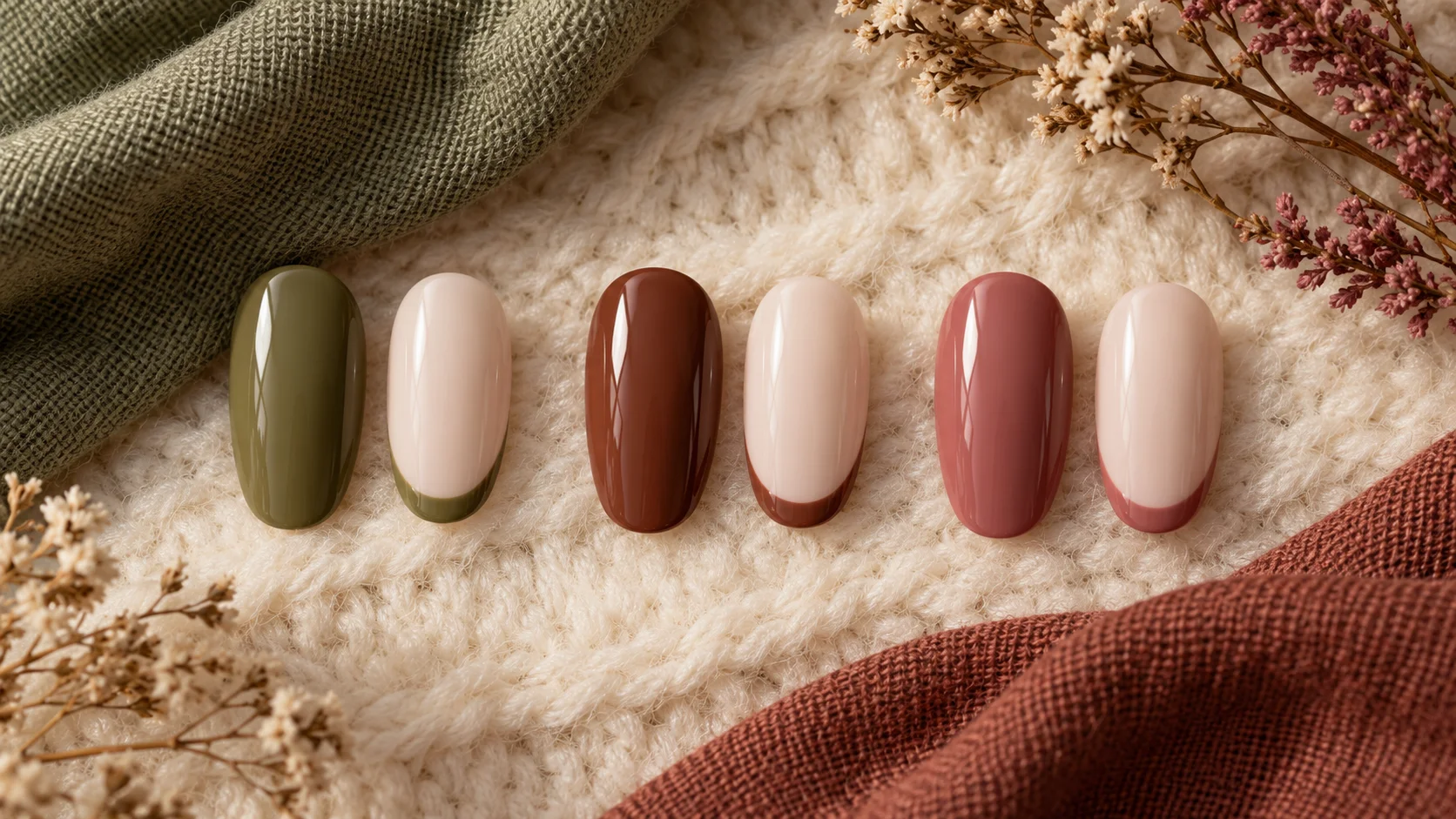
A muted colour can be the second option. Essie’s Caught in the Rain is described as a neutral sage green with grey undertones. A similar colour family could sit beside navy, cream or a patterned scarf. This is a styling suggestion, not a claim that it suits every wardrobe or matches the illustration exactly.
| Daily priority | Possible starting point | Check before committing |
|---|---|---|
| Typing and small fastenings | A short, gently rounded edge | Whether ordinary movements feel comfortable |
| Fewer colour decisions | One familiar shade repeated | Whether you still enjoy it in different clothes |
| Some variety | A light shade and one muted colour | Coverage and finish, not just the bottle colour |
| Limited maintenance time | A finish and removal method you already understand | The actual time available for application and removal |
| A regulated workplace | The permitted nail condition or finish | Your current employer’s specific policy |
Separate a simple look from a simple process
A plain pink manicure can involve extensions, several products and a professional removal appointment. A vivid ordinary lacquer can be visually bold yet fit an uncomplicated home routine. Judge the work involved by the system and your experience, not by how quiet the final colour looks.
Before booking, ask what the service includes and how the finish is removed. Before painting at home, read the relevant product instructions and allow time for the entire process. Do not assume a quick surface-dry claim means you can immediately press the nails into clothing, bedding or a tightly packed bag.
If you are trying a new length and a new product system, consider changing one thing at a time. It is easier to identify what you liked when the comparison is clear. A familiar finish at a shorter length is already a meaningful trial; it does not need decorative extras to count as a new routine.
Make a small, realistic weekly plan
Choose a time when you can check your nails without rushing. That might be a quiet weekend morning rather than the evening before a demanding day. Look for rough edges, decide whether the existing finish still suits you and check the instructions before any removal. A routine is more useful when it fits your actual schedule.
Keep only the items you use regularly within easy reach, stored according to their labels. You do not need a salon-sized kit to maintain a simple look. If an appointment is part of your routine, include travel and removal time when judging its practicality, rather than considering only the time spent having colour applied.
Record one useful observation after the week: the length felt comfortable, the green was easy to pair, or the finish needed more attention than expected. Avoid turning ordinary variation into a product verdict after a single wear. The aim is to learn what fits your life, not to create a universal ranking.
Keep the option to do less
Some weeks, shaped bare nails may be the most convenient choice. On others, a red or blue shade might provide the interest you want without any art. A repeatable routine should make those choices easier, not create an obligation to keep a perfect manicure at all times.
When you want another colour, our seasonal styling articles offer palettes you can adapt to the same comfortable shape. Compare finishes and application requirements in the polish and tools section before buying something new. Keep the parts of the routine that work and change only the part that has become inconvenient.
To adapt the plan to related occasions and outfits, compare Late Summer Nails: Warm Neutrals and Faded Pastels, Early Autumn Nail Colours: Olive, Chestnut and Dusty Rose and Christmas Nail Planning: Choosing a Manicure for Several Events. For the underlying care, colour or service choice, see Choosing a Comfortable Nail Length for Work, Sport and Hobbies.
Common questions
How short should nails be for a busy routine?
Choose the shortest length that feels comfortable for your own tasks rather than following a universal measurement. Try typing, handling fastenings and gripping everyday objects. If an edge catches or changes your movement, a small adjustment may help. Follow any specific workplace rules that apply to you.
Are rounded nails always more practical than square nails?
Not for everyone. A softly rounded outline avoids prominent corners, while a softly squared nail can still feel comfortable if its edges are smooth. Your natural shape and daily movements matter more than the label. Compare the options at a similar length before deciding which suits you.
Do I need a neutral colour for work?
There is no universal work-appropriate nail colour. Your employer may have a specific policy, particularly where hygiene or safety requirements apply. Otherwise, choose a colour you enjoy and can maintain comfortably. A muted finish does not make a prohibited artificial nail or length acceptable under a workplace rule.
Is a sheer pink easier to maintain than a bright colour?
That depends on the formula, system, your activities and what changes you notice. Sheer pink describes appearance rather than guaranteed durability or effort. Compare application and removal requirements separately from colour. A familiar ordinary lacquer in a bright shade may fit your routine better than an unfamiliar pale enhancement.
How many colours do I need in a routine?
You can repeat one colour indefinitely if you enjoy it. Two options are a useful planning suggestion: one familiar shade and one alternative. They are not a shopping requirement. Check what you already own, whether it is usable under its label instructions and whether it still fits your preferences.
Should I cut every nail to match one shorter nail?
Exact equality is not always necessary. Consider comfort and the overall appearance of the hand before shortening everything. Avoid filing aggressively to force symmetry or continuing when an edge feels tender. If you are unsure about a change in a nail, obtain appropriate professional advice rather than disguising it.
Can bare nails be part of a planned routine?
Yes. A routine can involve checking the edges and choosing no colour at all. It does not require a continuous coating or a new manicure every week. Leave cuticles alone, follow gentle care guidance and choose the amount of maintenance that fits your time and preferences.
What should I record after trying a new routine?
One or two practical observations are enough: whether the length felt comfortable, whether the colour paired easily with your clothes and whether maintenance fitted the available time. A single wear does not establish a universal product ranking. Use the note to guide your next choice, not to chase perfection.
Sources and further reading
- American Academy of Dermatology — How to trim your nails — checked 2026-10-23
- OPI UK — Bubble Bath Nail Lacquer — checked 2026-10-23
- Essie UK — Caught in the Rain — checked 2026-10-23