Early Autumn Nail Colours: Olive, Chestnut and Dusty Rose
Build an early-autumn manicure palette by comparing olive, chestnut and muted rose with clothes you already wear.
Archive edition: 2026-09-09 · This is an editorial allocation, not the first-publication date.
Key takeaways
- Depth: light, medium or dark against your everyday clothes.
- Family: green, brown or softened pink as the main colour.
- Coverage: sheer impression or a solid block of colour.
- Placement: full nail, fine tip or one restrained accent.
In this guide
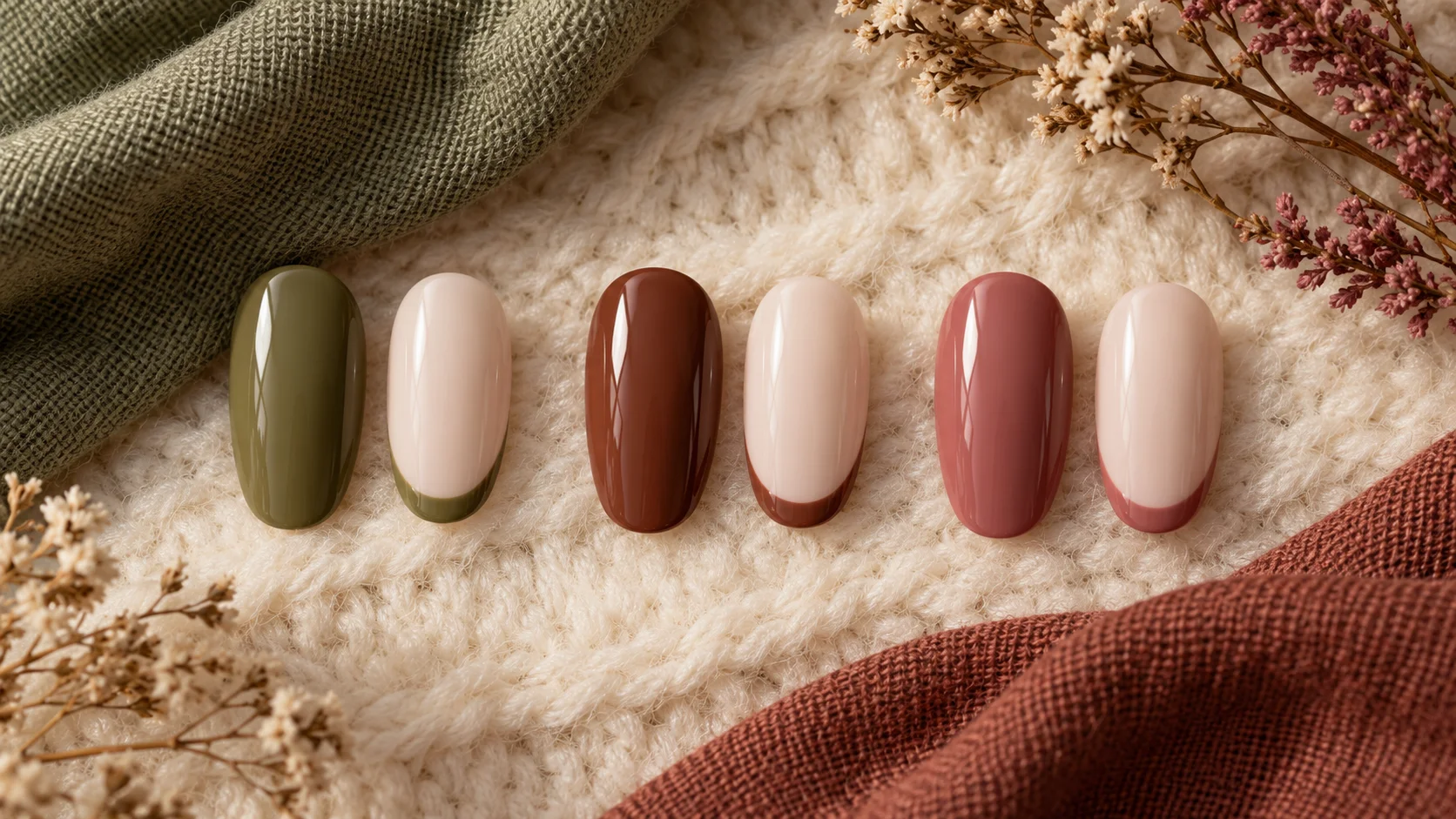
Early autumn does not require an immediate switch from pale summer colours to the darkest bottle in the drawer. Olive, chestnut and dusty rose offer three different routes through the change of season: a muted green, a warm brown and a softened pink. Each can be worn alone, paired with a neutral or reduced to a narrow detail.
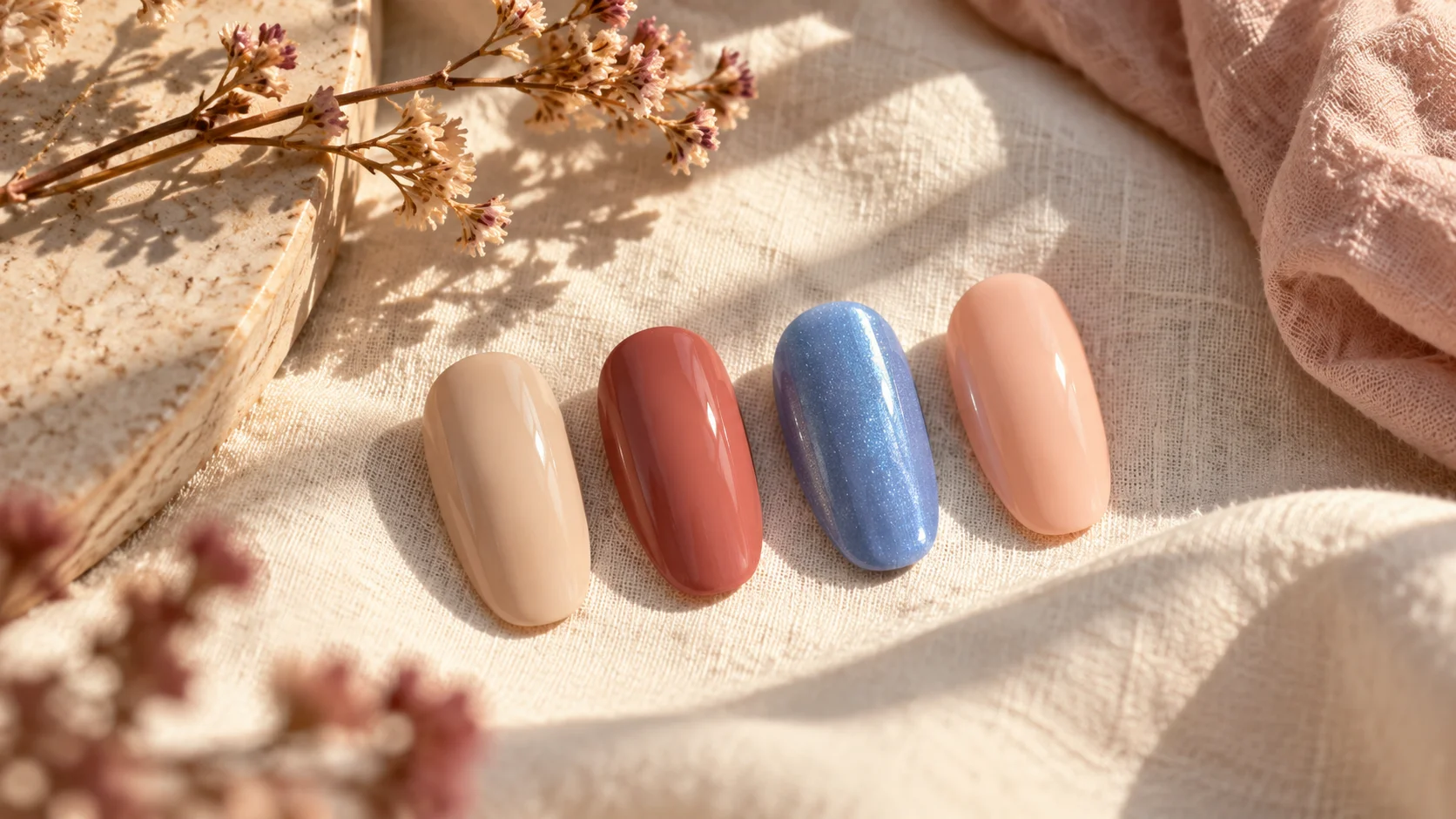
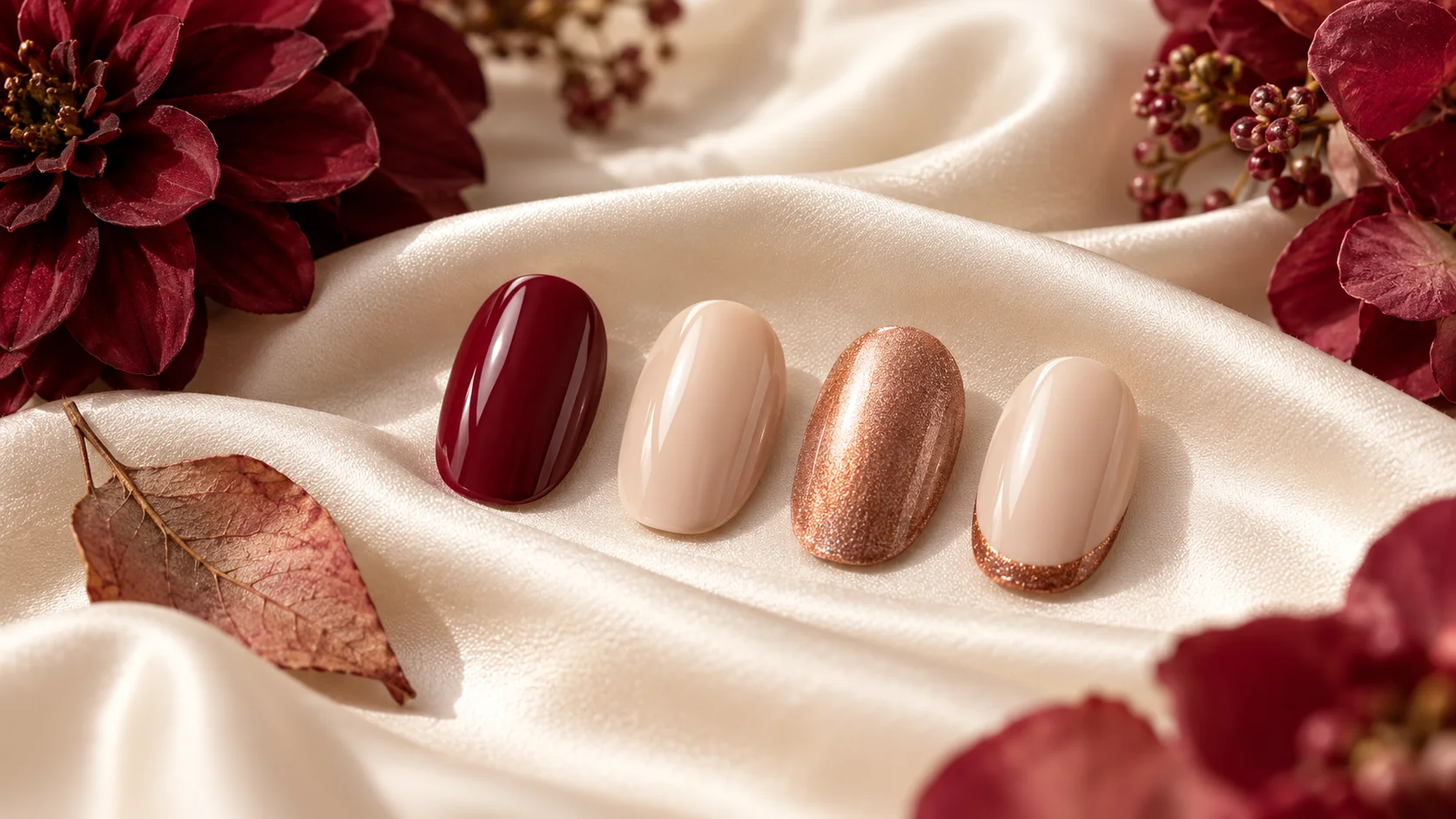
The useful question is which direction works with the clothes and finishes you already enjoy. This guide compares the colours by depth, coverage and placement. Named products provide manufacturer colour references only. We have not independently swatched or wear-tested them, and the generated illustration shows generic palette ideas rather than exact commercial shades.
Look at the clothes you are wearing now
Start with two or three pieces you actually reach for: perhaps a cream knit, blue denim and a rust-coloured shirt. Put them together before considering a polish. This creates a smaller, more useful palette than a mood board containing every autumn colour at once.
Choose whether the nails should repeat one of those colours or introduce a different note. Olive might echo a green jacket, while dusty rose could soften the visual contrast between dark denim and ivory. Chestnut can connect brown accessories with a lighter outfit. These are optional combinations, not colour rules or claims about what flatters a particular skin tone.
Try the candidate beside your sleeve in daylight and ordinary indoor light. A shade can look different against white packaging, warm wool or a bright screen. If you are booking a salon appointment, bring a small reference selection and describe what matters: muted rather than bright, brown rather than burgundy, or pink rather than lilac.
Olive: decide how green you want it
Olive can range from a yellow-leaning muted green to a much deeper, brownish shade. At the lighter end it can feel closer to a neutral; a darker version creates a stronger contrast against pale fabric. Neither is automatically more autumnal. The distinction matters because two bottles both called olive may give very different results.
OPI describes Suzi – The First Lady of Nails as an olive or army green. That is a useful vocabulary reference when explaining the family you mean. It is not a recommendation based on our own application, and availability in a particular UK salon or shop should be checked separately.
For a softer green comparison, Essie’s Caught in the Rain is described as neutral sage with grey undertones. Sage and olive are not interchangeable, but placing the ideas side by side helps clarify whether you want a cooler-looking greyed green or a more yellow-brown direction.
Chestnut: choose the balance of brown and red
Here, chestnut means a warm brown idea rather than a precise product shade. Some versions look chocolate-like, some have a reddish cast and others are lighter and closer to caramel. Ask to see the actual colour instead of relying on the name. A generic illustration cannot establish how a real formula will look on your nails.
A full brown manicure can provide a clear block of colour beside cream, pale blue or grey. If that feels heavier than you want, use the brown as a slim tip over a neutral base or choose a lighter depth. You can keep the warm impression without covering every nail in the darkest option.
Consider the difference between your handbag, shoes and polish rather than demanding an exact match. Three slightly different browns can look deliberate if their variation is accepted. If you dislike the combination, choose a contrasting rose or green instead; there is no need to replace an accessory to accommodate a manicure.
Dusty rose: adjust pink, brown and coverage
A dusty rose direction can offer colour without the brightness of a vivid pink. The word dusty usually communicates a softened visual impression, but it does not specify opacity or finish. You may prefer a translucent pink, an opaque rose-brown or a muted pink with a little shimmer.
Essie describes Mrs. Always Right as a terracotta rose pink. It provides a warmer reference point rather than a definition of all dusty roses. If your reference looks too orange, describe the adjustment you want instead of asking for the same colour and hoping another coat will change its undertone.
Rose can also serve as the connecting colour in a mixed palette. A neutral pink base with one olive or chestnut detail keeps the overall design lighter than alternating three full-coverage shades. Test the relationship on a sample before deciding on a complete set.
| Direction | What to compare | Simple styling option | Useful reference question |
|---|---|---|---|
| Olive | Yellow-green versus deeper brown-green | Full colour with cream and denim | Do I want olive or a greyer sage? |
| Chestnut | Brown depth and visible red warmth | A narrow tip beside a pale neutral | Does this look brown in the light I use? |
| Dusty rose | Pink versus terracotta, sheer versus opaque | One colour across a short shape | Is the warmth coming from the shade or lighting? |
| Mixed palette | Contrast between the three colours | One dominant colour and a small accent | Which colour should the eye notice first? |
Use one organising idea
If you want all three colours, give the design a simple structure. You could repeat olive on most nails and use a rose base with a chestnut line on one. Alternatively, keep the same fine-tip placement across the hand while changing the tip colour. Consistent placement can connect colours that are quite different.
A full alternating set is another valid choice, particularly if the colour combination itself is the main feature. Check both hands together in the plan. Decide whether the order mirrors, repeats or changes deliberately, so the second hand does not become an afterthought at the appointment.
For a quieter result, remove one element before adding another. Three colours, several finishes and different shapes can obscure the palette you originally liked. A single glossy colour may express the seasonal idea more clearly than a design with many unrelated details.
Make the reference practical
Save one picture for colour and, if necessary, another for placement. Label their purposes in a short note. A photograph of a long almond nail can still communicate a colour for your short rounded shape, but the amount of space available for the design will change.
Tell the technician which elements are optional and which matter most. At home, use a product and method you understand rather than treating a seasonal colour change as a reason to experiment with unfamiliar curing or removal instructions. Colour inspiration does not determine a safe application system.
Our nail-art guides explore small details, while the polish and tools section helps with finish and product comparisons. Return to the seasonal edit when you want another palette. Keep any colour you enjoy beyond autumn; the calendar is a prompt for ideas, not an expiry date.
To adapt the plan to related occasions and outfits, compare Late Summer Nails: Warm Neutrals and Faded Pastels, Autumn Wedding Nails: Rich Reds, Warm Nudes and Fine Metallics and Back-to-Routine Nails: Short Shapes and Easy-to-Style Colours. For the underlying care, colour or service choice, see Mocha Nails: Choosing Chocolate, Taupe and Coffee Tones.
Common questions
What is the difference between olive and sage nail colour?
These are broad colour descriptions, and brands may use them differently. Olive often suggests a yellow-brown green, while sage may look softer and greyer. Compare the actual samples and describe the direction you prefer. The name alone does not establish the exact undertone, opacity or finish of a polish.
Is chestnut a specific nail-polish shade?
In this article, chestnut is a generic warm brown idea rather than a named product. It can range from a reddish brown to a lighter caramel direction. Use a real sample to choose your preferred depth. The generated illustration is an editorial palette and cannot verify a commercial colour match.
Can I wear dusty rose with brown accessories?
Yes, if you like the combination. Try the colour beside the accessory and a sleeve from the outfit, rather than considering the bottle alone. A warm rose may connect with the brown, while a cooler-looking pink creates more contrast. Neither approach is a rule or a guaranteed flattering choice.
Do all three autumn colours need to appear in one manicure?
No. Each colour can stand alone. If you want a mixed design, choose one organising idea, such as the same tip placement or one dominant colour with a smaller accent. Using fewer colours may express the palette more clearly when your clothing already contains several patterns or textures.
How can I use a dark autumn colour on very short nails?
You can wear a full dark colour at a short length if you like the result. Alternatively, reduce it to a fine tip or small detail over a lighter base. Adapt the width of the decoration to the available space rather than copying a long-nail reference without adjustment.
Will a colour look the same in daylight and indoors?
Not necessarily. Lighting, surrounding fabric and the screen used to view a photograph can change your impression of a colour. Compare the actual option in the lighting available to you and avoid treating a digital illustration as an exact swatch. Decide which view matters most for your usual routine.
Are the named colours independently tested recommendations?
No. The named products provide manufacturer descriptions that help explain colour families. We have not independently tested their application, wear or removal for this article. Check the current local product and instructions before purchase, and do not assume a similarly named shade in another system behaves the same way.
Do I have to stop wearing these colours after autumn?
No. Seasonal labels are a way to organise inspiration, not an expiry date for a colour. Olive, brown or rose can remain part of your wardrobe throughout the year. Change the depth, finish or amount of detail when you want variety, rather than replacing a shade simply because the season changes.
Sources and further reading
- OPI — Suzi The First Lady of Nails — checked 2026-10-23
- Essie US — Mrs. Always Right — checked 2026-10-23
- Essie UK — Caught in the Rain — checked 2026-10-23