Bridal Nail Jewellery: Keeping Rings and Manicure Details in Balance
Plan the visual balance between your rings, polish finish and optional nail details without making every element compete for attention.
Archive edition: 2026-08-11 · This is an editorial allocation, not the first-publication date.
Key takeaways
- Start with the actual rings and outfit.
- Compare a plain colour as the baseline.
- Choose painted detail or raised decoration deliberately.
- Check comfort during ordinary tasks.
- Keep jewellery care with the appropriate professional.
In this guide
- Key takeaways
- Begin with the jewellery you intend to wear
- Choose a plain base before deciding on embellishment
- Separate painted metallic detail from actual nail jewellery
- Consider the setting without trying to assess it yourself
- Keep ring care out of improvised manicure routines
- Test the whole combination in ordinary use
- See the hand as one composition
- Common questions
- Sources and further reading
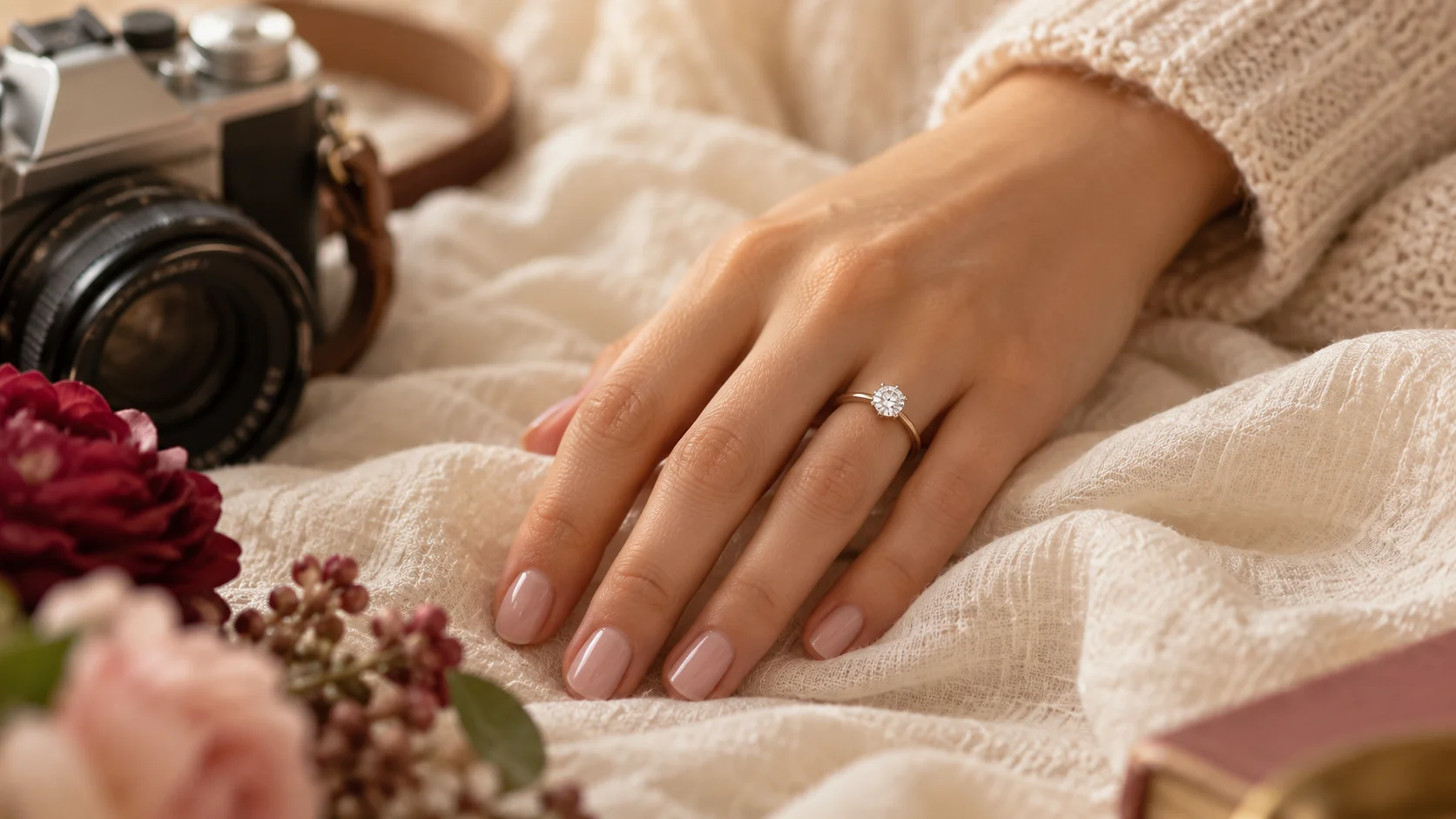
Wedding rings and manicure details share a small visual space. A ring may already provide shine, colour and an intricate shape, while nail art adds another pattern beside it. Before adding more decoration, decide what you want to notice first when you look at the whole hand: the jewellery, the manicure or a deliberate combination of both.
Balance does not mean that one part must always be quiet. You can enjoy a statement ring with bold nails, or a simple band with a plain tint. This guide offers original styling comparisons and practical questions, not rules about which jewellery is correct for a wedding or an assessment of the value or condition of any ring.
Begin with the jewellery you intend to wear
Put on the ring or rings planned for the occasion and look at the hand relaxed. Notice the overall arrangement rather than only the central stone. A single band, a prominent setting and several stacked rings each create a different starting point. The nail design can respond to that actual arrangement instead of an imagined ideal ring.
Include other jewellery that will sit nearby, such as a bracelet, if it matters to the outfit. You may find that the hand already has enough reflective detail for your taste. Alternatively, you may prefer the manicure to be equally noticeable. The aim is to decide deliberately, rather than adding each element separately and only seeing the full combination at the end.
Take a simple whole-hand photograph as a reference if it helps. Keep the image unfiltered and include the sleeve or fabric you expect to wear. It does not need to be a perfect product photograph; it is a way to compare placement and visual emphasis before committing to extra artwork.
Choose a plain base before deciding on embellishment
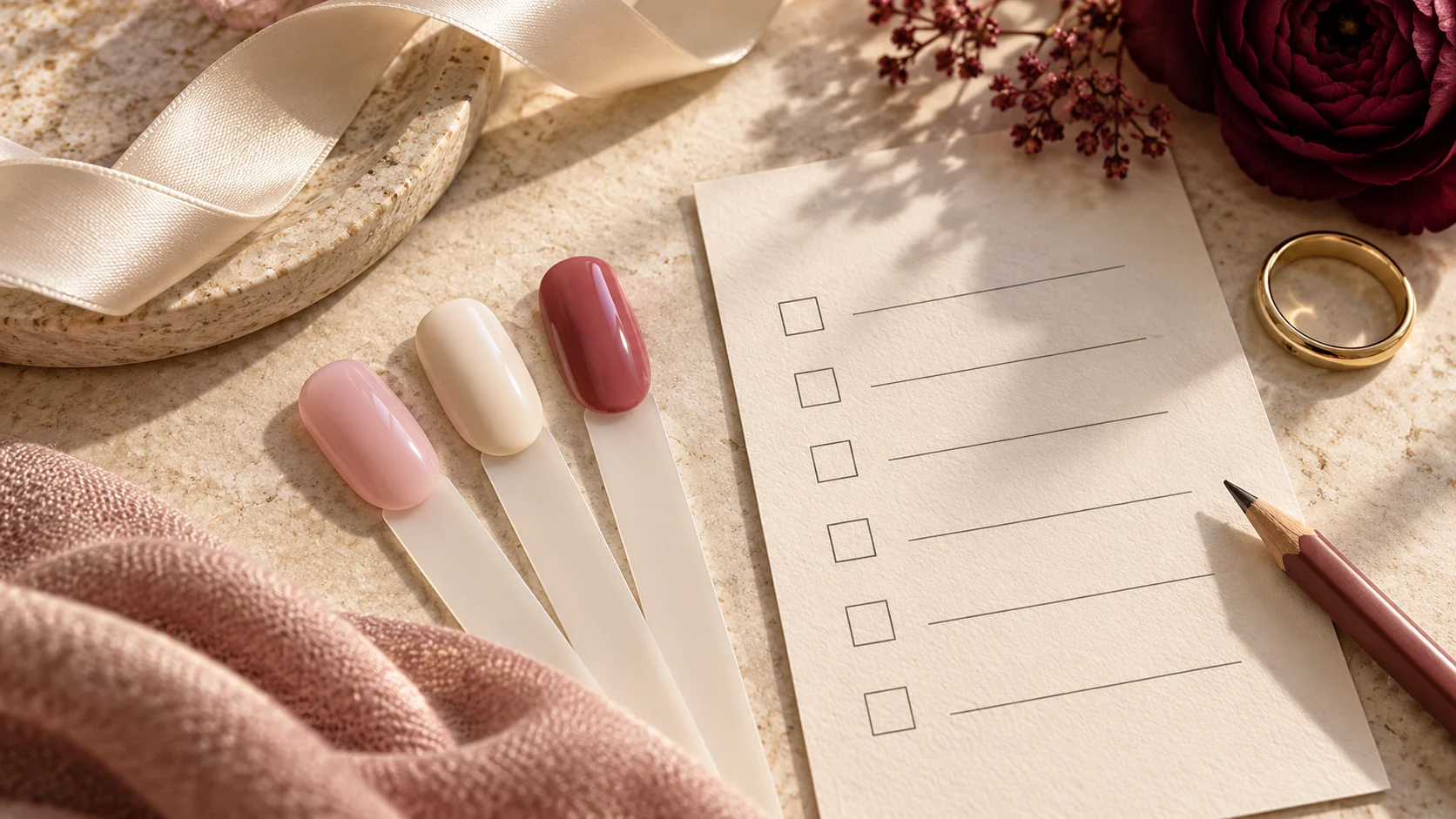
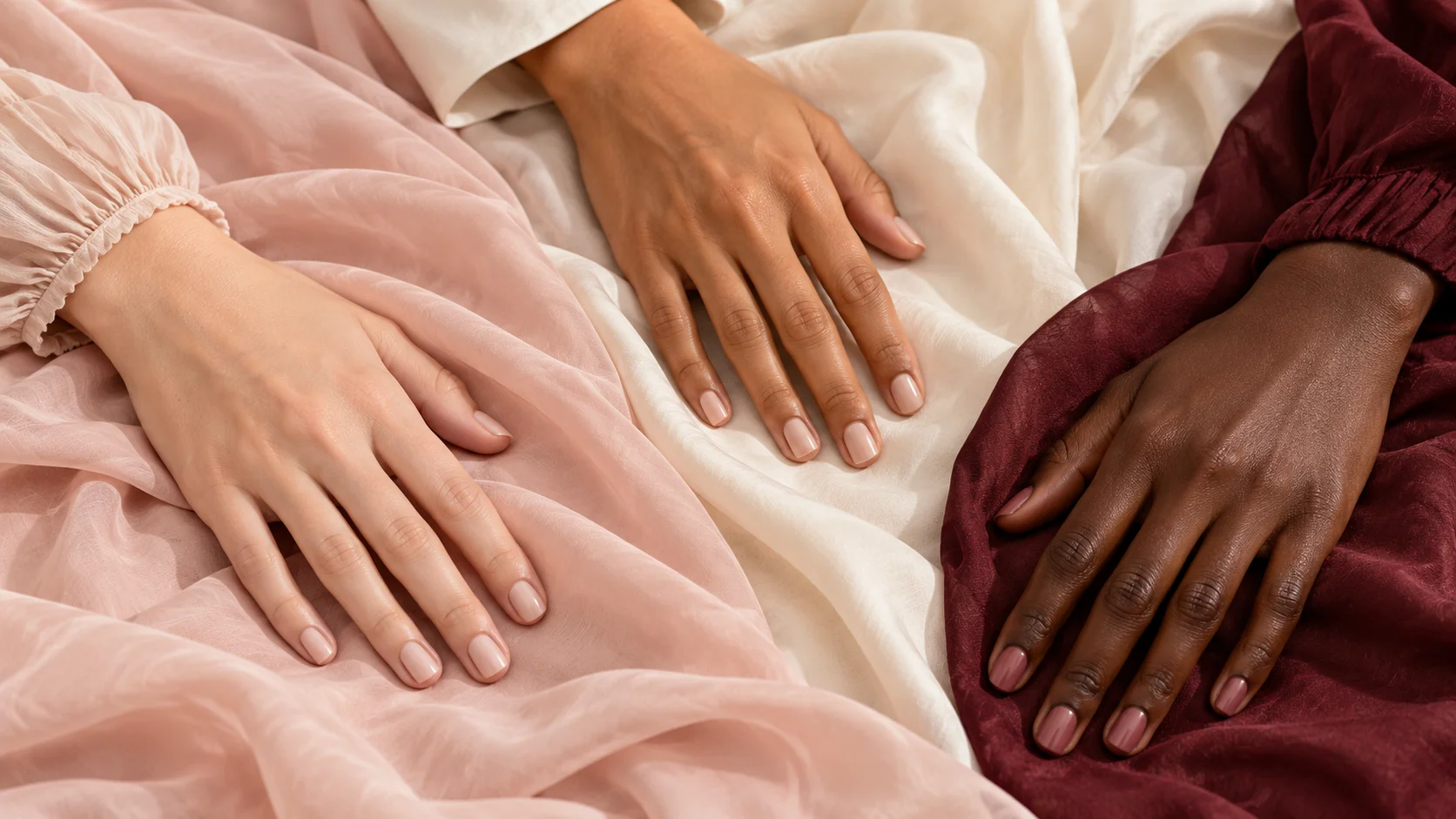
A plain colour gives you a useful baseline. Try the idea of a sheer pink, a deeper colour or another favourite beside the rings before introducing lines, dots or raised pieces. If the combination already feels complete, the plain manicure can remain the final design.
OPI describes Bubble Bath Nail Lacquer as a sheer light pink, illustrating one quiet background option. This is a manufacturer colour description rather than a claim that the shade suits every ring, hand or wedding outfit. A stronger colour may be the personal choice you prefer.
Decide on coverage as well as colour. A translucent tint and an opaque pale manicure can create different contrast beside the same jewellery. If you are choosing a salon service, describe how much natural nail you want visible instead of assuming that the word subtle communicates the finished effect.
Separate painted metallic detail from actual nail jewellery
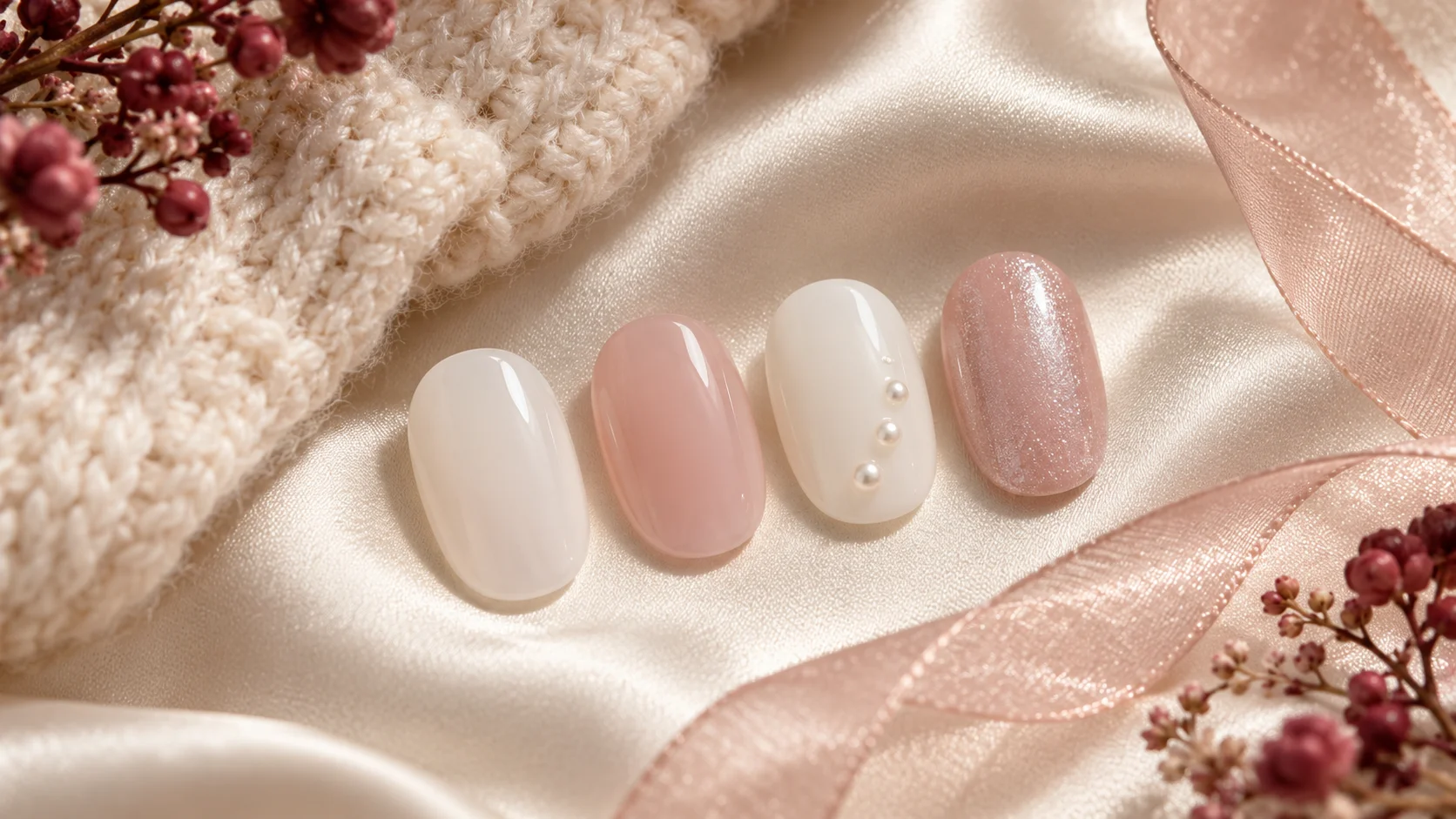
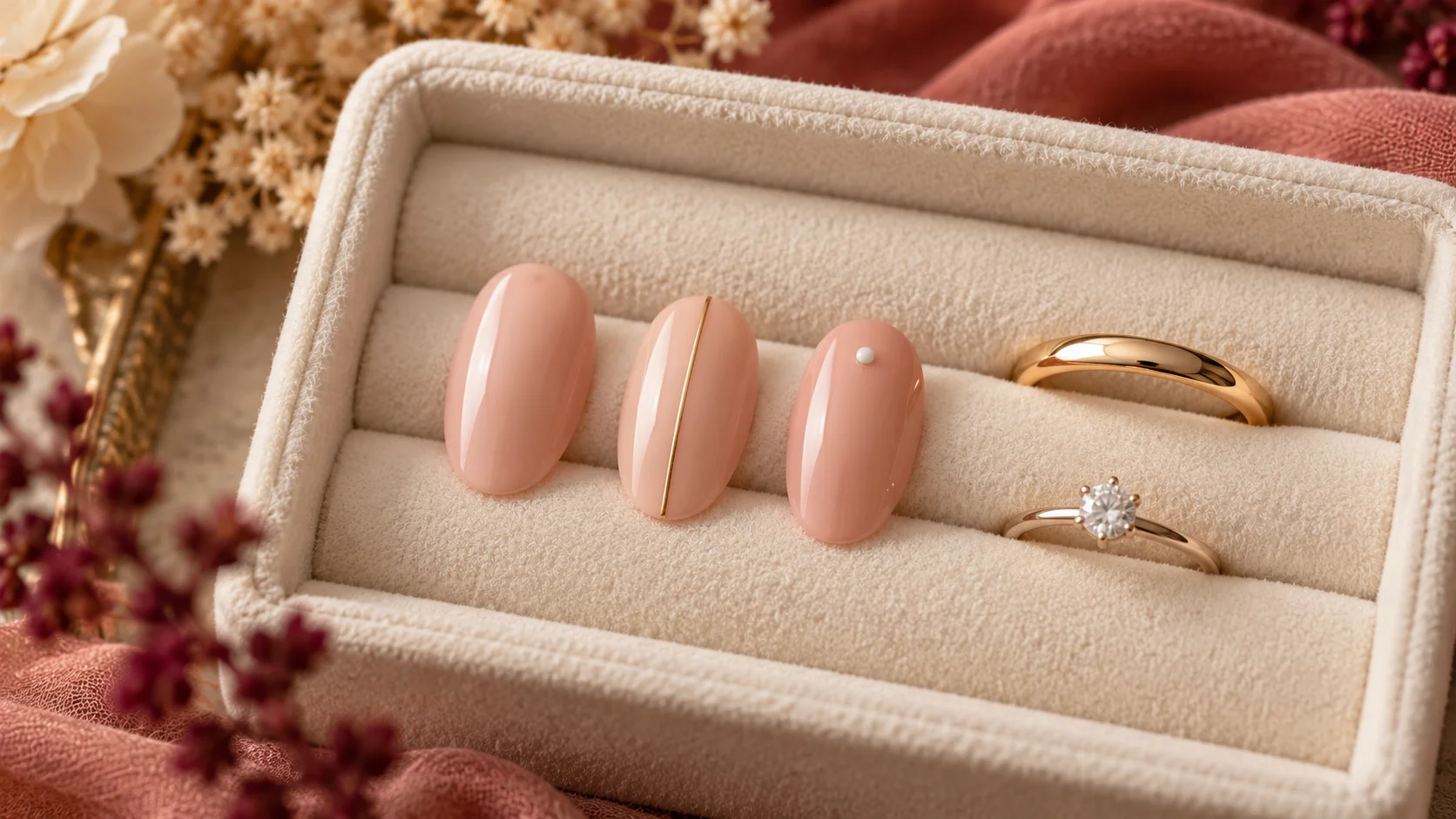
A fine painted gold line, a metallic polish and an attached decorative piece are different choices. They may all appear shiny in a small photograph, but they do not have the same application, practical feel or removal requirements. Ask what the reference actually shows before requesting it.
If you mainly want to repeat the colour of a ring, a small painted accent may be enough for the idea. If you want a raised decorative element, discuss the exact product and method with a provider who understands the chosen system. Do not treat loose craft gems or general-purpose adhesives as interchangeable nail products.
Keep the amount of detail specific. One short line on a single nail is different from a full metallic outline on every finger. Agree the number of decorated nails, placement and size so the design and price are clear. A broad request for jewellery nails leaves too much room for different interpretations.
| Manicure choice | Possible visual role | Practical question |
|---|---|---|
| Plain tint or colour | Lets the jewellery provide most of the detail | Do I like the coverage beside the rings? |
| Fine painted metallic line | Repeats a metal colour in a small area | Where should the line sit? |
| One painted dot or flower | Adds a separate small focal point | Does it work better beside the ring or elsewhere? |
| Raised nail decoration | Introduces additional shape and texture | How will it feel, be maintained and be removed? |
| Bold plain colour | Creates a clear contrast around the jewellery | Is this the emphasis I want? |
Consider the setting without trying to assess it yourself
GIA explains that ring settings have different structures and that well-finished prongs should minimise snagging. That is useful context for thinking about how jewellery feels during wear. It does not tell you that a particular ring is secure, or that you should adjust a setting yourself to suit the manicure.
If a ring catches unexpectedly or you are concerned about its condition, ask a jeweller for advice. Do not treat a snag as a nail-art problem to solve by filing, covering or modifying the jewellery. Keep the practical care of the ring separate from the aesthetic decision about colour and decoration.
Similarly, do not force a ring over an uncomfortable nail arrangement simply to complete a photograph. Plan how you will put on the jewellery and handle ordinary tasks with the chosen length and details. A trial can help you notice those practical issues before the occasion.
Keep ring care out of improvised manicure routines
GIA notes that diamond rings can be damaged and recommends individual storage in padded boxes or soft pouches. If you remove jewellery during a service or preparation, choose a secure place for it. Avoid leaving a loose ring on the edge of a sink or mixing several pieces together without care.
Ask the jeweller about cleaning and care for your actual stone, metal and setting. This article does not provide a universal jewellery-cleaning recipe, and nail products are not a substitute for appropriate jewellery care. A method described for one type of untreated stone should not be assumed suitable for every ring.
Keep any service instructions clear with the technician. The person doing the manicure should understand which jewellery you want to wear afterwards, while the jeweller remains the appropriate source for concerns about the ring itself. You do not need to turn the design appointment into an improvised repair or cleaning session.
Test the whole combination in ordinary use
During a trial, notice sleeves, pockets, clasps and other routine tasks. Raised nail decoration and a prominent ring can each add something you feel while moving. Decide whether the combination suits you rather than assuming a static inspiration photograph captures that experience.
If the arrangement feels too busy visually, simplify one element at a time. Keep the ring and remove a nail accent, or retain the artwork with fewer additional bands if that is your preference. The choice is personal; the goal is not to enforce minimalism but to make the final arrangement intentional.
Explore Seasonal & Bridal for related wedding ideas and Nail Art & Trends for smaller motifs. Keep the final brief specific about colour, coverage, placement and texture, so the manicure supports the combination you actually chose.
To adapt the plan to related occasions and outfits, compare Engagement Photo Nails: Colour and Finish for Close-Up Pictures, A Bridal Nail Trial Checklist for Colour, Shape and Comfort and Winter Wedding Nails: Milky Colour, Pearl Details and Soft Shimmer. For the underlying care, colour or service choice, see Pearl Nail Details: Placement Ideas for a Balanced Manicure.
Common questions
Must the manicure be quiet if the ring is prominent?
No. You can enjoy a strong manicure beside a statement ring if that is the combination you want. Compare the whole hand and decide what should be most noticeable. Balance is a personal styling decision, not a requirement to reduce one element whenever the other has detail.
Is a painted gold line the same as nail jewellery?
No. A painted metallic accent, metallic polish and an attached decorative piece can have different application, feel and removal requirements. Ask what a reference actually shows before requesting it. If the aim is only to repeat a metal colour, a small painted detail may be enough.
Should the nail accent sit beside the wedding ring?
It can, but it does not have to. Try the ring with a plain manicure first, then compare an accent on the ring finger and another placement. The decision is about the whole arrangement you enjoy rather than a rule that one particular nail must always be decorated.
Can I attach loose craft gems with ordinary glue?
Do not improvise with general-purpose adhesives or assume any decorative object is suitable for a nail. Discuss appropriate products and methods for the actual system with a qualified provider. A shiny inspiration photograph does not establish a safe or compatible attachment and removal process.
What if my ring catches on clothing?
Ask a jeweller about an unexpected snag or concern with the setting rather than trying to modify it yourself. The manicure cannot establish that the ring is secure or resolve a jewellery problem. Keep ring condition and repair separate from decisions about nail colour and decoration.
Where should I put rings during a manicure?
Choose a secure place and follow appropriate care for the jewellery. The linked GIA guidance recommends individual padded storage for diamond jewellery to help avoid damage from contact. Do not leave a loose ring beside a drain or assume all stones and settings can be handled identically.
Can nail products be used to clean jewellery?
This guide does not recommend using nail products as jewellery cleaners. Ask a jeweller about the actual stone, metal and setting, and do not generalise a cleaning method from one gemstone to another. Keep the manicure design appointment separate from improvised jewellery cleaning or repair.
How can I test whether raised details feel practical?
Wear a trial where possible and notice ordinary tasks involving sleeves, pockets, clasps and bags. Compare that experience with flat painted detail rather than judging only a static photograph. Agree maintenance and removal with the provider before committing to decoration you have not worn before.
Sources and further reading
- GIA — How to protect your diamond engagement ring — checked 2026-10-23
- GIA — Guide to engagement ring settings — checked 2026-10-23
- OPI UK — Bubble Bath Nail Lacquer — checked 2026-10-23