Press-On Nails for an Interview: Choosing a Practical Finish
Choose an optional press-on finish around comfort, interview tasks and actual instructions, without treating a nail colour as a hiring advantage.
Archive edition: 2026-08-20 · This is an editorial allocation, not the first-publication date.
Key takeaways
- Requirements: read the actual interview and assessment instructions.
- Comfort: confirm fit and manageable movement.
- Finish: choose an optional style you enjoy.
- Preparation: return attention to your examples and arrangements.
In this guide
- Key takeaways
- Check the interview format and tasks first
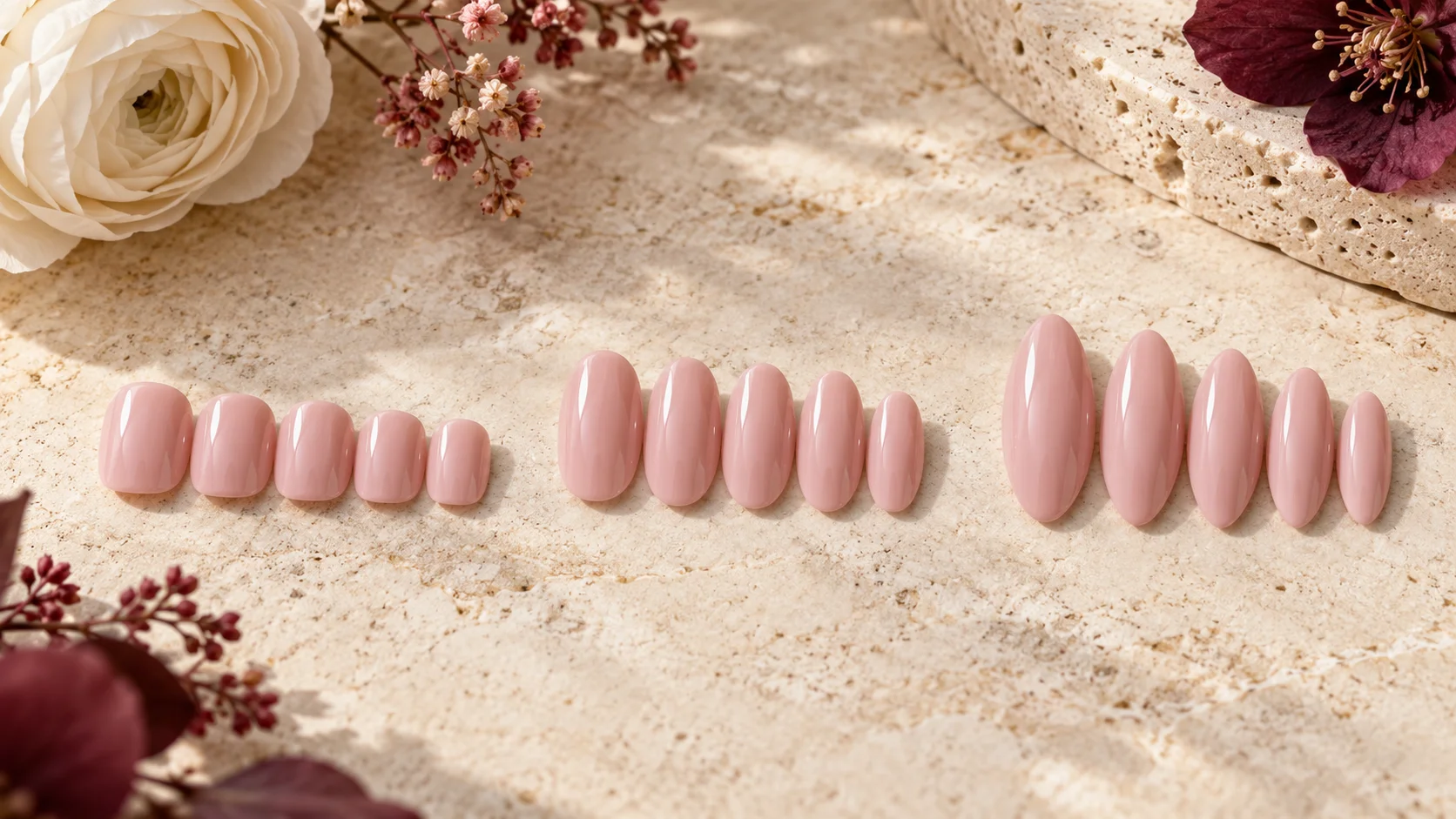
- Choose a familiar level of length
- Resolve fit before thinking about colour
- Select a finish by preference and practicality
- Allow time for the product’s actual process
- Plan for a small problem without creating a rushed repair
- Keep video preparation in proportion
- Requirements, comfort, finish, preparation
- Common questions
- Sources and further reading
Press-on nails are an optional part of interview preparation. If you choose to wear them, prioritise a comfortable fit, a manageable length and any actual instructions for the interview or assessment. A particular colour is not evidence of competence and cannot be promised to improve a hiring outcome.
The useful aim is to make the manicure a settled detail rather than something you have to manage during the conversation. Choose a finish you enjoy and understand, then return your attention to the role, your examples and the practical arrangements for the day.
Check the interview format and tasks first
The National Careers Service recommends confirming the interview format, reading the job description and preparing relevant examples. It also advises reading instructions carefully for an assessment centre or presentation. Those details should lead your preparation.
Find out whether the session includes typing, handwriting, a practical demonstration or work in a setting with specific hygiene requirements. If nail or hand requirements are given, use that information rather than guessing from a general idea of professional appearance.
When a relevant instruction is unclear, ask the organiser what is needed for the task. This guide does not interpret employment law or establish a dress code for a particular role. It also does not assume that artificial nails are permitted simply because the interview is brief.
Choose a familiar level of length
Think about the hand movements you expect to make: opening a folder, writing notes, using a keyboard or demonstrating a skill. A length close to what you already use may reduce the amount of adaptation you have to think about. That is a practical preference, not a universal rule that long nails are unprofessional.
If you enjoy a longer style and it is compatible with the setting, check that the actual set allows you to perform the expected tasks comfortably. Do not rely on the length label alone. The correct-fitting tip and your natural nail-bed length affect the visible result.
A first attempt at a substantially different length is best assessed with time to change your mind. Avoid making an unfamiliar manicure part of a rushed departure. The interview is already a new situation; the nail routine does not need to add another unresolved question.
Resolve fit before thinking about colour
Dry-fit the set according to the manufacturer’s instructions and confirm suitable choices for all ten fingers. A neat-looking shade cannot compensate for a tip that presses, overlaps skin or requires force to sit in position.
Olive & June’s fitting advice emphasises comfortable sizing and notes that styles can have different curves. Keep the exact range with your size record, especially if you are changing from a set that fitted well previously.
If the fit remains uncomfortable or uncertain, choose another option rather than deciding to tolerate it until the interview is over. You should not have to spend the conversation monitoring a painful nail or worrying about a visibly loose edge.
Select a finish by preference and practicality
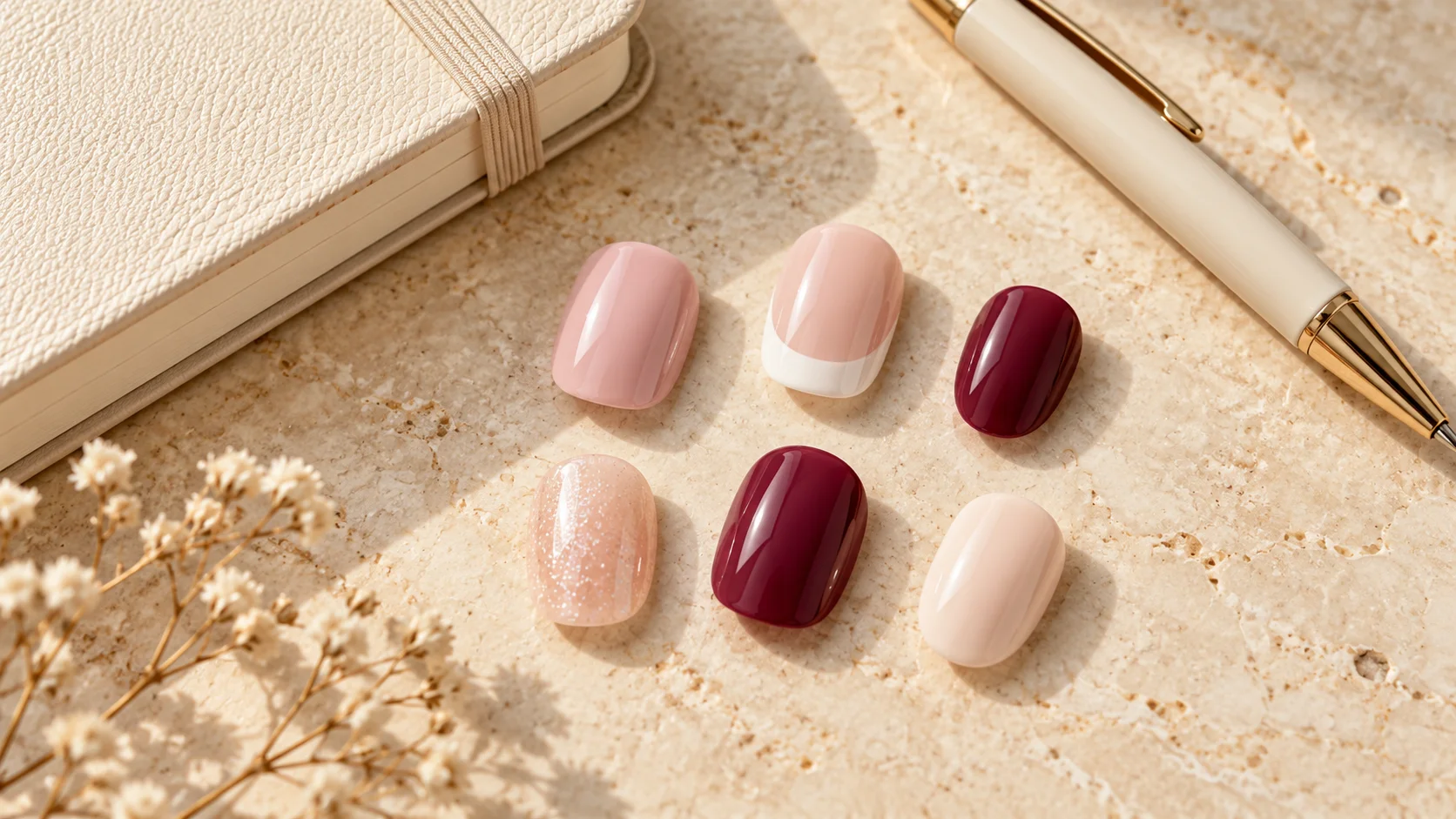
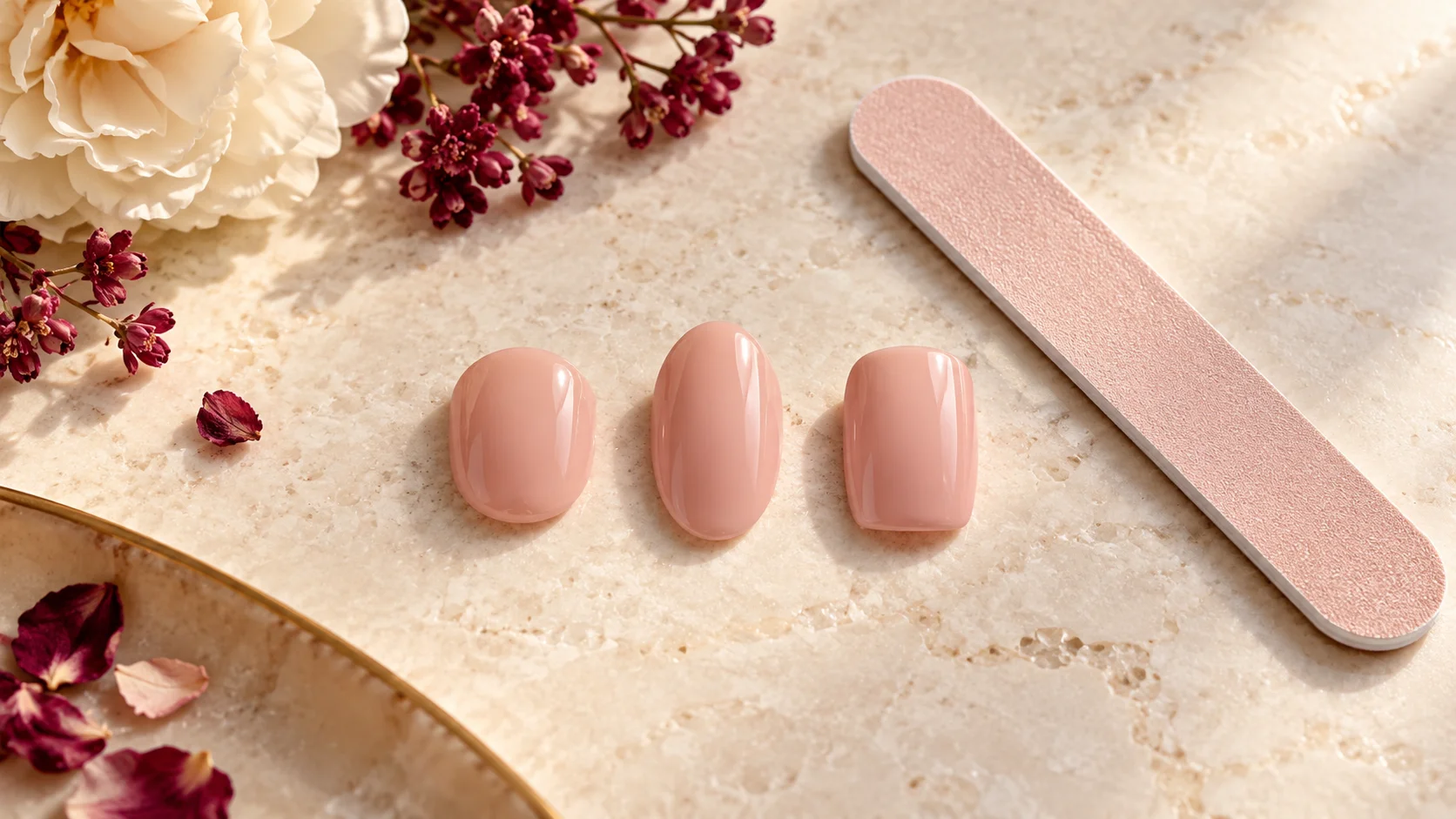
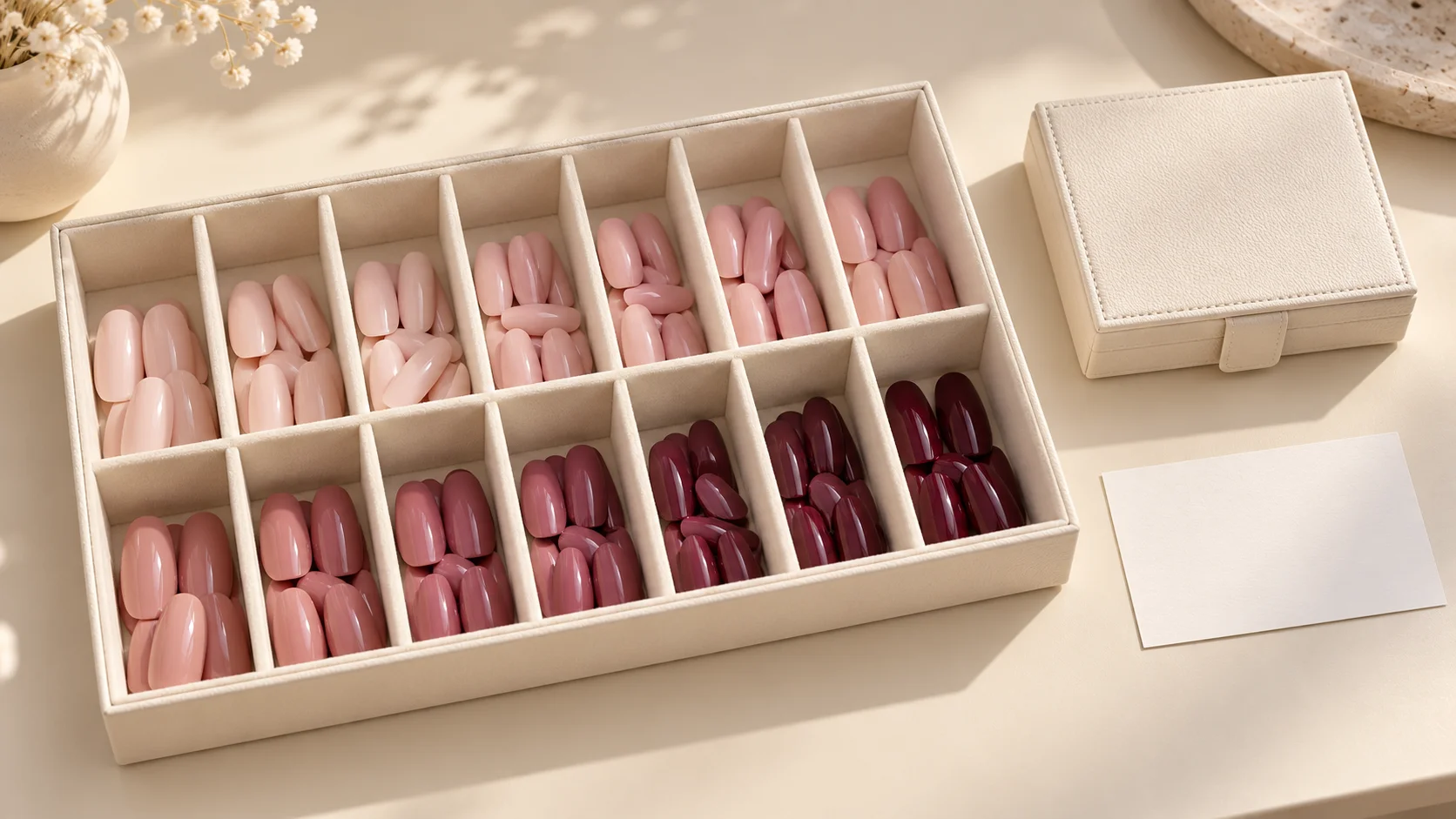
A plain blush, a deeper berry or a French design can all be considered according to your own style and the setting’s actual requirements. This article does not assign professionalism to a colour family. There is no evidence here that one shade gives a candidate an employment advantage.
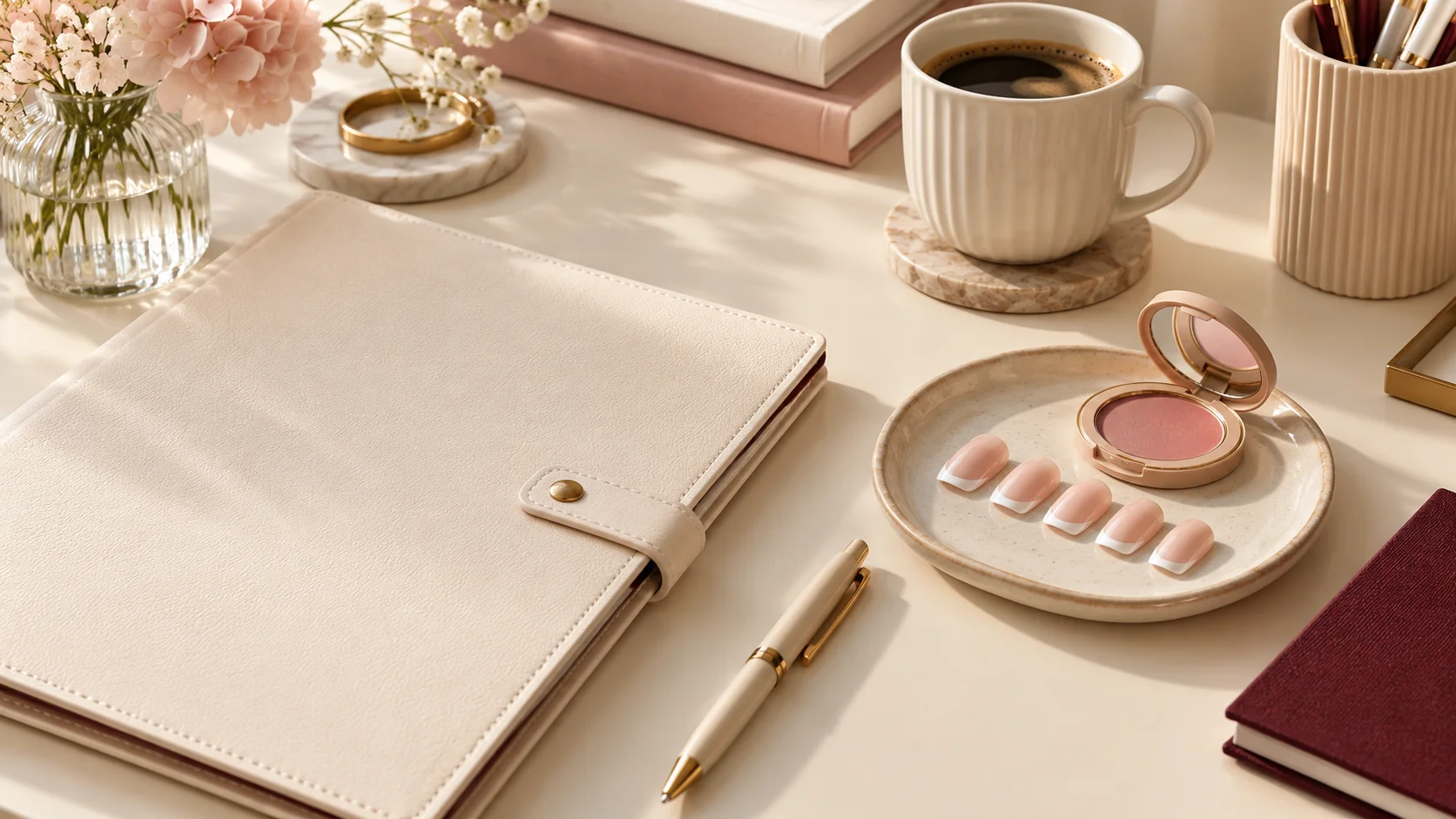
If you prefer a visually quiet finish, compare a smooth single colour with a simple French band. As a manufacturer-described example, OPI UK’s French Press is a short rounded French-tip set. It is an illustration of a style category, not a tested interview recommendation.
Think about raised decoration separately from colour. If a textured detail catches on your clothes or interferes with handling materials, a smoother design may suit that day’s tasks better. You do not need to abandon your taste; you can choose how much detail you want to manage.
| Interview feature | Useful check | Decision to make |
|---|---|---|
| Written or keyboard task | Comfort using the actual tools | Choose a length you can work with naturally |
| Practical assessment | Supplied hygiene or safety instructions | Confirm whether artificial nails are appropriate |
| Presentation | Handling notes, a clicker or equipment | Keep the set compatible with your planned movements |
| Video call | Ordinary camera framing and desk setup | Avoid spending preparation time chasing a perfect close-up |
| Travel to the venue | Time for the whole routine | Resolve fit and removal questions before departure |
Allow time for the product’s actual process
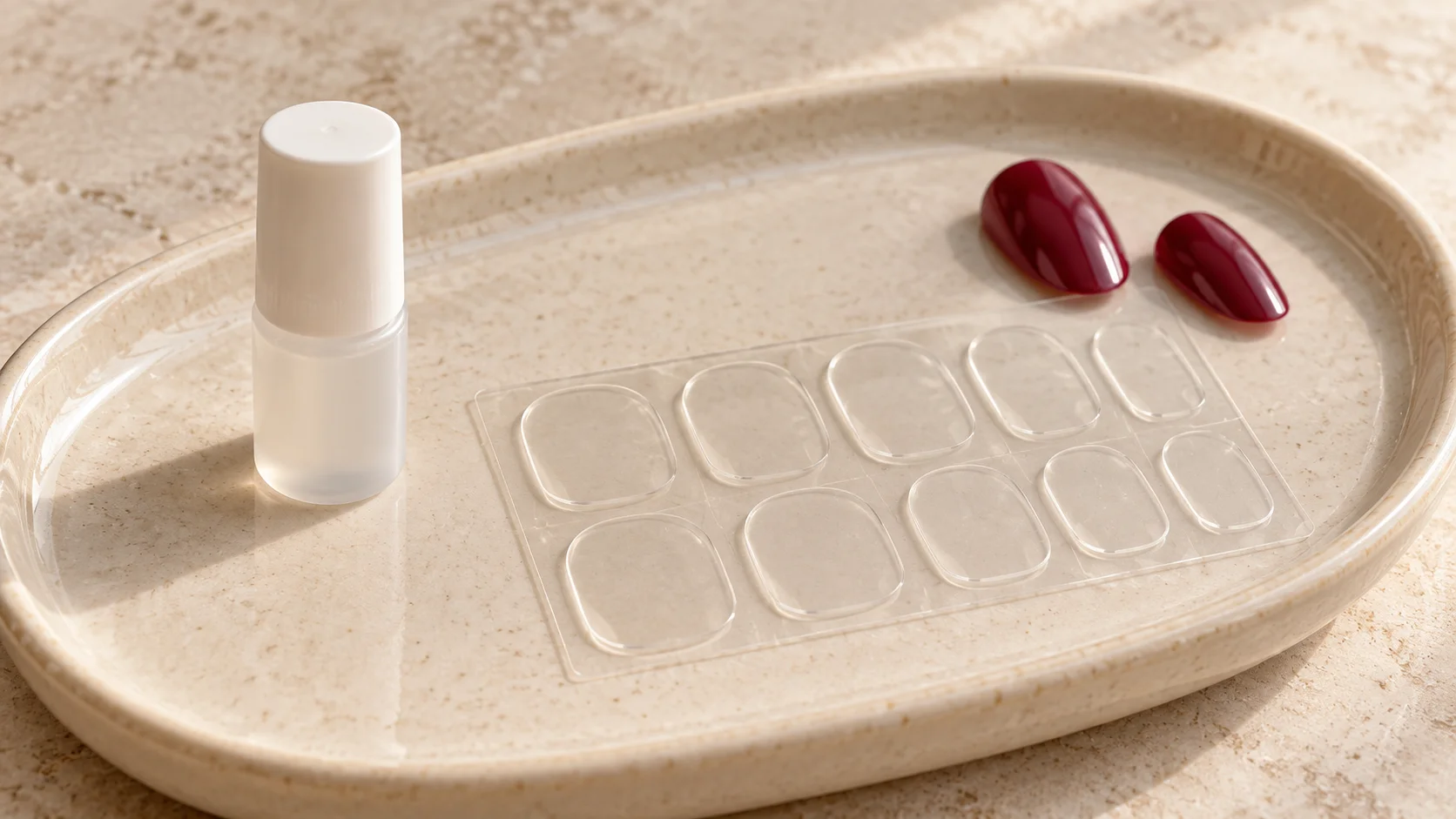
Read the application and removal directions before setting a schedule. Different adhesives can have different requirements, so a generic last-minute manicure timetable is not useful. Make sure the necessary supplies are available and that you understand what to do if the set is unsuitable.
If you are unfamiliar with the product, inspect the sizes and instructions ahead of the day. That does not mean repeatedly applying and removing a set for practice. It means resolving the information you can check before adhesive is involved.
Keep a simpler alternative available, including wearing your natural nails. An optional cosmetic step should not displace sleep, travel planning or the preparation of relevant examples. There is no obligation to buy a new set for an interview.
Plan for a small problem without creating a rushed repair
If a tip becomes loose before the interview, use the manufacturer’s guidance for the actual system. Do not seal a partly lifted edge with extra glue or force a replacement onto an uncomfortable area. A tidy appearance is not a reason to ignore a fit or nail-condition concern.
A crowded waiting area or moving vehicle is not a suitable place to improvise with adhesive. If a supported replacement cannot be done properly, choose the simpler available option and focus on getting to the appointment. The manicure does not have to dictate the day.
Keep any required product information accessible rather than carrying an unlabelled emergency bottle. If you bring tools or liquids, consider the venue and journey rules as relevant. The contents should support a planned routine, not encourage a last-minute experiment.
Keep video preparation in proportion
For an online interview, check the camera, sound, connection and materials you need. The National Careers Service includes technical readiness in its interview preparation advice. A nail close-up should not become more important than whether you can hear, respond and present your examples clearly.
Use your ordinary desk position to assess comfort when typing or referring to notes. If a length or raised detail gets in the way, reconsider it before the call. You do not need to hold your hands unnaturally still to preserve the appearance of a manicure.
Once the practical checks are complete, leave the cosmetic decision settled. Reviewing the role and practising concise examples will give you more useful preparation material than repeatedly comparing tiny differences between two pale shades.
Requirements, comfort, finish, preparation
- Requirements: read the actual interview and assessment instructions.
- Comfort: confirm fit and manageable movement.
- Finish: choose an optional style you enjoy.
- Preparation: return attention to your examples and arrangements.
Use the Press-On Nails section for fitting and removal questions if you decide to wear a set. The final choice should feel like one manageable detail within your preparation, with no claim that a particular manicure determines your professional ability.
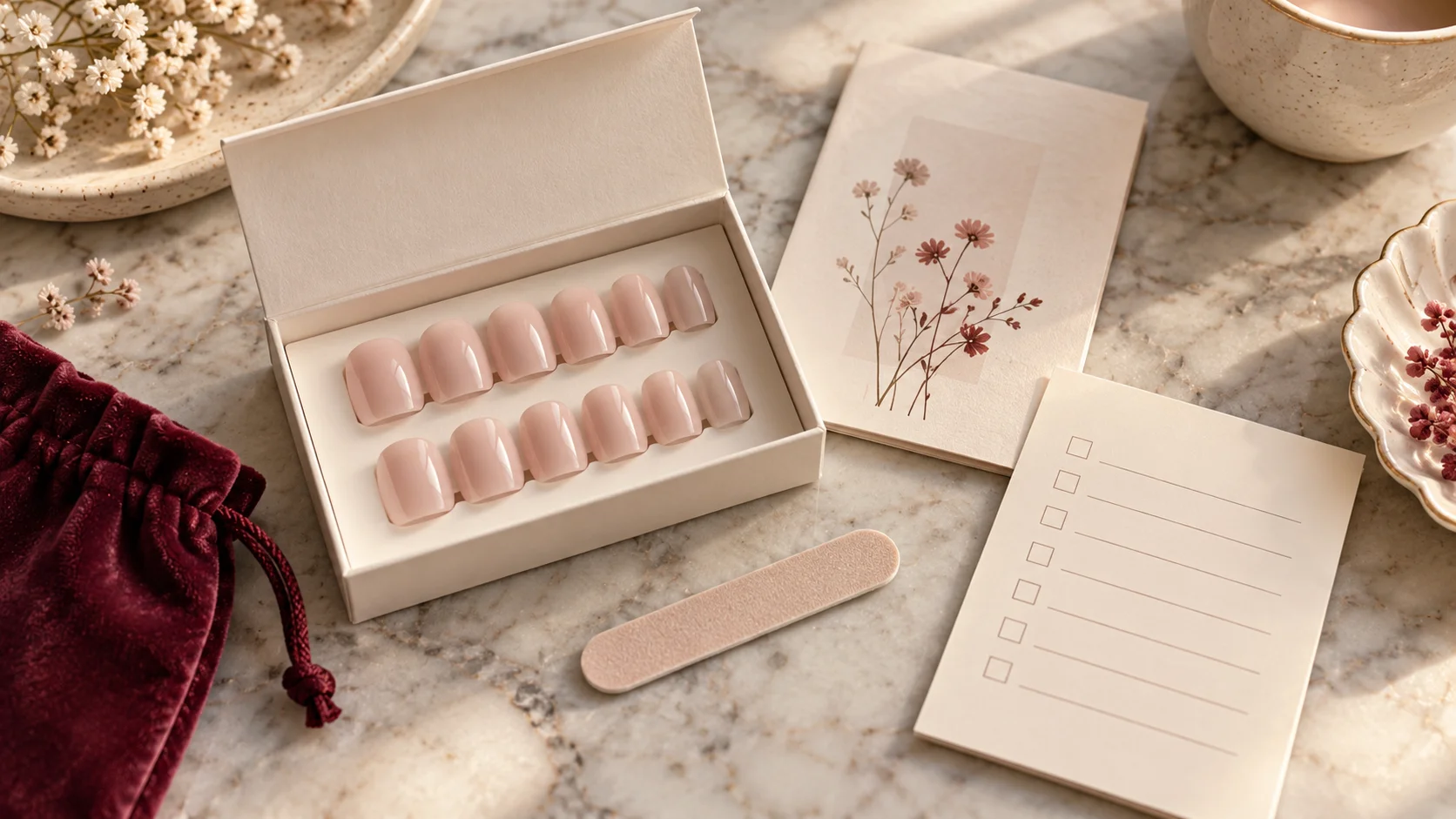
To complete the fit, wear and removal plan, read Short Press-On Nails: Shapes and Details for Everyday Wear, Press-On Nail Lengths: Comparing Short, Medium and Long Sets and A Press-On Nail Shopping Checklist for Your First Set. For the related care, tool or design decision, see Choosing a Comfortable Nail Length for Work, Sport and Hobbies.
Common questions
Do I need press-on nails for an interview?
No. They are an optional cosmetic choice, and there is no requirement in this guide to buy a set. Focus on the actual interview instructions, relevant examples and practical arrangements. If a manicure adds uncertainty or discomfort, choosing natural nails is a reasonable alternative.
Which nail colour is most likely to help me get hired?
This guide provides no evidence that a particular colour improves a hiring outcome. Choose according to your preference and any actual requirements for the setting. Professional ability should not be inferred from a shade, and styling suggestions here are not employment-performance claims.
Are long nails always unsuitable for interviews?
There is no universal rule given here. Consider the tasks, setting and any supplied instructions, then check whether the length is comfortable and manageable for you. A familiar longer style and a compact style can create different practical choices without either determining competence.
What if the interview includes a practical assessment?
Read the instructions carefully and clarify any relevant hand, nail, hygiene or safety requirements with the organiser. Do not assume that artificial nails are permitted because the session is short. Choose a manicure only after understanding the actual tasks and conditions involved.
Should I apply a new set just before leaving?
Avoid leaving unresolved fit and instruction questions until departure. Inspect the sizes and understand the product’s application and removal process beforehand. Different systems have different requirements, so this guide does not prescribe one universal timing. Keep a simpler alternative available if the set proves unsuitable.
What if a tip feels uncomfortable but looks neat?
Do not treat the appearance as a reason to tolerate discomfort through the interview. Follow the appropriate removal guidance and reconsider the fit or product. A pale shade or simple design cannot compensate for pressure, skin overlap or another unresolved problem with the set.
Is a French set more professional than a coloured one?
That is not an evidence-based ranking made by this guide. A French design is one visual option among many. Choose the finish you enjoy within the setting’s actual requirements, and compare its fit, length and practicality rather than assigning professional status to the design.
What matters most for a video interview?
Check your connection, sound, camera setup and the materials needed to discuss the role. If you wear press-ons, make sure they do not interfere with typing or handling notes. Cosmetic preparation should remain proportionate and should not displace practising relevant examples or resolving technical issues.
Sources and further reading
- National Careers Service — Interview tips — checked 2026-10-22
- Olive & June — Fit — checked 2026-10-22
- OPI UK — French Press — checked 2026-10-22