Short Press-On Nails: Shapes and Details for Everyday Wear
Choose short press-ons by actual dimensions, everyday tasks and the details of the design, with fit and removal checked before application.
Archive edition: 2026-05-17 · This is an editorial allocation, not the first-publication date.
Key takeaways
- Length: compare dimensions with the amount of extension you want.
- Fit: choose comfortable tips for all ten nails before attachment.
- Routine: check activities, gloves and workplace requirements.
- Finish: choose decoration after the practical questions are answered.
In this guide
- Key takeaways
- Read the length description alongside the dimensions
- Choose the outline before the decoration
- Try fit without attaching the nails
- Use your ordinary week as the practical test
- Keep small designs readable
- Check alteration before planning to shorten a set
- Plan the adhesive and removal together
- Length, fit, routine, finish
- Common questions
- Sources and further reading
Short press-on nails can give you a deliberate colour or design without choosing a long extension. The useful starting point is the amount of nail you want beyond your fingertip, followed by fit, outline and the tasks you need your hands to do. A packet labelled short does not settle those questions by itself.
Think of this as a selection guide rather than a wear test. The best choice for your routine might be a plain round set, a compact French design or a softly squared berry finish. None has to make your fingers look a particular way to be worth wearing.
Read the length description alongside the dimensions
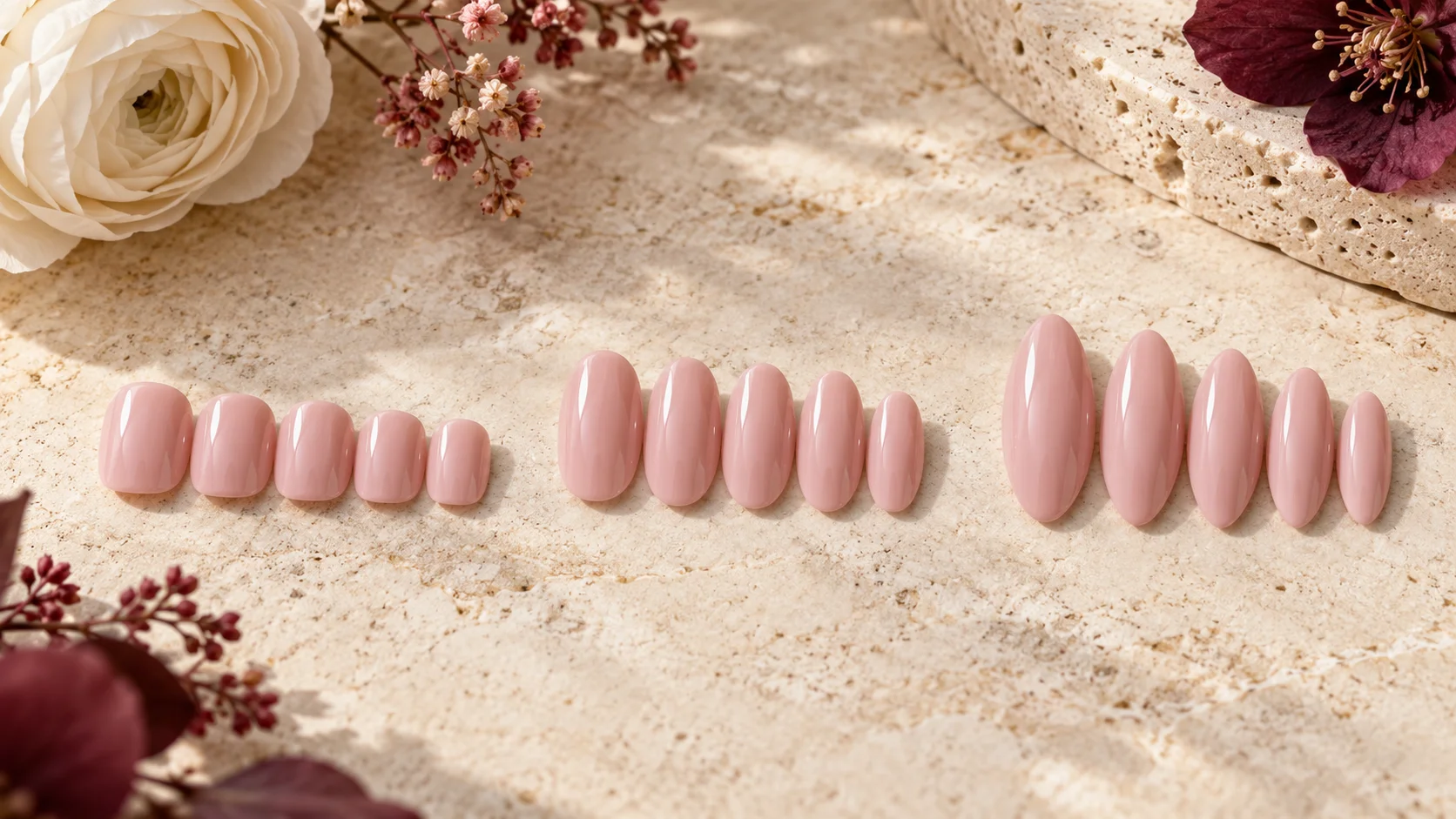
Length names help you browse, but they are not a universal measurement system. Glamnetic’s shape guide lists different dimensions for its short, extra-short and super-short options. It also separates the measurements by outline, showing why the name alone cannot describe every tip.
Check whether a listed length means the whole detached tip or the part intended to extend past your own nail. Most product photographs do not let you measure that accurately. Ask for clarification where the description is unclear, especially if you have a firm maximum length in mind.
Your natural nail-bed length changes the visible result too. Glamnetic explains that the same tip may look longer on a shorter nail bed and shorter on a longer one. Treat a model photograph as inspiration rather than a promise about your own finished length.
Choose the outline before the decoration
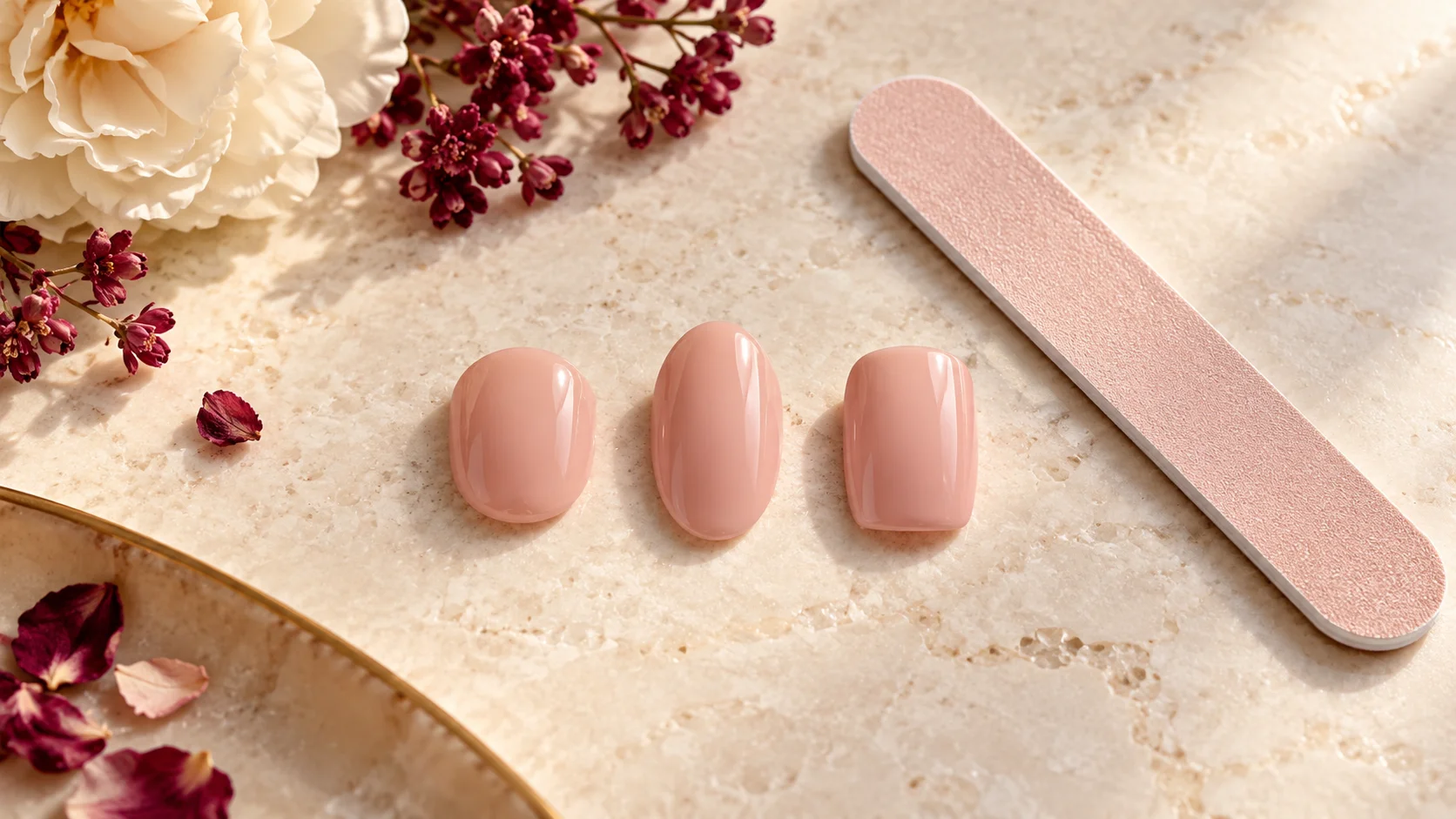
Round, oval and rounded square are useful starting descriptions. A round outline has a curved end; an oval is more elongated; a rounded square keeps a straighter front with softened corners. Sellers use their own shapes, so compare the actual silhouette rather than assuming every product with the same name is identical.
Look at the smallest tips as well as the thumb in the product photographs. A design can appear quite different across the set. If you want a consistently compact look, check whether the little-finger and thumb tips have similar visual proportions once the width changes.
You can also choose by the shape you already enjoy wearing. There is no need to follow a chart that assigns a compulsory nail shape to your hand type. A useful comparison is whether you like the outline from above and whether its edges feel manageable in your routine.
| Option | Visual character | Check before buying |
|---|---|---|
| Round | A curved, compact-looking end | Actual extension beyond your fingertip |
| Oval | A softer elongated outline | Whether the chosen size is longer than expected |
| Rounded square | A straighter front with softened corners | Corner shape in the real product images |
| French design | A contrasting band at the end | Band depth and whether shortening would remove it |
| Raised decoration | Texture as well as colour | Compatibility with gloves, pockets and your activities |
Try fit without attaching the nails
Lay out the tips and identify a comfortable choice for each finger before opening the adhesive. Olive & June’s fitting guide emphasises a fit without forcing or gaps and notes that different styles have different curves. Follow the fitting instructions for the actual range you buy.
A shorter tip can still be too wide, too narrow or the wrong curve. Do not let the appealing length persuade you to accept a pressing edge or an obvious mismatch. If the shape only sits correctly when squeezed into place, pause and check another option with the seller.
Record the chosen tip number for each finger alongside the brand, range and shape. This can make a repeat purchase simpler, but it is not a universal size record. Recheck when changing ranges or when the manufacturer has changed the product.
Use your ordinary week as the practical test
List the activities that matter: typing, opening small clasps, fastening buttons, using contact-lens equipment, playing an instrument or wearing fitted gloves. That list gives you a reason to prefer one length or surface detail. It is more informative than choosing solely because a set is advertised for everyday wear.
For workplace use, check the actual uniform, hygiene or safety policy before buying. A short artificial nail may still be outside the rules for your role. This article cannot establish permission for healthcare, food handling, laboratory work or another regulated setting.
If you are trying press-ons for the first time, choose a time when you can notice how they affect normal movements and remove them using the supplied method if needed. Avoid making the first application immediately before an important task with no opportunity to change your mind.
Keep small designs readable
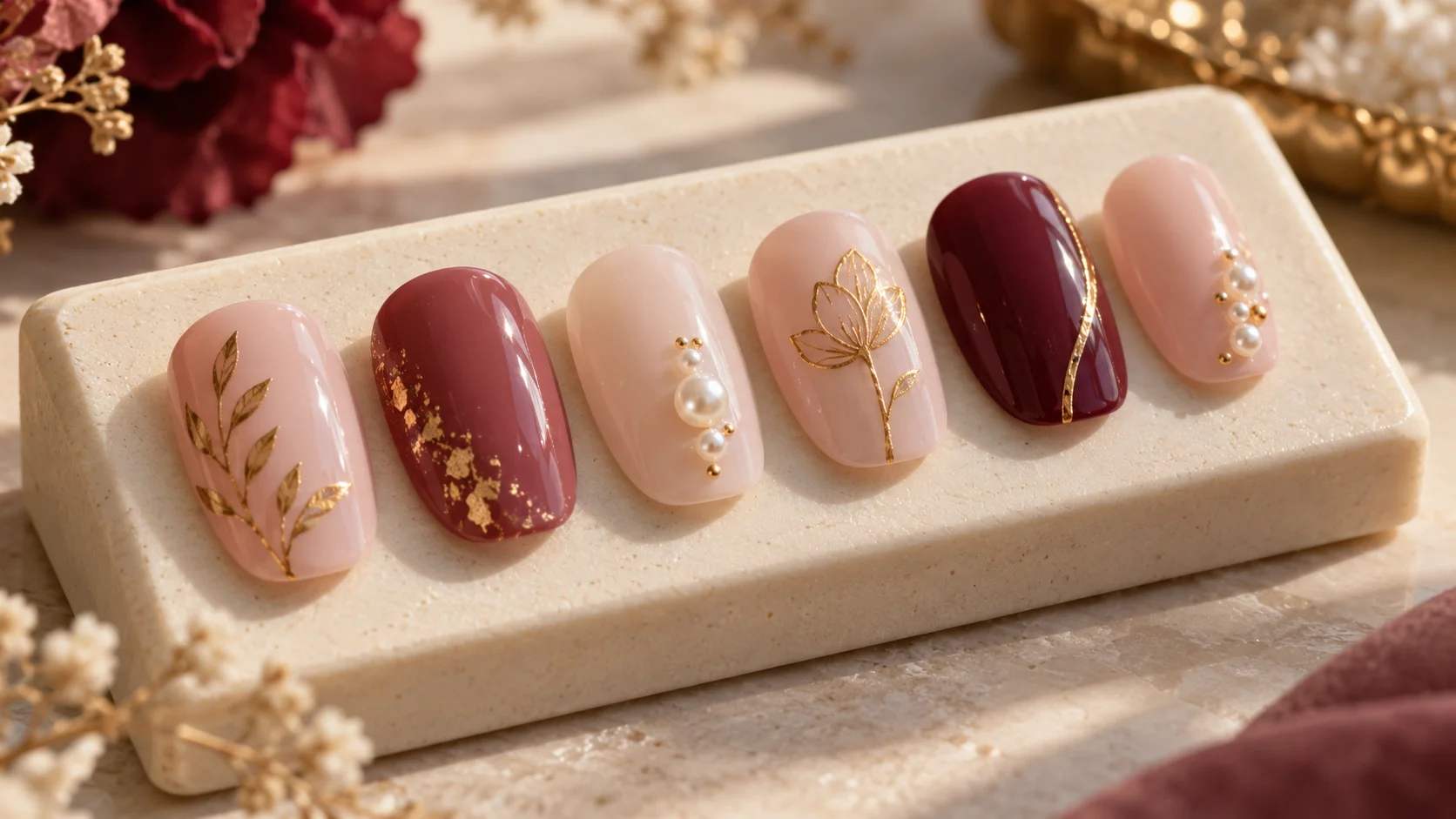
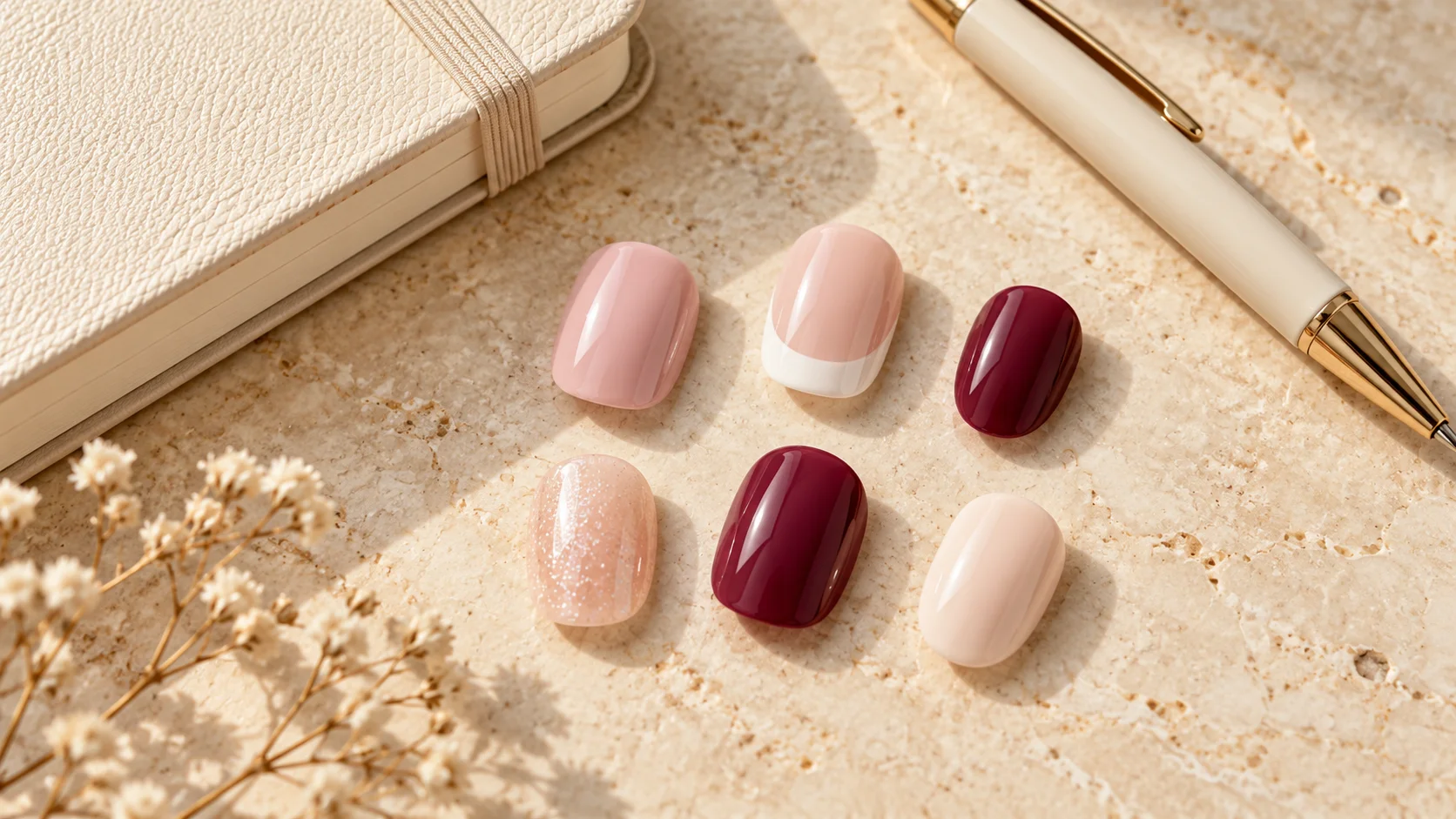
A short surface offers a small space for decoration. A narrow French band, one fine dot or a single accent colour can give the design a clear focal point. These are styling choices, not rules: a dense pattern is equally valid if you enjoy the effect.
Look closely at the actual set rather than relying on a heavily enlarged close-up. Decide whether you want the detail to be obvious at normal hand distance or visible mainly when inspected. A subtle shimmer and a bold geometric line answer those two preferences differently.
Consider the finish alongside the colour. Gloss reflects light, while a matte-looking surface gives a different visual texture. Images and screens can alter shade and shine, so avoid treating a generated illustration or a studio photograph as an exact colour sample.
Check alteration before planning to shorten a set
It may be tempting to buy a longer design and assume it can be reduced to your ideal size. Ask the manufacturer whether that particular tip can be filed or shortened and what effect alteration may have on the finish. A printed French band or decoration at the end may disappear.
Starting with a closer length can avoid that uncertainty. Do not file the natural nail narrower to fit an unsuitable tip, and do not use an unsupported alteration method simply because another brand recommends it. The intended finished shape and the product’s instructions both matter.
Plan the adhesive and removal together
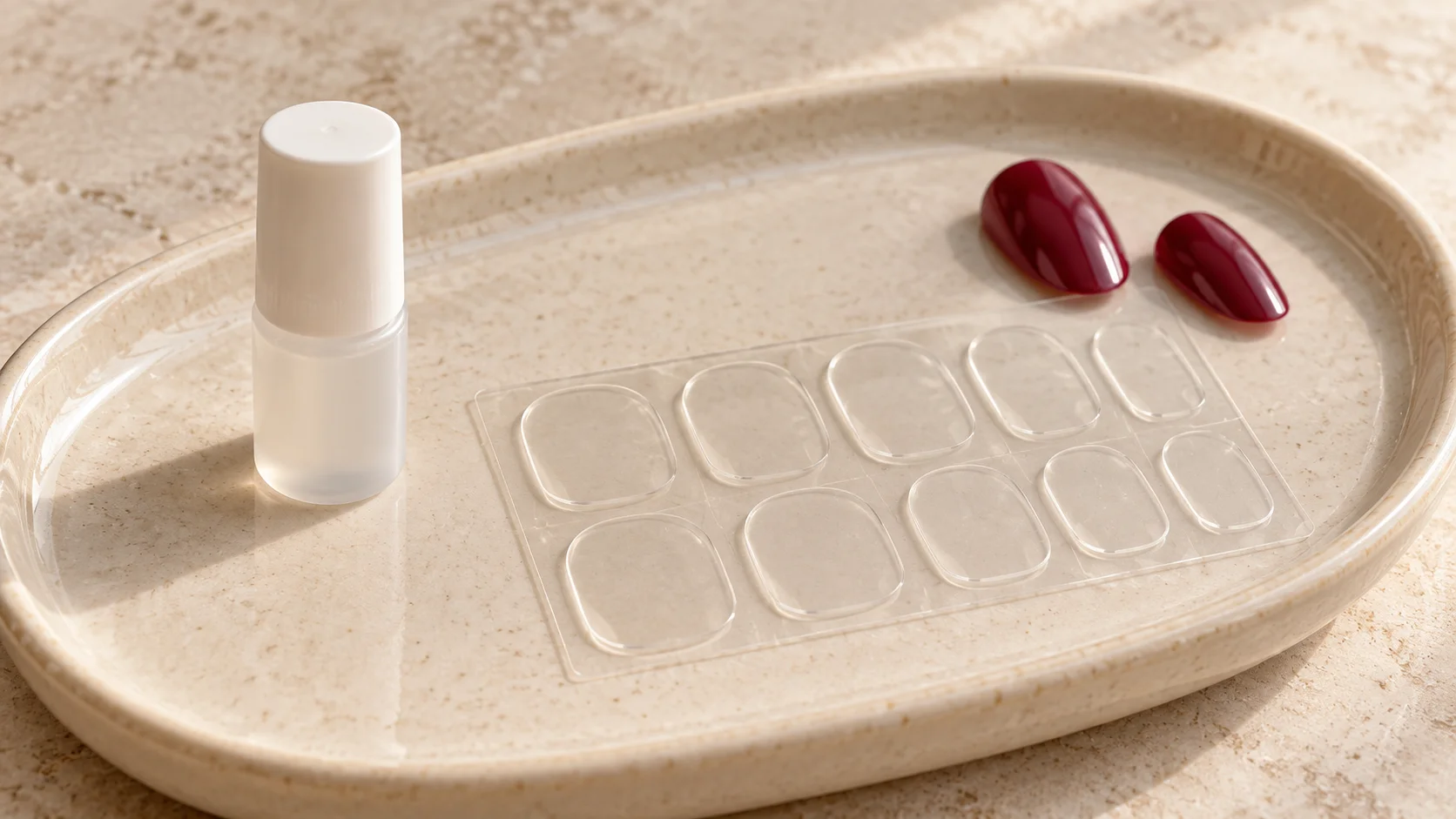
A short set still needs its specified attachment and removal process. Check whether the box uses separate glue, adhesive tabs or pre-applied adhesive. The style name does not tell you which system is inside or whether extra supplies are needed.
KISS’s FAQ illustrates why product identification matters: its glue-on instructions include a specific removal route and warn against forcing or pulling nails off. Reuse also differs between its ranges. Do not assume that a shorter nail can simply be peeled away or that every detached tip is intended for another wear.
Length, fit, routine, finish
- Length: compare dimensions with the amount of extension you want.
- Fit: choose comfortable tips for all ten nails before attachment.
- Routine: check activities, gloves and workplace requirements.
- Finish: choose decoration after the practical questions are answered.
For a first shortlist, save two sets with similar dimensions and compare their fit information, adhesive and removal instructions. Then choose the design you prefer. The Press-On Nails section covers the next questions to ask before application.
To complete the fit, wear and removal plan, read Press-On Nail Lengths: Comparing Short, Medium and Long Sets, Can You Reshape Press-On Nails? What to Check Before Filing and Decorated Press-On Nails: Checking Raised Details Before You Buy. For the related care, tool or design decision, see Choosing a Comfortable Nail Length for Work, Sport and Hobbies.
Common questions
Does short mean the same length in every brand?
No. Length labels are useful browsing terms, but the actual dimensions can differ between brands and shapes. Check the chart for the exact range and consider how much of the tip will extend beyond your own nail bed before choosing a set.
Why does the same set look longer on me?
The visible result depends partly on your natural nail-bed length. A tip can extend further beyond a shorter nail bed than a longer one. Product photographs show one example, so compare dimensions and your own fit rather than expecting an identical appearance.
Which short shape should I choose first?
Start with an outline you already enjoy, such as round, oval or rounded square, then check the actual dimensions and fit. There is no compulsory shape for a particular hand type. Your preferred appearance and the tasks you need to do are useful guides.
Can I wear short press-ons at work?
Check your actual workplace policy before application. A short artificial nail may still be outside hygiene, uniform or safety rules for your role. A product description saying everyday wear does not establish permission in healthcare, food handling, laboratory work or another specific setting.
Can I shorten a longer set instead?
Only plan that alteration after checking the instructions for the particular tips. Shortening can change the outline or remove decoration such as a French band. A set closer to your intended length may be a clearer choice when alteration guidance is missing or uncertain.
Are short press-ons automatically comfortable?
No. Length is only one part of the decision. The tip must also have a suitable width and curve, and it should not need to be forced into position. Dry-fit the exact range as directed and reconsider any tip that feels uncomfortable or visibly mismatched.
Will a small design still show on short nails?
That depends on the size and contrast of the detail. Look at the smaller tips in the actual set, not only an enlarged thumb photograph. Decide whether you want the design to stand out at ordinary hand distance or remain a subtle close-up detail.
Can I peel off a short set when finished?
Do not assume that shorter length changes the removal method. Identify the adhesive system and follow the supplied removal instructions without forcing the tips away. Whether the detached nails can be used again is also specific to the range rather than their length.
Sources and further reading
- Glamnetic — Nail shapes and measurements — checked 2026-10-22
- Glamnetic — Why worn length varies — checked 2026-10-22
- Olive & June — Choosing press-on size — checked 2026-10-22
- KISS — Nails FAQ — checked 2026-10-22