Press-On Nail Lengths: Comparing Short, Medium and Long Sets
Compare short, medium and long press-ons using actual dimensions, your nail-bed length and the activities you need the set to suit.
Archive edition: 2026-07-14 · This is an editorial allocation, not the first-publication date.
Key takeaways
- Read: identify total length and the exact size range.
- Compare: keep shape and finish similar where possible.
- Fit: establish correct placement without force.
- Plan: choose the visible extension for your activities and preference.
In this guide
- Key takeaways
- Understand total length and visible extension
- Compare like with like where possible
- Consider short sets as a proportion choice
- Use medium as a starting description, not a compromise rule
- Plan long sets around the intended use
- Resolve fit before judging the length
- Do not assume shortening preserves the original design
- Make a shortlist with a realistic routine
- Measure the product, picture the routine
- Common questions
- Sources and further reading
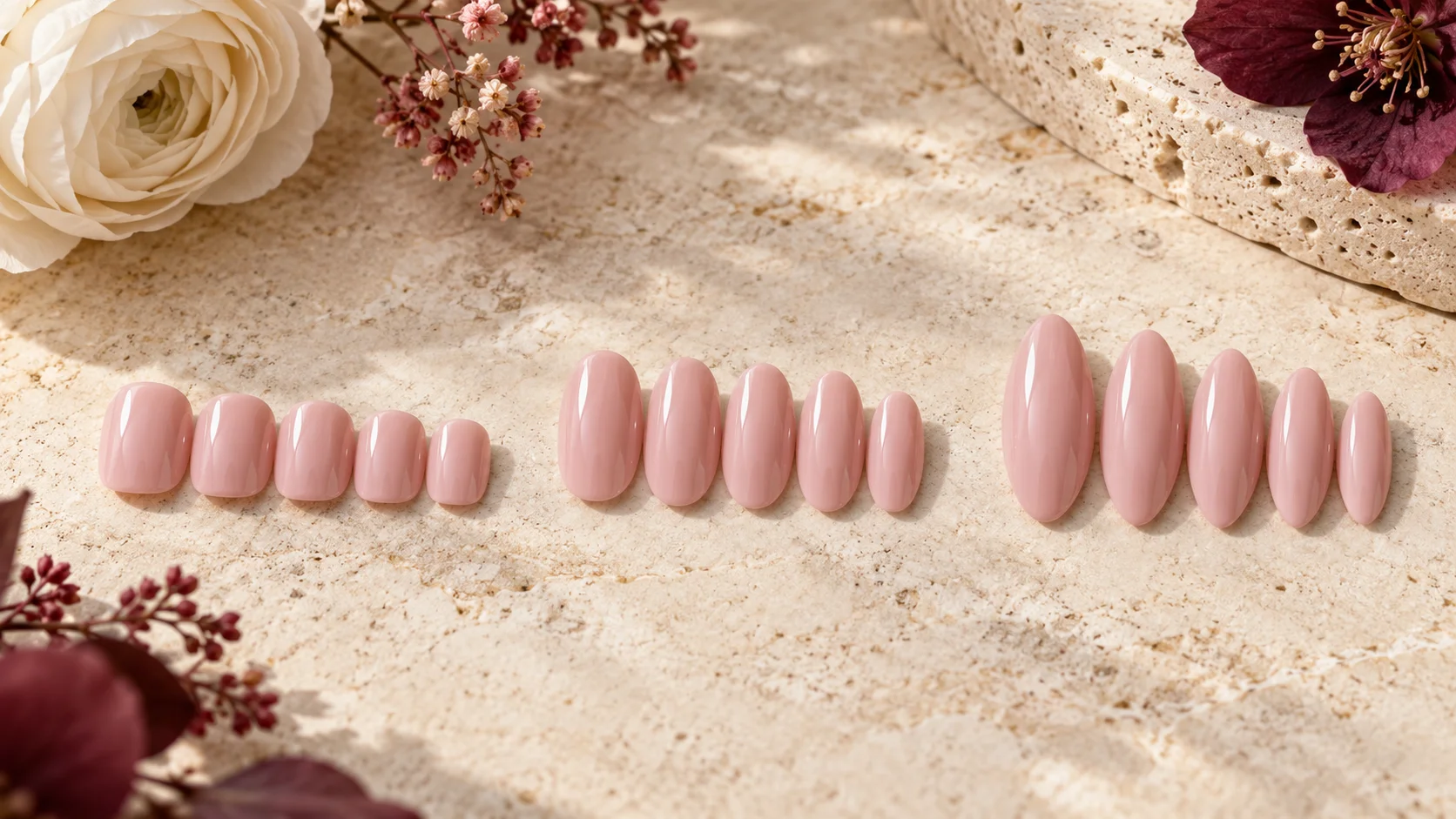
Choose press-on length by the actual tip dimensions and the amount of extension you want beyond your fingertip. Short, medium and long are useful browsing categories, but they do not form a universal measurement scale. The same labelled length can look and feel different across shapes, brands and hands.
A useful comparison separates three decisions: whether the tip fits your nail, whether the finished length suits your activities, and whether you enjoy the visual effect. You do not need to choose the longest option to make a manicure feel special, or the shortest option simply because it is your first set.
Understand total length and visible extension
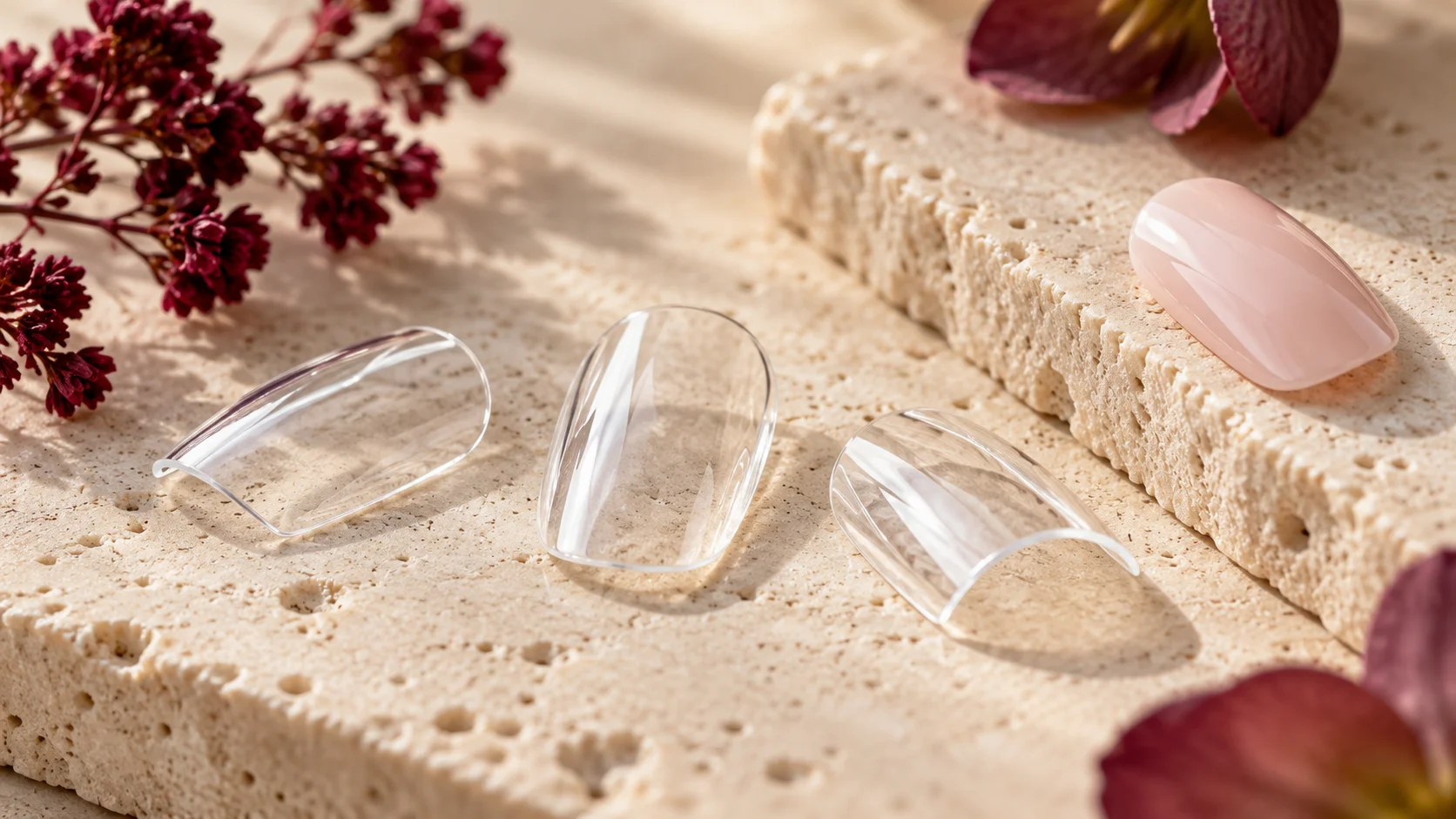
The length of a detached artificial nail is not necessarily the length you will see beyond your own fingertip. Part of the tip covers the natural nail bed. How much remains beyond it depends on the product’s fit and your own nail-bed length.
Glamnetic explains that the same tip may appear longer on a shorter natural nail bed and shorter on a longer one. This is why a model photograph cannot guarantee your finished proportions.
When a listing provides millimetres, check what is being measured. Ask whether it is the complete tip and whether individual sizes have different lengths. Do not subtract a guessed number from a photograph to produce a supposedly exact prediction of your own extension.
Compare like with like where possible
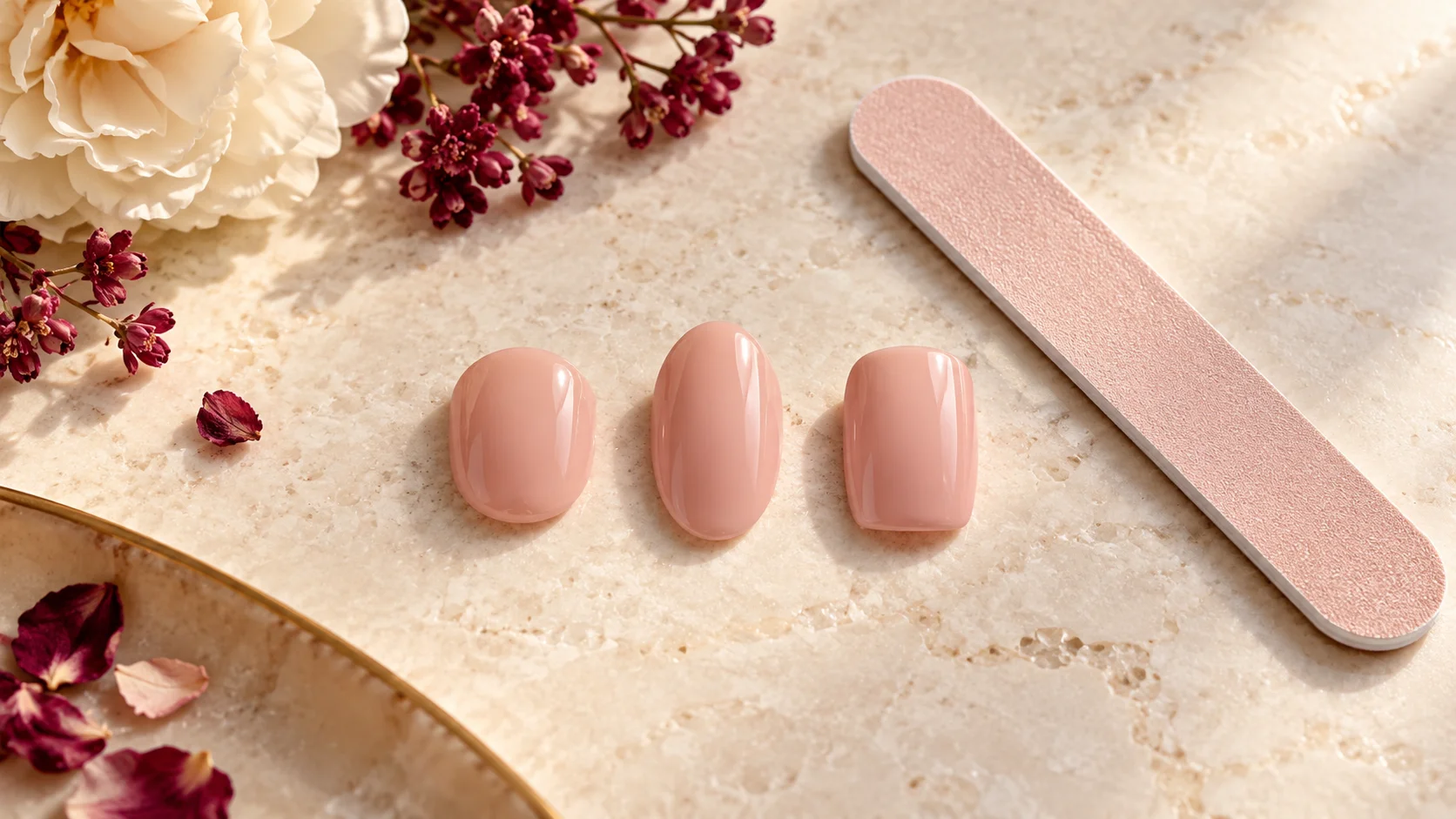
If you want to understand length alone, compare similar shapes and finishes first. A compact round nail and a long almond differ in both length and outline. That can make it difficult to decide which feature attracts you or which one concerns you.
The Glamnetic measurement guide lists separate length and width ranges for its shapes. The information shows that the size category and the silhouette both matter. It does not create a universal threshold for every brand’s short, medium or long label.
Write the exact product name beside each measurement. A note that simply says medium loses the useful context. If the chart only gives a range, ask whether it provides the dimensions for the specific tip sizes you expect to use.
Consider short sets as a proportion choice
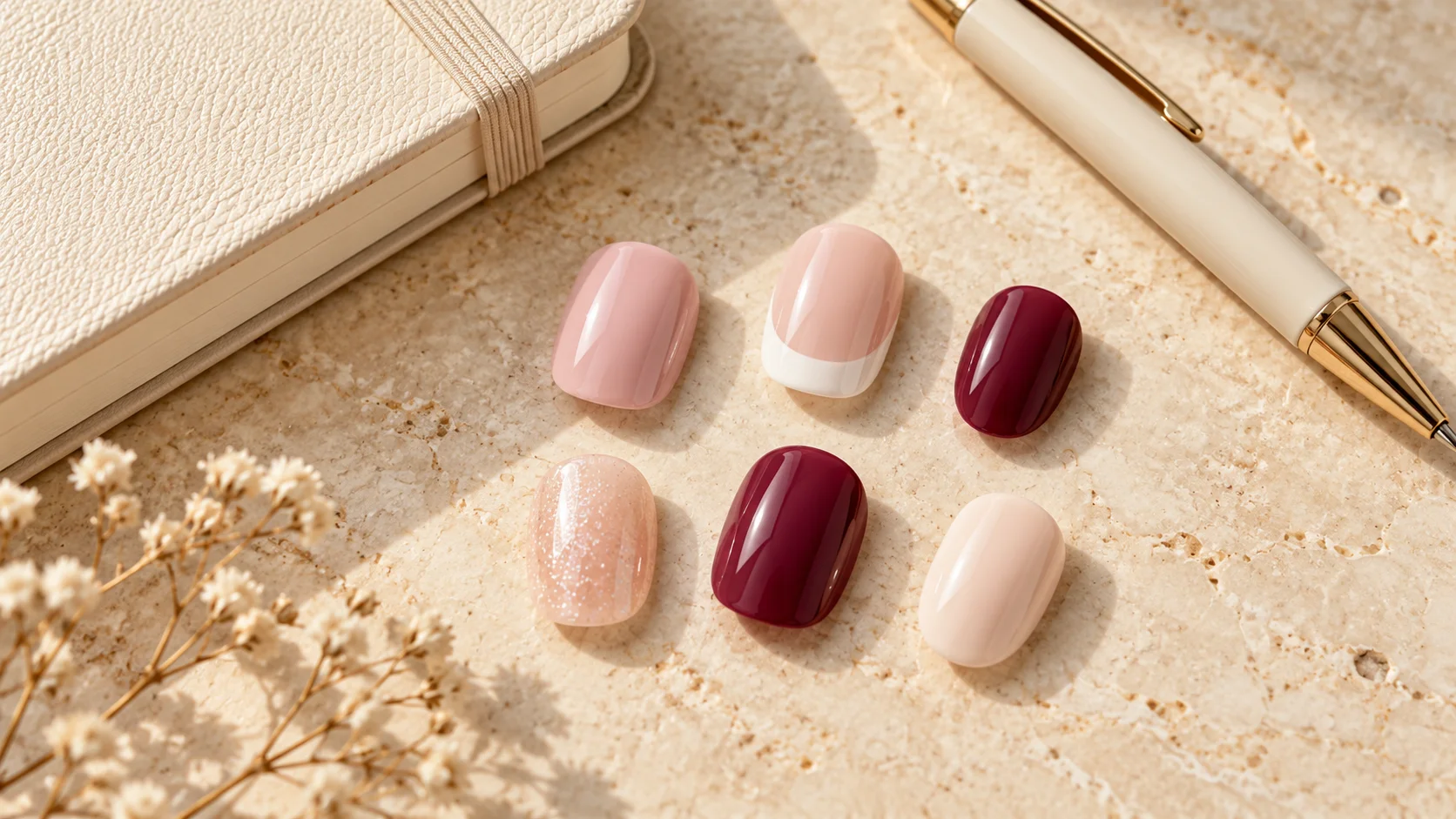
A short set can keep the overall appearance compact, with colour or detail as the main feature. This may appeal if you prefer your usual natural-nail length or want a quieter outline. It can still carry a strong shade, a French band or intricate artwork.
Check whether the correct-fitting size covers your natural nail as intended. A set that is too short for your preference is not improved by choosing an oversized tip for extra length. Ask about another range with a more suitable proportion instead.
Short does not automatically mean permitted at work or suitable for every activity. Check any hygiene or safety requirements that apply to your role. The artificial-nail system itself may be relevant to a policy, regardless of how little it extends.
Use medium as a starting description, not a compromise rule
A medium set can offer a more visible extension without choosing the longest option in a collection. Whether it feels moderate to you depends on what you normally wear. Someone used to very short nails may find the same tip more noticeable than someone who regularly wears extensions.
Decide what you want the added length to do visually. It may provide more space for a pattern, create an elongated outline or simply show a favourite shape. Those are preference questions, not evidence that a medium set will suit every hand.
Compare the smallest and largest tips in the pack. Length often varies across sizes, so the thumb and little finger may not share the same proportion. Check the set as a complete design rather than deciding from one enlarged sample.
Plan long sets around the intended use
A long outline makes length part of the design itself. You may want that effect for a particular event or enjoy it as an everyday preference. The practical question is whether you can use the set comfortably for the activities and setting you have in mind.
Consider gloves, small fasteners, instruments, typing habits and tasks involving tight spaces. A product photograph cannot answer those questions for you. If you have not worn a comparable length before, allow time to assess it without an immediate important task or a deadline for removal.
Do not use the ends of the nails as tools for prising, opening or scraping. If an activity repeatedly catches the tips, reconsider the length or manicure choice for that task. A longer advertised wear period is not a reason to continue with a set that does not suit the situation.
| Length direction | Possible visual aim | Practical question |
|---|---|---|
| Short | A compact outline with colour as the focus | Does the correct size cover the nail and meet your preferred length? |
| Medium | A more visible extension or extra design space | How different is it from the length you normally use? |
| Long | Length and silhouette as prominent design features | Does it suit the activities and setting you have planned? |
| Any category | Your chosen style | Are width, curve, adhesive and removal also appropriate? |
Resolve fit before judging the length
A tip must sit in its intended position for its visible extension to be assessed meaningfully. Do not move it further down the natural nail to make it look shorter or further forward to gain length. Follow the manufacturer’s fitting instructions.
Olive & June’s fitting guidance emphasises comfort without forcing and notes that styles have different curves. A length you love may still come in a mould that does not suit a particular nail.
Check all ten sizes before application. If the right width produces an unsuitable length, that is a reason to compare another range or ask about a supported alteration. It is not a reason to accept skin overlap or pressure from a different size.
Do not assume shortening preserves the original design
Ask the manufacturer whether the particular tips can be filed or shortened and what method it supports. Changing the end can remove artwork, alter a French band or change an almond into a different silhouette. A long design is not automatically a ready-made short design waiting to be trimmed.
If you need a substantial reduction, a closer starting length may be easier to assess. Avoid planning the purchase around an unsupported alteration. Keep changes to the artificial product distinct from filing or reshaping your natural nail to make a poor-fitting tip work.
Make a shortlist with a realistic routine
Record your preferred outline, the range’s dimensions, the likely size choices and the activities that matter. Add the adhesive and removal requirements before choosing between the final options. Length is one part of the complete manicure routine.
For an event, allow time to check the sizes and practise understanding the instructions before the day. If your first choice is unsuitable, having a simpler alternative can be more useful than trying to force a dramatic set into a routine it does not fit.
Measure the product, picture the routine
- Read: identify total length and the exact size range.
- Compare: keep shape and finish similar where possible.
- Fit: establish correct placement without force.
- Plan: choose the visible extension for your activities and preference.
Explore the Press-On Nails section for measuring and fitting guidance. Keep your final choice attached to the exact range name so that a future purchase starts with useful information rather than a vague length label.
To complete the fit, wear and removal plan, read Short Press-On Nails: Shapes and Details for Everyday Wear, Can You Reshape Press-On Nails? What to Check Before Filing and Press-On Nail Curvature: Why a Size Can Fit but Still Feel Wrong. For the related care, tool or design decision, see Choosing a Comfortable Nail Length for Work, Sport and Hobbies.
Common questions
Is there a universal millimetre range for short, medium and long?
This guide does not assign universal boundaries because manufacturers describe their ranges differently. Check the dimensions for the exact shape and product family. Keep those details with your shortlist so you are comparing actual tips rather than assuming the same label means the same measurement everywhere.
Does total tip length equal the extension beyond my fingertip?
No. Part of the artificial tip covers the natural nail bed, so the visible extension depends on your own proportions and the product’s correct placement. Read what the manufacturer measures and do not treat a model photograph as an exact prediction for your hands.
Why can one medium set look longer than another?
The shapes, size ranges and manufacturers’ length labels may differ. Your natural nail-bed length also affects the visible result. Compare similar outlines and actual dimensions where possible, then check the correct-fitting size rather than relying on the word medium alone.
Is short always the best choice for a first set?
There is no compulsory first length. A compact set may resemble what you already use, while a longer one may match your preferred look. Consider activities, fit and removal requirements, and allow time to assess an unfamiliar length without an immediate task or deadline.
Can I choose a larger size to make the nails longer?
Do not trade suitable width and curve for extra length. An oversized tip may overlap skin or sit incorrectly. If the correct-fitting size is shorter than you prefer, compare another range with different proportions or ask about supported options for the exact product.
Can I move the tip forward or back to adjust its length?
Follow the manufacturer’s intended fitting position rather than changing placement to gain or lose visible extension. Length should be chosen through the appropriate product and size. If the correctly positioned tip does not suit your preference, another range may provide a better combination.
Will shortening leave the same shape and artwork?
Not necessarily. Filing the end can alter the silhouette and remove a French band or other decoration. Ask whether the particular tips support alteration and what effect it may have. A closer starting length can avoid relying on an uncertain modification.
What should I record after finding a suitable length?
Keep the brand, range, shape, tip sizes and any available dimensions with a note about how the set suited your routine. The word short or long alone is less useful for another purchase. Recheck when changing products because the proportions may not transfer.
Sources and further reading
- Glamnetic — Shape measurement guide — checked 2026-10-22
- Glamnetic — Worn length varies — checked 2026-10-22
- Olive & June — Choosing fit — checked 2026-10-22