A Simple Nail Care Routine for Hands That Are Often in Water
How can I fit sensible nail care around unavoidable wet work?
Archive edition: 2026-04-22 · This is an editorial allocation, not the first-publication date.
Key takeaways
- Before: organise suitable protection and required tools.
- During: follow hygiene and product instructions.
- After: dry hands and use suitable care products.
- Review: notice recurring discomfort and ask for advice when needed.
In this guide
An everyday nail care routine has to fit the day you actually have. Cooking, cleaning, caring for someone and many jobs involve water; a plan that assumes you can avoid every wet task will not be useful. Start by distinguishing necessary hand hygiene from avoidable soaking, then make the moments before and after wet work easier to manage.
This guide is for organising ordinary care of natural fingernails. It is not a treatment plan for eczema, infection or a painful nail. If you already have advice from a clinician or workplace occupational health team, use that as your starting point rather than replacing it with a beauty routine.
Map the wet parts of your day
Think through yesterday from breakfast to bedtime. You might have washed dishes, rinsed food, cleaned a bathroom and washed your hands repeatedly. Write those activities in a short list. There is no need to count every splash or turn the exercise into a score; the purpose is to notice where a practical change could fit.
Next to each task, record what is already available: suitable gloves, a clean towel, a convenient place for hand cream or permission to take a short break. A missing towel beside a frequently used sink can be more relevant to your routine than an elaborate treatment kept in a drawer upstairs.
Keep required hygiene practices intact. This plan is not a reason to skip handwashing, reduce infection-control standards or substitute a cosmetic product for an approved workplace procedure. Where the requirements are unclear, ask the person responsible for them rather than improvising around a manicure.
Prepare before washing-up or cleaning
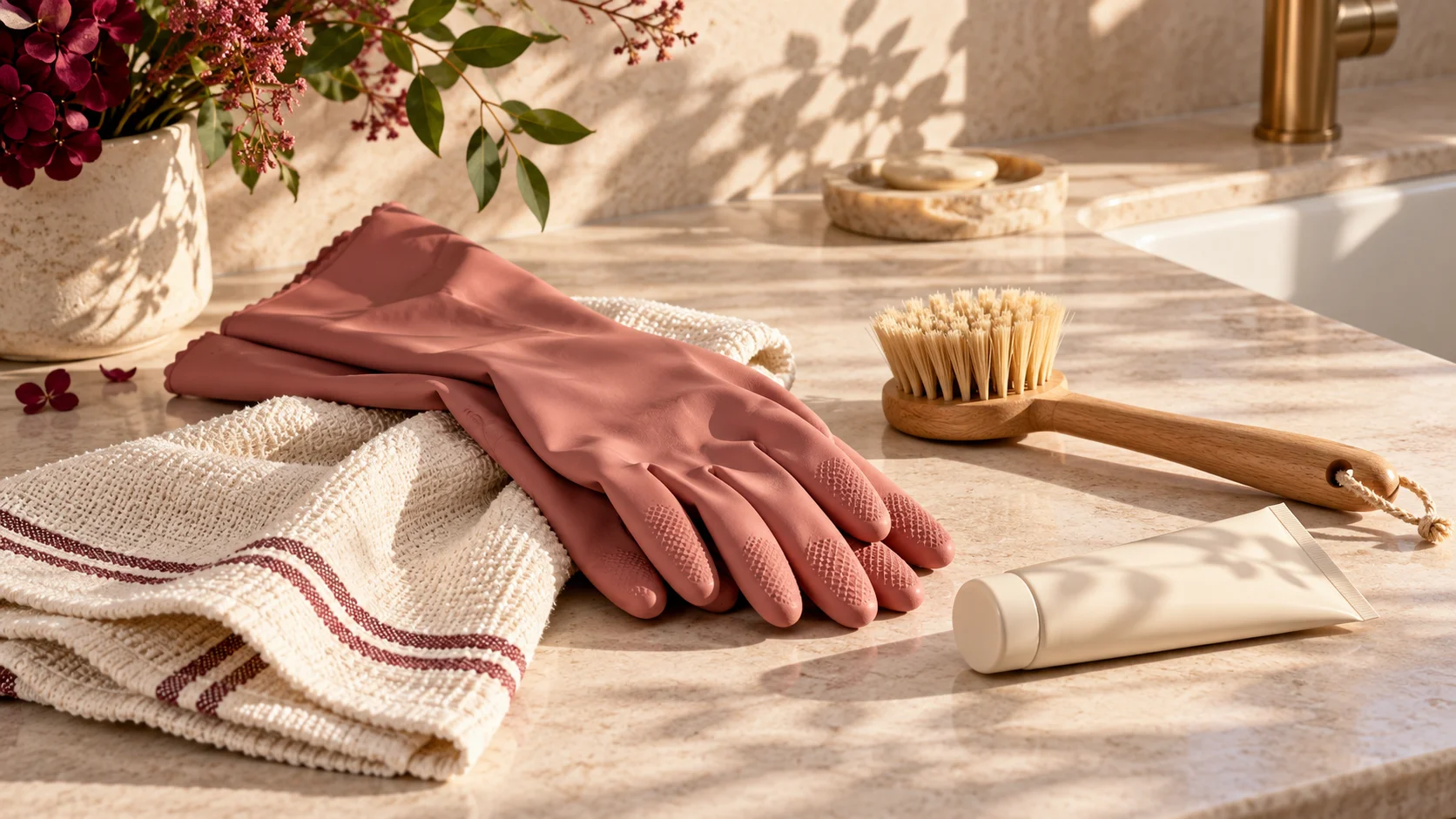
The NHS nail-care advice recommends protective gloves for frequent water or cleaning-product exposure and regular hand cream on nails and fingertips. Make those basics easy to reach. Select gloves appropriate to the particular task and follow the cleaning product’s safety directions.
At home, keep the relevant gloves near the job they belong to. If several people share a cupboard, a simple named hook or separate basket can prevent the useful pair from disappearing into a different room. Check the gloves before beginning, so discovering a damaged pair does not become part of the task itself.
Gloves are not a promise that every material suits every person. If wearing a pair repeatedly causes discomfort or a rash, discuss the problem with a pharmacist, GP or occupational health adviser. Buying a succession of similar pairs without keeping the product details makes that conversation harder.
Build an uncomplicated finish to the task
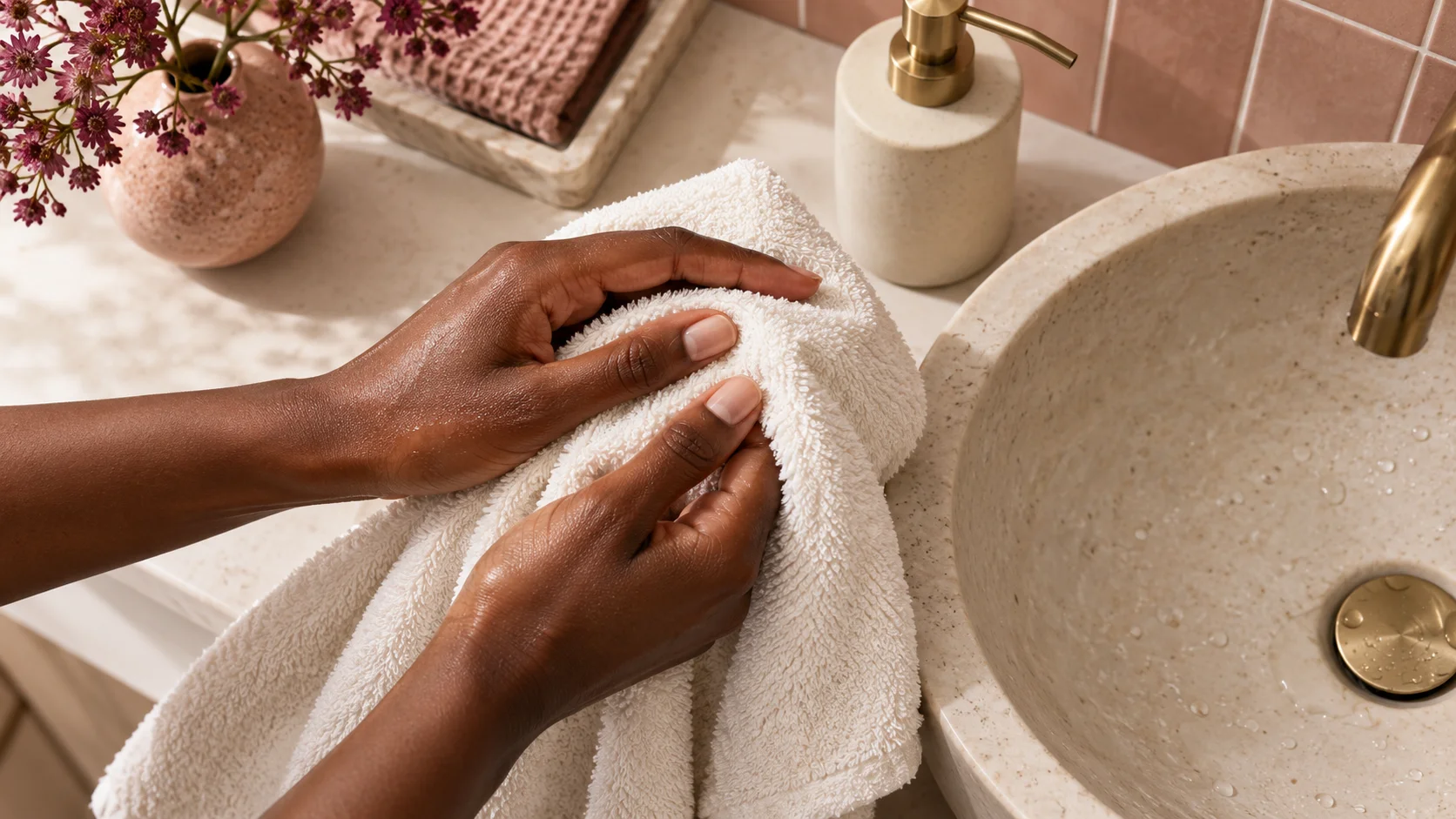
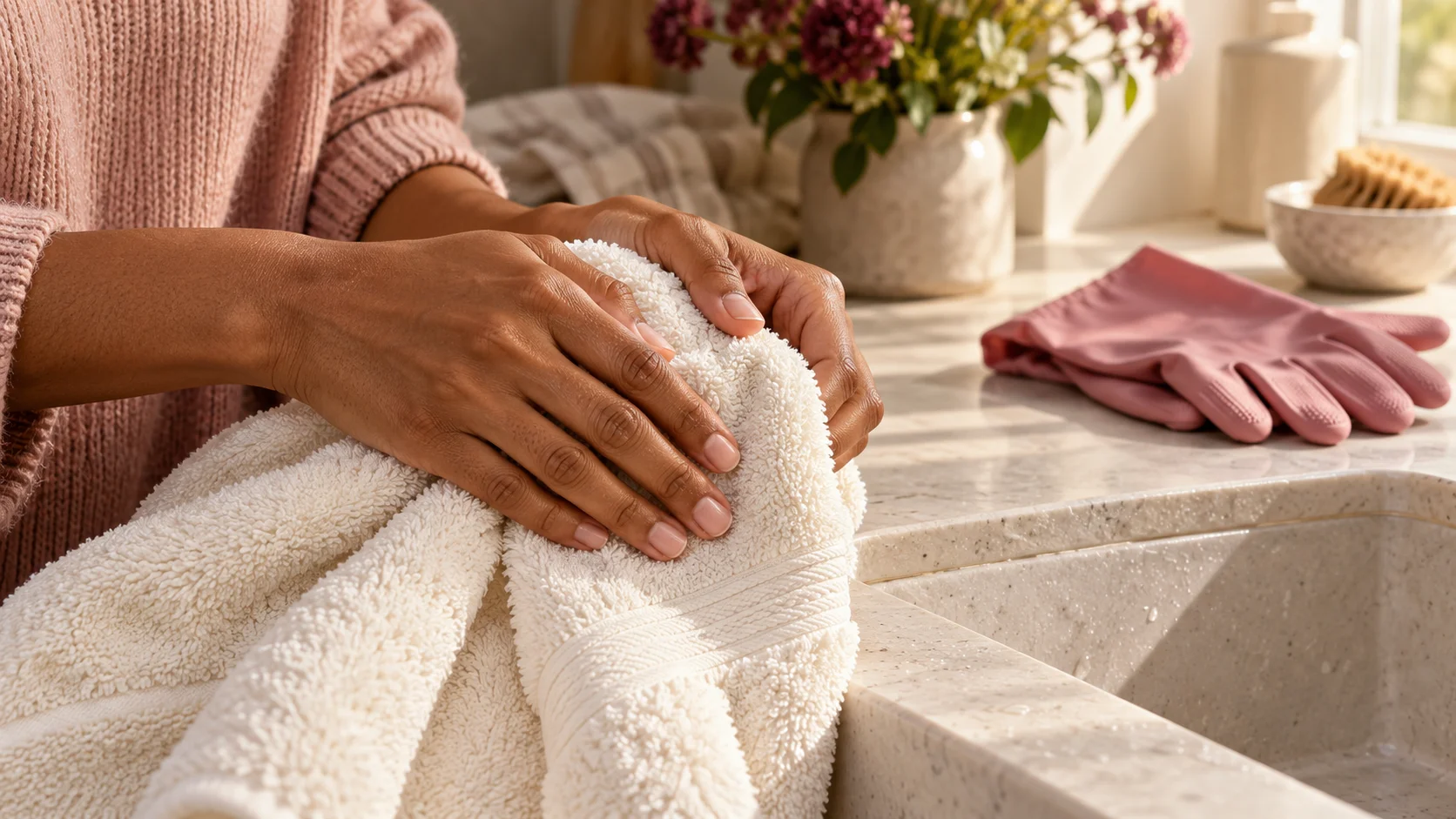
Place a clean towel where you naturally finish washing rather than where it looks best in a photograph. Allow time to dry your hands before moving back to work. Keep your usual suitable moisturiser nearby if that is compatible with the setting. The routine should be simple enough to remember on a busy day.
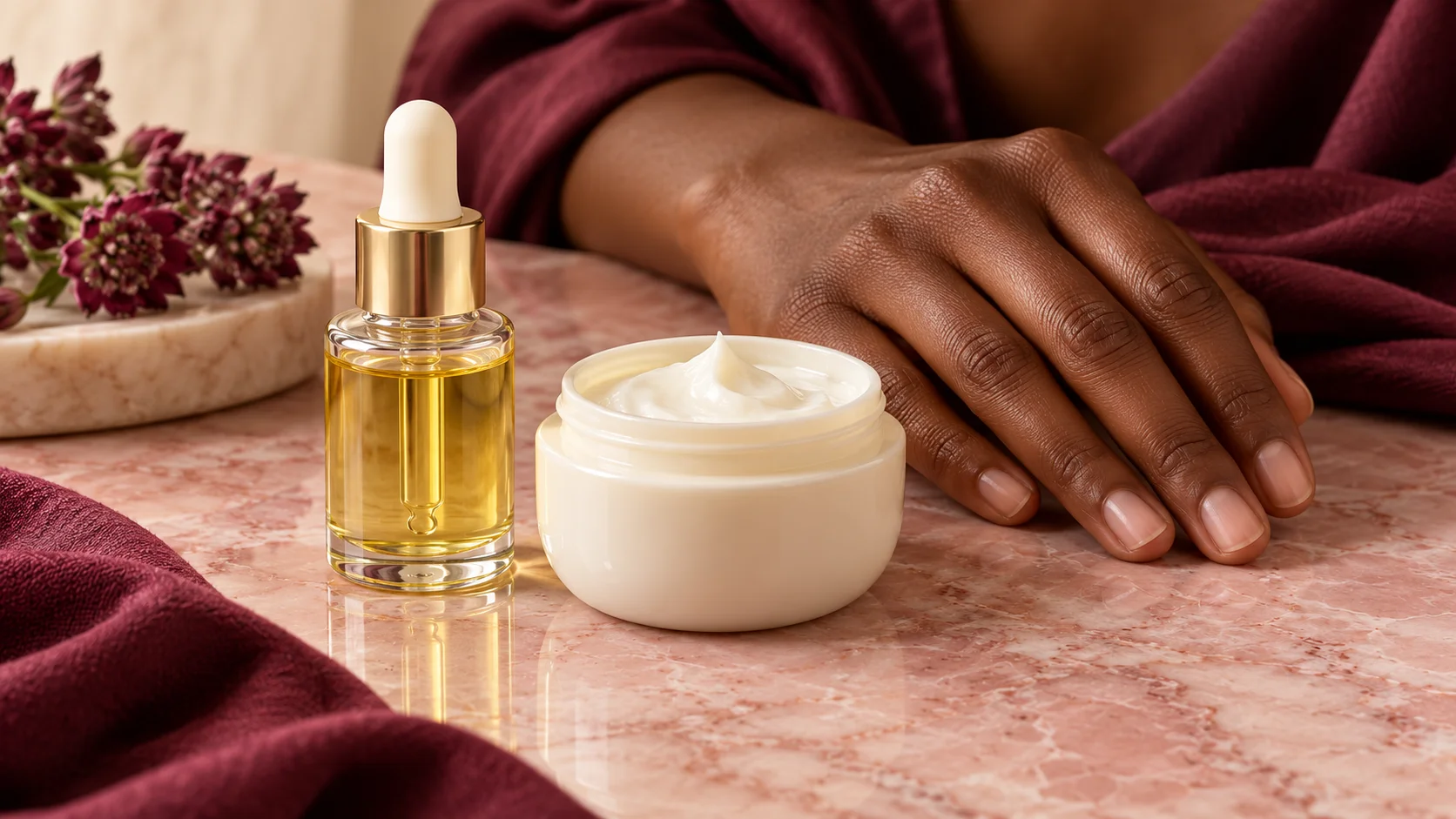
The American Academy of Dermatology advises moisturising after handwashing and protecting nails from excess water exposure. It also discourages using nails as tools. A bottle opener, scraper or other appropriate tool can take over jobs that you habitually ask a thumbnail to do.
Choose one useful location first. A cream at the kitchen sink may suit someone who spends most wet-work time there; a portable tube may suit someone moving between rooms. You do not need a collection of matching products in every space to have an organised routine.
| Situation | Practical preparation | Question to review |
|---|---|---|
| Washing-up | Keep suitable gloves and a clean towel nearby | Can I reach everything before starting? |
| Workplace handwashing | Check approved products and procedures | Does this fit the workplace policy? |
| Moving between rooms | Choose a portable product you already tolerate | Is the packaging easy to close and carry? |
| Opening packaging | Put the appropriate tool in its usual place | Am I using my nails out of habit? |
Keep the evening review short
At a convenient quiet moment, look at your hands in ordinary light. Notice whether a nail is catching on fabric, whether the skin feels uncomfortable and whether today’s setup worked. This is an observation, not an invitation to scrape, buff or repeatedly inspect every small surface variation.
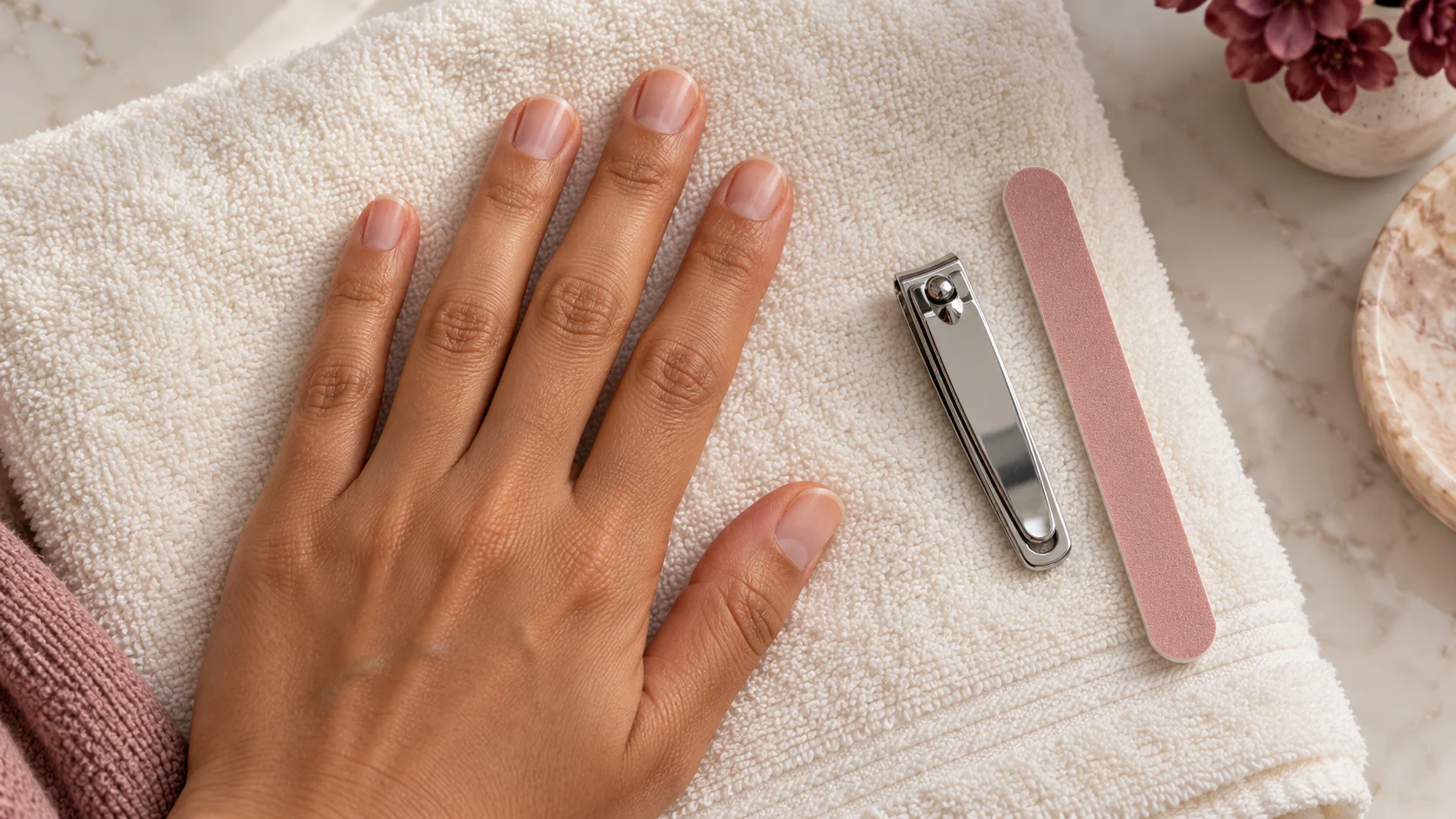
If your nails need routine shaping, set aside a separate unhurried moment with suitable tools. Avoid making a rushed grooming session the automatic end of every washing-up task. A weekly calendar reminder can simply ask whether attention is needed; it does not mean every nail must be shortened on that day.
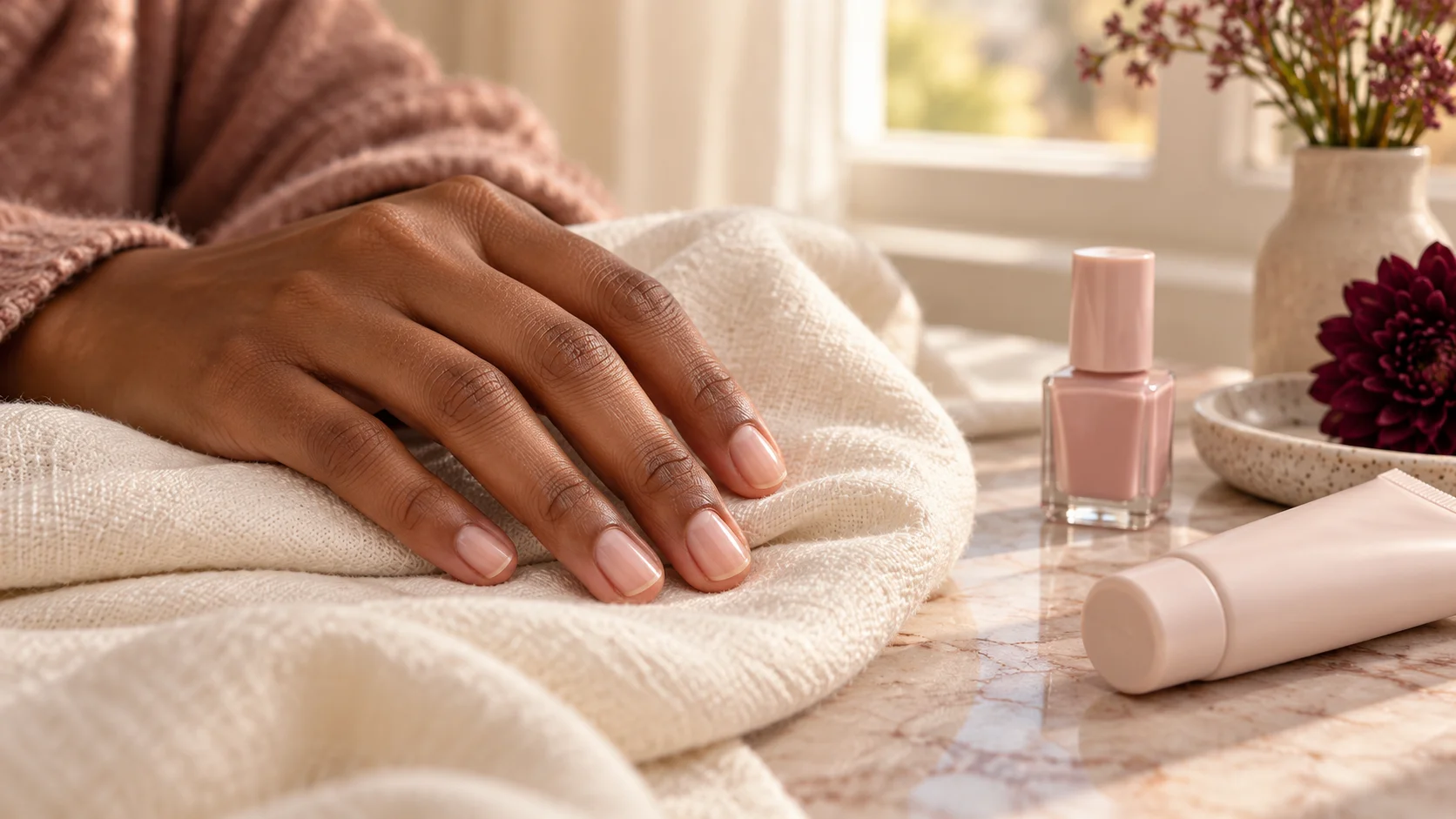
Consider your actual activities when choosing length. A length that feels manageable while typing may feel different when handling small fasteners or caring for someone. Your preference does not need to match an editorial photograph, and shorter nails can still be an intentional, finished look.
Know when this becomes a skin-care question
DermNet’s hand dermatitis guidance explains that repeated exposure to water, soaps and detergents can contribute to irritant dermatitis, while identifying the cause can be complicated. Persistent itchy, cracked or inflamed skin deserves advice rather than a more elaborate cosmetic routine.
For that conversation, keep the names of the products and gloves you use, the tasks involved and when the discomfort occurs. A photograph of the packaging may be more useful than remembering that a bottle was blue. You do not need to establish the diagnosis before asking for help.
Seek GP advice if a nail changes shape or colour without an understood reason, or the surrounding skin is sore, swollen, warm or red, as the NHS advises. Do not wait for a routine review date when there is a new concerning change.
A routine built around the task
- Before: organise suitable protection and required tools.
- During: follow hygiene and product instructions.
- After: dry hands and use suitable care products.
- Review: notice recurring discomfort and ask for advice when needed.
Make one change you can keep
For the next ordinary day, choose a single logistical improvement: put the towel closer, replace an unsuitable storage location or ask about an approved workplace moisturiser. Record whether the change made the routine easier. This is a test of convenience, not a clinical experiment or proof that a particular product repaired your nails.
After that, adjust the next obstacle. A useful routine is repeatable without demanding perfect attention. Keep the focus on comfortable, manageable hands and timely advice for problems, rather than a flawless photograph. Explore our Nail Care guides for further explanations of everyday grooming and product choices.
For the related parts of your care routine, read How to Protect Your Nails During Cleaning and Washing Up, Handwashing and Nail Care: Keeping Hands Clean Without Neglecting Moisture and Cuticle Oil and Hand Cream: What Each Adds to Your Routine. For the relevant product or service decision, see Gel Manicure Aftercare: Everyday Habits and When to Return to the Salon.
Common questions
Should I wash my hands less often to protect my nails?
Do not reduce necessary hand hygiene to preserve a manicure. Organise the surrounding routine instead: suitable protection for cleaning tasks, a convenient towel and products compatible with your setting. Workplace infection-control requirements and individual clinical advice take priority over a beauty routine.
What should I keep beside the sink?
Start with the items relevant to that sink: a clean towel, appropriate task gloves and a suitable care product where permitted. Choose a storage position you can reach easily. An elaborate display is less useful than a small setup that remains available during ordinary work.
Do I need a separate routine at work?
You may need different arrangements because workplaces have their own hygiene, glove and product requirements. Ask which products are approved and how to report skin discomfort. Do not assume that a product used comfortably at home is appropriate for every professional setting.
How can I remember to use the routine?
Attach it to an existing task rather than creating several unrelated reminders. Put the relevant items where the task ends and review one obstacle at a time. A reminder can prompt a check, but it should not require unnecessary grooming every time it appears.
What if gloves seem to make my skin uncomfortable?
Keep the glove details and note when the discomfort occurs. Ask a pharmacist, GP or occupational health adviser about the problem rather than repeatedly trying similar products without a record. A general nail article cannot identify an allergy or select workplace protective equipment for you.
Must my nails be extremely short for wet work?
Choose a manageable length within any workplace requirements and individual advice. Think about the tasks your hands perform and what feels comfortable. A particular length in a photograph is a styling choice, not evidence that everyone doing wet work needs the same outline.
What should I record if discomfort keeps returning?
Write down the tasks, products and gloves involved, roughly when symptoms appear and whether the pattern changes away from work. Keep packaging details where possible. These observations help explain the situation without requiring you to diagnose the cause before asking for advice.
How do I know whether my routine is realistic?
Ask whether you can follow it on an ordinary busy day with the supplies already available. If it depends on several new purchases or uninterrupted leisure time, simplify it. Judge convenience separately from symptoms, which may still need professional assessment regardless of how organised the routine becomes.
Sources and further reading
- NHS — Nail problems — checked 2026-10-21
- AAD — Healthy nail tips — checked 2026-10-21
- DermNet — Hand dermatitis — checked 2026-10-21