How to Protect Your Nails During Cleaning and Washing Up
How do I plan washing-up and cleaning around suitable protection and product directions?
Archive edition: 2026-06-13 · This is an editorial allocation, not the first-publication date.
Key takeaways
- Task: identify what needs cleaning and the approved method.
- Label: read the actual product instructions.
- Protection: confirm suitable equipment and its condition.
- Finish: complete hygiene, equipment care and storage.
In this guide
- Key takeaways
- Choose the task before choosing the supplies
- Reduce avoidable contact first
- Select gloves for the product and the job
- Plan the end of the task as well as the beginning
- Respond to skin symptoms rather than working through them
- Task, label, protection, finish
- Make the setup usable for everyone sharing it
- Common questions
- Sources and further reading
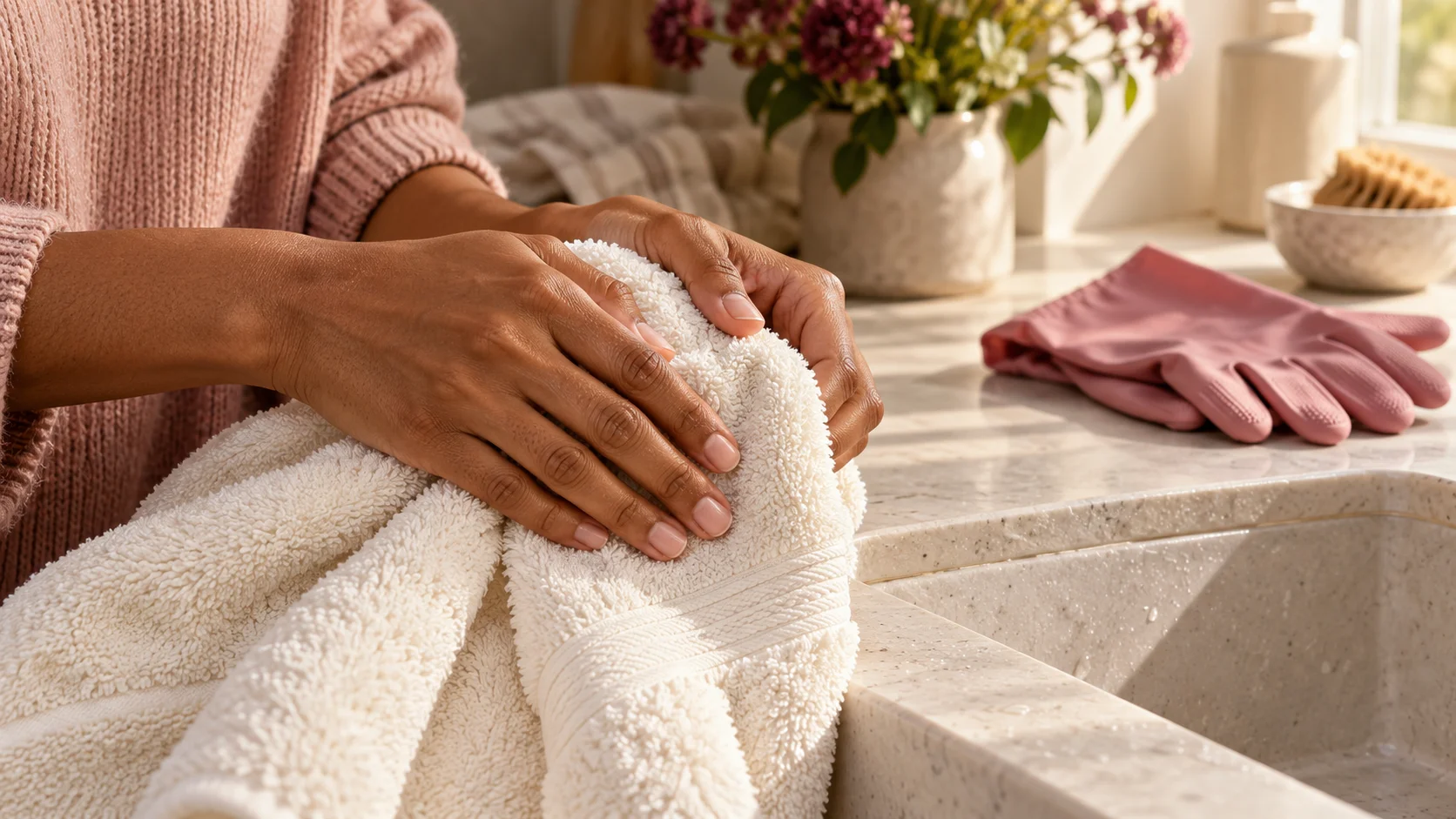
Protecting your nails during cleaning starts before the first cloth goes into water. Know which task you are doing, which product it requires and how your hands will be protected. A manicure may make you notice the issue, but comfortable skin and sensible handling matter whether your nails are polished, bare, long or short.
This guide applies general exposure-reduction principles to everyday planning. It is not a chemical-handling assessment or a replacement for workplace procedures. Follow the actual product label and any required safety information, and ask for clarification when you cannot identify a product or the protection needed.
Choose the task before choosing the supplies
Separate washing dishes, wiping a worktop and using a specialist cleaner. These may happen in the same room, but they do not necessarily require the same equipment or precautions. Read the directions before beginning instead of treating every bottle beneath the sink as interchangeable.
Keep products in their labelled containers. If a container has no readable label or you do not know its contents, do not guess from its colour or smell. A tidy arrangement should preserve the information needed to use the product correctly, not hide it behind matching decorative bottles.
Never improvise a mixture of cleaning products. This article gives no dilution or mixing recipe because those details must come from the relevant product instructions and the task assessment. More concentrated or more complicated does not mean more appropriate.
Reduce avoidable contact first
The Health and Safety Executive’s cleaning guidance uses an avoid, protect and check approach. It gives equipment such as dishwashers and utensils as ways to reduce direct contact where practical. Think about the process before treating gloves as the only possible improvement.
For a household example, put the washing-up brush within reach before starting, organise a clear draining area and decide which items can go in the dishwasher according to their care instructions. These are planning choices, not a promise that every task can be automated or performed without water.
If cleaning is part of your job, raise practical obstacles with the person responsible. A missing tool or inconvenient supply station can repeatedly undermine the intended procedure. Describe the actual task and obstacle so it can be addressed at the right level.
Select gloves for the product and the job
The HSE’s wider skin-prevention guidance stresses suitable protection and points to product labels and safety information. Glove selection can be complex. The word “waterproof”, a particular colour or a familiar material name does not establish suitability for every cleaner.
Check the relevant instructions, fit and condition before use. At work, use the approved equipment and training. At home, follow the cleaning-product and glove directions together, including any limits on use, cleaning or replacement. If the two sets of instructions are unclear, ask the supplier rather than inventing a compromise.
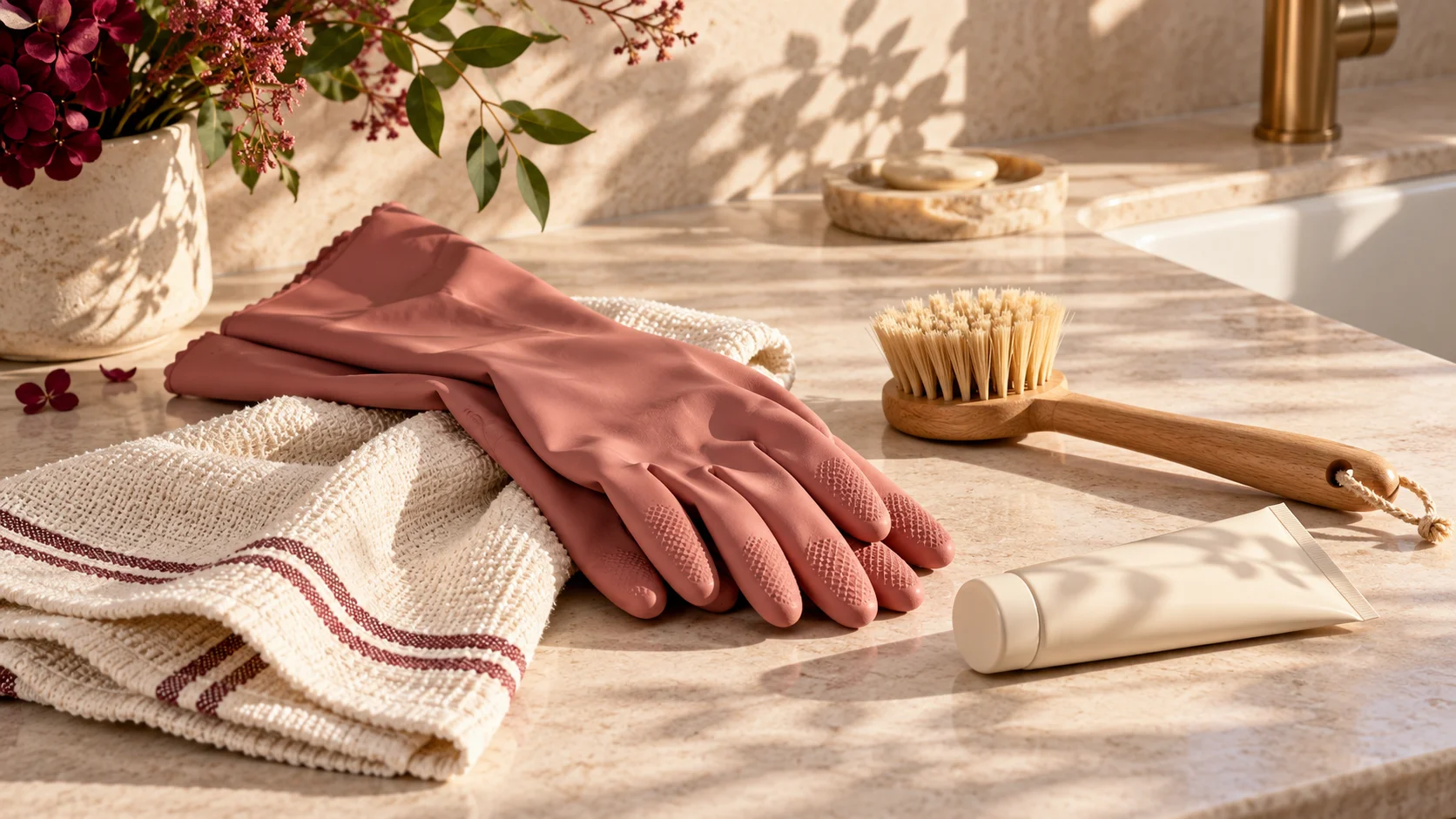
Keep different-purpose supplies clearly organised. A pair stored for a dirty cleaning job should not be casually treated as food-handling equipment. Follow the hygiene requirements of the task, and avoid letting a preference for protecting nail colour override those requirements.
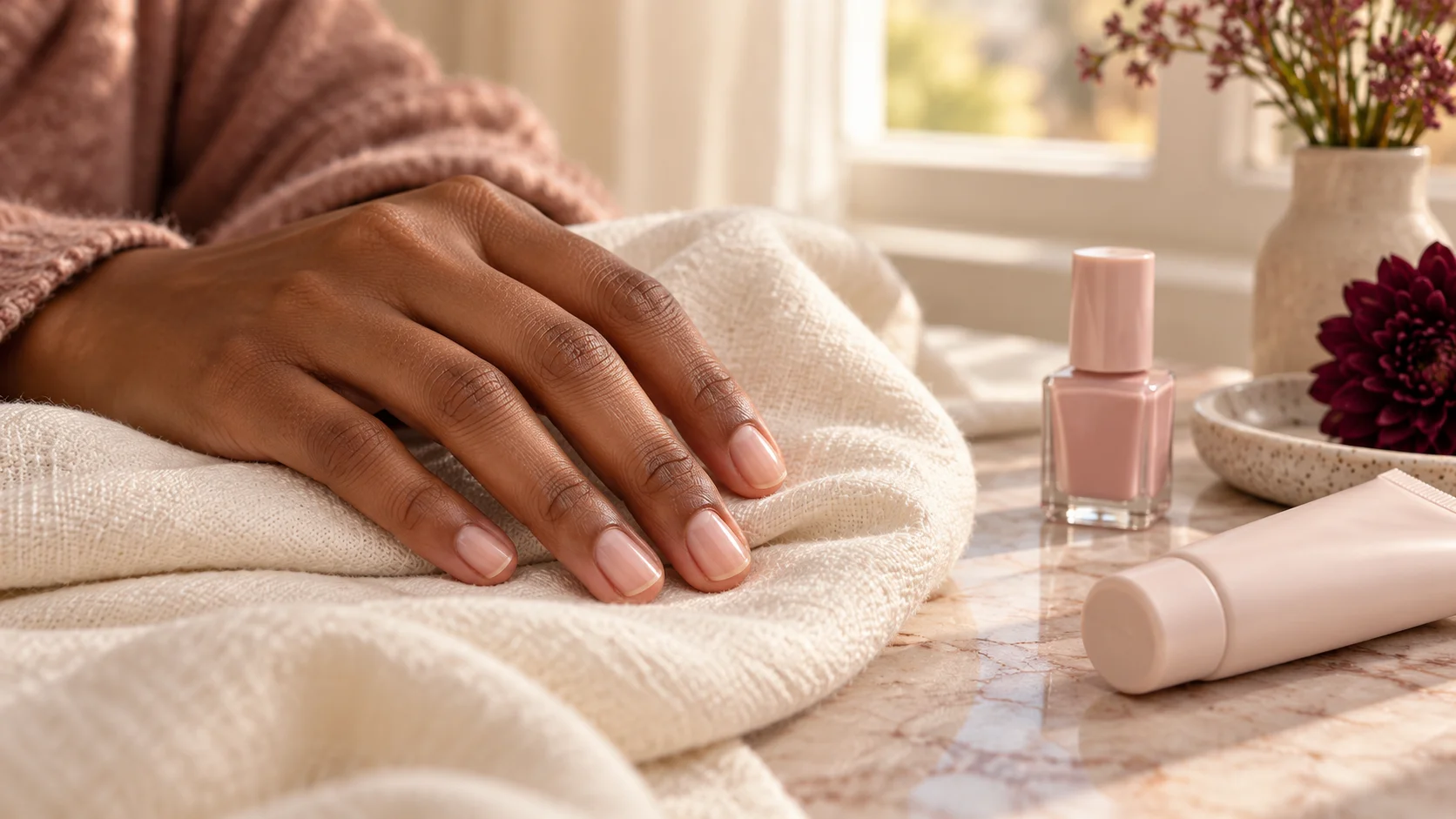
Nail polish, gel and artificial tips are cosmetic finishes, not the protective equipment specified for a cleaning task. Do not use an intact-looking manicure as evidence that exposure was harmless. Equally, a chip in polish does not tell you which substance was involved or whether a glove was suitable. Keep the assessment tied to the task, product and actual symptoms. If you wear enhancements, check that you can comfortably use the required equipment and perform the job as instructed; ask about the workplace’s nail policy when relevant.
| Before starting | What to establish | If it is unclear |
|---|---|---|
| Task | The surface or item and intended cleaning method | Check its care instructions |
| Product | Identity, directions and precautions | Do not use an unidentified substance |
| Protection | Suitable gloves or other required equipment | Ask the supplier or workplace supervisor |
| Setup | Tools, drying supplies and a clear workspace | Organise them before opening the product |
| Afterwards | Cleanup, equipment care and storage | Follow the relevant instructions |
Plan the end of the task as well as the beginning
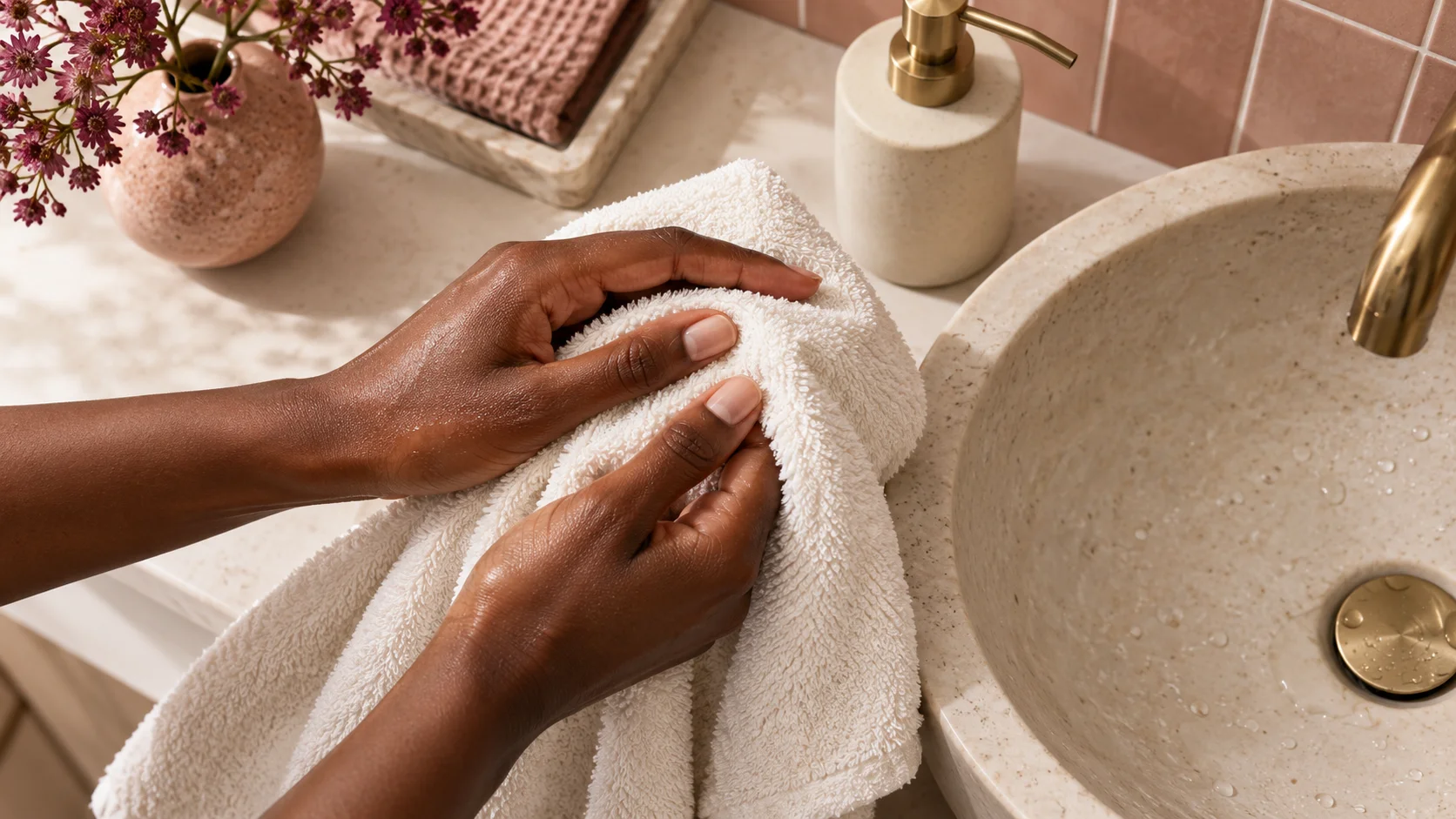
Think about where you will put used equipment, how you will follow the required hand-hygiene procedure and where a clean drying towel is kept. Finish the task according to the product and equipment instructions. Do not remove protection early simply to answer a phone or open a cupboard.
Choose a suitable moisturiser if one belongs in your routine, and observe workplace restrictions on products. In settings involving food, healthcare or specific equipment, compatibility is a practical question to confirm. A favourite scented cream is not automatically the right choice for every location.
Store cleaning supplies as directed and away from cosmetic products. A beauty shelf and a cleaning cupboard should not become one collection of similar unlabelled bottles. Keep the information with each item so the next person using it can understand the intended use.
Respond to skin symptoms rather than working through them
The NHS explains that contact dermatitis can involve itching, dryness, cracking or blisters. Changes can look red on lighter skin and brown, purple or grey on darker skin. It advises GP review for persistent, recurrent or severe symptoms.
Keep a note of the product, glove and task if discomfort appears. Include whether symptoms occurred during work or afterwards, but do not deliberately repeat the exposure to test a theory. A clinician may need to distinguish irritation from allergy; a home observation cannot reliably do that.
Report work-related symptoms through the appropriate workplace route as well as seeking health advice. The HSE encourages early checking and reporting. Waiting until a manicure looks damaged overlooks the skin itself and may miss an earlier opportunity to adjust the process.
Task, label, protection, finish
- Task: identify what needs cleaning and the approved method.
- Label: read the actual product instructions.
- Protection: confirm suitable equipment and its condition.
- Finish: complete hygiene, equipment care and storage.
Make the setup usable for everyone sharing it
Agree where gloves, brushes and towels belong, and how replacements are requested or bought. A system that only one person understands is likely to break down when someone else takes over. Use straightforward labels for storage positions while retaining the original product labels.
Review the arrangement after an ordinary week. Was anything missing, difficult to reach or confusing? Fix that specific obstacle instead of adding more products. For general grooming and everyday care around these tasks, browse our Nail Care guides. Product safety directions and individual clinical advice remain the starting point whenever the task becomes more specialised.
For the related parts of your care routine, read A Simple Nail Care Routine for Hands That Are Often in Water, Handwashing and Nail Care: Keeping Hands Clean Without Neglecting Moisture and Nail Care for Gardening: Gloves, Cleaning and Simple Protection. For the relevant product or service decision, see Press-On Nails and Handwashing: Following Your Kit's Care Advice.
Common questions
Are all waterproof gloves suitable for cleaning products?
No single description establishes suitability for every product and task. Read the relevant cleaning-product and glove instructions, and use approved equipment at work. If the required protection is unclear, ask the supplier or supervisor rather than choosing by colour or familiarity.
Can gel polish replace protective gloves?
A cosmetic coating is not the protective equipment specified for a cleaning task. Follow the task and product instructions regardless of whether the manicure looks intact. A chipped or unchipped finish does not establish the nature of exposure or the suitability of the equipment used.
What should I do with an unlabelled cleaner?
Do not guess its contents from colour or smell. Establish what it is and obtain the proper instructions before use. Keeping products in their original labelled containers makes later decisions clearer and avoids confusing cleaning supplies with cosmetics or other similar bottles.
Should I mix cleaners for a stronger result?
Do not improvise mixtures. Follow the specific product directions and the approved task method. This guide provides no mixing or dilution recipe because those instructions must match the actual substance and use; adding products together is not a reliable improvement.
Why plan the end of the cleaning task?
You need somewhere for used equipment, the required hygiene steps and suitable drying supplies. Organising those details beforehand reduces the temptation to remove protection early or carry contaminated items elsewhere. Follow the equipment and product instructions for cleaning, storage and replacement.
Can I use my usual hand cream at work?
Check the workplace rules and compatibility with the task, especially around food, healthcare or specialist equipment. A product you enjoy at home is not automatically suitable in every setting. Ask which care products are approved and how they should fit the existing hygiene procedure.
What should I record if cleaning causes discomfort?
Note the task, product and glove details, when the symptoms appeared and whether they recur. Report work-related concerns through the appropriate route and seek health advice. Do not deliberately repeat the exposure to decide whether irritation or allergy is responsible.
What makes a shared cleaning setup easier to maintain?
Agree clear storage positions and a simple way to replace missing supplies. Keep original labels visible and separate equipment used for different purposes. Review specific obstacles after ordinary use rather than buying more products without understanding why the existing arrangement was difficult.
Sources and further reading
- HSE — Cleaning and dermatitis — checked 2026-10-21
- HSE — Preventing work-related skin disease — checked 2026-10-21
- NHS — Contact dermatitis — checked 2026-10-21