Cuticle Oil and Hand Cream: What Each Adds to Your Routine
What are the practical differences between cosmetic cuticle oil and hand cream?
Archive edition: 2026-05-07 · This is an editorial allocation, not the first-publication date.
Key takeaways
- Purpose: which area and moment of the day?
- Formula: does the actual ingredient list suit your needs?
- Use: can you open, dispense and store it conveniently?
- Need: does it add something useful to your existing routine?
In this guide
- Key takeaways
- Read the formula rather than only the product name
- Choose the area and moment of use
- Make packaging part of the decision
- Keep expectations specific
- Know when to pause and ask
- Four questions before adding a bottle
- Build the smallest routine that works for you
- Common questions
- Sources and further reading
Cuticle oil and hand cream occupy similar space on a dressing table, but they are usually packaged and used differently. An oil often invites a small, targeted application around the nails; a hand cream is convenient for a wider area. The useful question is which job you want a product to do, rather than which bottle looks more specialist.
You do not automatically need both. Begin with what feels comfortable, suits your skin and fits any advice you already follow. This comparison concerns everyday product choices, not treatment for a rash, infection or unexplained nail change. Neither a cosmetic label nor a pleasant finish establishes that a product can repair a medical problem.
Read the formula rather than only the product name
“Cuticle oil” describes a category, not one fixed recipe. As a current example, OPI’s Glow Up Nail & Cuticle Oil lists several plant oils and fragrance. Its instructions describe a targeted application. This is a manufacturer example, not a product we have tested or a recommendation for sensitive skin.
The example also shows why natural-sounding language is not a substitute for the ingredient list. Read the actual packaging, including any ingredients you have been advised to avoid. A product name can stay familiar while a range, formula or size changes, so do not rely solely on an old screenshot.
For hand cream, the texture and dispenser may be as noticeable in daily use as the name. Guy’s and St Thomas’ guidance on emollients explains that creams combine oil and water and tend to feel less greasy than ointments. An ointment is a separate texture choice, not simply another name for cuticle oil.
Choose the area and moment of use
If you want a product beside the kitchen sink for your hands as a whole, consider how easily you can open it and spread it. If you prefer a small evening step around the nails, a targeted applicator may be convenient. Convenience is a personal preference; it does not demonstrate superior clinical performance.
Think about what happens immediately afterwards. Will you handle papers, use a touch screen, cook, put on gloves or go to bed? A texture you enjoy during a quiet evening may be inconvenient during a short work break. You can choose around those practical differences without declaring one entire category better.
Follow the directions for the actual product. There is no universal number of drops, application order or schedule shared by every oil and cream. If a clinician has recommended an emollient, use their plan and ask how optional cosmetics fit rather than replacing the prescribed routine with a general beauty rule.
| Question | Cuticle oil | Hand cream |
|---|---|---|
| How is it usually presented? | A small bottle, pen, brush or dropper | A tube, pump or jar |
| What area is convenient? | A targeted application around the nails | A broader application over the hands |
| What should I check? | Ingredients and the product’s own directions | Ingredients, texture and dispensing method |
| What does the name not prove? | Guaranteed nail growth or repair | Suitability for every skin condition |
| Do I need another product? | Only if it serves a useful, suitable role | A simple routine may already be enough |
Make packaging part of the decision
A narrow bottle can look elegant but be awkward to open with limited grip. A pump may be easy on a stable surface yet inconvenient in a bag. A screw-cap tube may be portable but require two hands. Consider these details before buying a large size or a decorative set.
Check whether the lid closes securely and whether you can read the label without keeping a separate web page open. Store products according to their instructions, and keep the original packaging where useful. Decanting into an unlabelled decorative container can make it harder to remember what the product is and when you opened it.
If you use a pot of emollient, the NHS advises using a clean spoon or spatula to reduce contamination. The same NHS guidance explains that emollients can cause reactions and that persistent stinging or other troublesome symptoms warrant advice from a health professional.
Keep expectations specific
Describe the result you want in terms you can actually evaluate: an easy dispenser, a comfortable texture or a routine you remember. Claims such as “transforms nails” are much harder to interpret without knowing what was measured, in whom and over what period.
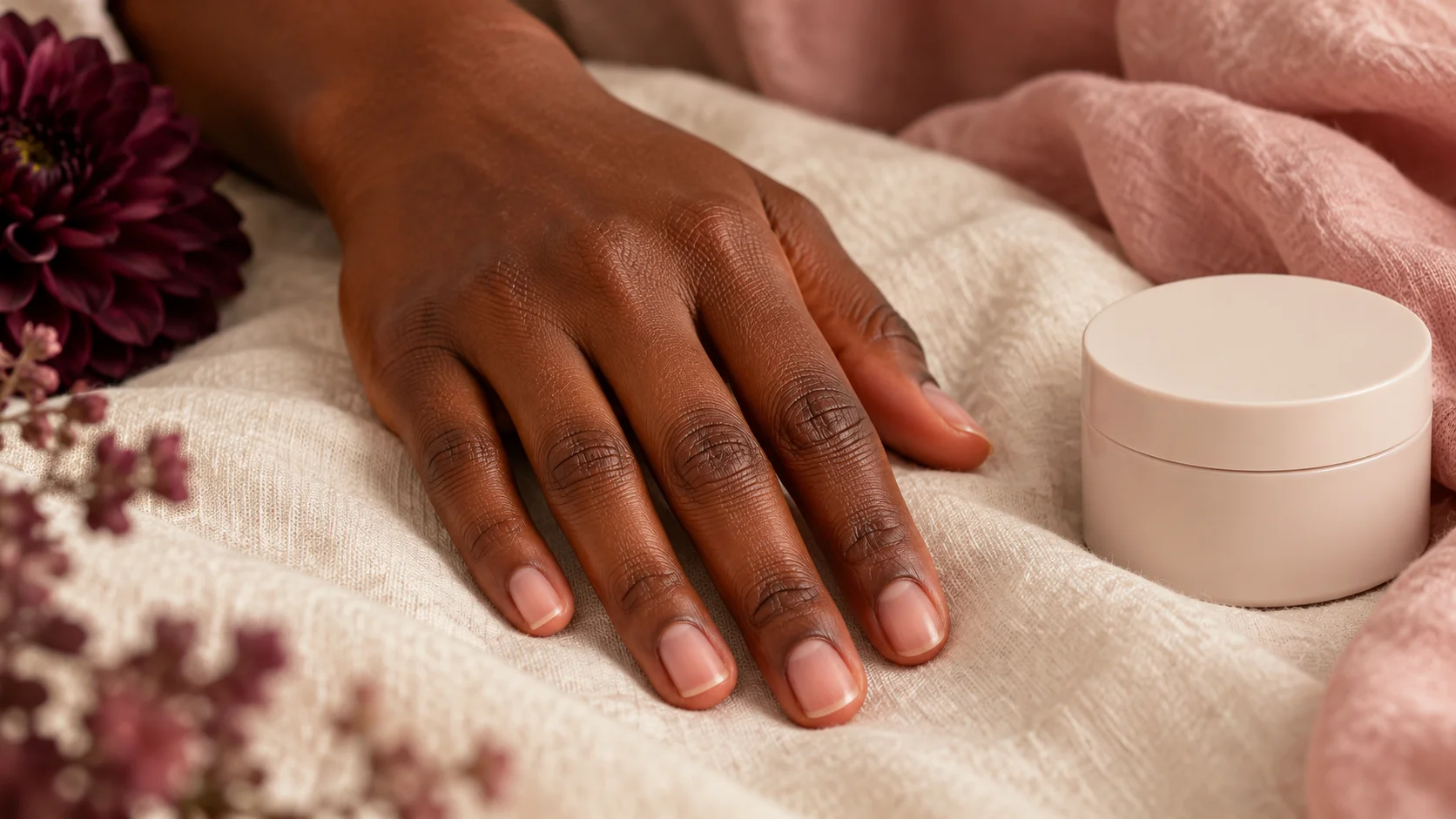
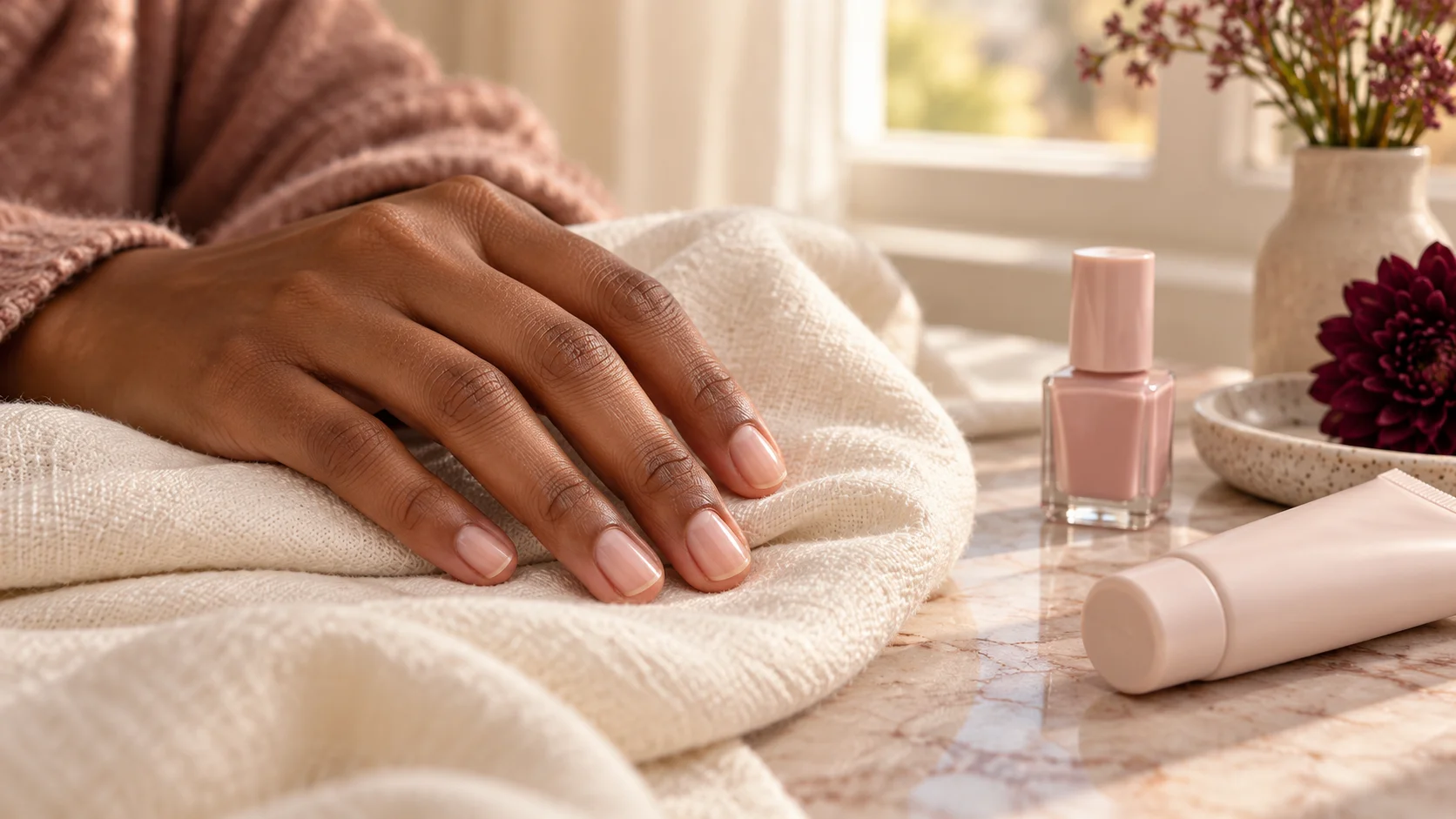
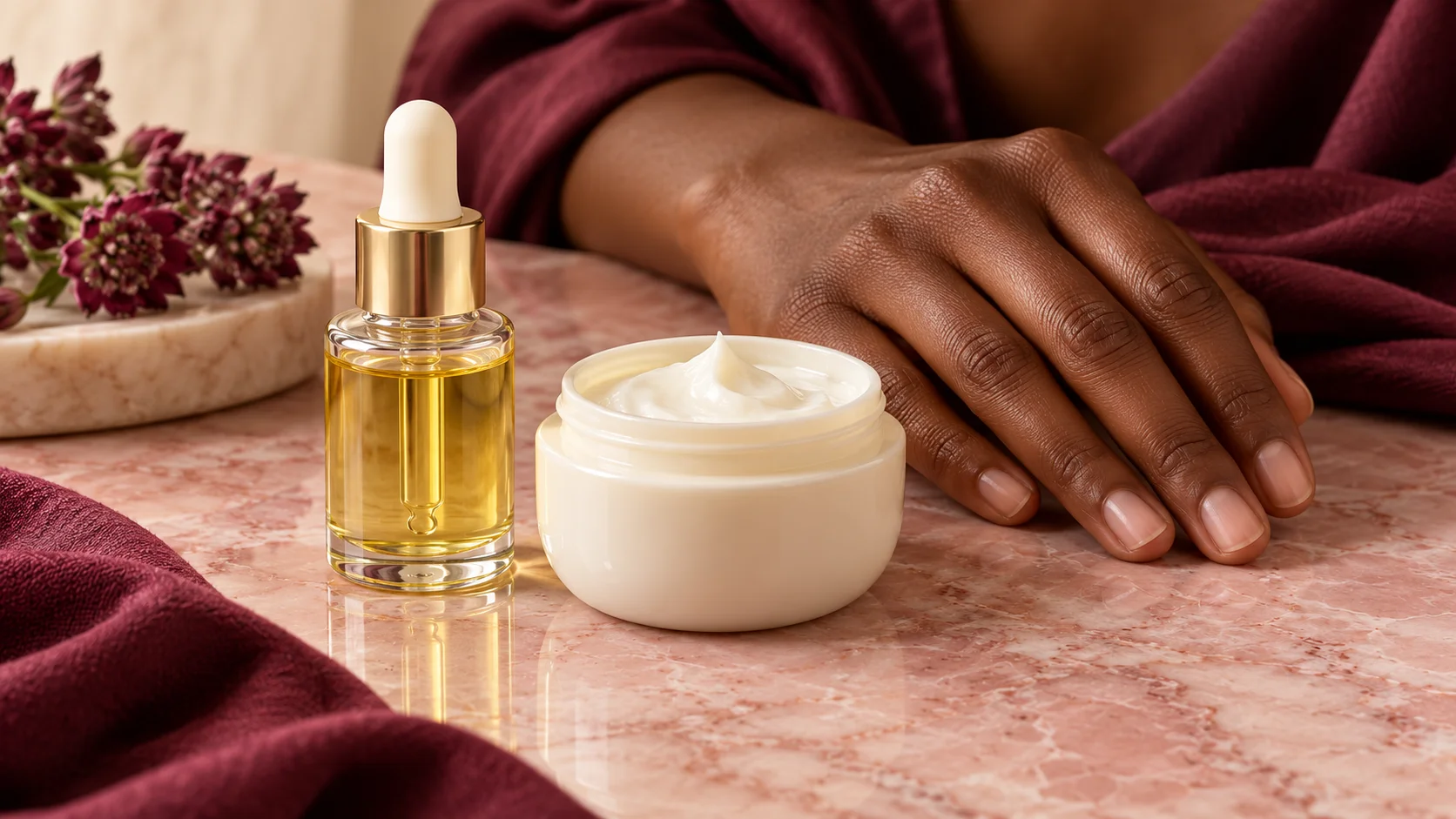
Our featured illustration shows generic products, not tested formulas or a before-and-after result. A glossy-looking nail in a photograph cannot tell you whether its owner used an oil, a cream, polish or favourable lighting. Do not use that image as evidence that a particular purchase is necessary.
When comparing labels, separate the manufacturer’s cosmetic claims from independent medical guidance. A brand can describe its intended use, but that does not answer an individual question about an allergy, a persistent rash or unexplained breakage. Those questions require a different kind of assessment.
Know when to pause and ask
If a product causes discomfort, do not treat that sensation as proof that it is working. Keep the packaging and ask a pharmacist or clinician about the reaction. Note which product was used and when, without deliberately applying it again to reproduce the problem.
For emollients, observe the NHS fire warning: keep away from flames and cigarettes, because product residue on clothing or bedding can increase fire risk even after washing. This applies to paraffin-free as well as paraffin-based emollients. Follow the product’s safety information rather than assuming a different texture removes the concern.
Four questions before adding a bottle
- Purpose: which area and moment of the day?
- Formula: does the actual ingredient list suit your needs?
- Use: can you open, dispense and store it conveniently?
- Need: does it add something useful to your existing routine?
Build the smallest routine that works for you
Start by arranging a suitable product you already use where it is needed. If an additional targeted oil would be convenient, assess it as an optional choice with its own label and limitations. There is no requirement to complete a matching collection or layer everything from one brand.
Keep a simple note of what you chose and why. At your next review, ask whether the product was comfortable and easy to use, not whether your hands look like an advertisement. Find related practical explanations in our Nail Care section, and seek individual advice when the question involves symptoms rather than product preference.
For the related parts of your care routine, read Cuticle Care at Home: What to Leave Alone and What to Moisturise, A Simple Nail Care Routine for Hands That Are Often in Water and Cold Weather Nail Care for Dry Hands and Rough Edges. For the relevant product or service decision, see An At-Home Manicure Toolkit: What to Buy and What You Can Skip.
Common questions
Do I need both cuticle oil and hand cream?
Not automatically. Decide whether each would serve a useful role in your actual routine and follow any clinical advice you already have. A targeted applicator may be convenient, but owning two categories does not by itself establish better care or a need for extra products.
Is every cuticle oil made from the same ingredients?
No. Read the current ingredient list and directions for the actual product. Oils can contain different blends, fragrance and other ingredients. A familiar name or an old product photograph does not establish that the formula matches something you previously used comfortably.
Does a natural label mean a product suits sensitive skin?
The label alone cannot answer that. Check ingredients you have been advised to avoid and ask a pharmacist or clinician when you have a skin condition or previous reaction. Do not treat botanical branding as a guarantee of individual tolerance or medical suitability.
Which should I apply first?
There is no universal order covering every oil, cream and prescribed product. Follow the relevant labels and any individual care plan. If combining products creates uncertainty, ask the pharmacist or clinician who recommended the treatment rather than adding a rule from an unrelated beauty routine.
What packaging is easiest to use?
That depends on your grip, storage and setting. A pump may suit a stable countertop, while a securely closing tube may suit a bag. Think about opening and dispensing as well as appearance, and avoid assuming that the most decorative bottle will be the most convenient.
Can I judge an oil by the shine in a photograph?
A photograph cannot isolate the effect of one product from lighting, polish or editing. Treat it as a styling image unless a clearly described test supports a specific claim. Our illustration uses generic products and is not evidence of a tested formula or treatment outcome.
What if a product stings?
Do not assume that discomfort means the product is working. Keep its packaging and seek advice about a troublesome reaction, especially if symptoms continue. Avoid deliberately reapplying it to recreate the sensation; a professional can advise what information is useful and what to do next.
How can I compare two products without overcomplicating the choice?
Write the job you need, preferred packaging, ingredients to check and a realistic budget. Compare those points using the actual labels. Keep cosmetic preferences separate from symptom questions, and do not buy a matching collection merely because the products are presented as a set.
Sources and further reading
- NHS — Emollients — checked 2026-10-21
- Guy’s and St Thomas’ — Emollients — checked 2026-10-21
- OPI UK — Glow Up Nail & Cuticle Oil — checked 2026-10-21