Cold Weather Nail Care for Dry Hands and Rough Edges
Make winter hand care practical with a simple moisturising routine, manageable nail edges and clear limits for persistent symptoms.
Archive edition: 2026-09-16 · This is an editorial allocation, not the first-publication date.
Key takeaways
- Place: keep suitable care products where the routine happens.
- Protect: choose gloves for the actual activity.
- Maintain: handle a rough edge as a focused task.
- Review: get advice for persistent or severe symptoms.
In this guide
- Key takeaways
- Notice when your hands become uncomfortable
- Put moisturising where it is easy to remember
- Choose texture around use, not marketing language
- Deal with rough edges as a separate grooming task
- Keep gloves useful and comfortable
- Recognise when the issue needs more than routine care
- Place, protect, maintain, review
- Make one useful change at a time
- Common questions
- Sources and further reading
Cold-weather nail care works best when it fits the day you actually have. Gloves need to be where you leave the house, a hand-care product needs to be easy to use, and a catching nail edge needs a small deliberate response rather than repeated picking. You do not need to replace your whole routine when the weather changes.
Start by separating the concerns. Dry skin, a rough free edge and a new nail change are not the same problem. This guide focuses on organising everyday care and recognising when a persistent symptom needs advice, without treating every winter complaint as something a richer cream will solve.
Notice when your hands become uncomfortable
Think about the points in your day when dryness or catching edges bother you. It might be after washing, during a commute, while handling paperwork or when putting on knitted clothing. Write down the situation rather than relying on a general impression that your hands always dislike winter.
A short note can reveal a practical obstacle. Perhaps your cream is upstairs when you usually need it downstairs, or your gloves live in a bag you no longer carry. Fixing that placement may be more useful than buying a new product with a seasonal label.
Keep the observation modest. You are identifying a routine, not proving a diagnosis or testing a treatment. If symptoms are severe or persistent, seek advice instead of extending the note-taking exercise until you feel certain of the cause.
Put moisturising where it is easy to remember
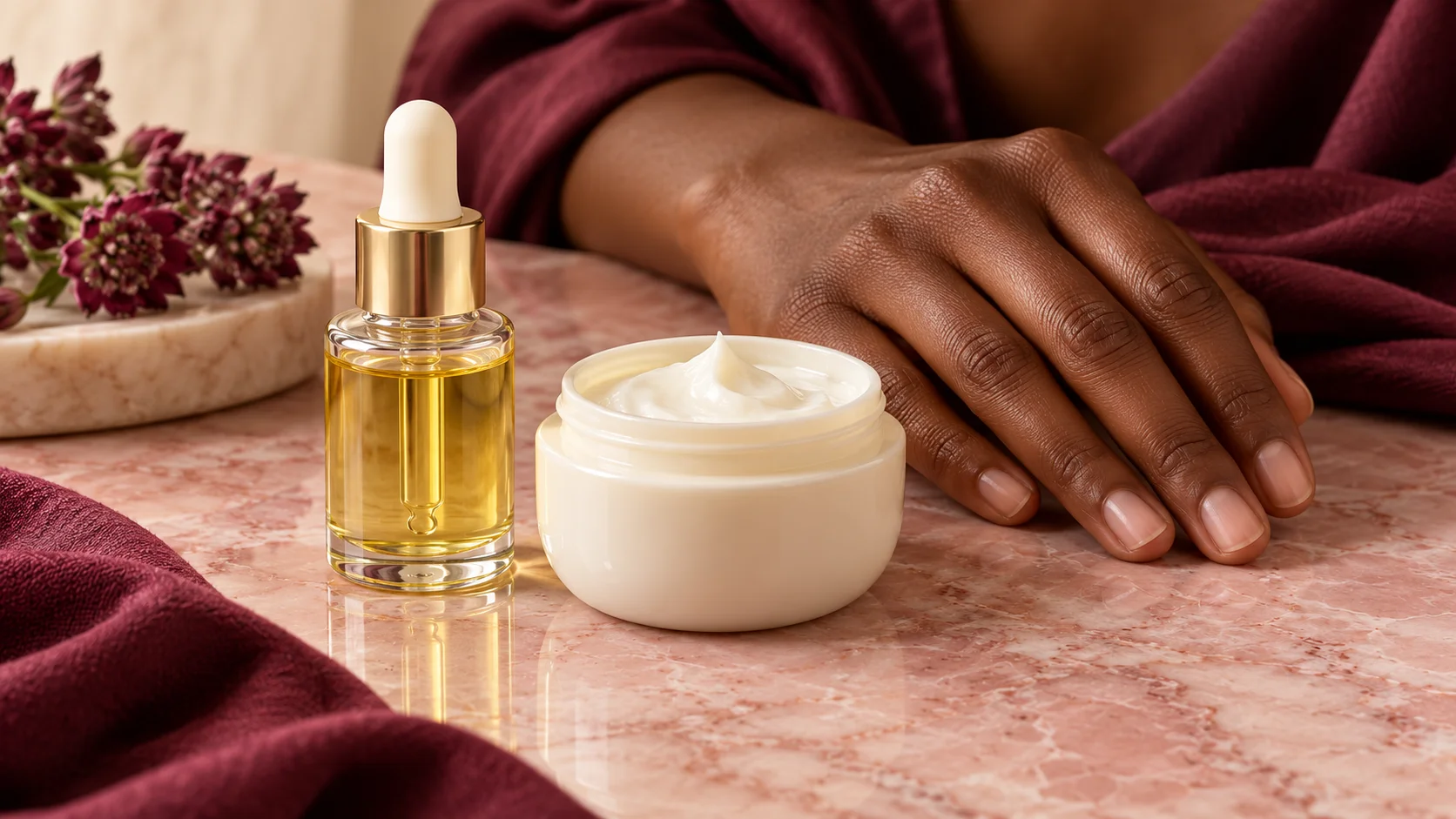
The AAD recommends moisturising dry skin after handwashing and when it feels dry. Choose a suitable product you tolerate and follow its directions. Make the relevant point in your routine easy to repeat rather than setting an ambitious schedule you cannot maintain.
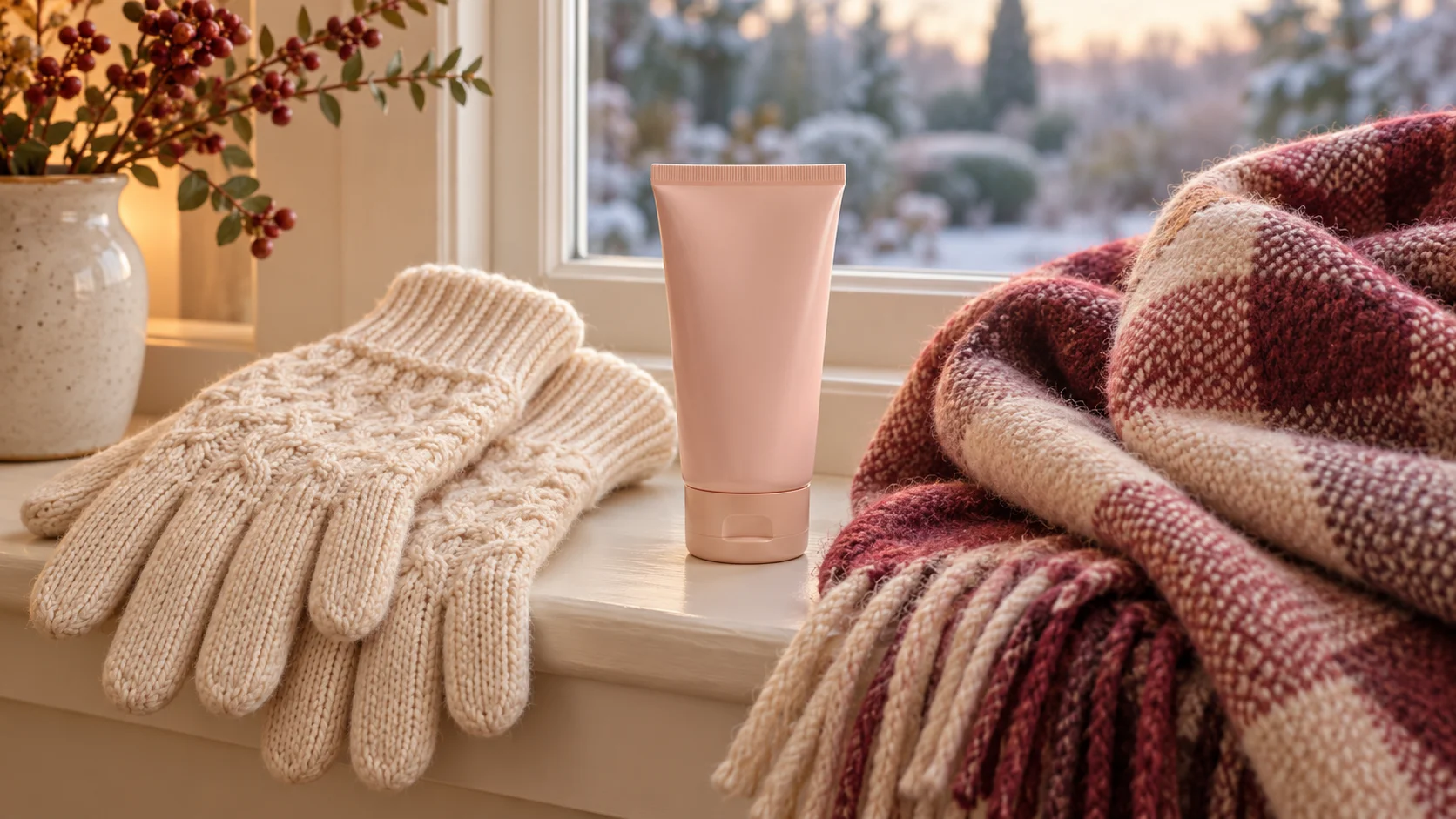
For example, keep a labelled tube near the place where you dry your hands, away from children’s reach where needed. A second appropriately stored tube may be useful if your day regularly moves between two locations. There is no need to decant into an unlabelled container merely to make the shelf look coordinated.
Think about the next task before applying a product that leaves your hands slippery. Give yourself time before handling delicate objects or equipment. At work, follow the hygiene and product rules for your role; a personal beauty routine should fit those requirements.
Choose texture around use, not marketing language
The NHS explains differences between creams, lotions and ointments and advises discussing suitable emollients with a pharmacist or clinician. A richer texture may feel different from a light daytime cream, but the word winter on a label does not decide what suits your skin.
When comparing products, ask practical questions. Can you use the packaging easily? Do you understand the directions? Does the product fit the time of day you intend to use it? Avoid purchasing several unfamiliar formulas at once if you are trying to understand what your skin tolerates.
There is an important fire precaution with emollients: residue on clothing, bedding and other fabrics can make them burn more easily. Keep affected fabrics away from cigarettes, naked flames and other ignition sources. Washing may reduce residue but does not remove the risk completely. Follow the product and clinical safety advice.
| Moment | Practical preparation | What to avoid |
|---|---|---|
| After handwashing | A suitable labelled product within reach | Skipping required hygiene to protect a manicure |
| Leaving home | Comfortable gloves stored with outdoor items | Waiting until you are already outside to find them |
| A catching edge | A personal file and time for a gentle adjustment | Picking at it throughout the day |
| Persistent symptoms | A clear account for a pharmacist or GP | Assuming every problem is seasonal dryness |
Deal with rough edges as a separate grooming task
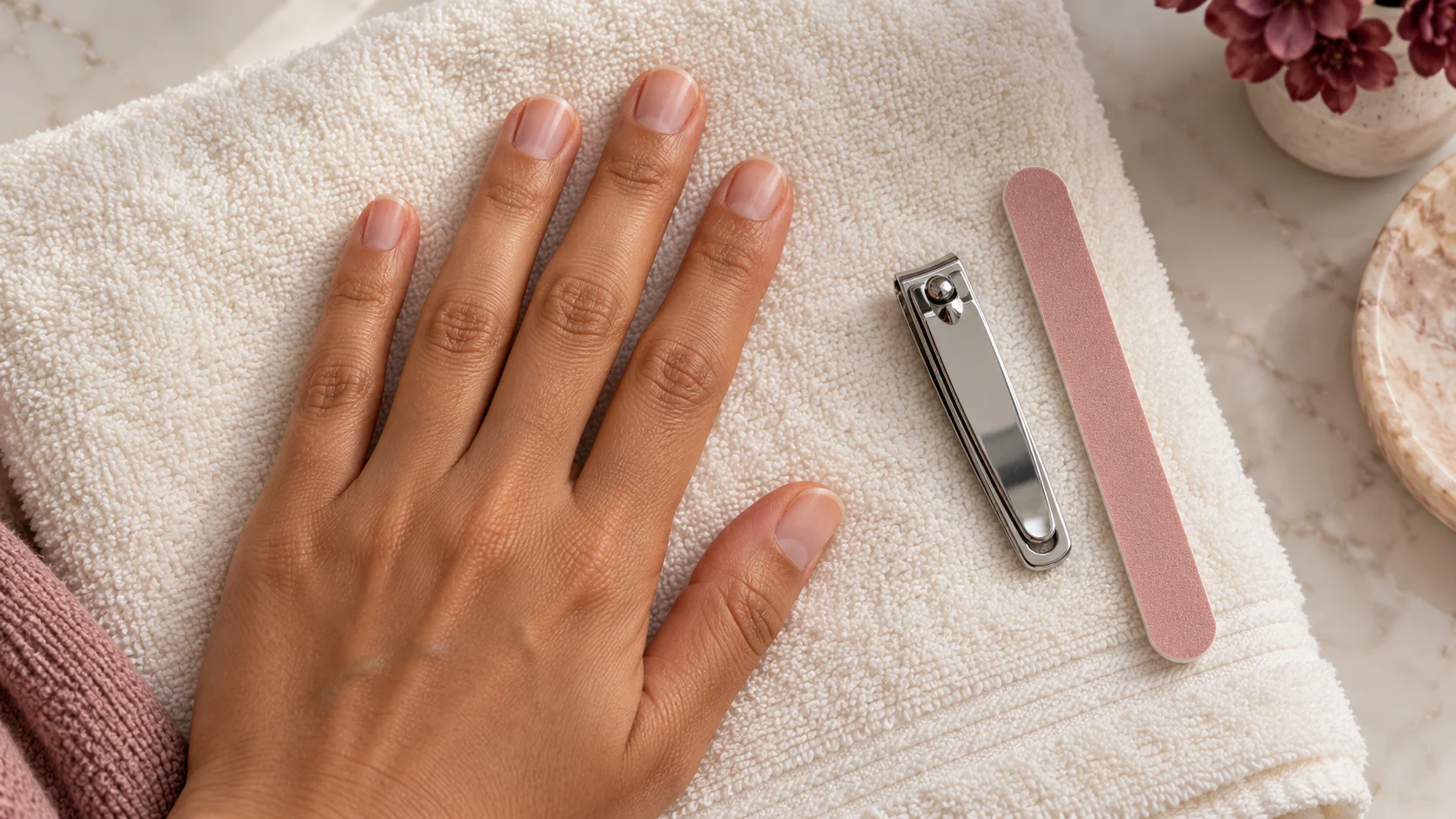
If a tip catches on a jumper, identify the actual spot before reaching for a tool. Is it a free-edge snag, a peeling layer or product that is lifting? Those observations lead to different questions. An unfamiliar enhancement remnant should be discussed with the provider rather than treated as an ordinary bare-nail edge.
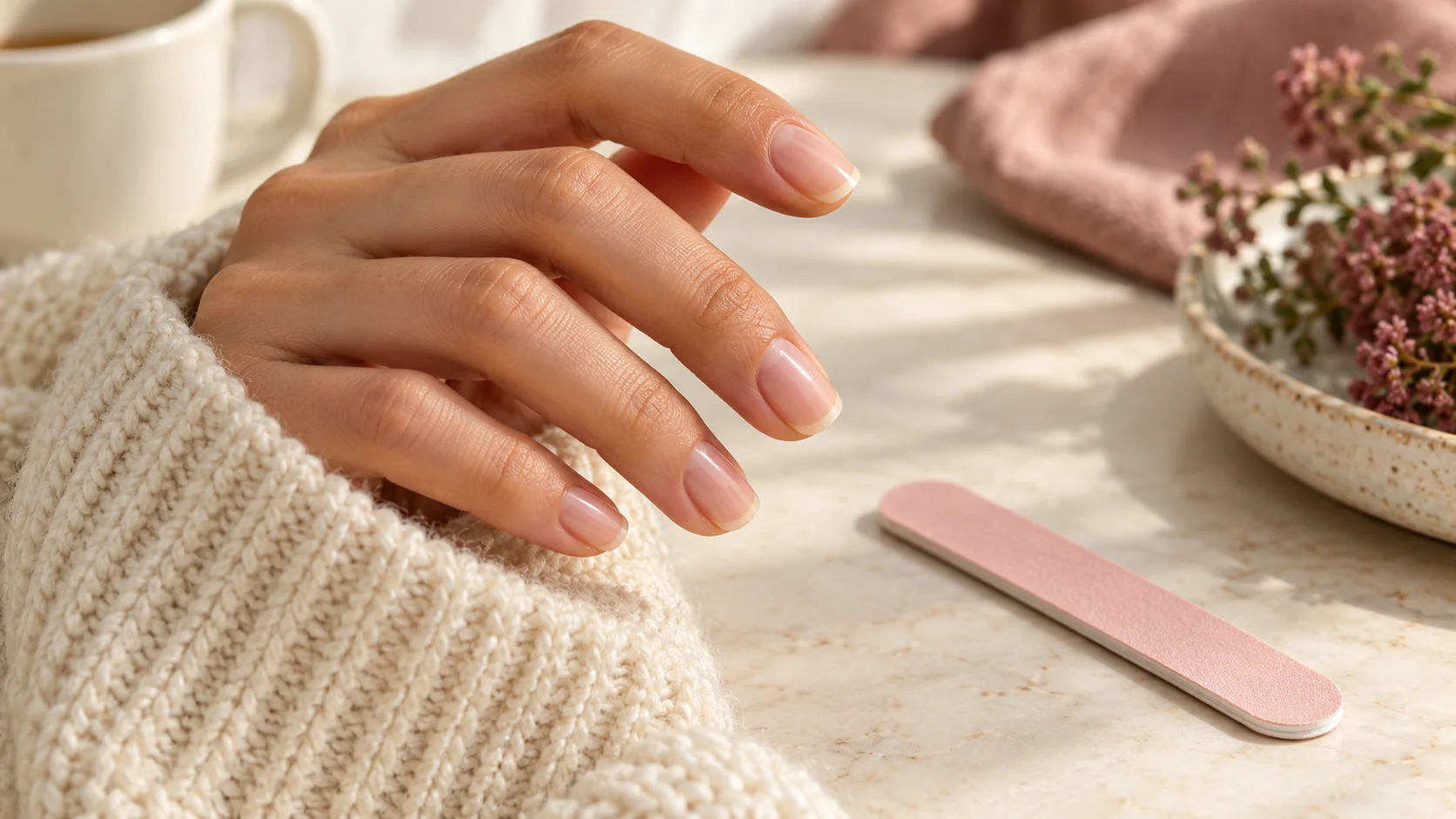
For routine grooming, choose a comfortable outline and a tool intended for that purpose. Avoid turning one catching corner into a full surface-buffing session. A small maintenance task does not require recreating every step from a salon video.
Put the tool away after the planned adjustment. Keeping a file in your hand while working or watching television can turn a specific task into repeated, unfocused attention. If the same area repeatedly causes trouble, note it and seek advice rather than continually removing more material.
Keep gloves useful and comfortable
Outdoor gloves are easier to use consistently when they fit and are stored with the items you take out. Check that you can manage ordinary closures comfortably. If they become wet or need cleaning, follow their care instructions and have a practical alternative available for the next trip.
Do not confuse a warm fabric glove with protection for cleaning chemicals or another specialised task. Match those jobs to the relevant product and equipment instructions. The glove that suits a walk is not automatically the glove for washing up, work or handling a garden product.
If a nail length makes gloves awkward, consider discussing a more manageable shape at your next appointment. Explain the exact problem rather than asking for a universally winter-proof manicure. Colour and small design details can still fit a shorter practical outline.
Recognise when the issue needs more than routine care
The NHS advises GP review for persistent, recurrent or severe contact-dermatitis symptoms. Itching, cracking or a rash should not automatically be dismissed as a normal winter inconvenience. This guide cannot identify the cause from appearance.
Record which products touch the area and when symptoms began. Include household and workplace exposures, not just hand cream. If a newly introduced cosmetic seems to irritate your skin, stop using it and seek appropriate advice rather than layering another unfamiliar product over it.
Describe changes in your own skin clearly without expecting redness to look identical on every skin tone. Photos may help a clinician when requested, but they do not replace the history or determine whether the issue is only cosmetic.
If you travel between home and work, check what you actually carry on those days. A product stored in a weekend bag will not help you remember the weekday routine. Keep labels readable and lids secure, and review the setup when you change bags or coats. Small organisational changes are easier to judge than several new cosmetics introduced together.
Place, protect, maintain, review
- Place: keep suitable care products where the routine happens.
- Protect: choose gloves for the actual activity.
- Maintain: handle a rough edge as a focused task.
- Review: get advice for persistent or severe symptoms.
Make one useful change at a time
Choose the most obvious obstacle first. If you forget gloves, improve their storage. If the product is inconvenient, discuss a suitable alternative. If a nail catches every day, address that specific concern. You do not need a collection of seasonal products to make the routine more workable.
Review how the change fits your day, without promising yourself a particular transformation by a fixed date. Keep professional treatment instructions separate and follow them as given. Our Nail Care section offers related grooming guides to help you build a simple routine around your own hands, tasks and preferences.
For the related parts of your care routine, read Cuticle Oil and Hand Cream: What Each Adds to Your Routine, Cuticle Care at Home: What to Leave Alone and What to Moisturise and Why Nails Split at the Edges and How to Reduce Snagging. For the relevant product or service decision, see Nail Polish Storage: Light, Heat and Bottle Care.
Common questions
Do I need a completely different routine in winter?
Start with the part of your existing routine that is not working. Product placement, glove storage or a repeatedly catching edge may be the practical issue. You can make one useful adjustment without replacing every product or adopting a complicated seasonal timetable.
When is a convenient time to use hand cream?
Choose a suitable point after handwashing or when your hands feel dry, following the product directions and any clinical advice. Keep the product accessible, but allow for tasks where slippery hands would be inconvenient or unsafe and follow workplace requirements.
Is the richest product always the best choice?
Texture alone does not decide suitability. Consider your skin, tolerance, the product’s directions and when you intend to use it. A pharmacist can help with emollient choices, especially when dryness is persistent or you are managing a diagnosed skin condition.
Can I avoid handwashing to preserve my manicure?
Keep required hygiene in place. Organise care around it rather than treating washing as optional because your hands feel dry. If the routine is difficult at work or symptoms persist, ask for appropriate advice while continuing to follow the relevant hygiene instructions.
Are winter gloves suitable for cleaning jobs?
Warm outdoor gloves and task-specific protective gloves serve different purposes. Follow cleaning-product and equipment instructions for the actual exposure. A soft fabric pair that feels comfortable on a walk does not establish suitable protection for chemicals or wet household tasks.
What if a rough edge keeps catching on wool?
Identify the exact spot and whether it is bare nail or product before acting. A focused grooming adjustment may be appropriate for an ordinary free-edge snag. Repeated trouble, discomfort or an unfamiliar enhancement remnant warrants advice rather than continual filing.
Why do emollients have a fire warning?
Product residue can remain on fabrics and increase how easily they burn. Follow the safety information, keep affected clothing and bedding away from ignition sources and do not assume washing eliminates the risk. Discuss any uncertainty with your pharmacist or clinician.
When should I ask about dry or cracked skin?
Seek advice for persistent, recurrent or severe symptoms rather than assuming they are merely seasonal. Record timing and products used, including household or workplace exposures. A photograph may help when requested, but it cannot establish the cause by itself.
Sources and further reading
- AAD — Relieving dry skin — checked 2026-10-21
- NHS — Emollients — checked 2026-10-21
- NHS — Contact dermatitis — checked 2026-10-21