Bridal French Nails: Choosing a Base Shade and Tip Style
Choose the coverage, contrast and tip width of a bridal French manicure before adding optional decorative details.
Archive edition: 2026-06-23 · This is an editorial allocation, not the first-publication date.
Key takeaways
- Choose background colour and coverage.
- Compare soft and crisp tip contrast.
- Set width and curve on the intended length.
- Wear the trial and note specific adjustments.
- Add one optional detail, or keep the design plain.
In this guide
- Key takeaways
- Separate the base colour from the base coat
- Compare the background on your own hand
- Choose the strength of the tip
- Set the width in relation to the nail
- Keep shape and length separate from the painted line
- Add decoration only after the French itself works
- Define the French before the extras
- Save a brief that can be reproduced
- Common questions
- Sources and further reading
A bridal French manicure is a set of choices, not one fixed look. The base can be pink, beige or almost transparent; the tip can be fine and soft or clearly defined. Before adding pearls, shimmer or flowers, decide how much contrast you want between the two parts and how the line should sit on the length you plan to wear.
This guide helps you describe that design at a trial or choose an ordinary-polish interpretation you understand. It is not a universal gel tutorial or a rule that wedding nails must be French. The aim is to make a familiar idea specific enough that you and the person providing the service are discussing the same result.
Separate the base colour from the base coat
In a design conversation, the base colour means the visible background beneath the tip. It is different from a preparation base coat used within a product system. Saying you want a pink base describes an appearance; it does not specify all the products or steps needed to create it. Keep those two meanings clear when comparing options.
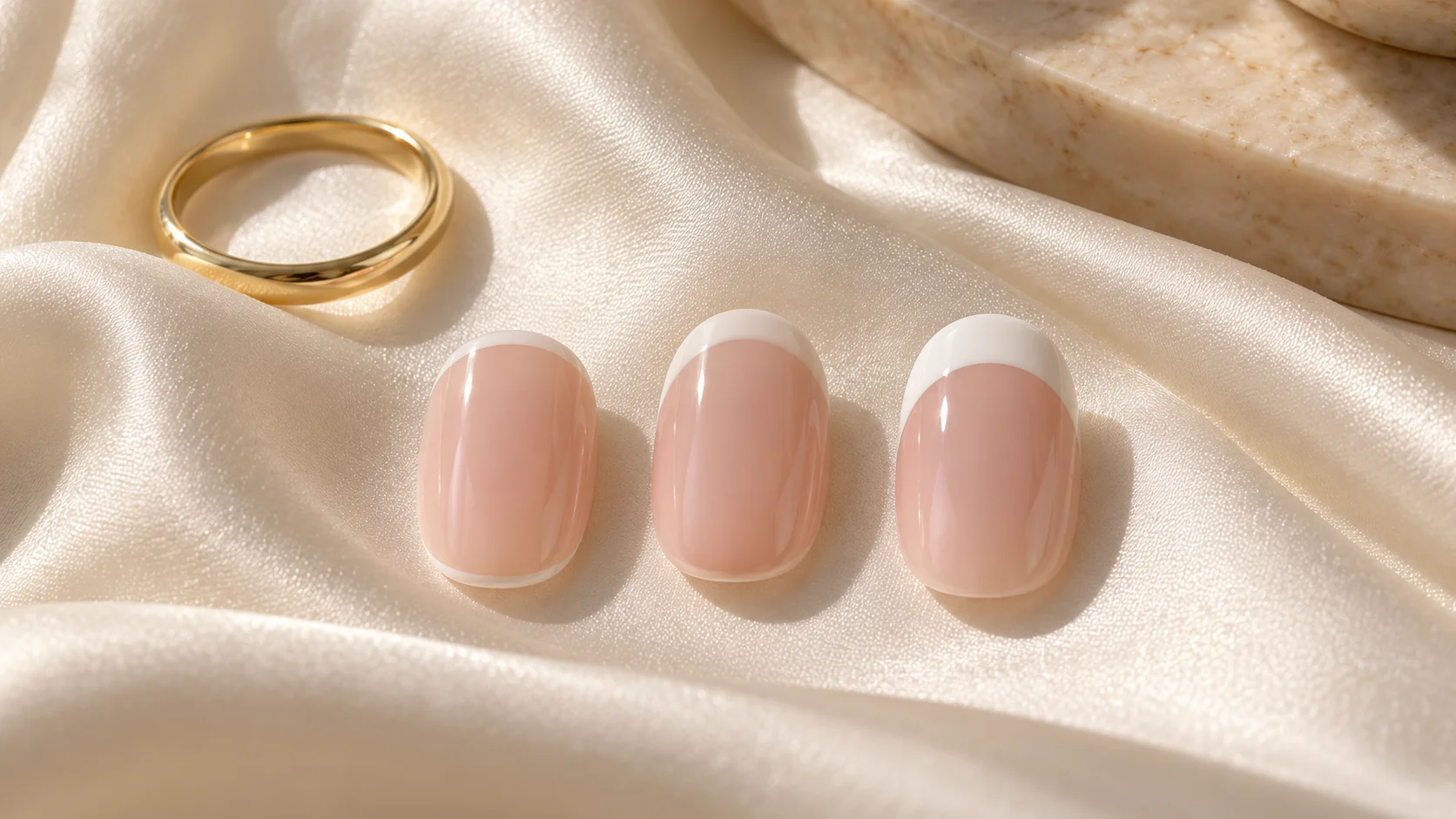
Mavala describes the classic arrangement as a sheer background with a white band, separated by a curved smile line. That gives you useful vocabulary for the design. You can then adjust the colours and proportions without assuming there is one correct version for every hand or occasion.
Start by deciding whether you want much of the natural nail visible. A very translucent pink can feel quite different from a more covered beige or milky background. If you dislike seeing the natural free edge beneath a design, explain that at the trial rather than only requesting a pale colour. Coverage is a separate preference from warmth or coolness.
Compare the background on your own hand
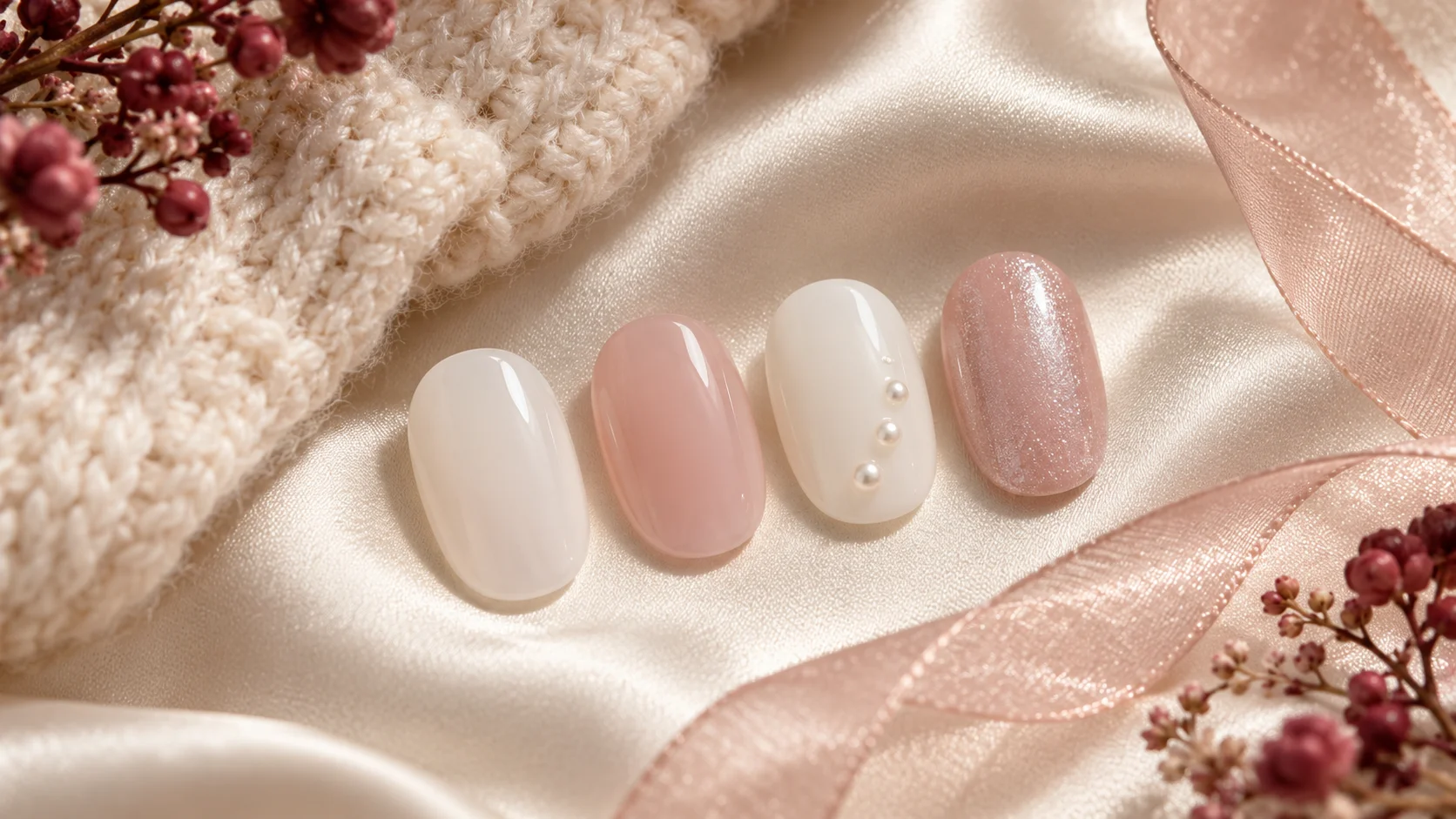
A named product can be a helpful reference, provided it is not treated as a universal match. OPI describes Bubble Bath Nail Lacquer as a sheer light pink. This identifies a colour and coverage family, not the exact effect of a different formula, a salon mixture or the generated samples pictured here.
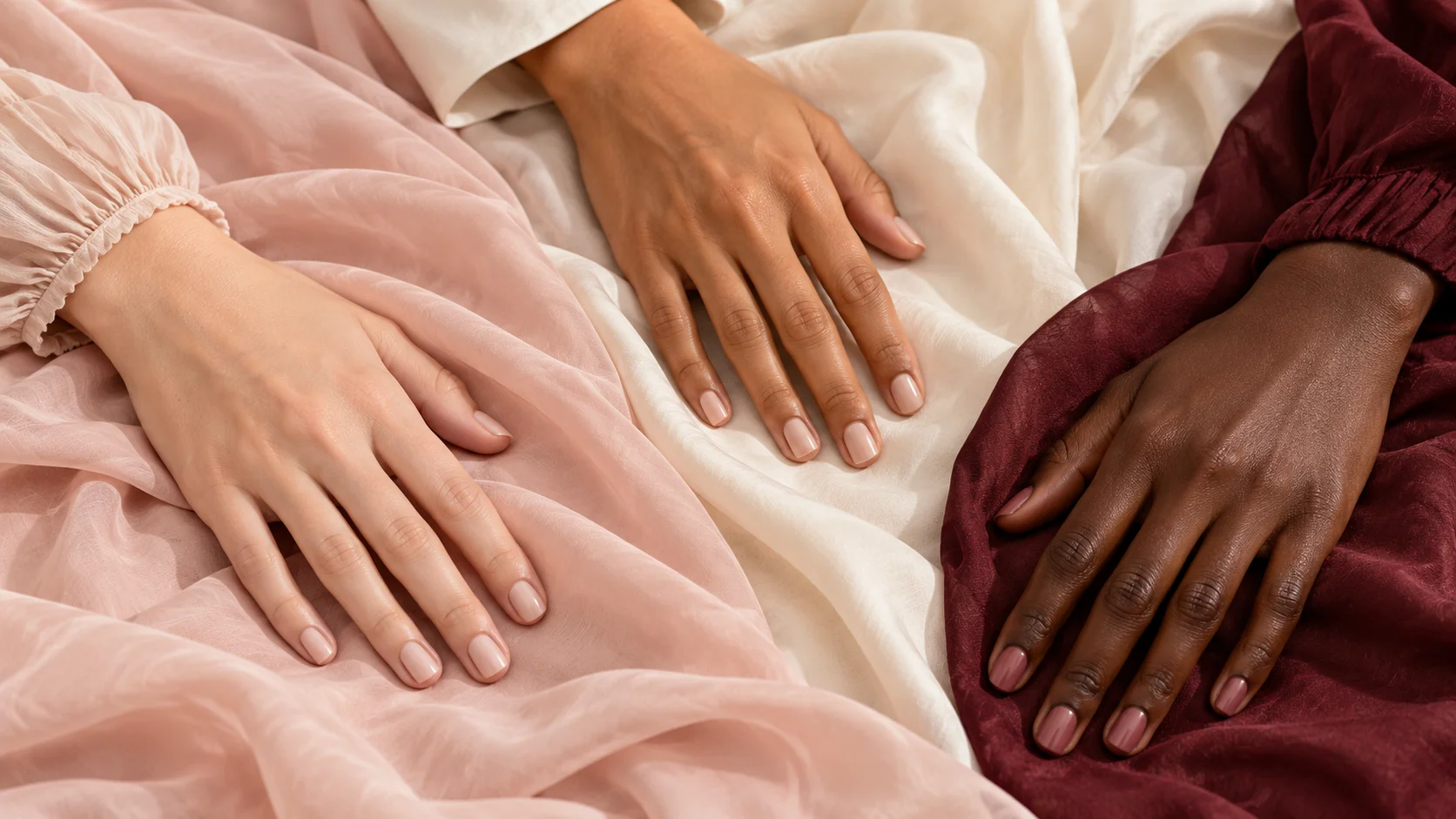
Compare the proposed background beside your outfit fabric and jewellery. A pink you enjoy in isolation may feel different next to ivory silk or a bright white sleeve. Look at the hand relaxed as well as posed. If two backgrounds are close, decide which you prefer before changing the tip width, so you know which adjustment produced the result.
You do not need to find a shade that disappears into your skin. The choice can be a deliberate tint or a clear contrast. Avoid broad labels such as universally flattering nude; explain the actual colour, transparency and depth you like. A useful brief might say sheer pink with the natural nail visible, rather than only natural French.
Choose the strength of the tip
Essie’s French-tip guide distinguishes a crisp white edge from a softer sheer-white option. That contrast is a useful starting point when comparing samples. A bright tip can make the boundary more obvious, while a softer one can create a gentler distinction from the background.
Choose the effect according to what you want to notice. If the outfit already has lace and reflective jewellery, you may prefer a quieter line. If the manicure is intended as a clear detail in close photographs, you may like more contrast. Neither choice is inherently more bridal, sophisticated or appropriate; they simply create different visual emphasis.
A coloured tip is also an option. A pale rose, a muted berry or another small accent can connect the manicure to your personal style. Keep that as a separate design decision rather than adding it alongside several other untried changes. The French arrangement can remain recognisable through its structure even when the tip is not white.
Set the width in relation to the nail
A very fine line and a broad band occupy different amounts of the visible nail. Compare the proportion on the length you will actually wear, not only on an inspiration image showing long extensions. A narrow nail may need a different balance from a wider one while still sharing the same overall look across the hand.
The Essie guide also describes micro and diagonal variations, showing that the tip line can be adjusted rather than treated as fixed. Use those terms as starting points, then specify the desired effect with a sample. Micro is not a universal measurement, and a photograph can make a narrow band look larger than it appears in person.
If you are unsure, ask to compare two widths before committing to the full design. Decide whether you prefer the amount of contrast, the curve or the overall balance, then record the choice. Do not assume that adding more white will automatically make the nail look longer or suit your hand better.
| Decision | Options to compare | Useful wording for the brief |
|---|---|---|
| Background coverage | Translucent tint or fuller coverage | How much natural nail should remain visible |
| Tip contrast | Soft white, crisp white or coloured edge | How strongly the tip should stand out |
| Tip width | Fine line or wider band | Reference sample on your actual length |
| Line shape | Soft curve, more defined curve or diagonal | The outline you want repeated |
Keep shape and length separate from the painted line
The physical nail outline and the painted smile line are related but different. You might want a softly squared nail with a curved tip, or a rounded nail with a very fine edge. Describe both. If a reference contains extensions you do not want, say that the colour arrangement is the inspiration rather than the complete service.
Choose a comfortable length before finalising the artwork. During a trial, notice ordinary tasks such as fastening a clasp, using your phone or handling clothing. An attractive painted line does not remove the practical effects of an unfamiliar shape. If the length needs adjusting, discuss how the design will be adapted afterwards.
Add decoration only after the French itself works
Once the background and tip feel right, decide whether an extra detail contributes anything. A small painted flower, a fine shimmer accent or a plain finish are all possible choices. You may find that the contrast between base and tip already gives you enough detail beside the ring and outfit.
Distinguish flat painted accents from raised embellishments. They can look similar in a small image but feel different with fabric and everyday movement. If you want added decoration, confirm placement, number of nails, price and removal requirements with the provider. Avoid leaving a broad request such as bridal sparkle open to several interpretations.
Save a brief that can be reproduced
Keep an unfiltered photograph and written notes about the exact products or service agreed. A concise description might say short rounded shape, sheer pink background, fine soft-white curved tip, no raised decoration. If the final provider is different from the trial provider, share the record early enough for them to confirm what they can achieve.
Browse Seasonal & Bridal for other wedding ideas and Polish & Tools for finish comparisons. The value of the trial is a clear choice you enjoy, with the design and service understood before the wedding appointment.
To adapt the plan to related occasions and outfits, compare Spring Wedding Nails: Soft Colour and Small Detail Ideas, A Bridal Nail Trial Checklist for Colour, Shape and Comfort and Winter Wedding Nails: Milky Colour, Pearl Details and Soft Shimmer. For the underlying care, colour or service choice, see Micro French Nails: Choosing Tip Width, Shape and Colour.
Common questions
What is the difference between a base colour and base coat?
The base colour is the visible background of the French design, while a base coat is a product used within the application system. Requesting a pink background describes the look, not the full preparation or product sequence. Confirm the actual service separately with the provider.
Does a bridal French manicure need a pink background?
No. Pink is a familiar option, but you can compare beige, milky or other backgrounds according to your preference. Decide on coverage and colour separately, and view the proposed effect beside your outfit. A bridal design does not require one supposedly universal shade.
What is the smile line?
It is the boundary where the tip colour meets the background in a French design. Its curve and position affect the appearance of the manicure. Use a sample to explain the line you want rather than assuming that a broad term such as classic French specifies every detail.
How wide should the white tip be?
There is no single width for every nail. Compare a fine line and a wider band on the length you intend to wear, then choose the proportion you like. A reference showing long extensions may need adaptation rather than exact copying on a shorter nail.
Can I choose a softer white tip?
Yes. A softer or more translucent white creates a different level of contrast from a crisp bright white. Compare the effect with the proposed background before finalising the design. Describe how strongly you want the edge to stand out rather than only naming the colour white.
Do French nails require extensions?
No. The painted arrangement can be adapted to a natural length where appropriate. Decide the physical shape and length separately from the tip design. If extensions are proposed, understand the service, maintenance and removal before choosing them rather than treating extra length as a bridal requirement.
Should I add pearls or other raised details?
Only if you want them and understand their practical feel and care. A plain French manicure is already a complete design. Compare flat painted accents with raised embellishments, considering clothing and ordinary tasks, and agree exact placement and quantity with the technician before the appointment.
What should I save after a French manicure trial?
Keep an unfiltered whole-hand photograph plus notes on the system, background coverage, tip colour, width, curve and any artwork. Record specific adjustments requested after wearing it. These details help the final provider understand the design more clearly than a folder of unrelated bridal inspiration.
Sources and further reading
- Essie UK — French tip nail guide — checked 2026-10-23
- Mavala UK — French manicure at home — checked 2026-10-23
- OPI UK — Bubble Bath Nail Lacquer — checked 2026-10-23