How to Compare Press-On Sets Without Relying on Wear-Time Claims
Compare fit, kit contents, removal, reuse conditions and total supplies alongside the manufacturer’s advertised wear period.
Archive edition: 2026-09-11 · This is an editorial allocation, not the first-publication date.
Key takeaways
- Define the occasion and practical requirements.
- Record each exact range and style.
- Check fit, contents and removal information.
- Label wear and reuse claims with their conditions.
- Resolve important unknowns before comparing total cost.
In this guide
- Key takeaways
- Write down the job you want the set to do
- Record the exact product, not just the brand
- Make fit the first comparison
- Translate wear claims into their actual meaning
- Compare what comes in the box
- Read removal and reuse before calculating value
- Use reviews to find questions, not to invent averages
- Choose a manageable first purchase
- Common questions
- Sources and further reading
A press-on set can advertise an impressive wear period and still be an awkward purchase if its sizes, curve or removal method do not suit your needs. Compare the complete product before allowing the largest number on the box to decide.
This is a buying framework, not a tested ranking. We have not measured wear time, verified customer-review averages or selected a universal winner. The aim is to help you turn product pages into a practical shortlist with clearly labelled facts and unanswered questions.
Write down the job you want the set to do
Start with the occasion, your preferred visible length and the activities you need to perform. A set for a few photographs and one intended for a longer period raise different practical questions. Neither use makes a product automatically suitable; both still require a comfortable fit and an appropriate adhesive system.
Describe your needs in observable terms. “I want a short tip that lets me type comfortably” is more useful than “I need the strongest nails”. You can then ask about dimensions, shape and fit rather than relying on an undefined performance label.
Also check any relevant workplace or activity rules before shopping. A decorative product cannot override a requirement about artificial nails. Where the rules are unclear, ask the organisation directly rather than assuming a short or neutral-looking set will be accepted.
Record the exact product, not just the brand
Brands can sell several adhesive formats, lengths and moulds. Create one comparison row per exact range and style, including the market or regional shop. Two boxes with similar colour names may contain different products or instructions.
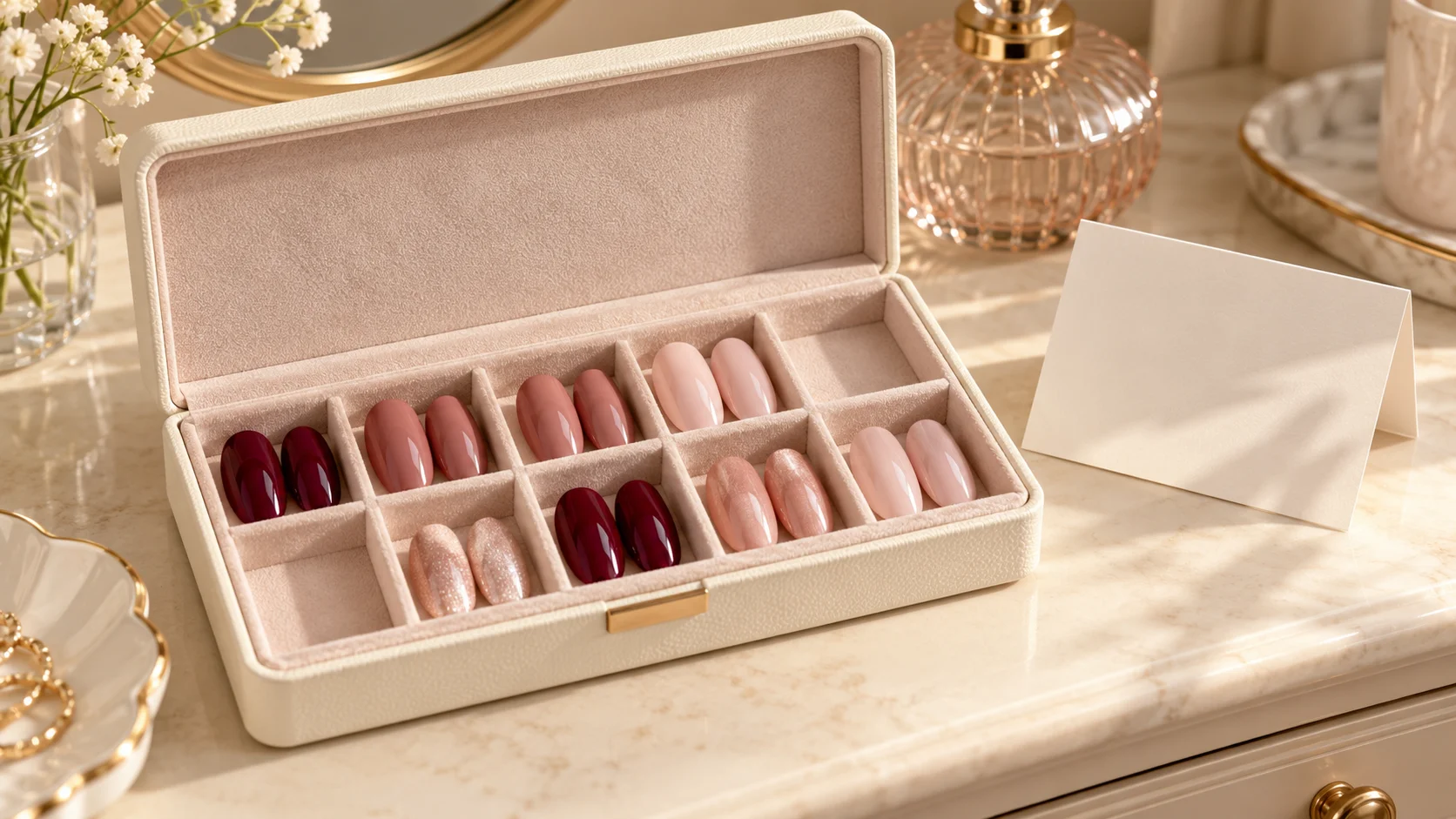
OPI’s xPRESS/ON overview illustrates the variety of finishes and shapes within a press-on range. A brand-level description is a starting point, but the individual product page and supplied instructions remain necessary.
Save the product link and the date you checked it. That makes it easier to revisit a claim before buying, particularly if a kit’s contents or available styles change. Do not fill a missing detail by borrowing it from a similar-looking product.
Make fit the first comparison
Look for a size chart, a sizing kit or a clearly described fitting process. Check what any measurements mean and whether the range provides choices for all ten fingers. The total number of pieces is not necessarily the number of distinct sizes.
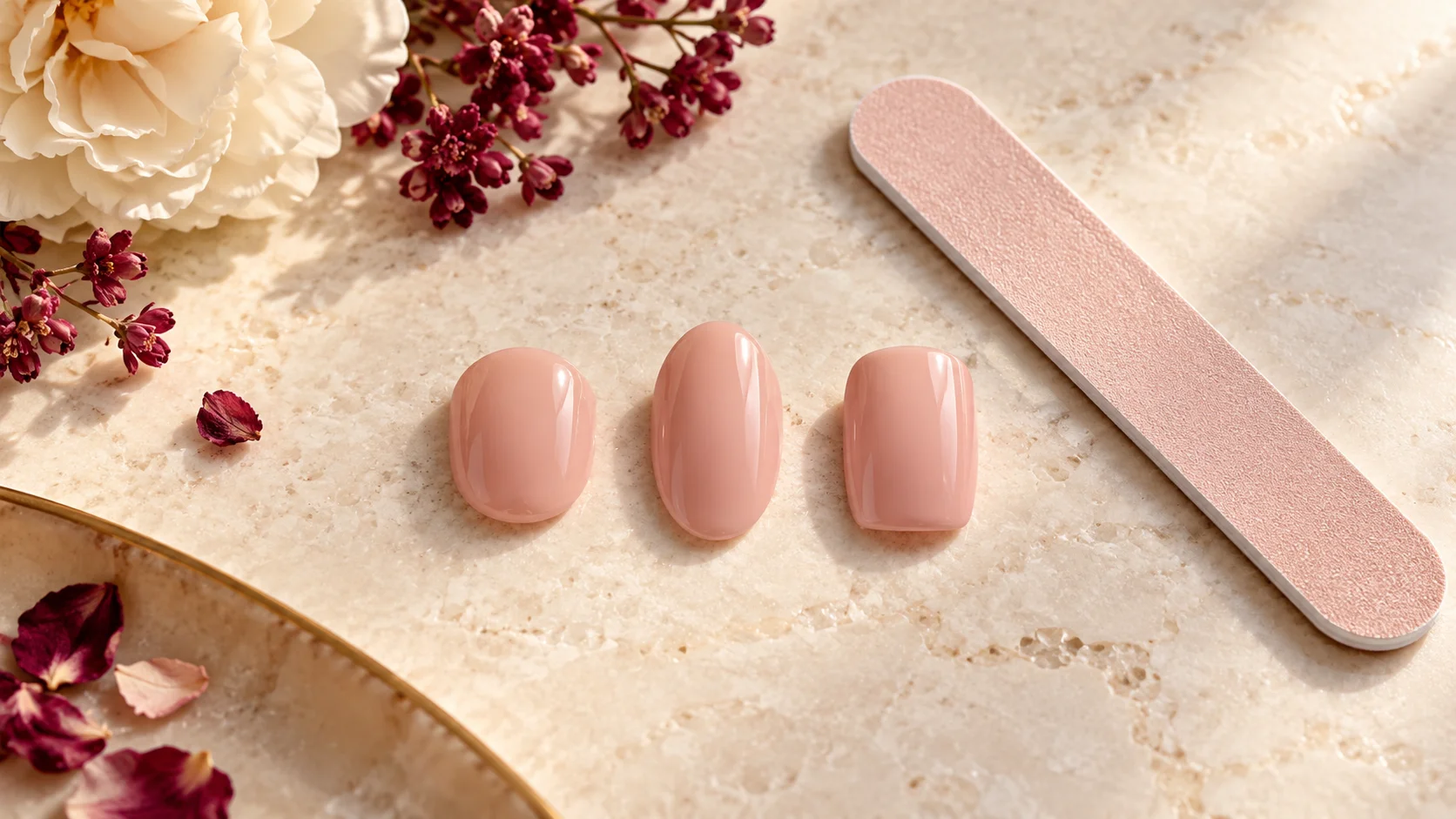
Width alone cannot describe every feature of a tip. The curve, base shape and overall length also affect how it sits. If you already know that a particular style felt uncomfortable, record the exact style and the problem rather than treating the entire brand as one identical mould.
A comparison chart can include “not stated”. That is an honest and useful entry. If a crucial dimension or fitting detail is missing, ask the seller before purchasing rather than giving the product a positive score based on a model photograph.
Translate wear claims into their actual meaning
Olive & June’s wear guidance gives different maximum wear claims for its adhesive systems. These are manufacturer statements about those products, not independent results from our own testing or a promise about your experience.
Record the wording and its conditions together. “Up to” does not establish an average, a minimum or the number of days you should keep a set on despite discomfort. A product with a larger advertised maximum is not automatically the better choice for a one-evening plan.
The KISS nails FAQ also discusses recommended wear and product-specific care. Read any maximum wear instruction alongside the marketing headline. A recommendation about when to remove a set is not interchangeable with a durability guarantee.
| Compare | Record for each exact set | Leave unresolved when |
|---|---|---|
| Fit | Size options, chart method, shape and length | The listing gives only a total piece count |
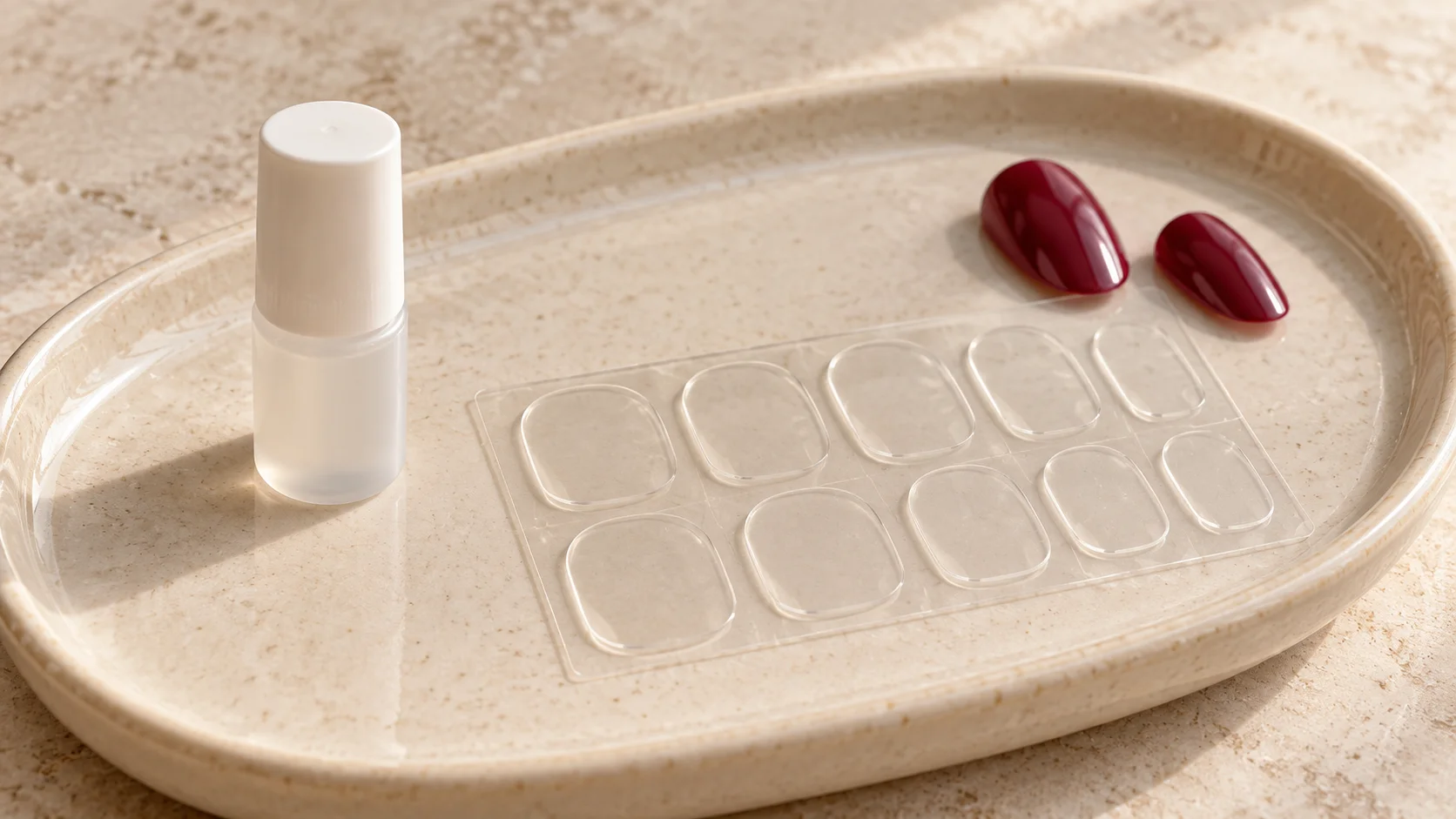
| Adhesive | Glue, separate tabs or pre-attached adhesive | Replacement compatibility is unstated |
| Removal | Directions and required supplies | The seller gives only an application video |
| Reuse | Permission and conditions for the exact range | Only customer anecdotes mention a second wear |
| Cost | Current kit price, delivery and missing supplies | Potential future wears are being assumed |
Compare what comes in the box
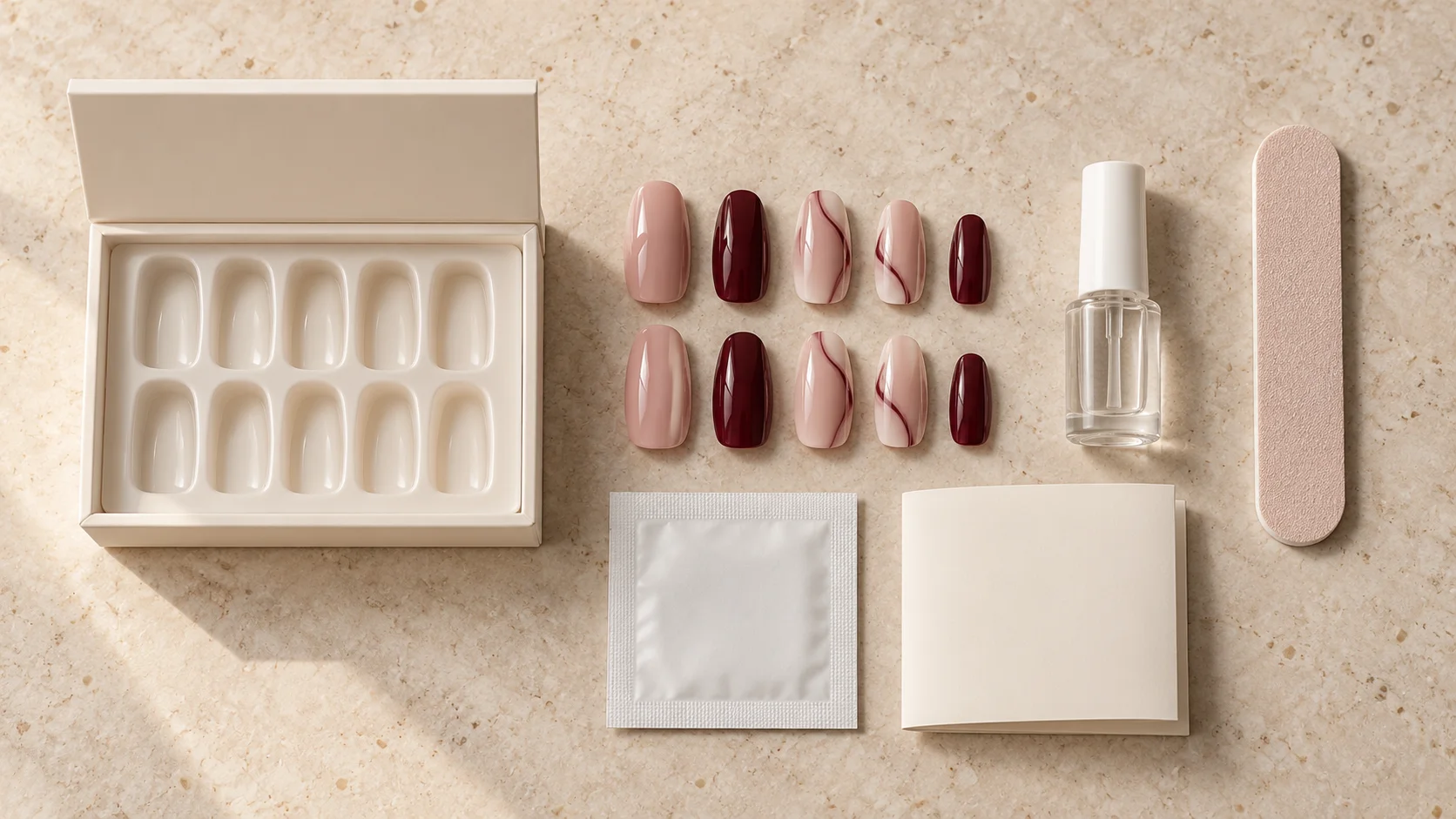
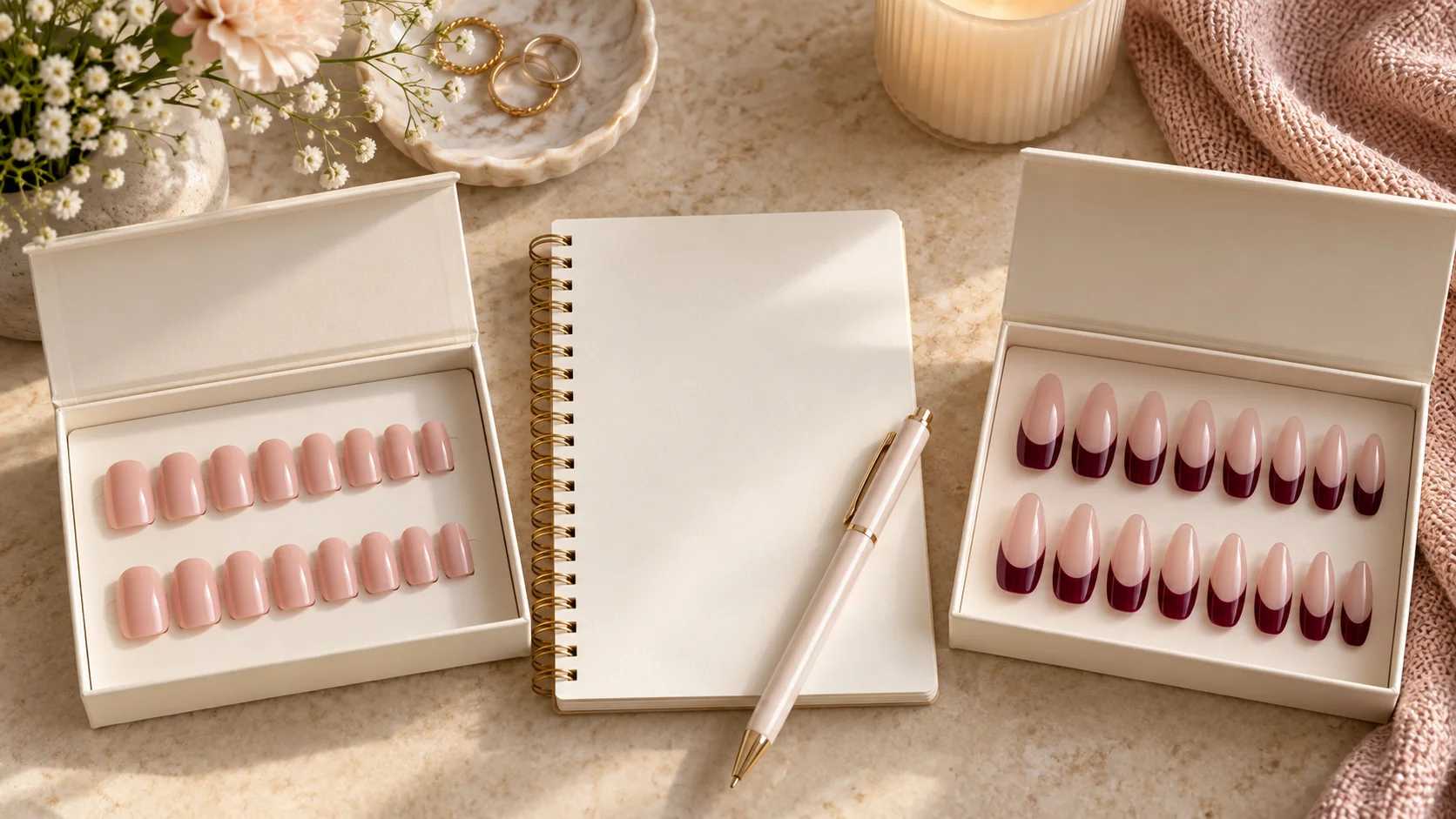
List the tips, adhesive and preparation tools actually included. Then separate essential missing supplies from optional extras. A larger-looking kit may contain items you already own, while a smaller one may require an additional compatible adhesive or removal product.
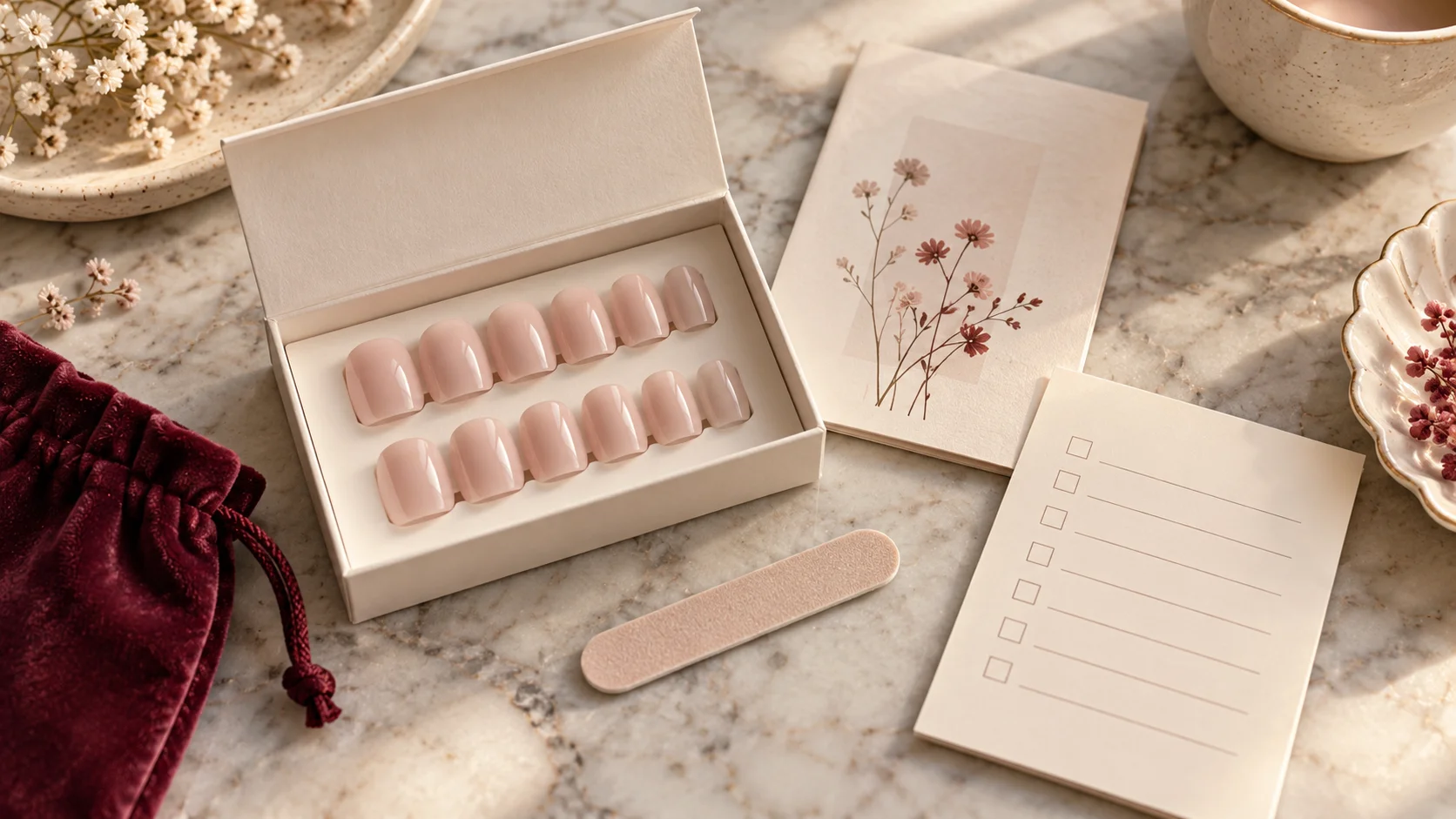
Do not assume that a file, preparation pad or stick is included because it appears in a lifestyle photograph. Look for the written contents list for that exact listing. Where the photograph and list disagree, ask the seller to confirm the current version.
Keep the instructions themselves on the checklist. Clear application, care and removal directions are part of making an informed purchase. A product page that only shows the finished manicure leaves practical questions unanswered, even when the design is appealing.
Read removal and reuse before calculating value
Removal affects both the supplies you need and the time you must allow. Check the method for the specific adhesive and tip. Do not assume every press-on comes off with the same household ingredients, or that a quicker-looking method is approved.
Reuse claims also vary. The KISS FAQ distinguishes general single-use guidance from a named reusable range, while Olive & June differentiates its systems. Treat those conditions as product-specific; spare nails or tabs alone do not prove permission for repeat wear.
For a basic budget, count the purchase and necessary supplies you know you will need. You can note a possible future reuse separately, but do not divide the price by several imagined wears and present the result as a guaranteed cost per manicure.
Use reviews to find questions, not to invent averages
A review may reveal a useful concern, such as missing size information or uncertainty about removal. It does not tell you whether the reviewer used the same adhesive, followed the directions or has a similar nail shape. Keep those unknowns visible.
If several comments mention fit, use that as a reason to examine the chart or ask the seller about the mould. Avoid translating a handful of anecdotes into a numerical failure rate. We have not audited review authenticity or performed a representative review analysis here.
Look for disclosed conditions in any published test you consult: the exact product, application method, activities and removal process. A photograph of an attractive manicure establishes appearance in that image, not verified comfort or a particular period of wear.
Choose a manageable first purchase
Once two sets meet your basic requirements, decide which remaining uncertainty matters most. One may have clearer sizing information; another may offer a finish you prefer but leave replacement adhesive unclear. Ask the unresolved question before committing to extra accessories or multiple sets.
Keep your first-use notes factual: exact style, selected sizes, application date, any discomfort and why you removed it. Those notes can inform a later purchase without turning one experience into a universal performance claim about the brand.
Build a useful shortlist
- Define the occasion and practical requirements.
- Record each exact range and style.
- Check fit, contents and removal information.
- Label wear and reuse claims with their conditions.
- Resolve important unknowns before comparing total cost.
A useful comparison ends with a reasoned choice, not necessarily the longest advertised wear period. Keep exploring the press-on nails guides for help understanding size charts, adhesive formats and the questions to ask before application.
To complete the fit, wear and removal plan, read What Comes in a Press-On Nail Kit? A Buyer's Checklist, A Press-On Nail Shopping Checklist for Your First Set and Reusable Press-On Nails: How to Check Care Instructions Before Buying. For the related care, tool or design decision, see Nail Polish Gift Sets: How to Compare Useful Colours and Bottle Sizes.
Common questions
Which press-on set lasts the longest?
This guide cannot name a tested winner because we have not carried out comparative wear testing. Manufacturer maximums are conditional claims, not directly comparable personal predictions. Compare the exact system’s fit, care, removal and intended use before giving its advertised duration decisive weight.
Does “up to” describe average wear time?
No. An advertised maximum does not establish a typical result, a minimum period or a guarantee. Record the wording with the manufacturer’s conditions and maximum wear instructions. Do not keep an uncomfortable or lifting set attached simply to reach the number printed on the box.
Is a larger piece count better value?
A higher total can include repeated sizes rather than more distinct fitting choices. Check the size options and whether all ten fingers have suitable tips. Also compare included adhesive and necessary removal supplies; piece count alone cannot establish fit, useful contents or overall value.
How should I compare customer reviews?
Use reviews to identify questions worth checking, such as sizing uncertainty or unclear removal directions. Do not turn a few anecdotes into a failure rate or average wear estimate. The reviewer’s exact product, application, activities and nail shape may differ from yours or remain unstated.
Can I calculate cost per wear from a reuse claim?
Only treat known costs and supported conditions as facts. Potential reuse depends on the exact product, removal and subsequent condition, so imagined future applications should not become guaranteed savings. Record the purchase, delivery and required supplies first, with possible repeat wear clearly separated.
What if a product page has no measurements?
Mark that detail as unstated and ask the seller about the exact range, rather than borrowing dimensions from another style. A model image or broad size label cannot settle fit. If the missing information is essential to your choice, resolve it before purchasing.
Should I compare only products from one brand?
You can compare across brands, but keep each exact range and adhesive system separate. Brand names alone hide differences in moulds, contents and instructions. Use the same practical questions for each candidate and leave unknown details visible instead of assuming equivalence from similar marketing language.
What should I record after my first set?
Keep the exact style, chosen sizes, application date, practical activities and reason for removal. Note discomfort or a fitting issue in ordinary language. These observations can help your next purchase, but one personal experience does not establish a universal performance claim about every set in a range.
Sources and further reading
- Olive & June — Wear and care guidance — checked 2026-10-22
- OPI — xPRESS/ON guide — checked 2026-10-22
- KISS — Nails FAQ — checked 2026-10-22