Press-On Nail Curvature: Why a Size Can Fit but Still Feel Wrong
Understand width and curve as separate fit features, and know when to change the tip or seek advice rather than force an uncomfortable set.
Archive edition: 2026-08-27 · This is an editorial allocation, not the first-publication date.
Key takeaways
- Span: check the width using the seller's method.
- Profile: observe how the tip rests without force.
- Comfort: do not treat continuing pressure as a wear requirement.
- Next step: seek product clarification or clinical advice as appropriate.
In this guide
- Key takeaways
- Separate width from the curved profile
- Look at the dry fit without pressing it into a new shape
- Describe the mismatch in ordinary language
- Do not turn between-size advice into a universal rule
- Avoid force, heat and adhesive as fitting shortcuts
- Reassess pressure after application
- Know when to ask a clinician
- Make the next purchase more specific
- Span, profile, comfort, next step
- Common questions
- Sources and further reading
A press-on can appear to be the right width and still sit uncomfortably because its curve differs from the natural nail beneath it. The printed size number describes a choice within a product range; it does not capture every feature of the mould. Check how the tip rests as well as how far it spans.
The practical response is to reconsider the product’s fit, not force the tip flat or use extra adhesive to hide a mismatch. This guide explains the questions to ask. It cannot diagnose the cause of pain or establish a personal nail shape from a photograph.
Separate width from the curved profile
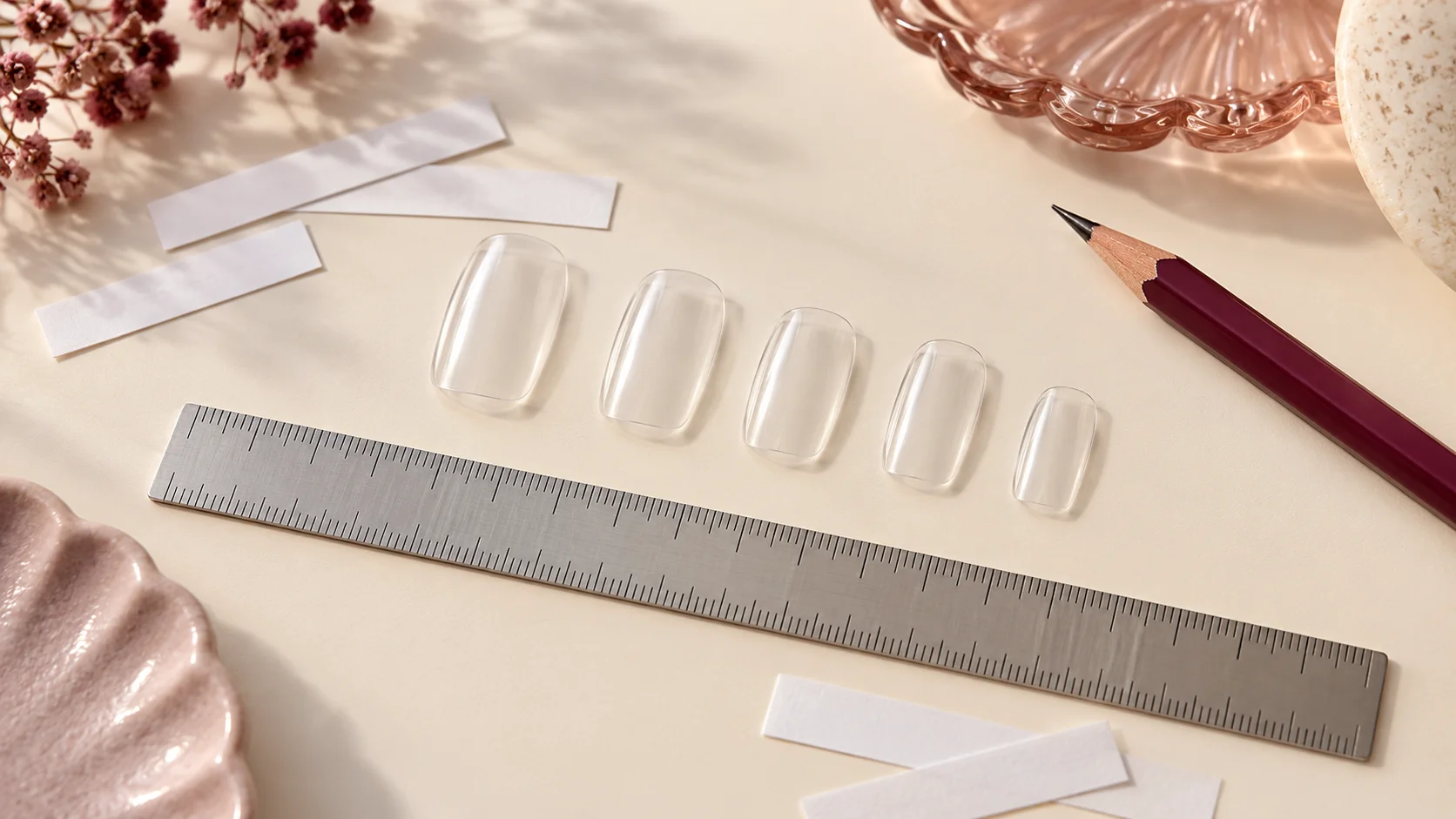
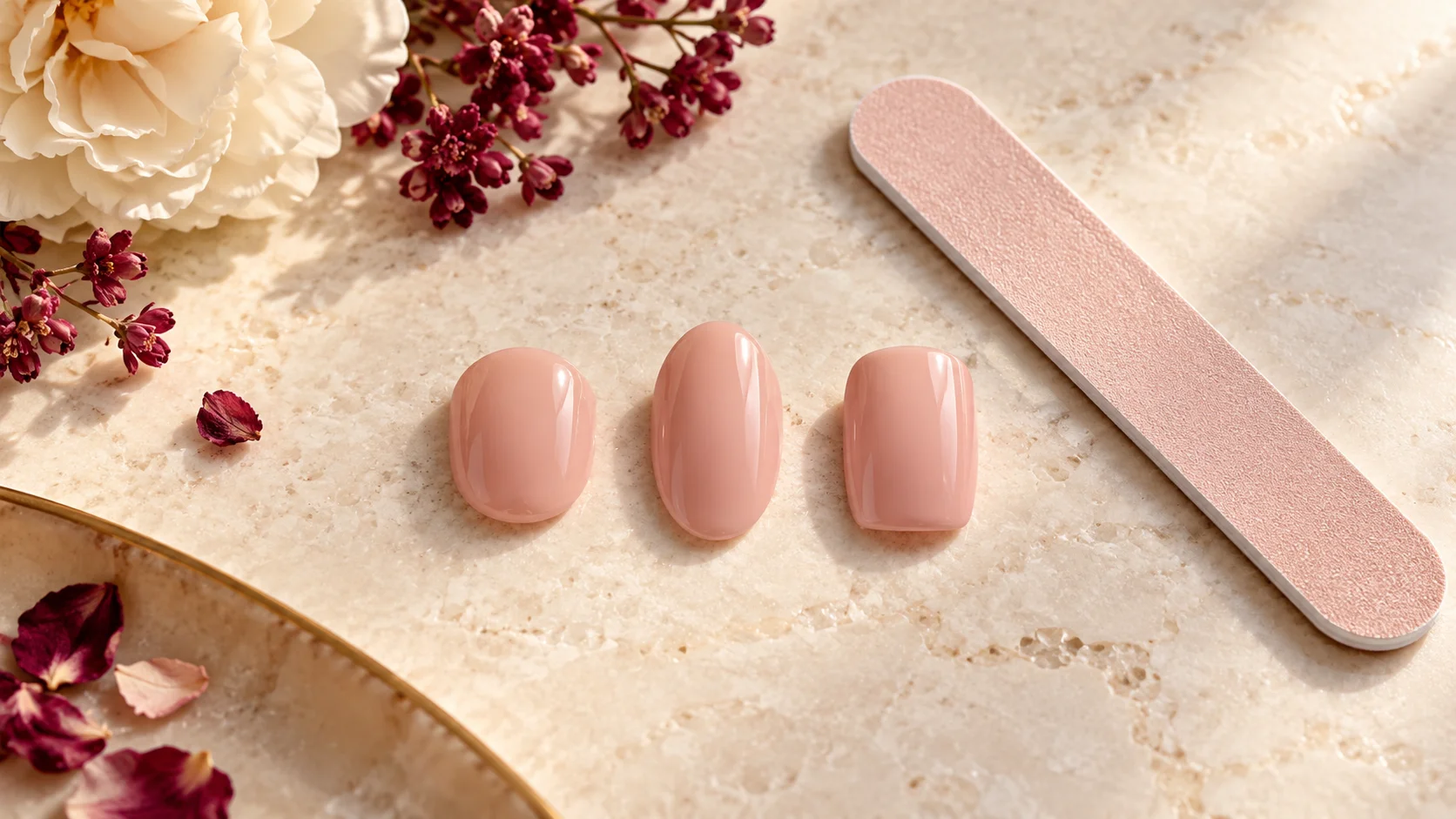
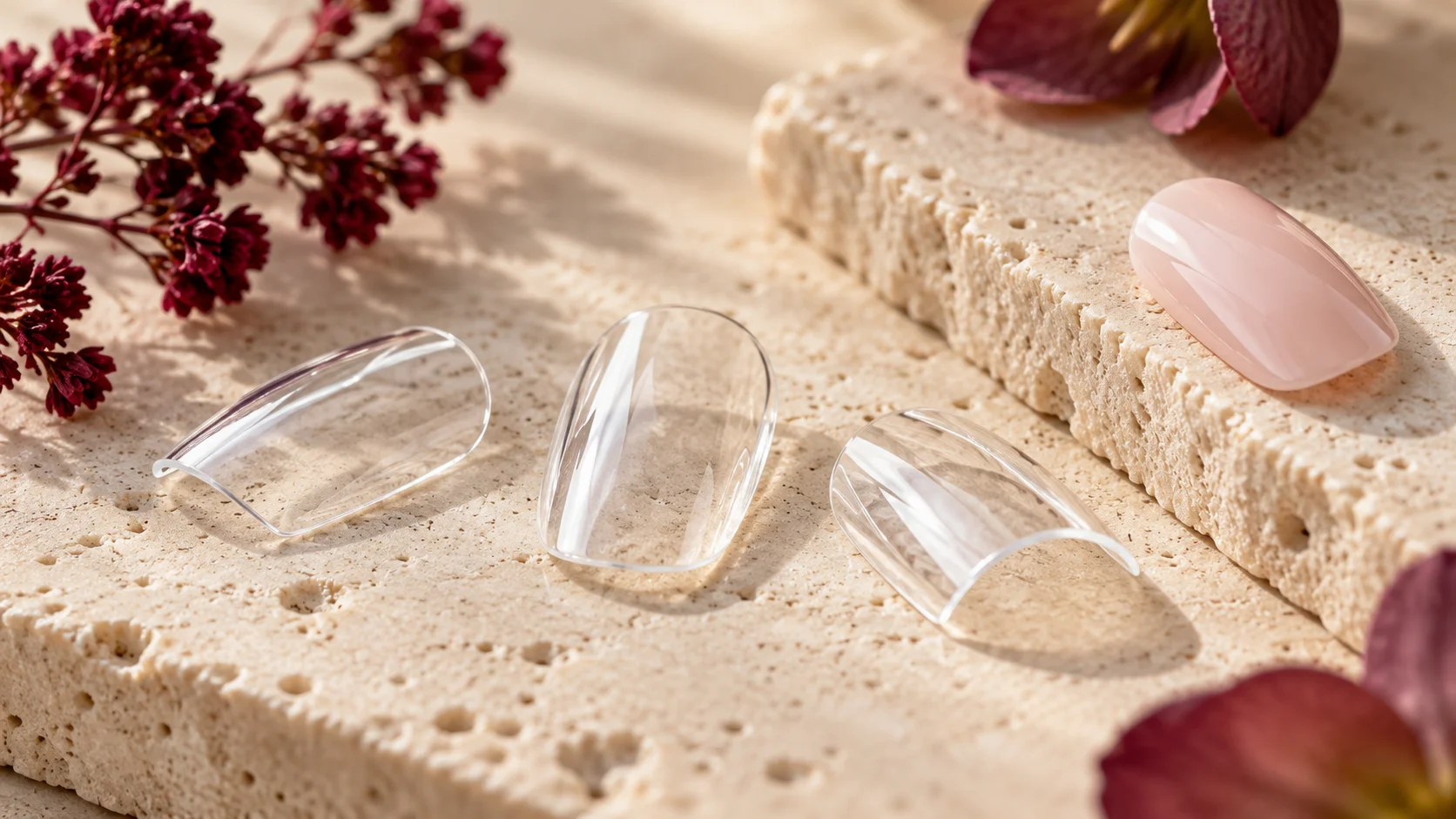
Width describes a span across the nail, while curvature describes the shape of that surface. Two artificial tips can have a similar apparent width when viewed from above yet differ in how deeply they curve across the nail.
The base outline and length are additional features. A tip that looks suitable at its widest point may still sit differently near the base or along its length. A single measurement or a familiar size number therefore cannot settle the entire fitting decision.
When reading a chart, check what its width measurement means. A curved surface measurement and a straight span are not interchangeable by default. Use the seller’s specified method and ask for clarification rather than converting between the two by guesswork.
Look at the dry fit without pressing it into a new shape
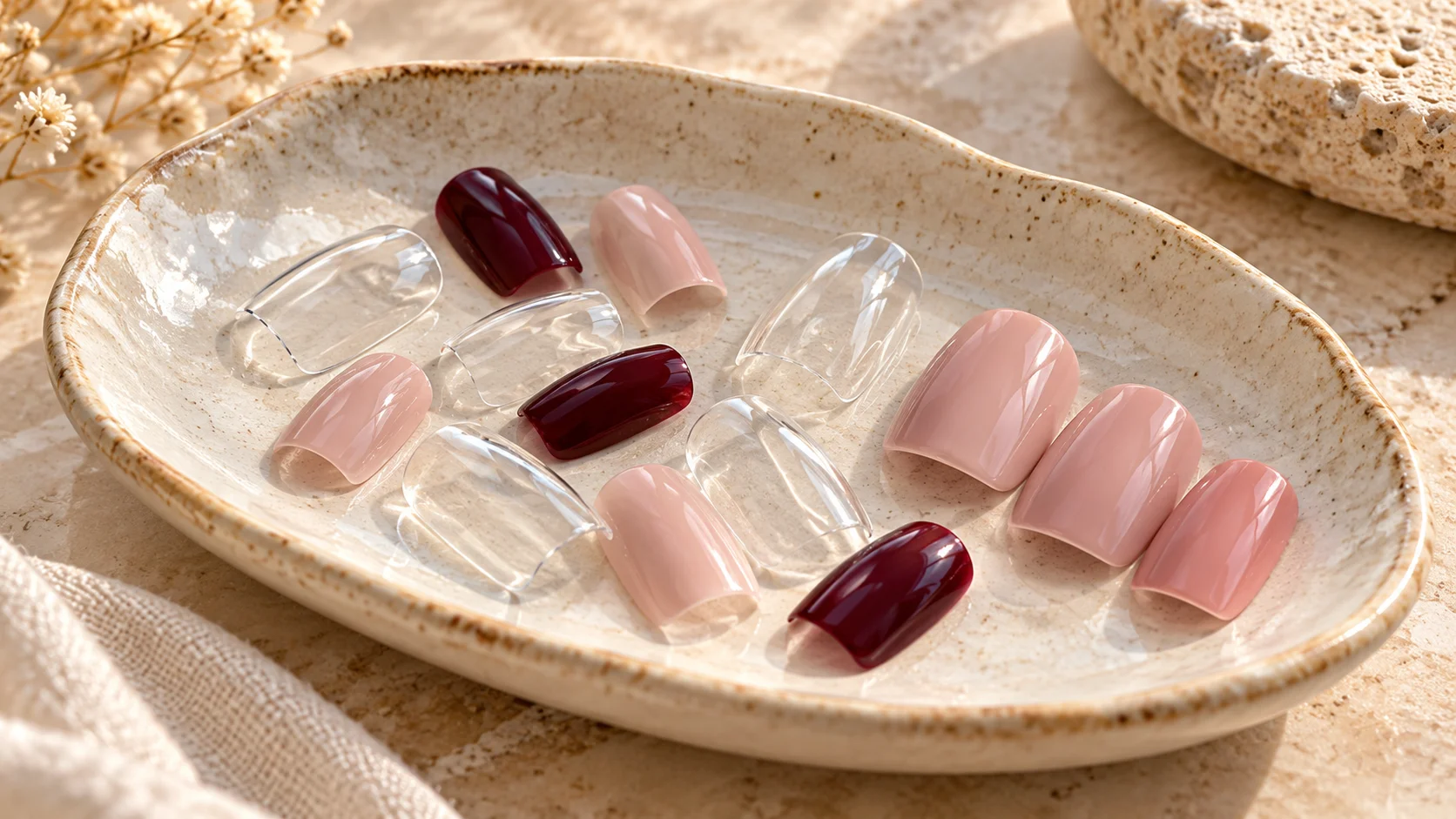
Follow the manufacturer’s instructions for trying the unattached tip. Observe whether it sits comfortably in its intended position, without squeezing your nail or changing the tip’s shape by force. The purpose is to understand the match before adhesive is introduced.
Olive & June’s fitting guide emphasises fit without forcing and notes that different styles have different curves. A size that worked in one style may therefore need to be checked again in another.
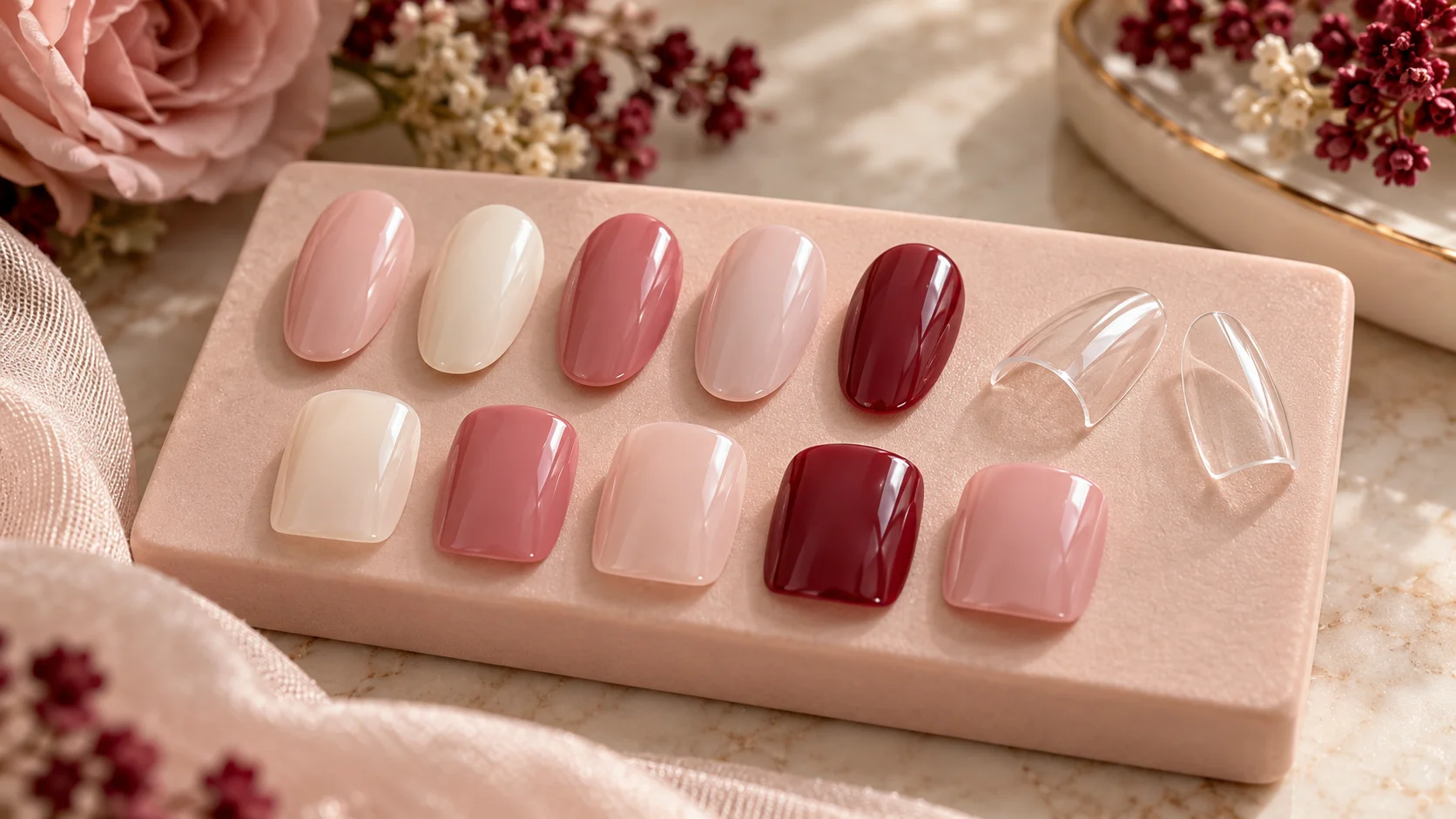
Do not judge from the thumb alone. Each finger needs its own suitable choice, and the left and right hands may not use identical sizes. Lay out the intended set and note any finger whose fit is uncertain before beginning application.
Describe the mismatch in ordinary language
You do not need to calculate a curve angle or label your nails with a technical category to ask for help. Describe where the tip seems to touch, where you can see a gap and whether an edge overlaps surrounding skin.
Useful observations include a tip that appears to contact the centre while its sides sit differently, or one that reaches the side edges but does not settle comfortably. These descriptions help explain the question without claiming to diagnose the exact mechanics from a home inspection.
Keep the exact brand, range, shape and tip number with the observation. A seller can respond more usefully to a specific product enquiry than to a general statement that press-ons never fit. A matching sizing kit may help if the manufacturer offers one for that mould.
| What you notice | Question to explore | What not to assume |
|---|---|---|
| Width seems close but the tip does not rest comfortably | Does this mould have a suitable curved profile? | That width alone proves the fit |
| A larger size overlaps skin | Is another shape or range more appropriate? | That increasing size always solves curve |
| The same number feels different in another style | Have the mould or dimensions changed? | That numbering guarantees identical fit |
| Pressure continues after application | What removal and advice route is appropriate? | That discomfort must be tolerated until wear ends |
| Nail or skin changes are visible | Is clinical assessment needed? | That every symptom is merely a curve issue |
Do not turn between-size advice into a universal rule
Manufacturers may give different instructions for different fit questions, and even their help pages can contain differing wording. If one page says to choose a smaller size while another suggests a larger one, ask which advice applies to the exact range and situation.
The Olive & June page about pressure discusses curve and fit alongside its own adjustment suggestions. Its between-size wording differs from the brand’s general sizing page. We therefore do not turn either into a blanket instruction to always size up or down.
The relevant outcome is a suitable, comfortable fit. If both available sizes remain visibly unsuitable or uncomfortable, neither has to be accepted simply because it is in the box. Another mould or a different product may be the clearer answer.
Avoid force, heat and adhesive as fitting shortcuts
Do not assume a tip can be made appropriate by bending it harder, warming it or adding extra glue. A manufacturer’s supported adjustment for one product does not establish a safe general method for every artificial-nail material or finish.
If alteration is suggested, ask what is permitted for that exact range and how the result should be checked. Keep changing the tip separate from changing your natural nail. Filing the sides of your own nail narrower to accommodate the product is not the aim of fitting.
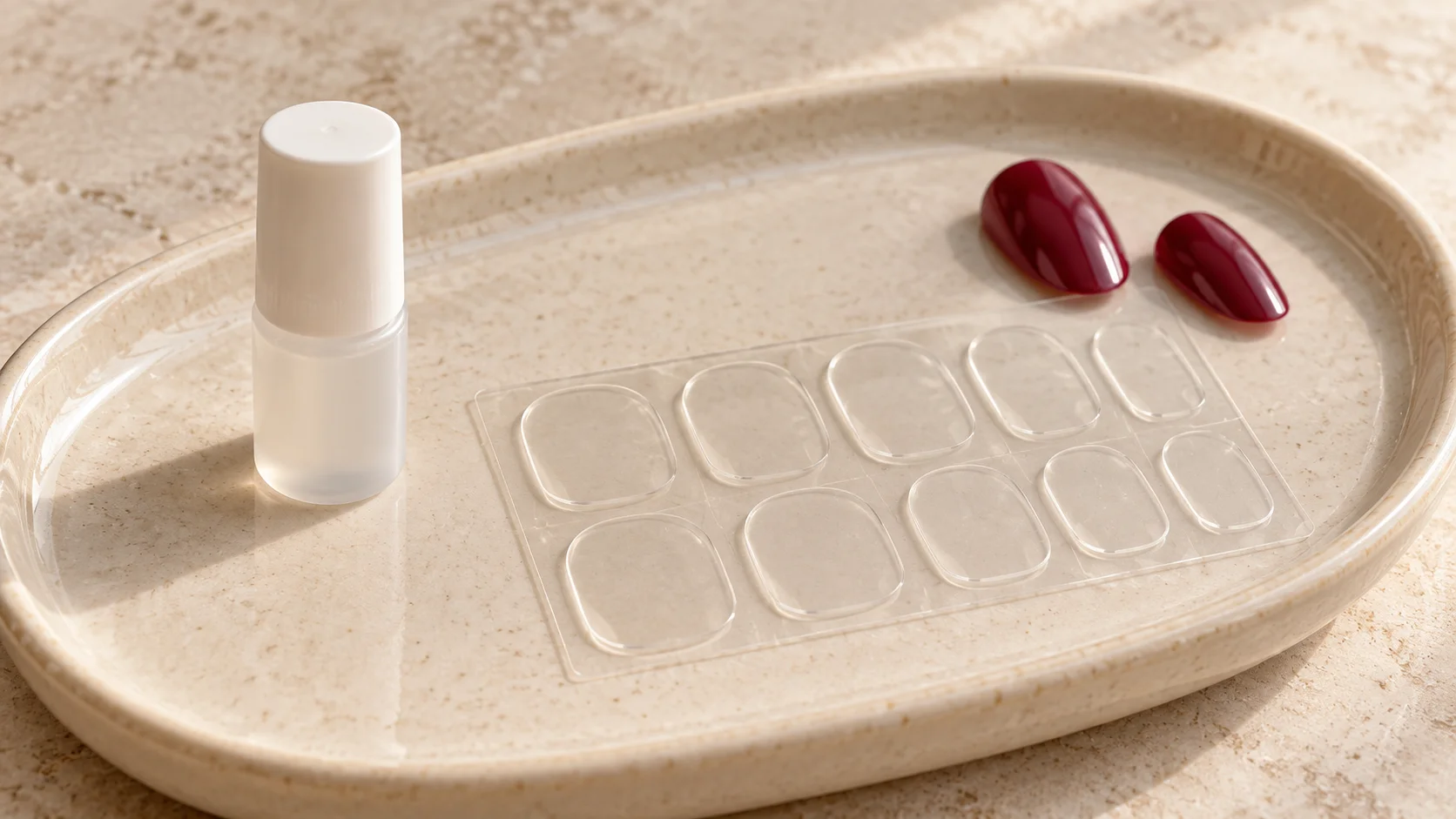
Extra adhesive should not become a filler for a mismatch you have already noticed during dry fitting. Resolve the shape question before attachment. A stronger bond does not demonstrate that the tip’s profile has become more suitable.
Reassess pressure after application
A set should not require you to work through ongoing discomfort in order to achieve a stated wear time. Follow the product’s appropriate removal guidance and seek clarification if the process is unclear. Do not pull the tip away to relieve pressure quickly.
Keep a note of the adhesive and any preparation products used as well as the tips. Discomfort cannot automatically be attributed to curve alone. Irritation, injury or another problem may need a different response, and this article cannot determine the cause for an individual.
Do not immediately apply another size over an area that remains sore or visibly changed. First establish what is happening and whether further cosmetic application is appropriate. Product support can explain a mould or instruction, but it is not a clinical assessment.
Know when to ask a clinician
The NHS advises seeing a GP for unexplained changes in nail colour or shape, unexplained nail loss, and sore, red, swollen and warm skin around a nail. Those concerns should not be dismissed as a normal part of getting used to press-ons.
If you seek advice, keep the product names and a clear description of when the problem began. Mention whether the symptoms occurred during fitting, after adhesive application or during removal. That record is more useful than a confident home diagnosis that the curve was definitely wrong.
A comfortable fit is worth checking, but it is not a guarantee against every possible reaction or nail problem. Continue to follow product directions and respond to changes appropriately rather than assuming that passing a dry-fit check settles all later concerns.
Make the next purchase more specific
Keep a short record of ranges that fitted comfortably and those that did not, including the shape and size rather than only the brand. Note the actual observation, such as pressure near the sides, rather than labelling the entire collection unsuitable.
When comparing another option, ask whether the seller has a matching sizing sample or useful profile information. A product advertised for flatter nails still needs checking on your own fingers. Marketing language cannot replace a suitable individual fit.
Span, profile, comfort, next step
- Span: check the width using the seller’s method.
- Profile: observe how the tip rests without force.
- Comfort: do not treat continuing pressure as a wear requirement.
- Next step: seek product clarification or clinical advice as appropriate.
Use the Press-On Nails section to compare measuring, length and removal questions alongside curvature. A better fitting decision combines those details instead of asking one printed number to explain everything.
To complete the fit, wear and removal plan, read How to Measure Your Nails Before Buying a Press-On Set, Press-On Nails for Wide Nail Beds: Fit Questions to Check and Press-On Nails for Narrow Nail Beds: Size and Curve Explained. For the related care, tool or design decision, see A Nail Care Checklist to Take to Your Next Salon Appointment.
Common questions
Can the right width still have the wrong curve?
Yes, width and curved profile describe different features of a tip. A similar span does not guarantee that two moulds will rest in the same way. Check the manufacturer’s dry-fit instructions and observe comfort and position rather than relying only on a printed size number.
Does the same tip number fit identically across styles?
Do not assume it does. Styles can use different curves and dimensions, even within a brand. Keep the exact range and shape with your size record, and recheck when changing products. A familiar number is a useful reference only when its product context is preserved.
Should I always size up when a tip feels tight?
There is no universal rule in this guide. Manufacturer pages may give different advice for different situations, so ask which applies to your exact range. If neither available size fits comfortably, another mould or product may be more appropriate than forcing a choice from the box.
Can I flatten the tip with heat or pressure?
Do not improvise a general heating or bending method. A manufacturer’s adjustment advice for one product does not establish compatibility with every material and finish. Ask what is supported for the exact range and how to reassess the result before applying adhesive.
Can extra glue fill a curve mismatch?
Do not use adhesive as a substitute for resolving an unsuitable dry fit. More glue or a stronger bond does not prove that the curved profile has become appropriate. Clarify the size or mould choice before attachment rather than concealing a visible gap with extra product.
What should I describe when asking the seller for help?
Give the exact brand, range, shape and tip number, then describe where it touches, gaps or overlaps without force. You do not need to invent a technical curve measurement. Ask whether a matching sizing sample or another mould is available for the specific fit question.
Should I tolerate pressure until the nails loosen naturally?
Do not treat continuing discomfort as a requirement for completing the advertised wear period. Follow the appropriate removal guidance and seek clarification if needed. Avoid pulling the tip away, and do not immediately cover a sore or changed area with another size.
When might the problem need clinical advice?
The NHS advises GP assessment for unexplained nail colour or shape changes, unexplained nail loss, and sore, red, swollen and warm skin around a nail. Do not assume every symptom is caused by curvature. Keep product details and the timing of symptoms available when seeking advice.
Sources and further reading
- Olive & June — Pressure and curvature — checked 2026-10-22
- Olive & June — Fit — checked 2026-10-22
- NHS — Nail problems — checked 2026-10-22