How to Store Press-On Nails and Keep Sizes Together
Organise unused tips and supported reusable sets with their sizes and instructions, while keeping adhesive and remover labels intact.
Archive edition: 2026-07-29 · This is an editorial allocation, not the first-publication date.
Key takeaways
- Identity: keep each exact range recognisable.
- Sizes: record both hands in a consistent finger order.
- Status: separate unused tips from previously worn ones.
- Instructions: retain labels and review them before use.
In this guide
- Key takeaways
- Begin with the original packaging
- Record your sizes without losing the range name
- Use compartments for a clear purpose
- Separate unused stock from worn tips
- Keep adhesive and remover in their labelled containers
- Do not invent a universal shelf life
- Review the contents before the next application
- Identity, sizes, status, instructions
- Common questions
- Sources and further reading
Store press-on nails so that the set, size choices and care instructions remain identifiable. Keep unused tips separate from anything already worn, and retain the original labels on glue, remover and other liquids. A tidy box should make the next decision easier without hiding information about the products inside it.
This guide offers an organisation system rather than a cleaning or sterilisation method. Whether a worn tip can be used again depends on its manufacturer’s instructions and condition. Storage alone does not turn a single-use product into a reusable one.
Begin with the original packaging
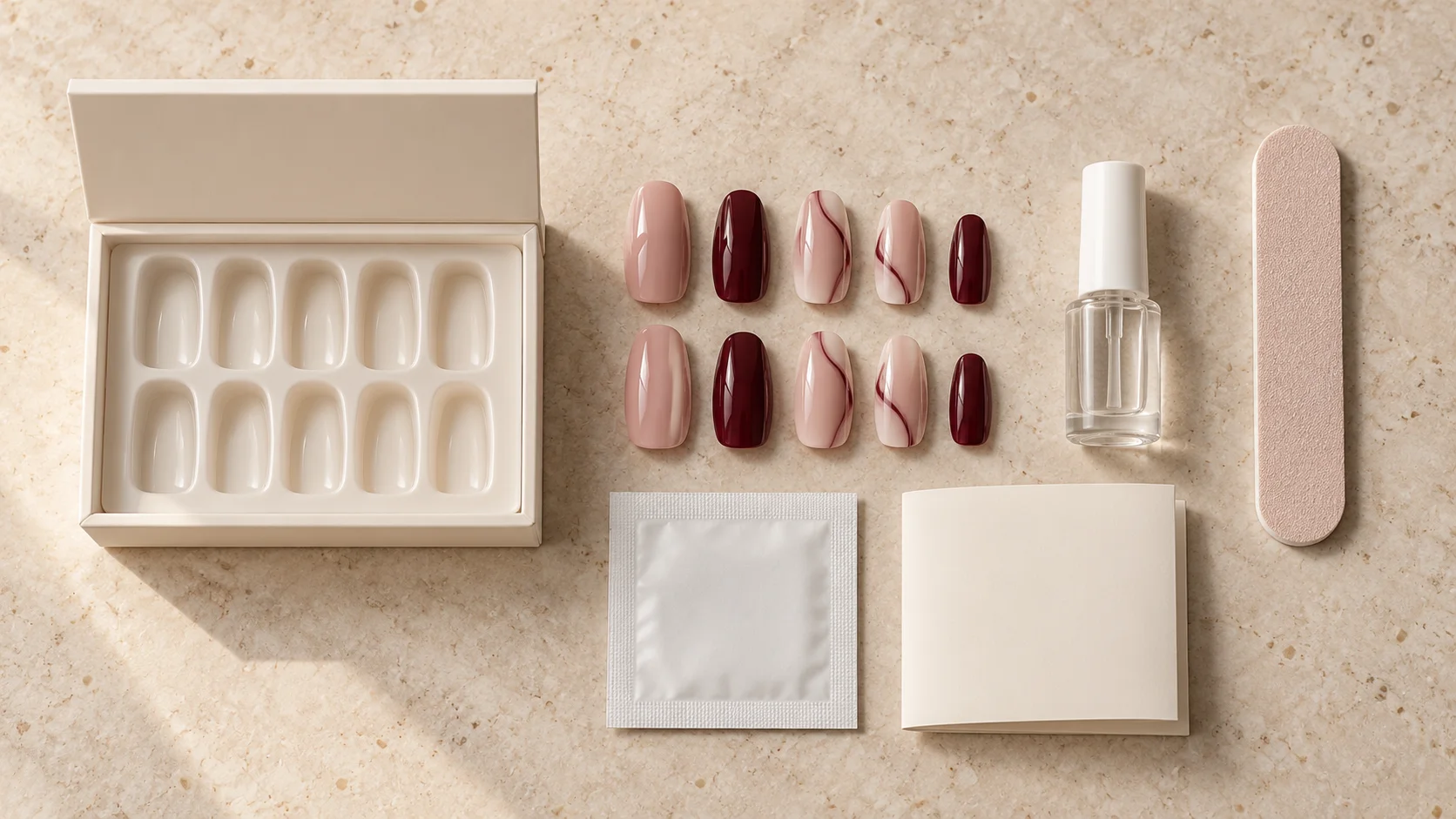
Before transferring anything, check what the box already provides. A fitted tray may keep the tips separated and show the range name, size information or a product reference. You may only need to add a small record card rather than buy a new organiser.
If you prefer another container, keep the useful part of the packaging or a clear record of it. Include the exact range, shape and length, not just the brand. A colour name can appear in several product families with different moulds or adhesive systems.
Keep the application and removal instructions with the set or save their current reference in a place you can find. Do not rely on remembering which video you watched months earlier. A useful storage system preserves the information needed to use the product appropriately.
Record your sizes without losing the range name
Olive & June’s sizing guide suggests recording the numbers on the backs of suitable tips. That is a helpful organisational habit, provided the numbers stay attached to the product family they describe.
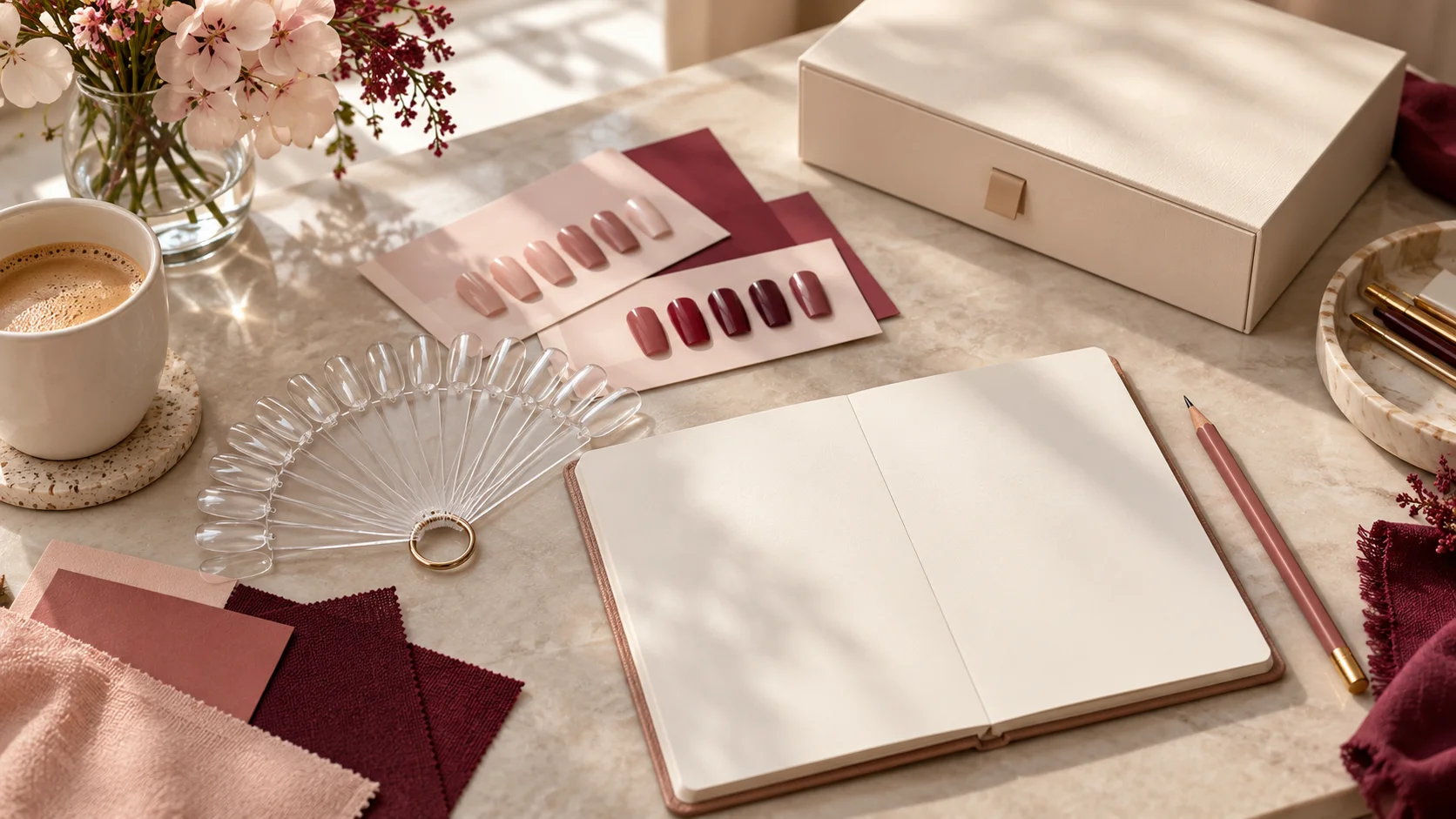
Write a left-hand sequence and a right-hand sequence in a fixed finger order. For example, use thumb, index, middle, ring and little finger for both. Put the order on the card so a future list of numbers cannot be read backwards or assigned to the wrong hand.
Keep measured millimetres in a separate field from tip numbers. A printed size number is a product reference, not automatically a measurement. If you change brands or shapes, recheck rather than treating the old sequence as a universal fitting code.
| Field | What to write | Why it helps |
|---|---|---|
| Product identity | Brand, range, shape, length and reference | Prevents confusion between similar-looking sets |
| Left hand | Tip numbers in a named finger order | Keeps a repeat fitting organised |
| Right hand | A separate sequence in the same order | Avoids assuming the hands match |
| Status | Unused, or worn and awaiting a reuse decision | Prevents mixing new and previously worn tips |
| Instructions | Leaflet location or exact product guide | Keeps care and removal information accessible |
| Notes | Any supported alteration or fit concern | Explains why a tip may differ from its original shape |
Use compartments for a clear purpose
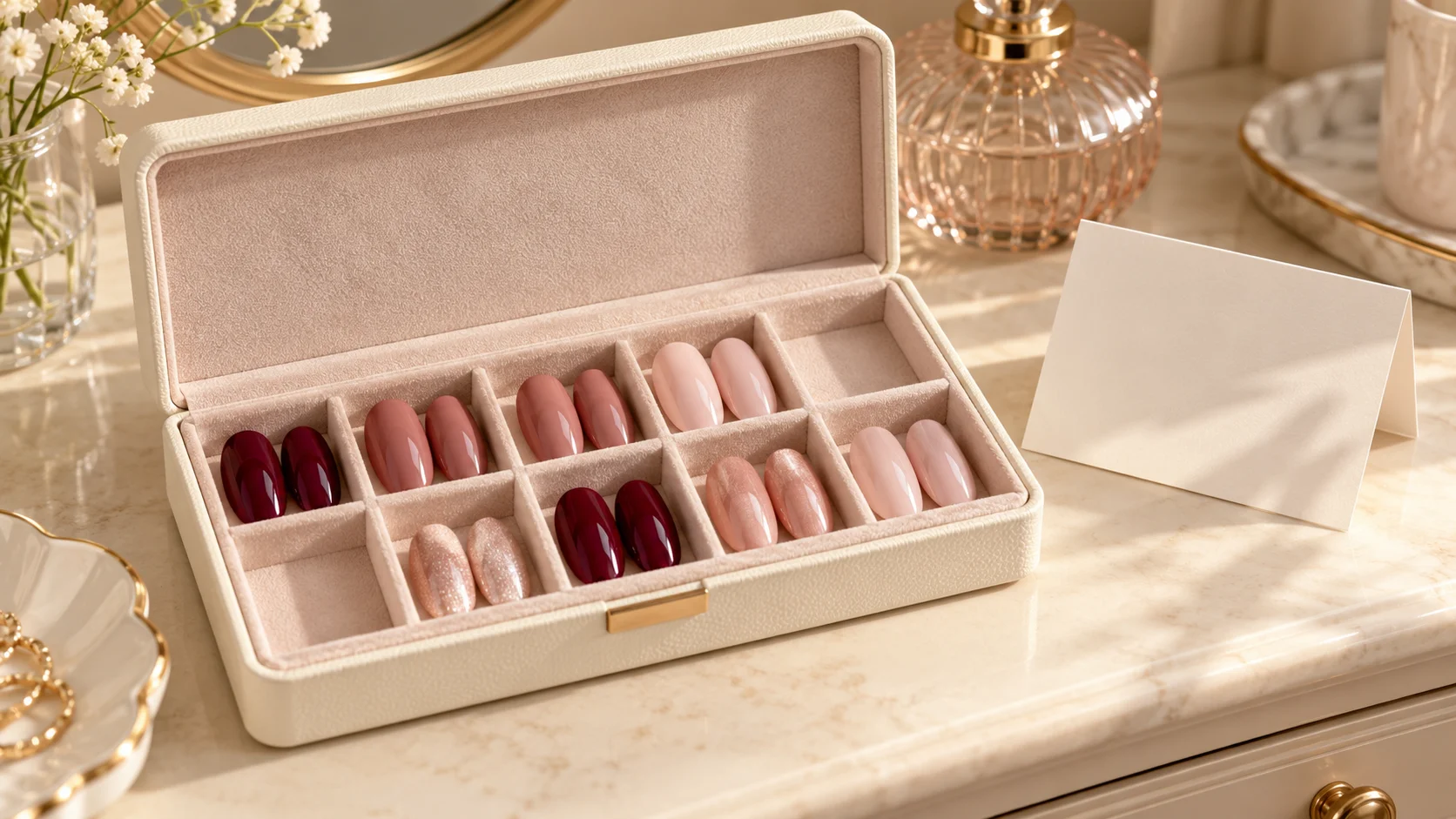
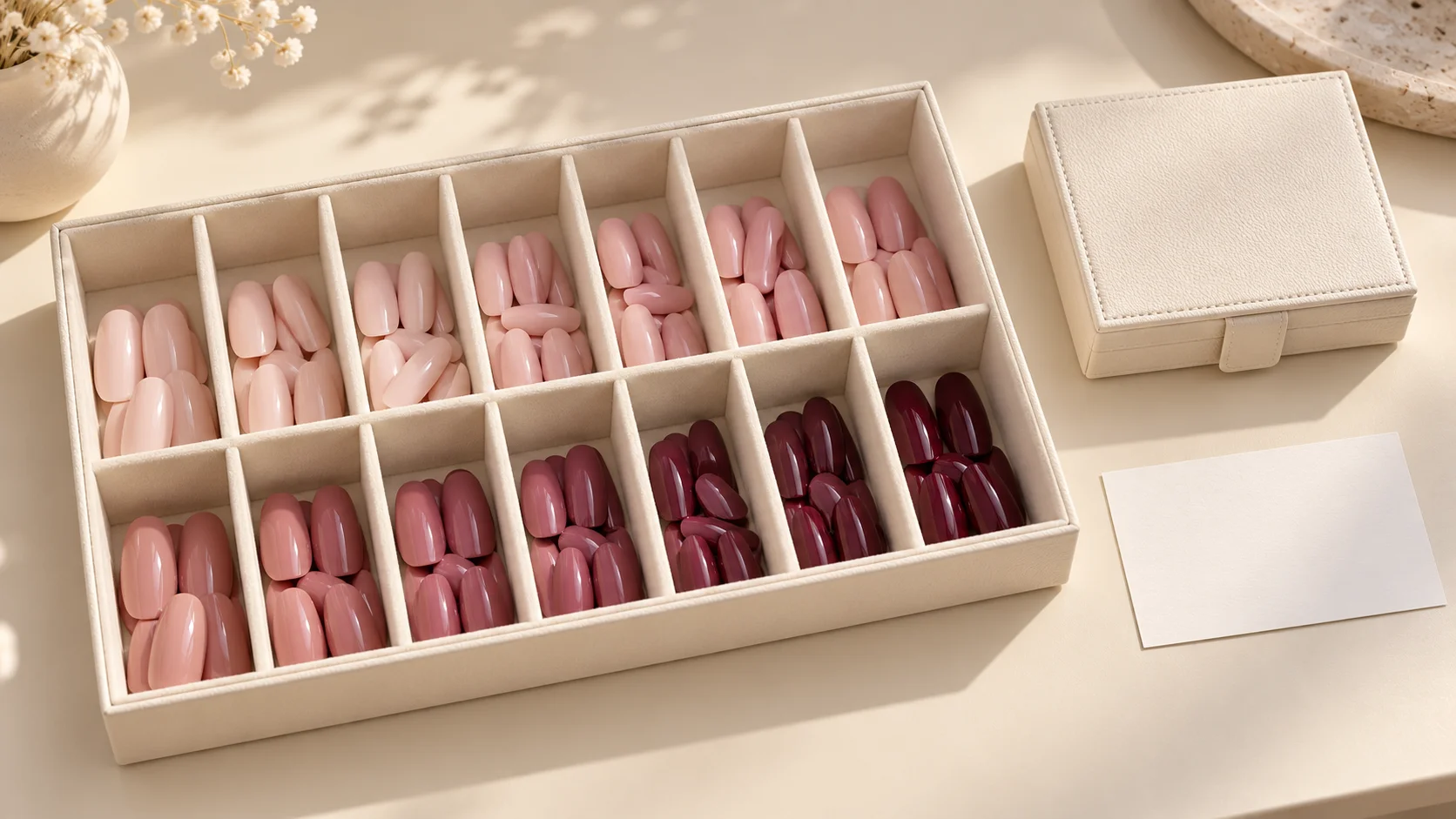
You can organise unused tips by set, by size within a set, or by the planned combination for each hand. Choose one primary method and label it plainly. A small collection may work well in its original tray; a larger collection may need separate containers for each range.
Do not combine visually similar leftovers from several brands in one unlabelled section. The same apparent width or colour does not establish the same curve, length or material. Sorting by appearance alone can make the next fitting more confusing rather than less.
Leave enough room that the container does not force tips into a bent position when closed. Keep lids and dividers from pressing against raised decoration. These are practical organisation checks, not a promise that any particular box preserves a set indefinitely.
Separate unused stock from worn tips
Unused spare sizes and tips removed after wear are different categories. Keep them apart while you decide what the manufacturer’s care guidance allows. Avoid returning a worn tip straight into a compartment of unused nails because the colour matches.
KISS’s FAQ shows why the distinction matters: most of its ranges are described as single-use, with a named exception carrying specific conditions. A spare unused tip and a previously worn tip from the same box do not necessarily have the same status.
For a supported reusable range, follow its removal and cleaning directions before considering storage for another application. This guide does not supply a universal solvent or disinfection recipe. If the instructions are unclear, keep the item separate and ask rather than guessing.
Keep adhesive and remover in their labelled containers
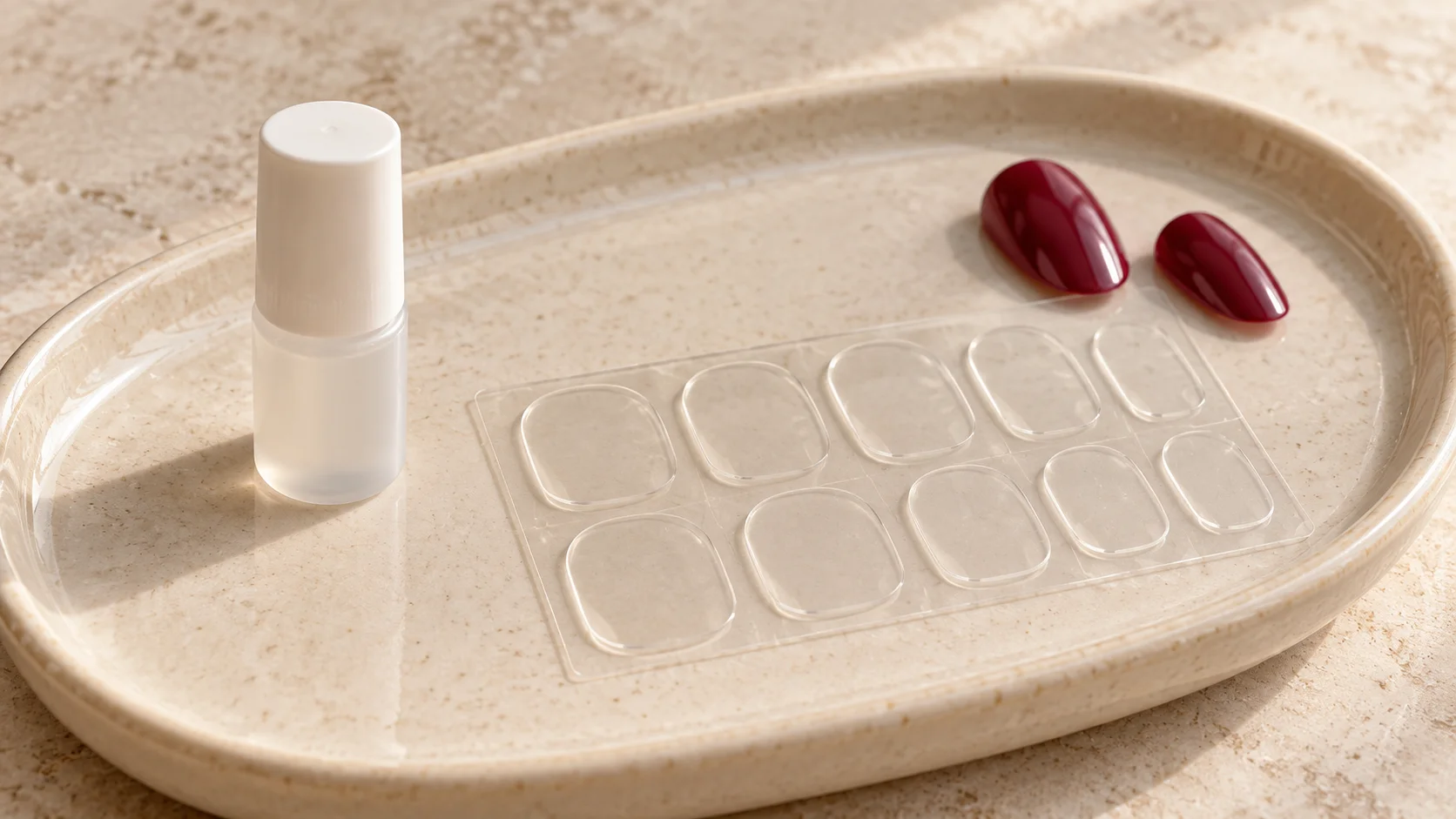
Do not decant glue or remover into decorative unlabelled pots. The original container carries the identity, warnings and storage instructions you may need later. Keep those directions readable even if you place the container inside a larger storage box.
The FDA’s nail-product safety guidance emphasises reading labels and warns about ingestion, eye contact and products that can ignite near heat sources. Use the product’s own handling and storage directions rather than a general beauty-organiser rule.
Keep nail products away from children and pets, and do not store them beside food in containers that could be confused with something edible. Check that caps are closed as directed and that any leaking or damaged container is dealt with according to its label or manufacturer advice.
Do not invent a universal shelf life
Check the date or period-of-use information supplied with each product. The decorative tips, preparation pads, adhesive and remover are different items; one date cannot automatically describe the whole kit. Keep any opening-date note beside the relevant bottle or sachet.
Do not assume that a dried, thickened or unidentified adhesive can be restored by adding another liquid. Follow the manufacturer’s advice for a product that no longer looks or behaves as expected. An organised collection should make it easier to retire an unsuitable item, not encourage using it up at any cost.
This guide does not assign a storage temperature or number of months for every press-on system. If a listing omits those details and you need them for long-term storage, ask about the exact range and adhesive rather than borrowing another brand’s answer.
Review the contents before the next application
Open the set in good light and confirm its identity and status. Check the intended tips for visible damage or a changed shape, and revisit any notes about fit. A neat compartment is not evidence that the contents are still appropriate for use.
Confirm that the required size combination is complete before opening adhesive. If a tip is missing, check whether a matching replacement exists for that range. Do not force another size into place simply because it is the only one left in the organiser.
Read the current instructions again if you are returning to a product after a long gap or have replaced part of the system. If the adhesive or removal route has changed, the old note may need updating. Keep the record simple enough that you will actually maintain it.
Identity, sizes, status, instructions
- Identity: keep each exact range recognisable.
- Sizes: record both hands in a consistent finger order.
- Status: separate unused tips from previously worn ones.
- Instructions: retain labels and review them before use.
Start with one set and one record card rather than reorganising everything at once. The Press-On Nails section covers fit and reuse questions that help determine what belongs in a ready-to-use collection.
To complete the fit, wear and removal plan, read Reusable Press-On Nails: How to Check Care Instructions Before Buying, What Comes in a Press-On Nail Kit? A Buyer's Checklist and Custom Press-On Nails: What to Send When Ordering a Set. For the related care, tool or design decision, see How to Keep a Personal Manicure Kit Clean and Organised.
Common questions
Can I keep all spare nails in one unlabelled box?
That can make it difficult to identify their range, curve and size system later. Separate exact product families and retain their references, even when colours look similar. An organised collection should preserve useful fitting and care information rather than sort everything only by appearance.
What should I put on a size record?
Record the brand, range, shape and length, followed by separate left- and right-hand tip sequences in a clearly named finger order. Keep measured millimetres separate from printed tip numbers. Recheck the record when changing products because numbering and moulds may not transfer.
Does a storage case make used tips reusable?
No. Reuse depends on the exact range, its care instructions and the condition of the tips and your nails. A case only organises the items. Keep previously worn tips separate from unused ones until you have established whether another application is actually supported.
Should unused and previously worn tips share a compartment?
Keep them separate so their status remains clear. A matching colour does not make an unused spare and a removed tip equivalent. Follow the manufacturer’s cleaning and reuse guidance for worn tips, and do not invent a universal solvent or sterilisation method for the collection.
Can I put glue in a prettier small container?
Keep glue, remover and other liquids in their original labelled containers. Their identity, warnings and storage directions may be needed later. An outer organiser is optional, but it should not hide or replace the information that belongs with each individual product.
How long can I keep a press-on kit?
Check the information for each component rather than assigning one shelf life to the entire box. Tips, adhesive, pads and remover are different products. Follow their labels and ask the manufacturer when storage or use-period guidance is unclear for the actual items you own.
Can I restore thickened glue by adding another liquid?
Do not improvise a thinning or restoration recipe. Follow the adhesive manufacturer’s advice when a product no longer looks or behaves as expected. Keeping the original container and opening information makes that enquiry easier and helps prevent using an unidentified or unsuitable product.
What should I check before using a stored set?
Confirm the product identity, status and complete size combination, then inspect the intended tips for visible damage or changed shape. Revisit the current instructions, especially if part of the system has been replaced. A tidy compartment is not evidence that everything remains appropriate for use.
Sources and further reading
- Olive & June — Sizing record — checked 2026-10-22
- KISS — Reuse and removal FAQ — checked 2026-10-22
- FDA — Nail-product safety — checked 2026-10-22