Why Press-On Nails Pop Off: Fit and Preparation to Review
Review fit, preparation, adhesive instructions and wear circumstances when a press-on detaches, without forcing a repair or hiding nail changes.
Archive edition: 2026-06-08 · This is an editorial allocation, not the first-publication date.
Key takeaways
- Observe: note the finger, timing and nail condition.
- Identify: find the actual tip and adhesive system.
- Compare: review fit and instructions without adding force.
- Decide: seek product clarification or health advice as appropriate.
In this guide
- Key takeaways
- Identify the attachment system first
- Describe what happened before deciding why
- Revisit the original dry fit
- Review preparation against the supplied directions
- Check adhesive instructions without experimenting with strength
- Consider whether the chosen wear suits your routine
- Know when the issue needs assessment
- Observe, identify, compare, decide
- Common questions
- Sources and further reading
A press-on that comes off earlier than expected is a reason to review the fit and the application instructions, not automatically to buy stronger glue. Preparation, size, adhesive choice and what happened during wear can all be relevant. A single detached tip cannot tell you exactly which factor caused the problem.
Start by looking at the natural nail and surrounding skin. If there is pain, a new unexplained change or irritation, the next step is different from ordinary cosmetic troubleshooting. Do not cover a concern with another tip just to complete the appearance of the set.
Identify the attachment system first
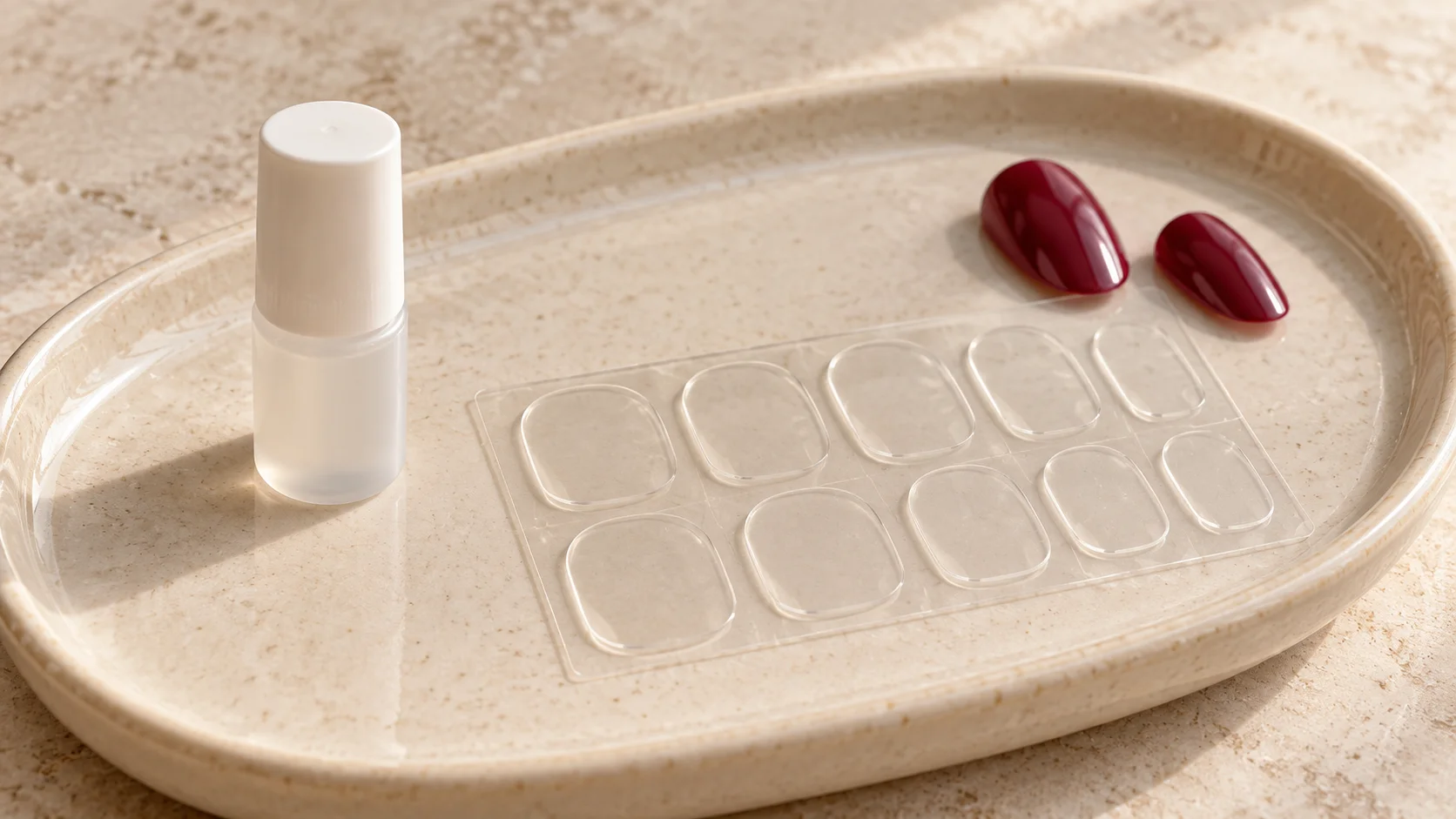
Find the box, order record or instructions for the actual range. Separate liquid nail glue, removable adhesive tabs and pre-applied adhesive are different systems. Advice intended for one may not apply to another, even when the finished nails look similar.
Write down any substitution you made. Perhaps you used a separate glue with a set supplied with tabs, or followed a video for a different product. That information is useful when asking the manufacturer for help; it is not a reason to improvise another combination.
Keep ordinary glue-on press-ons separate from lamp-cured extension systems. Adding a lamp or a gel adhesive is not a routine fix for a detached decorated tip. Use only the attachment method the actual products support.
Describe what happened before deciding why
Note which finger was affected, how long the tip had been worn and whether you noticed a knock or catching incident. Also record whether the whole tip detached or one edge became loose while the rest stayed attached. Those are observations, not diagnoses.
Look for a pattern across the set without drawing a conclusion too quickly. Several tips coming away soon after application suggests a different question from one tip catching during a task. It still does not prove that your nails are unusually oily, that the glue is defective or that a medical condition is involved.
If a tip is partly attached, follow the product’s removal guidance rather than lifting the rest to inspect underneath. Do not push glue into an opening to seal it down. A hidden area that needs checking should not be turned into a closed repair simply to prolong the manicure.
Revisit the original dry fit
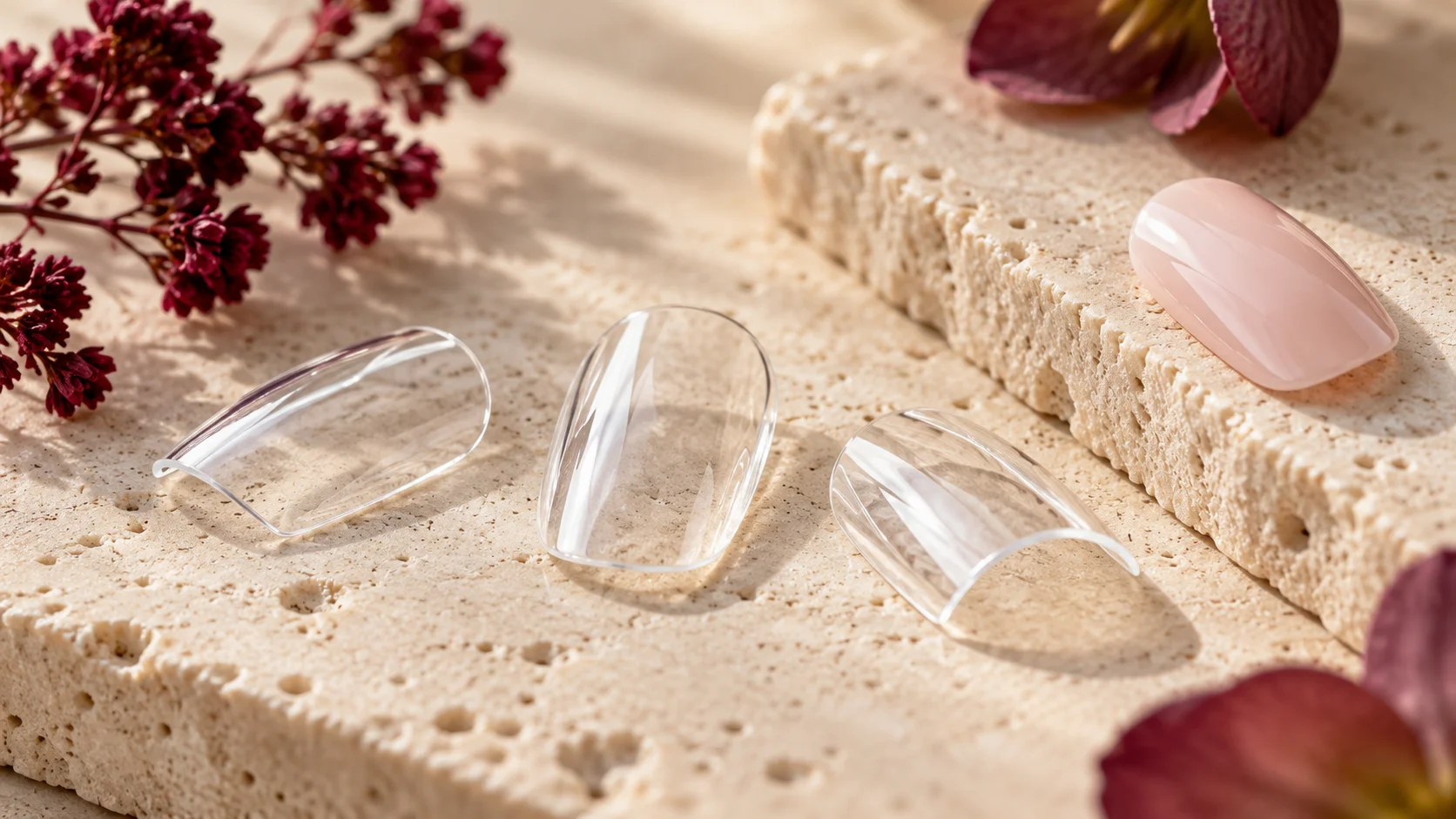
Think back to the fitting stage. Did the tip sit comfortably, or did you need to press it into a different shape? Did an edge overlap skin? Was the selected size based on a previous brand rather than this range?
Olive & June’s sizing guide emphasises a comfortable fit without force and notes that curves differ between styles. This supports checking the mould as well as the printed size number. Its specific between-size advice belongs to its own products.
A repeated problem on one finger may make a matching sizing sample useful for a future set. Record the actual range and size you tried, along with the mismatch you noticed. Avoid filing the natural nail narrower or choosing an uncomfortable tip in pursuit of a tighter-looking fit.
Review preparation against the supplied directions
Olive & June’s glue-on troubleshooting page identifies preparation, fit and glue amount as factors to review. Its instructions include particular water-avoidance and pressing guidance. Use those details only for the relevant system rather than turning them into a universal timetable.
Compare what you did with the instructions in order. Was the nail clean and dry as required? Did you apply cream or oil between cleaning and attachment? Did you omit a supplied preparation step or add an unrelated product?
The response to a missed step should be a better plan for the next appropriate application, not increasingly aggressive preparation. Do not repeatedly buff the natural nail or cut surrounding skin because the first set did not last. More preparation is not necessarily the same as correct preparation.
| Observation | Question to review | Avoid assuming |
|---|---|---|
| Several tips detached early | Did preparation and attachment follow this product’s directions? | That stronger glue is automatically needed |
| One finger repeatedly loses its tip | Does the size and curve suit that particular nail? | That every finger needs the same change |
| An edge is still partly attached | What is the specified removal route? | That adding glue underneath is a suitable repair |
| A tip caught during a task | Would another length or routine be more practical? | That the product alone caused the event |
| The nail or skin has changed | Is health advice needed before another application? | That covering the area resolves it |
Check adhesive instructions without experimenting with strength
Read the required amount, placement, pressing time and storage instructions for the exact adhesive. Check whether the container is within its stated use period and whether it has been stored as directed. Keep the label available rather than transferring the contents into an unidentified bottle.
Do not add household glue or combine adhesive systems to chase a longer hold. Likewise, do not assume that flooding the fitting surface will compensate for a gap. If the quantity or technique is unclear, ask the manufacturer before another application.
Handle nail glue with care during any future use. ANSES warns that cyanoacrylate nail glue can generate heat and cause burns when it contacts textiles such as cotton or wool. Keep fresh glue away from those materials and do not use a cotton pad as an improvised spill-cleaning tool.
Consider whether the chosen wear suits your routine
A long tip or raised decoration may be less convenient for particular tasks than a shorter, smoother option. Think about what was happening when the detachment occurred. The useful change may be choosing a different design for that activity rather than pursuing maximum wear time.
Follow the product’s care instructions during wear, but do not sacrifice necessary handwashing or workplace hygiene to protect a manicure. If the required routine and the product’s care directions do not fit together, choose another nail option.
Advertised wear times describe the manufacturer’s claim under its conditions, not a personal guarantee. Avoid treating an earlier removal as a failure that must be corrected at any cost. Comfort, nail condition and suitable use matter more than reaching a number of days.
Know when the issue needs assessment
The NHS advises seeing a GP for an unexplained change in nail shape or colour, unexplained nail loss, or sore, red, swollen and warm skin around a nail. Do not assume a new discolouration is just leftover adhesive without appropriate assessment.
Keep the product details if irritation or a reaction occurs and stop further application while seeking advice. A seller can clarify instructions, but a product-support reply is not a clinical examination. A painful or changing nail should not become another trial of a stronger attachment.
Observe, identify, compare, decide
- Observe: note the finger, timing and nail condition.
- Identify: find the actual tip and adhesive system.
- Compare: review fit and instructions without adding force.
- Decide: seek product clarification or health advice as appropriate.
Keep a short record for your next purchase or manufacturer enquiry. The Press-On Nails section covers sizing and removal choices to revisit before starting a new set.
To complete the fit, wear and removal plan, read Press-On Nail Curvature: Why a Size Can Fit but Still Feel Wrong, Nail Glue vs Adhesive Tabs: Choosing for Your Wear Time and When to Remove a Press-On Set Instead of Reattaching a Loose Nail. For the related care, tool or design decision, see Nail Changes to Photograph and Discuss with Your GP.
Common questions
Does an early pop-off mean I need stronger glue?
Not necessarily. First identify the actual system and compare fit, preparation and attachment with its instructions. A detached tip does not prove that adhesive strength was the problem. Household glue, extra adhesive or another unapproved combination should not become an automatic solution.
Can I add glue underneath a partly lifted tip?
Do not seal a loose edge down as a shortcut. Follow the product’s removal guidance so the nail and fitting area can be assessed appropriately. Adding glue into an opening can hide the issue you need to understand before considering another application.
Why does the same finger keep losing its press-on?
That pattern makes the fit of that particular tip worth reviewing, alongside what happens during wear. It does not establish a single cause. Note the size, range, curve and activity involved, then ask the manufacturer about a more suitable fit or application approach.
Should I buff more if the first set came off?
Do not respond by repeatedly or aggressively buffing the natural nail. Compare your preparation with the actual product directions and identify any missed or added step. More abrasion is not the same as better preparation, and an uncomfortable nail should not receive another trial application.
Do all press-ons need the same water-avoidance time?
No. Use the instructions for the actual adhesive and range. A manufacturer may specify a particular period around application, but that timing should not be transferred to every system. Necessary handwashing and workplace hygiene should never be sacrificed to extend a manicure.
Can I use a lamp to make the glue hold better?
An ordinary glue-on set should only use its supported attachment method. A lamp or gel adhesive is not a routine repair for detachment, particularly beneath decorated tips. If you used a lamp-cured extension system, identify that system and seek its specific professional or manufacturer guidance.
What should I do if the nail has changed colour?
Do not assume the change is simply adhesive residue and cover it again. The NHS advises GP assessment for unexplained nail colour or shape changes and other concerning nail problems. Keep the product details available and pause further cosmetic application while getting appropriate advice.
What information helps a manufacturer troubleshoot?
Provide the exact tip range and adhesive, which finger was affected, when it detached, how you prepared and applied it, and any relevant activity. Describe what you observed without guessing a diagnosis. Mention any substitution because it can change which instructions apply.
Sources and further reading
- Olive & June — Early glue-on detachment — checked 2026-10-22
- Olive & June — Fit guidance — checked 2026-10-22
- NHS — Nail problems — checked 2026-10-22
- ANSES — Nail glue thermal burns — checked 2026-10-22