Press-On Nails for Wide Nail Beds: Fit Questions to Check
Check individual tip widths, coverage, curve and duplicate sizes when choosing press-on nails for wider nail beds.
Archive edition: 2026-05-24 · This is an editorial allocation, not the first-publication date.
Key takeaways
- Identify: note which fingers lacked a suitable tip.
- Compare: use the exact range and its measurement definition.
- Check: examine curve, comfort and duplicate sizes.
- Choose: select length and decoration after fit is credible.
In this guide
- Key takeaways
- Separate width from the appearance of the design
- Identify which fingers need a different option
- Read the widest dimension with care
- Check quantity without confusing it with variety
- Test coverage and curve as separate features
- Keep adjustment within the actual product instructions
- Choose the design once the fit is credible
- Coverage first, then the complete set
- Common questions
- Sources and further reading
For wider nail beds, the important press-on question is whether the actual tips cover each natural nail comfortably. A generous-looking design, a large box or a label saying wide fit does not establish that on its own. Start with the dimensions and fit information for the exact shape you want to buy.
There is no need to make your nails appear narrower. The aim is a set that works with their size and curve, in a design you enjoy. This guide helps you ask more precise questions when a standard kit has previously left your thumbs or other fingers without a convincing match.
Separate width from the appearance of the design
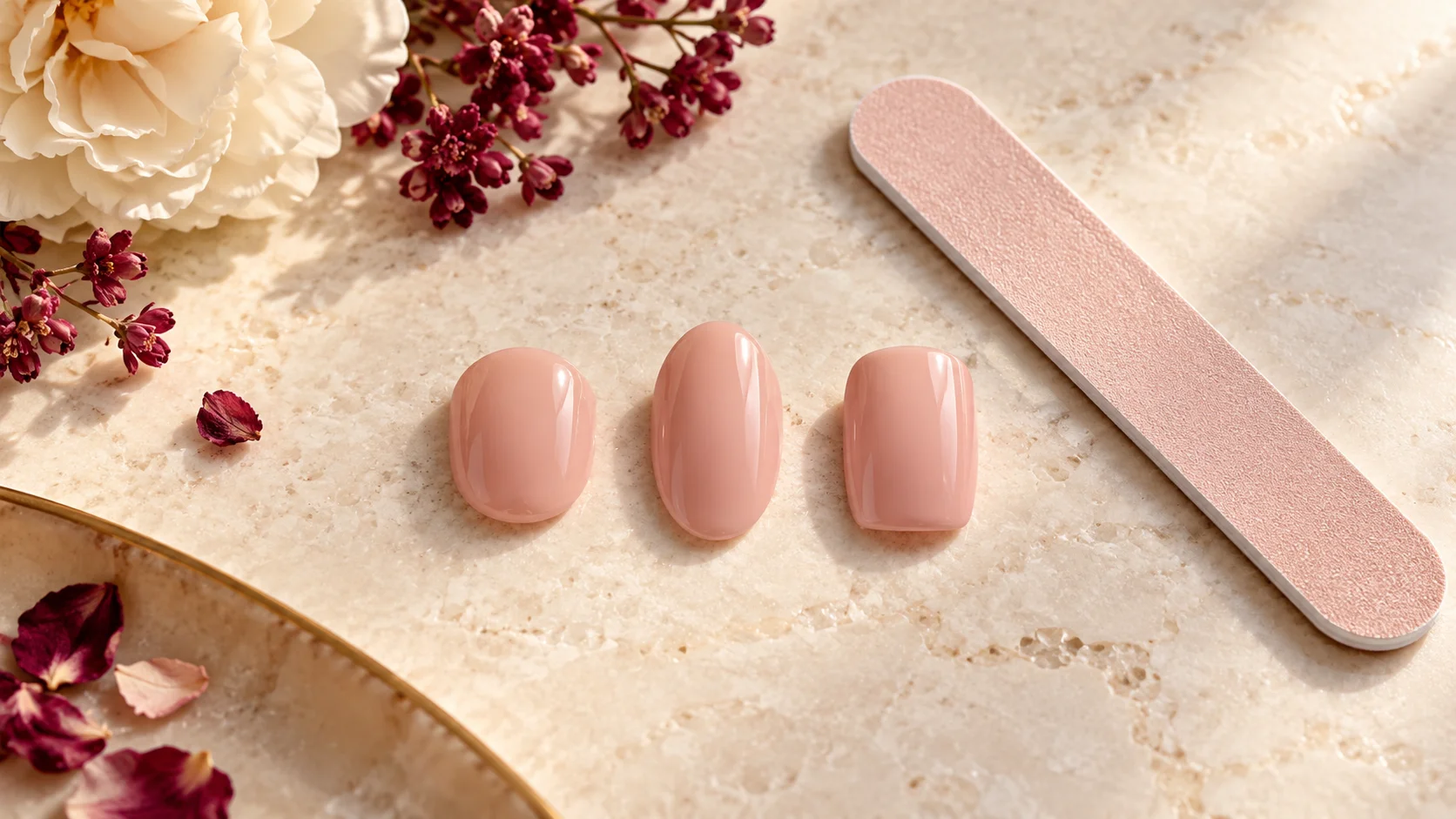
A square tip may look broad at the end while having a narrower base. An almond tip may narrow towards its point while still offering a wider area where it covers the natural nail. The silhouette in a photograph therefore cannot tell you the fitting width by itself.
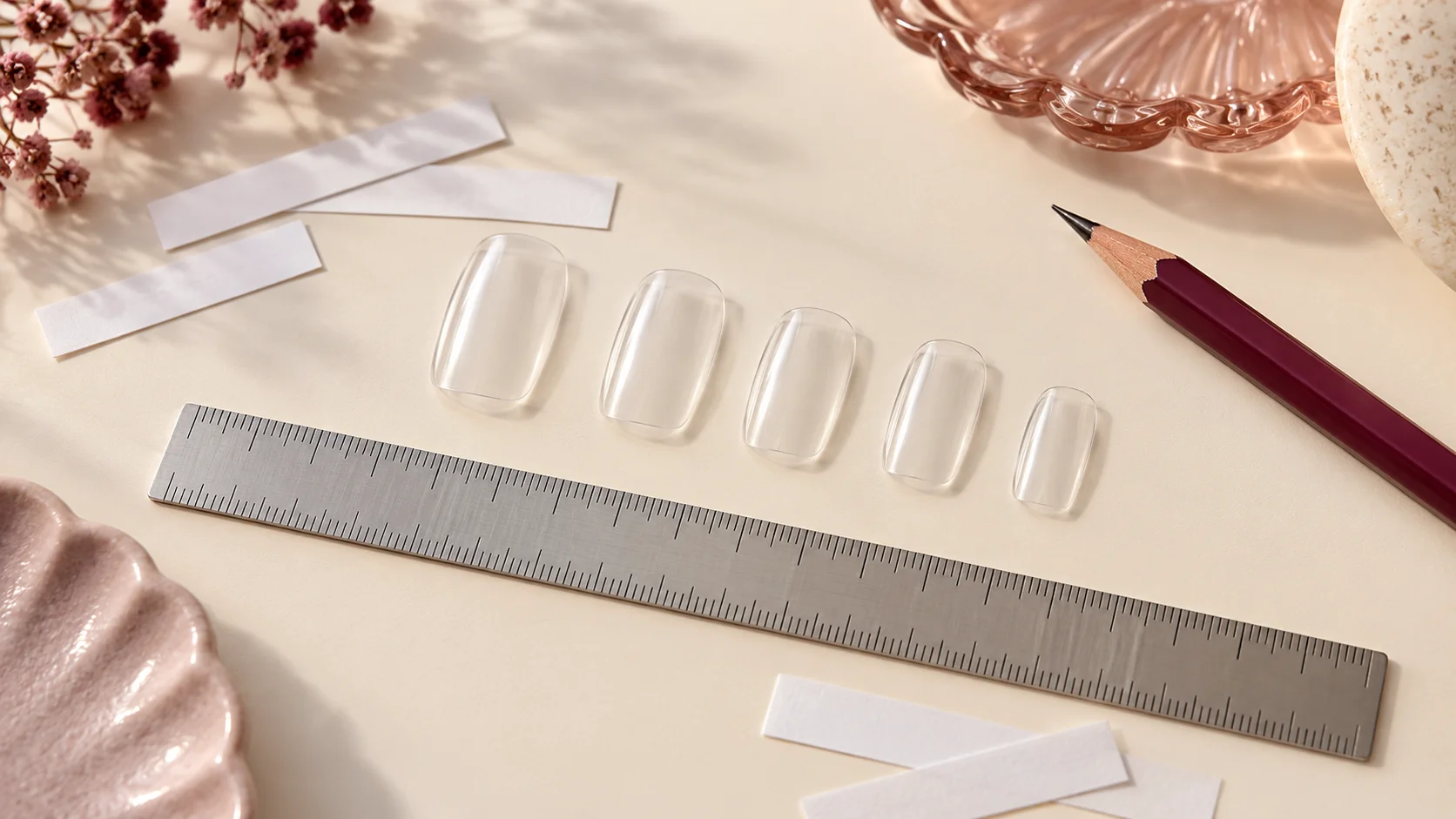
Ask where the manufacturer’s measurement is taken. Is it the widest part of the tip, an internal surface measurement, or another defined dimension? Compare your own measurement only with a chart that uses a compatible method. A numerical match is less useful if the two numbers describe different things.
Avoid assigning yourself a universal wide size based on one unsuccessful purchase. That result tells you something about a particular mould or kit. It does not establish that every brand, shape or tip carrying the same printed number will fit in the same way.
Identify which fingers need a different option
Write down the fingers that caused difficulty in the previous set. Perhaps both thumbs lacked coverage, while the remaining tips fitted comfortably. That is a more useful starting point than replacing the whole shopping brief with the vague request for bigger nails.
Keep left and right hands separate. The MuseMoodNails size guide illustrates a seller-defined method that records each nail’s curved width in millimetres. Follow the method required by your intended seller rather than copying numbers from a different kind of chart.
If you still have an unused tip from a previous kit, note its range and number alongside what did not work. A clear description such as uncovered side edges is more useful than saying it felt wrong. Do not reattach an unsuitable tip merely to create evidence for the comparison.
Read the widest dimension with care
The Glamnetic measurement guide lists different width ranges for its different shapes. This demonstrates why you should check the selected style rather than treating the brand’s largest advertised width as available in every box.
A range also does not tell you how many tips occupy each point within it. The largest width may describe a single size, while your middle or ring finger may need another dimension that is not shown individually. Ask for a size-by-size chart where the range alone cannot answer your question.
Do not estimate the missing sizes by dividing the stated range into equal steps. Manufacturers do not have to space their sizes according to that calculation. It creates a neat-looking chart without evidence that the resulting tips actually exist.
| Question | Why it matters | Useful information to provide |
|---|---|---|
| What is the fitting width of the largest tip? | Checks the specific range rather than the brand overall | Exact product name and chosen shape |
| How is that width measured? | Avoids comparing incompatible dimensions | The method used for your own measurement |
| Are individual size dimensions available? | Checks fingers beyond the widest thumb | All ten recorded measurements |
| How many duplicates are supplied? | Several fingers may need the same tip | Your expected size sequence for both hands |
| Is a matching sizing kit available? | Lets you examine curve as well as width | The exact mould or range you intend to order |
Check quantity without confusing it with variety
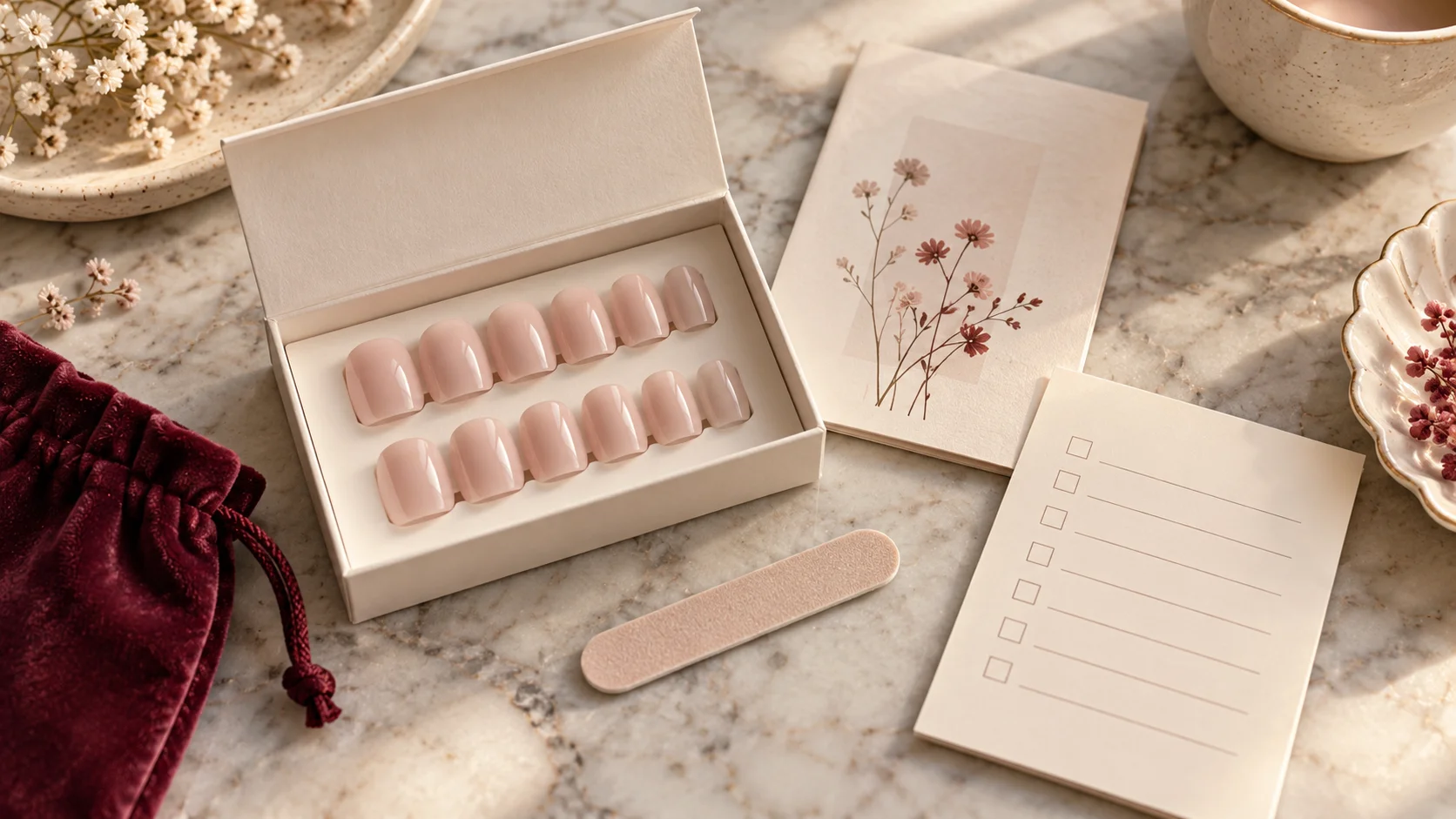
A box containing thirty nails does not contain thirty distinct sizes. Glamnetic’s small-and-large-fit guidance, for example, distinguishes total nail counts from the number of sizes in its kits. The distribution is part of the purchase decision.
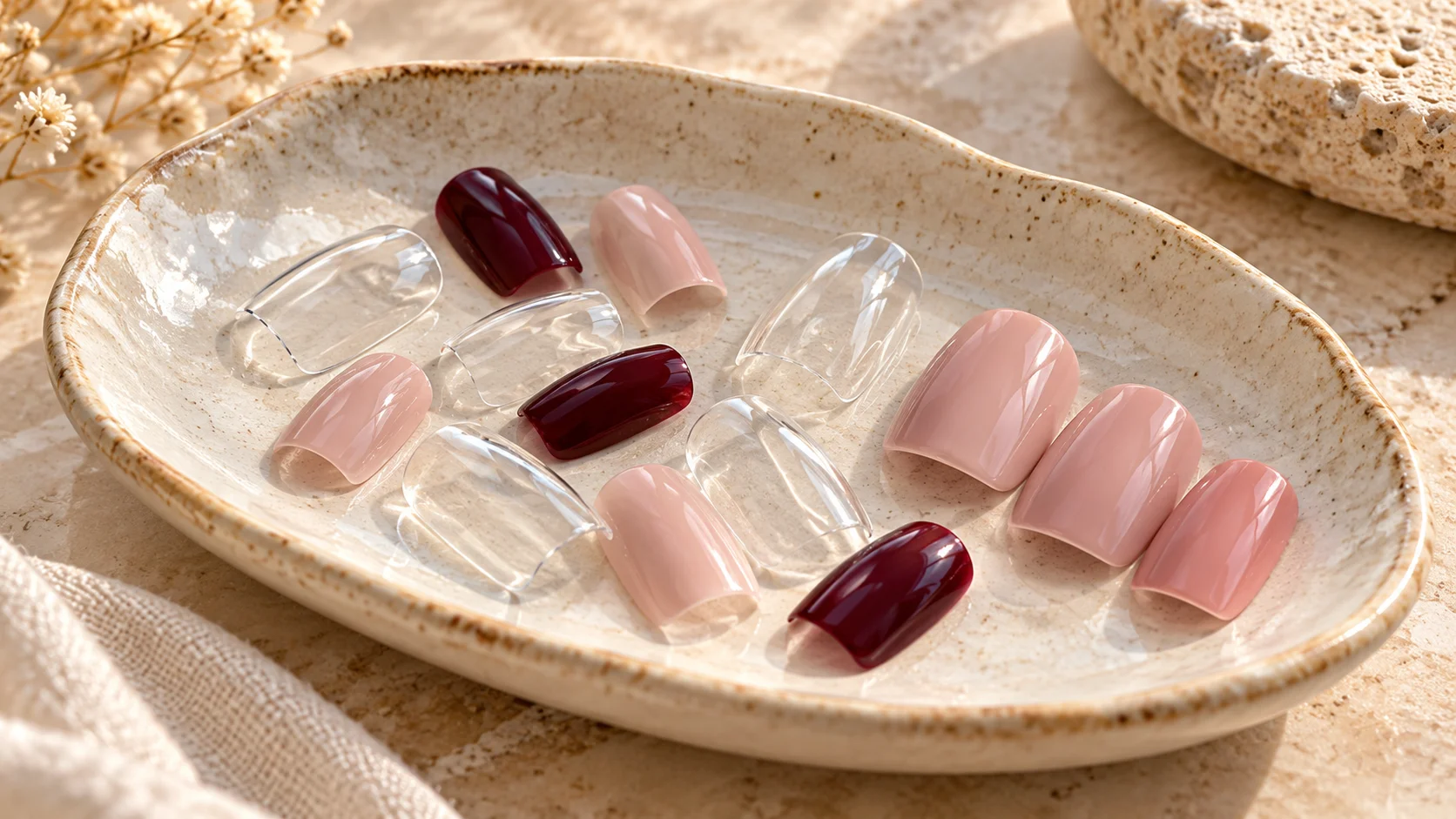
If three fingers need the same size, ask whether enough copies are supplied. A kit can include the right width somewhere in the box and still fail to provide the combination you need for both hands. A custom ten-nail order needs an accurate sequence rather than a general size label.
Also check whether replacement tips can be ordered for that specific design. This is an optional convenience, not a requirement or a promise that every brand offers spares. Knowing the answer can help you compare two otherwise similar options.
Test coverage and curve as separate features
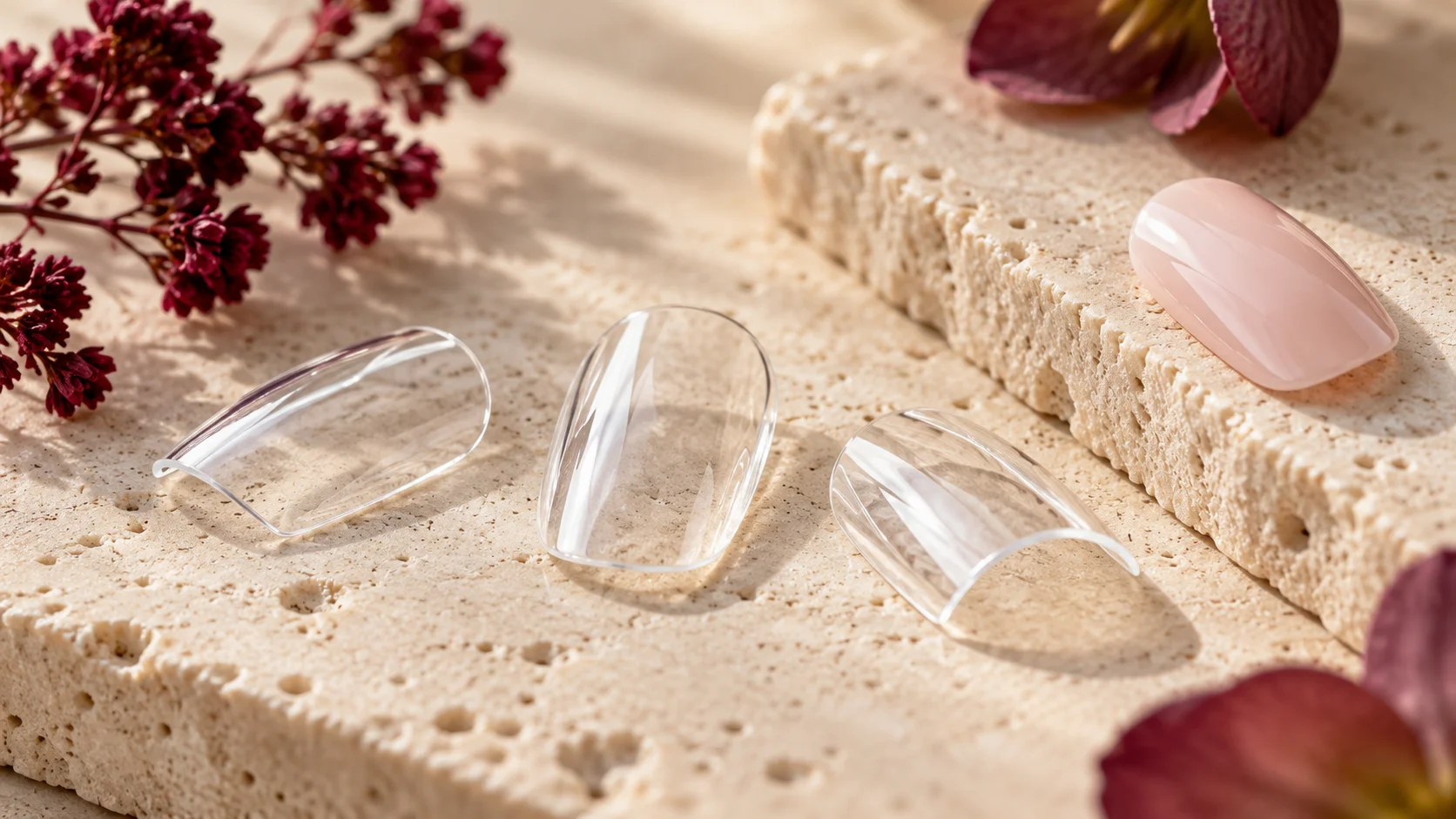
Width is only one part of fit. A tip can reach across the nail yet sit differently because of its curve. Look at how an unattached sample rests without squeezing it into shape, following the manufacturer’s dry-fit instructions.
Olive & June warns against forcing a fit and notes that styles can have different curves. Its guidance applies to its own system; it is not a reason to choose a smaller tip from every other range regardless of coverage.
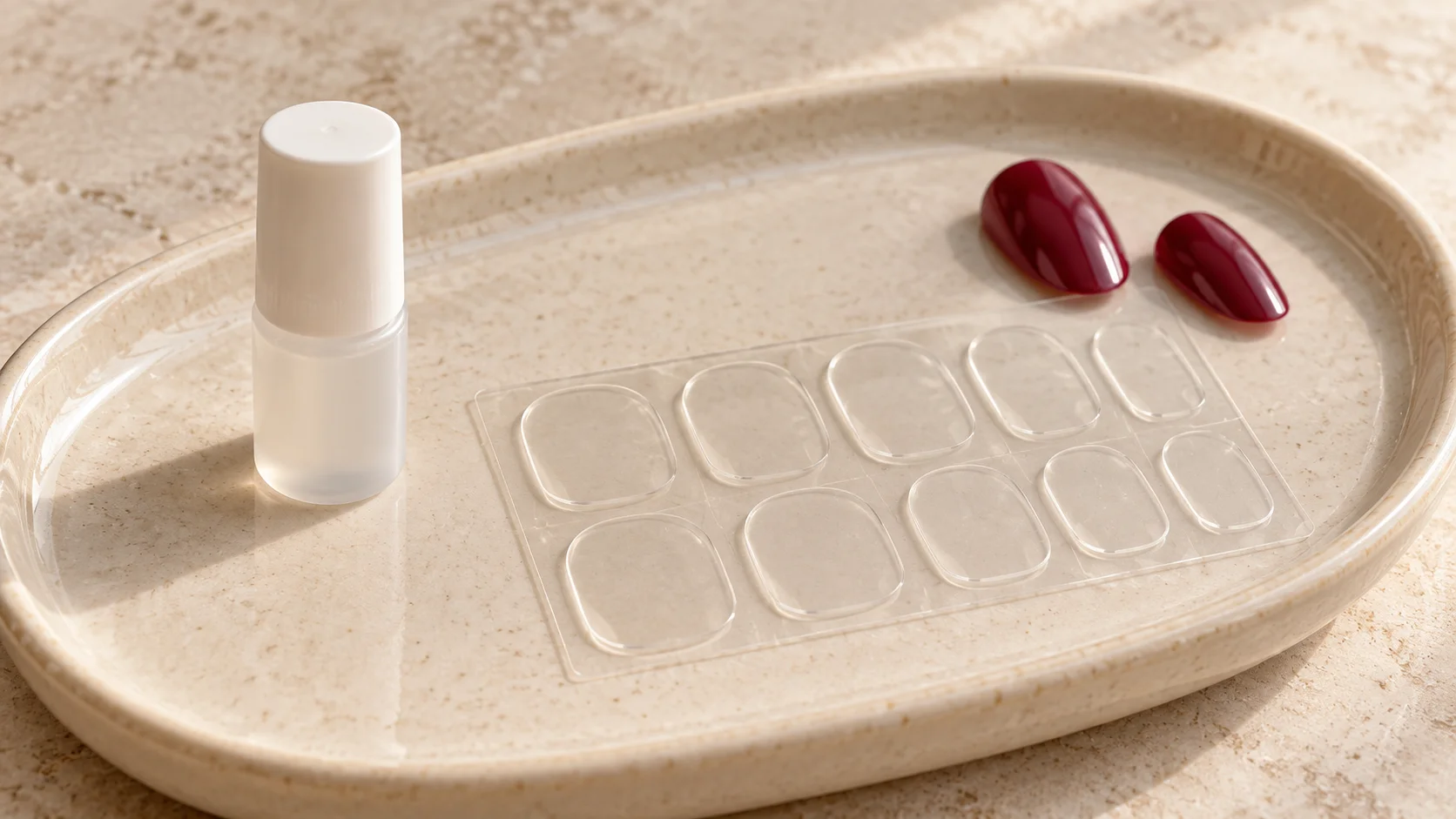
If one sample leaves exposed side edges and the next overlaps skin, neither is automatically the answer. Ask about another mould, a different range or a sizing service. More adhesive should not become the plan for resolving a mismatch that is already visible before application.
Keep adjustment within the actual product instructions
Some sellers describe minor adjustment of a slightly larger tip; others give a different between-size rule. That difference is a reason to consult the correct instructions. It does not justify filing any tip until it looks roughly acceptable.
Do not narrow your natural nail’s sides to make it match the artificial tip. If a proposed alteration would remove a substantial part of the product, change the decision from home adjustment to a seller enquiry. A more suitable starting shape may answer the problem more clearly.
Be especially cautious about confusing cosmetic trimming with a change to the fitting surface. Shortening the end and changing the width where the tip meets the nail are different operations. Ask what is supported for the particular material and finish.
Choose the design once the fit is credible
A broad surface can carry a plain colour, a small French band or a detailed pattern. Choose by the effect you enjoy rather than advice that wide nails must be visually disguised. If you like a dark shade or a straight edge, neither needs an apologetic styling explanation.
Check the actual length as well as the artwork. A wider tip may also be longer within the size progression. If the correct fitting size is longer than you want, ask whether a shorter mould exists instead of assuming the smallest overall set will solve both dimensions.
Coverage first, then the complete set
- Identify: note which fingers lacked a suitable tip.
- Compare: use the exact range and its measurement definition.
- Check: examine curve, comfort and duplicate sizes.
- Choose: select length and decoration after fit is credible.
Your next step is a short enquiry with the product name, measurement method and the fingers that need clarification. Keep the answer with your size record. Explore the Press-On Nails section for the attachment and removal decisions that follow.
To complete the fit, wear and removal plan, read How to Measure Your Nails Before Buying a Press-On Set, Press-On Nail Curvature: Why a Size Can Fit but Still Feel Wrong and A Press-On Nail Shopping Checklist for Your First Set. For the related care, tool or design decision, see Almond, Oval or Squoval: A Visual Guide to Nail Shapes.
Common questions
Is there one measurement that defines a wide nail bed?
This buying guide does not use a universal cut-off. What matters is how your measurements compare with the actual dimensions and curve of the chosen tips. A failed fit in one range does not establish that every similarly numbered tip from another brand will fail.
Does square mean wider fitting than almond?
Not necessarily. The visible outline at the free edge and the width where the tip covers your nail are different features. Ask for the fitting dimensions of the exact range, then choose the end shape you prefer once the size and curve are suitable.
Why is the largest width on a brand page not enough?
That figure may describe one shape or the overall collection rather than the particular box you want. It also does not list every intermediate size. Check the selected product and ask for individual dimensions when an overall range cannot answer your fit question.
What if only my thumbs do not fit?
Record that specific problem instead of assuming every finger needs a wider tip. Ask about the thumb dimensions, matching sizing samples or replacement options for the exact range. Keep your left and right size choices separate, because the same finger on each hand need not match.
Does a thirty-piece box provide thirty sizes?
No. Total pieces and distinct sizes are different information. A box may contain repeated tips, so check the size distribution as well as the count. This is particularly useful when several fingers need the same width or you want spare matching tips.
Should I choose a smaller tip if I am between sizes?
Follow the instructions for the actual product, rather than applying one brand’s rule to every range. If the smaller tip lacks coverage and the next overlaps skin, ask about another option. An uncertain fit should not be resolved by force or extra adhesive.
Can I file my natural nail narrower to fit?
Do not narrow the sides of your natural nail to accommodate an unsuitable artificial tip. Ask whether the tip itself permits a minor adjustment, or consider a different mould or range. Changing your natural nail to meet a product’s dimensions is not the aim of sizing.
Do wide nails need a particular colour or design?
No. Fit and styling are separate choices. You can enjoy a plain dark colour, a French band or detailed artwork without trying to disguise the nail’s width. Choose a comfortable, suitable set first, then select the decoration and outline you actually want to wear.
Sources and further reading
- Glamnetic — Nail shapes and measurements — checked 2026-10-22
- Olive & June — Choosing press-on size — checked 2026-10-22
- MuseMoodNails — Sizing guide — checked 2026-10-22
- Glamnetic — Small and large nail beds — checked 2026-10-22