Handwashing and Nail Care: Keeping Hands Clean Without Neglecting Moisture
Fit moisturising around proper hand hygiene, with practical choices for drying, products and workplace routines.
Archive edition: 2026-07-19 · This is an editorial allocation, not the first-publication date.
Key takeaways
- Hygiene: follow the method required for the situation.
- Drying: keep suitable supplies available.
- Moisture: use an appropriate product as a separate step.
- Advice: address ongoing discomfort without dropping hygiene.
In this guide
- Key takeaways
- Keep the hygiene step clear
- Give drying its own place in the routine
- Add moisturising as a separate care step
- Keep nail grooming out of the rushed washing moment
- Do not confuse discomfort with a reason to abandon hygiene
- Make hand care workable away from home
- Wash properly, dry fully, care appropriately
- Review the arrangement rather than adding complexity
- Common questions
- Sources and further reading
Handwashing and nail care should work together. Necessary hygiene protects you and other people; moisturising and an organised drying routine can fit around it. The answer to dry or uncomfortable hands is not to skip required washing or replace soap with a cosmetic product without appropriate advice.
This guide explains the practical sequence and the questions to ask when skin discomfort makes it difficult. It covers general everyday arrangements, not a replacement for healthcare, food-handling or other workplace procedures. If you have a prescribed skin-care plan, ask how it fits the hygiene requirements of your setting.
Keep the hygiene step clear
The NHS handwashing guide recommends soap and water, cleaning the different hand surfaces for around twenty seconds and drying completely. Its illustrated sequence includes thumbs, fingertips and the spaces between fingers. Follow the linked instructions rather than treating a quick rinse as equivalent.
Think about the reason you are washing: preparing food, using the toilet, handling animals or another activity with a hygiene requirement. A nail-care preference does not remove that reason. At work, follow the relevant procedure and ask for clarification if it conflicts with advice you have received about a skin condition.
Keep hand soap and leave-on products distinguishable. Similar bottles beside a sink can be confusing, especially in a shared space. Retain labels and choose an arrangement that makes the intended step obvious. A moisturiser’s texture or fragrance does not tell you that it is a hand-cleaning product.
Give drying its own place in the routine
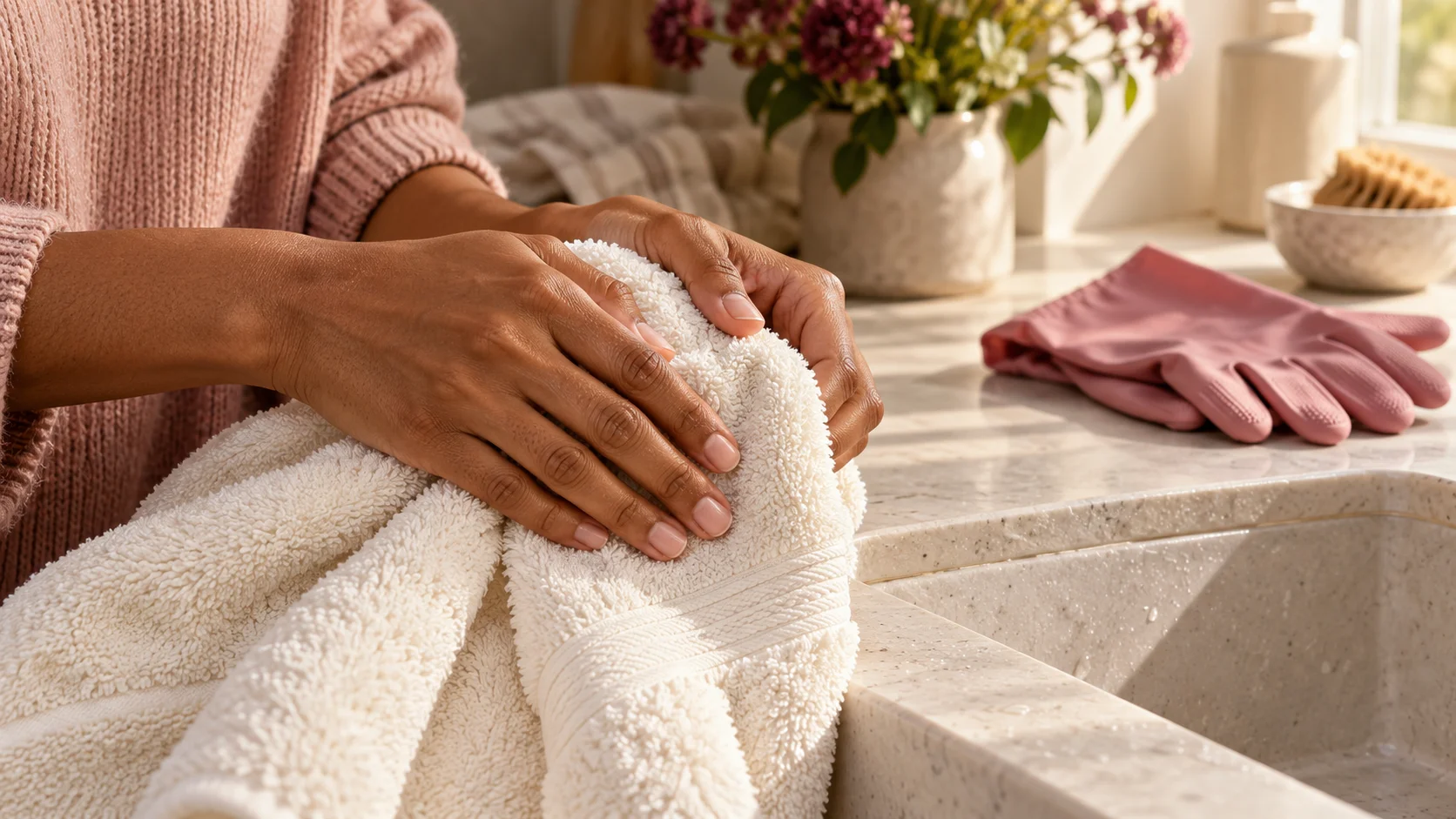
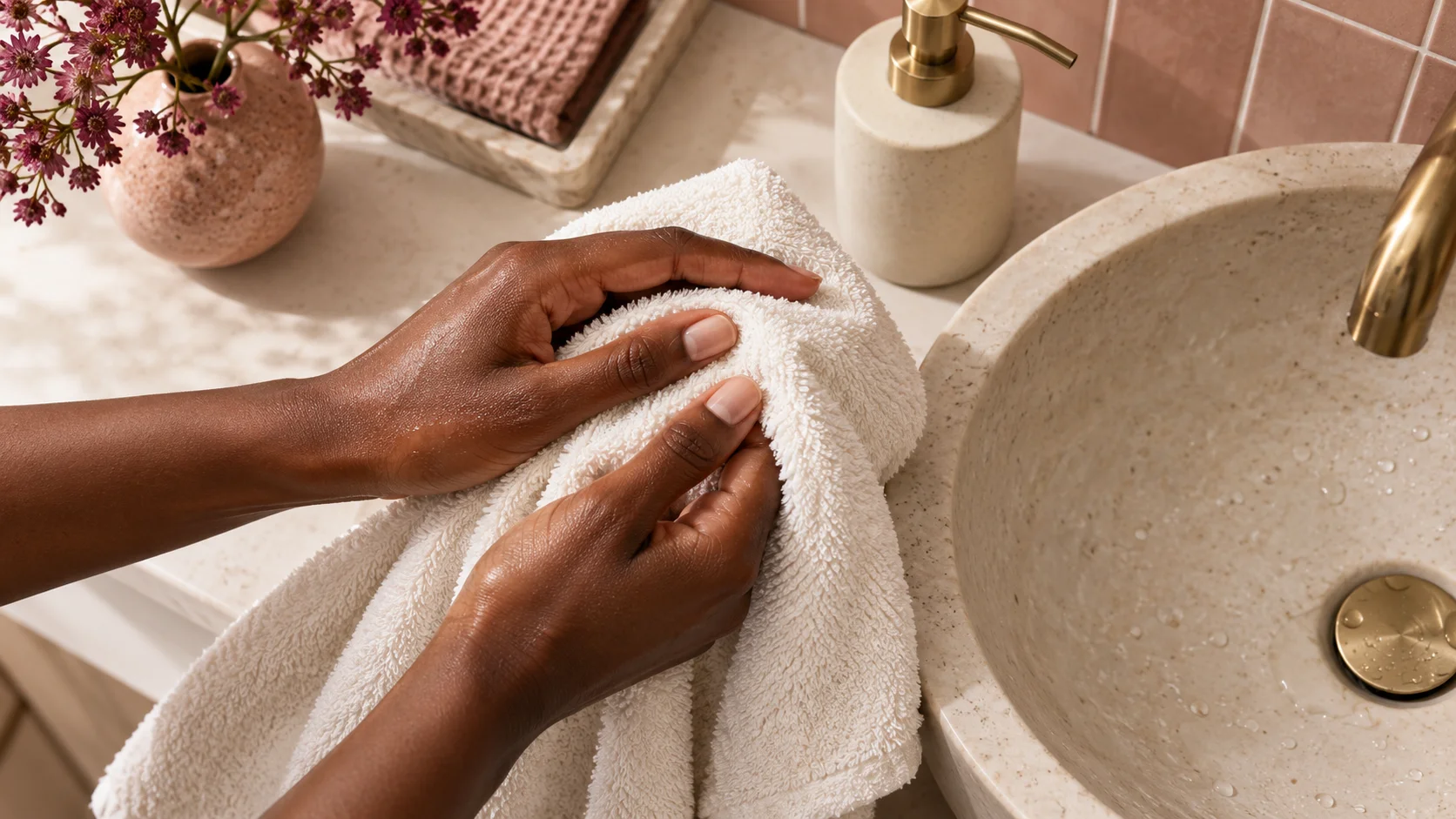
Put suitable drying supplies where you finish washing, not across the room behind other items. Check that the arrangement works for the people using the sink, including someone with limited reach or grip. A well-positioned towel or dispenser can remove an everyday obstacle without changing the hygiene method.
Follow the drying method appropriate to the setting. Healthcare and food workplaces may specify particular supplies and disposal procedures. At home, keep the setup clean and practical. Do not assume a decorative towel that is rarely changed is suitable simply because it matches the bathroom.
If the routine becomes rushed because supplies are missing, fix the supply problem. Agree who replaces towels or refills the dispenser, and make shortages easy to report. The best arrangement is one that continues working when the person who organised it is not present.
Add moisturising as a separate care step
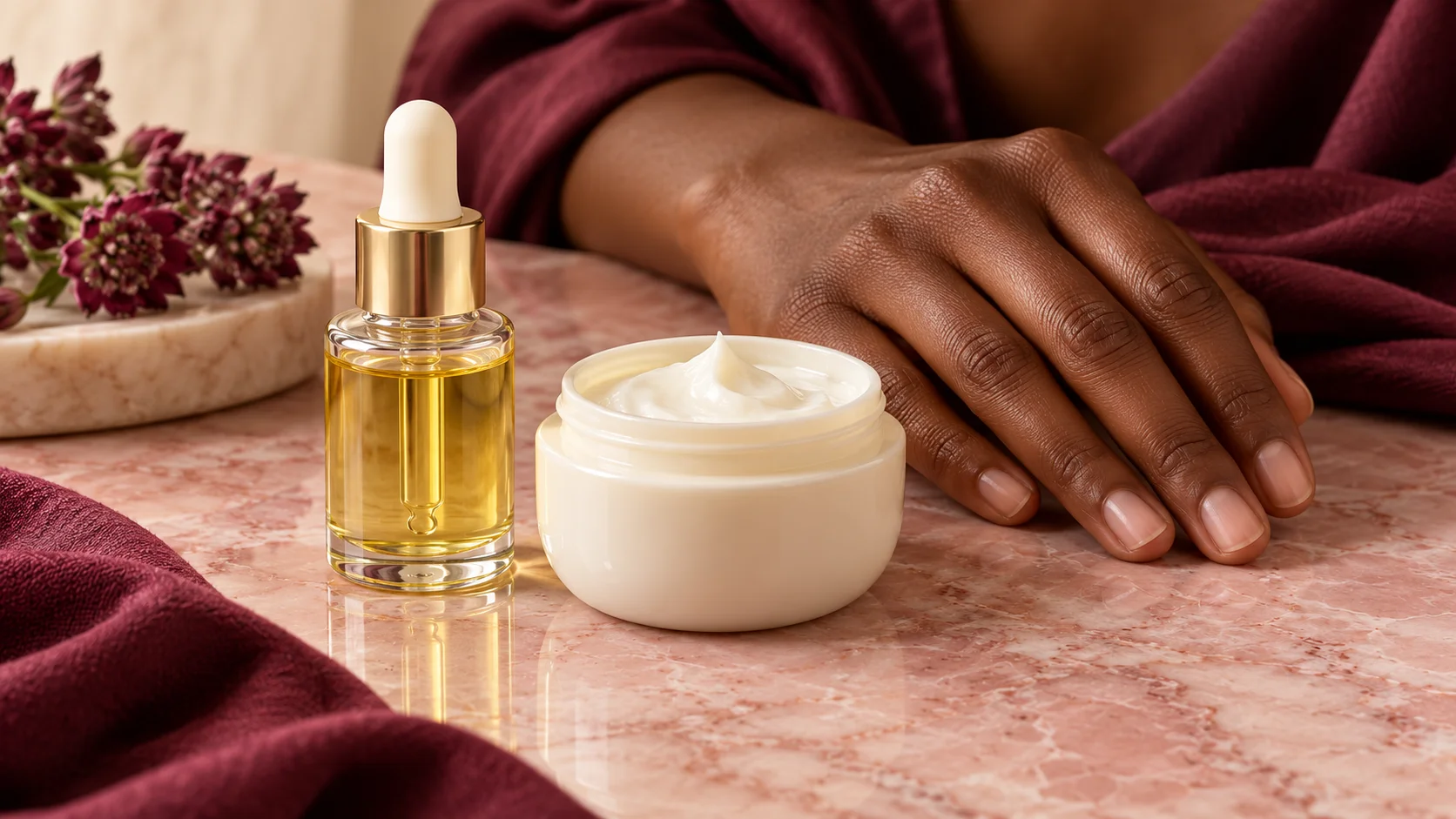
Newcastle Hospitals’ hand-care advice discusses applying suitable emollients after washing and choosing a product that is practical for daily life. It also stresses following workplace infection-control guidance. Its advice for irritated skin should not be turned into a blanket instruction to replace required handwashing with a cosmetic cleanser.
Choose a product you tolerate and can use according to its directions and any individual advice. Consider the dispenser, where it will be kept and what you will do afterwards. A richer texture may be inconvenient when immediately handling papers or equipment; that is a practical issue to discuss, not proof that the product is poor.
Keep the care step easy to remember by locating the appropriate product near the place where it is permitted. At work, ask which products are approved. Do not assume a personal tube is compatible with every glove, equipment or food-handling requirement.
| Step | What to organise | Important distinction |
|---|---|---|
| Wash | Correct product, method and access | A cosmetic care product does not replace hygiene |
| Dry | Suitable supplies within reach | Drying is a step, not an optional extra |
| Care | A suitable moisturiser where permitted | Individual skin advice and workplace rules still apply |
| Review | Notice discomfort and practical obstacles | Persistent symptoms need advice, not skipped washing |
Keep nail grooming out of the rushed washing moment
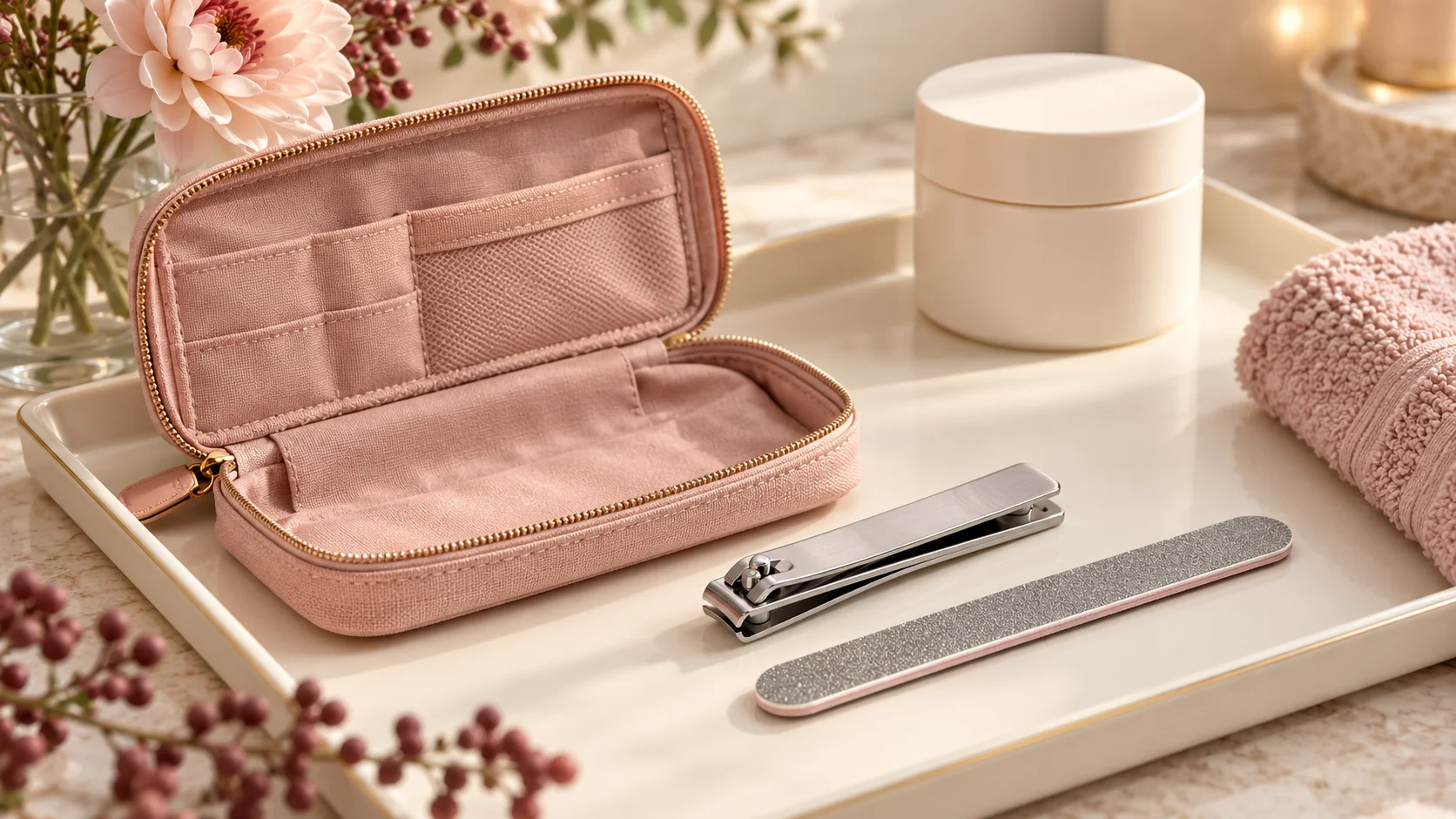
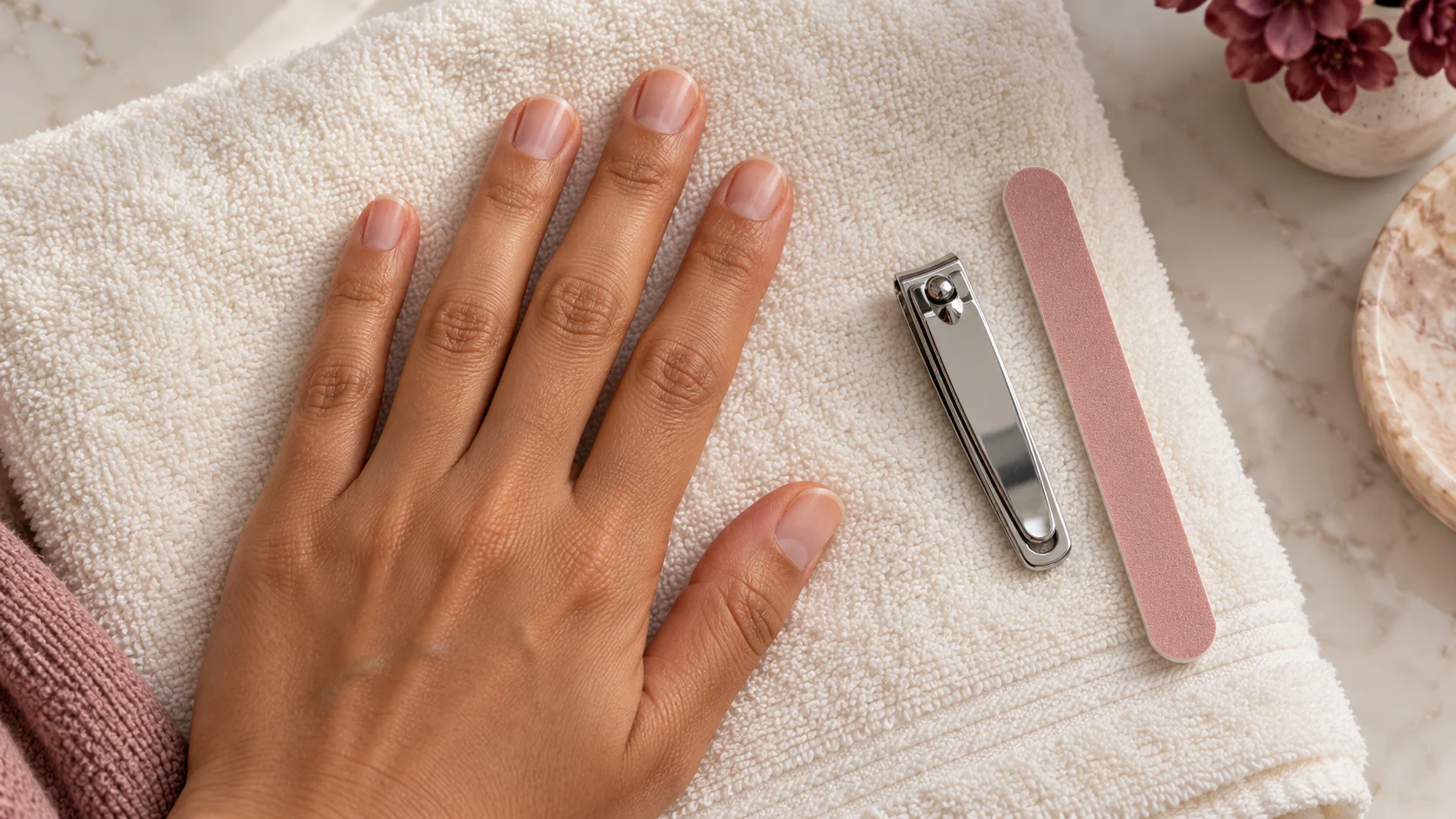
Noticing a rough nail while washing does not mean you have to reshape it immediately. Set aside a separate, well-lit moment for ordinary grooming if needed. Avoid turning every visit to the sink into an inspection with a pointed tool or a prolonged manicure routine.
A length that fits your work and activities may make everyday care more manageable. Follow any workplace nail requirements and ask about them before choosing enhancements or a particular length. A photograph from a beauty account cannot override the requirements of your actual role.
If an area is painful, lifting or otherwise changed, describe it and seek advice instead of using washing as an opportunity to investigate underneath it. The goal is to keep hands clean, not to establish a diagnosis through scrubbing or scraping.
Do not confuse discomfort with a reason to abandon hygiene
The NHS contact-dermatitis guidance explains that water, soaps and detergents can be irritants and that allergy is a different mechanism. Persistent, recurrent or severe symptoms warrant GP advice. A general article cannot tell which mechanism is responsible for your discomfort.
Record the products used, the frequency of relevant tasks and when symptoms appear. Include the gloves and skin-care products in the routine, not only the soap. Keep labels or product names so the discussion can be specific rather than based on the appearance of a bottle.
Ask how to maintain necessary hygiene while the skin problem is assessed. In a workplace, involve the appropriate occupational health or infection-control contact where available. Do not independently remove a required step because a social-media routine seems gentler.
Make hand care workable away from home
For travel or a long day out, think about the situations in which you normally wash and what suitable supplies will be available. A securely closing personal care product may be useful, but it should remain labelled and stored as directed. Do not decant unrelated products into similar unmarked containers.
Where soap and water are not immediately available, the NHS guide mentions alcohol-based hand sanitiser if available. That is not a reason to treat every product or every setting as interchangeable. Follow the requirements of the situation, especially when dealing with food, healthcare or visible contamination.
When you reach a regular washing place, return to the normal routine required there. Keep the plan straightforward enough to follow without a long collection of accessories. If a product repeatedly causes discomfort, ask for advice rather than buying a new version every few days without keeping a record.
Wash properly, dry fully, care appropriately
- Hygiene: follow the method required for the situation.
- Drying: keep suitable supplies available.
- Moisture: use an appropriate product as a separate step.
- Advice: address ongoing discomfort without dropping hygiene.
Review the arrangement rather than adding complexity
At the end of an ordinary week, identify one practical obstacle: a missing towel, confusing bottle or unsuitable storage location. Improve that detail and check whether the routine becomes easier. This is an organisational review, not evidence that a product has treated a skin condition.
For related explanations of moisturisers, natural-nail grooming and wet-work planning, explore our Nail Care section. Keep the two purposes clear: clean hands through appropriate hygiene, and comfortable care through suitable products and timely individual advice.
For the related parts of your care routine, read A Simple Nail Care Routine for Hands That Are Often in Water, Cuticle Oil and Hand Cream: What Each Adds to Your Routine and How to Keep a Personal Manicure Kit Clean and Organised. For the relevant product or service decision, see Press-On Nails and Handwashing: Following Your Kit's Care Advice.
Common questions
Should I wash less often if my hands feel dry?
Do not drop necessary hygiene steps to protect a manicure or avoid addressing discomfort. Ask how to manage the skin issue while maintaining the required procedure. Organise suitable drying and care products, and seek advice for persistent or recurrent symptoms rather than independently changing workplace rules.
Can hand cream replace soap?
A leave-on moisturiser is a separate care product, not automatically a hand-cleaning product. Keep the containers distinguishable and follow the method required for the situation. If a clinician recommends a cleanser for a skin condition, clarify how that advice fits necessary hygiene requirements.
Why is the drying setup worth reviewing?
A missing or awkwardly placed towel can make an otherwise clear routine difficult to finish. Keep suitable supplies within reach and follow the setting’s drying requirements. Agree how shared supplies are replenished so the arrangement works during an ordinary busy day.
Can I bring any moisturiser to work?
Check which products are approved and compatible with the task, equipment and hygiene procedure. A personal favourite is not automatically appropriate in healthcare, food handling or specialist work. Ask where the care step belongs rather than adding an unfamiliar product to the process without checking.
What information helps when handwashing causes discomfort?
Keep the names of soap, sanitiser, gloves and care products, along with the tasks and timing of symptoms. Include what happens away from work if relevant. This supports a useful assessment without requiring you to decide whether irritation or allergy is responsible.
Should I groom my nails every time I wash?
No. Washing is a hygiene task, not a requirement to inspect and reshape the nails each time. If ordinary grooming is needed, choose a separate well-lit moment. A painful or changed area should be discussed rather than investigated with a pointed tool at the sink.
What if soap and water are not immediately available?
The NHS guide mentions alcohol-based hand sanitiser if available, but the appropriate method still depends on the situation. Follow relevant workplace and activity requirements, especially around food or healthcare. Do not assume every cleansing product is interchangeable or suitable for every kind of contamination.
How can I make the routine easier while travelling?
Plan around the places you normally wash and keep any personal care product securely closed, labelled and stored as directed. Avoid several similar unmarked bottles. A practical travel arrangement should support the hygiene required in each setting rather than create a separate complicated beauty ritual.
Sources and further reading
- NHS — How to wash your hands — checked 2026-10-21
- Newcastle Hospitals — Hand care advice — checked 2026-10-21
- NHS — Contact dermatitis — checked 2026-10-21