Nail Discolouration: Cosmetic Staining and Changes to Get Checked
What can and cannot be inferred from nail colour after polish removal?
Archive edition: 2026-06-20 · This is an editorial allocation, not the first-publication date.
Key takeaways
- Pattern: describe the visible change in ordinary language.
- History: record polish, services and timing.
- Symptoms: include pain, lifting or surrounding skin changes.
- Assessment: seek advice for new, changing or unexplained findings.
In this guide
- Key takeaways
- Describe the pattern before naming a cause
- Keep cosmetic staining in its proper context
- Do not diagnose fungus by colour alone
- Have new or changing dark bands examined
- Avoid home stain-removal experiments
- Pattern, history, symptoms, assessment
- Make photographs useful without overinterpreting them
- Common questions
- Sources and further reading
Nail discolouration is a description, not a diagnosis. A colour noticed after removing polish might relate to cosmetic staining, but that timing does not rule out other causes. Begin by looking at what changed, where it appears and whether there are other symptoms, without trying to bleach, scrape or cover the evidence.
This guide explains how to prepare a useful description and distinguish a product-history question from a health question. It cannot identify a cause from a shade chart or photograph. New, changing or unexplained colour changes deserve appropriate advice, especially when the nail is painful, lifting, thickening or otherwise different from usual.
Describe the pattern before naming a cause
Note whether the change affects one nail or several, the whole visible surface or a limited area, and whether it looks like a spot, band or diffuse colour. Include the approximate date you noticed it. If polish has covered the nail for a while, distinguish the date you first saw it from the date it may have begun.
Use everyday words. “A new dark line on one thumbnail” is more useful than a medical term selected from an image search. A health professional can interpret the description alongside an examination, your history and any other relevant findings.
Do not manipulate the nail to decide whether colour is on top or underneath. If that is unclear, say so. Scraping, digging or repeatedly applying remover can alter the appearance and add another exposure without answering the original question.
Keep cosmetic staining in its proper context
DermNet’s nail-cosmetics guidance describes staining associated with coloured nail enamels. It also discusses irritation and allergic reactions to cosmetics. A polish history is therefore relevant, but it does not prove that every yellow or brown-looking change is harmless surface staining.
Record the polish, base coat and remover if you know them, along with the approximate wear period. Include any other products applied during a salon service. A photograph of the label is useful; a description such as “the red bottle” may be hard to match to the correct formula later.
Do not adopt a guaranteed clearing deadline from another person’s experience. If the change persists, develops further or has no clear explanation, ask for advice. A cosmetic explanation should not become a reason to ignore a new symptom simply because a manicure happened recently.
Do not diagnose fungus by colour alone
The NHS fungal nail infection page describes possible discolouration, thickening and brittleness. It notes that fingernails can be affected as well as toenails. These observations provide context, not a reliable colour-based test for an individual nail.
If you suspect an infection, speak to a pharmacist or GP rather than buying a succession of products based on photographs. Treatment suitability depends on the situation, and the NHS describes circumstances in which further assessment or nail testing may be needed. This guide does not select an antifungal or provide a treatment schedule.
Tell the adviser about diabetes, a weakened immune system, pregnancy, breastfeeding or other relevant health circumstances. The point is to help them assess suitability, not to decide yourself which detail changes the diagnosis. Mention medicines and any products you have already tried.
Before leaving an appointment, check what the proposed next step is and how you will receive any results. If a sample is suggested, ask what question it is intended to answer. If observation is recommended, ask which changes should prompt another contact and when the review should happen. Keep these instructions with your product history so you do not have to reconstruct the plan later. A clear follow-up arrangement is more useful than a long list of possible diagnoses saved from different websites.
| Question | Useful detail | What it does not establish |
|---|---|---|
| Where is it? | Which nail and which visible area | The cause from location alone |
| When was it noticed? | First observation and any subsequent change | The exact start date under polish |
| What was applied? | Product and service records | That cosmetics are definitely responsible |
| What else changed? | Comfort, thickness, attachment or surrounding skin | A diagnosis without assessment |
Have new or changing dark bands examined
The AAD advises examination of a new or changing dark streak. Not every streak is melanoma, but an online comparison cannot rule it out. Arrange an assessment rather than waiting for a cosmetic product to lighten the area.
When booking, describe the change clearly and mention that it is new or evolving. Do not downplay it as a manicure question if you are uncertain. A clinician can decide what assessment is needed and how promptly it should happen.
Keep any existing photographs that show how the nail looked previously, but do not postpone seeking advice while searching for a perfect comparison. The absence of an old image is normal and does not prevent a useful appointment.
Avoid home stain-removal experiments
A household cleaning method is not automatically appropriate for a nail or its surrounding skin. Do not try bleach, abrasive scraping or improvised chemical mixtures to determine whether a mark is removable. This guide intentionally gives no whitening recipe.
If product remains on the nail and you are unsure how it should be removed, ask the original provider about the system used. Explain any discomfort or visible change before agreeing to another service. Removal directions should match the actual product, not a general label taken from a video.
Leave the question of covering the nail until you have appropriate advice. A new coat can make the appearance less visible, but it does not establish that the cause has gone away. Keep a record of any instructions you receive about products or future appointments.
Pattern, history, symptoms, assessment
- Pattern: describe the visible change in ordinary language.
- History: record polish, services and timing.
- Symptoms: include pain, lifting or surrounding skin changes.
- Assessment: seek advice for new, changing or unexplained findings.
Make photographs useful without overinterpreting them
Use neutral daylight where practical, include the whole hand and avoid colour filters. Keep the original file and its date. A warm lamp can change how a colour appears, so do not compare two differently lit images as though they are laboratory measurements.
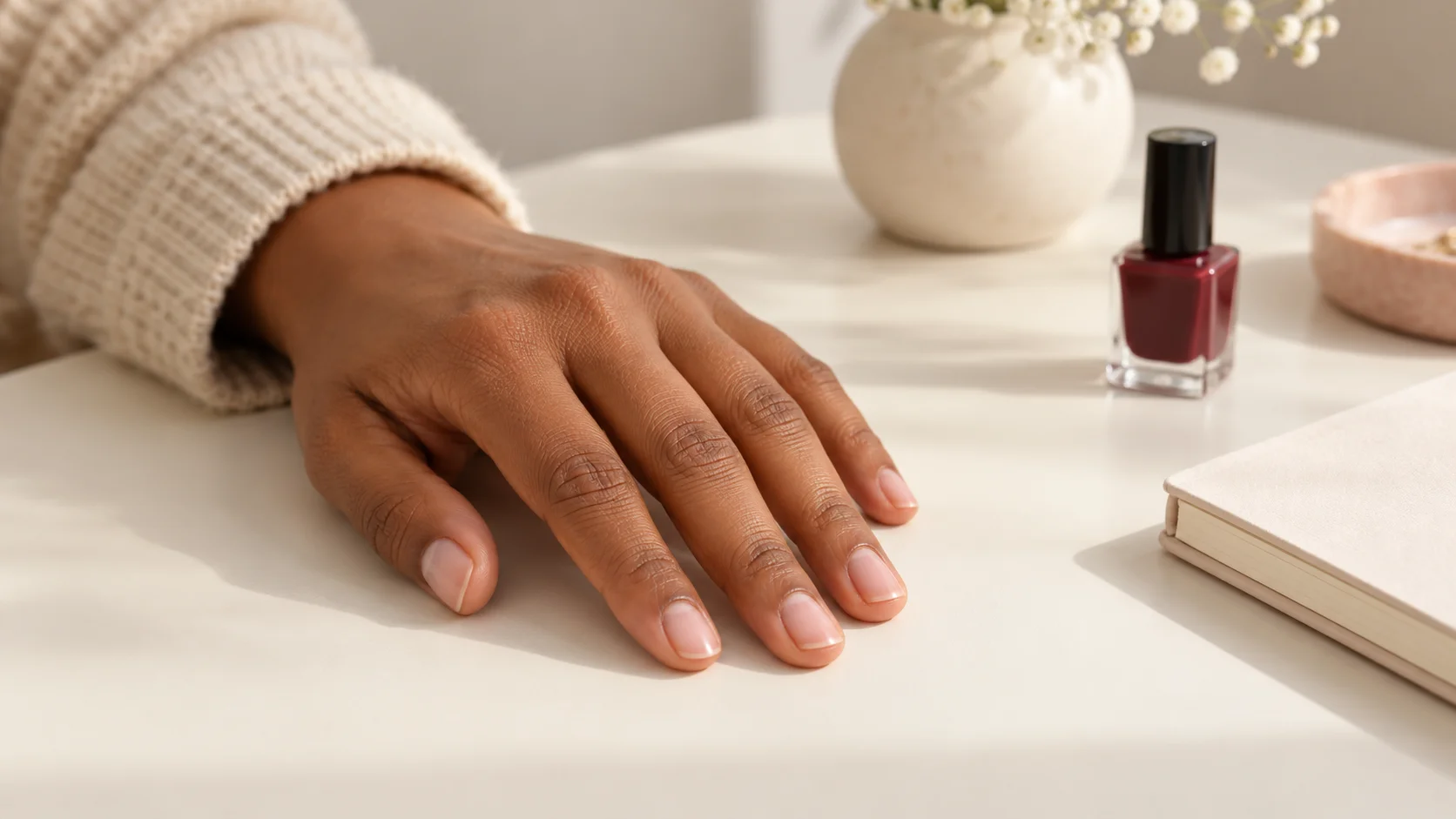
Our featured image shows ordinary natural nails for editorial context; it is not a clinical example of staining or disease. Use the checked sources and professional advice for health questions. For related explanations of grooming and cosmetic products, explore our Nail Care guides, keeping appearance preferences separate from an unexplained change.
For the related parts of your care routine, read Nail Changes to Photograph and Discuss with Your GP, Ridges in Nails: Common Changes and When to Ask a Professional and Nail Peeling After a Manicure: Gentle Care and Warning Signs. For the relevant product or service decision, see How to Read Nail Polish Ingredient and Safety Labels.
Common questions
Does yellow colour after polish prove it is staining?
No. A polish history is relevant but does not establish the cause by itself. Record the products and timing, and include any thickness, comfort or attachment changes. Seek appropriate advice for a persistent, new or unexplained finding rather than relying on the sequence alone.
Can I identify a fungal infection by the colour?
Colour alone is not a reliable individual diagnosis. Several changes can look similar in photographs. Speak to a pharmacist or GP about the pattern and your circumstances, particularly if there are other symptoms, rather than selecting treatment from an online colour comparison.
What should I do about a new dark line?
Arrange a professional assessment and clearly mention that the line is new or changing. Not every dark streak is a serious condition, but an online image cannot rule one out. Do not wait for a whitening product or another manicure to answer the question.
Should I scrape the nail to see whether the colour comes off?
Do not scrape or dig to investigate where the colour sits. Describe what is visible and say when you are unsure. Manipulating the nail or repeatedly applying products can change the appearance and add another exposure without establishing the original cause.
Which product details are useful to keep?
Keep the polish, base coat, remover and salon system names where available, along with approximate wear and removal dates. Photographs of labels can help. A short accurate history is more useful than guessing a formula from the colour of its packaging.
Can lighting change how discolouration looks in a photograph?
Yes, different lighting and filters can change the recorded appearance. Use ordinary neutral light where possible and keep the original image. Photographs can support a conversation, but do not compare differently lit images as though they provide a precise measurement or diagnosis.
What if I have no old photograph for comparison?
You can still seek advice. Explain when you first noticed the change and whether you have observed it evolving. Do not delay an appointment while searching for a perfect earlier image; an examination and history can begin without that comparison.
What should I clarify after an assessment?
Ask what the next step is, how any results will be communicated and which changes should prompt another contact. Keep those instructions with your product history. A clear follow-up plan is more useful than continuing to collect unrelated possible diagnoses online.
Sources and further reading
- NHS — Fungal nail infection — checked 2026-10-21
- DermNet — Nail cosmetics allergy — checked 2026-10-21
- AAD — Nail changes to have examined — checked 2026-10-21