Ridges in Nails: Common Changes and When to Ask a Professional
How do lengthwise ridges differ from grooves across the nail, and what should be checked?
Archive edition: 2026-06-27 · This is an editorial allocation, not the first-publication date.
Key takeaways
- Direction: base to tip, or across the nail?
- Duration: longstanding, newly noticed or changing?
- Difference: any pain, colour or attachment change?
- Discussion: seek assessment when new or unexplained.
In this guide
- Key takeaways
- Distinguish lengthwise texture from a crosswise groove
- Use terminology to communicate, not to diagnose
- Why grooves across the nail need context
- Do not make buffing the default response
- Prepare a concise account for an appointment
- Direction, duration, difference, discussion
- Observe without repeatedly testing the surface
- Common questions
- Sources and further reading
Ridges in nails are often noticed when light catches the surface or a new polish makes texture more visible. The word “ridge” can describe several different observations, so start by noting the direction and whether the feature is new. A line running from base to tip is not the same description as a groove crossing the nail.
This guide helps you describe texture accurately and decide when to seek advice. It does not diagnose a deficiency, date an illness from a groove or recommend a treatment based on a photograph. A new or unexplained change, particularly with pain or another symptom, deserves individual assessment.
Distinguish lengthwise texture from a crosswise groove
Lengthwise means running roughly from the base towards the tip. Crosswise means running from one side towards the other. You do not need a technical term to explain that difference when contacting a clinician. A simple description of direction is often the most useful first detail.
Mayo Clinic notes that vertical ridges can be harmless and become more noticeable with age. That does not make every new line, groove or texture change an inevitable part of ageing. Consider what is usual for you and whether anything else has changed.
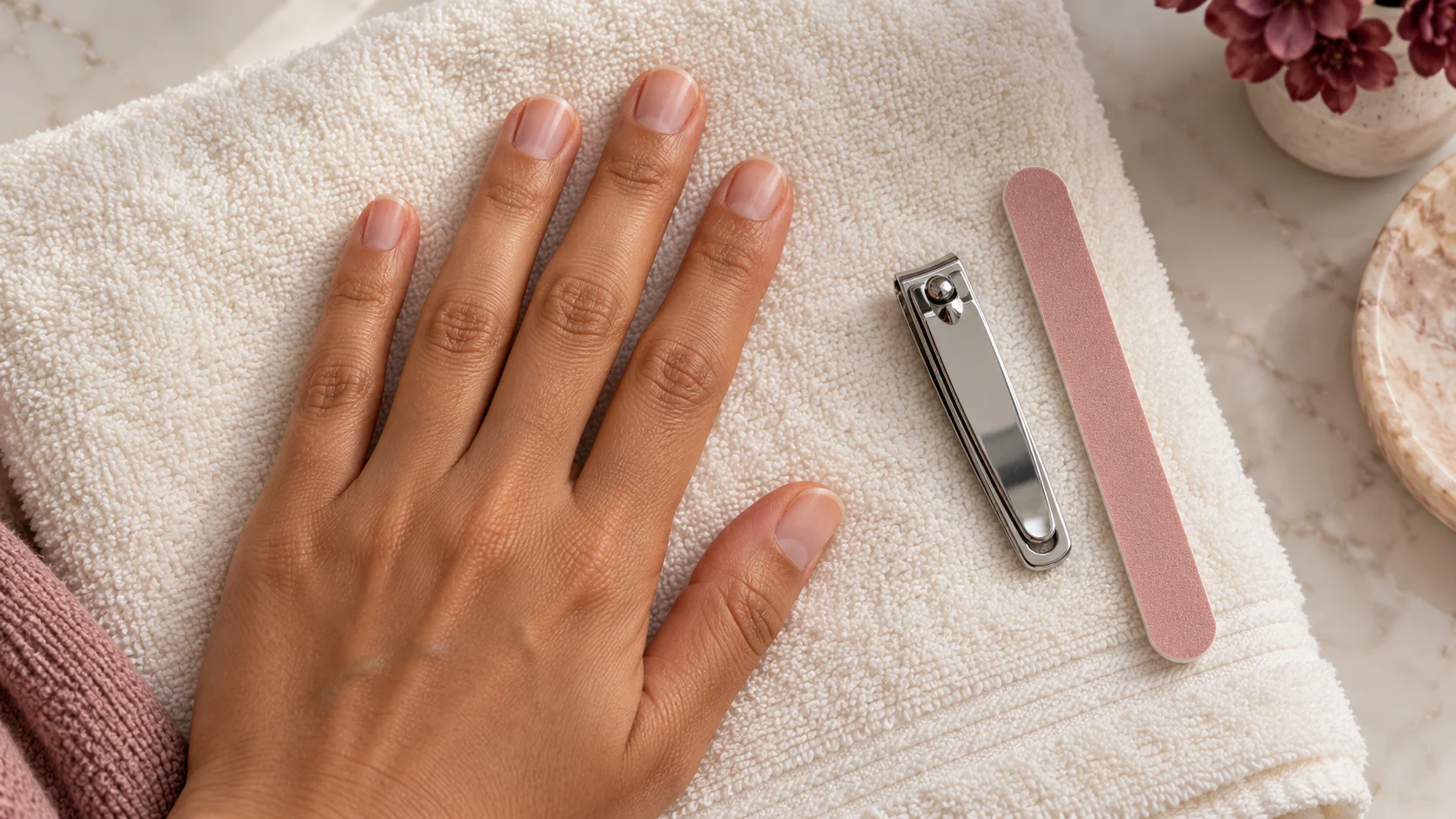
Look at the whole hand rather than one extreme close-up. Record whether the feature appears on one nail or several and whether it seems similar across them. Do not press, scrape or buff the area to make its direction easier to see.
Also distinguish a line of colour from a change in surface shape. A reflection, a stripe of pigment and a physical groove may all be described casually as a line, but they are different observations. You do not need to feel the surface repeatedly to prove which one it is. Say what is visible and whether it changes with the lighting, and let the person examining it make the distinction. If a new dark band is present, mention that specifically rather than including it only in a general description of ridges.
Use terminology to communicate, not to diagnose
DermNet’s terminology guide distinguishes longitudinal ridging, transverse ridging and grooves. It describes several possible associations rather than a single explanation for all texture changes. Finding a matching term is therefore a way to organise a description, not proof of a condition.
For example, “a shallow lengthwise line that I have noticed for years” and “a new groove across several nails” provide different histories. Neither sentence establishes a diagnosis. Both give a professional more useful information than the broad statement that your nails look unhealthy.
Keep a separate note of any colour change, splitting, lifting or surrounding skin symptoms. Combining every observation under the word “ridge” can hide an important detail. If you are unsure whether two features are connected, describe them separately and let the clinician assess that relationship.
Why grooves across the nail need context
The AAD’s nail-change guidance explains that deep crosswise grooves or gaps can reflect an interruption in growth and advises assessment when the explanation is unclear. Do not use the distance from the base to calculate an exact illness date or identify a particular cause at home.
Tell the clinician about recent illness, injury, treatments and the approximate timeline if relevant. If you do not remember a possible event, say so. There is no need to search your history until you find something that seems to fit an internet explanation.
A changed nail can be assessed even when the history is incomplete. The purpose of your notes is to support the conversation, not to solve the case before booking. Ask what follow-up is appropriate if the cause remains uncertain.
| Observation | Detail to add | Avoid concluding |
|---|---|---|
| Lengthwise ridges | Longstanding or newly noticed; one nail or several | Age explains every new change |
| A groove across the nail | When noticed and relevant recent history | A precise cause or date from position alone |
| Texture with another change | Colour, comfort, splitting or attachment | Every finding belongs to one cosmetic issue |
| An unclear photograph | Lighting and what you see in person | A filtered image provides a reliable diagnosis |
Do not make buffing the default response
A surface that catches the light differently is not automatically a surface that needs removing. Decide first whether this is an ordinary cosmetic preference or a new health concern. If you cannot answer that confidently, ask for advice before trying to erase the feature.
A smoothing base coat can alter the appearance of a manicure, but that visual effect does not identify or treat the reason for a ridge. If you use cosmetics after receiving appropriate advice, keep the product’s purpose clear. Appearance and assessment are different questions.
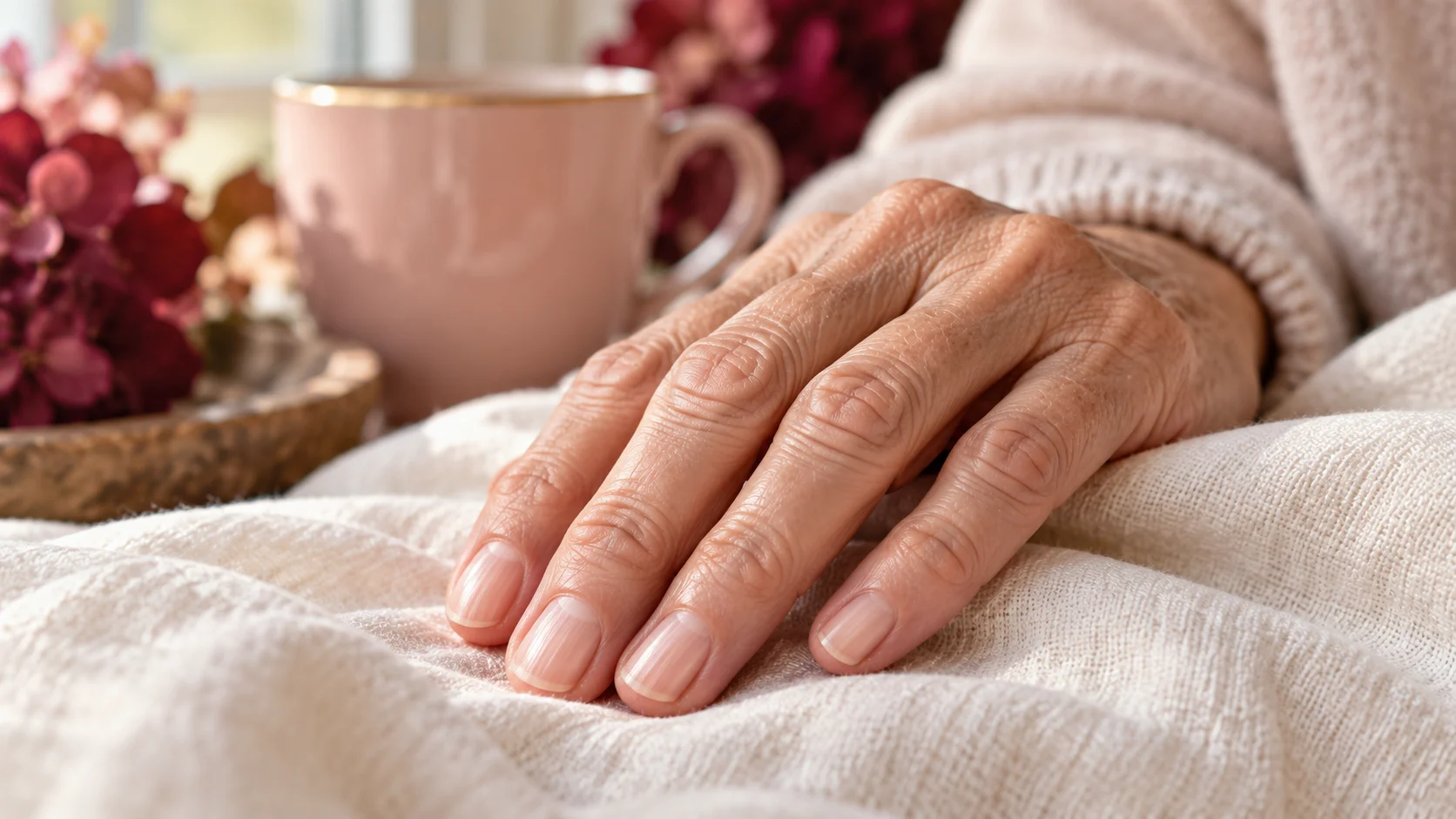
Our illustration shows an older adult’s natural hand with ordinary surface texture. It is not a diagnostic reference or an example of a treatment result. Real nails vary, and a polished editorial image is not the standard against which every unpolished nail must be measured.
Prepare a concise account for an appointment
Write the affected nails, direction of the feature, approximate duration and any accompanying symptoms. Add relevant product or manicure history, medicines and recent health events. Keep uncertainty visible: “first noticed last month” is not the same as “definitely began last month”.
Useful questions include whether the finding needs investigation, whether any current grooming should pause and what changes should prompt another contact. Ask for an explanation in ordinary language if a technical term is used. Understanding the next step matters more than memorising the name.
Do not start supplements or stop prescribed medicines because an online list connects them with ridges. Share concerns with the professional who manages your care. This article cannot decide whether a test or a treatment change is appropriate for you.
Direction, duration, difference, discussion
- Direction: base to tip, or across the nail?
- Duration: longstanding, newly noticed or changing?
- Difference: any pain, colour or attachment change?
- Discussion: seek assessment when new or unexplained.
Observe without repeatedly testing the surface
If you keep photographs, use similar ordinary lighting and save the date. Avoid filters and side-by-side comparisons made under very different conditions. You do not need daily magnified photographs to prepare a useful account, and recording the feature should not involve scraping or bending the nail.
Follow the review plan you are given and raise new symptoms rather than waiting for a cosmetic appointment. For everyday grooming and product context, visit our Nail Care section. A practical approach leaves room for normal variation while giving unexplained changes the attention they need.
For the related parts of your care routine, read Nail Changes to Photograph and Discuss with Your GP, Nail Discolouration: Cosmetic Staining and Changes to Get Checked and Brittle Nails: Everyday Habits to Review and When to Seek Advice. For the relevant product or service decision, see Nail File Grit Numbers: What to Check Before Filing Natural Nails.
Common questions
Are all vertical ridges a sign of illness?
No. Lengthwise ridges can be harmless and become more noticeable with age, but that does not explain every new or changing feature. Describe what is usual for you and seek advice when the finding is unexplained, changing or accompanied by other symptoms.
How should I describe the direction of a ridge?
Say whether it runs from the base towards the tip or across the nail from side to side. Add which nails are affected and when you noticed it. Ordinary language is sufficient; you do not need a medical term to prepare a useful description.
Can a groove tell me exactly when I was ill?
Do not use its position as a precise home timetable or diagnosis. Mention recent illness, injury or treatment if relevant and let the clinician consider the context. An incomplete memory is acceptable; you do not need to find an event that fits an online explanation.
Should I buff ridges away before asking for advice?
If the texture is new or unexplained, ask about it before trying to erase its appearance. Surface smoothing is a cosmetic action and does not establish the cause. Leave the observation clear and describe any associated colour, comfort or attachment change separately.
Is a ridge-filling base coat a treatment?
A cosmetic product may alter how a manicure looks, but that does not diagnose or treat the reason for a ridge. Keep appearance preferences separate from health questions, follow appropriate advice and read the actual product directions if cosmetics are suitable for your situation.
Do ridges mean I should start supplements?
A general appearance does not determine whether a supplement or test is appropriate. Discuss persistent or unexplained changes with a clinician, including relevant medicines and health history. Do not start supplements or stop prescribed treatment simply because an online list mentions ridges.
How is a coloured line different from a ridge?
A line may describe pigment, reflection or a surface feature, so say what you can actually see without repeatedly testing the nail. Mention a new dark band specifically. If the distinction is unclear, a professional examination is more useful than probing or scraping.
Do I need daily close-up photographs?
Usually a concise dated record is more useful than repeatedly photographing at extreme magnification. Use similar ordinary lighting and avoid filters if documenting a change. Follow any review instructions you receive, and do not postpone advice for new symptoms while building a photo diary.
Sources and further reading
- Mayo Clinic — Healthy fingernails — checked 2026-10-21
- DermNet — Nail terminology — checked 2026-10-21
- AAD — Nail changes to have examined — checked 2026-10-21