How to Read Nail Polish Ingredient and Safety Labels
Find the product system, precautions, ingredients and durability information before relying on a nail polish claim.
Archive edition: 2026-07-16 · This is an editorial allocation, not the first-publication date.
Key takeaways
- Identify the product and complete system.
- Find instructions, precautions and any leaflet.
- Check the current ingredient list where relevant.
- Keep batch and durability information.
- Clarify missing or conflicting details before use.
In this guide
- Key takeaways
- First identify what the product does
- Find the directions and precautions together
- Use ingredients as identification, not a fear score
- Separate batch identity from durability information
- Look for accountable product information
- Read front-label claims with a specific question
- Common questions
- Sources and further reading
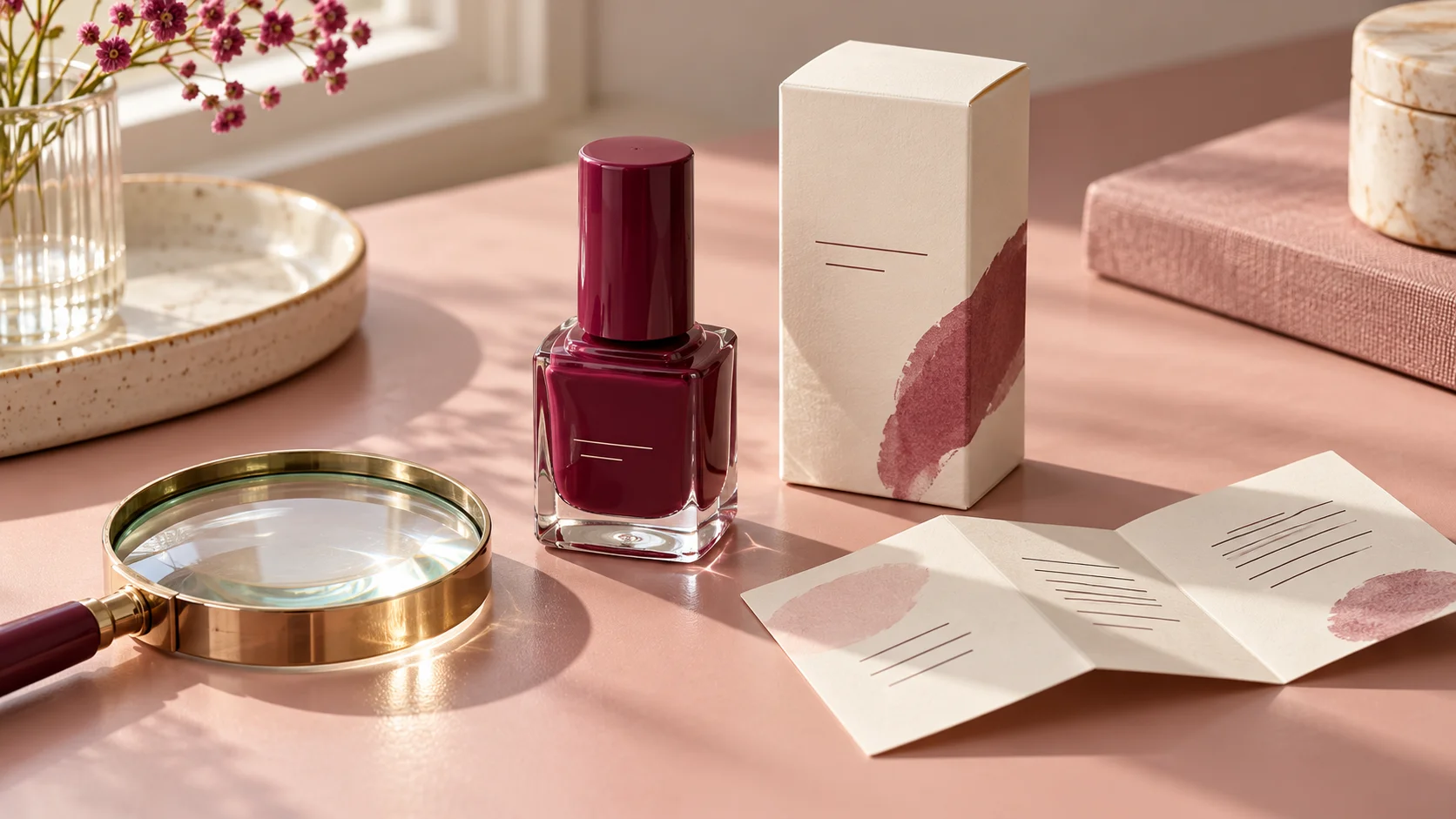
A nail polish label is more than a shade name. It helps you identify the product, understand how it should be used and find information if something goes wrong. Reading it is easier when you separate practical directions from colour descriptions, ingredient information and promotional claims.
This guide is for consumers choosing products in Great Britain. It explains a useful reading order rather than certifying a product’s legal compliance. Northern Ireland can have different arrangements, and an imported web page is not a substitute for the instructions supplied with the product actually sold to you. Keep the carton or leaflet when it contains information absent from the bottle.
First identify what the product does
Before studying unfamiliar ingredient names, establish whether you are holding ordinary colour lacquer, a base coat, a top coat, a remover or a lamp-cured product. Similar bottles and shade names can belong to different systems. Words such as gel effect describe an appearance in some ranges and should not alone determine whether you need a lamp.
Look for the complete range name and application directions. Check whether the product is intended for home use or described as professional use only. If the wording is unclear, ask the seller to identify the system rather than combining it with whichever lamp or top coat you already own.
When shopping online, request readable photographs of the relevant packaging if the listing only shows the front. A colour swatch is useful for visual planning, but it cannot tell you the precautions, removal method or identity of the supplied product. Check that the size and range shown in the listing match the item in your basket.
Find the directions and precautions together
GOV.UK’s consumer cosmetics guidance identifies precautions, product purpose and ingredient information among the details consumers should be able to find. Some information may be on packaging or an enclosed leaflet where space is limited. A small bottle is therefore a reason to check the accompanying material, not to assume the missing directions are unnecessary.
Read the whole routine before starting. Application, drying or curing, removal, storage and disposal may appear in different places. If a process needs a particular system component, find that information before opening the product. Instructions for a similar-looking polish are not a reliable replacement.
Keep warnings visible in your storage area. If a label becomes covered in polish or a carton is thrown away, save a clear photograph while the information is still readable. Avoid moving products into unlabelled containers, because doing so separates the contents from the identity and instructions you are trying to preserve.
Use ingredients as identification, not a fear score
An ingredient list can help someone with a known allergy check for a substance they have been advised to avoid. It is not a complete assessment of how a finished product will affect an individual. An unfamiliar chemical name does not by itself establish danger, just as a familiar plant ingredient does not establish suitability for everyone.
Match the list to the exact product, shade where relevant, market and pack. On its Ballet Slippers page, Essie UK advises checking the product packaging because ingredient lists can change. That is a practical reason to keep your own bottle information rather than rely permanently on a screenshot from an old purchase.
If you have a diagnosed allergy, use the ingredient names your clinician has given you and ask about any uncertainty. Do not try an unknown polish on skin as a home allergy test. A small application cannot establish that a product is safe for you, and deliberate skin exposure is not a substitute for professional assessment.
Separate batch identity from durability information
A batch or lot reference helps identify a particular production group. It is useful when contacting a supplier about a quality issue or unexpected reaction. Do not assume that the sequence is a date you can decode without the manufacturer’s explanation; brands do not all present their identification information in the same way.
Durability information serves a different purpose. You may see a minimum-durability date or a period-after-opening symbol, depending on the product. An open-jar symbol with a number of months relates to time after opening. It is not the date you bought the bottle, a manicure wear claim or a promise that every storage condition is acceptable.
Record when you open a product if that will help you follow the label. Check the storage directions too. Do not use an unopened bottle’s purchase date to invent a universal expiry rule, and do not assume a product remains suitable indefinitely because it still looks the same from the outside.
| Information | Question it answers | What it does not establish alone |
|---|---|---|
| Product and range name | What am I using? | Compatibility with every other range |
| Directions and precautions | How should I use and handle it? | A personalised medical assessment |
| Ingredients | What substances are listed? | A simple safe-versus-unsafe ranking |
| Batch reference | Which production group is this? | A universally readable expiry date |
| Durability information | What usage period is stated? | Guaranteed wear time on nails |
| Responsible business details | Who is identified for the product? | Independent approval of every marketing claim |
Look for accountable product information
The government’s Great Britain cosmetics guidance describes the Responsible Person and labelling obligations. For consumers, the practical point is to look for clear product identity and contact details, not just a marketplace username. That page contains scope and exceptions, so a short checklist should not be treated as a complete legal audit.
Be cautious when the listing cannot explain what the product is, the directions are missing or the seller cannot provide readable information. Ask for clarification before buying. A low price, a professional-looking bottle or a large social-media following does not answer those basic questions.
If the packaging and website disagree, send the business photographs of the product and its batch reference. Ask which directions apply to the pack you have. Do not resolve a conflict by selecting whichever instruction is quicker or by averaging two different application times.
Read front-label claims with a specific question
Claims about excluded ingredients, plant-derived content, vegan formulation or a gel-like finish describe different things. They should not be collapsed into a single promise of safety, environmental benefit or longer wear. Ask what the claim covers, what evidence the brand provides and whether it changes the actual instructions.
For example, a vegan claim does not tell you whether the polish needs a lamp. An acetone-free claim on a remover does not identify every other ingredient or prove compatibility with your enhancement. A long-wear statement may have conditions involving a named top coat or reapplication, so read the qualifying wording beside the headline.
Keep your decision proportionate. You do not need to become a formulation scientist to buy a polish, but you should be able to identify it, follow its directions and reach the business with a clear question. If the necessary information is unavailable, choose an alternative with instructions you can understand.
Read before opening
- Identify the product and complete system.
- Find instructions, precautions and any leaflet.
- Check the current ingredient list where relevant.
- Keep batch and durability information.
- Clarify missing or conflicting details before use.
Browse the Polish & Tools section for related comparisons. A readable label is useful because it supports a clear decision and traceable information, rather than turning every unfamiliar word into either a warning or a reassurance.
To compare the connected product and routine choices, read What Does Vegan Nail Polish Mean? Labels and Brand Claims Explained, Acetone vs Non-Acetone Remover: Product Suitability and Care and Nail Polish Storage: Light, Heat and Bottle Care. For the related care or design question, see Gel Nail Allergies: Symptoms to Get Checked and Products to Pause.
Common questions
Where should I look if the bottle has very little information?
Check its carton, attached label and enclosed leaflet. Small cosmetic packs may provide some information there. If essential directions or precautions remain unavailable, ask the supplier before use. A front-facing product photograph or a shade swatch does not replace the instructions for the actual item.
Is the website ingredient list always the same as my bottle?
Not necessarily. Formulas and online information can change, and different markets or product versions may differ. Check the packaging supplied with your exact purchase and ask the brand about discrepancies. Keep a clear photograph of the list if you need to discuss an ingredient with a clinician.
Can I judge safety from whether an ingredient name sounds natural?
No. Familiarity or natural-sounding wording does not establish suitability for an individual, and an unfamiliar name alone does not prove danger. Use ingredient information for specific questions, such as a diagnosed allergy, rather than trying to rank the whole product by how reassuring its names appear.
What does the open-jar symbol mean?
Where it is used, the open-jar symbol indicates a period after opening, commonly expressed in months. Read it with the product storage directions. It is not the purchase date, a promise about manicure wear or permission to ignore changes or handling conditions that concern the manufacturer.
Is a batch number an expiry date?
Do not assume that it is. A batch reference identifies a production group and helps the business trace a query or problem. Durability information serves a separate purpose. Ask the manufacturer to explain an unclear code rather than applying a decoding rule from an unrelated brand.
Does vegan or acetone-free mean allergy-safe?
Those claims describe particular attributes, not a guarantee that no one can react to the complete formulation. Check the actual ingredients and directions. If you have a known allergy or previous reaction, seek appropriate advice instead of treating a front-label claim as personalised reassurance.
What if the packaging and application website disagree?
Pause and ask the brand which instructions apply to the exact product and batch you have. Send clear packaging photographs and the range name. Do not choose whichever process seems faster, mix the directions or assume an old video is more authoritative than the current supplied instructions.
Does this checklist prove that a polish is legally compliant?
No. It is a consumer reading guide, not a full compliance assessment. Great Britain guidance includes responsibilities, scope and exceptions that a short checklist cannot certify, and Northern Ireland arrangements can differ. Clear identity, directions and business details help you ask informed questions before purchase.
Sources and further reading
- GOV.UK — Consumer products: cosmetics — checked 2026-10-22
- GOV.UK — Making cosmetics available in Great Britain — checked 2026-10-22
- Essie UK — Ballet Slippers ingredients — checked 2026-10-22