Splitting Nails and Supplements: Why Cause Matters More Than Promises
Look beyond supplement promises: review nail changes, understand limits of biotin evidence and tell clinicians what you take.
Archive edition: 2026-09-08 · This is an editorial allocation, not the first-publication date.

Key takeaways
- Observe: describe the splitting and its timing.
- Question: check what the evidence actually studied.
- Disclose: tell clinicians about every supplement.
- Decide: use advice matched to your circumstances.
In this guide
- Key takeaways
- Describe the splitting before naming a cause
- Ask what evidence supports the exact claim
- Keep photographs and testimonials in perspective
- Tell clinicians about biotin before blood tests
- Make a complete product list
- Prepare a short consultation note
- Observe, question, disclose, decide
- Read a product page without accepting its conclusion
- Choose a realistic next step
- Common questions
- Sources and further reading
Splitting nails can make a supplement promise sound appealing: take one product, wait a little and expect stronger nails. The difficulty is that a visible split does not tell you its cause. Before choosing a bottle, it is more useful to describe the change, review what your nails have been exposed to and decide whether you need professional advice.
This guide explains how to think about supplement claims and prepare a useful conversation. It does not diagnose a deficiency, recommend a dose or provide a timetable for stopping a supplement before a test. Those decisions depend on the person, the product and the clinical situation.
Describe the splitting before naming a cause
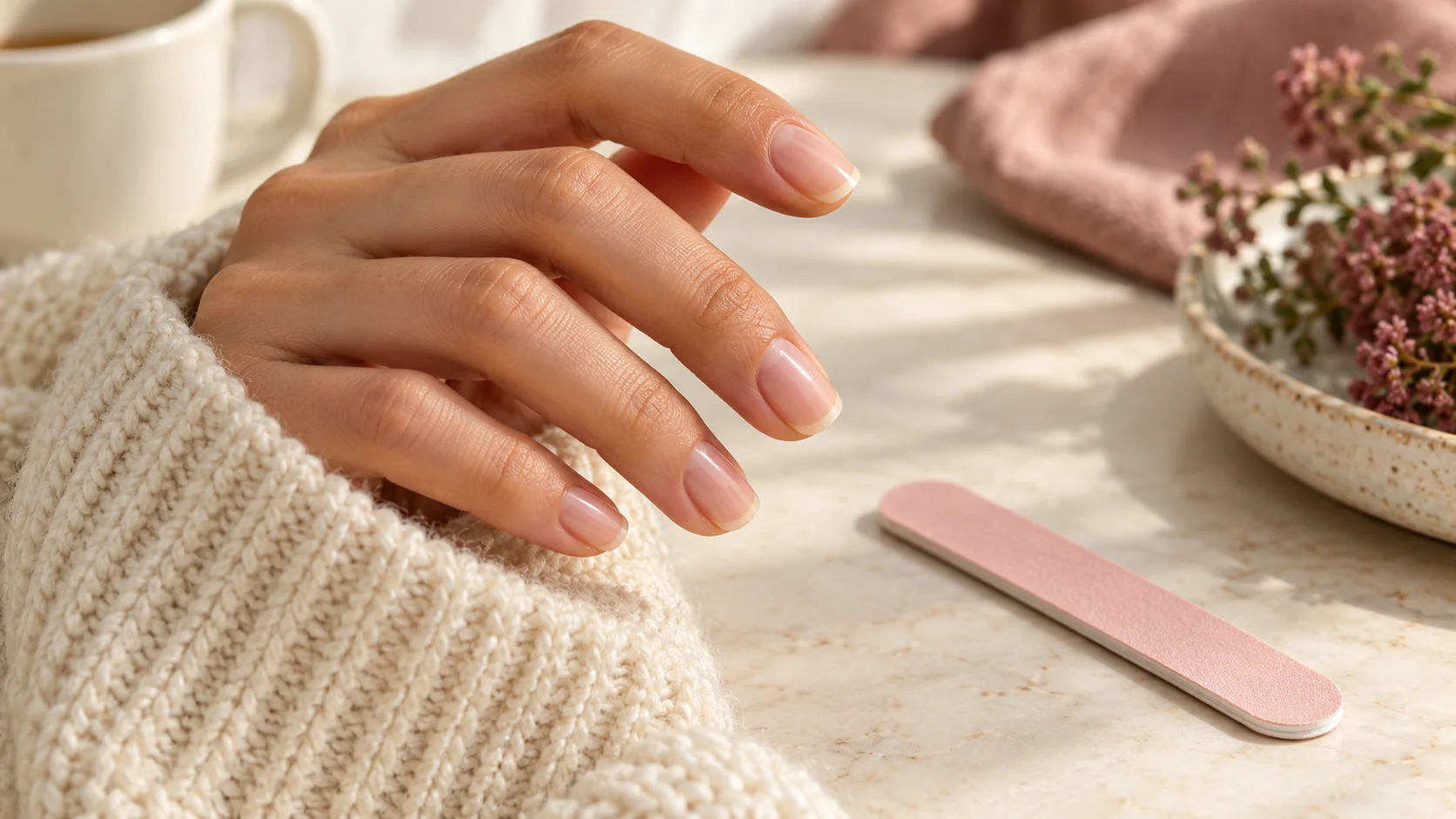
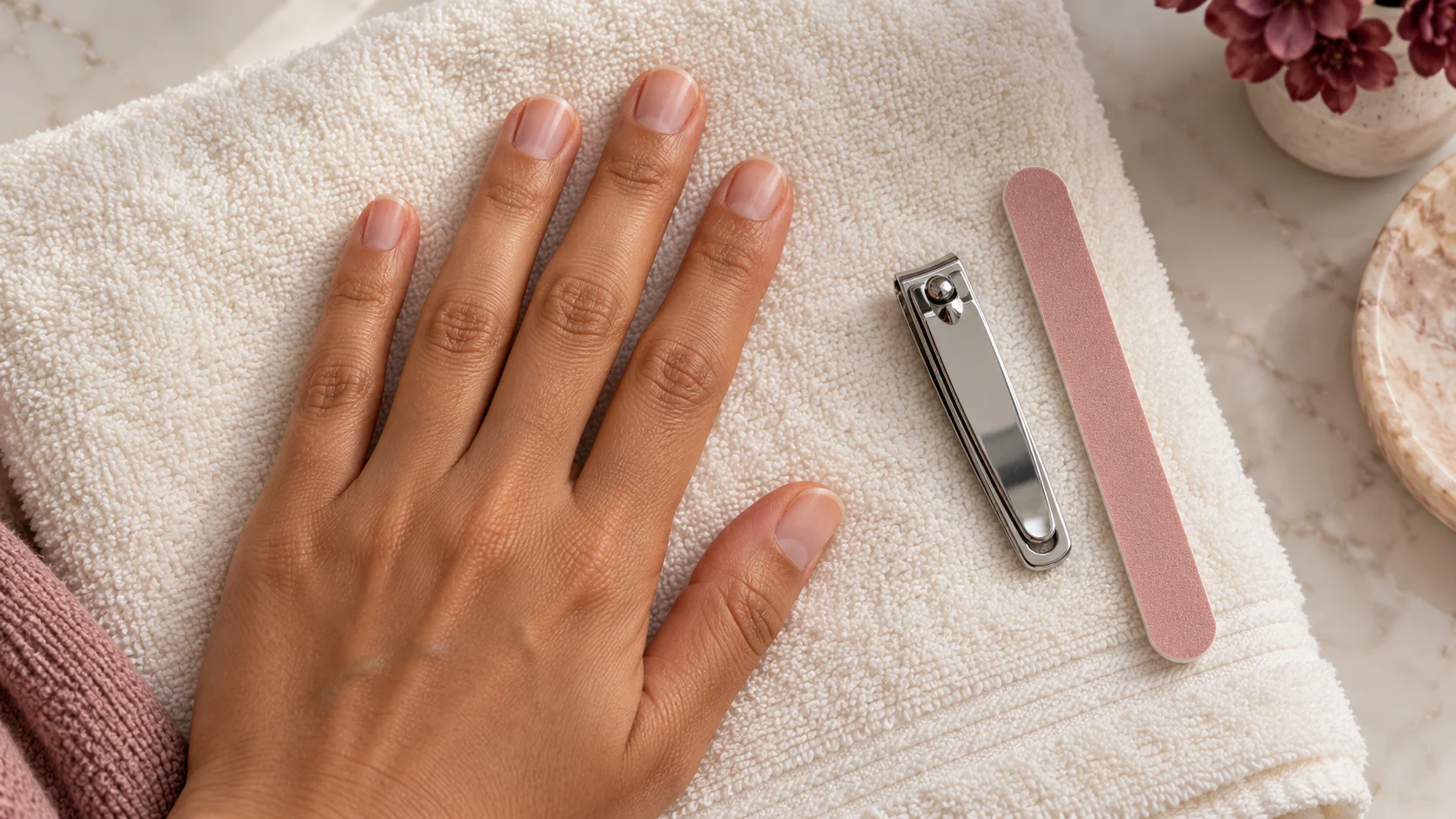
Start with what you can observe. Is the free edge peeling in layers, is there a crack in one place, or are several nails changing? When did you first notice it? Record the pattern without deciding that it must be a vitamin problem because an advert used the same photograph.
Include recent manicure services, removal methods and changes in daily tasks. A new cleaning routine or a period of repeated cosmetic work may be relevant background, but a timing connection does not prove causation. Keep the description neutral so a clinician can consider it alongside other information.
For unexplained changes or symptoms, consult the NHS guidance on nail problems and seek appropriate advice. A supplement purchase should not become a reason to postpone assessment while waiting for a promised result.
Ask what evidence supports the exact claim
There is a difference between evidence that a nutrient has a role in the body and evidence that extra amounts improve a particular person’s nails. Marketing can slide between those ideas without making the change obvious. Read the claim literally: what outcome, in which people, with which product?
The NIH Office of Dietary Supplements says evidence for biotin’s advertised hair, skin and nail benefits is limited. It describes a small number of nail studies and the need for further research. That does not establish that everyone with splitting nails should take biotin.
Look for the actual research behind a broad statement such as “clinically proven.” A study of one ingredient is not automatically a trial of the finished multi-ingredient product. A change reported by a small group does not tell you how reliably the same result would occur in other people.
| Claim feature | Ask | Why it matters |
|---|---|---|
| Named ingredient | Was this ingredient or the complete product studied? | The evidence may concern something different |
| Promised result | How was the nail outcome measured? | A testimonial is not a clear measurement |
| Study population | Who took part and why? | The participants may not resemble your situation |
| Safety information | What should my clinician know? | Supplements can matter to care decisions |
Keep photographs and testimonials in perspective
A before-and-after image can show a different manicure, lighting setup, nail length or camera angle as well as a passage of time. It cannot by itself establish that a supplement caused the change. Ask whether the comparison controls those differences and whether the result was measured independently.
A positive review can tell you what a customer reports, but it cannot diagnose why your nails split. Nor does a large number of enthusiastic comments replace information about the people studied, comparison groups or other changes made during the same period.
Notice whether the page makes it easy to find limitations. An informative explanation should distinguish what is known from what remains uncertain. You should not have to buy the product before discovering whether the promise applies only to a narrowly defined group.
Tell clinicians about biotin before blood tests
The FDA warns that biotin can interfere with certain laboratory tests, including some troponin assays used in heart-related assessment. The concern is an inaccurate test result, not simply whether the supplement seems to cause an obvious symptom.
Tell the clinician or testing team what you take, including the product name, amount shown on the label and when you last took it. Bring the packaging or a clear photograph if that is easier. Do not assume a beauty supplement is irrelevant because it was bought without a prescription.
Follow the testing team’s specific instructions. There is no single stopping interval offered here for all doses and assays. Do not delay urgent medical care to wait for a supplement to clear; tell the team about it when you seek help.
Make a complete product list
A useful list includes prescribed medicines, over-the-counter products and all supplements, even when their purposes overlap. Copy the names and label details accurately. A multivitamin and a separate hair-and-nail product may be easy to think of as unrelated purchases when discussing your routine.
Keep the list current when you start or stop something, and share it with a pharmacist or clinician who is advising you. If a product contains a blend you do not understand, bring the whole ingredient panel instead of guessing which component is the important one.
Do not change prescribed treatment because a supplement advert describes a more natural option. Ask the professional responsible for your care about any proposed change. The purchasing decision and the treatment decision should be based on the relevant information rather than the tone of the packaging.
Prepare a short consultation note
Write three headings: what changed, what I use and what I want to know. Under the first, record the affected nails and approximate timing. Under the second, include products and services as well as your supplement list. Under the third, ask whether assessment or a change in care is appropriate.
A useful question is: “Is there a reason to investigate this pattern before I buy a supplement?” Another is: “Could any product I take affect tests you might order?” These questions keep the conversation focused without assuming a particular deficiency or demanding a test that may not fit the situation.
Observe, question, disclose, decide
- Observe: describe the splitting and its timing.
- Question: check what the evidence actually studied.
- Disclose: tell clinicians about every supplement.
- Decide: use advice matched to your circumstances.
Read a product page without accepting its conclusion
Try separating the page into three parts: the description of the product, the evidence offered and the purchasing prompt. Write the claimed benefit in your own words before looking at the discount or subscription offer. Then ask which link, if any, supports that precise benefit for people with a similar concern.
If the evidence link leads only to a general explanation of nutrition, record that limitation rather than filling in the missing connection yourself. If the page refers to a study, check whether the participants, product and outcome are described clearly enough to discuss with a professional. You can leave the shopping decision unfinished while you seek that information. A countdown offer or a bundle price does not make uncertainty about your nail change any smaller.
Choose a realistic next step
You do not have to settle the whole problem in one shopping decision. The next useful step may be a clearer product history, a pharmacist conversation or a clinical appointment. If a clinician recommends a supplement for a specific reason, ask what outcome to expect and how the plan will be reviewed.
For everyday grooming alongside that decision, browse our Nail Care section. Keep cosmetic maintenance and clinical questions connected but distinct: a tidy outline can make daily life easier, while understanding a persistent change may require more than another bottle.
For the related parts of your care routine, read Brittle Nails: Everyday Habits to Review and When to Seek Advice, Why Nails Split at the Edges and How to Reduce Snagging and Nail Changes to Photograph and Discuss with Your GP. For the relevant product or service decision, see How to Read Nail Polish Ingredient and Safety Labels.
Common questions
Do splitting nails prove a vitamin deficiency?
A visible split does not establish its cause. Describe the pattern, timing, products and recent activities before drawing a conclusion. Seek advice for persistent or unexplained changes rather than using a supplement advert or an online photograph to diagnose yourself.
Is biotin proven to improve everyone's nails?
The evidence does not establish a universal benefit for everyone with a nail concern. Ask whether the studies concern the same ingredient, finished product and type of participant. An advertised outcome should not be assumed to apply to your circumstances automatically.
Should I choose a higher dose for faster results?
This guide does not recommend a dose or increasing one. Discuss the exact product and reason for taking it with an appropriate professional. A larger label number does not answer whether the supplement suits your situation or explains the nail change.
Why mention supplements before a blood test?
Some supplements, including biotin, can affect certain laboratory measurements. Give the testing team the product name, label amount and timing of use. Do not assume a beauty product is irrelevant simply because it was purchased without a prescription or feels harmless.
How long should I stop biotin before testing?
Ask the clinician or testing team for instructions matched to the product and test. No universal interval is provided here. Do not postpone urgent care while waiting to stop a supplement; disclose what you take when you seek help.
Can a before-and-after photograph prove a benefit?
A photograph alone cannot separate a supplement’s effect from lighting, manicure changes, nail length and other factors. Ask how the outcome was measured and what comparison was used. A customer’s positive experience may be sincere without establishing what will happen for you.
What should I include in a supplement list?
Include every supplement alongside prescribed and over-the-counter medicines, using exact names and label details. Bring packaging or photographs if easier. Update the list when anything changes so the professional advising you does not have to guess what a product contains.
What is a useful first question for a pharmacist or GP?
Explain the nail change and ask whether its pattern needs assessment before buying a supplement. Share the timing and product history, then ask how any current supplements might affect care. This opens a focused conversation without assuming a particular deficiency or test.
Sources and further reading
- NIH ODS — Biotin consumer fact sheet — checked 2026-10-21
- FDA — Biotin interference with laboratory tests — checked 2026-10-21
- NHS — Nail problems — checked 2026-10-21