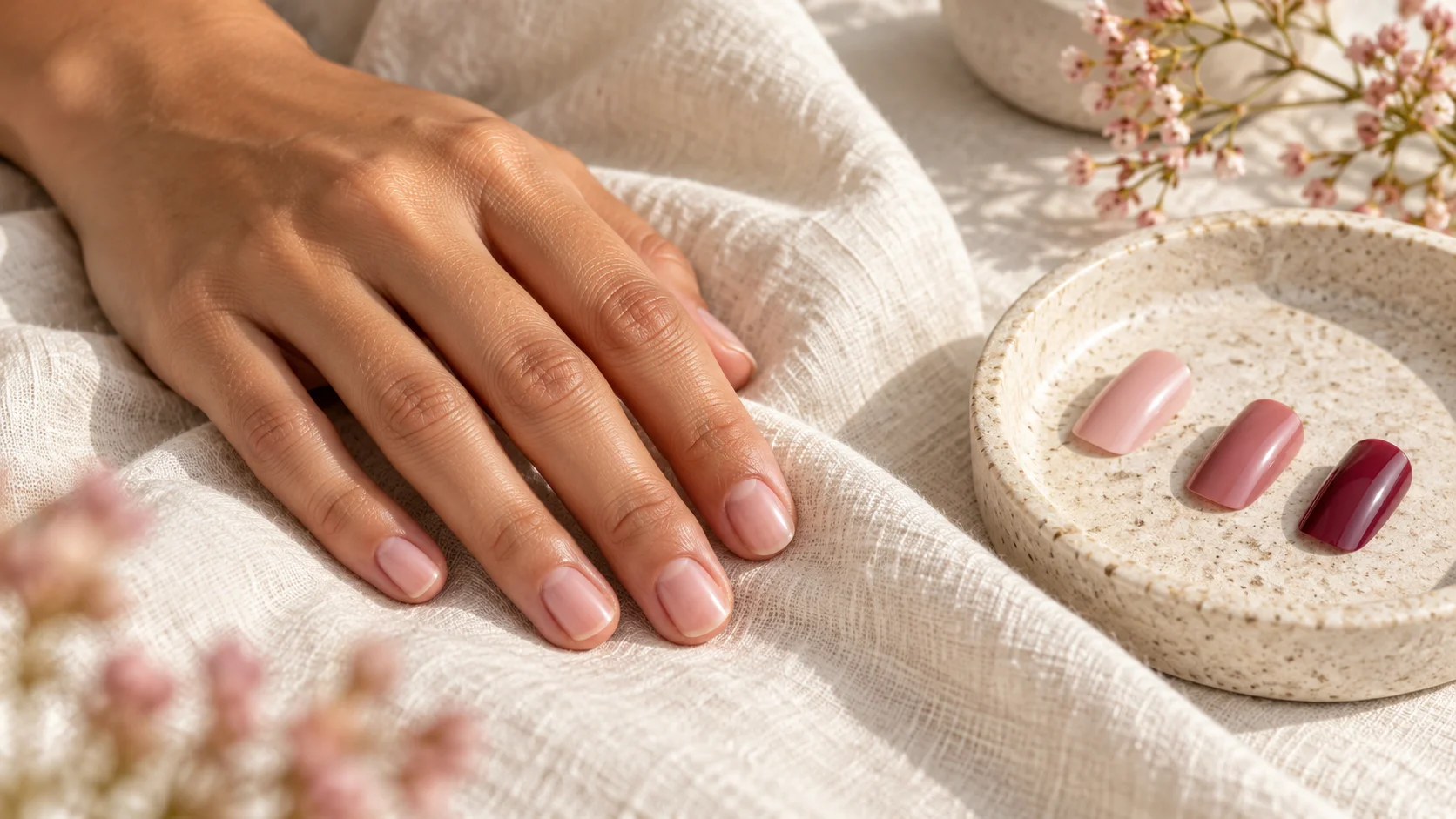
Nail Buffing: What It Does and Why a Light Touch Matters
Separate edge filing from surface buffing, read tool instructions and avoid polishing away unexplained nail changes.
Archive edition: 2026-08-10 · This is an editorial allocation, not the first-publication date.
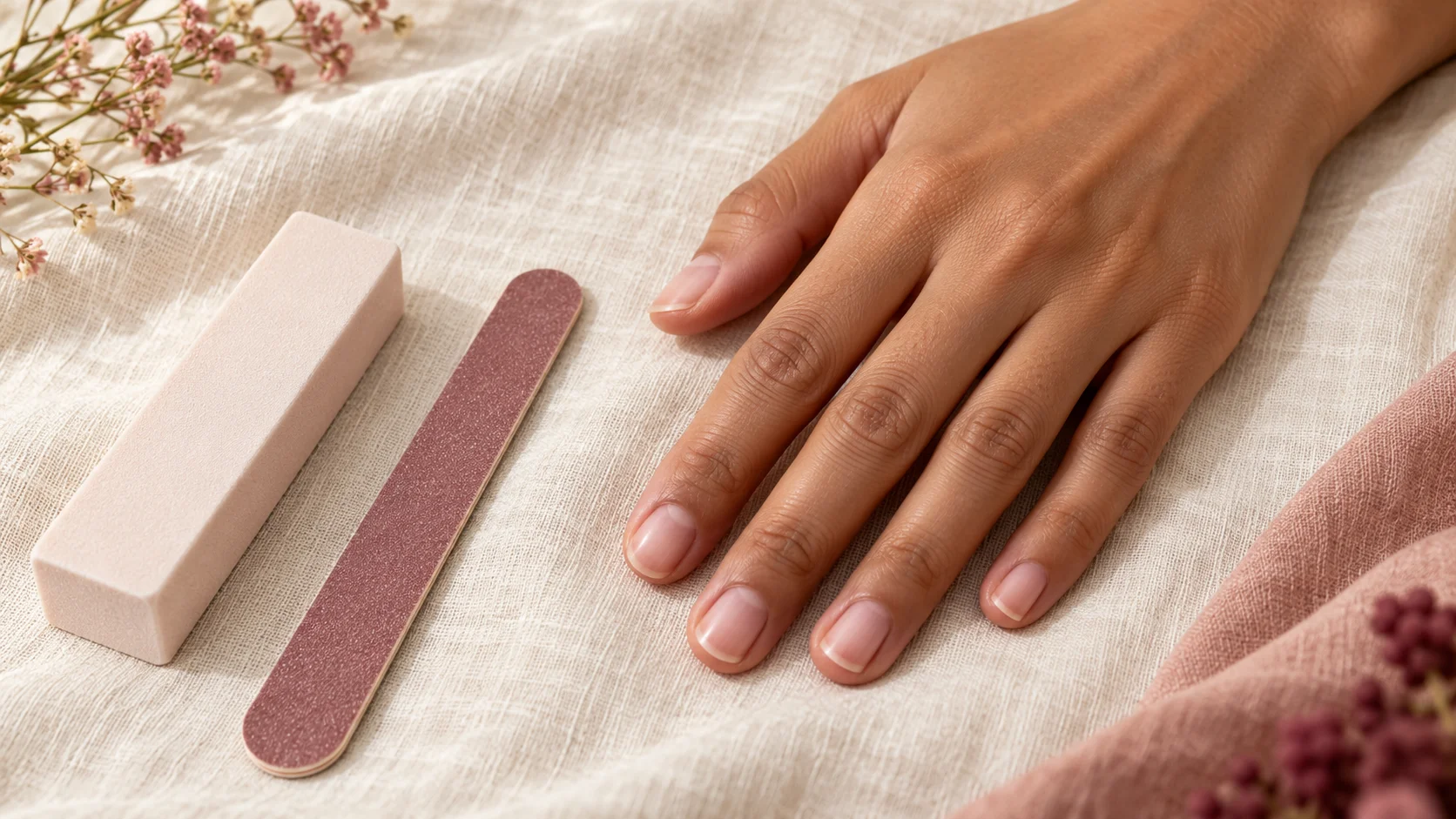
Key takeaways
- Purpose: name the actual change you want.
- Surface: distinguish the free edge from the nail plate.
- Instructions: check the exact tool and intended use.
- Endpoint: accept a natural finish and stop if uncertain.
In this guide
- Key takeaways
- Identify the part of the nail you want to change
- Read what the tool is actually designed to do
- A light touch includes knowing when not to start
- Do not use shine as a health score
- Keep new nail changes visible for assessment
- Purpose, surface, instructions, endpoint
- What to ask when a buffer comes in a set
- Build a smaller, clearer grooming routine
- Common questions
- Sources and further reading
Nail buffing changes the surface of a nail; filing usually changes its edge or outline. That distinction matters when you pick up a block with several numbered sides. A tool that promises a smooth finish is not automatically suitable for every nail, and an uneven surface is not a reason to keep working until it disappears.
For a home manicure, start with the result you want. Tidying a snag, changing a shape and creating shine are different jobs. This guide helps you separate them, interpret a tool’s instructions and decide when leaving the surface alone is the more sensible choice.
Identify the part of the nail you want to change
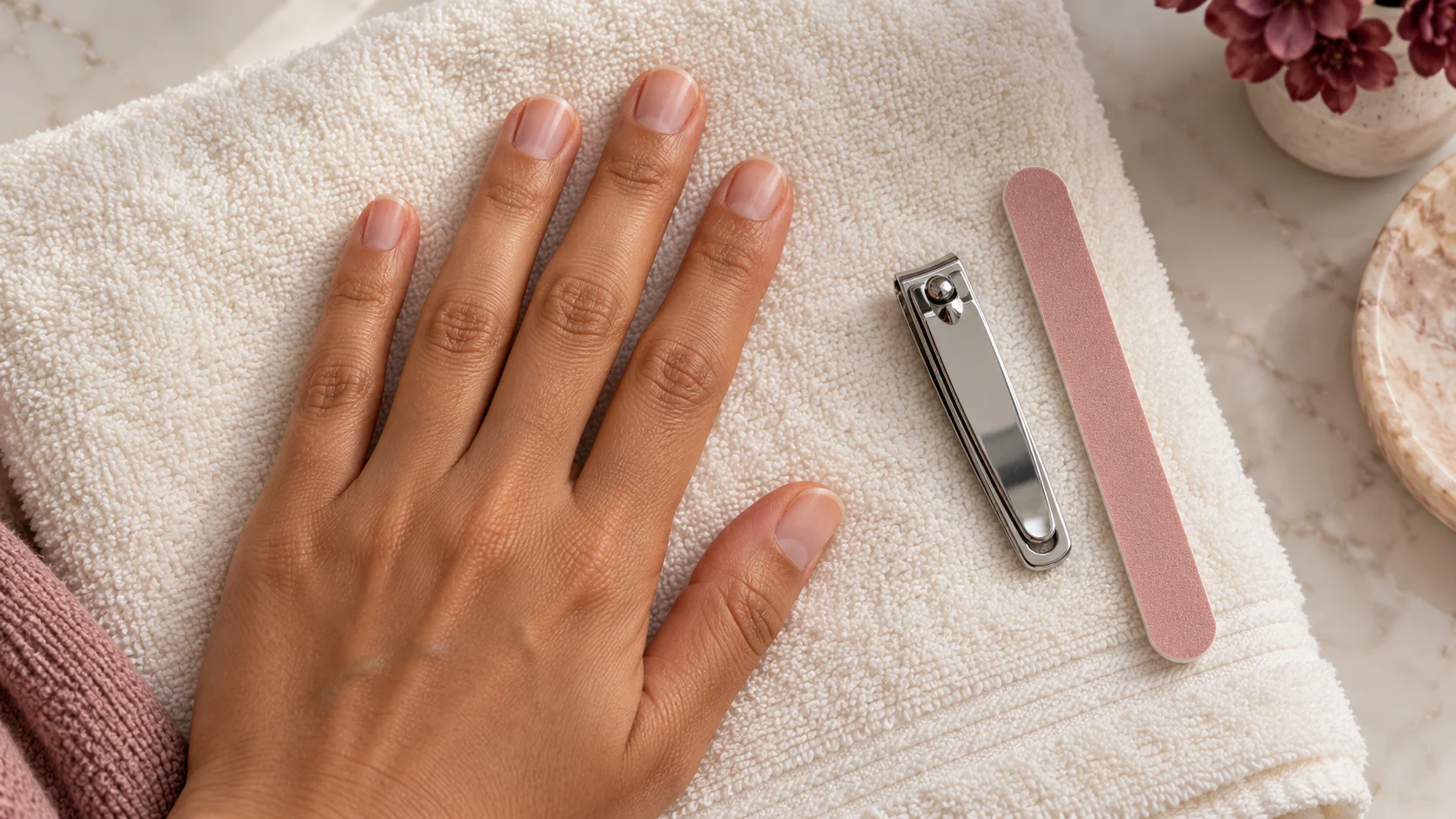
The free edge is the part extending beyond the fingertip. A rough corner there may need a small shaping adjustment. The visible plate is the broad surface where colour sits. Passing an abrasive over that surface is a different operation from smoothing an edge, even when the same object could physically reach both.
Make your aim specific before you begin: “This corner catches on fabric” is more useful than “My nails need fixing.” Look in ordinary daylight and avoid judging the finish only under a magnifying lamp. A close-up photograph can make normal texture look like a much larger cosmetic problem than it appears in daily life.
The AAD’s trimming guidance describes gentle edge shaping as part of routine grooming. It does not mean that the whole nail surface needs to be polished whenever you shorten the tips. Keep the two tasks separate in your kit and your routine.
Read what the tool is actually designed to do
Names such as buffer, polisher and finishing file can appear on quite different products. Read the manufacturer’s description of the intended surface, each side’s purpose and any limitations. Packaging matters more than the colour of a block or the fact that a similar-looking tool appeared in a salon video.
For example, OPI describes its Flex Silver 100/180 Buffer as a tool for refining nail enhancements. That is a product-specific purpose, not an endorsement of those grits for routine buffing of every bare natural nail. A number alone cannot tell you whether the tool fits your situation.
If you have thrown away the instructions, look up the exact item rather than borrowing directions from another brand. A generic multi-sided block with no identifiable maker or guidance leaves you guessing about its purpose. You can choose not to use it while you resolve that uncertainty.
| What you notice | What to establish | A useful next step |
|---|---|---|
| A catching free edge | Is the issue limited to the tip? | Consider a gentle edge adjustment |
| A less glossy surface | Do you actually want a different finish? | Leave it natural if you prefer |
| An unfamiliar buffer | Natural nail or enhancement use? | Find the exact instructions |
| A new ridge or colour change | Does this need assessment? | Seek advice before disguising it |
A light touch includes knowing when not to start
The phrase “light touch” should not become permission to work repeatedly over the same area. In this guide it means a conservative decision about whether surface work is needed at all. There is no universal number of strokes or weekly schedule that makes every buffer appropriate for every person’s nails.
If your nails already feel tender or unusually thin, do not treat extra surface work as a way to make them look finished. Explain the concern to a suitable professional instead. Likewise, do not try to remove an unfamiliar patch by increasing pressure until the colour changes.
At a salon, ask what step is being performed and why. “Are you shaping the edge, preparing an enhancement or polishing my natural nail?” gives the provider a clear question to answer. You can ask for a simpler service when you do not want a particular cosmetic finish.
Do not use shine as a health score
A glossy surface can be an aesthetic preference, but it is not a diagnosis. Nor does a matte-looking nail prove that you have neglected it. Lighting, products and photography all affect the appearance of a manicure, so a highly polished reference should not become a compulsory target for bare nails.
Choose an endpoint that makes sense to you. A neat free edge and comfortable surrounding skin may be enough for an everyday groomed look. You do not have to complete every side of a multi-step block merely because the sides are numbered.
When comparing photographs, check whether they show bare nails, a clear coating or a full enhancement. Those finishes can look similar in a small image. Ask the creator or provider what was used instead of assuming that intensive buffing produced the result.
Keep new nail changes visible for assessment
The NHS advises getting help for unexplained nail changes and for sore, warm or swollen skin around a nail. Buffing is not a way to identify the cause. Record when a change appeared and what products or services preceded it.
A clear photograph can support that history, but it cannot replace an assessment. Take it before any new cosmetic work, in consistent lighting, with the affected nail easy to identify. Avoid altering contrast or smoothing the image if you intend to show it to a clinician.
Do not let an upcoming event force the decision. Tell the salon about the concern before arriving so the appointment can be adjusted. A postponed decorative finish is easier to arrange when the provider knows the situation in advance.
Purpose, surface, instructions, endpoint
- Purpose: name the actual change you want.
- Surface: distinguish the free edge from the nail plate.
- Instructions: check the exact tool and intended use.
- Endpoint: accept a natural finish and stop if uncertain.
What to ask when a buffer comes in a set
A set may include several items whose purposes are not obvious from their shape. Before the first use, make a short list of each item and the job assigned to it by the manufacturer. If the instructions describe preparation for a coating you do not use, that step may have no place in your ordinary natural-nail routine.
For example, someone who only wants to tidy a catching corner does not need to recreate an entire enhancement-preparation sequence. Put the unused tools aside instead of treating the set as a checklist that must be completed. If you book a professional manicure, bring the specific question about the corner and agree the desired finish. That conversation gives the appointment a clear purpose and makes it easier to decline unnecessary cosmetic steps.
Build a smaller, clearer grooming routine
Keep tools in their packaging or save a photograph of their instructions. Label a storage compartment by the job it serves, such as edge filing, rather than keeping several unidentifiable abrasives together. This makes it easier to choose deliberately the next time you tidy your nails.
Review the routine after a manicure without judging it only by shine. Was the outline comfortable? Did you understand each step? Was there an unwanted change? Those observations are more useful for your next appointment than trying to reproduce a photograph at any cost.
Our Nail Care section covers related grooming choices. Use buffing as an optional cosmetic decision within that wider routine, with the tool’s intended purpose and the condition of your own nails guiding what happens next.
For the related parts of your care routine, read How to Trim and File Natural Nails Without Overdoing It, Nail Peeling After a Manicure: Gentle Care and Warning Signs and Looking After Natural Nails After Removing Extensions. For the relevant product or service decision, see Nail File Grit Numbers: What to Check Before Filing Natural Nails.
Common questions
Is buffing the same as filing?
They are different tasks. Filing commonly changes the free edge or outline, while buffing works on the surface. Identify the result you want before choosing a tool, and do not assume a device suitable for one task suits the other.
Do natural nails need a glossy finish?
A glossy finish is an aesthetic choice, not a requirement for a well-groomed appearance. You can choose a neat outline and leave the surface natural. A photograph showing shine may also include a clear coating or enhancement rather than buffing alone.
Can I use every side of a buffer block?
Only use a side when its instructions and intended purpose match your situation. Numbered sides do not create an obligation to complete every step. If the exact tool or the condition of your nails leaves you uncertain, do not guess.
How often should I buff my nails?
There is no universal schedule offered here. The exact product, its intended use and your nails matter more than a weekly beauty timetable. Ask a suitable professional if you are unsure whether any surface work is appropriate for your current concern.
Can a buffer remove a new ridge?
A new or unexplained ridge should not become a target to erase before you understand it. Record the change and seek appropriate advice. Cosmetic smoothing cannot establish its cause, and a more even appearance would not answer that underlying question.
Does a higher grit number guarantee safety?
A number is only part of the product information. Check the manufacturer’s intended surface and directions for the exact item. Do not use a grit comparison chart as a substitute for understanding whether a tool is meant for natural nails or enhancements.
What should I ask at a salon?
Ask which surface is being worked on, what the step is intended to achieve and what finish you can expect. Mention tenderness or other changes before work begins. Agreeing the purpose helps you choose a simpler service where appropriate.
What if my nail feels sore during buffing?
Stop the cosmetic step rather than trying to finish a sequence. Describe the discomfort and seek appropriate advice, particularly if it persists or accompanies other changes. Do not add more products or pressure merely to achieve the appearance originally planned.
Sources and further reading
- OPI — Flex Silver 100/180 Buffer — checked 2026-10-21
- AAD — How to trim your nails — checked 2026-10-21
- NHS — Nail problems — checked 2026-10-21