Gel Overlay vs Extensions: Choosing Length and Support
Separate existing nail length from added length, then choose a service around appearance, daily tasks and realistic maintenance.
Archive edition: 2026-05-23 · This is an editorial allocation, not the first-publication date.
Key takeaways
- Length: decide whether the natural free edge is enough.
- Structure: match the service to a suitable product.
- Routine: account for tasks and maintenance.
- Exit: know the removal plan before application.
In this guide
- Key takeaways
- Identify the length you already have
- Understand what structural support means in a service
- Respect product-specific length limits
- Use your ordinary week as a design constraint
- Compare maintenance before committing to added length
- Keep cosmetic support separate from nail-health claims
- Agree the end of the service as well as the beginning
- Length, structure, routine, exit
- Write the booking brief in everyday language
- Common questions
- Sources and further reading
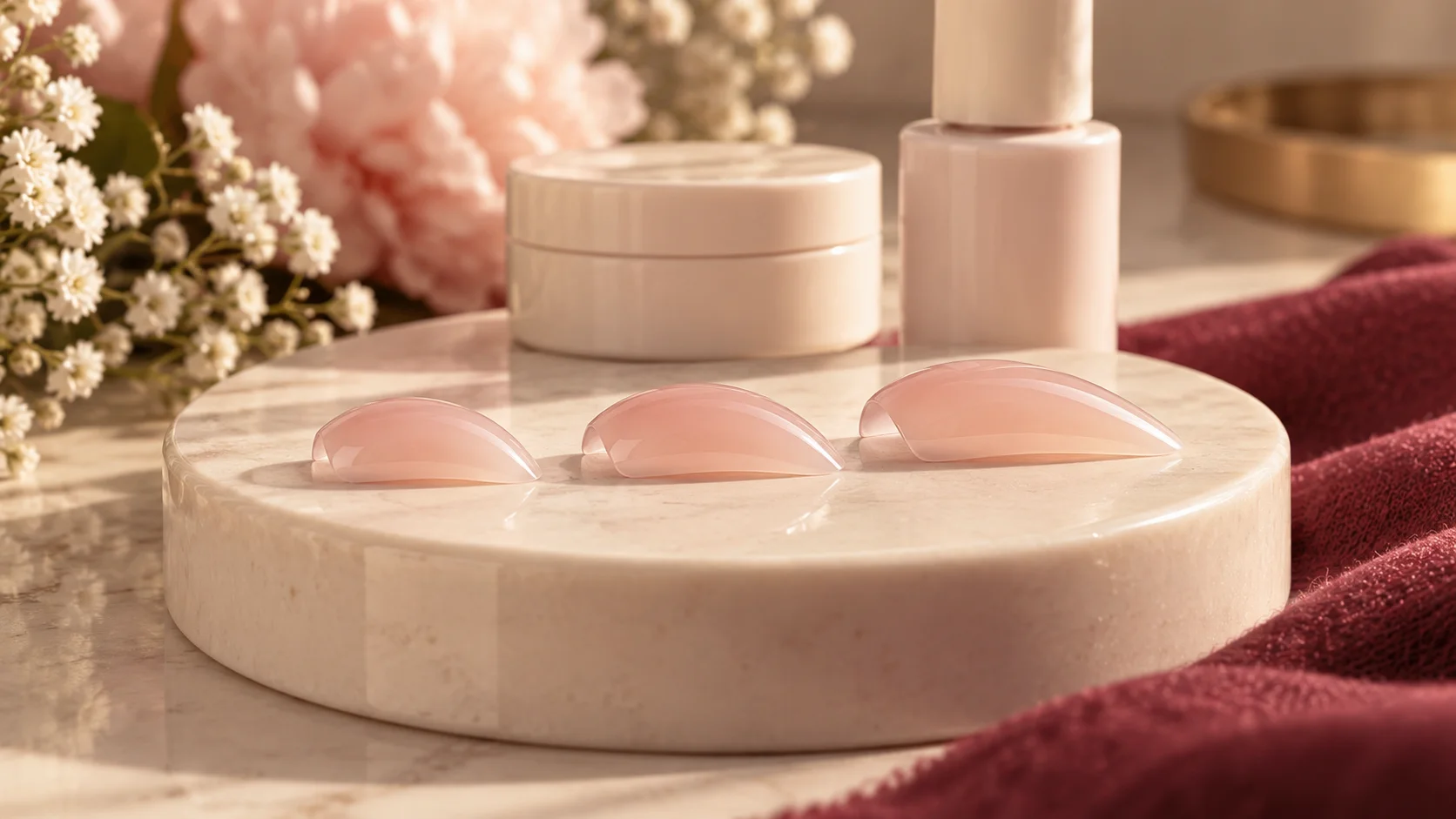
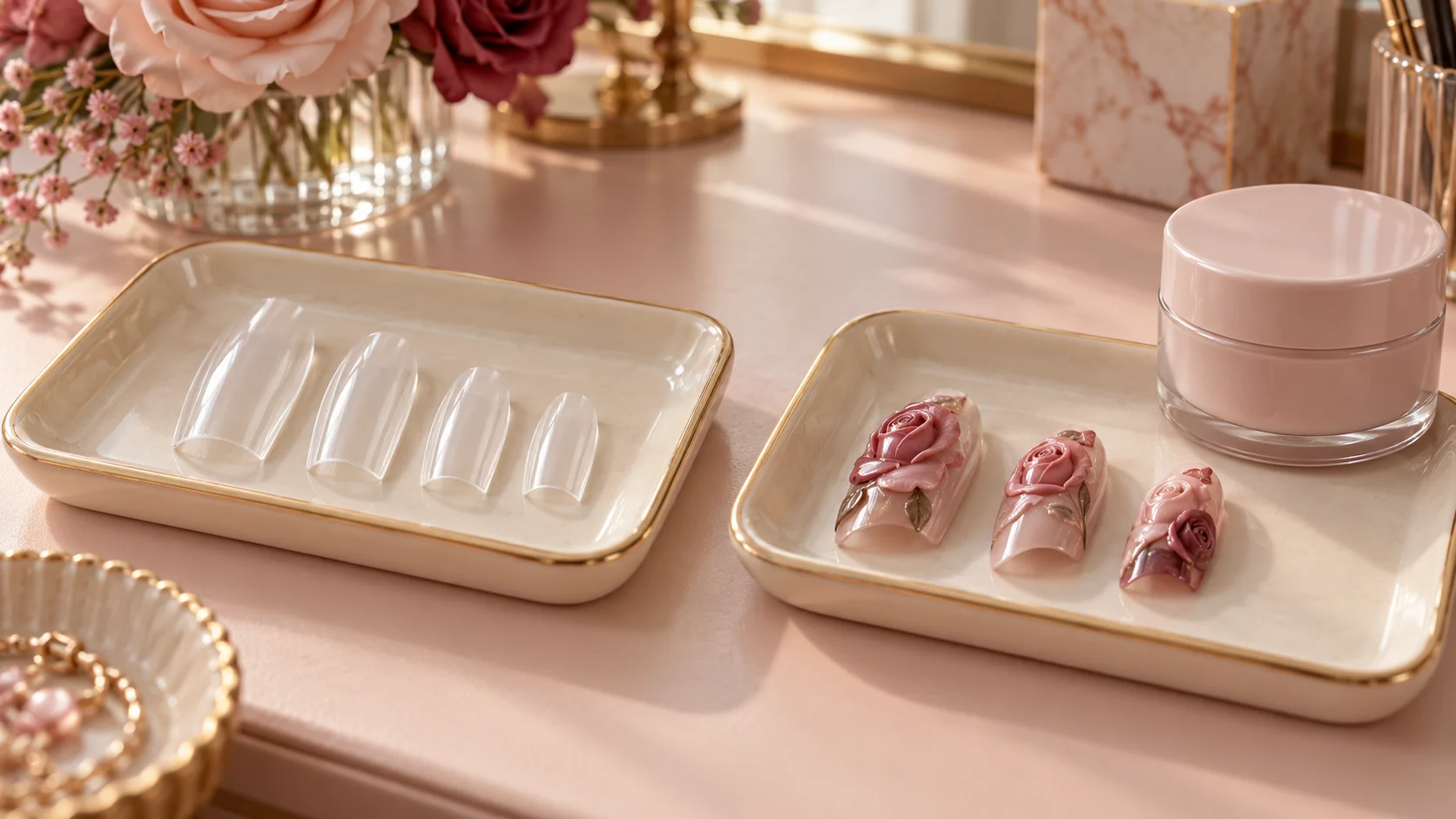
A gel overlay works over your existing natural nail, while an extension adds length beyond it. That is the first distinction to make when booking. Neither term tells you the exact product, the finished shape or the maintenance plan, so the next step is to connect the service to the result you actually want.
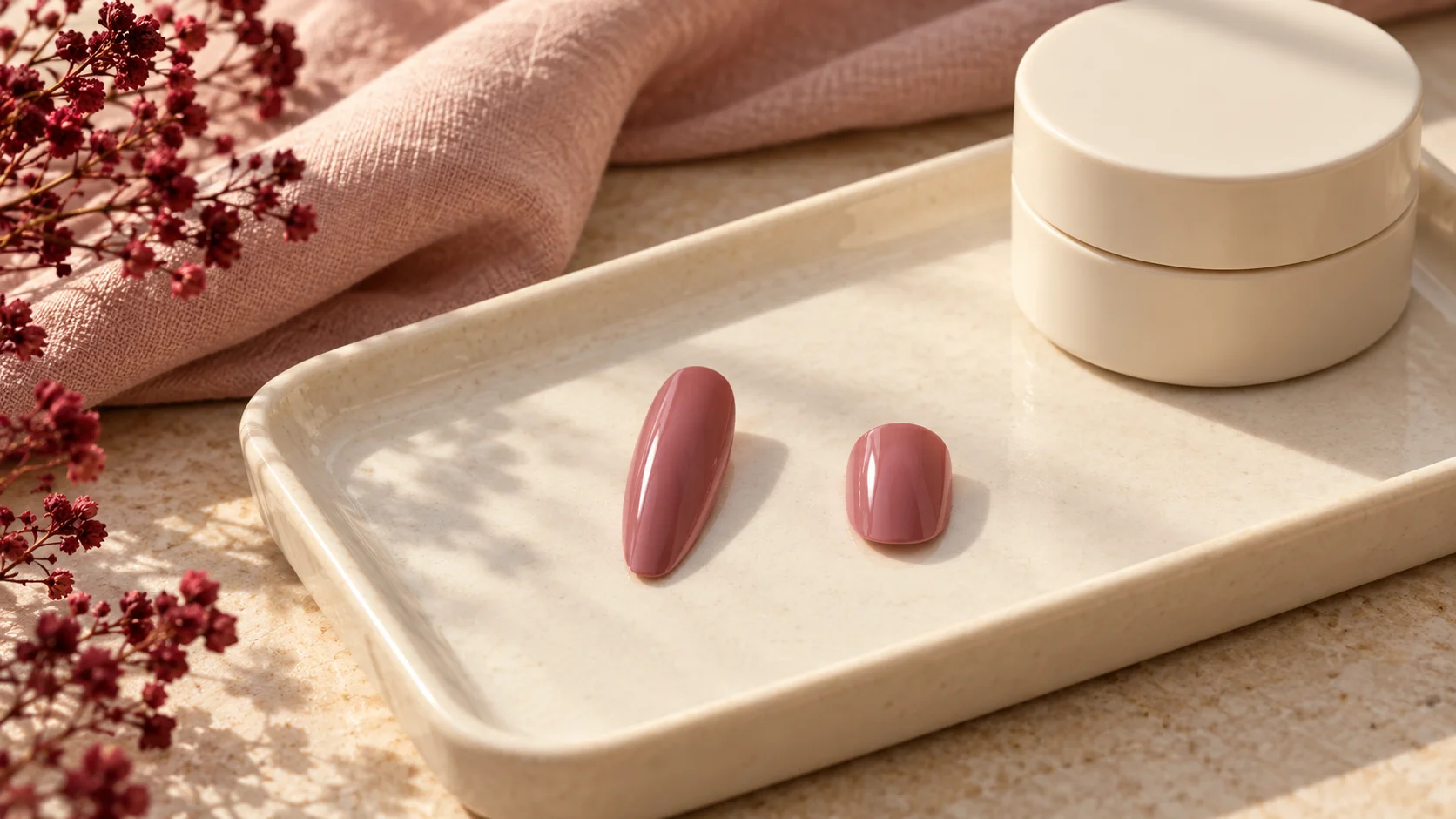
You may want a short polished look, a different profile at your current length or more free edge for a particular design. Explain those preferences separately. A clear discussion of length and structure is more useful than choosing the most dramatic service name on the menu.
Identify the length you already have
Look at your natural free edge before selecting a reference. An overlay can follow the length already present; it does not automatically create the extra reach shown in a photograph of long enhancements. If added length is central to the design, make that explicit.
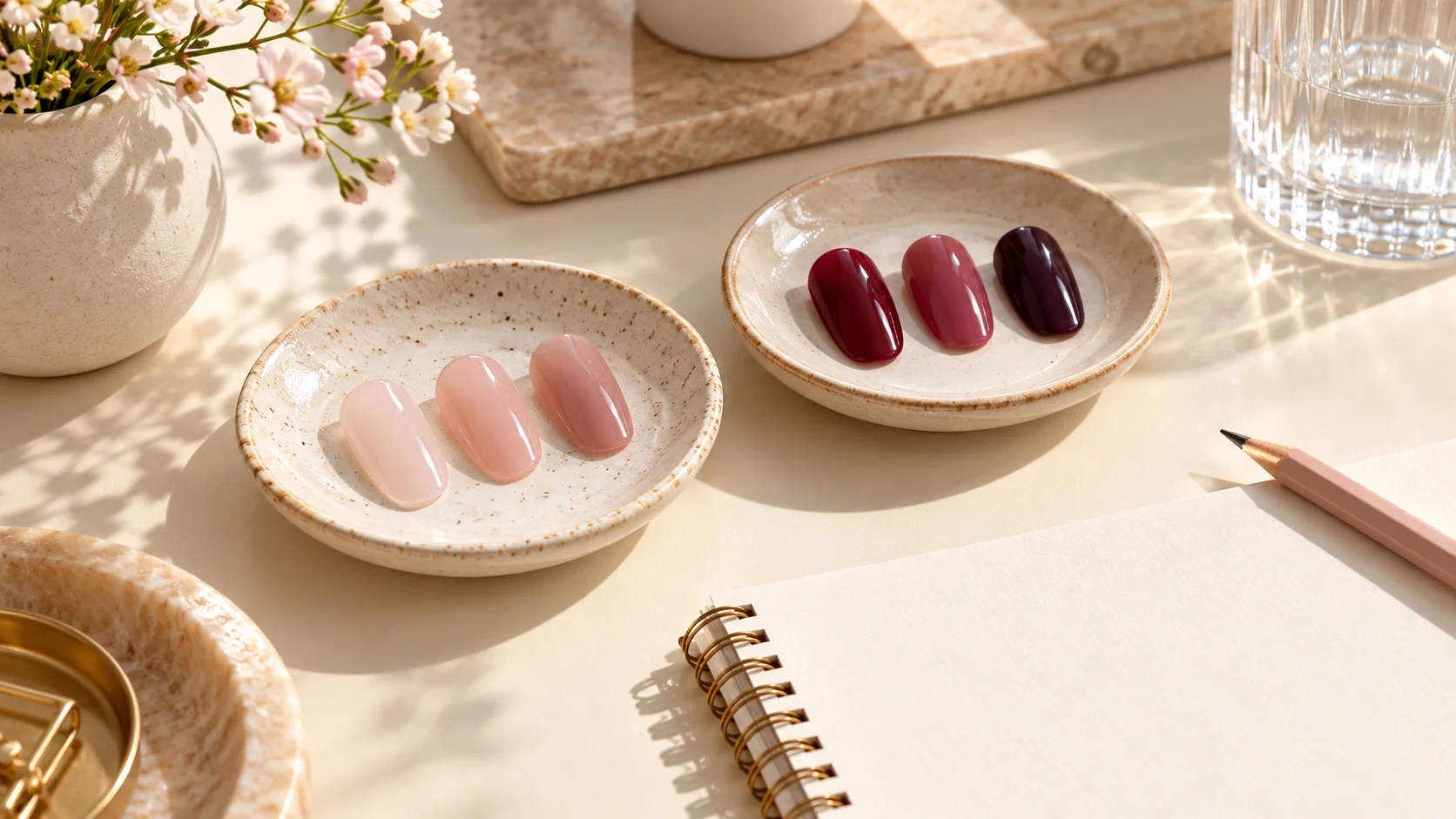
You can still request a substantial visual change without adding length. Colour, outline and decorative placement affect the appearance of a short manicure. Ask the provider how the reference could be adapted to your current nails before assuming extensions are required.
If your nails differ in length, discuss that too. Decide whether you want an entirely matched outline or are comfortable with a small variation. The provider can explain the service options rather than treating one shorter nail as an automatic reason to extend the whole set.
Understand what structural support means in a service
A builder product is shaped to create the intended cosmetic structure. That is a different discussion from choosing the visible shade. An overlay may have a subtle finish while still involving a structural product, and an extension may be finished in either a sheer or opaque colour.
CND distinguishes Shaper and Builder uses within its PLEXIGEL system, including overlays and different enhancement lengths. The example illustrates that product selection depends on the intended structure. It does not make one named product a universal solution for every client’s nails.
Ask the provider what the proposed structure is intended to achieve and how it relates to your length. You do not need to prescribe technical dimensions. You do need to understand whether the service matches the appearance and practical requirements you have described.
Respect product-specific length limits
The GelBottle’s extension guidance sets length expectations for the products it discusses. Current instructions for the exact variant take priority, particularly as ranges change. A builder label alone does not mean unlimited extension length is appropriate.
Show a reference close to the length you intend to wear and ask what the salon can provide with a suitable system. If the provider recommends adapting the length, ask for the reason. A clear explanation helps you decide whether to modify the design or choose another service.
Do not ask a provider to recreate an extreme reference outside the supported use of a product simply because it is the only system on the menu. The design should fit the actual service, rather than the service being forced to match a photograph.
| Decision | Overlay discussion | Extension discussion |
|---|---|---|
| Length | Work with the existing natural free edge | Agree how much length will be added |
| Structure | Confirm the intended profile over the nail | Confirm the system supports the proposed enhancement |
| Design | Adapt spacing to the available area | Plan proportions at the chosen added length |
| Daily tasks | Review comfort at the current outline | Consider how a new length changes familiar tasks |
| Upkeep | Ask about maintenance and removal | Ask about maintenance and removal |
Use your ordinary week as a design constraint
Think about typing, fastening clothes, handling small objects, wearing gloves and any work or sport requirements. A length that looks appealing for a photograph may feel unfamiliar during those activities. Describe the tasks that matter rather than seeking a universal ideal length.
If you have never worn extensions, discuss a manageable starting point. You do not need to choose the longest version of a design to try the look. Colour and placement can create an intentional result at a more modest length.
Check explicit rules with the relevant workplace or activity provider. Do not ask the salon to guess a policy, and do not modify required protective equipment to accommodate a manicure. Bring the actual restriction into the design discussion.
Compare maintenance before committing to added length
Ask what the next appointment involves and how the provider decides when maintenance is needed. Include your ability to return and any upcoming travel. A service should fit the time you can realistically give it, rather than relying on an ideal schedule that will be difficult to maintain.
Discuss what to do if an individual nail catches, breaks or becomes uncomfortable. Save the product name and contact route. A routine maintenance question and an injury are different situations; describe symptoms clearly instead of asking only how to make the set look even again.
Consider the complete cost. Initial application, colour, art, maintenance and removal may be quoted separately. An overlay is not automatically the cheaper option in every menu, and an extension quote may include work another salon lists as an extra.
Keep cosmetic support separate from nail-health claims
The AAD cautions that artificial-nail preparation and removal can affect natural nails and that covering damaged nails can worsen problems. Neither an overlay nor an extension should be chosen as a shortcut around an unexplained health concern.
If a nail is painful or changing, seek appropriate advice before applying another covering. Tell the salon about any instructions you have received. A product described as strengthening does not diagnose the reason for splitting or establish that it is suitable for every condition.
Judge cosmetic claims carefully. A glossy finished nail shows the appearance of the service, not proof of a treatment outcome. Before-and-after images may illustrate added length or colour, but they cannot alone establish improved nail health.
Agree the end of the service as well as the beginning
Ask how the exact product will be removed and whether that requires a separate appointment. An overlay is not automatically a simple home-removal task, and added length does not identify the underlying system. Keep the manufacturer’s product identity in your record.
If you plan to change salons, share that information before booking maintenance or removal elsewhere. Another provider needs more than a shade name. Do not peel or file away an unfamiliar product to make the new appointment easier.
Length, structure, routine, exit
- Length: decide whether the natural free edge is enough.
- Structure: match the service to a suitable product.
- Routine: account for tasks and maintenance.
- Exit: know the removal plan before application.
Write the booking brief in everyday language
For an overlay, you might say: “I want to keep my current short length and have a neat sheer finish.” For extensions, you might say: “I would like a modest amount of added length in this shape, with upkeep I can manage.” Add your practical constraints and any current product.
Ask the provider to confirm the system, included work and follow-up. Our Gel & BIAB guides cover related terminology, but the useful final decision is specific to your appointment. Choose the service whose length, appearance and maintenance make sense for your own hands.
Before settling the service plan, compare Builder Gel vs Hard Gel: Questions to Ask Before Booking, Soft Gel Tips vs Sculpted Extensions: A Client’s Comparison and Moving from Long Extensions to a Short Gel Overlay. For the related everyday care or design question, see Choosing a Comfortable Nail Length for Work, Sport and Hobbies.
Common questions
Does an overlay add length beyond my nail?
An overlay works over the existing natural nail, while an extension adds length beyond it. Explain which result you want before booking. The exact product and finishing options still need discussion, because the service term alone does not specify the whole manicure.
Can an overlay still look noticeably different?
Colour, outline, profile and decorative placement can change the appearance without adding length. Ask how a reference could be adapted to your current nails. You do not need extensions simply because the finished look you admire appears polished or carefully shaped.
Can any builder product create any extension length?
No general builder label establishes unlimited length capability. Follow the supported uses of the exact system and discuss the intended result with the provider. A design reference may need adaptation when its length exceeds what the proposed product and service are intended to create.
What if my natural nails are uneven in length?
Discuss whether you want a fully matched outline or can accept a small variation. One shorter nail does not automatically decide the service for the entire set. Ask the provider to explain suitable options and their preparation, maintenance and removal implications.
Are overlays always cheaper than extensions?
Prices depend on what the salon includes, so compare the actual work rather than assuming a universal order. Existing-product removal, colour, art and maintenance can be separate. Ask for a clear quote and the follow-up plan before making the decision.
Which choice is better for work or hobbies?
Consider the required length, glove fit, hand tasks and any explicit activity rules. Give the provider the actual constraints rather than asking them to guess. The better fit is the service you can manage comfortably while meeting those practical requirements.
Can an overlay treat a damaged nail?
Do not choose a covering as a substitute for assessing a painful or unexplained change. A cosmetic support claim does not diagnose the underlying concern. Follow relevant clinical advice and tell the provider before deciding whether any service should proceed.
Does the service name tell me how to remove it?
Neither overlay nor extension identifies the exact product or removal process. Save the system name and arrange a suitable plan before application. If you change providers, share those details instead of peeling or filing unfamiliar product away to prepare for the appointment.
Sources and further reading
- CND — PLEXIGEL system questions — checked 2026-10-21
- The GelBottle — Extending with BIAB — checked 2026-10-21
- AAD — Reducing artificial nail damage — checked 2026-10-21