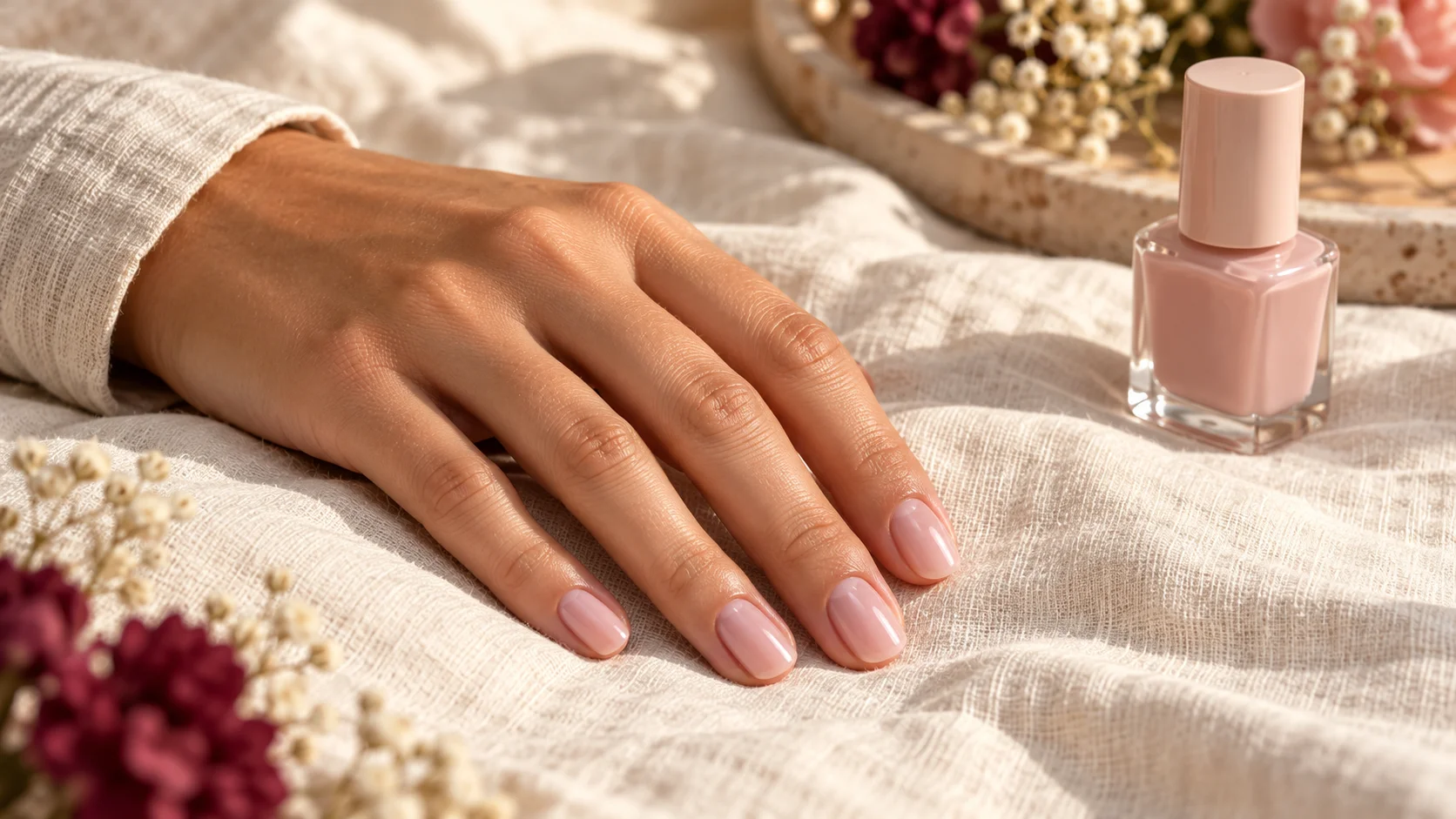
Sheer Gel vs Opaque Gel Colour: Coverage and Regrowth Compared
Compare visible coverage, colour contrast and regrowth appearance while keeping product application and maintenance separate from style.
Archive edition: 2026-09-02 · This is an editorial allocation, not the first-publication date.
Key takeaways
- Tone: choose the colour family separately.
- Transparency: decide how much underlying detail to show.
- Contrast: consider the look of the boundary as nails grow.
- System: confirm products and maintenance regardless of coverage.
In this guide
- Key takeaways
- Separate transparency from shade depth
- Decide how much natural-nail detail you want visible
- Keep shimmer separate from coverage
- Understand why regrowth can look different
- Do not equate extra thickness with better colour
- Compare the whole finish, including the base
- Use references to describe an effect, not demand a recipe
- Tone, transparency, contrast, system
- Common questions
- Sources and further reading
Sheer and opaque gel colours create different visual effects, even when they belong to the same pink or neutral family. A sheer finish allows more of the underlying nail to remain visible; an opaque finish gives a more solid colour impression. Neither description tells you the entire product system or maintenance plan.
Choose according to the appearance you enjoy and the amount of visible detail you want. Then confirm how that finish will be achieved with the actual products. Coverage is a styling decision, not proof of a healthier nail, correct curing or a longer interval between appointments.
Separate transparency from shade depth
A pale colour is not necessarily sheer, and a deeper colour is not necessarily opaque. A creamy pastel may cover the underlying nail strongly while a transparent berry tint allows detail to show through. Ask about both the colour family and coverage.
Look at finished samples against a comparable background where possible. A translucent product on a white tip can appear different from the same style over a natural nail. Ask what the sample represents rather than treating every display stick as an exact preview.
If you want a barely-there tint, say that. If you want an even block of colour, explain that too. The provider can then discuss suitable options without interpreting “light pink” as a complete instruction.
Decide how much natural-nail detail you want visible
With a transparent finish, the underlying nail and free edge can remain part of the design. Some people enjoy that softer appearance; others prefer the more uniform visual effect of opaque colour. Neither preference needs to be justified as more natural or more polished.
Explain whether you like seeing the free-edge line or would rather minimise that contrast. A sheer option may not produce the visual uniformity you expect from an edited reference. Discuss the realistic result before application rather than asking for repeated extra layers afterwards.
Do not use opaque colour to postpone attention to an unexplained nail change. A cosmetic coating can alter what is visible without explaining the cause. Raise a current concern before the service and seek appropriate advice where needed.
Keep shimmer separate from coverage
Shimmer describes a light-catching effect, while sheer describes transparency. A finish can be both, or it can be glossy without visible shimmer. If a photograph looks luminous, ask which quality is responsible for the effect you like.
The GelBottle’s Sheer BIAB FAQ distinguishes sheer shades from shimmer choices within that collection. This is useful vocabulary for a consultation, but it does not mean every brand uses identical labels or that the sample will look the same under every light.
Move a finished sample under ordinary lighting to see whether the effect is a smooth reflection or visible sparkle. If you want a quiet everyday finish, describe that preference directly. Do not rely on the word “subtle” alone, because people use it for different amounts of contrast and shimmer.
| Feature | Sheer direction | Opaque direction |
|---|---|---|
| Underlying detail | More likely to remain visible | More visually covered |
| Colour impression | Tint influenced by the background | More solid colour impression |
| Regrowth contrast | May appear softer with a close colour match | May appear clearer with strong contrast |
| Shimmer | Possible, but separate from transparency | Possible, but separate from coverage |
| Maintenance | Still follows the actual service | Still follows the actual service |
Understand why regrowth can look different
As the natural nail grows, the area near its base becomes more visible beside the existing coating. A colour close to the surrounding appearance can make that boundary less visually prominent than a strongly contrasting shade. This is an observation about contrast, not a claim that the nail grows more slowly.
A sheer pale pink may look softer at that boundary for one wearer, while a deeper translucent shade may still show a clear difference. Likewise, an opaque neutral close to the person’s preferred natural look may be visually quiet. Transparency is only one part of the effect.
Do not extend maintenance solely because the gap is less noticeable. Product condition and the agreed service plan still matter. A subtle colour can change how regrowth looks without changing the responsibilities that come with wearing the manicure.
Do not equate extra thickness with better colour
If a colour is less solid than expected, ask whether another shade or suitable colour product would better match the brief. Do not direct extra thick application simply to obscure the underlying nail. Coverage needs to be achieved within the relevant system instructions.
Aprés warns for its pigmented Gel Couleur that excessive thickness can interfere with curing and lead to an unsatisfactory finish. That product-specific guidance is a reminder that more material is not a universal solution. It does not supply a coat count or curing schedule for other brands.
Visible opacity is not a test of whether a gel has cured appropriately. Neither is a smooth-looking surface. Leave the technical process to a provider following the actual product and lamp instructions, and ask for clarification when the proposed application is unclear.
Compare the whole finish, including the base
Ask whether the desired appearance comes from a coloured builder, a separate gel-colour layer or a combination. Two manicures can look similar at first glance while using different products underneath. That distinction matters when you later ask about a colour change or removal.
The GelBottle’s formula update information also shows why the shade name alone may not identify the product version. Keep the actual service details with the colour choice instead of relying on a photograph or nickname.
If you are changing from an opaque finish to a sheer one, tell the provider in advance. Ask whether the existing base or colour will affect the result and which booking is required. Do not assume that a new translucent layer can simply make a darker underlying finish disappear.
Use references to describe an effect, not demand a recipe
Bring a picture and identify whether you like its transparency, tone, gloss or overall simplicity. Ask to compare a sheer and an opaque sample in the same broad colour family. That isolates the coverage decision more clearly than comparing an ivory sample with a dark red one.
Consider the settings in which you will see the manicure most often. Ordinary daylight and indoor light can give a different impression from a close-up studio photograph. You do not need perfect colour measurement; you need enough information to choose between the available effects.
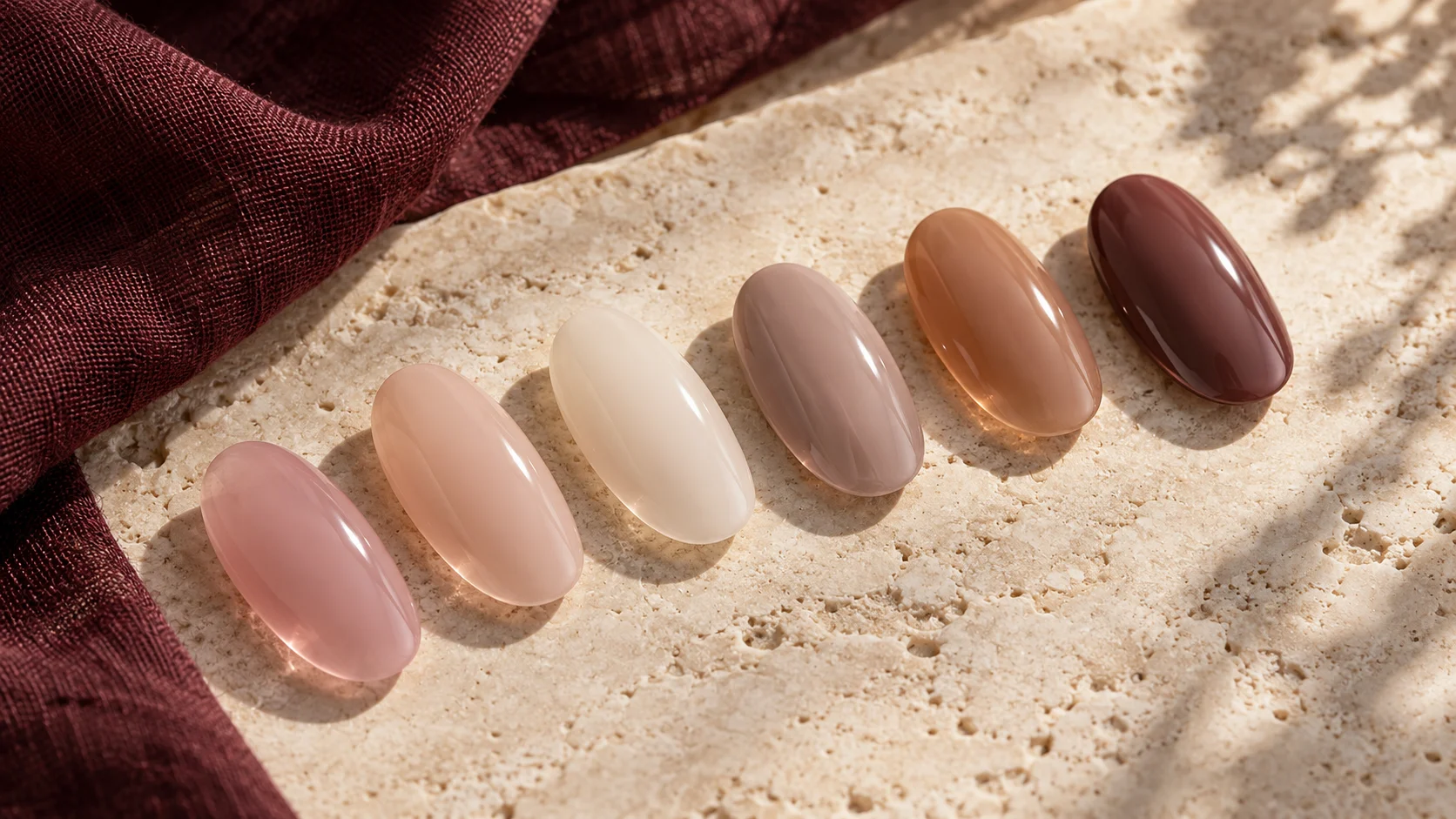
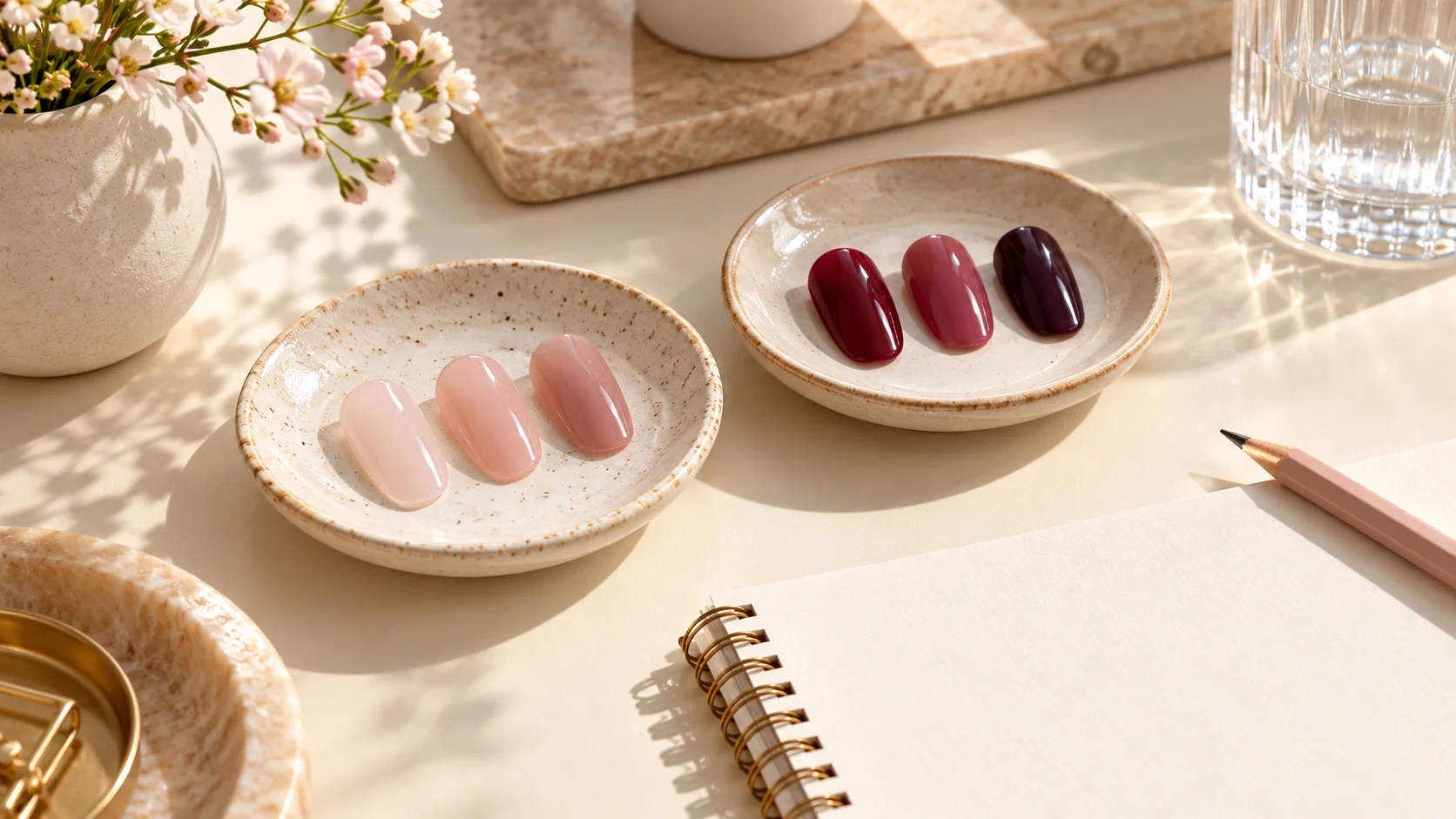
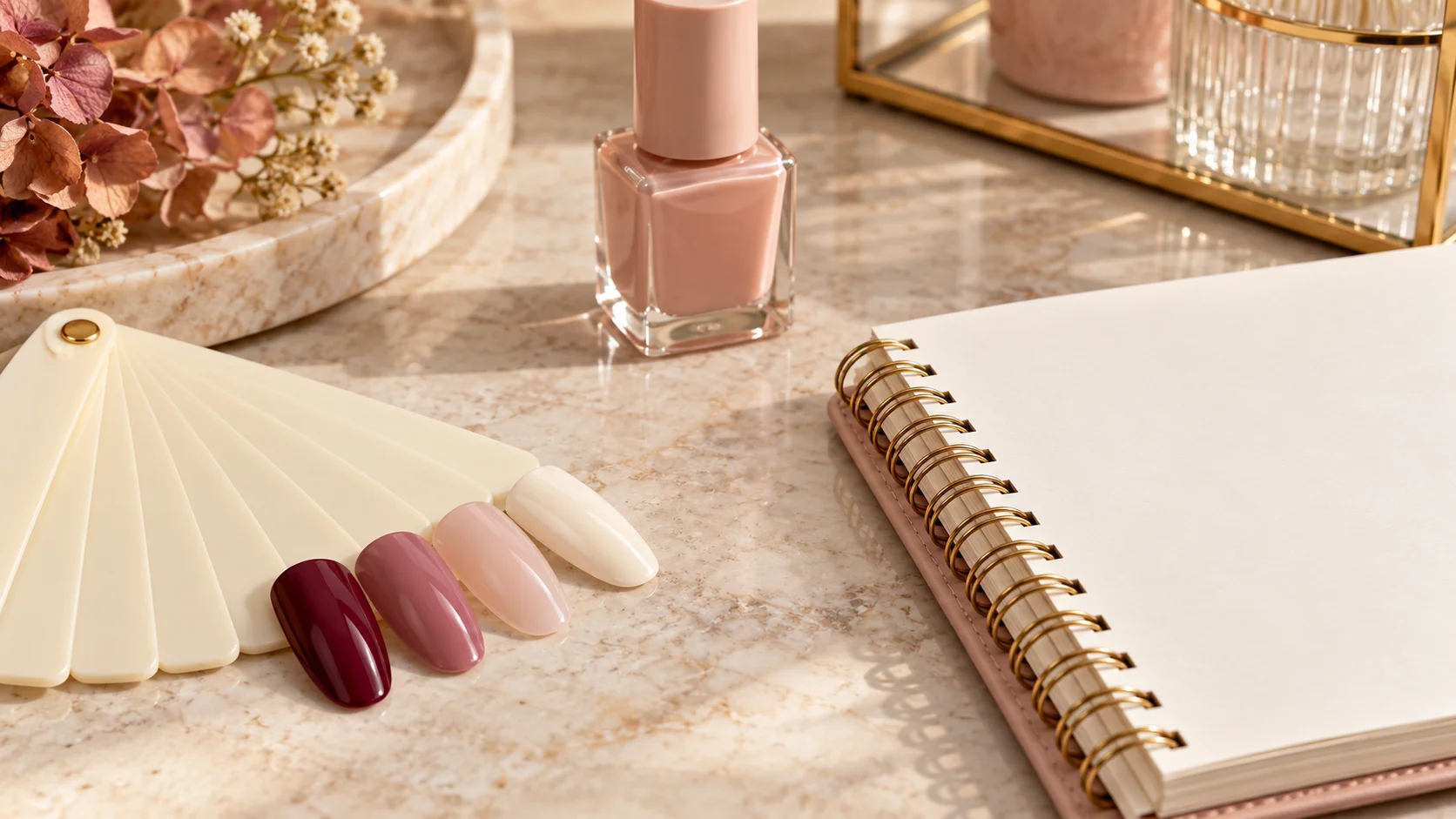
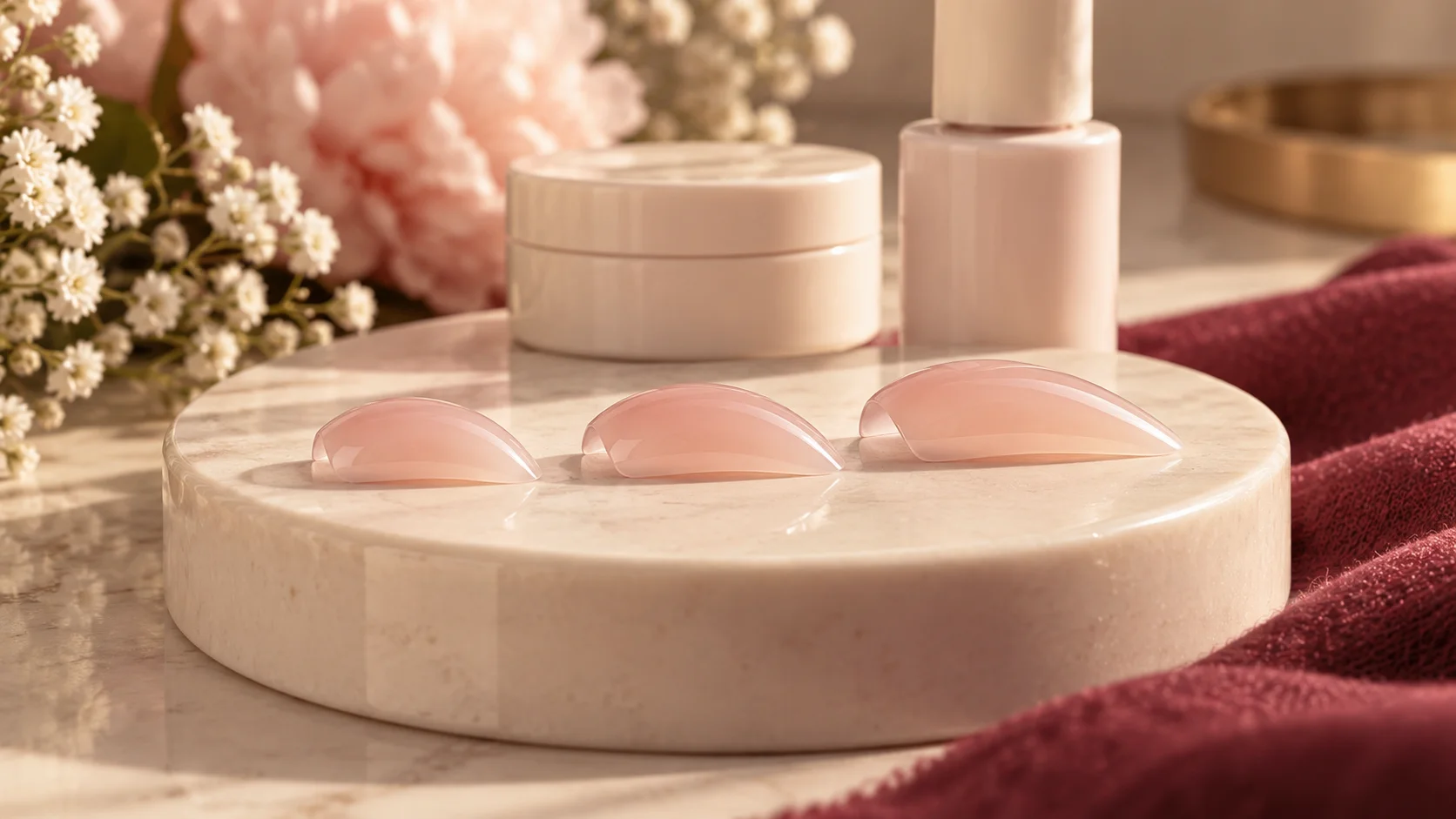
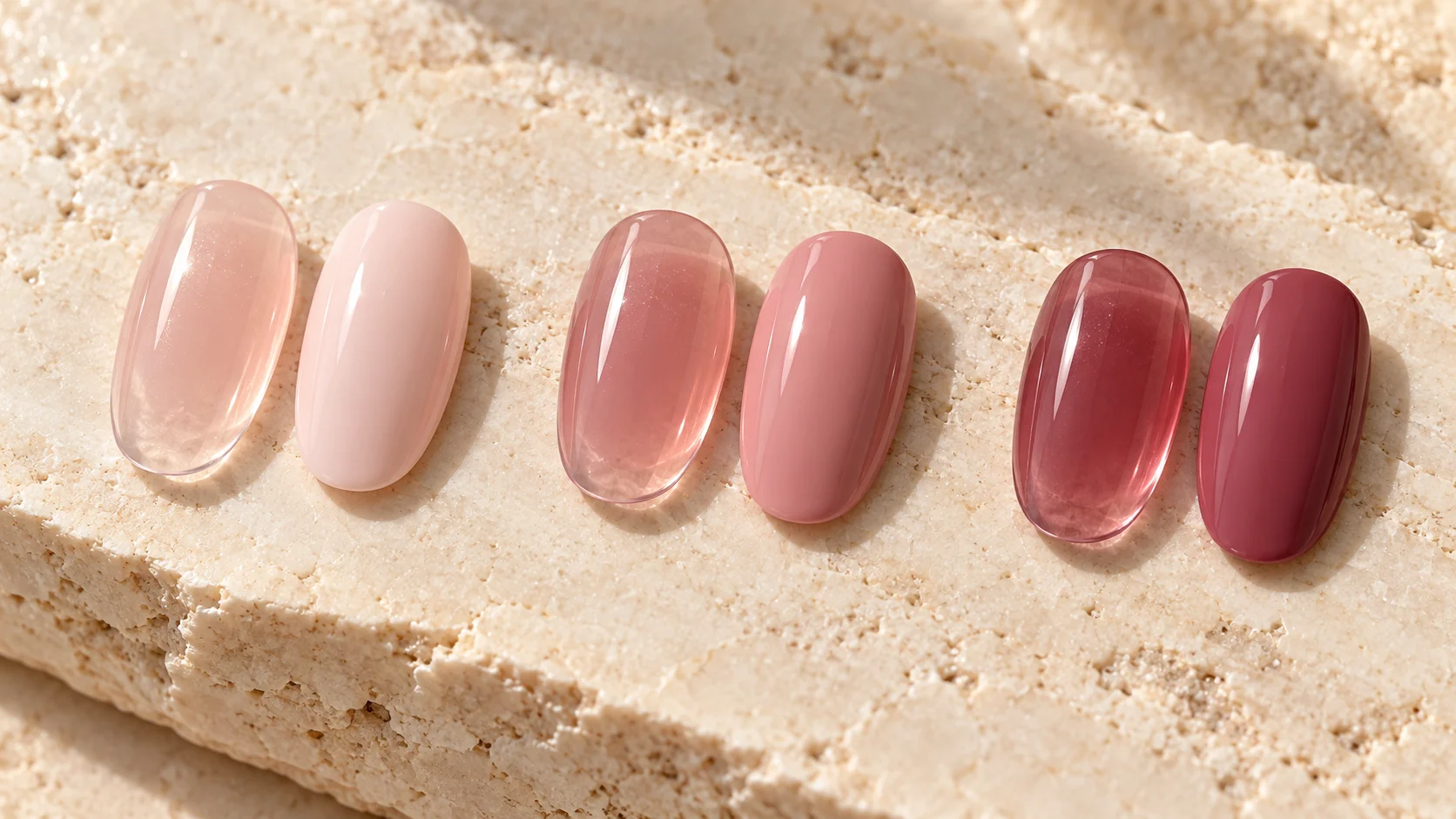
The illustration in this article is a conceptual comparison, not tested brand swatches. Use it to understand the visual distinction, then check the provider’s real samples. It should not be used to order an exact colour match or infer a particular product’s performance.
Tone, transparency, contrast, system
- Tone: choose the colour family separately.
- Transparency: decide how much underlying detail to show.
- Contrast: consider the look of the boundary as nails grow.
- System: confirm products and maintenance regardless of coverage.
Choose the finish you enjoy, record what produced it and follow the actual service plan. A quiet-looking manicure still deserves clear aftercare. Visit the Gel & BIAB section for related colour, consultation and maintenance guidance.
Before settling the service plan, compare BIAB Shades for a Natural Finish: Sheer Pink, Nude and Milky Tones, BIAB vs Gel Polish: Structure, Finish and Maintenance Compared and Changing Gel Nail Colour at an Infill: What to Ask in Advance. For the related everyday care or design question, see Sheer White vs Opaque White Polish: Finding the Finish You Want.
Common questions
Is every pale gel colour sheer?
No. Pale describes colour depth, while sheer describes transparency. A creamy pastel can be opaque and a deeper berry can be translucent. Ask about both features and compare finished samples so the provider does not have to infer the coverage you want from the shade family alone.
Does sheer gel make nails grow more slowly?
No such claim is made here. A close colour match or softer contrast can make the regrowth boundary less visually prominent, but that does not establish a different growth rate. Keep maintenance based on the actual service and condition rather than how noticeable the gap looks.
Will an opaque colour always hide the free edge?
It generally creates a more solid colour impression, but check the actual finished sample and proposed service rather than relying on a label alone. Explain the visual coverage you want. Do not ask for extra thickness simply to force a product into a different appearance.
Is shimmer the same as a sheer finish?
No. Shimmer is a light-catching effect, while sheer refers to transparency. A finish can combine both qualities or have one without the other. Ask to see the sample move in ordinary light and say whether you want visible sparkle or simply a smooth glossy reflection.
Can I delay an infill if the regrowth is hard to see?
Do not base that decision only on colour contrast. A subtle boundary does not tell you whether the product or nail condition is suitable for a longer interval. Follow the agreed service plan and contact the provider if the condition changes or the schedule becomes difficult.
Does solid colour prove the gel has cured correctly?
No. Visual opacity is not a curing test, and a smooth surface does not identify the processing conditions. The actual product, application and recommended lamp instructions matter. Ask for clarification rather than treating a finished photograph as proof that the technical process was appropriate.
Can I change a dark opaque set to a sheer shade at an infill?
Discuss it before booking. The existing colour and base can affect the result, and the provider needs to decide which service is required. A translucent layer cannot simply erase a darker background. Share the desired effect so the appointment and product plan can be assessed.
Are the images in this guide exact product swatches?
No. They are generated editorial illustrations of contrasting coverage effects, not photographs of tested brand shades. Use them to understand the concept, then compare the provider’s real samples. The images do not establish colour accuracy, wear performance, formulation or suitability for a particular person.
Sources and further reading
- The GelBottle — Sheer BIAB FAQs — checked 2026-10-21
- Aprés — Gel colour wrinkling — checked 2026-10-21
- The GelBottle — Formula update FAQs — checked 2026-10-21