How to Explain Your Preferred Gel Nail Shape at a Consultation
Turn a reference picture into a clear brief for outline, length and everyday practicality before your gel service.
Archive edition: 2026-08-11 · This is an editorial allocation, not the first-publication date.
Key takeaways
- Outline: name the edge and corner preferences.
- Length: agree the amount beyond the fingertip.
- Life: explain practical tasks and requirements.
- Review: confirm when to check the developing result.
In this guide
- Key takeaways
- Describe the outline in ordinary language
- Make length a separate decision
- Show one reference and explain why you chose it
- Bring everyday tasks into the design conversation
- Ask what the product system can support
- Agree when you will check the developing shape
- Separate comfort concerns from style preferences
- Outline, length, life, review
- Save a repeatable brief
- Common questions
- Sources and further reading
“Short almond” can mean quite different things to two people. One imagines a modest taper just beyond the fingertip; another pictures a longer pointed outline. A useful gel-nail consultation turns that shorthand into an agreed shape, length and finish before the technical work begins.
You do not need professional vocabulary or a folder full of inspiration. A few clear preferences and one well-chosen reference are enough to start. The aim is to explain the appearance and practical result you want while leaving product structure and application to the trained provider.
Describe the outline in ordinary language
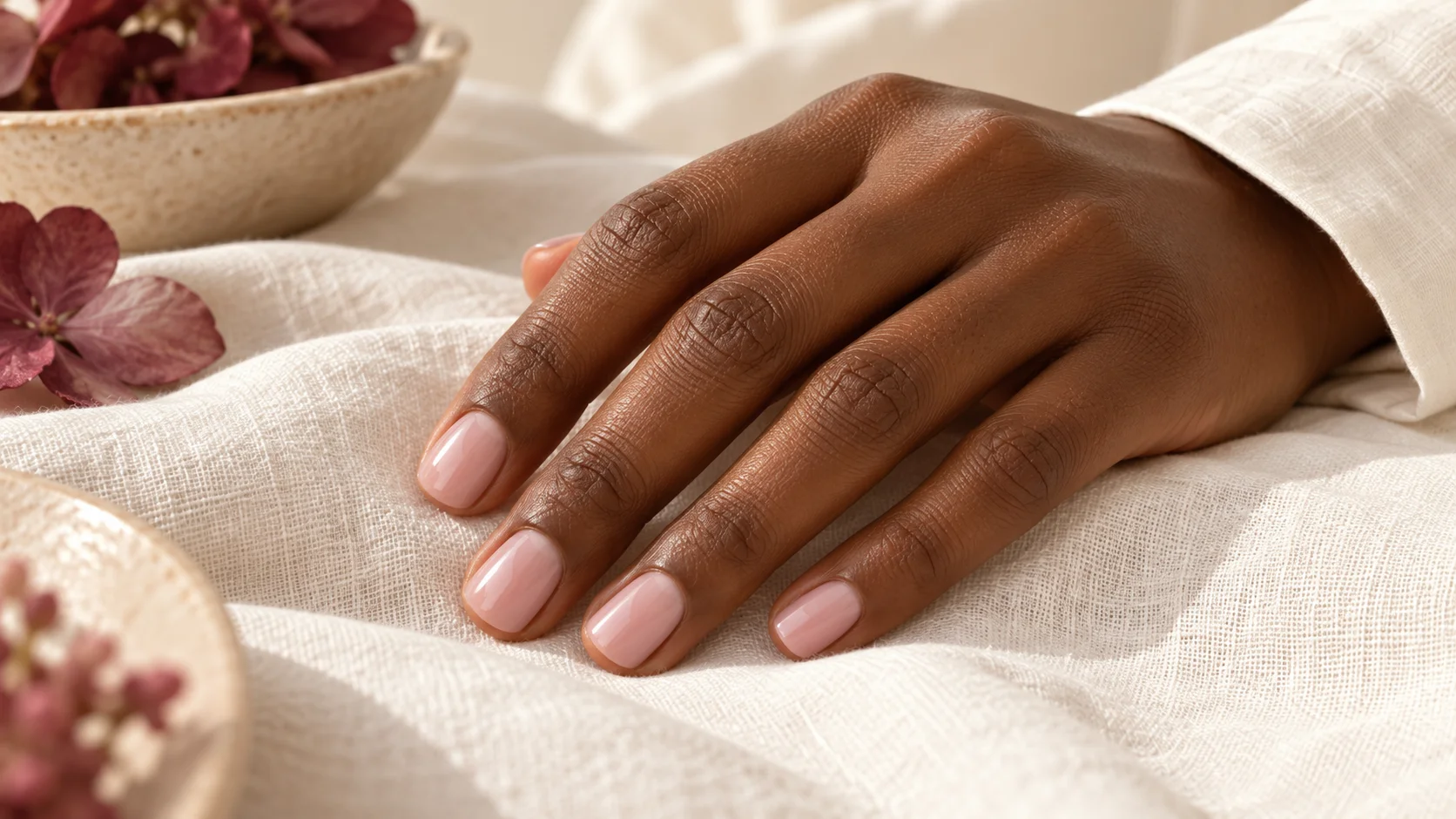
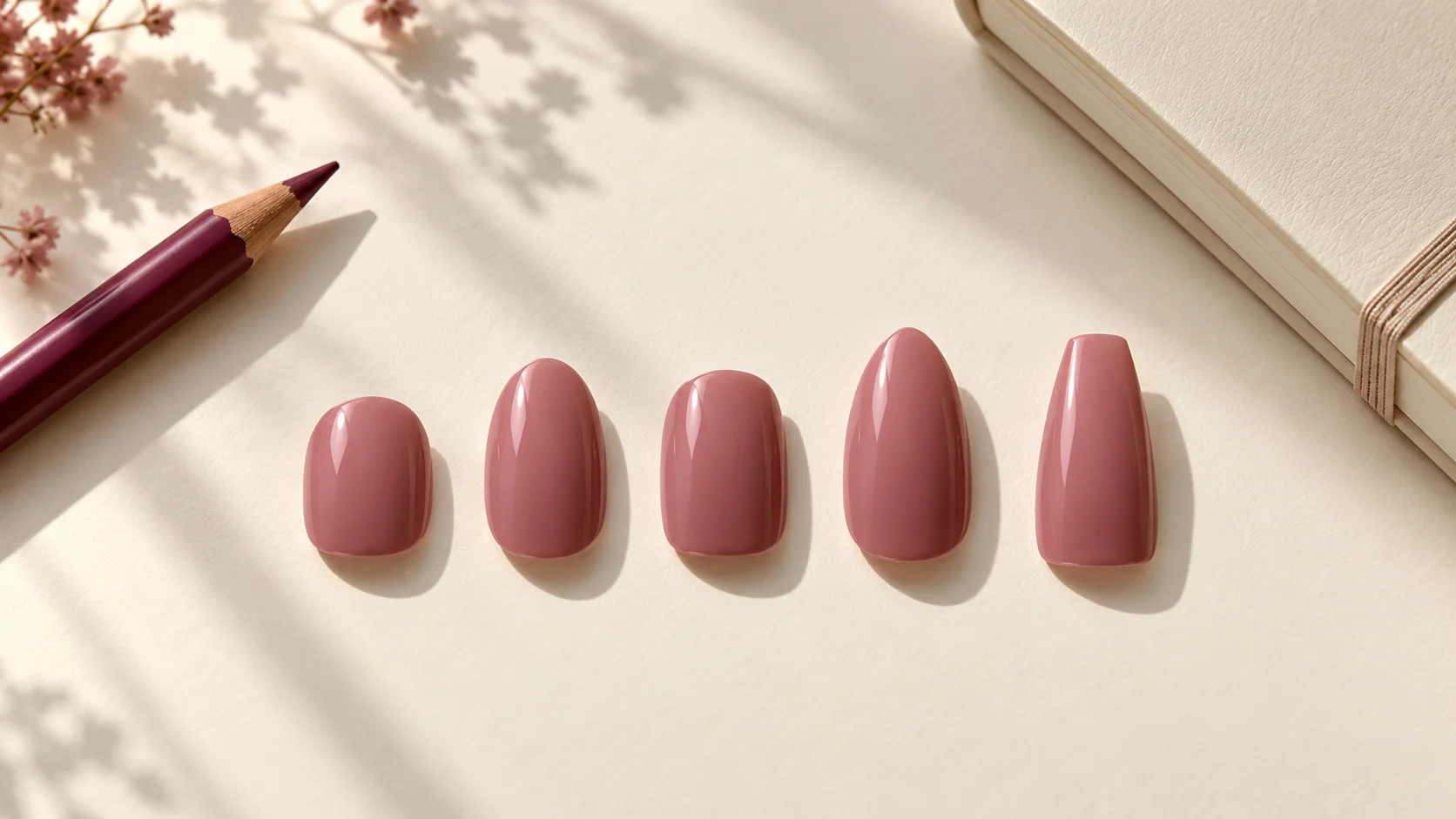
Start with the visible edge: rounded, straight across, softly squared, tapered or pointed. Then explain how sharp or soft you want the corners. These descriptions often communicate more than a trend name that different salons interpret differently.
OPI’s shape guide uses familiar names including round, oval, almond, square, squoval and coffin. Use them as vocabulary, not rules about which fingers deserve which shape. Your preference does not need to match a claim that a particular outline is universally flattering.
If you like a square outline but dislike distinct corners, say both things. If you want taper without a sharp point, make that explicit. A provider can discuss the nearest workable version more easily when the feature you want to avoid is clear.
Make length a separate decision
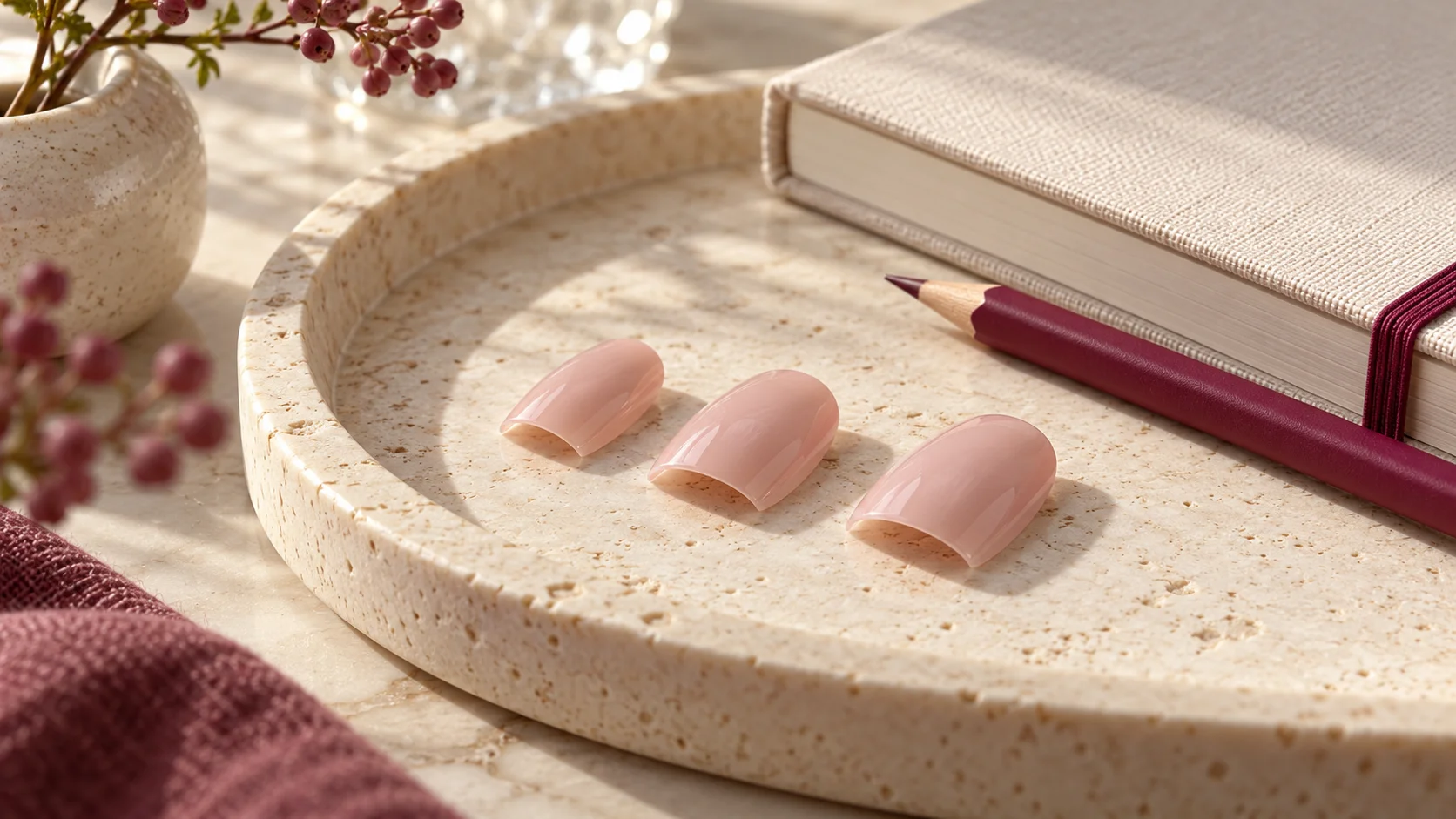
A shape name does not set the length. Ask to discuss how far the finished nail should extend beyond your fingertip, and use a sample or your current nails as a visual reference. “A little shorter than this” is useful only when both people are looking at the same thing.
Explain whether the shortest natural nail sets your preferred limit or whether you are considering added length. A colour service or overlay does not automatically mean an extension is included. Clarifying that distinction can change the appointment, product choice and quote.
If a photograph shows a much longer nail than you want, identify what should carry over: the soft corner, tapered sides or overall mood. Ask how that feature would look at your chosen length. Shrinking a reference is not always a literal copy of its proportions.
Show one reference and explain why you chose it
Choose a clear image where the outline is visible rather than hidden by curled fingers or elaborate decoration. Tell the provider which part matters. You might like the shape but dislike the length, or want the length with a simpler colour.
A second image can be useful if it shows a feature to avoid, but explain that purpose. A collection of contradictory examples can leave the provider guessing which one represents the final brief. Two labelled preferences are often easier to use than twenty unranked screenshots.
Remember that a reference may be edited or show a different hand, nail structure and service. Ask what can be achieved with your circumstances rather than demanding an exact reproduction. A consultation should turn the image into a realistic plan.
| Starting phrase | Clarify | Example detail |
|---|---|---|
| Short | Length beyond the fingertip | Use the current shortest nail as a reference |
| Natural | Outline, colour or both? | A rounded outline with a translucent colour |
| Soft square | How visible should the corners be? | A straight edge with gently softened corners |
| Almond | Degree of taper and point | Tapered sides with a softly rounded end |
| Like this picture | Which features should transfer? | The outline, with less length and no decoration |
Bring everyday tasks into the design conversation
Name the activities that are likely to affect the choice. Mention an instrument, close-fitting work gloves, sport, typing habits or another task that makes certain lengths awkward. Be specific about the difficulty rather than simply saying that you use your hands a lot.
The AAD advises against using nails as tools. A manicure should not be designed around prising lids or scraping labels with the free edge. Discuss a manageable length and use appropriate equipment for those tasks.
Follow workplace or activity rules where they apply. A preferred outline does not override hygiene requirements or the proper fit of protective equipment. If a rule limits length or cosmetics, bring that information to the consultation before choosing the service.
Ask what the product system can support
The provider needs to match the service to the required length and structure. CND’s enhancement guidance, for example, distinguishes product roles within its system. That is a reason to ask which service fits the brief, rather than assuming every gel coating can create every outline.
Let the provider explain if the requested taper, length or profile would require another approach. Ask what a shorter or softer version would look like and whether it changes the maintenance plan. You can then choose among understood options rather than agreeing to an unfamiliar upgrade.
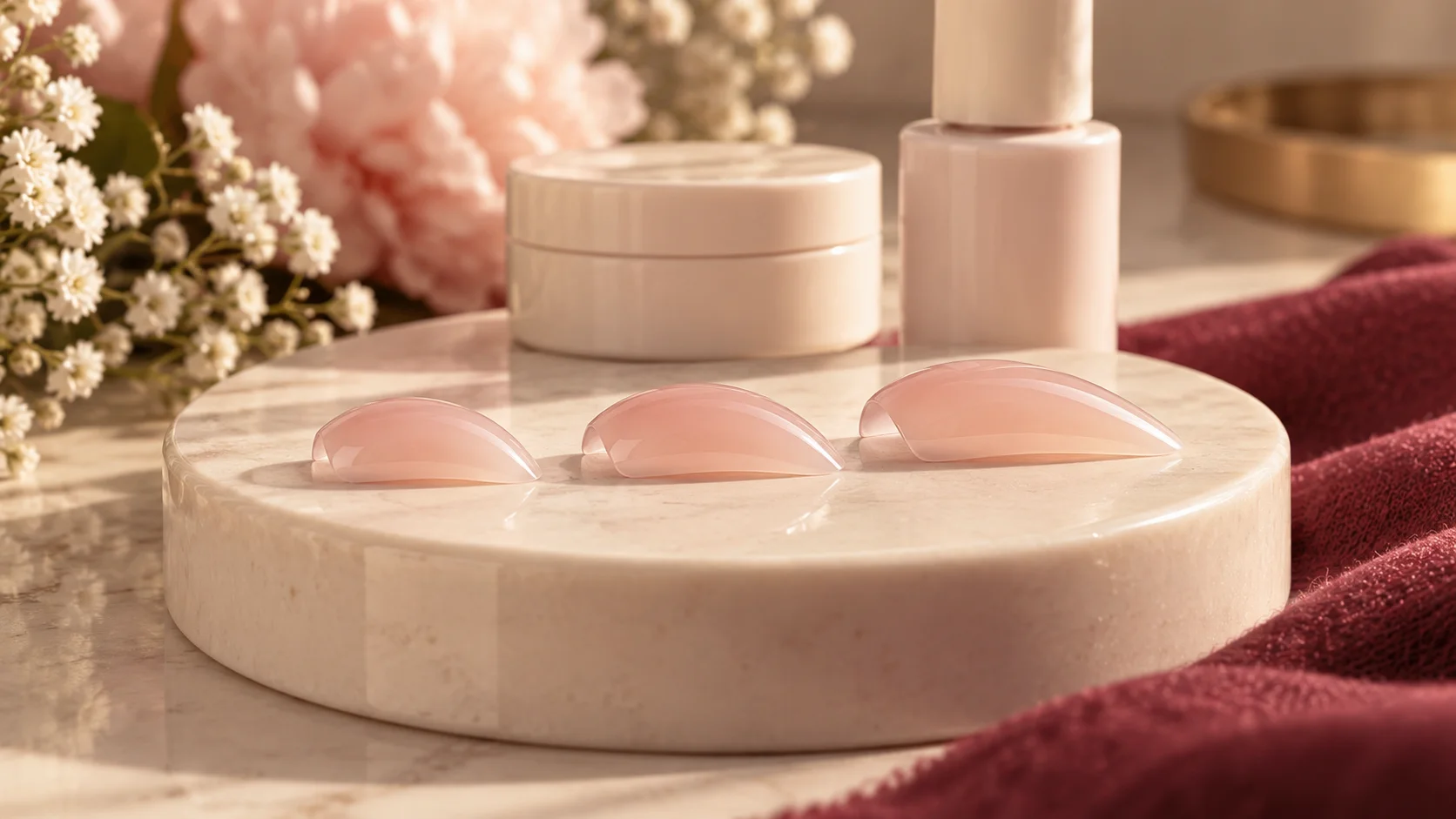
Do not direct the provider to remove structural material just because a side photograph looks thicker than expected. Explain the appearance or sensation that concerns you and ask for an assessment. Product architecture is not something to redesign from an isolated image.
Agree when you will check the developing shape
Ask when there will be a useful opportunity to review the outline and length during the service. Checking at an appropriate stage gives you a chance to clarify the brief before the final colour and decoration make a change more involved.
Look at both hands in an ordinary relaxed position. Compare the overall impression rather than insisting that every nail appear identical from every angle. Natural differences and perspective can affect what you see; discuss a specific concern with the provider instead of diagnosing it yourself.
If one edge feels too angular or the length is not what you agreed, say so plainly and promptly. “I wanted this corner softer” is more actionable than “something looks wrong”. Keep the conversation focused on the feature that can be assessed.
Separate comfort concerns from style preferences
Tell the provider immediately about pressure, pain or another uncomfortable sensation. Do not wait until the end because you are unsure whether it is part of the service. A request for a different outline and a symptom are different pieces of information.
If a concern continues afterwards, use the provider’s contact route and seek clinical advice when appropriate. Do not file or cut a finished enhancement into a new profile solely to avoid asking for help. The material and current condition should guide any adjustment.
For your next consultation, keep factual notes about what worked in daily life. Perhaps the outline looked right but the length made a specific task difficult. That detail helps refine the next service without abandoning every part of the design you enjoyed.
Outline, length, life, review
- Outline: name the edge and corner preferences.
- Length: agree the amount beyond the fingertip.
- Life: explain practical tasks and requirements.
- Review: confirm when to check the developing result.
Save a repeatable brief
After a result you like, save a clear photograph and a short description of the shape and length. Include the actual service name. If you return to another provider, this gives them a starting point without implying that the same method must be suitable in every circumstance.
A successful brief leaves room for informed professional advice while making your preferences clear. Use the Gel & BIAB section to prepare related questions about products, maintenance and removal before the appointment.
Before settling the service plan, compare BIAB on Short Nails: Shape, Finish and Realistic Expectations, Gel Nail Thickness: What a Balanced Finished Set Should Feel Like and A Salon Consultation Checklist for Gel and BIAB Appointments. For the related everyday care or design question, see Almond, Oval or Squoval: A Visual Guide to Nail Shapes.
Common questions
What is the clearest way to ask for a shape?
Describe the visible outline, preferred corner softness and desired length separately. A familiar name such as almond or square can help, but add the feature that matters to you. One clear reference with an explanation is more useful than a trend name alone.
How do I explain short without misunderstanding?
Discuss how far the finished nail should extend beyond the fingertip and use a shared visual reference, such as your current shortest nail or a sample. The word short is relative. Confirm whether you want to keep existing length or add an extension.
Should I bring several reference photographs?
Bring a small number with a clear purpose. Explain whether each shows the outline, length, colour or a feature to avoid. A large collection of conflicting images can obscure your preference. Ask how the chosen details would translate to your own service and desired length.
Must I choose a shape said to flatter my finger type?
No. Shape names are useful vocabulary, but styling rules are not requirements. Choose an outline you enjoy and discuss practical suitability with the provider. Your preference does not need to match a claim that a particular shape makes fingers appear longer or suits everyone.
Can an overlay create the same length as an extension?
Clarify the service before booking. An overlay and an extension are not interchangeable descriptions, and the actual product system matters. Explain whether you want added length, then let the provider discuss the appropriate service, appointment time and maintenance rather than assuming it is included.
When should I check the shape during the appointment?
Ask the provider when a review would be useful before the final finish is completed. At that stage, describe specific concerns about length or corners. Early clarification is usually easier to discuss than waiting until all colour and decoration are finished before explaining a mismatch.
What if the finished nails make an everyday task awkward?
Tell the provider which task is difficult and how the length or outline affects it. That gives a concrete basis for reviewing the service. Avoid cutting or filing a finished enhancement into a new structure yourself without guidance about the actual product and condition.
What should I save to repeat a shape I liked?
Keep a clear photograph, a short description of the outline and length, and the actual service name. Add a note about how it worked in daily life. This record helps the next consultation while leaving room for the provider to assess the current circumstances.
Sources and further reading
- OPI — Nail shape guide — checked 2026-10-21
- CND — PLEXIGEL questions and answers — checked 2026-10-21
- AAD — Healthy nail tips — checked 2026-10-21