How to Trim and File Natural Nails Without Overdoing It
How can I organise a conservative trim and file of healthy natural fingernails?
Archive edition: 2026-05-14 · This is an editorial allocation, not the first-publication date.
Key takeaways
- Look: is this ordinary grooming or a new concern?
- Plan: choose a manageable length and suitable tools.
- Adjust: make conservative changes to the free edge.
- Stop: finish when comfortable; do not chase perfect symmetry.
In this guide
- Key takeaways
- Choose a place where you can see clearly
- Agree the length with yourself before cutting
- Use a conservative trim and a light finishing file
- Separate shaping from surface work
- Do not use grooming to investigate a nail problem
- Look, plan, adjust, stop
- Make the next session easier
- Common questions
- Sources and further reading
Trimming and filing natural nails is easier when the aim is modest: a manageable length and a comfortable free edge. It does not require reshaping every finger to match a photograph or making the nail surface look uniformly glossy. Before picking up a tool, decide what actually needs attention.
This guide concerns routine care of healthy adult fingernails. A painful, lifting, unusually thick or otherwise changed nail needs a different approach. Do not force an ordinary grooming routine onto a problem that you cannot comfortably see or manage, and follow any individual clinical advice you have already received.
Choose a place where you can see clearly
Use a stable surface and comfortable lighting. Put the tools within reach before starting, and give yourself enough time to stop and look between small adjustments. A dim room, moving vehicle or hurried moment before leaving home is a poor setting for deciding how much nail to remove.
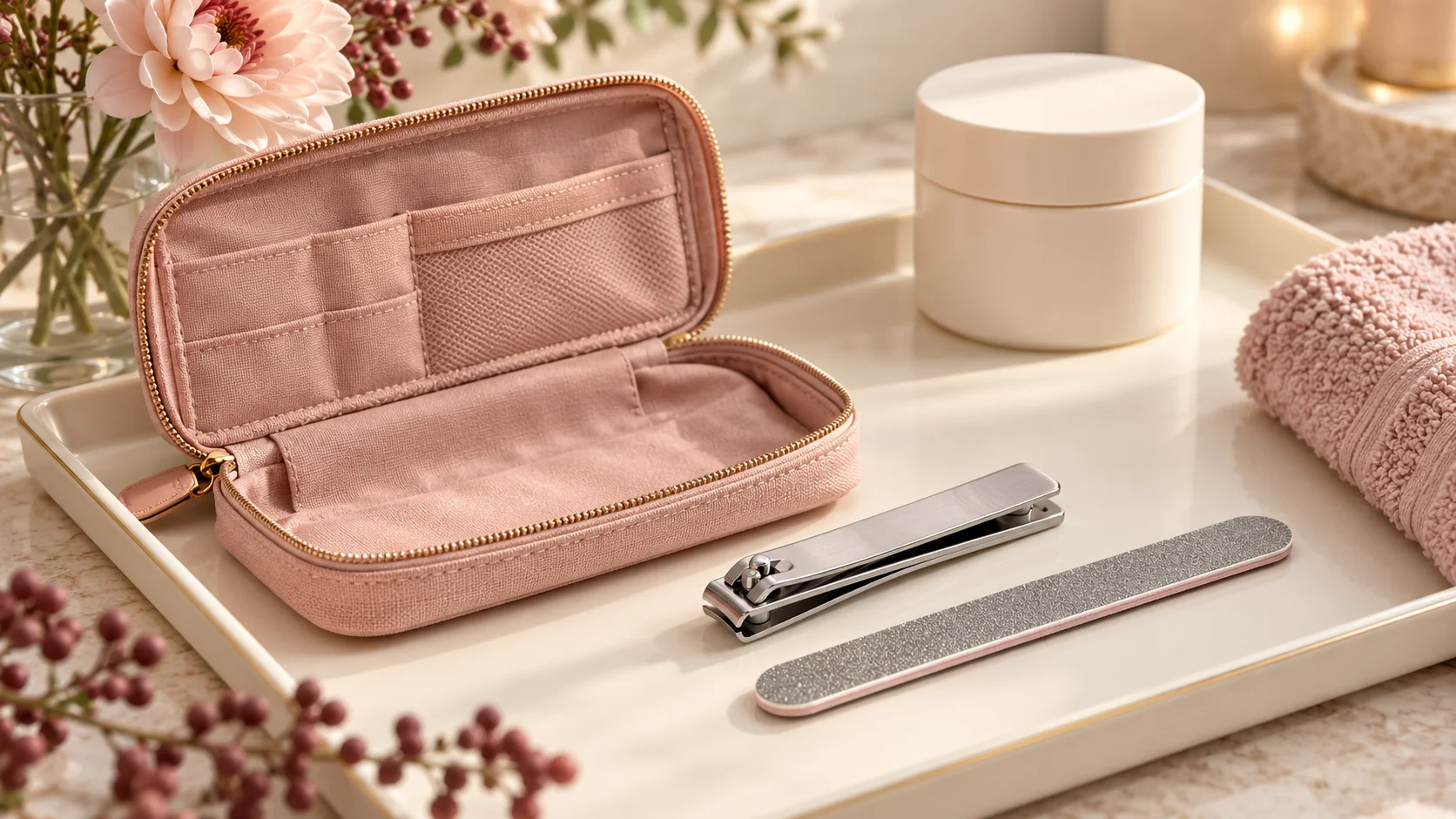
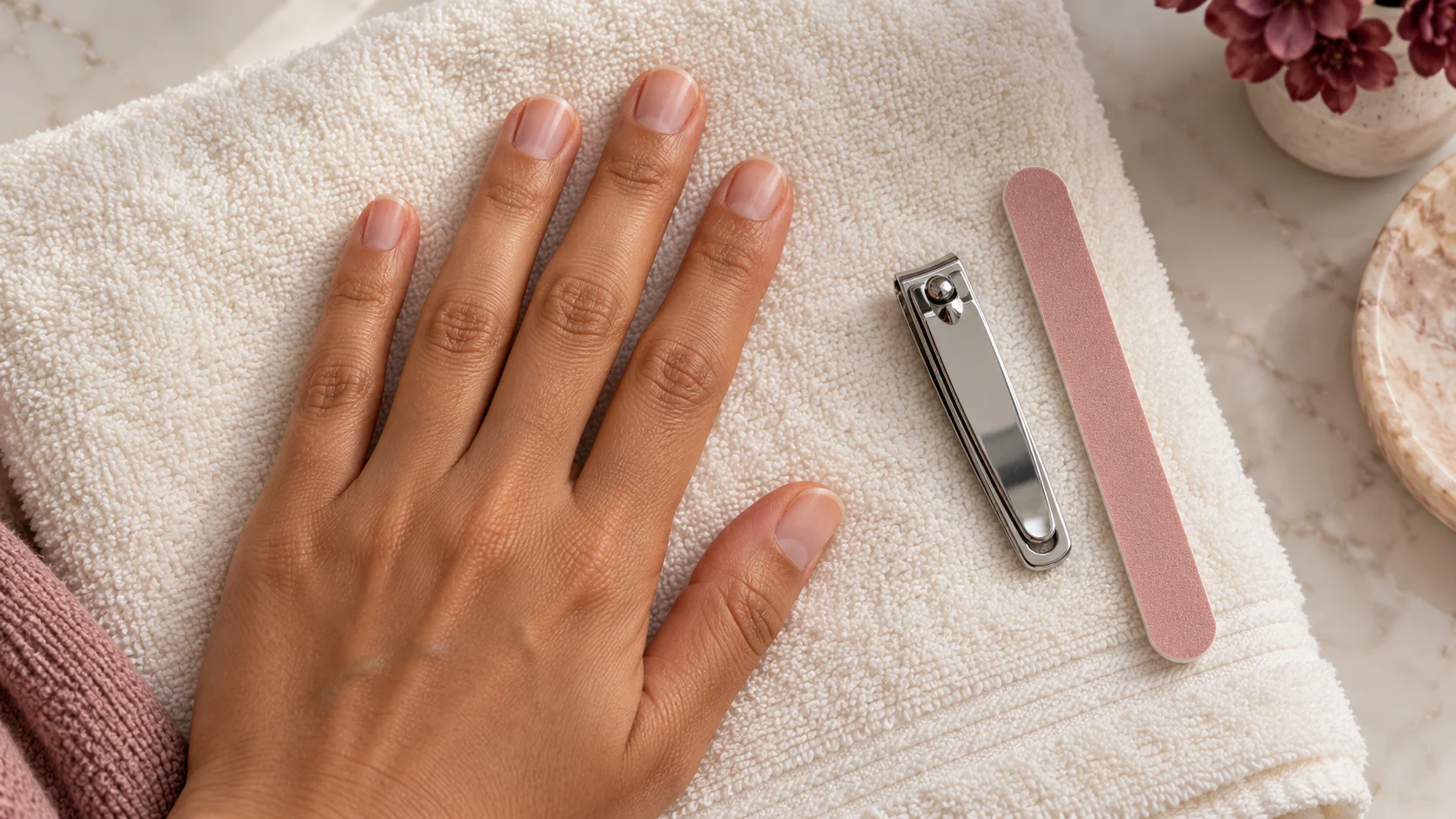
Set out only what the task requires: a suitable fingernail clipper or scissors, a file and something to collect the clippings. A large manicure kit can suggest that every instrument has to be used. Routine length management does not require working through a box of pointed or powered tools.
Check the condition of the tools and follow their cleaning and care instructions. If a tool is damaged, awkward to control or not appropriate for natural nails, do not compensate by pressing harder. When buying a replacement, prioritise a comfortable grip and a clear intended use over decorative packaging.
Agree the length with yourself before cutting
Look at the whole hand and notice the shortest comfortable nail. You do not need to shorten every other nail to an identical measurement immediately. Decide whether the task is reducing excessive length, addressing a small snag or simply leaving things as they are until another day.
Consider the work your fingers do: fastening buttons, using a keyboard, playing an instrument or handling tools may influence the length you prefer. A photo can suggest an outline, but it cannot tell you what feels manageable in your own routine. Your preference can change with your activities.
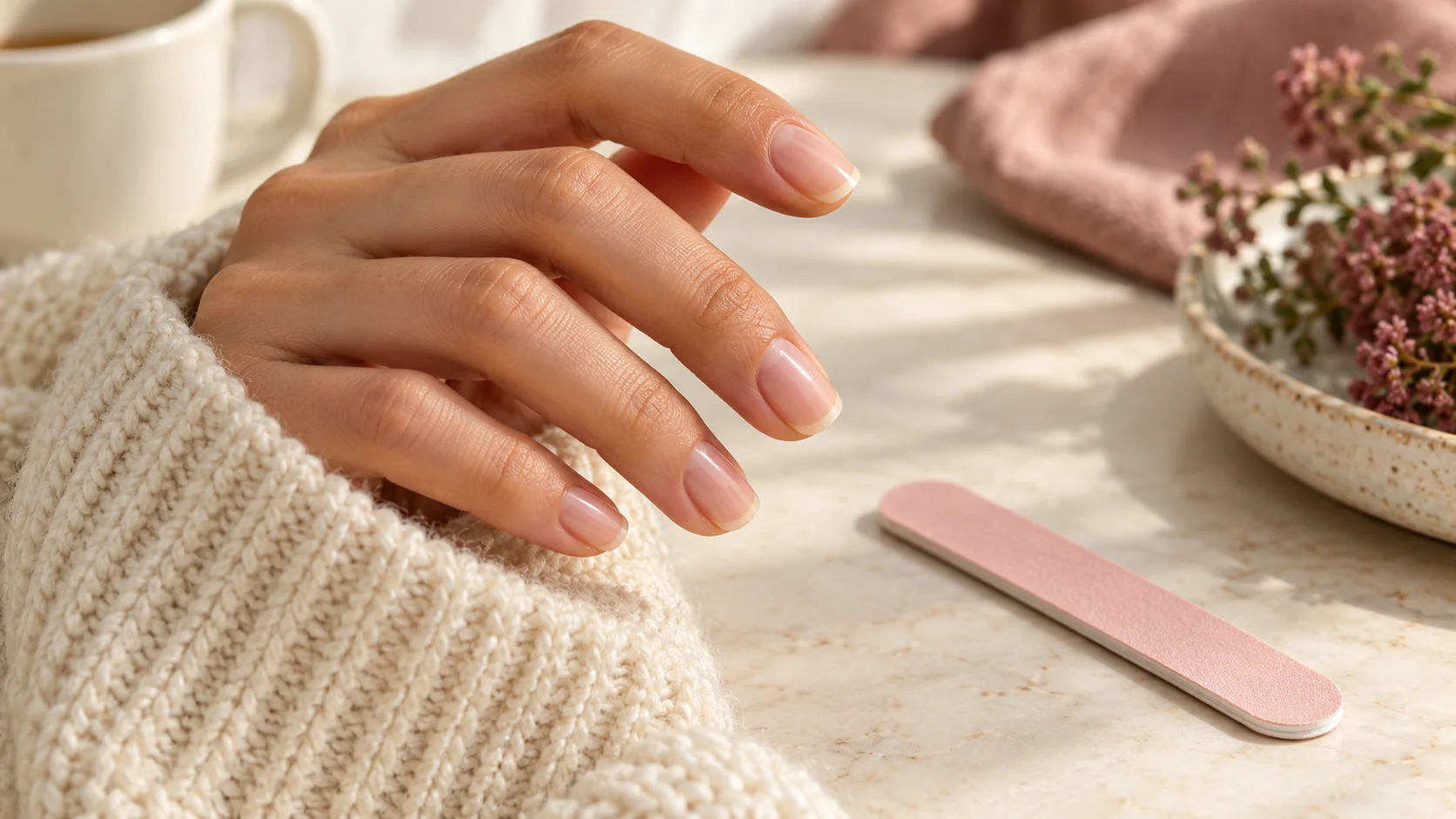
Do not aim to remove every visible bit of free edge just because a short manicure appeals to you. Work conservatively and stop before you reach attached tissue or discomfort. If you cannot distinguish the area you intend to trim, seek appropriate help rather than guessing.
Use a conservative trim and a light finishing file
The AAD’s trimming guide recommends softening nails, such as after a bath or shower, cutting fingernails almost straight across and gently rounding the corners with a file. It advises filing in one direction and leaving cuticles uncut and unpushed.
Take time to look at the edge after each small adjustment. The file is there to finish an uneven edge, not to chase an increasingly elaborate outline. Once the nail is comfortable and manageable, put the tool down rather than continuing because the other hand looks slightly different.
The same AAD guide recommends moisturising after trimming. Its advice for toenails differs: they should be cut straight across. This article’s discussion of softly rounded fingernail corners is not an instruction to cut down the sides of a toenail.
| Observation | Routine decision | Boundary |
|---|---|---|
| Comfortable length and edge | No adjustment may be needed | A calendar reminder is not an obligation to cut |
| Unwanted free-edge length | Plan a conservative fingernail trim | Do not cut into attached tissue |
| A small rough free edge | Consider a light finishing file | Stop if the task is painful or unclear |
| A changed, painful or lifting nail | Seek appropriate advice | Do not treat it as an ordinary shape correction |
Separate shaping from surface work
Reducing the free edge and polishing the top surface are different tasks. You can finish a basic trim without buffing the nail plate. If the reason for reaching for a buffer is an unfamiliar change in colour or texture, ask about that change rather than trying to erase what you see.
A close-up manicure image often exaggerates tiny differences that are barely noticeable in normal use. Judge the outline from an ordinary viewing distance as well as close up. A hand is not a set of interchangeable plastic tips, and exact symmetry is not a necessary endpoint.
Keep the purpose written in a short phrase if you tend to overwork a manicure: “shorter length and no catching edge”. When that purpose is met, stop. Adding another finishing step simply because a tool is available can turn a straightforward job into a much longer session.
Do not use grooming to investigate a nail problem
The NHS advises against cleaning beneath nails with sharp objects and recommends GP advice for unexplained nail changes or inflamed surrounding skin. An uncomfortable area is not something to explore with the point of a manicure instrument.
If you are uncertain whether the free edge is damaged, lifting or simply uneven, describe what you see to an appropriate professional. Do not pull at it to find out. A clear photograph and an account of when the change appeared can help explain the concern without manipulating it.
The AAD’s healthy-nail advice also highlights the importance of seeking treatment for nail problems when you have diabetes or poor circulation. A general grooming article cannot assess those individual risks or replace the care plan you have been given.
Look, plan, adjust, stop
- Look: is this ordinary grooming or a new concern?
- Plan: choose a manageable length and suitable tools.
- Adjust: make conservative changes to the free edge.
- Stop: finish when comfortable; do not chase perfect symmetry.
Make the next session easier
Collect the clippings, care for your tools as directed and return them to a designated place. Notice whether lighting, grip or positioning made the task difficult. Improving the setup may be more useful than buying a more complicated device or setting a more frequent schedule.
If limited vision, dexterity or reach makes grooming difficult, ask for suitable help. Explain the task that is difficult rather than only requesting a particular gadget. For more context on products and everyday habits, browse our Nail Care guides. A straightforward routine should remain understandable, comfortable and within what you can safely manage.
For the related parts of your care routine, read Why Nails Split at the Edges and How to Reduce Snagging, Choosing a Comfortable Nail Length for Work, Sport and Hobbies and How to Keep a Personal Manicure Kit Clean and Organised. For the relevant product or service decision, see Glass Nail Files vs Emery Boards: Choosing a File for Your Routine.
Common questions
Must I trim my fingernails every week?
A regular reminder can be useful, but it does not mean every nail needs cutting on that date. Look at the actual length and comfort first. The purpose is manageable grooming, not completing a fixed number of cuts or recreating an exact outline every week.
Is this the same method I should use for toenails?
No. The AAD distinguishes softly rounding fingernail corners from trimming toenails straight across. Do not transfer a fingernail styling preference to the sides of a toenail. Seek appropriate help when a nail is painful, changed or difficult to manage safely.
Should all ten nails have exactly the same length?
Exact matching is an aesthetic preference, not the necessary goal of ordinary grooming. Consider comfortable length, the shortest nail and your daily activities. Do not keep removing nail simply because a close-up comparison reveals a small difference that is barely noticeable in normal use.
Do I need a powered file for routine natural nail care?
This guide does not require one. Start with suitable basic tools you can control comfortably and understand. A more complicated device does not resolve uncertainty about a changed or painful nail; that situation calls for advice rather than a stronger or faster tool.
Should I buff the surface after trimming?
Surface work is separate from shortening and finishing the free edge, so it is not an automatic final step. If a change in colour or texture is the reason you want to buff, ask about the change instead of trying to remove its appearance.
How should I choose a comfortable setup?
Use stable support, clear lighting and tools within easy reach. Notice whether grip or positioning makes the task difficult before starting. If vision or dexterity limits safe grooming, ask for appropriate help rather than compensating with more force or working in a rush.
What should make me stop filing?
Stop when the intended free edge is comfortable, or earlier if there is pain, uncertainty or an unexpected change. Do not chase perfect symmetry indefinitely. A simple written goal such as manageable length can help keep the task limited to what was actually needed.
What should I do with the tools afterwards?
Collect the clippings and clean, dry and store the tools according to their care instructions. Keep them in a designated place so the next session starts with a clear setup. Replace damaged or unsuitable tools rather than trying to make them work through extra pressure.
Sources and further reading
- AAD — How to trim your nails — checked 2026-10-21
- NHS — Nail problems — checked 2026-10-21
- AAD — Healthy nail tips — checked 2026-10-21