Brittle Nails: Everyday Habits to Review and When to Seek Advice
What should I record and review when nails keep breaking, without diagnosing the cause?
Archive edition: 2026-04-30 · This is an editorial allocation, not the first-publication date.

Key takeaways
- Describe: the affected nails and type of breakage.
- Context: recent tasks, products and services.
- Priorities: comfort, practical length and clear questions.
- Advice: seek assessment for persistent or concerning changes.
In this guide
- Key takeaways
- Describe the problem in ordinary words
- Review the tasks your hands perform
- Write a clear manicure history
- Choose a manageable routine while arranging advice
- Prepare for a useful appointment
- Observe, record, discuss
- Measure progress without making a promise
- Common questions
- Sources and further reading
Brittle nails can make small everyday tasks frustrating: a corner catches on a jumper, a tip breaks while you are away from home, or a fresh manicure seems difficult to maintain. The useful first step is to describe what is happening and review the circumstances. The appearance alone does not tell you why it is happening.
This guide helps you prepare a sensible account of repeated breakage and identify practical habits worth discussing. It does not diagnose a deficiency, prescribe a supplement or promise stronger nails by a deadline. If the problem is painful, persistent or accompanied by another change, professional advice matters more than completing a home checklist.
Describe the problem in ordinary words
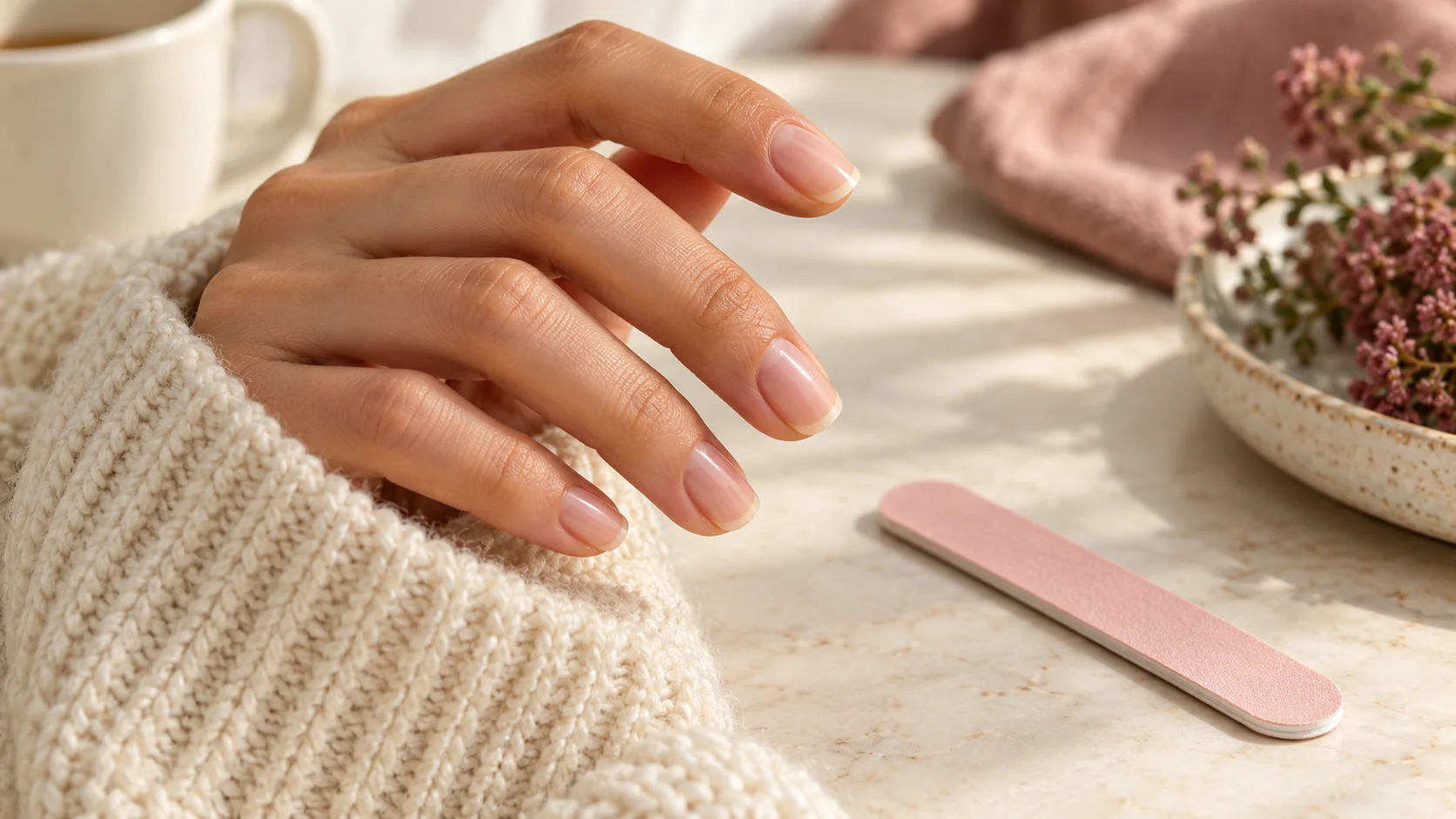
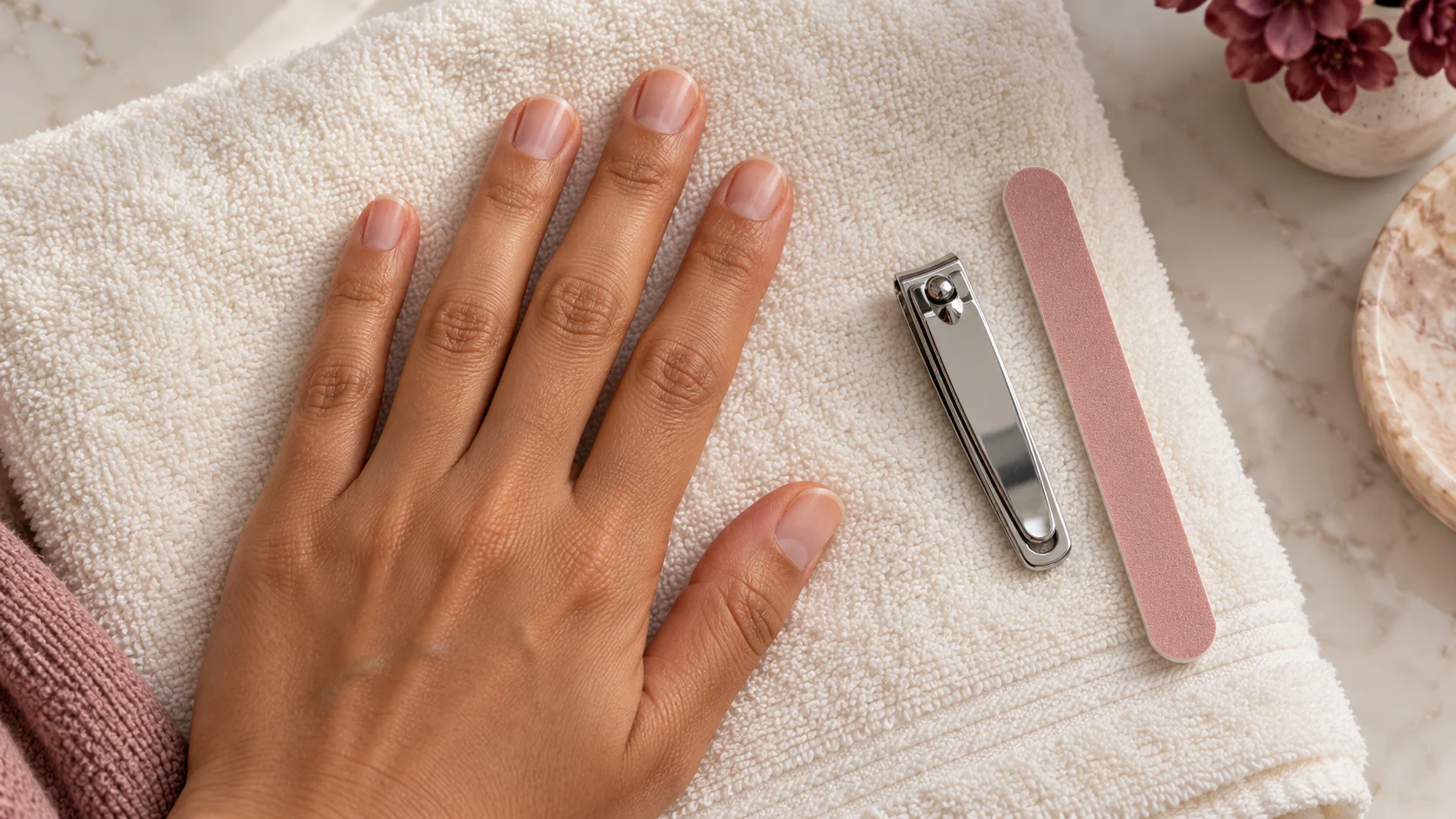
Start with what you can see without manipulating the nail. Is a tip snapping, a thin layer peeling at the free edge, or a corner repeatedly catching? Which fingers are affected? A brief factual description is more useful than choosing a medical label from an image search.
Separate observation from explanation. “Both thumbnails have broken at the corners this month” is an observation. “My nails are definitely lacking a vitamin” is an explanation that the observation cannot establish. Keeping those separate makes it easier to discuss possibilities without becoming attached to one unsupported answer.
Write down roughly when you first noticed the change and whether it is new for you. If you cannot remember an exact date, say so. An honest estimate is more useful than a precise date invented because a form has a space for one.
Review the tasks your hands perform
The NHS overview of nail problems lists water and cleaning-product exposure among common contributing circumstances and notes that nail changes can have other causes. That is a reason to review context, not to assume that every brittle nail has the same explanation.
Consider your ordinary work, household jobs and hobbies. Include activities you do without thinking, such as lifting labels, prising open containers or picking adhesive from a surface. If one particular finger repeatedly does the same job, record that detail rather than treating the whole hand as a single identical surface.
The AAD’s healthy-nail guidance recommends avoiding nails as tools and using protection during wet cleaning tasks. Put the appropriate alternative tool where you use it. The practical goal is to make a different action convenient, not to rely on remembering a rule every time.
Write a clear manicure history
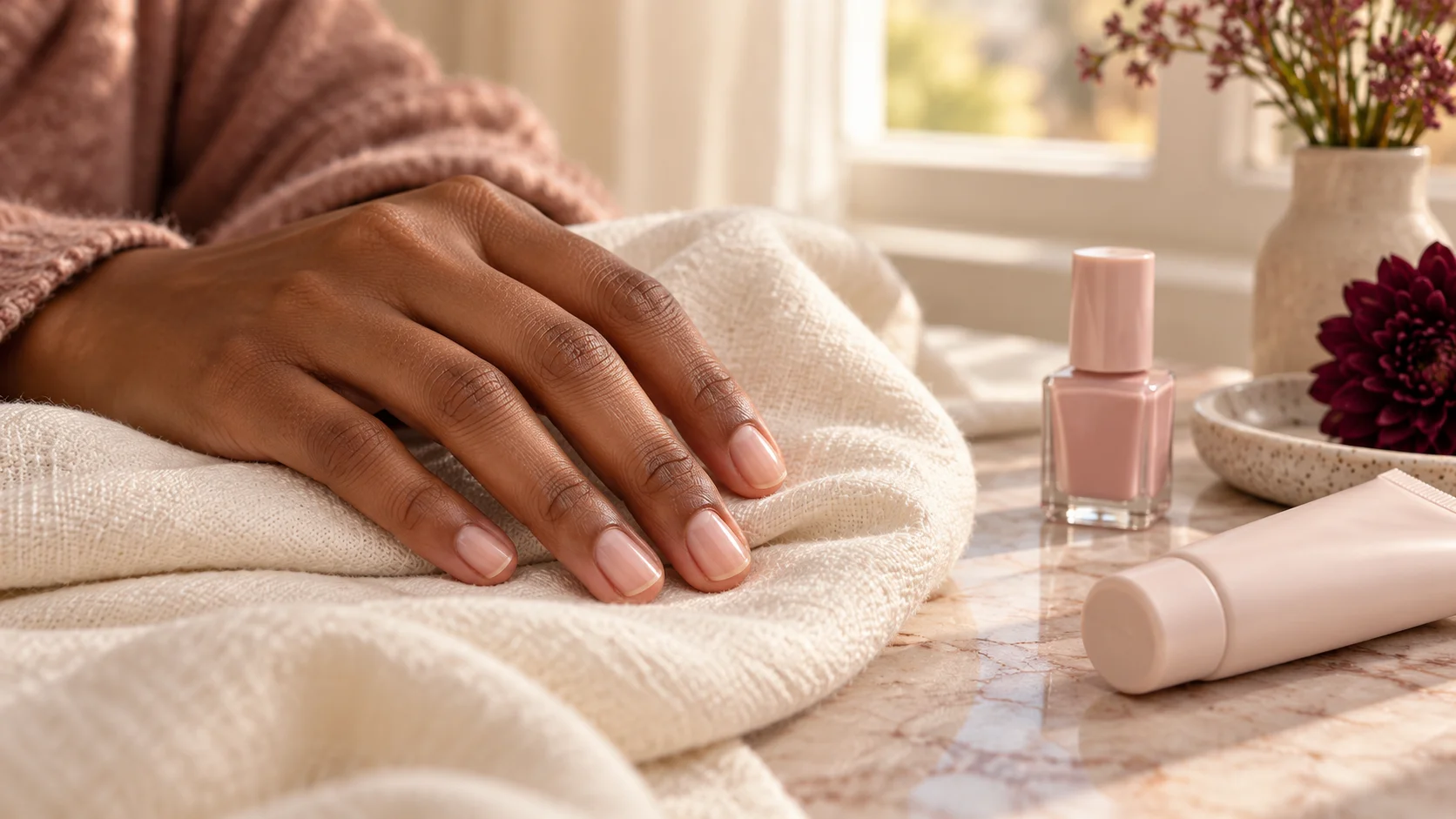
Record what was applied, when it was applied and how it was removed, if you know. “Gel” can be an incomplete description of a service, so ask the salon for the actual product system rather than guessing. Note whether a change appeared before the appointment, during wear or after removal.
Include home products too: a base coat, hardener, remover, adhesive or preparation tool may be relevant to the history. Keep photographs of labels or booking details if they are already available. You do not need to reconstruct every manicure you have ever had before seeking advice.
The AAD’s artificial-nail guidance warns that covering damaged nails can worsen existing problems. A new overlay should not be treated as proof that the underlying issue has been solved. Tell the provider about the breakage before agreeing another service.
| Record | Helpful example | Avoid assuming |
|---|---|---|
| Pattern | Left thumbnail corner repeatedly catches | Every nail has the same cause |
| Timing | First noticed after the last removal appointment | Timing proves the cause |
| Exposure | More washing-up than usual this month | One habit explains everything |
| Products | Names from labels or the salon record | All products called gel are identical |
| Symptoms | Whether there is pain or surrounding skin change | Appearance alone establishes a diagnosis |
Choose a manageable routine while arranging advice
A routine review need not begin with shopping. Look at the products and tools you already own and identify which ones you actually use. Keep packaging for anything associated with discomfort, and avoid adding a long list of new products simply because each promises a different kind of strength.
Think about convenience as well as aesthetics. A nail length you can comfortably maintain may be more practical than repeatedly trying to recreate a longer reference. Describe your daily tasks when speaking to a nail professional, and explain that comfort and reducing repeated catching are priorities.
If you have been given a clinical care plan, keep that separate from optional cosmetic choices. Ask the clinician or pharmacist where a proposed product fits before assuming that an additional oil, hardener or supplement is necessary. A more crowded shelf does not automatically create a clearer plan.
Prepare for a useful appointment
Bring the short record rather than a folder of unrelated internet images. A clinician may want to know about your health, medicines, work and skin symptoms as well as the nails themselves. Mention information accurately and let them decide what examination or further investigation is appropriate.
Useful questions include: “Does this need an investigation?”, “What should I avoid while we assess it?”, and “What change should make me contact you again?” Write the answers down in your own words. If a proposed step is unclear, ask for clarification before leaving.
The NHS advises GP review for unexplained changes in nail colour or shape and for sore, warm, swollen or red skin around a nail. These signs should not be filed away as ordinary brittleness. A persistent problem also merits advice even if your notes do not reveal an obvious trigger.
Observe, record, discuss
- Describe: the affected nails and type of breakage.
- Context: recent tasks, products and services.
- Priorities: comfort, practical length and clear questions.
- Advice: seek assessment for persistent or concerning changes.
Measure progress without making a promise
If you take photographs, use similar lighting and an ordinary view of the whole hand. Save the date and a short note about what you noticed. Do not repeatedly scrape or bend a nail to see whether it is stronger. That would change the thing you are trying to observe.
Review the plan you were actually given rather than comparing yourself with an advertisement’s timeline. Follow-up may involve another conversation, not a different purchase. For related practical explanations, visit our Nail Care section; use it to prepare questions, while keeping diagnosis and treatment with an appropriate health professional.
For the related parts of your care routine, read Why Nails Split at the Edges and How to Reduce Snagging, Splitting Nails and Supplements: Why Cause Matters More Than Promises and Nail Changes to Photograph and Discuss with Your GP. For the relevant product or service decision, see Nail File Grit Numbers: What to Check Before Filing Natural Nails.
Common questions
Does a brittle nail prove I have a vitamin deficiency?
No single appearance establishes that explanation. Describe the affected nails, timing, activities and any other symptoms to a clinician if the problem persists. This guide does not recommend supplements or tests; those decisions should follow an assessment of your individual circumstances.
What is the most useful first note to make?
Record which nails are affected and what happens: a corner catches, a tip snaps or a layer peels at the free edge. Add an approximate start date if known. Ordinary factual language is more useful than choosing a medical term you are unsure about.
Should I bring my manicure history to an appointment?
Yes, if it is available, include product names, application dates and removal methods. Ask the salon for details you do not know. A short accurate history is enough to start the conversation; you do not need to reconstruct every service before seeking help.
Can I assume removal caused the problem if I noticed it afterwards?
Timing is useful information but does not prove the cause on its own. Record when the change became visible and what happened during removal without making a definite conclusion. A clinician can consider that history alongside the examination and other relevant information.
Should I buy several strengthening products to compare?
Start by clarifying the problem and reviewing what you already use. Adding several products can make it harder to explain which one was associated with discomfort. Ask a pharmacist or clinician what is suitable if breakage persists, rather than treating a product comparison as a diagnosis.
Are photographs useful for recurring breakage?
They can help document a pattern when taken in similar ordinary light, with dates and a brief description. Keep them unfiltered and avoid manipulating the nail to make damage more visible. Photographs support an account but do not replace an appropriate examination.
What should I ask before another cosmetic service?
Explain the recurring breakage and ask whether the provider needs the original product details or recommends assessment first. State that comfort and manageable length are priorities. Do not agree to a service simply because it promises to hide a change you do not understand.
What makes a follow-up plan clear?
Know which steps were recommended, what changes should prompt another conversation and whom to contact. Write those points in your own words. Avoid replacing the plan with an advertisement’s timetable, since your circumstances and the reason for the nail problem may be different.
Sources and further reading
- NHS — Nail problems — checked 2026-10-21
- AAD — Healthy nail tips — checked 2026-10-21
- AAD — Reducing artificial nail damage — checked 2026-10-21