Thick Nail Polish: When to Check Storage, Age and Brand Advice
Check the formula, closure, storage and product guidance before trying to change a thick nail polish.
Archive edition: 2026-09-05 · This is an editorial allocation, not the first-publication date.
Key takeaways
- Identify the exact polish system.
- Describe what has changed.
- Check closure, storage and durability information.
- Ask for product-specific advice.
- Use only a supported method or replace the bottle appropriately.
In this guide
- Key takeaways
- Check whether the texture has actually changed
- Identify lacquer, gel-like polish and lamp-cured products
- Look at the closure and storage history
- Read age information without inventing an expiry date
- Understand what a purpose-made thinner does and does not establish
- Avoid turning uncertainty into a home experiment
- Make the next decision practical
- Common questions
- Sources and further reading
Thick nail polish is a reason to check the product and its history before trying to change it. A brush that suddenly drags, a cap that no longer closes properly or a bottle that has been stored somewhere unsuitable can all raise useful questions. None establishes one automatic diagnosis or a universal fix.
This guide concerns ordinary polish troubleshooting and the questions to ask a manufacturer. It does not give a solvent recipe, a drop count or instructions for altering lamp-cured gels. Start by identifying the exact range, then use its current storage, durability and product-care guidance rather than adding whatever liquid is nearby.
Check whether the texture has actually changed
Compare the bottle with your own earlier experience of that product, not with a completely different formula. A sheer colour, a dense cream and a textured finish need not feel identical on the brush. If the bottle is new to you, a different texture may require clarification rather than immediate alteration.
Read the application directions and any instruction to mix the product before use. Follow the stated method instead of assuming every brand recommends the same shaking or rolling routine. An unfamiliar formula should not be judged solely by how it looks through the glass when it has been standing still.
Note the practical symptom. Does the brush seem loaded with unusually heavy product, does the finish pull into strings, or is the problem mainly a difficult cap? A precise description helps the brand distinguish a handling question from a damaged package or a formula concern.
Identify lacquer, gel-like polish and lamp-cured products
Read the full product name before searching for a remedy. Gel-like wording on an ordinary lacquer does not make it equivalent to a lamp-cured gel, and a thinner sold for lacquer should not automatically be added to another type of product. The same brand may sell several systems with different requirements.
If a salon supplied or applied the product and you do not know the range, ask for its identity. Do not try to infer the formula from gloss, bottle shape or how long the manicure lasted. Those observations cannot establish which ingredients or corrective products are compatible.
Keep the base and top coat out of the troubleshooting experiment too. A change in one colour bottle does not mean the supporting products need modification. Assess each item by its own instructions rather than treating the whole manicure kit as one interchangeable formula.
Look at the closure and storage history
Essie’s FAQ advises keeping the bottle neck clean, the cap tightly closed and polish away from direct sunlight and unsuitable heat. These are useful checks when investigating a change in a bottle. They do not prove that every thick polish has the same cause or can be restored.
Think back to where the product has been kept. Was it left open while you searched for a tool, displayed on a sunny shelf or stored in a bag in an unsuitable location? Record what you know without inventing a cause. The manufacturer may ask about those conditions when deciding what guidance to provide.
Check the cap, neck and glass for damage. If the closure no longer works or the bottle is cracked, changing the liquid consistency will not repair the packaging. Do not transfer it into an unlabelled container just to continue using it; retain the identity and ask how to handle the damaged item.
Read age information without inventing an expiry date
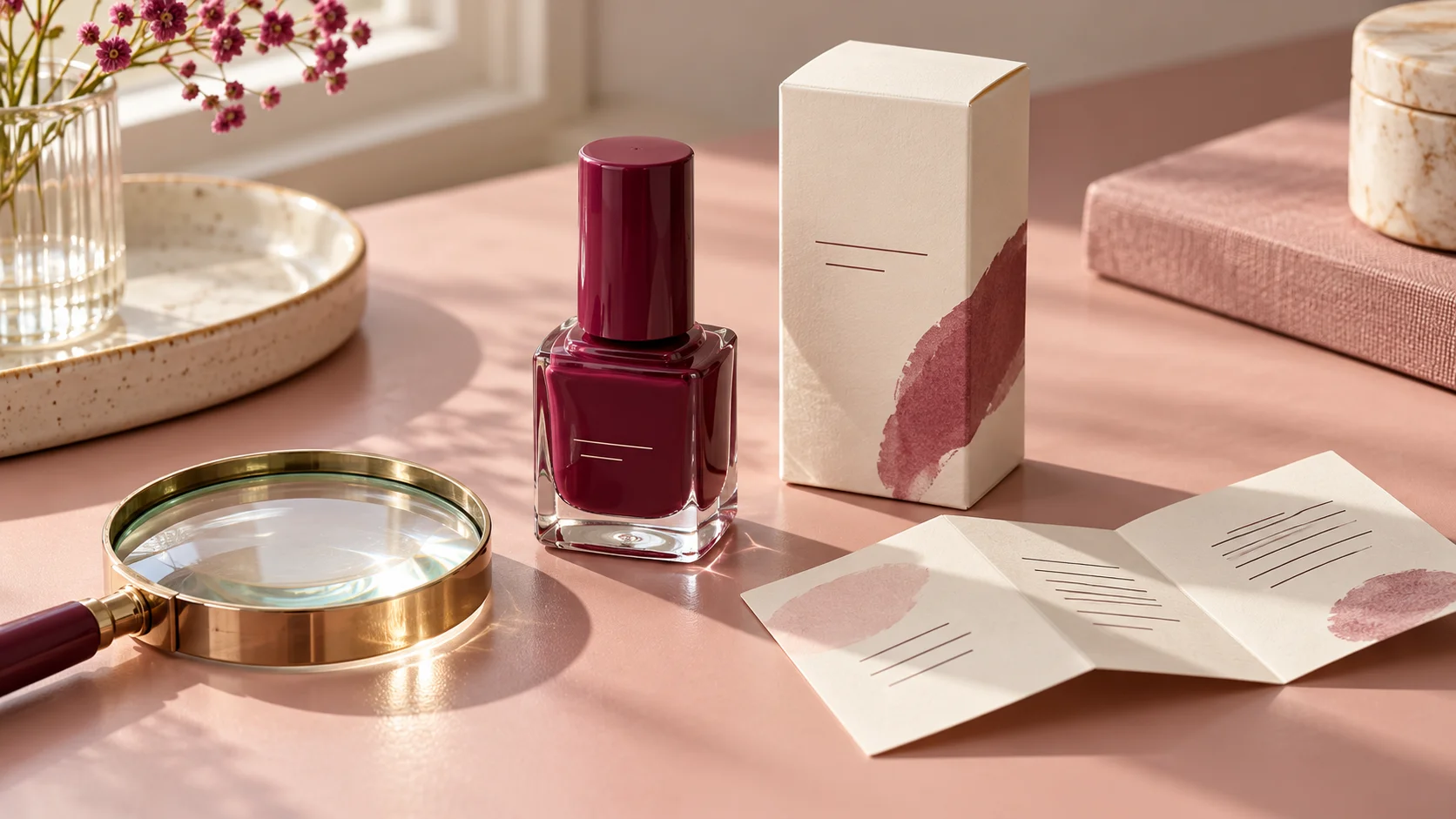
GOV.UK’s cosmetics guidance explains durability information and product symbols. Check what the actual product states, including any period-after-opening information. Purchase date, opening date and batch code are separate details, and a code should not be decoded using a rule borrowed from another manufacturer.
Do not apply one brand’s general shelf-life statement to every polish in the drawer. Equally, the presence of usable-looking liquid is not proof that a bottle should be kept indefinitely. If you do not know when it was opened, say so when asking for advice rather than presenting a guessed date as fact.
A thinner does not reset durability information or make a damaged, unsuitable or unidentified product acceptable again. The question is whether the manufacturer supports a specific action for this bottle, not whether you can make it flow well enough for one more manicure.
| Check | Useful information | Avoid assuming |
|---|---|---|
| Exact product system | Range and intended use | Every gel-like bottle is the same formula |
| Change in behaviour | What differs from previous use | Every thick product is spoiled or repairable |
| Closure condition | Whether cap and glass are intact | A liquid additive repairs packaging |
| Storage history | Known heat, light or open-container exposure | One observation proves the cause |
| Durability information | Label, opening record and batch reference | Thinning restarts the product’s usable period |
| Manufacturer advice | Named compatible product and directions | Any remover or household liquid is suitable |
Understand what a purpose-made thinner does and does not establish
OPI sells a Nail Lacquer Thinner described as improving lacquer consistency. Its listed ingredients include butyl acetate and ethyl acetate. That is evidence that a purpose-made product exists for a stated role, not a recipe for mixing those ingredients yourself.
The product description does not establish a universal dose or compatibility with every brand, finish and lamp-cured system. Obtain the directions for your actual combination before use. If those directions are unavailable or unclear, ask the manufacturer rather than borrowing a drop count from an unrelated video.
Do not confuse thinner with remover merely because a retailer places both in a broad nail-liquid category. Their intended tasks differ. A remover is not an automatic substitute for a supported consistency product, and an ingredient name shared between two bottles does not make their complete formulations interchangeable.
Avoid turning uncertainty into a home experiment
Do not add water, oil, fragrance, another polish or a household solvent to make the bottle appear usable. Do not heat it. These actions introduce new variables without establishing that the resulting product remains appropriate for its intended use.
If you have already added something, tell the manufacturer what it was. Do not describe the altered product as though it were unchanged, and do not offer it to someone else without that context. Accurate information is more useful than trying to obtain advice for a formula that no longer matches the original bottle.
When there is discomfort during use, stop the cosmetic routine rather than continuing to test consistency on the nail or skin. A texture concern and a health concern are different questions; persistent irritation or unexplained nail changes need appropriate medical advice.
Make the next decision practical
Gather the range, shade, batch reference, opening information and a brief description of storage. A clear photograph of the packaging can help identify the item. Ask whether the product should be replaced or whether a named manufacturer-supported method applies.
Sometimes replacing a bottle is the more manageable outcome, particularly when the identity, age or closure is uncertain. Follow the label and local waste guidance for unwanted contents and packaging. Avoid treating the desire to avoid waste as a reason to keep experimenting with a product you cannot confidently identify or use.
Check before changing the formula
- Identify the exact polish system.
- Describe what has changed.
- Check closure, storage and durability information.
- Ask for product-specific advice.
- Use only a supported method or replace the bottle appropriately.
Browse the Polish & Tools section for storage and label guides. The aim is to make an informed decision about the bottle, not to force every old or unfamiliar polish back into service.
To compare the connected product and routine choices, read Nail Polish Storage: Light, Heat and Bottle Care, How to Read Nail Polish Ingredient and Safety Labels and Nail Polish Brush Shapes: Wide, Rounded and Fine Brushes Compared. For the related care or design question, see How to Keep a Personal Manicure Kit Clean and Organised.
Common questions
Does thick polish always mean it has expired?
No single cause is established by thickness alone. Identify the formula, compare it with its previous behaviour and check storage, closure and durability information. A new product may also feel different from another range. Ask the manufacturer when the texture is unexpected rather than guessing a diagnosis.
Can I add nail polish remover to thin it?
Do not use remover as an automatic substitute for a manufacturer-supported thinner. The products have different intended tasks, and shared ingredient names do not make complete formulas interchangeable. Ask for guidance on your exact polish and follow a supported method rather than an improvised drop count.
Is a lacquer thinner suitable for lamp-cured gel?
Do not assume so. A product described for lacquer consistency does not establish compatibility with lamp-cured products or every other polish range. Identify the exact formula first and obtain explicit manufacturer guidance. Altering an unfamiliar system is not a reliable way to solve an application problem.
Will thinner make an old bottle new again?
No. A consistency product does not reset durability information, repair damaged packaging or establish suitability for an unidentified formula. The decision should account for the bottle’s condition and the manufacturer’s guidance, rather than whether you can make the liquid flow well enough for another manicure.
What should I tell the brand about a texture problem?
Provide the range, shade, batch reference, opening information if known and a clear description of the change. Include relevant storage history and any damage to the cap or bottle. If you have already added something, say exactly what it was so the advice addresses the altered product.
Should I heat thick polish before applying it?
Do not improvise heating to change the texture. Follow the product’s handling and storage warnings and ask about unexpected consistency. A troublesome bottle does not remove fire or compatibility considerations, and a temperature trick from an unrelated formula is not a substitute for current directions.
Can a damaged cap cause a problem worth checking?
Yes, the closure is an important part of the product’s packaging and storage guidance. Check whether it closes properly and whether the glass or neck is damaged. Adding liquid will not repair a closure problem, and decanting into an unlabelled container loses useful identity and warning information.
What if I cannot remember when the bottle was opened?
Do not invent a date. Check the available label and batch details and tell the manufacturer what is unknown. Follow its advice and the product’s durability information. Keeping a simple opening record for future purchases can make later decisions easier without imposing one expiry rule on every formula.
Sources and further reading
- Essie — Storage FAQ — checked 2026-10-23
- OPI — Nail Lacquer Thinner — checked 2026-10-23
- GOV.UK — Consumer cosmetics guidance — checked 2026-10-23