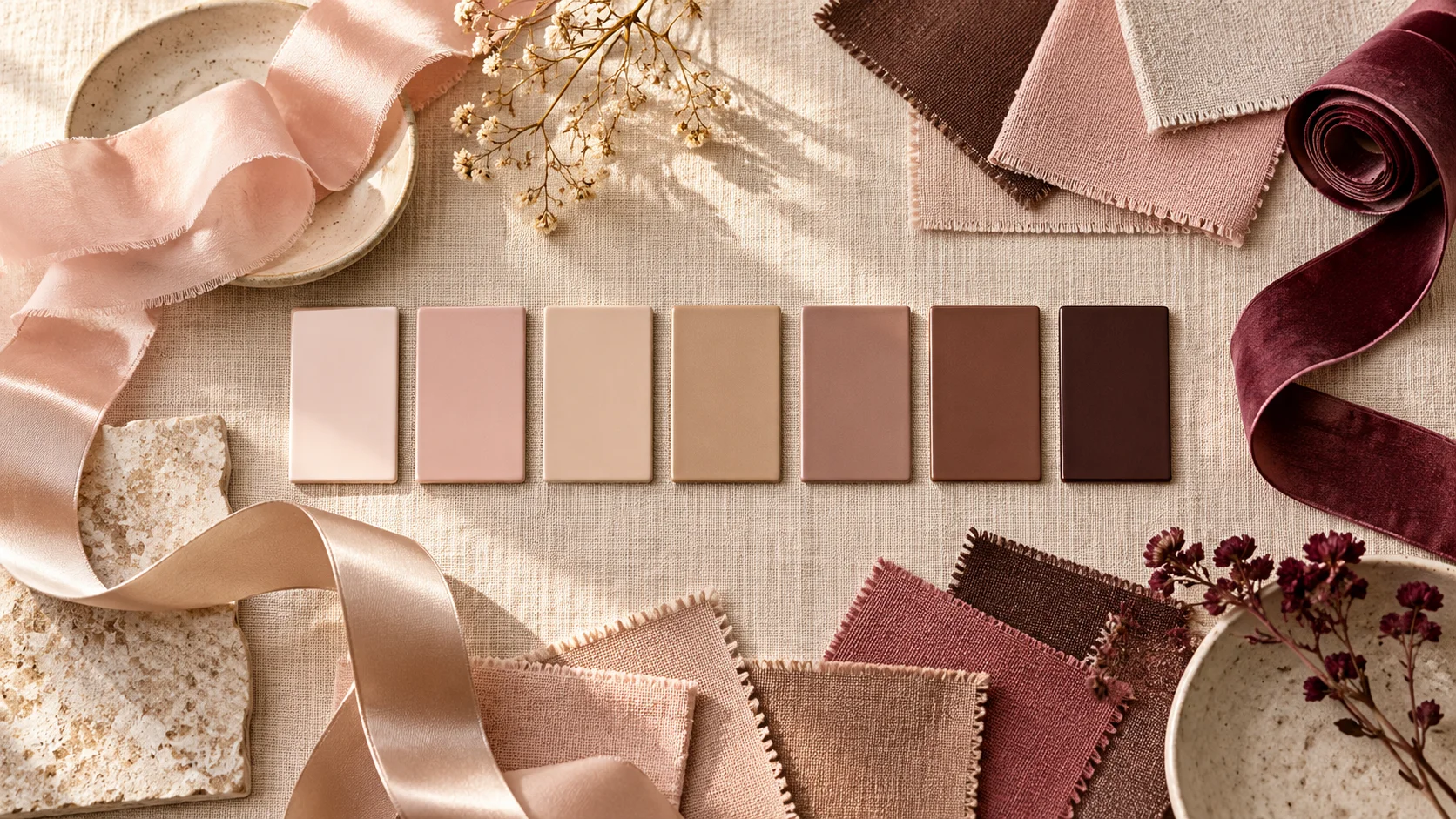
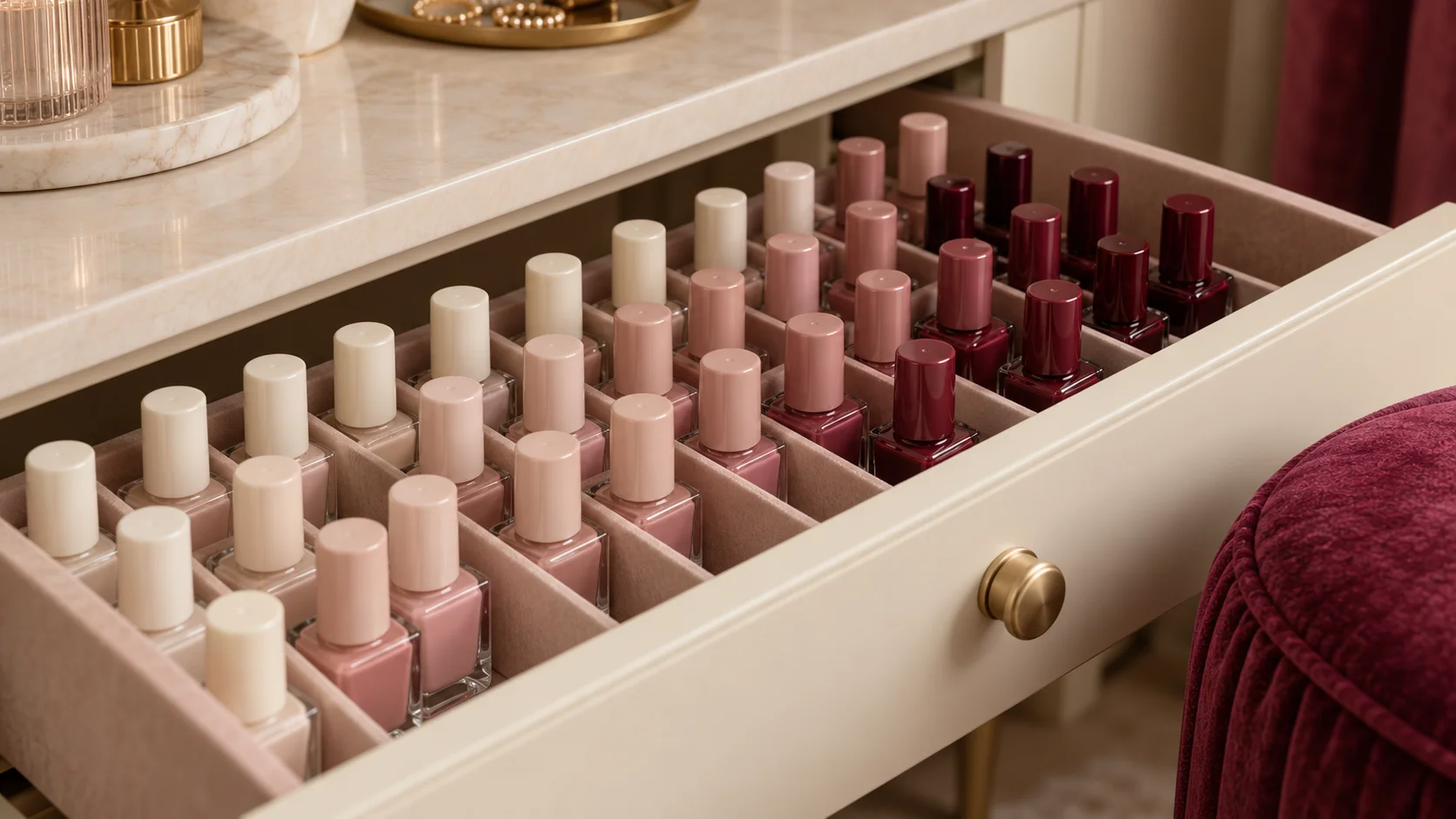
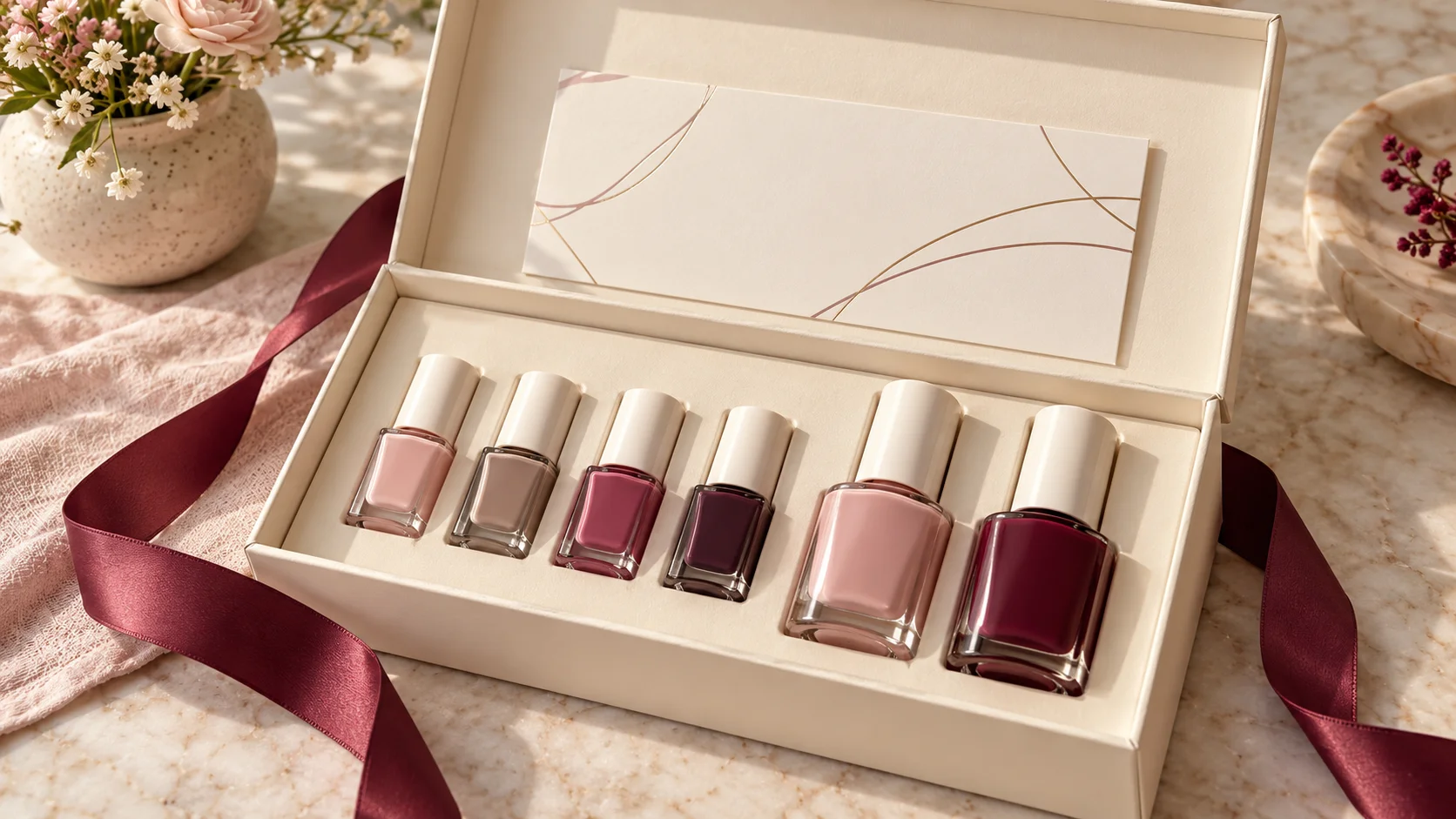
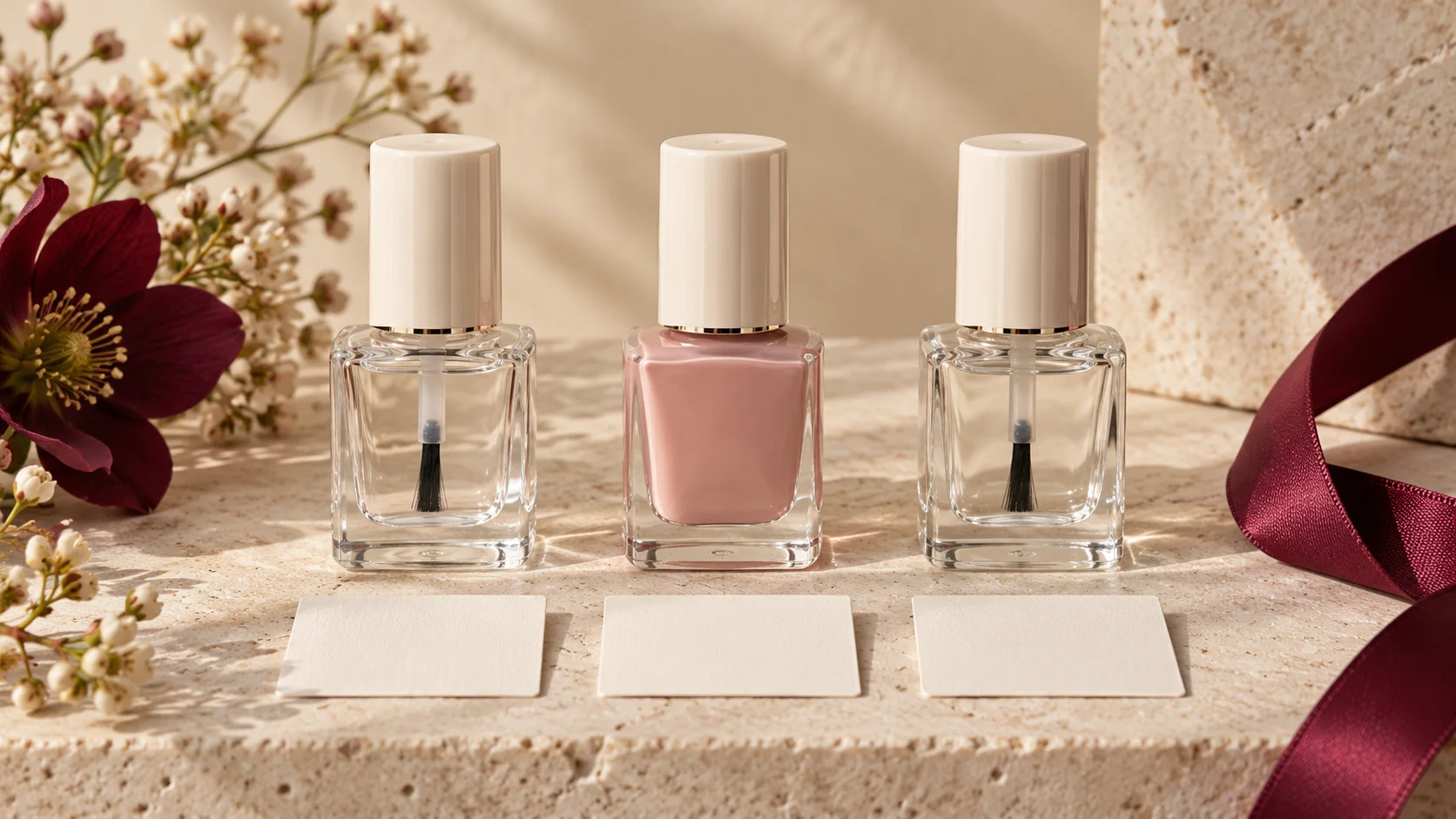
Building a Small Nail Polish Collection with Versatile Colours
Plan a useful colour collection around your favourite finishes, actual routines and a few distinct roles.
Archive edition: 2026-08-21 · This is an editorial allocation, not the first-publication date.
Key takeaways
- List what you already enjoy wearing.
- Identify a genuinely missing colour or finish role.
- Check the complete application and removal routine.
- Compare against existing bottles before buying.
- Add slowly and keep the collection easy to manage.
In this guide
- Key takeaways
- Begin with the manicures you already choose
- Choose a familiar everyday option
- Add depth or contrast deliberately
- Choose an accent because you like it
- Think about finish as well as colour
- Keep the formula collection manageable too
- Leave space before buying the next shade
- Common questions
- Sources and further reading
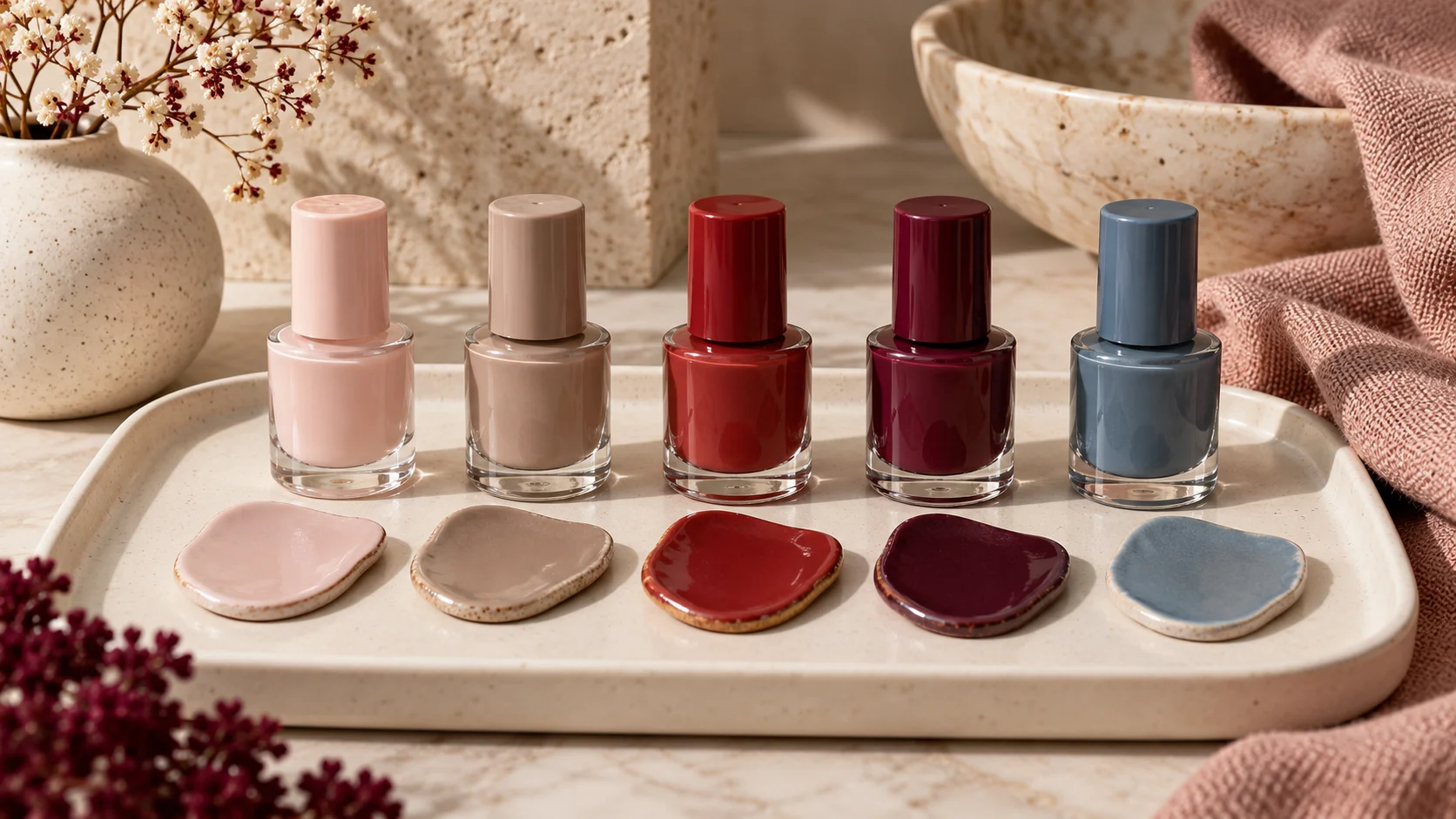
A useful nail polish collection does not need a fixed number of bottles or a fashionable list of must-have shades. It needs colours you enjoy, finishes you understand and a routine you can actually use. A small collection can still offer variety if each purchase has a clear role rather than duplicating something you already own.
The framework below is an editorial planning suggestion, not a universal capsule wardrobe or a ranking based on product tests. Named shades are examples of colour descriptions, not required purchases. Choose around your own taste, schedule and budget without assuming that one neutral, red or dark shade must suit every person.
Begin with the manicures you already choose
Look at the colours you have actually worn over recent months. Separate those from shades you saved in a photograph but never wanted to apply. A collection based on real preferences is more likely to feel useful than one built around the idea of being prepared for every possible trend.
Ask when you paint your nails and how often you enjoy changing them. Someone who likes a simple weekly colour may want a different selection from someone who experiments with small nail-art accents. Your routine is a better starting point than another person’s bottle count.
If you already own polish, make a short inventory before shopping. Record the range, colour family, coverage and finish. Two bottles that look nearly identical in storage may behave differently on the nail, while two differently named shades may fill almost the same role in your routine.
Choose a familiar everyday option
Your everyday shade can be pink, brown, blue, black or anything else you enjoy. Neutral does not need to mean pale, and everyday does not need to mean discreet. The useful question is whether you repeatedly want to wear it without needing a special outfit or occasion.
As one example, Essie describes Ballet Slippers as a pale pink with a sheer finish. That describes a possible soft, translucent role. It does not make the shade a universal nude, a guaranteed match for any skin tone or an automatically opaque option after a particular number of coats.
If you dislike seeing the natural nail through colour, choose your everyday option by coverage as well as hue. A soft pink cream and a soft pink sheer may serve different preferences even when the bottle colours look close. Reading that distinction can prevent an unnecessary second purchase.
Add depth or contrast deliberately
A deeper colour can provide a different mood without requiring a large collection. You might prefer berry, brown, navy or another dark shade. Choose one you can imagine wearing in your actual routine, rather than adding a category because a shopping checklist says it is essential.
OPI describes You Don’t Know Jacques as a dark warm taupe cream. It is an example of a deeper neutral direction, not an instruction that every collection needs that exact bottle. A similar role could be filled by a colour you already own and enjoy.
Compare the potential addition with your everyday shade. Does it provide a meaningful change in depth, hue or finish? If the difference is only visible when the bottles sit together under bright light, it may be a near-duplicate rather than a useful expansion for you.
Choose an accent because you like it
A vivid accent can make a small collection feel varied. Red is one option: OPI describes Big Apple Red as a bright, shiny red. That is a colour example, not evidence that it suits everyone, lasts longer than alternatives or belongs in every starter set.
Your accent could instead be a muted green, a clear blue or a seasonal favourite. Consider whether you want it across every nail or only as a small design detail. If you mainly want a single stripe, the applicator and product compatibility may matter more than buying several full-size accent bottles.
Give yourself permission to omit a colour family. A collection can be complete for your needs without a red, a glitter or a pale pink. Versatility means having useful choices, not meeting an external rule about which colours a manicure enthusiast should own.
| Role | Question to ask | Reason to skip it |
|---|---|---|
| Familiar everyday colour | Would I happily wear this often? | An existing bottle already fills the role |
| Deeper or contrasting shade | Does it feel meaningfully different? | The difference is too subtle to matter to me |
| Personal accent | Do I enjoy this colour beyond one photograph? | I only feel obliged to own it |
| Different finish | Will sheer, cream or shimmer add useful variety? | I dislike the extra application or removal needs |
| Supporting products | Can I use the chosen colours as directed? | The item is optional and unnecessary for my routine |
Think about finish as well as colour
A sheer, cream and shimmer can create different effects even within one colour family. That does not mean you need all three. Decide whether finish variation is something you enjoy using, and check the product instructions before assuming that one finishing layer works with every formula.
If you like a matte effect, confirm that the intended top coat is compatible with the colour system. If you prefer glitter, consider the supported removal method before buying. A finish that looks exciting in a bottle may be less appealing if its routine does not fit the time you want to spend.
Use labelled samples when possible. Note the colour range and the layers used, rather than relying on a single screen image. A photograph is inspiration; it is not a guarantee that your bottle, lighting and natural nail will reproduce the same appearance.
Keep the formula collection manageable too
Buying one colour from several systems can create a larger supporting-product list than expected. Check base coats, top coats, removers and any equipment requirements. A small colour collection is not necessarily a simple routine if each bottle needs a different set of components.
You may prefer to begin with a familiar system and add another only for a clear reason. This is an organisational suggestion, not a claim that products from one brand are always better together. Follow the actual compatibility instructions rather than grouping bottles solely by logo.
Budget for usable routines rather than the lowest price per bottle. A sale bundle is not automatically good value if several shades repeat what you own or if it lacks the required finishing product. Compare what you will use, not just the number of items in the box.
Leave space before buying the next shade
Keep a short wish list with the role each proposed colour would fill. Wait until you have worn the existing choices enough to understand what is missing. You might discover that you want a different coverage level, a more manageable brush or no new colour at all.
Store the collection so you can see the labels and keep the bottles properly closed, following their instructions. A visible, manageable inventory makes accidental duplicates easier to avoid. Review older products by their own condition and durability guidance rather than keeping them indefinitely to preserve a complete colour spectrum.
Build around real use
- List what you already enjoy wearing.
- Identify a genuinely missing colour or finish role.
- Check the complete application and removal routine.
- Compare against existing bottles before buying.
- Add slowly and keep the collection easy to manage.
Explore the Polish & Tools section for colour and system explanations. A small collection works when its choices feel useful to you, not when it recreates somebody else’s definition of the perfect set.
To compare the connected product and routine choices, read Choosing a Nude Nail Polish: Undertones, Coverage and Personal Preference, Nail Polish Storage: Light, Heat and Bottle Care and Nail Polish Gift Sets: How to Compare Useful Colours and Bottle Sizes. For the related care or design question, see Skittle Nails: Building a Five-Colour Palette That Feels Cohesive.
Common questions
How many nail polishes should a small collection contain?
There is no required number. Begin with colours and finishes you genuinely use, then add only when a new bottle fills a distinct role. A smaller usable set can be more versatile for you than a large collection of near-duplicates or formulas needing unfamiliar supporting products.
Does every collection need a nude shade?
No. An everyday colour can be any hue you enjoy wearing often. Nude is not one universal colour, and a pale pink is not automatically everyone’s best neutral. Choose by personal preference, coverage and finish rather than treating a particular shade family as compulsory.
How do I avoid buying nearly identical colours?
Keep a short inventory with range, shade, coverage and finish. Compare a proposed purchase with what you already wear and ask what different role it would fill. Clearly labelled samples can help, while two attractive bottle photographs may hide how similar the finished effects would be.
Is red an essential starter colour?
Only if you want to wear it. A red can provide a vivid accent, but blue, green, berry or another favourite may serve that role better for you. A collection is useful when it reflects real choices, not when it completes somebody else’s list of essentials.
Should I choose different finishes or different colours first?
Start with whichever difference you will actually enjoy using. Sheer, cream and shimmer can create variety within one colour family, but they may have different application or removal needs. Do not add a finish merely for variety if its routine does not suit your preferences.
Is it simpler to stay within one polish system?
It can make organisation easier, but it is not a rule that one brand is universally better. Check the required base, top and remover for each product. Several colour bottles from different systems can create more supporting-product requirements than you expected from the colour collection alone.
Are large sale bundles always better value?
Not necessarily. Compare the shades and usable routines you will actually keep, including any missing supporting products. A low price per bottle is less useful if several colours duplicate what you own or if the set does not include the components needed to use it as directed.
What should I put on a polish wish list?
Record the intended role, such as a deeper contrast or a preferred coverage level, alongside the range and shade. Revisit the list after wearing your existing options. This helps distinguish a lasting preference from a colour that appealed in one photograph but adds little to your routine.
Sources and further reading
- Essie UK — Ballet Slippers — checked 2026-10-22
- OPI — You Don’t Know Jacques Nail Lacquer — checked 2026-10-22
- OPI — Big Apple Red Nail Lacquer — checked 2026-10-23