Base Coat vs Top Coat: Why the Jobs Are Different
Understand where each layer belongs, when a system omits one and why clear-looking bottles are not automatically interchangeable.
Archive edition: 2026-05-18 · This is an editorial allocation, not the first-publication date.
Key takeaways
- Identify the colour system.
- Read which layers it requires.
- Match the base and finish to those instructions.
- Use dual-purpose products only as labelled.
- Keep the product names and removal directions together.
In this guide
- Key takeaways
- Think about the order of the manicure
- What a base coat is intended to do
- Read strengthening language carefully
- What a top coat is intended to do
- Why clear bottles are not automatically interchangeable
- Some systems omit a separate layer
- Keep lacquer and lamp-cured products separate
- Build a small routine you can repeat
- Common questions
- Sources and further reading
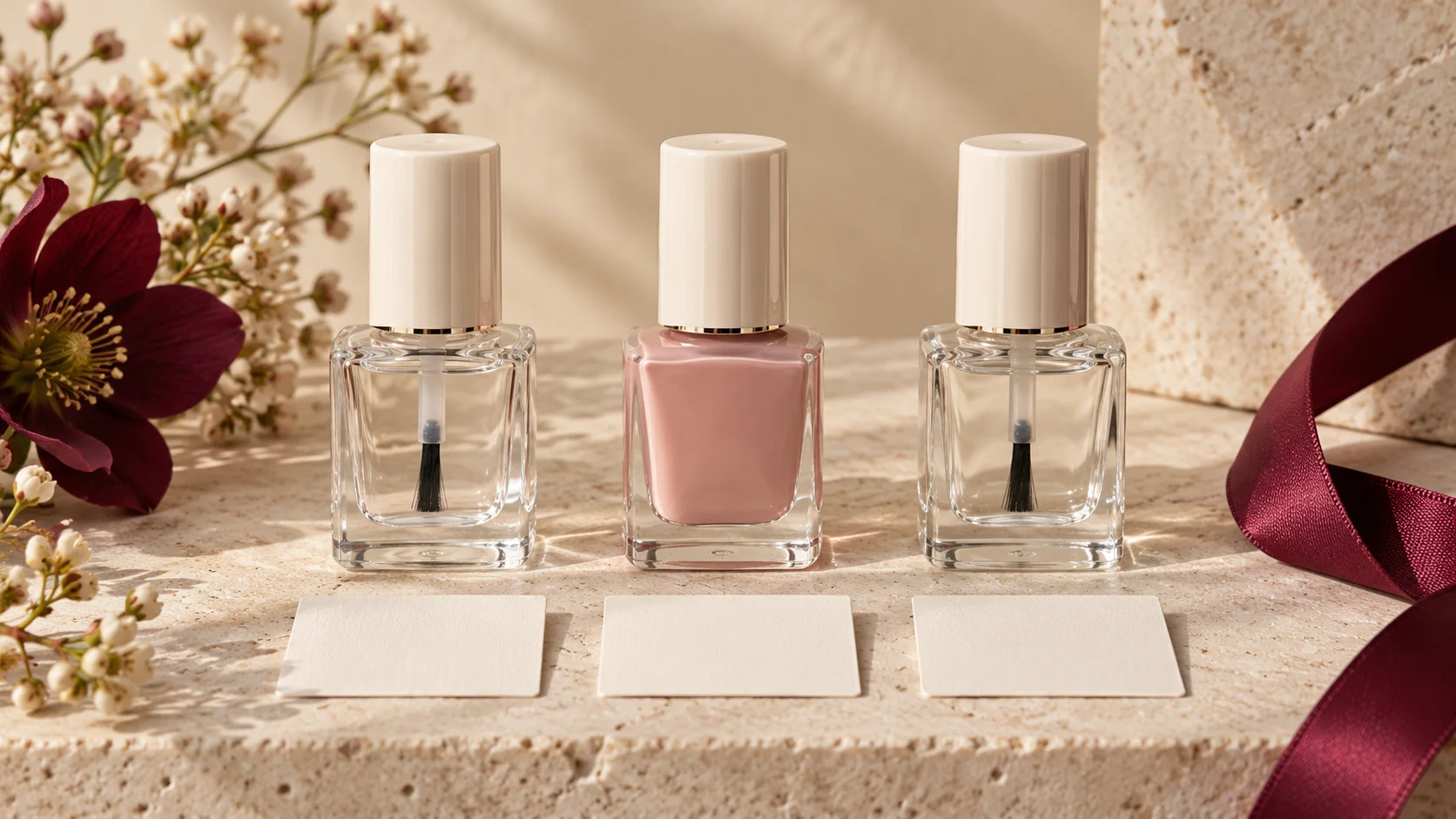
A base coat belongs beneath the colour when the polish system calls for one. A top coat belongs above it when that system requires a finishing layer. Although both bottles may look clear, their position and intended role are different.
The important exception is that not every polish routine uses separate base and top coats. Read the range’s instructions before adding or swapping layers. A tidy manicure routine begins with the products you actually own, rather than a rule that every clear liquid does the same job.
Think about the order of the manicure
In a conventional layered lacquer routine, the base is the first product applied to the prepared nail, followed by colour and then the specified finish. That order helps you understand the labels without needing to identify a formula by its appearance.
Do not arrange bottles by cap colour or texture alone. A clear-looking product might be a base, top coat, treatment, drying aid or another item with different directions. Read the product name and the section explaining how to use it.
If you are buying a new colour, check its routine before selecting the other bottles. You may already have the recommended companions, or the range may use a different sequence from your last manicure.
What a base coat is intended to do
Essie’s product FAQ describes a base as a foundation for its original polish range, helping colour adhere and protecting the nail. That is the manufacturer’s stated role for that routine, not a universal guarantee against every stain or type of nail problem.
Different bases may be marketed for different cosmetic purposes. Some emphasise grip, others appearance or a strengthening claim. Do not assume those descriptions make the products interchangeable, or that a product sold for one purpose is necessary for every manicure.
Check whether the base is intended for your colour system and whether it should be worn alone or under polish. The answer belongs to the actual product’s instructions. A treatment schedule from another bottle should not be added by guesswork.
Read strengthening language carefully
Essie Strong Start is an example of a base sold with a strengthening claim. We have not tested that claim or assessed whether it is appropriate for an individual nail concern.
A cosmetic product name is not a diagnosis or a reason to dismiss persistent splitting, discomfort or an unexplained change. If a nail problem needs assessment, repeatedly covering it with a product labelled strengthening is not a substitute for appropriate advice.
Likewise, an ingredient highlighted in marketing does not by itself establish a clinical benefit. Compare the stated use and directions, and avoid assuming that adding another treatment layer makes the complete routine more effective.
What a top coat is intended to do
Essie Stay Longer is presented as a finishing product for shine and protection against chips. These are top-coat functions in the manufacturer’s description, rather than the under-colour role of a base.
A finish can also be a visual decision. If you choose a glossy or matte product, check that it is intended for the colour beneath it and that the resulting appearance matches your plan. Do not assume every top coat preserves every special-effect finish unchanged.
A wear-period claim does not promise that every manicure will remain perfect for that long. We have not conducted a comparative wear test, and the presence of a top coat does not remove the need to follow the complete product routine.
| Product role | Typical place in a specified lacquer routine | Question to ask |
|---|---|---|
| Base coat | Under the colour | Is this the base recommended for this range? |
| Top coat | Over the colour | Does this finish suit the colour and intended effect? |
| Combined product | Only the roles stated on its label | Does the manufacturer explicitly permit both uses? |
| One-step colour system | Separate layers may be unnecessary | What does the actual range require or allow? |
Why clear bottles are not automatically interchangeable
A base and a top coat may look similar in the bottle, but that does not establish that each performs the other’s intended task. Use the position specified on the label rather than swapping them because one bottle has run out.
If a product explicitly says it can serve as both base and top coat, follow that product’s directions. That is a specific dual-use instruction, not evidence that every top coat can be used underneath colour or every base can finish it.
When a label is worn away or the identity of a bottle is uncertain, do not guess from how the liquid feels. Check your purchase record or ask the manufacturer. A missing label is an information problem, not a reason to invent a use.
Some systems omit a separate layer
Essie’s FAQ distinguishes its original polish routine from gel couture and expressie. Those examples show why the decision about layers follows the range. A familiar step from one manicure is not automatically required in another.
Read what is required, what is optional and what is not mentioned. If the manufacturer names an optional finishing product, keep that permission specific. It does not establish that any bottle marketed as quick-dry or gel-like will work in the same way.
A simpler sequence is not an incomplete manicure when it is the stated process for that system. Conversely, a colour that expects a separate finishing layer should not be assumed equivalent to a one-step product.
Keep lacquer and lamp-cured products separate
Check whether each bottle belongs to an air-drying lacquer range or a lamp-cured system. The words base and top coat are used in both contexts, but the processes and compatibility requirements can differ.
Do not add a gel layer over ordinary colour simply because you want more shine or longer wear. This guide does not establish a mixed-system curing method. Ask about a supported combination rather than trying to build one from similar-looking bottles.
If a professional applies the product, ask which system is being used and how it will be removed. Keep that information with the service record so that the later removal decision does not depend on remembering only the shade.
Build a small routine you can repeat
Place the chosen products in order before beginning and read any drying instructions. Avoid adding several extra layers because each bottle promises a separate benefit. More steps can create more uncertainty about whether you are still following the intended process.
Keep the labels visible in storage and close the bottles as directed. When reordering, confirm the exact product rather than choosing the closest-looking replacement. Similar packaging is not the same as confirmed compatibility.
If your result is disappointing, record the actual products and sequence before changing them. That gives the manufacturer a clearer question and helps you avoid replacing every part of the routine at once without knowing what differed.
Let the range define the routine
- Identify the colour system.
- Read which layers it requires.
- Match the base and finish to those instructions.
- Use dual-purpose products only as labelled.
- Keep the product names and removal directions together.
Browse the Polish & Tools section for more help reading formula labels. Understanding where a product belongs is more useful than judging its role by the clarity or gloss of the liquid.
To compare the connected product and routine choices, read Regular Nail Polish vs Gel-Like Polish: What the Labels Mean, Matte vs Glossy Top Coat: How Finish Changes the Same Colour and OPI Nail Lacquer vs Infinite Shine: Comparing the Two Systems. For the related care or design question, see Do Nails Need to Breathe? Understanding Manicure Breaks.
Common questions
What is the main difference between a base and top coat?
When a polish system calls for separate layers, the base goes beneath the colour and the top coat finishes it. Their intended jobs differ even when both look clear. Read the full product names and directions rather than deciding their role by the appearance of the liquid.
Can I use a top coat as a base coat?
Only use a product for both roles when its manufacturer explicitly supports that use. A clear finish is not automatically interchangeable with a base. If one bottle has run out, check for a compatible replacement rather than swapping the layers solely because they look similar.
Does every nail polish need a base coat?
No universal routine applies to every range. Some systems specify a separate base, while others incorporate functions into the colour or use a different sequence. Read the current directions for the exact product, and distinguish required layers from optional additions before beginning.
Will a base coat prevent every kind of staining?
This guide does not make that guarantee. A manufacturer may describe protection as one purpose of a base, but that is not proof against every outcome with every colour and routine. Use the compatible product as directed and do not substitute a cosmetic claim for assessment of an unexplained nail change.
Is a strengthening base a treatment for a nail problem?
A strengthening label is a cosmetic product claim, not a diagnosis or proof of a clinical benefit for your situation. We have not tested those claims. Persistent problems or unexplained changes deserve appropriate advice rather than repeated concealment under another product.
Can I mix a lacquer base with a gel top coat?
Do not assume compatibility across air-drying and lamp-cured systems. Check the exact manufacturer guidance before combining products. The labels base and top coat describe positions in different routines, and a similar final shine does not establish that their application or curing requirements match.
Does a top coat guarantee the advertised wear period?
No personal wear guarantee is made here. Manufacturer claims depend on their stated conditions, and we have not conducted comparative wear tests. Follow the complete routine and choose a finish that suits your intended appearance rather than treating the top coat as insurance against every chip.
How should I organise a simple polish routine?
Identify the colour range, list its required layers and keep the exact product names together. Read application and removal instructions before starting, then separate optional extras from the basic sequence. If a result is unexpected, record what you used before changing several products at once.
Sources and further reading
- Essie — Strong Start Base Coat — checked 2026-10-22
- Essie — Stay Longer Top Coat — checked 2026-10-22
- Essie — Product FAQ — checked 2026-10-22