HEMA-Free Gel Labels: What They Do and Do Not Tell You
Read HEMA-free claims alongside the full product identity, application instructions and any personal allergy advice.
Archive edition: 2026-10-02 · This is an editorial allocation, not the first-publication date.
Key takeaways
- Claim: read the specific ingredient statement.
- Contents: identify the exact version and full service.
- System: follow the relevant application instructions.
- History: use clinical advice for symptoms or confirmed allergy.
In this guide
- Key takeaways
- Understand what HEMA names
- Confirm the actual product version
- Look at the whole service, not just the colour bottle
- Application still matters
- If you have had a reaction, pause before switching
- Use clinical results as a document, not a remembered slogan
- Keep other marketing claims in their own categories
- Claim, contents, system, history
- Common questions
- Sources and further reading
A HEMA-free label answers a narrow ingredient question. It does not, by itself, tell you whether a gel product is suitable for your history, whether the rest of the system is compatible or whether a previous reaction has been understood. Read it alongside the full product information rather than treating it as a complete safety verdict.
That distinction matters both when choosing a new service and when responding to a concern. A label can help identify a formulation; it cannot diagnose an allergy. If you have symptoms or previous clinical advice, bring those facts into the discussion before another application.
Understand what HEMA names
HEMA is short for 2-hydroxyethyl methacrylate, one of the substances discussed in DermNet’s guide to acrylate allergy. It is not a name for every ingredient used in a gel manicure. Other substances within this wider chemistry can also be relevant to contact allergy.
Consequently, excluding HEMA does not establish that a product excludes every possible allergen. This is a limit of the claim, not a statement that all formulations behave identically. The information needed for a personal decision depends on the actual product and any relevant assessment.
Avoid turning the word into a simple good-versus-bad ranking of salons. Ask what the provider uses, why it fits the intended service and how the system instructions are followed. That discussion is more informative than judging the entire appointment from one phrase.
Confirm the actual product version
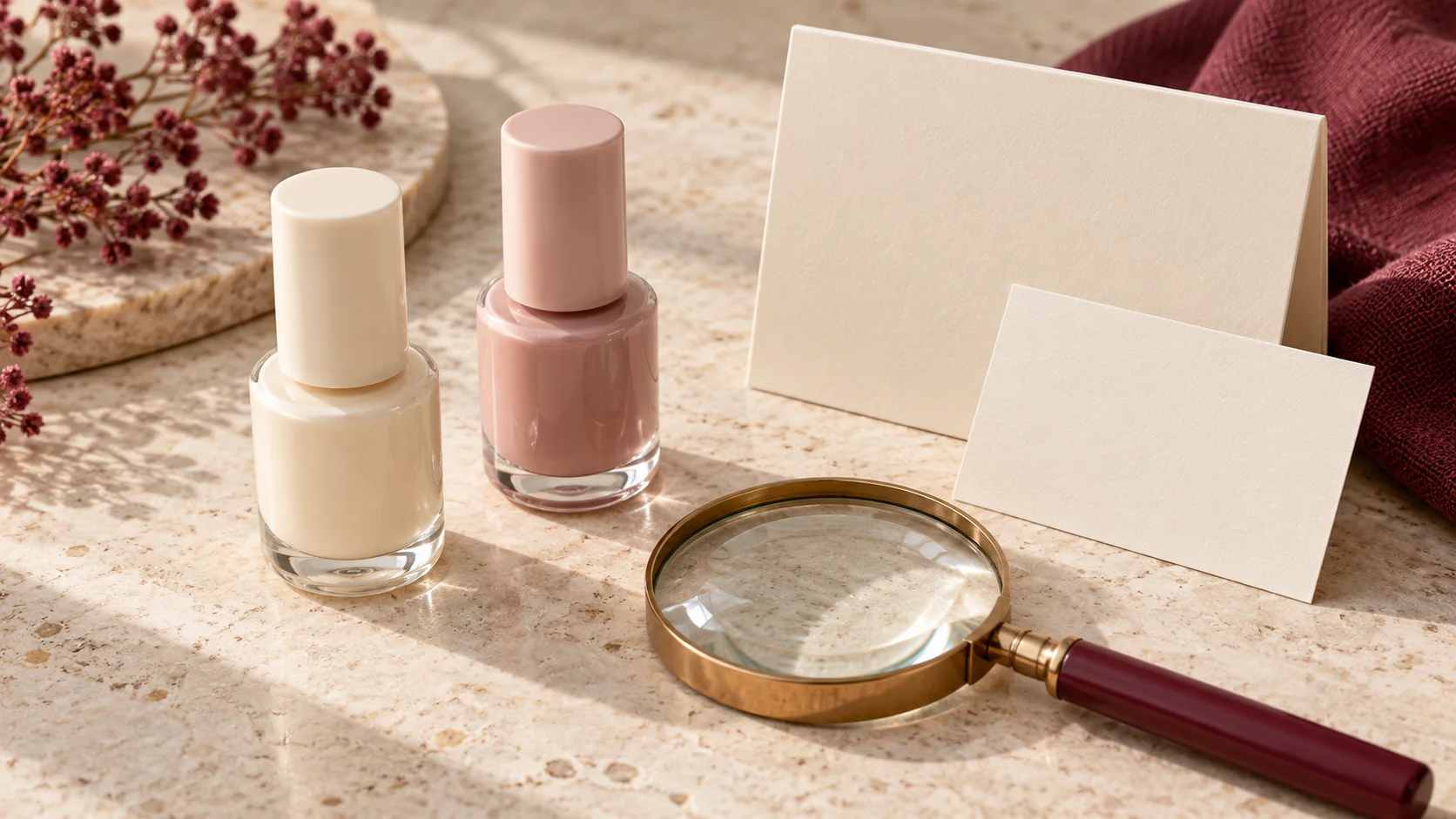
Brands may offer different formulations under related names. The GelBottle’s formula update information, for example, describes named Original and HEMA-free versions. A familiar shade name or bottle colour may not be enough to identify the version used at a particular appointment.
Ask the provider to record the exact product and version rather than only the colour. If you are buying a product, compare the current manufacturer information with the packaging supplied. When details are unclear or inconsistent, seek clarification instead of resolving the discrepancy by assumption.
Keep a photograph of the relevant label or a written product list with the appointment date. This helps if the range changes later or another provider needs the history. A saved social-media advertisement is less useful than information tied to the actual product used.
Look at the whole service, not just the colour bottle
A manicure may include preparation products, a base, a builder, colour, top coat or an attachment product. A claim about one component does not automatically describe all the others. Ask which products are included in the service and whether the claim applies to each relevant component.
If a provider says “we use HEMA-free gel”, ask what that means for the exact booking. It is a reasonable request for clarity, particularly when you have been advised to avoid a substance. Do not assume that every item on the desk shares the same formulation.
Keep the questions specific and manageable. You are trying to identify the system and obtain usable information, not perform a chemistry assessment at the manicure table. A clinician can help interpret ingredient information in relation to confirmed findings where needed.
| Information | What it can help establish | What remains separate |
|---|---|---|
| HEMA-free claim | The stated exclusion of one ingredient | Other ingredients and personal suitability |
| Exact product version | Which formulation is being discussed | Whether every service component matches the claim |
| Ingredient information | Material for an informed review | A diagnosis from symptoms alone |
| Application instructions | The intended system and process | A guarantee that no reaction can occur |
| Clinical findings | Individual avoidance advice | Permission to ignore product instructions |
Application still matters
The British Association of Dermatologists warns about uncured nail-product contact with skin and inadequate curing. A formulation label does not remove the need to follow the actual system instructions, including the appropriate lamp and application process.
Do not use a HEMA-free claim as a reason to let uncured material touch skin or to experiment with an unrelated lamp. Nor should a client be expected to design a curing schedule from a product slogan. Ask the provider how the proposed system is used as intended.
If a new version changes the instructions, those details need checking rather than carrying over every step from an older product. The same colour appearance does not prove that two formulations are interchangeable for every technical purpose.
If you have had a reaction, pause before switching
Changing to a bottle with a different label is not a way to establish what caused itching, soreness or a rash. The BAD explains that irritant and allergic contact dermatitis can resemble one another. A clinical history and, when appropriate, specialist testing help investigate the cause.
Pause further nail-cosmetic application while arranging suitable advice about a suspected reaction. Record the symptoms, timing and actual products involved. Do not add a new exposure simply to see whether it produces the same result.
Do not apply uncured gel directly to the skin as a home patch test. DermNet specifically cautions against deliberate testing with acrylate monomers in that way because it can cause sensitisation. A salon test nail is not equivalent to a controlled clinical investigation.
Use clinical results as a document, not a remembered slogan
If you have patch-test results or written avoidance advice, keep the actual record available. Share it with the healthcare professional or provider as appropriate. A remembered phrase such as “allergic to gel” may omit information needed to discuss a proposed product.
Ask the clinician how the findings should guide future cosmetic choices and what information they need to review an ingredient list. Do not create your own substitutions from similar-sounding chemical names. The relationship between a result and a product is a question for informed advice.
Tell healthcare professionals about a confirmed allergy when relevant, including dental or other treatment discussions. Do not cancel necessary care based on an internet list of materials. Give the treating professional the findings so they can consider suitable options for the actual procedure.
Keep other marketing claims in their own categories
A product may also be described as vegan, natural-looking or free from another named ingredient. Those claims concern different questions. None should be silently translated into a promise that the product cannot irritate or cause allergy for any person.
Likewise, the appearance of a glossy finished manicure does not verify a label or establish the condition of the skin underneath. Keep product identification, application and personal symptoms as separate sources of information. This avoids asking a photograph or a slogan to answer something it cannot show.
If a seller cannot provide clear information for the product being supplied, choose a route that allows the uncertainty to be resolved before use. You do not need to complete a purchase or appointment merely because a reassuring phrase appeared in the advertisement.
Claim, contents, system, history
- Claim: read the specific ingredient statement.
- Contents: identify the exact version and full service.
- System: follow the relevant application instructions.
- History: use clinical advice for symptoms or confirmed allergy.
Use HEMA-free information as one part of an informed choice, with its scope kept clear. The Gel & BIAB section provides related consultation and reaction-awareness guides without treating any ingredient label as personalised medical clearance.
Before settling the service plan, compare Gel Nail Allergies: Symptoms to Get Checked and Products to Pause, Gel Polish and UV Lamps: Safety Questions Worth Asking and A Salon Consultation Checklist for Gel and BIAB Appointments. For the related everyday care or design question, see How to Read Nail Polish Ingredient and Safety Labels.
Common questions
Does HEMA-free mean allergy-free?
No. The claim concerns one named ingredient, while other ingredients and the wider service still need consideration. It does not diagnose a previous reaction or provide personalised clearance. Use the actual product information and relevant clinical advice rather than treating the phrase as a complete safety guarantee.
What does HEMA stand for?
HEMA is short for 2-hydroxyethyl methacrylate, one substance within the wider chemistry discussed in acrylate-allergy guidance. It is not a name for every ingredient in a gel manicure. Excluding it does not by itself describe the rest of the formulation or all products used in the service.
Can a familiar shade have more than one formulation?
Yes, related ranges or versions can use different formulations. Confirm the exact product and version used at the appointment instead of relying only on the shade name or bottle appearance. Keep that information with the application date so a later change does not obscure the history.
Does the claim on the colour apply to the base and top coat?
Do not assume it does. A manicure can involve several preparation, attachment and coating products with separate information. Ask which components are included and what the claim means for each relevant one. A statement about a single bottle does not automatically describe the entire service.
Can I test a HEMA-free gel on my skin before using it?
Do not deliberately apply uncured gel to skin as a home allergy test. Acrylate guidance warns that this can cause sensitisation. A salon test nail is not equivalent to specialist patch testing. Seek appropriate clinical advice if you are investigating symptoms or a possible previous reaction.
Do HEMA-free products still need the recommended curing system?
Yes. A formulation claim does not replace the actual application and lamp instructions. Avoid treating it as permission for skin contact or an improvised curing process. Ask the provider how the specific version is used as intended, especially when changing from an older product.
What should I do if I already have patch-test results?
Keep the actual report and individual avoidance advice available for relevant product and healthcare discussions. Ask a clinician how the findings apply to a proposed formulation. Do not rely only on a remembered ingredient name or invent substitutions from chemicals that sound similar.
Can I switch labels to find out what caused a rash?
Do not use another application as an experiment to diagnose the cause. Pause further nail cosmetics while arranging suitable advice and record the original symptoms, timing and products. Irritant and allergic problems can resemble one another, so a change of label does not settle the question.
Sources and further reading
- The GelBottle — Formula update FAQs — checked 2026-10-21
- DermNet — Allergy to acrylates — checked 2026-10-21
- BAD — Artificial nails warning — checked 2026-10-21
- BAD — Contact dermatitis — checked 2026-10-21