Looking After Natural Nails After Removing Extensions
Plan simple care after extension removal, record the product used and recognise concerns that need professional assessment.
Archive edition: 2026-08-17 · This is an editorial allocation, not the first-publication date.
Key takeaways
- Record: save the system and removal details.
- Observe: describe changes without testing or picking.
- Simplify: choose manageable length and clear care instructions.
- Review: seek advice for symptoms before another covering.
In this guide
- Key takeaways
- Get the product and removal details before leaving
- Separate a changed appearance from a health concern
- Agree a manageable shape without chasing symmetry
- Make aftercare easy to repeat
- Avoid turning every uneven patch into another treatment
- Know when to change the plan
- Record, observe, simplify, review
- Plan a follow-up that answers a specific question
- Choose the next manicure on its own merits
- Common questions
- Sources and further reading
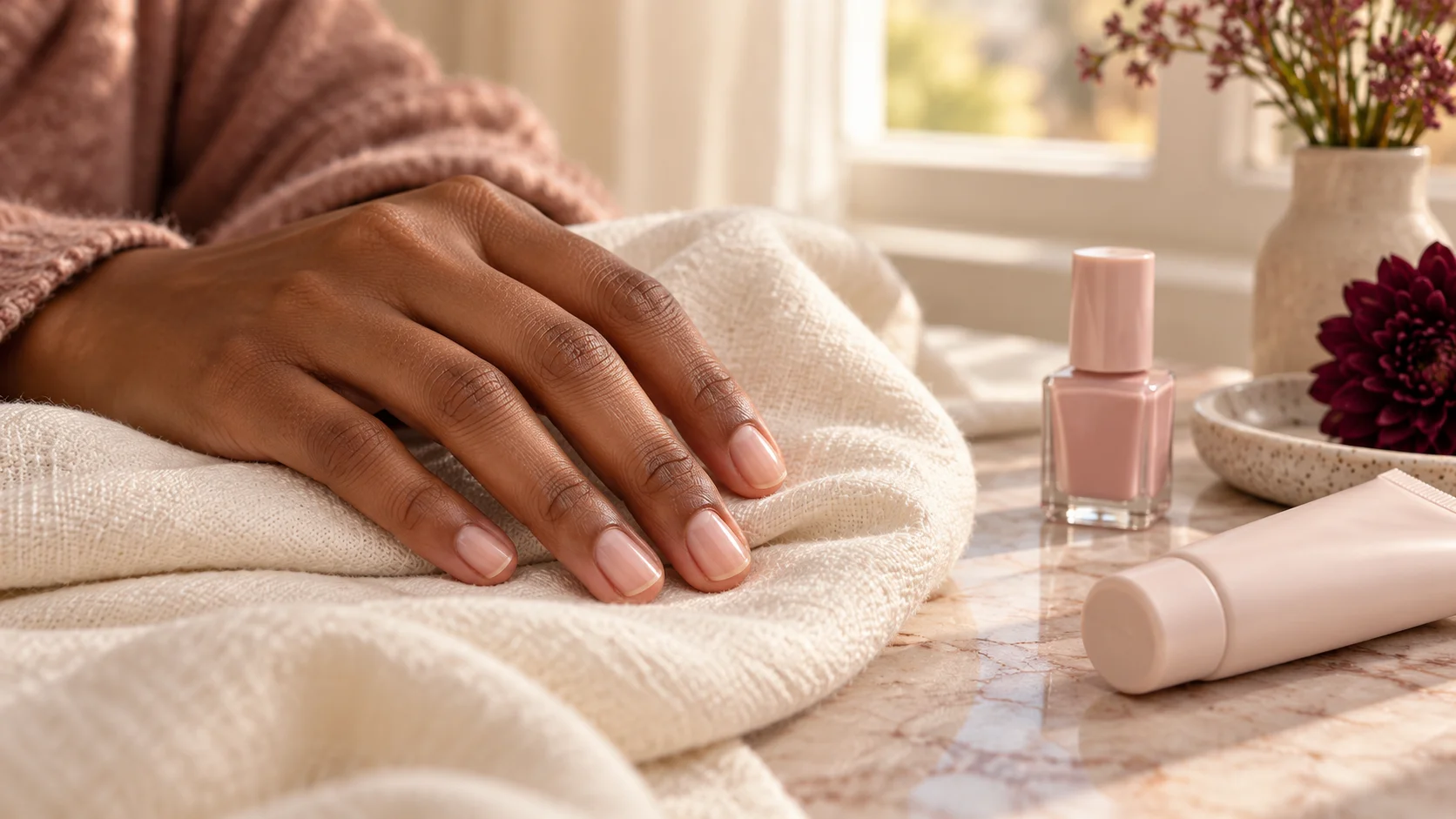
After removing extensions, the most useful starting point is to understand what is on your nails now and how they feel. A short natural nail can seem unfamiliar after weeks of added length. That change in appearance is separate from tenderness, lifting or other symptoms that deserve attention.
You do not need an elaborate recovery kit or a promised seven-day transformation. A practical plan starts with the product history, a comfortable outline and a few clear questions. This guide is about organising care after removal; it is not a universal method for removing acrylic, hard gel or another enhancement system.
Get the product and removal details before leaving
Ask the provider for the name of the system used and what was done at removal. Establish whether the service left a deliberate layer of product or whether the nails are bare. Those details help avoid guessing later when a smooth patch, ridge or unfamiliar finish catches your eye.
A useful note might read: “Extensions removed on Tuesday; provider says a thin layer of this named product remains; these are the maintenance instructions.” Keep the actual wording and a photograph of any aftercare card. Do not substitute a product name from a previous appointment if the system changed.
If you removed the product yourself and do not know what it was, say so honestly when seeking advice. There is no advantage in choosing a confident-sounding label. Describe what you used, how long the process took and anything that felt uncomfortable without trying to diagnose the result.
Separate a changed appearance from a health concern
The AAD explains that preparation, maintenance and removal of artificial nails can damage natural nails. It also cautions against covering damaged nails. This makes a brief look at your bare nails more useful than immediately booking another covering to hide every imperfection.
Describe what you observe in ordinary terms. Is the concern about length, colour, a rough free edge or a sensation? Does it involve one nail or several? A description helps a provider or clinician understand the issue without relying on ambiguous phrases such as “my nails are ruined.”
Do not repeatedly bend or press a nail to test its strength. You can record how it feels during normal gentle activities instead. An apparent difference from the stiffness of an extension is not, by itself, a measure of damage or a reason to begin a strengthening treatment.
| Detail | Example of a useful note | Why it helps |
|---|---|---|
| Product history | Exact system and provider | Supports product-specific advice |
| Removal outcome | Bare nail or a retained layer | Avoids guessing about the surface |
| Current concern | Which nail, what changed, when | Makes follow-up more precise |
| Next step | Care instructions and contact route | Keeps the plan easy to follow |
Agree a manageable shape without chasing symmetry
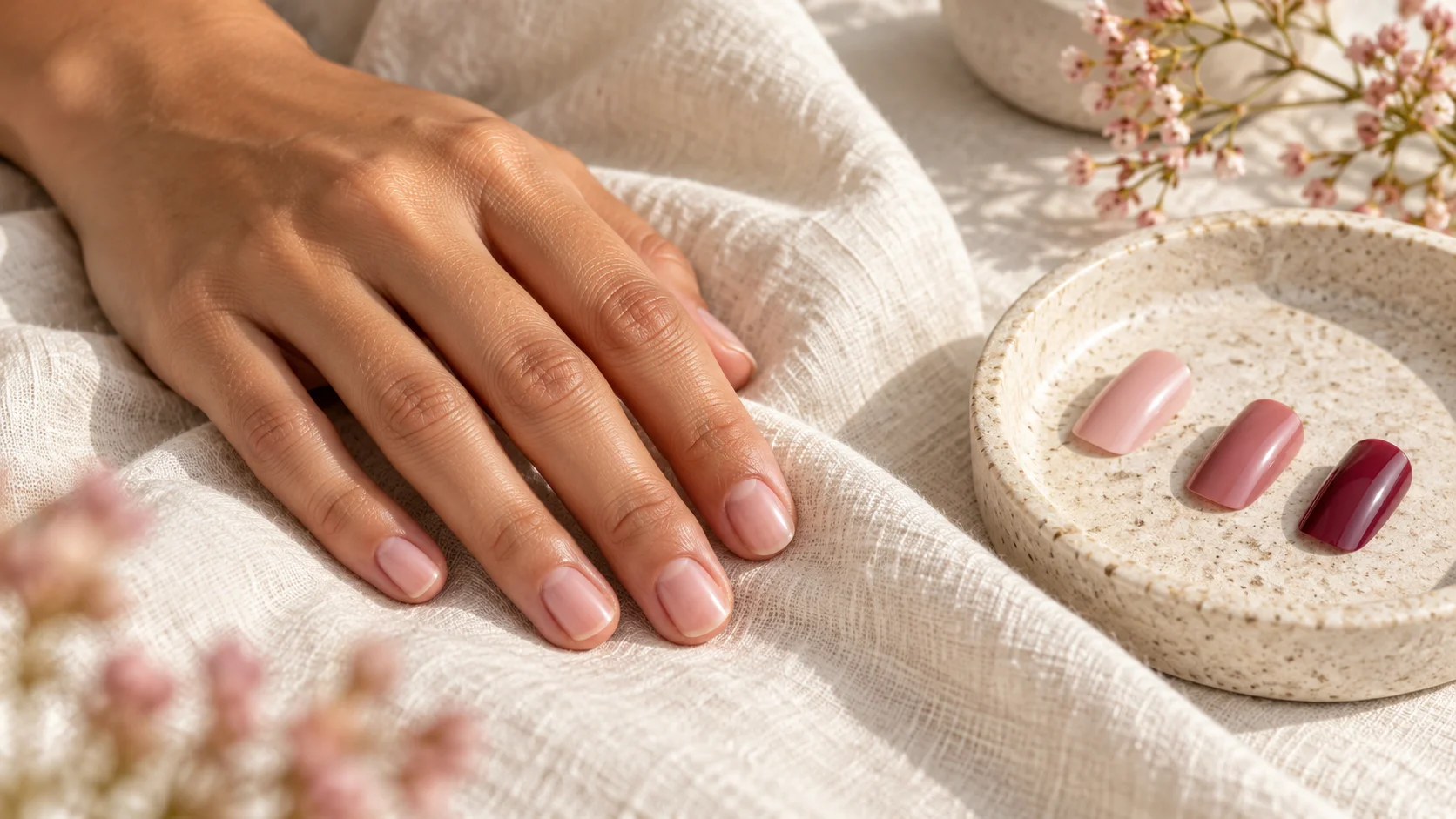
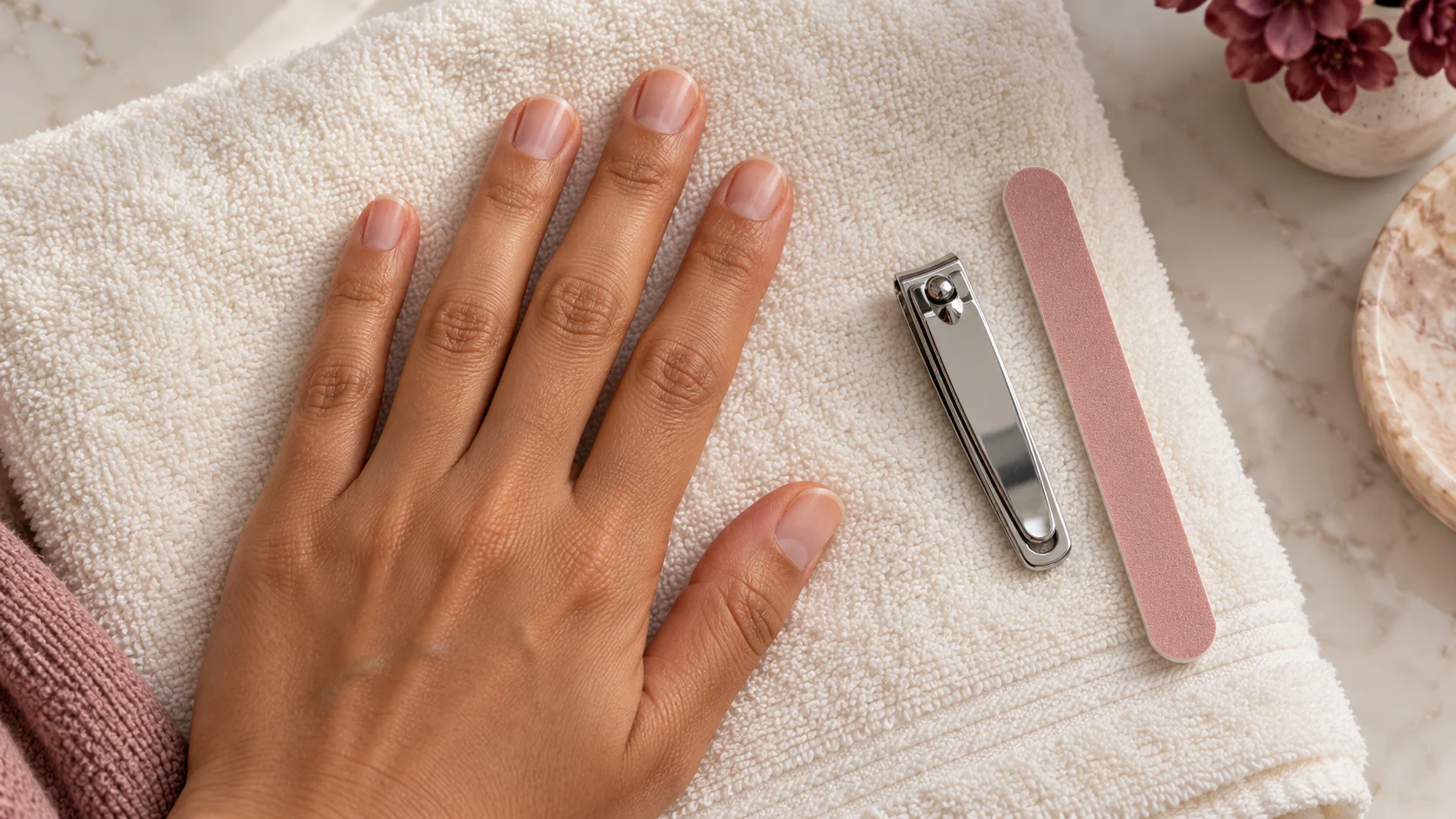
Decide how much free edge is comfortable for your actual week. Typing, fastening clothes and handling small objects may feel different without the extension length. A shorter outline can be an intentional style choice while you get used to your natural nails again.
Ask the provider to show you the proposed length before a large adjustment. If the nails are uneven, discuss whether every nail needs to match exactly or whether a small variation is acceptable. The desire for a perfect row should not automatically dictate further work on every surface.
If product remains, ask how any future shortening should be handled. A natural-nail grooming routine is not automatically appropriate for an unfamiliar coating or enhancement. Keep those instructions with the product name so that a later appointment starts from accurate information.
Make aftercare easy to repeat
Choose a simple place for the care items you already use and tolerate. A cream near the handwashing area and your aftercare note in your phone can be more practical than several new purchases. The aim is a routine you understand, with fewer opportunities to confuse one product’s directions with another’s.
Introduce any new cosmetic cautiously according to its label, and stop using a product that causes irritation. A complicated collection can make it harder to identify what changed if a problem appears. Record the product name rather than describing it only as “the pink bottle.”
Plan hands-on jobs sensibly around the appointment. If you know you will be doing a large cleaning project, organise the appropriate tools and protection beforehand. Avoid using the newly shortened tips as improvised scrapers or openers simply because they now feel easier to reach with.
Avoid turning every uneven patch into another treatment
After removal, it is tempting to keep filing until the surface looks completely uniform. Ask what the patch is before working on it. A residual product layer and a natural surface change need different decisions, and neither can reliably be identified from a distant social-media photograph.
The AAD’s gel-manicure guidance discourages picking at product. Carry that principle into follow-up decisions: a catching remnant is a reason to contact the provider for system-specific advice, not an invitation to peel it off.
Be cautious about services described only as repair. Ask what will actually be applied, what preparation is involved and how it will eventually be removed. A reassuring treatment name does not tell you whether the service suits your current nails or the concern you have described.
Know when to change the plan
Seek advice for a painful nail or an unexplained change rather than assuming everything is a normal stage of removal. The NHS nail-problems page explains when GP assessment is appropriate. Give the clinician the product history and timing as well as the visible symptom.
Keep a future manicure booking flexible if a concern is unresolved. Tell the salon before the appointment, particularly if you have been advised to avoid a service. The provider can discuss the booking while a clinician addresses the health question; those are different parts of the decision.
Record, observe, simplify, review
- Record: save the system and removal details.
- Observe: describe changes without testing or picking.
- Simplify: choose manageable length and clear care instructions.
- Review: seek advice for symptoms before another covering.
Plan a follow-up that answers a specific question
If you contact the salon after removal, include the appointment date and the concern in one message. For example: “There is a rough area near the tip of my right index nail. Was a layer left there, and how should it be managed?” This is easier to answer than sending several close-up images without explaining which nail they show.
If you are seeking clinical advice instead, describe symptoms and timing rather than asking the clinician to rate the salon’s technique from a photograph. Keep any receipts or product information available, but lead with the current concern. The purpose of follow-up is to establish the appropriate next action. It is not to secure an instant promise that another manicure will solve the problem or to decide fault before the facts are clear.
Choose the next manicure on its own merits
There is no single calendar deadline at which every person’s nails become ready for the same service. Your next decision should account for how the nails are doing, any professional advice and the preparation the proposed service requires. A booked event is a planning constraint, not evidence that a nail is ready.
You may enjoy a natural finish, a simpler colour service or a future return to extensions. Keep the choice open until the relevant questions are answered. Explore our Nail Care guides for related everyday routines, and use your own product history to make the next consultation more useful.
For the related parts of your care routine, read Nail Peeling After a Manicure: Gentle Care and Warning Signs, Do Nails Need to Breathe? Understanding Manicure Breaks and How to Care for Nails Between Salon Appointments. For the relevant product or service decision, see How to Prepare for a Gel Removal Appointment.
Common questions
Do I need another coating immediately after removal?
Another coating is not an automatic requirement. First establish the condition of your nails and whether product remains, then consider the preparation a new service would involve. If you have symptoms or unresolved concerns, seek advice before choosing another covering.
How long should I wait before extensions again?
There is no single waiting period that suits every person and product history. Discuss your current nails, the proposed service and any clinical advice with the provider. A future event or booking date alone does not establish that a service is appropriate.
What if a thin layer was deliberately left behind?
Ask the provider to identify the layer and explain its care, maintenance and eventual removal. Save those instructions with the product name. Do not assume the surface is bare or try to remove it using directions for an unrelated system.
Should all my nails be cut to match?
Perfect symmetry is optional. Discuss a manageable outline and the smallest useful adjustment rather than automatically shortening every nail to the same point. If product remains or a nail is uncomfortable, get advice specific to that situation before altering it.
Can I peel off a catching remnant?
Contact the provider for advice about the exact system instead of peeling it away. Explain which nail is affected and whether it is painful. A catching area may need attention, but it does not make an improvised removal method appropriate.
Do I need a large recovery kit?
A collection of new products is not the starting requirement. Clear product history, manageable grooming and a simple routine you understand are more useful first steps. Ask what any suggested cosmetic actually does and how it fits the instructions you already have.
What information should I bring to an appointment?
Bring the extension system if known, removal date, method used and details of any remaining product. Describe symptoms and when they began. If you do not know something, say so rather than substituting a product name from an earlier manicure.
Is a short natural manicure only a temporary option?
You can keep a short natural style for as long as it suits your preferences and activities. It does not have to function as a countdown to the next enhancement. Reconsider your options when you have the information needed for that decision.
Sources and further reading
- AAD — Reducing artificial nail damage — checked 2026-10-21
- AAD — Gel manicures — checked 2026-10-21
- NHS — Nail problems — checked 2026-10-21