Nail Polish Gift Sets: How to Compare Useful Colours and Bottle Sizes
Look beyond the box to compare colour choices, bottle volumes, required system components and the recipient’s preferences.
Archive edition: 2026-10-11 · This is an editorial allocation, not the first-publication date.
Key takeaways
- Identify the recipient's preferred system.
- Count colours and supporting items separately.
- Read each bottle's stated volume.
- Check required equipment and removal supplies.
- Choose the selection they are likely to use.
In this guide
- Key takeaways
- Start with the recipient’s routine
- Count colours separately from supporting products
- Compare actual volume, not bottle height
- Evaluate the palette as a usable selection
- Read a starter kit more carefully than a colour bundle
- Check product information and the seller
- Judge value by what will be used
- Common questions
- Sources and further reading
A nail polish gift set is useful when its contents match the person receiving it. The biggest box or highest bottle count is not automatically the best choice. Look at the colours, formula system, bottle sizes and supporting products, then consider whether the recipient will actually enjoy using the routine.
This guide provides a comparison method rather than a current best-buy ranking. Prices, availability and seasonal packaging change. Named sets are examples of how contents can be organised, not a promise that a particular edition is currently available in the UK or that its advertised value represents a saving for every buyer.
Start with the recipient’s routine
Find out whether they use ordinary polish, a no-lamp gel-like range or a lamp-cured system. If you do not know, a brief question about their favourite formula is more useful than guessing from a glossy manicure photograph. Similar finishes can come from very different routines.
Consider how often they change colour and what they already own. Someone who regularly finishes one favourite shade may value a full-size replacement. Someone who enjoys variety may appreciate smaller bottles, provided the colours and formula are suitable. Neither format is inherently more generous or more practical.
If they have mentioned a nail-product reaction or an ingredient they avoid, do not choose a replacement based on vague gentle or natural claims. Ask what products they already use comfortably or choose a gift route that lets them select the item themselves.
Count colours separately from supporting products
A set described as twelve pieces may not contain twelve different colours. As a historical example, OPI’s Holiday 2025 twelve-piece mini pack lists ten colour polishes plus a base and top coat. That is not a defect; it simply means the piece count and colour count answer different questions.
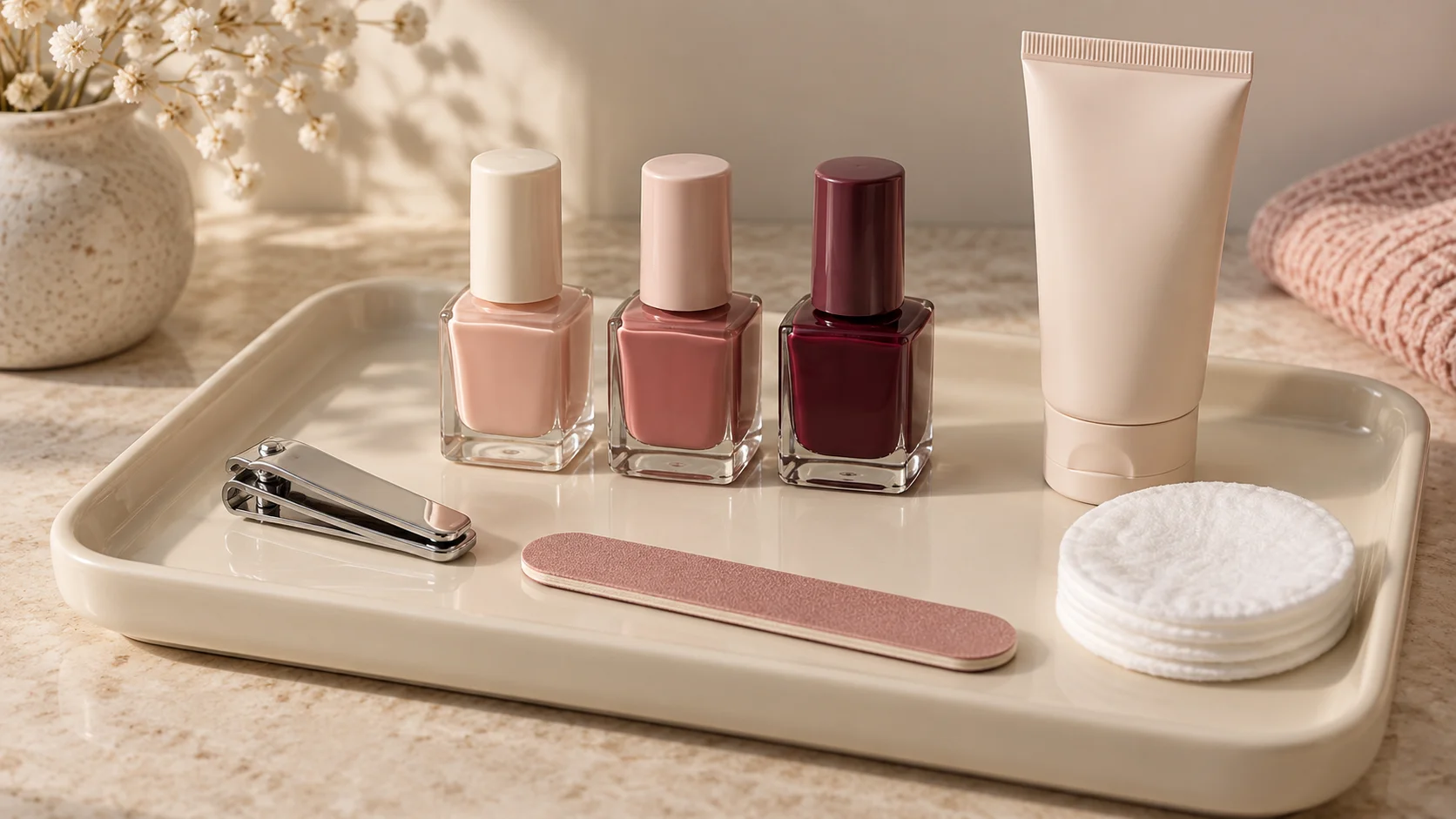
Read the contents list line by line. Separate colour, base, top coat, remover, treatment, tools and decorative extras. A pouch or file may be useful, but it should not be mentally counted as another polish when comparing two sets.
Check whether the supporting items are the ones the colour system requires. A gift can be more immediately usable when the appropriate layers are included. Conversely, an experienced recipient may already own those products and prefer a colour-only set. The useful mix depends on the person, not just the packaging.
Compare actual volume, not bottle height
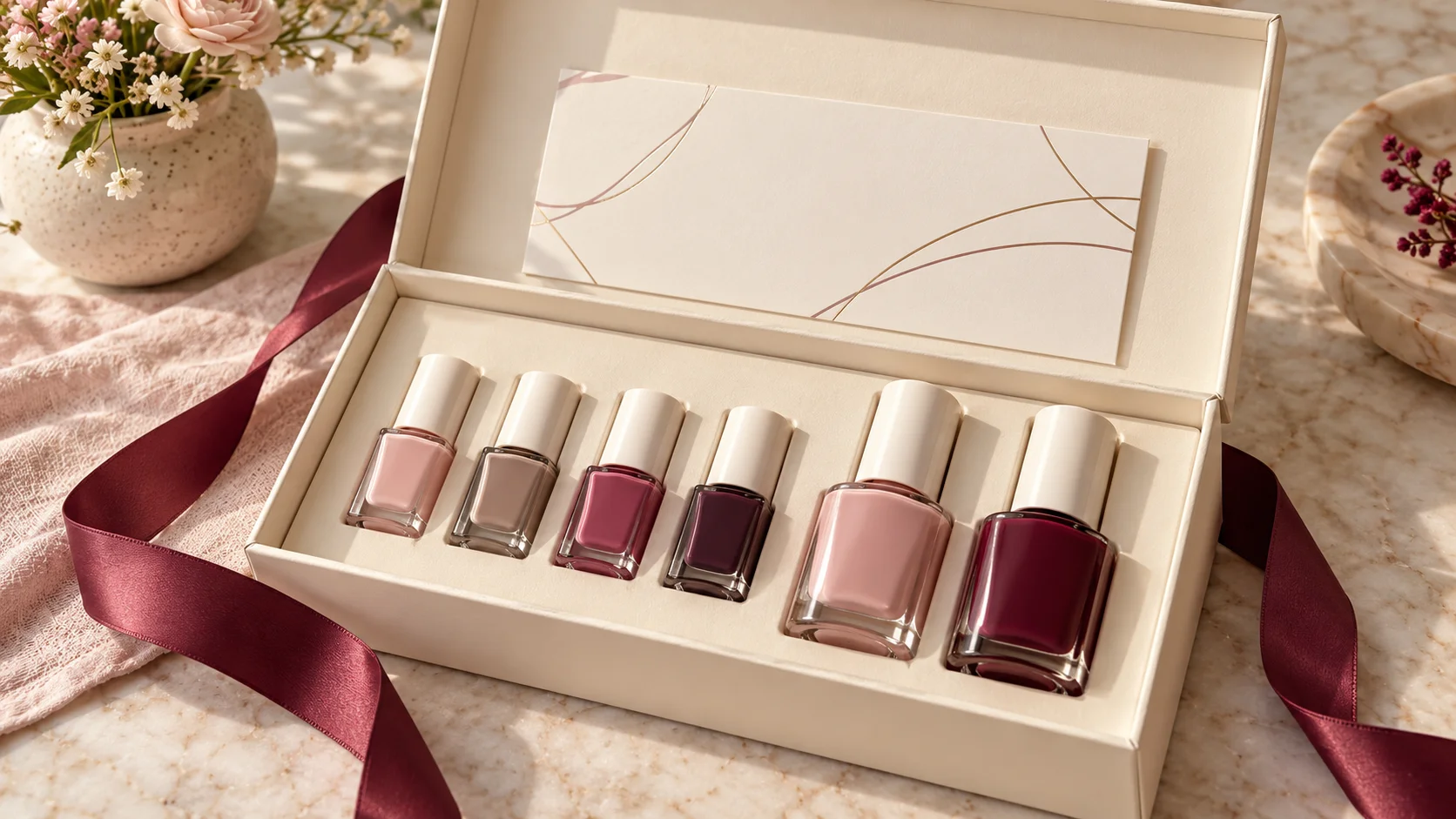
Mini is a size description, not one universal volume. Read the millilitres listed for each bottle. Photographs may use different scales, and a large cap or thick glass can make a small amount of product look more substantial than it is.
For a simple hypothetical comparison, four 5 ml bottles contain 20 ml in total, while two 12 ml bottles contain 24 ml. Those invented examples demonstrate the arithmetic only; they are not specifications for the named sets in this guide. Total volume still does not tell you which collection the recipient would prefer.
Keep supporting liquids separate where that helps the comparison. Ten millilitres of colour and ten millilitres of top coat are both product, but they fill different roles. A cost-per-millilitre calculation can be informative without being the only measure of a useful gift.
Evaluate the palette as a usable selection
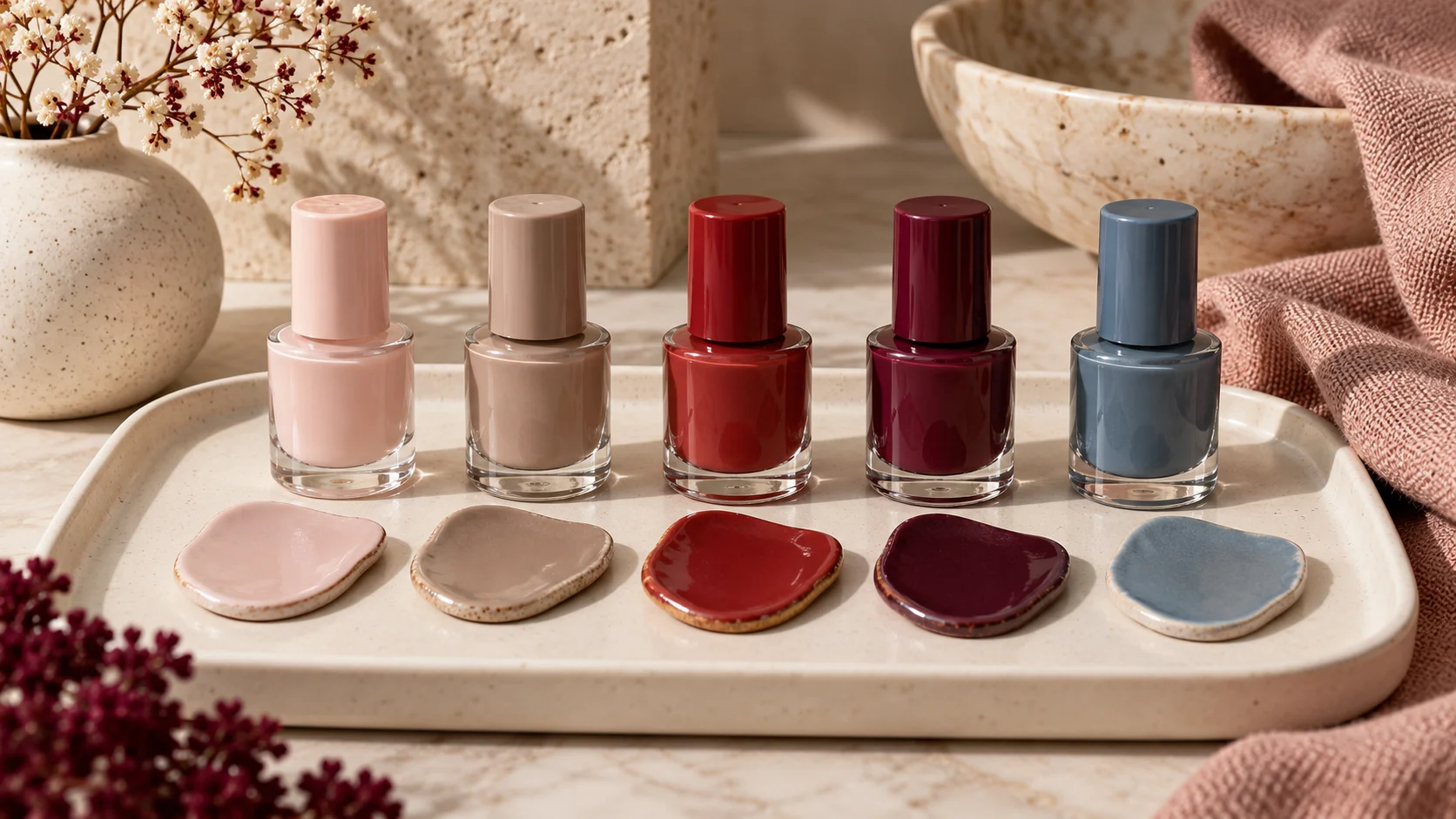
Look for colours the recipient wears and a manageable amount of variety. Several near-identical shades may be welcome to someone who loves that colour family, but less useful to someone hoping to explore different looks. There is no universally correct balance of neutral, bright and dark shades.
Check coverage and finish too. A sheer pink, an opaque cream and a shimmer can behave differently even if their bottle colours appear related. The gift should match preferences about application and appearance, not just a favourite colour named in conversation.
Do not assign a palette to someone based on age, ethnicity or a supposed universal skin-tone rule. If you want to include an adventurous shade, make it a thoughtful addition to known preferences rather than the main reason for choosing a large unfamiliar set.
| Record | Why it matters | Common misunderstanding |
|---|---|---|
| Exact formula range | Determines the routine and compatibility | All glossy polish uses the same method |
| Number of colour bottles | Shows actual shade variety | Piece count equals colour count |
| Volume of each bottle | Allows an accurate size comparison | Mini always means one fixed amount |
| Supporting products | Shows what is ready to use | Every required layer is included |
| Equipment requirements | Reveals additional commitments | Any existing lamp will be compatible |
| Recipient preferences | Connects the set to actual use | More bottles always means better value |
Read a starter kit more carefully than a colour bundle
A system kit may involve equipment as well as polish. The Manucurist Green Flash starter-kit page illustrates a named system with its own application guidance. Check the exact selected bundle and what it includes rather than assuming every option shown on the page has identical contents.
If a lamp is involved, confirm the intended equipment and instructions. Do not assume the recipient’s existing lamp is compatible simply because it looks similar or has a familiar wattage. A gift that introduces a new system can also introduce a learning and removal commitment.
Ask whether that is something the recipient wants. A colour gift can be a pleasant addition to a familiar routine; an unfamiliar technical kit is a different kind of present. The distinction should be deliberate rather than hidden by attractive packaging.
Check product information and the seller
GOV.UK’s consumer cosmetics guidance recommends checking clear product information, precautions and responsible business details. A sealed gift box should still provide the information needed to understand what is inside. If the listing is vague, ask for a readable contents and label photograph.
Keep the receipt and relevant packaging. Check the seller’s actual gift-return arrangements before purchase rather than assuming opened cosmetics can be exchanged like an unused accessory. This guide does not set out a universal returns rule; the transaction and applicable rights need their own accurate information.
For a seasonal edition, confirm the edition name and supplied contents. An old photograph can remain online after a bundle changes. Do not rely on a previous year’s review to establish the volume, shades or supporting products in the current item.
Judge value by what will be used
Compare the total current cost of the usable gift, including any genuinely required missing components. A headline saving against individual prices is less meaningful if the recipient would never choose several of the included products. The goal is a useful present, not the largest theoretical discount.
A smaller set with clear instructions and well-chosen colours may be the better fit. A single favourite bottle with a thoughtful note can also be a complete gift. There is no need to add tools or treatments merely to make the package look fuller.
Look inside the box
- Identify the recipient’s preferred system.
- Count colours and supporting items separately.
- Read each bottle’s stated volume.
- Check required equipment and removal supplies.
- Choose the selection they are likely to use.
Find more buying criteria in the Polish & Tools section. A thoughtful polish gift is built around a person and a usable routine, not just a high piece count.
To compare the connected product and routine choices, read Building a Small Nail Polish Collection with Versatile Colours, Regular Nail Polish vs Gel-Like Polish: What the Labels Mean and An At-Home Manicure Toolkit: What to Buy and What You Can Skip. For the related care or design question, see A Press-On Nail Shopping Checklist for Your First Set.
Common questions
Does a twelve-piece gift set contain twelve colours?
Not necessarily. The count may include base coat, top coat, tools or other supporting items. Read the contents list and count colour bottles separately. OPI’s historical twelve-piece holiday example includes ten colours plus base and top, illustrating why piece count alone can mislead.
Are all mini polish bottles the same size?
No universal volume is implied by mini. Read the millilitres for each bottle rather than comparing height or cap size in photographs. Total volume can help with a comparison, but it does not tell you whether the recipient will enjoy the colours or use the complete routine.
Is cost per millilitre the best way to choose a gift?
It is one comparison tool, not the whole decision. Separate colour and supporting liquids where useful, and consider how much of the set the recipient will use. A larger volume offers little practical value if the formula, shades or equipment requirements do not suit them.
Should I buy a lamp kit for someone who likes glossy nails?
Do not infer their preferred system from shine alone. Ask whether they want a lamp-cured routine and check the exact compatible equipment and removal process. A technical starter kit introduces different commitments from a familiar ordinary-polish gift, even when the finished photographs look similar.
What if I do not know their favourite colours?
Ask about their usual shades or choose a gift route that lets them select the products. Avoid assigning a palette based on age or skin-tone stereotypes. A smaller thoughtful choice can be more useful than a large assortment bought mainly for its impressive packaging.
Can I assume a seasonal set is unchanged from last year?
No. Editions, shades, volumes and supporting products can change while older photographs or reviews remain online. Confirm the current listing and supplied contents before purchase. Historical examples in this guide explain comparison principles rather than guaranteeing present UK stock, price or bundle composition.
Should I include a remover with every polish gift?
Check whether the recipient already has a compatible remover and whether the chosen system requires particular supplies. The useful goal is a usable routine, not automatically adding another bottle. Do not assume a gentle or acetone-free label establishes compatibility with every manicure.
What packaging information should I keep?
Keep the receipt, contents list, product labels and any instructions needed for the routine. Check actual gift-return arrangements before purchase rather than assuming all opened cosmetics can be exchanged. Clear product and batch information is also useful if the recipient needs to contact the supplier.
Sources and further reading
- OPI — Holiday 2025 mini set contents — checked 2026-10-23
- Manucurist UK — Green Flash starter kit — checked 2026-10-23
- GOV.UK — Consumer cosmetics guidance — checked 2026-10-23