Sheer White vs Opaque White Polish: Finding the Finish You Want
Separate soft translucent white from full-coverage white when planning an all-over manicure, French tip or graphic accent.
Archive edition: 2026-06-24 · This is an editorial allocation, not the first-publication date.
Key takeaways
- Decide whether the natural nail should show through.
- Read the product's coverage wording.
- Plan the all-over colour, tip or motif separately.
- Compare labelled samples under similar conditions.
- Follow the actual system's application and removal directions.
In this guide
- Key takeaways
- Separate whiteness from coverage
- What a sheer white can offer
- What a fuller-coverage white can offer
- Plan an all-over manicure around the intended effect
- Choose French-tip coverage independently of the base
- Think about graphic details as shapes
- Avoid a universal coat count for opacity
- Compare white samples under similar light
- Keep the finish and formula in the final decision
- Common questions
- Sources and further reading
White nail polish can create a soft translucent wash or a crisp layer of colour. Before choosing a bottle, decide whether you want the natural nail to show through or whether the white should form the main visible surface.
That coverage choice affects an all-over manicure, a French tip and small graphic details in different ways. This guide uses manufacturer descriptions to explain the distinction. We have not tested opacity, drying or wear, and the conceptual image is not a product swatch.
Separate whiteness from coverage
Colour and opacity answer different questions. A polish can belong to the white family while remaining sheer. Another white can be described as full coverage. The word white alone does not tell you how much of the nail underneath will remain visible.
Read the listing for terms such as sheer, translucent, layerable, cream or full coverage. Keep them in context: a finish category and a coverage statement are not always the same thing, so look for the manufacturer’s actual description.
Do not judge only by the colour of the liquid in its bottle. The container shows a depth of product that differs from a painted layer on a nail. A product description and labelled sample are more useful for understanding the intended result.
What a sheer white can offer
OPI describes Funny Bunny Nail Lacquer as a soft white with sheer, layerable coverage. That makes it an example of a white colour intended to be translucent, rather than a guarantee of a solid white result at a fixed coat count.
A sheer-white brief may suit a look where you want the natural nail to remain part of the appearance. Describe how much visibility you prefer, especially if you are discussing the manicure with a professional.
Sheerness is not automatically a defect or a sign that the product has failed. It can be the intended finish. The important question is whether that finish matches your design rather than whether it can be forced to imitate an opaque polish.
What a fuller-coverage white can offer
OPI’s Alpine Snow Nail Lacquer page presents a crisp white for manicures and French tips, with opaque product imagery. It is a different visual starting point from the brand’s sheer-white description.
Essie describes Blanc Original as a full-coverage white and places it in its cream category. That is another example of why reading the coverage wording matters when the colour family is the same.
These are source-based examples, not a tested ranking or a claim that either gives identical results in every application. Check the exact product in your market and its current directions before choosing a routine.
| Design goal | Coverage question | What to check |
|---|---|---|
| Soft all-over white | Should the natural nail remain visible? | A stated sheer or translucent description |
| Crisp all-over white | Should the colour conceal the nail beneath? | A stated full-coverage description and labelled sample |
| French tip | Do you want a sharp or softly visible white line? | The tip colour’s coverage separately from the base |
| Graphic accent | Should the shape remain distinct against its background? | Contrast, intended coverage and product compatibility |
Plan an all-over manicure around the intended effect
For a translucent look, expect the underlying nail to contribute to what you see. Decide whether that is part of the appeal. If you want a completely uniform block of colour instead, make that a separate coverage requirement.
For a crisp white look, pay attention to the outline and the amount of contrast you want with your hand. A strong contrast is a legitimate style preference, not something you need to avoid because of a skin-tone rule.
Compare the overall hand and nail shape rather than only a tiny crop. The same colour idea can feel different on a short rounded nail and a longer square shape, even before considering the polish system used.
Choose French-tip coverage independently of the base
A French manicure combines at least two visual decisions: the base and the tip. A sheer base does not require a sheer white tip, and a soft tip effect does not require the whole nail to be opaque.
Describe whether you want a clearly defined white line or a subtler edge. Also consider the width of the tip in relation to the visible nail. These choices communicate the design more clearly than simply asking for a natural French manicure.
If a salon is creating the look, confirm the system and show a reference with notes on the detail you like. A product’s French-tip marketing does not by itself determine the line thickness, curve or contrast of your final design.
Think about graphic details as shapes
For dots, lines or a small white motif, decide how distinct the shape should be from its background. A softly visible detail and a crisp graphic mark are different design briefs even when both use white.
Choose products and techniques that are supported within the intended system. This guide does not authorise mixing ordinary lacquer with a lamp-cured layer or adding a separate curing step to obtain stronger coverage.
A practice design on an appropriate sample can help communicate the visual plan, but do not treat an unlabelled image as proof of which white polish produced it. Keep the product and application details with any reference you intend to reproduce.
Avoid a universal coat count for opacity
Follow the current directions for the exact polish. A manufacturer’s application sequence is not a promise that every sheer white will become opaque, or that every fuller-coverage white needs the same treatment on every nail.
Do not keep adding thick layers solely because the natural nail remains visible through a product described as sheer. If the coverage category is wrong for your brief, another product may be the more appropriate choice.
We have not carried out a controlled coat-by-coat test, so there is no measured opacity ladder here. Any comparison of real samples should retain the range, number of coats and surface used rather than presenting photographs as interchangeable evidence.
Compare white samples under similar light
White can look different depending on the light and the colours around it. Compare candidates together where possible, with the same background and a clear label. Avoid judging one from a warm indoor photograph and another from a bright studio image.
Look for the aspect you actually care about: transparency, contrast, softness or a crisp line. A general comment that a shade is flattering does not answer those more specific questions.
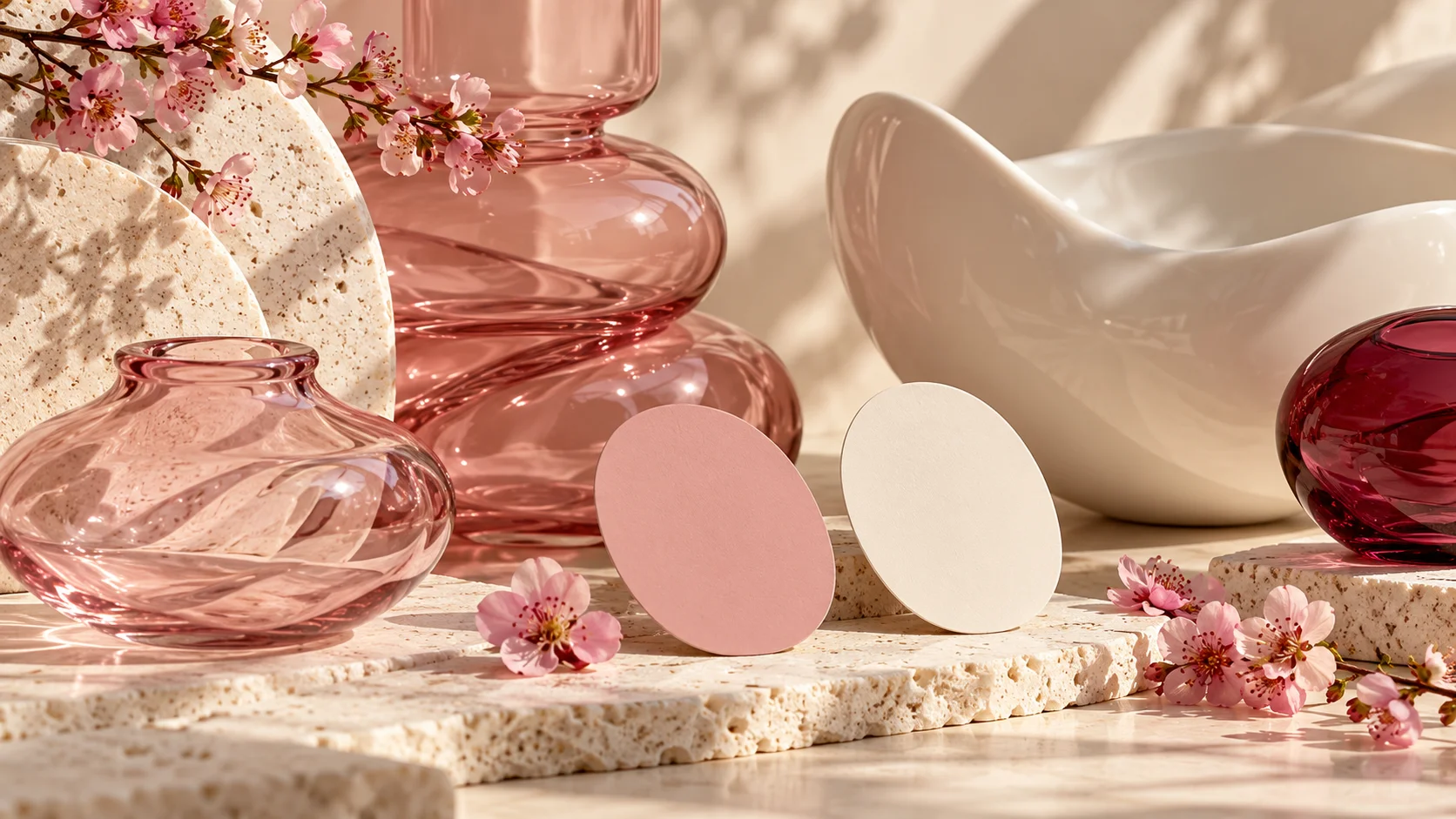
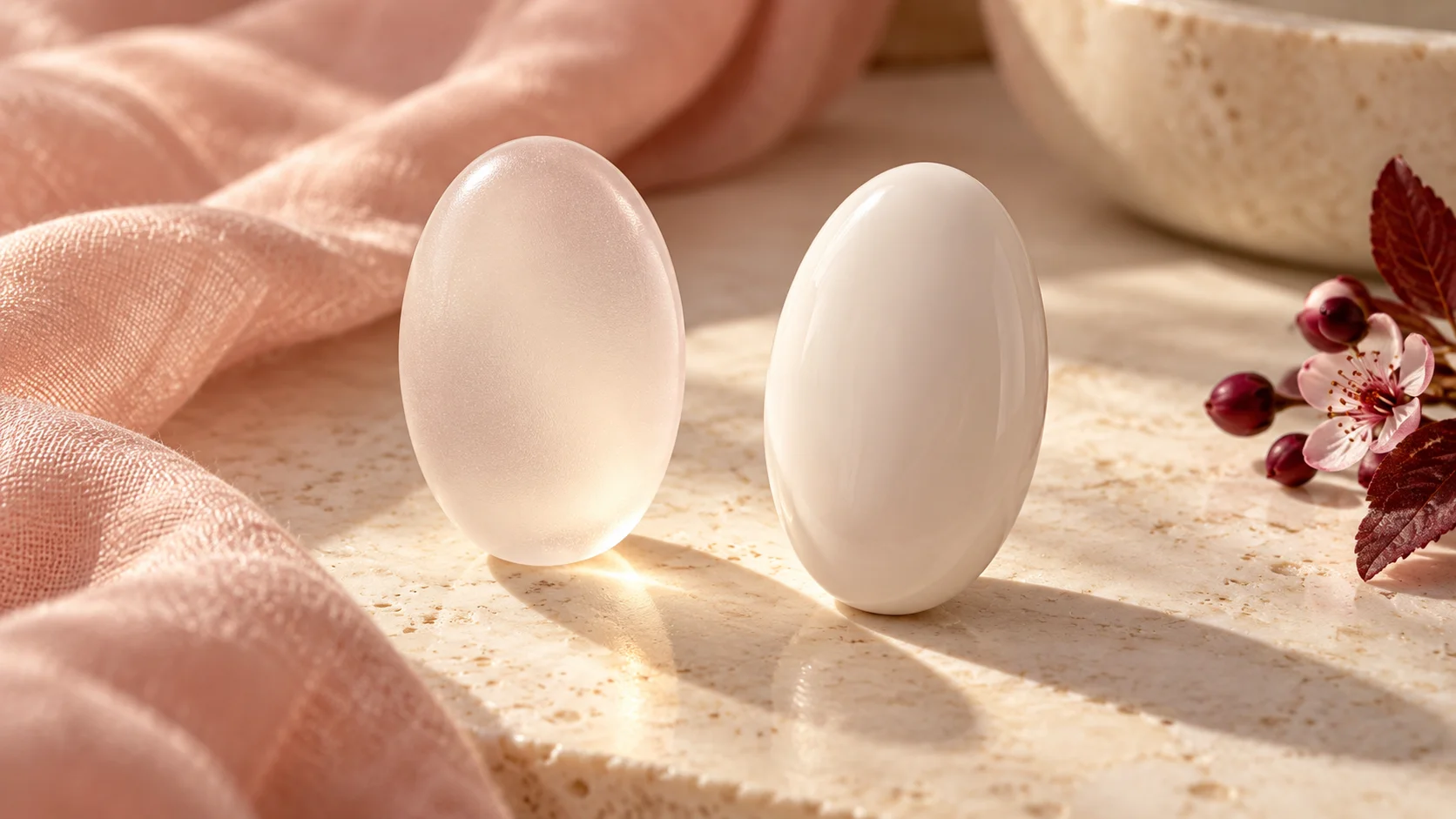
The illustration in this article uses translucent glass and opaque porcelain to explain the idea. Those materials are a visual analogy, not a colour-calibrated demonstration of Funny Bunny, Alpine Snow or Blanc.
Keep the finish and formula in the final decision
Check whether you are choosing ordinary lacquer, a gel-like lacquer or a lamp-cured service. Similar white shade names can appear in different systems, and each system brings its own application and removal requirements.
Also confirm the intended finishing layer. The final surface appearance is part of the manicure, but a glossy result should not be mistaken for evidence that the product is lamp-cured. Read the instructions rather than identifying the formula from shine alone.
Choose the white effect deliberately
- Decide whether the natural nail should show through.
- Read the product’s coverage wording.
- Plan the all-over colour, tip or motif separately.
- Compare labelled samples under similar conditions.
- Follow the actual system’s application and removal directions.
Find more colour and formula explanations in the Polish & Tools section. A clear coverage brief makes the choice easier than expecting the word white to describe one universal finish.
To compare the connected product and routine choices, read OPI Bubble Bath vs Funny Bunny: Colour, Coverage and Finish, Base Coat vs Top Coat: Why the Jobs Are Different and Nail Polish Brush Shapes: Wide, Rounded and Fine Brushes Compared. For the related care or design question, see French Ombré Nails: How the Fade Differs from a Classic French.
Common questions
Are all white polishes opaque?
No. A white polish can be described as sheer, translucent or full coverage. Read the manufacturer’s actual coverage wording rather than relying on the colour family alone. Decide whether you want the natural nail to remain visible before choosing between those different effects.
Is sheer white the same as a weak opaque polish?
Not necessarily. Transparency can be the intended design of the product, rather than a failure to deliver solid colour. Compare the stated finish with your brief. If you want complete coverage, choose a product described for that purpose instead of assuming every sheer needs more layers.
Should a French tip use sheer or opaque white?
Choose according to the line you want: softly visible or sharply defined. The base and tip are separate visual decisions, so a sheer base does not require the same coverage at the edge. Confirm the exact products and supported technique with the professional creating the manicure.
How many coats make a white polish opaque?
This guide has not performed a coat-by-coat test and does not give a universal number. Follow the current directions for the actual product. A sheer category should not be treated as a promise of full coverage after extra thick layers or an improvised application sequence.
Are Funny Bunny, Alpine Snow and Blanc identical whites?
The checked descriptions position them differently, including sheer coverage for Funny Bunny and fuller-coverage or crisp-white descriptions for the other examples. We have not measured an exact shade difference or tested performance. Keep the full range and application details with any comparison.
Can I compare photographs taken in different lighting?
You can use them as inspiration, but they are not a controlled colour or coverage comparison. Try to view labelled samples together under similar light and background conditions. Keep the product range and coat information where available so you know what each reference actually represents.
Does the glass-and-porcelain illustration show real polish results?
No. It is a conceptual analogy for transparency and opacity, not a product swatch, tested manicure or calibrated colour sample. Use official descriptions and real labelled samples to investigate the named polishes. The illustration cannot establish their exact shade or coverage on your nails.
Does a very glossy white manicure have to be gel?
No. Shine alone does not identify the product system. Ordinary lacquer, gel-like lacquer and lamp-cured services can have glossy finishes with different instructions. Confirm the actual range and its application and removal process rather than deciding from the appearance of a photograph.
Sources and further reading
- OPI UK — Funny Bunny Nail Lacquer — checked 2026-10-22
- OPI UK — Alpine Snow Nail Lacquer — checked 2026-10-22
- Essie — Blanc Original — checked 2026-10-22