Moving from Long Extensions to a Short Gel Overlay
Plan a shorter manicure by identifying the existing system, discussing removal or reshaping and choosing a realistic next service.
Archive edition: 2026-09-17 · This is an editorial allocation, not the first-publication date.
Key takeaways
- Brief: explain the new length and practical needs.
- Identify: provide the current product history.
- Assess: let the provider plan the transition.
- Choose: agree the next finish after considering the condition.
In this guide
- Key takeaways
- Explain what short means for your next manicure
- Identify the current material and application history
- Do not assume clipping is a harmless shortcut
- Keep removal separate from the next application
- Set realistic expectations for the natural length
- Discuss colour after the structural plan is clear
- Allow symptoms to change the plan
- Review maintenance for the shorter service
- Brief, identify, assess, choose
- Common questions
- Sources and further reading
Moving from long extensions to a short gel overlay is a change of service, not simply a request to cut the ends off. The current material, the natural nail underneath and the desired finish all influence the next appointment. Explain the full change when booking so the provider can plan the work.
You may want shorter nails for a new job, an instrument, sport or a preference for a quieter style. Whatever the reason, start by identifying the existing system and describing the result you want. Do not make a home cutting or filing attempt the first stage of the transition.
Explain what short means for your next manicure
Decide whether you want the nails close to the fingertips, a small amount of free edge or simply less length than the current set. Use a clear reference and say which part you like. A short rounded overlay and a shorter tapered extension are different briefs.
Tell the provider whether added length is still part of the plan. An overlay generally follows the natural nail rather than creating the same extension you currently wear. The shortest nail may affect the options if you want a consistent overall appearance without adding length.
Include practical limits such as workplace rules or required gloves. Do not rely on the word “manageable” to communicate a specific requirement. The clearer the constraint, the easier it is to discuss a suitable service before the appointment.
Identify the current material and application history
Save the product name, application date and details of any maintenance or repairs. If another salon applied the set, ask for the system information. A colour name or a photograph of the finished nails may not identify the structure underneath.
Tell the new provider if you do not know the product. They may need an assessment or a different booking. Guessing that every enhancement is soak-off gel can complicate the plan more than acknowledging the uncertainty.
Include any home alterations already made. If you have clipped, filed, glued or peeled part of the set, explain that plainly. The purpose is to give an accurate account of the current condition, not to defend or hide an earlier decision.
Do not assume clipping is a harmless shortcut
Aprés advises against cutting down the Gel-X tips covered by its FAQ because of effects on balance and durability. Other products and ranges may have different instructions. The useful point is that the actual system matters, not that one rule can be applied to every extension.
Ask the provider how the change should be handled for your set. Do not use ordinary clippers on an unidentified enhancement because the new length looks easy to mark. The remaining product may need more than a shorter free edge to match the proposed service.
Similarly, avoid filing the whole set thin before the appointment to save time. That removes information and material without a complete assessment. Book enough time for the transition instead of trying to perform the preparation yourself.
| Decision | Information to provide | Question for the provider |
|---|---|---|
| Current set | Product and maintenance history | What needs assessment before changing it? |
| Desired length | Reference and practical limits | What is achievable without added length? |
| Existing product | Known system or honest uncertainty | Removal, restructuring or another route? |
| Next finish | Colour, coverage and outline preferences | Is an overlay appropriate now? |
| Follow-up | Availability and maintenance preferences | What plan fits the new service? |
Keep removal separate from the next application
CND’s enhancement guidance distinguishes products with different removal behaviour, including solvent-resistant BRISA. A method appropriate for one gel cannot automatically be transferred to another just because both create extensions.
Ask how the provider will identify the appropriate route and what booking is needed. A transition appointment may involve removal, assessment and a discussion of the next service rather than a guaranteed immediate overlay. Keep those decisions visible in the plan.
If the current condition makes the desired next service unsuitable, discuss alternatives. Bare nails or another finish may be an option depending on the circumstances. Do not treat leaving without a new gel layer as a failed appointment.
Set realistic expectations for the natural length
Long extensions can make it easy to forget how much natural nail is underneath each one. The available length after the change may differ between fingers. Ask how the provider would create a visually coherent result with what is actually present.
You can choose a shorter overall outline rather than extending every nail to match the longest. Alternatively, a different service may be discussed if added length remains important. Make that a deliberate choice rather than assuming an overlay will reproduce the previous silhouette.
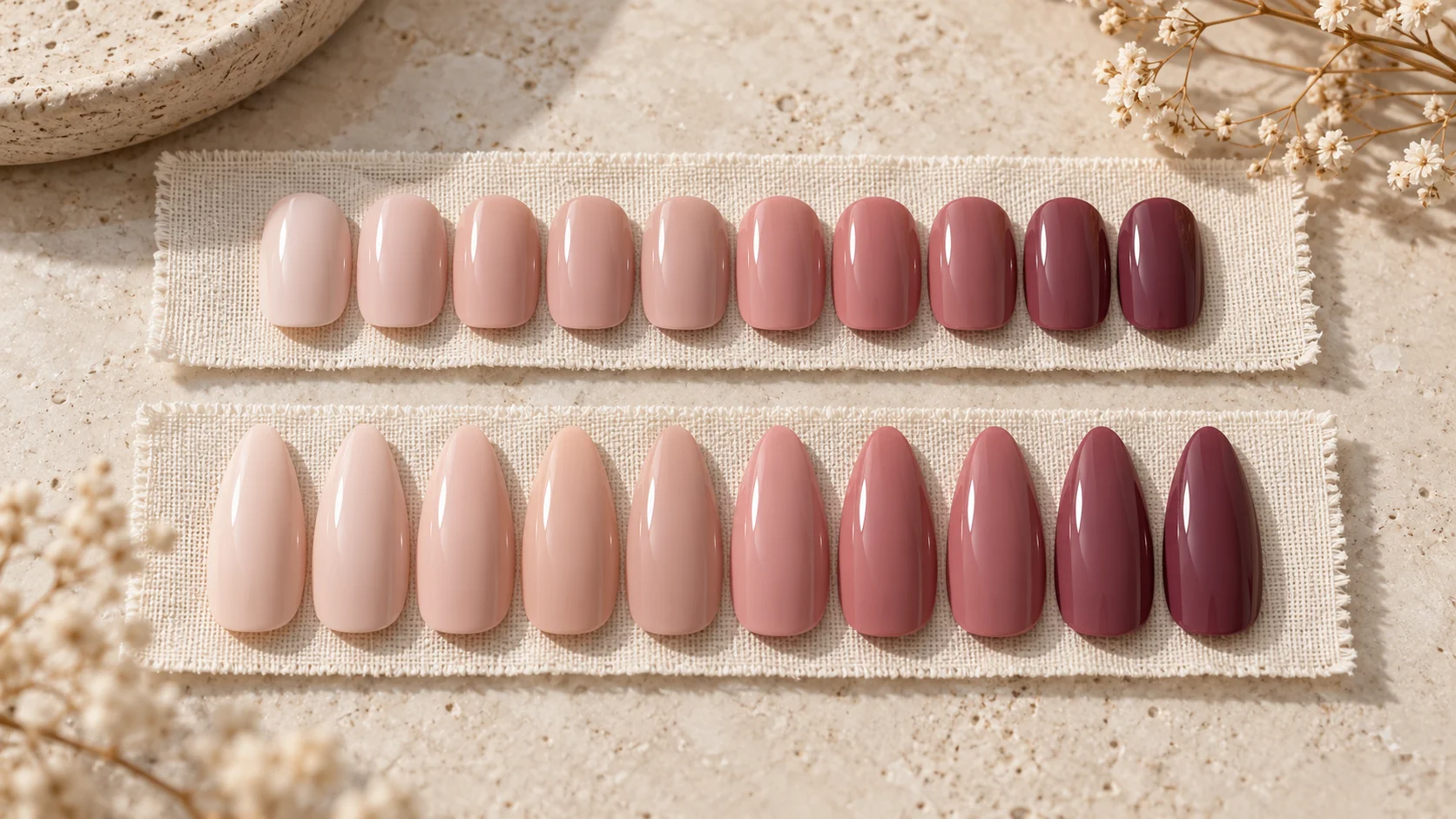
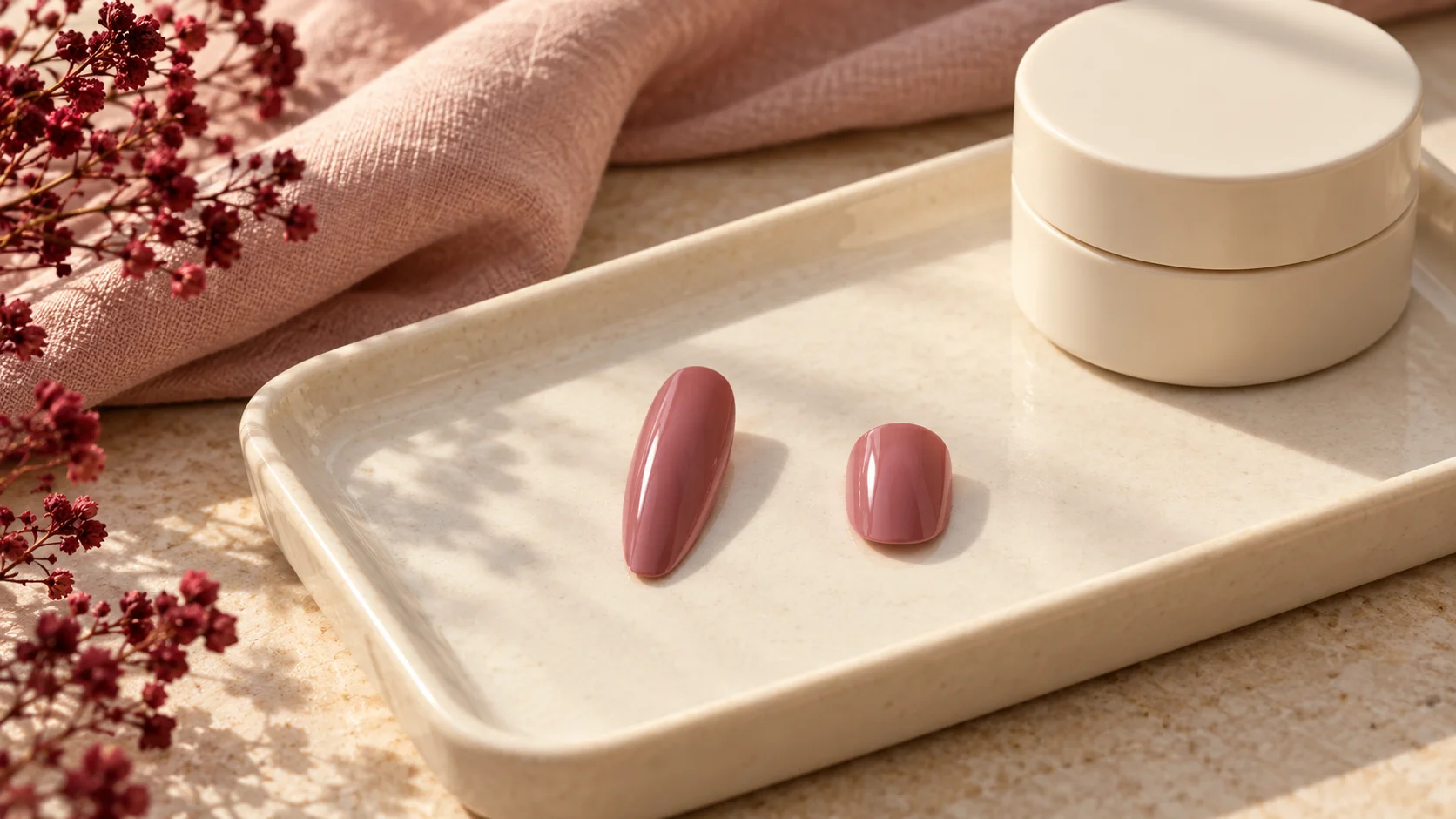
A reference photograph should guide the style, not promise a recovery outcome. This article’s long and short samples are a conceptual comparison, not before-and-after evidence. They do not show what any individual’s nails will look like after removal.
Discuss colour after the structural plan is clear
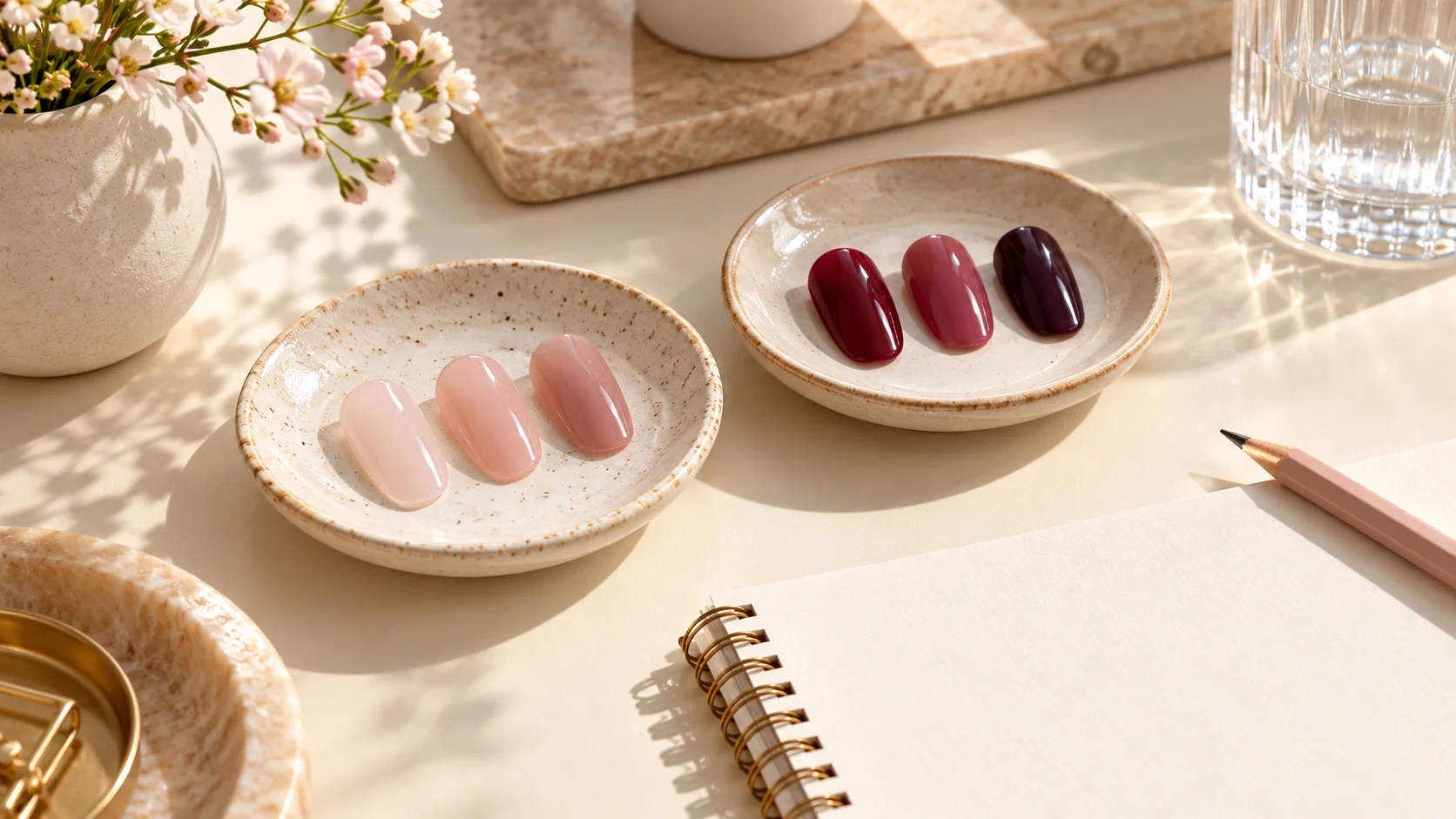
A sheer tint, a creamy neutral or an opaque colour can each suit a short outline. Explain whether you want natural detail to show through or prefer a more solid finish. Keep coverage separate from the decision about whether an overlay is appropriate.
Ask whether the chosen colour comes from the builder itself or a separate layer. That detail may matter for future colour changes and removal. Save the actual product names rather than remembering only that the result was a short pink manicure.
Do not ask a colour coating to conceal an unexplained problem. Raise changes or discomfort before selecting the finish. The appearance you want should be considered alongside the current condition, not used to avoid discussing it.
Allow symptoms to change the plan
The NHS nail guidance recommends seeking advice for unexplained changes or sore, warm, swollen skin around a nail. Mention such concerns when booking and seek the appropriate clinical assessment. A transition in style is not a treatment for them.
Describe whether discomfort began with the original application, developed later or followed an injury or home alteration. Keep the timeline factual. Neither you nor the provider needs to assign a medical cause before recognising that a health question deserves attention.
Avoid making promises to yourself about exactly when the nails will feel or look normal. The next step depends on the actual finding and advice. Choose the cosmetic plan after that discussion rather than setting a fixed recovery deadline around a new design.
Review maintenance for the shorter service
A shorter manicure may fit your activities better, but it still needs the instructions appropriate to the system. Ask how future maintenance and removal are arranged. Do not assume that less visible length means the set can be left indefinitely.
Note which everyday tasks feel easier and any detail you would change next time. A short factual record makes the next consultation useful: perhaps the length works well but you prefer softer corners. Keep successful parts of the design while refining the rest.
Brief, identify, assess, choose
- Brief: explain the new length and practical needs.
- Identify: provide the current product history.
- Assess: let the provider plan the transition.
- Choose: agree the next finish after considering the condition.
Use the Gel & BIAB section to prepare related questions about overlays and removal. A shorter style works best as an understood service choice, with a clear follow-up plan.
Before settling the service plan, compare Gel Overlay vs Extensions: Choosing Length and Support, How to Prepare for a Gel Removal Appointment and BIAB on Short Nails: Shape, Finish and Realistic Expectations. For the related everyday care or design question, see Looking After Natural Nails After Removing Extensions.
Common questions
Can I just clip long extensions into a short overlay?
Do not assume that shortening the free edge creates the appropriate new service. The material, structure and natural nail condition need consideration. Identify the current system and ask the provider how to make the transition rather than starting with clippers on an unknown enhancement.
Will a short overlay add length to my natural nails?
Clarify that with the provider. An overlay generally follows the existing natural nail rather than reproducing the extension you previously wore. Explain whether you want added length or are happy to work with what is present, including differences between individual nails after the transition.
What should I tell a new salon before booking?
Provide the existing product name if known, application and maintenance history, any repairs or home alterations, and the shorter result you want. Mention discomfort or other concerns. If you do not know the system, say so rather than guessing which removal or infill booking is appropriate.
Does every gel extension use the same removal method?
No. Different enhancement products can have different removal behaviour, including solvent-resistant systems. The word gel does not identify a complete protocol. Ask for the appropriate route for the actual product instead of applying a gel-polish tutorial to a longer or layered enhancement.
Is a new overlay guaranteed after removal?
No. The next service should be considered after assessing the current condition and relevant history. Discuss alternatives if the proposed overlay is unsuitable. Leaving with bare nails or choosing another finish can be a reasonable outcome rather than a failed transition appointment.
What if some natural nails are shorter than others?
Ask how the provider would create a coherent result with the available length. You may prefer a shorter overall outline instead of adding length everywhere. If extensions remain part of the goal, discuss that explicitly because it changes the brief from a straightforward natural-nail overlay.
Should I use opaque colour to hide a nail concern?
Raise unexplained changes or discomfort before choosing the finish. A colour layer can change what is visible without explaining the underlying issue. Seek appropriate assessment where needed, then discuss cosmetic options rather than using coverage to avoid a health or condition question.
Does a shorter set need no maintenance?
A shorter length can fit your routine better, but the actual product still needs its appropriate aftercare and follow-up. Agree the plan with the provider and save the details. Do not assume that less visible length or regrowth means the service can be left indefinitely.
Sources and further reading
- Aprés — Cutting down Gel-X tips — checked 2026-10-21
- CND — PLEXIGEL questions and answers — checked 2026-10-21
- NHS — Nail problems — checked 2026-10-21