Gel Manicure Aftercare: Everyday Habits and When to Return to the Salon
Make aftercare practical with product-specific instructions, suitable task protection and a clear plan for maintenance or problems.
Archive edition: 2026-06-28 · This is an editorial allocation, not the first-publication date.
Key takeaways
- Record: keep the system and aftercare details.
- Protect: use suitable tools and task-specific equipment.
- Notice: report changes without picking or patching.
- Return: plan maintenance or removal around real availability.
In this guide
- Key takeaways
- Keep the service details in one place
- Let tools do jobs that are not nail care
- Match protection to the task
- Use a simple hand-care routine you understand
- Do not pick at a changing finish
- Review maintenance before the calendar becomes a problem
- Keep removal in the plan
- Record, protect, notice, return
- Review what fits your everyday life
- Common questions
- Sources and further reading
Gel-manicure aftercare is most useful when it answers ordinary questions: what product is on your nails, how should you handle daily tasks and whom should you contact if something changes? A clear plan is easier to follow than a long list of rules that promises a flawless manicure for a fixed number of weeks.
Start with the instructions for your actual service. Gel colour, builder overlays and extensions are not identical, and one person’s routine may not apply to another system. This guide helps turn aftercare into practical habits without claiming that careful behaviour can prevent every problem.
Keep the service details in one place
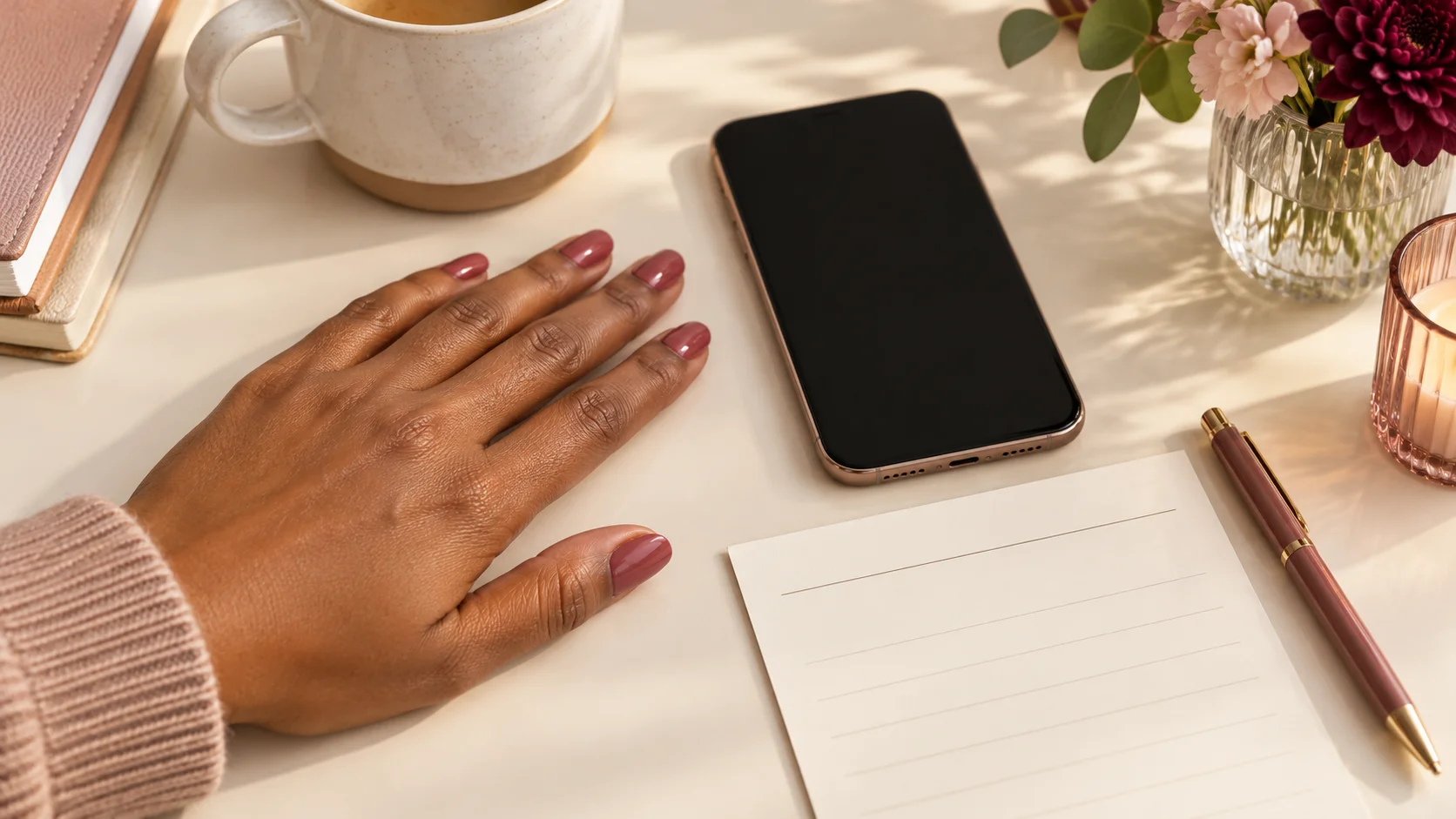
Save the product name, application date and provider’s contact route. Include the maintenance recommendation and how removal is arranged. A short note in your phone or the salon’s written card can prevent confusion when a question arises later.
If several products were used, ask which details another provider would need. A colour shade may not identify the builder or base beneath it. Keep the actual names instead of assuming every glossy finish follows the same instructions.
Read the aftercare information before leaving the appointment so you can ask about anything unclear. “Avoid damage” is less useful than knowing what to do if an edge catches, when to request a review and which booking to make for removal.
Let tools do jobs that are not nail care
The AAD advises against using nails as tools. Put suitable equipment within reach for opening packaging, lifting labels or scraping surfaces. The practical aim is to stop relying on the manicure as the nearest available implement.
Notice the task that repeatedly catches you out. If you often open parcels, keep the appropriate opener in the place where you unpack them. If a small fastening is difficult, review the nail length rather than forcing the same awkward action every day.
Choose equipment safely for its purpose. Protecting a manicure is not a reason to improvise with a sharp object or rush a job. A small change in where a tool is stored can be more useful than adding another cosmetic product to the routine.
Match protection to the task
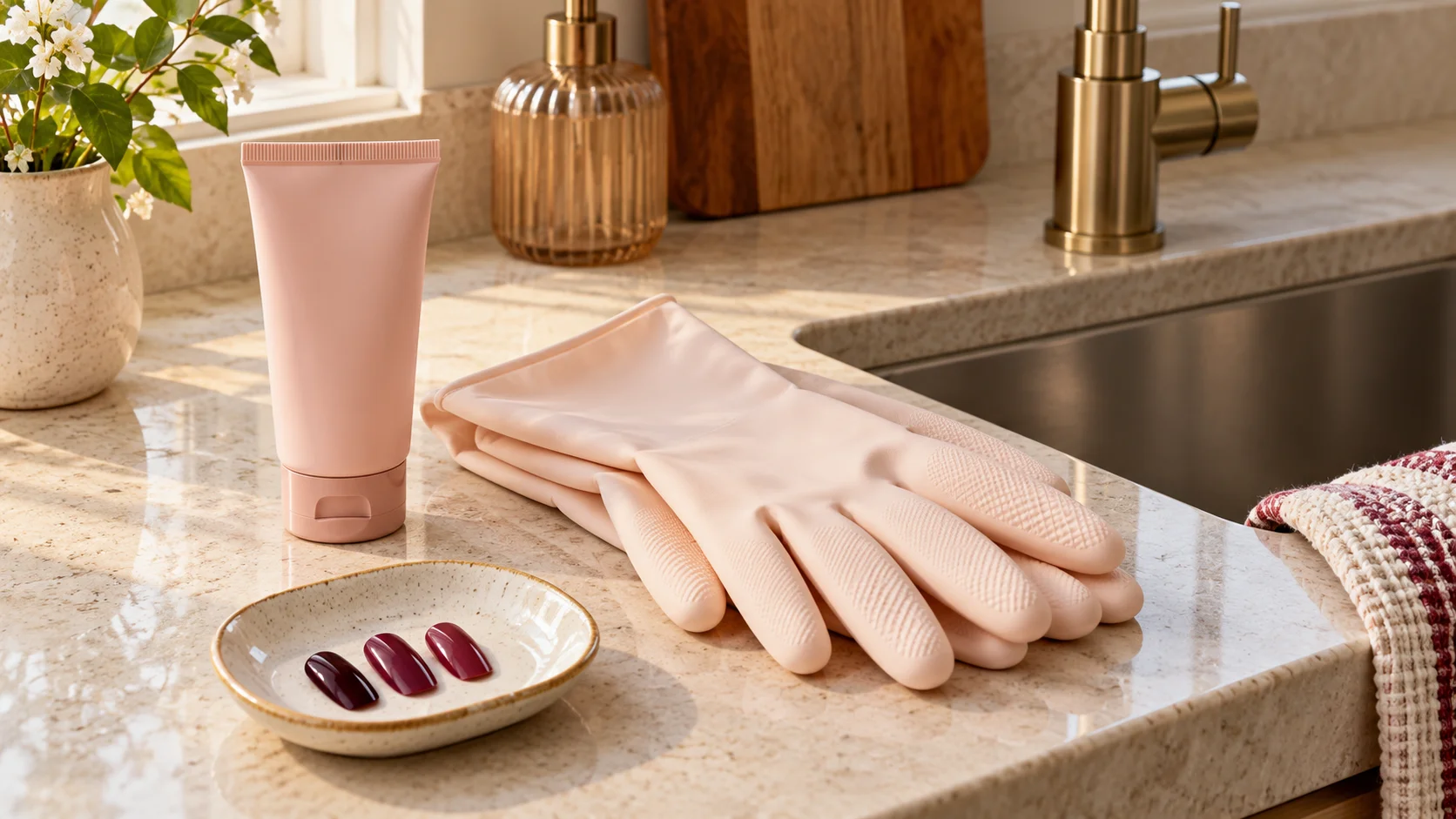
HSE guidance emphasises suitable protection for the exposure involved. For cleaning or other chemical tasks, follow the product information and glove instructions. A pair pictured in a beauty article is not evidence that it protects against every substance.
Keep the relevant gloves in good condition and follow their care guidance. Check that your manicure works with the required fit. Do not cut or otherwise alter protective equipment to accommodate a preferred length; discuss a more practical nail choice where necessary.
Continue required handwashing and workplace hygiene. Aftercare should fit around those responsibilities, not encourage you to skip them. If work makes a particular service difficult to maintain, explain the situation to the provider before the next appointment.
| Situation | Useful habit | Question to keep clear |
|---|---|---|
| Opening or scraping | Use a suitable tool | Can the tool be stored where the job happens? |
| Cleaning | Follow task-specific protection guidance | Are the gloves suitable for this product? |
| A catching edge | Contact the provider with details | Is it a routine issue or accompanied by symptoms? |
| Upcoming travel | Plan maintenance or removal beforehand | Can the agreed follow-up actually happen? |
| New concern | Record the change and seek suitable advice | Does it need more than cosmetic attention? |
Use a simple hand-care routine you understand
Keep the products recommended for your circumstances clearly labelled and follow their directions. Ask the provider what is part of ordinary cosmetic aftercare and what is specific to the system. Do not assume that buying several new products is necessary to make the manicure last.
Choose a convenient point in the day for the routine and allow for the next activity. A product that leaves hands slippery needs consideration before handling equipment or delicate objects. At work, follow the relevant product and hygiene policies.
If a new cosmetic seems to irritate your skin, stop using it and seek appropriate advice. Record its name and when it was introduced. Adding another unfamiliar product on top can make the history harder to explain if the concern continues.
Do not pick at a changing finish
The GelBottle’s aftercare guidance includes avoiding picking and arranging maintenance around the client and service. Treat a lifted or catching area as a reason to ask what should happen next, not as a loose corner to peel away.
Describe the affected nail, location and timing when contacting the provider. Mention whether it is painful or whether the natural nail seems involved. Do not add glue or another gel to an uncertain area solely to improve the appearance.
A clear unedited photograph may help if the salon requests one, but do not manipulate the product to demonstrate the gap. If symptoms suggest an injury or health concern, seek the relevant care rather than relying only on a cosmetic repair conversation.
Review maintenance before the calendar becomes a problem
Agree the planned follow-up for your exact service and ask what might change it. A broad wear claim is not a personalised instruction to leave a problem untouched until the end of that period. Contact the provider earlier when the condition changes.
Put travel, work commitments and event dates into the discussion before application where possible. If the schedule will not support maintenance, ask about another service or a removal appointment. It is easier to plan a change than to improvise when the original provider is unavailable.
If you miss an appointment, explain the situation and ask which service to book next. Do not assume the original maintenance slot remains appropriate regardless of elapsed time or product condition. The provider needs an accurate current account.
Keep removal in the plan
Save the removal instructions or booking route alongside the aftercare note. The correct process depends on the actual product, not simply the fact that the manicure is called gel. A tutorial for another system should not become your fallback when a visit is inconvenient.
If another salon will handle removal, share the product history in advance. Explain whether you want bare nails afterwards or are considering another service. Keep that next decision conditional on the current condition and any relevant professional advice.
You can choose to stop wearing the service without treating that as a failed manicure. Preferences, schedules and activities change. A practical aftercare plan includes a clear endpoint as well as ongoing maintenance.
Record, protect, notice, return
- Record: keep the system and aftercare details.
- Protect: use suitable tools and task-specific equipment.
- Notice: report changes without picking or patching.
- Return: plan maintenance or removal around real availability.
Review what fits your everyday life
After a service, note whether the length and outline made ordinary tasks easier or more awkward. Bring specific observations to the next consultation. A change in design may be more useful than repeatedly trying to make an inconvenient length work.
Do not judge yourself or the provider solely by a promised number of chip-free days. Use the actual product history, condition and practical routine to discuss the result. Our Gel & BIAB section covers related maintenance choices so you can keep that conversation informed and specific.
Before settling the service plan, compare Gel Infills Explained: What Changes as Your Nails Grow, Why Gel Nails Lift: Common Factors to Discuss with Your Technician and Gel Manicure Timing: Planning Appointments Around an Event. For the related everyday care or design question, see A Simple Nail Care Routine for Hands That Are Often in Water.
Common questions
What aftercare details should I save?
Keep the exact system, application date, provider contact route and maintenance or removal plan. Include any instructions specific to the service. A short accessible record is more useful when a problem occurs than remembering only a shade name or general wear claim.
Can I use my nails to open packaging?
Use an appropriate tool for opening, scraping or similar jobs instead of relying on the manicure. Store it where the task usually happens. The aim is a practical habit, while still choosing equipment safely rather than improvising with an unsuitable sharp object.
Will any gloves protect my manicure during cleaning?
Choose gloves for the task and cleaning product, following the relevant instructions. Appearance alone does not establish chemical suitability. Check fit and condition, and do not alter required protective equipment merely to accommodate a preferred nail length or shape.
Should I reduce required handwashing after a manicure?
Continue required hygiene and fit cosmetic aftercare around it. At work, follow the relevant rules and product policies. If the service is difficult to manage alongside your responsibilities, discuss a more practical option with the provider rather than skipping necessary hygiene.
How should I respond to a catching or lifted edge?
Contact the provider with the affected nail, location, timing and any symptoms. Avoid picking or covering an uncertain area with another product. If the natural nail seems involved or there is a health concern, seek the appropriate assessment rather than only a cosmetic repair.
Can I follow a friend's maintenance schedule?
Use the plan agreed for your actual product and circumstances. A friend’s interval or a broad wear claim may not fit your service. Ask what should prompt earlier contact, and review the plan if travel or other commitments make the original schedule unrealistic.
Do I need several special aftercare products?
Start with the instructions for your service and products suitable for your circumstances. Ask what each recommendation is intended to do. A large unfamiliar collection is not automatically necessary, and it can make the history harder to explain if irritation develops.
What if I want to stop having gel manicures?
Discuss the removal route and intended endpoint with the provider, keeping the exact system details available. You can choose a natural finish or another suitable option afterwards. A practical aftercare plan includes ending the service rather than assuming maintenance continues indefinitely.
Sources and further reading
- The GelBottle — Aftercare guide — checked 2026-10-21
- HSE — Skin prevention guidance — checked 2026-10-21
- AAD — Healthy nail tips — checked 2026-10-21