Nail Biting: Practical Ways to Interrupt the Habit
Build a practical response to nail-biting triggers, with realistic goals and clear signs to seek support.
Archive edition: 2026-07-05 · This is an editorial allocation, not the first-publication date.
Key takeaways
- Notice: identify one recurring setting.
- Prepare: make a suitable alternative easy to reach.
- Practise: record useful interruptions and practical obstacles.
- Support: ask for help with injury, distress or difficulty stopping.
In this guide
- Key takeaways
- Notice the pattern before setting the goal
- Choose one response that fits one setting
- Keep grooming separate from the urge
- Make progress observable without demanding perfection
- Ask for support in a way that feels helpful
- Recognise related skin picking without merging the labels
- Notice, prepare, practise, seek support
- Common questions
- Sources and further reading
Trying to stop nail biting often begins with a broad promise: “I will not do it again.” A more workable starting point is a specific situation and a different response you can practise there. Notice when your hand moves towards your mouth, what you are doing and what would make an alternative action easy to choose.
This guide offers practical ways to organise that process without blaming yourself or demanding perfect progress. It is not a diagnosis or a substitute for treatment when the behaviour causes injury, distress or difficulty in daily life. You do not need to reach a particular level of damage before asking for support.
Notice the pattern before setting the goal
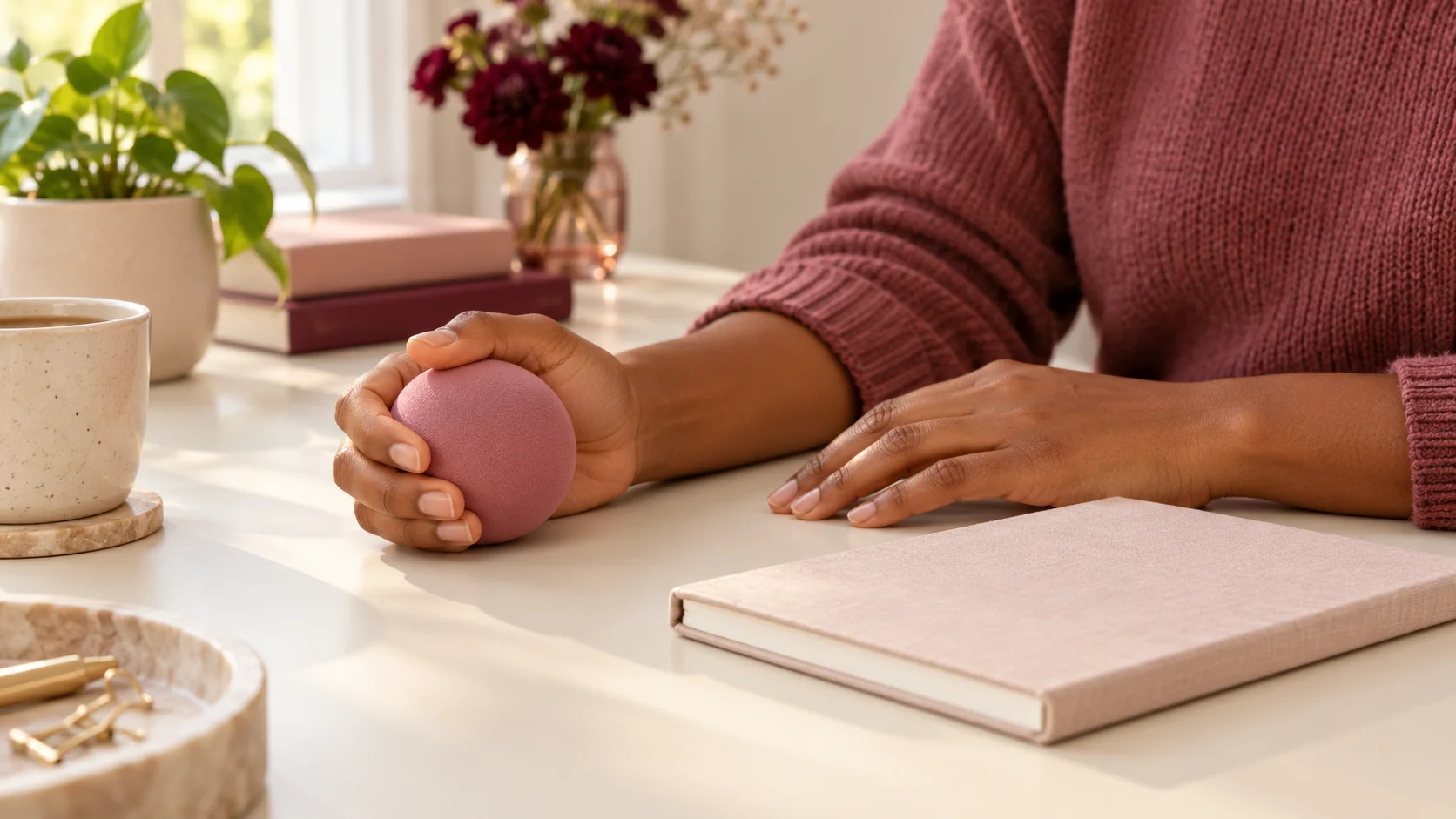
The American Academy of Dermatology’s nail-biting guidance recommends identifying triggers, keeping nails manageable and trying another hand activity, such as a stress ball. It also describes a gradual approach. These suggestions provide a starting framework, not a promise that one method suits everyone.
For a few ordinary situations, write down where you were and what you noticed. You might catch yourself while reading, waiting for a call, watching a programme or noticing a rough edge. Keep the note brief enough that recording it does not become another demanding task.
Separate the situation from your explanation. “I noticed it during a long video meeting” is useful even if you do not know whether boredom, concentration or anxiety was involved. You can work with the observable pattern without diagnosing an emotional cause.
If you only notice afterwards, record that too. Awareness can be incomplete, and it is not helpful to treat every missed moment as failure. The purpose of the note is to find a place to begin, not to produce a perfect account of your behaviour.
Choose one response that fits one setting
A small hand-held object may be convenient while watching television but distracting during a task requiring both hands. Choose an alternative that is safe and appropriate to the setting. Do not use a loose object while driving, operating equipment or doing anything where it would interfere with attention or control.
Try a clear sentence: “When I notice my hand moving towards my mouth during a programme, I will put it down and pick up the soft ball beside me.” This is an example of planning a response, not a formal therapy protocol. Adapt the wording to your circumstances.
Put the chosen object where the situation occurs. If it stays in a different room, the plan depends on interrupting the activity and finding it each time. A small logistical change can make the alternative easier to remember without adding another product or elaborate tracking system.
Review whether the response was practical. Was the object comfortable, easy to reach and acceptable in the setting? If not, change that detail. Do not conclude that every possible approach has failed because the first item or location was inconvenient.
| Situation | Specific plan | What to review |
|---|---|---|
| Watching television | Keep a suitable hand activity within reach | Was it available when I noticed the urge? |
| A long desk task | Choose a discreet response compatible with the work | Did it interfere with the task? |
| Noticing a rough edge | Plan ordinary grooming separately when appropriate | Am I using biting as an immediate adjustment? |
| Only noticing afterwards | Record the setting without self-criticism | Is a repeated context becoming clearer? |
Keep grooming separate from the urge
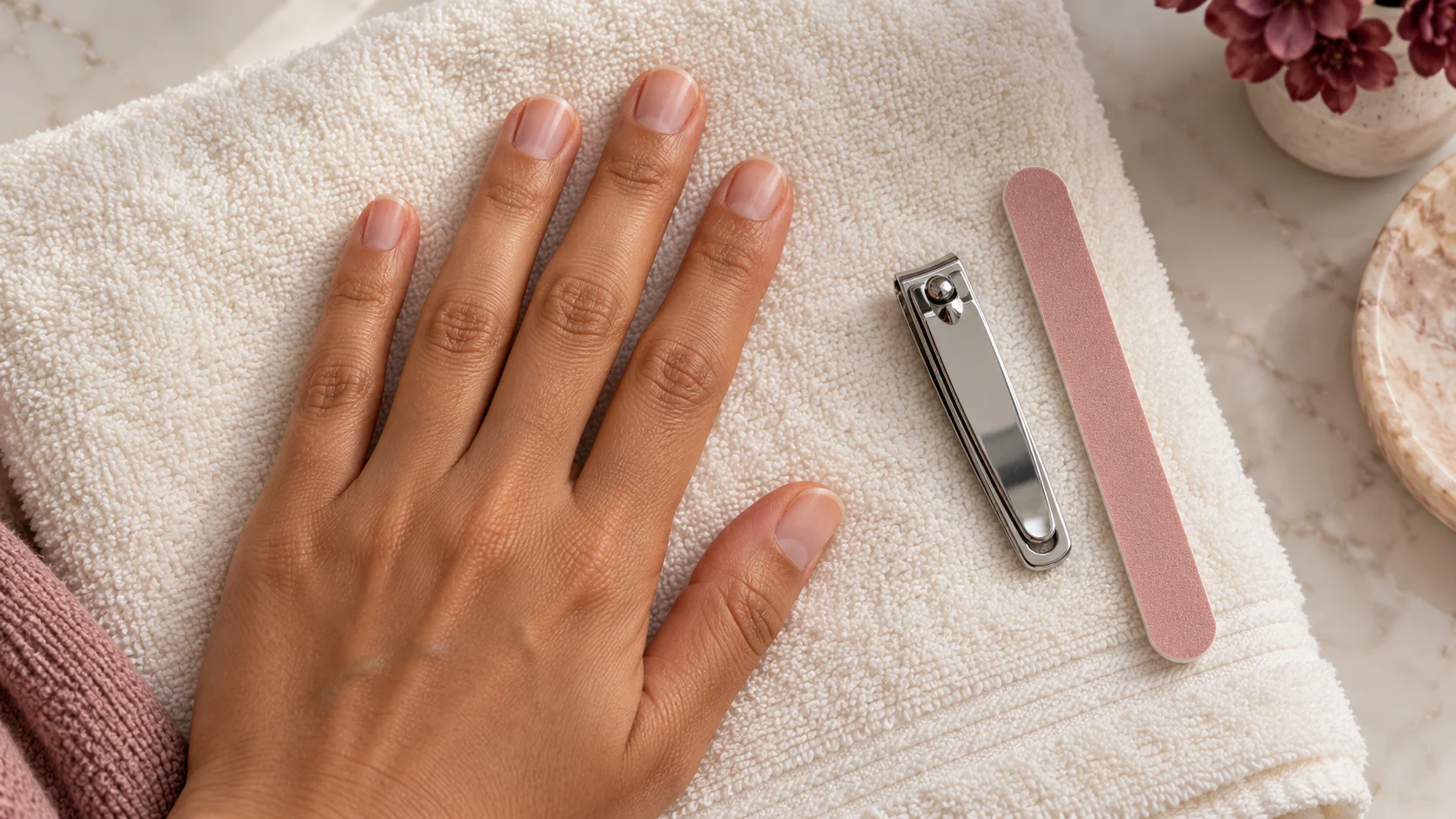
If a rough edge repeatedly attracts your attention, set aside an ordinary, well-lit grooming moment rather than repeatedly inspecting it during work. Keep the goal conservative and comfortable. A painful, bleeding or inflamed area is a reason for advice, not a surface to perfect with a tool.
You do not need a long manicure or expensive salon service to begin changing the habit. A cosmetic appointment may be a preference, but it should not become a financial penalty or a test of willpower. Choose grooming around your actual nail condition and any advice you receive.
Some people consider bitter-tasting products or coverings. If you are considering one, read its intended use and restrictions and ask a pharmacist about suitability. Do not apply an unsuitable product to damaged skin or assume that an unpleasant taste addresses every reason the behaviour continues.
Make progress observable without demanding perfection
Choose a small practical goal, such as noticing the behaviour during one recurring activity and trying the alternative response. You can also discuss a gradual approach with a professional. Avoid a promise that a fixed number of days will permanently remove the habit.
A useful record can include successful interruptions as well as difficult moments. “I noticed twice and changed what my hands were doing once” tells you something specific. “I failed again” does not identify what helped or what needs adjusting.
If you bite after a period of progress, return to the plan without punishment. Look at the setting and whether the alternative was available. A setback can provide information, but it is not an instruction to increase discomfort, shame yourself or create a harsher deterrent.
Ask for support in a way that feels helpful
If another person is involved, agree what support you want. A discreet reminder you have chosen may feel very different from public comments about your hands. You can ask them to avoid grabbing your hand, criticising your appearance or monitoring you without agreement.
UCLA Health recommends professional help when repeated attempts to stop are unsuccessful, the behaviour causes significant distress or it affects functioning. It also highlights recurring physical problems such as pain, swelling or infection. Support can address more than the visible manicure.
When contacting a GP, explain what happens, how long it has been a concern, what you have tried and how it affects you. You do not need to label yourself with a disorder. Ask what support or referral is appropriate and how any skin or nail damage should be assessed.
Recognise related skin picking without merging the labels
If the behaviour also involves repeatedly picking the skin around the nails, mention that separately. The NHS skin-picking guidance advises GP help when someone cannot stop, causes serious skin damage or experiences distress or disruption. It describes treatments that may include talking therapy and habit-reversal work.
That information does not mean nail biting and skin picking are identical or that either behaviour establishes another diagnosis. Give the clinician an accurate account of each action rather than forcing them under one label. The appropriate support depends on the individual situation.
Notice, prepare, practise, seek support
- Notice: identify one recurring setting.
- Prepare: make a suitable alternative easy to reach.
- Practise: record useful interruptions and practical obstacles.
- Support: ask for help with injury, distress or difficulty stopping.
Choose one small change for the next familiar situation rather than rebuilding the whole day. Keep the plan kind, specific and adjustable. Our Nail Care section provides related grooming guidance, but a persistent or distressing behaviour deserves support that goes beyond cosmetic advice.
For the related parts of your care routine, read How to Trim and File Natural Nails Without Overdoing It, Cuticle Care at Home: What to Leave Alone and What to Moisturise and When a Broken Nail Needs More Than a Cosmetic Fix. For the relevant product or service decision, see An At-Home Manicure Toolkit: What to Buy and What You Can Skip.
Common questions
Where should I start if I bite without noticing?
Record the setting when you first become aware, even if that is afterwards. You do not need a perfect account to begin. Look for one recurring situation and make a suitable alternative response easy to use there, rather than setting an all-day perfection target.
Does nail biting mean I have a mental health disorder?
The behaviour alone does not establish a diagnosis. If it causes distress, injury or difficulty in daily life, or repeated attempts to stop are unsuccessful, discuss it with a GP. Describe what happens and how it affects you without feeling you must choose a label first.
What makes an alternative hand activity practical?
It should be easy to reach and compatible with the setting. A soft object may suit a quiet television session but interfere with work needing both hands. Do not use one while driving or operating equipment if it would distract you or reduce control.
How should I respond to a setback?
Return to the specific plan and review what happened without punishment. Was the alternative available, and did it fit the situation? Record useful information rather than treating one episode as proof that every approach has failed or that you need a harsher deterrent.
Should I pay for a manicure to make myself stop?
A manicure is an optional cosmetic choice, not a required test of commitment. Do not use the cost as a punishment or cover damaged nails without appropriate advice. You can begin with a practical habit plan and seek support without purchasing a salon service.
Can someone else help me notice the habit?
Yes, if you agree on a form of support that feels useful. A discreet reminder you choose can be different from public criticism or unwanted monitoring. Explain what you welcome and what you do not, including avoiding comments that shame you about your appearance.
What if I also pick the skin around my nails?
Mention that separately when seeking help. Skin picking and nail biting can overlap, but they are not interchangeable labels. Describe any damage, difficulty stopping or distress so the clinician can assess what support is appropriate rather than assuming one explanation covers every action.
When is it reasonable to ask a GP for help?
Ask when the behaviour persists despite attempts to change, causes injury or distress, or affects daily functioning. You do not need to wait for severe damage. Include what you have tried and any nail or skin symptoms so both practical and health concerns can be considered.
Sources and further reading
- AAD — How to stop biting your nails — checked 2026-10-21
- UCLA Health — Nail biting and health — checked 2026-10-21
- NHS — Skin picking disorder — checked 2026-10-21