Glass Nail Files vs Emery Boards: Choosing a File for Your Routine
Compare intended use, surface, grip and care instructions rather than assuming the material alone decides which file is suitable.
Archive edition: 2026-06-02 · This is an editorial allocation, not the first-publication date.
Key takeaways
- Define the edge-care task.
- Check the intended nail type and working surface.
- Choose a shape you can control.
- Read cleaning and storage instructions.
- Inspect condition and stop if the tool or nail needs attention.
In this guide
- Key takeaways
- Define the job before choosing the material
- What to inspect on a glass file
- What to inspect on an emery board
- Choose a shape you can control comfortably
- Use the file on the edge, with a clear stopping point
- Distinguish preparation advice from a universal wet-or-dry rule
- Cleaning instructions are part of the purchase
- Replace or retire a tool when its condition calls for it
- Common questions
- Sources and further reading
A glass nail file and an emery board can both be sold for shaping natural nail edges. The useful comparison is not simply which material sounds more premium, but whether the particular tool has an appropriate surface, comfortable grip and clear care instructions for your routine.
This guide focuses on natural fingernail edges. It does not cover filing off gel or acrylic, treating thickened nails or using an electric file. We have not performed a comparative test proving that one material is universally gentler or more hygienic.
Define the job before choosing the material
You may want to smooth a small rough edge, maintain an existing shape or shorten the free edge. Those are different amounts of work. Describe the task before looking at a file’s appearance or a pack’s total number of pieces.
The American Academy of Dermatology’s trimming guide includes using a nail file or emery board to smooth rough edges. It also advises filing in one direction. The guidance does not make a universal material ranking between the two options discussed here.
Keep edge shaping separate from buffing the top surface. A tool suitable for the free edge is not automatically intended for thinning, polishing or removing layers from the nail plate. Read which part of the nail the manufacturer says to use it on.
What to inspect on a glass file
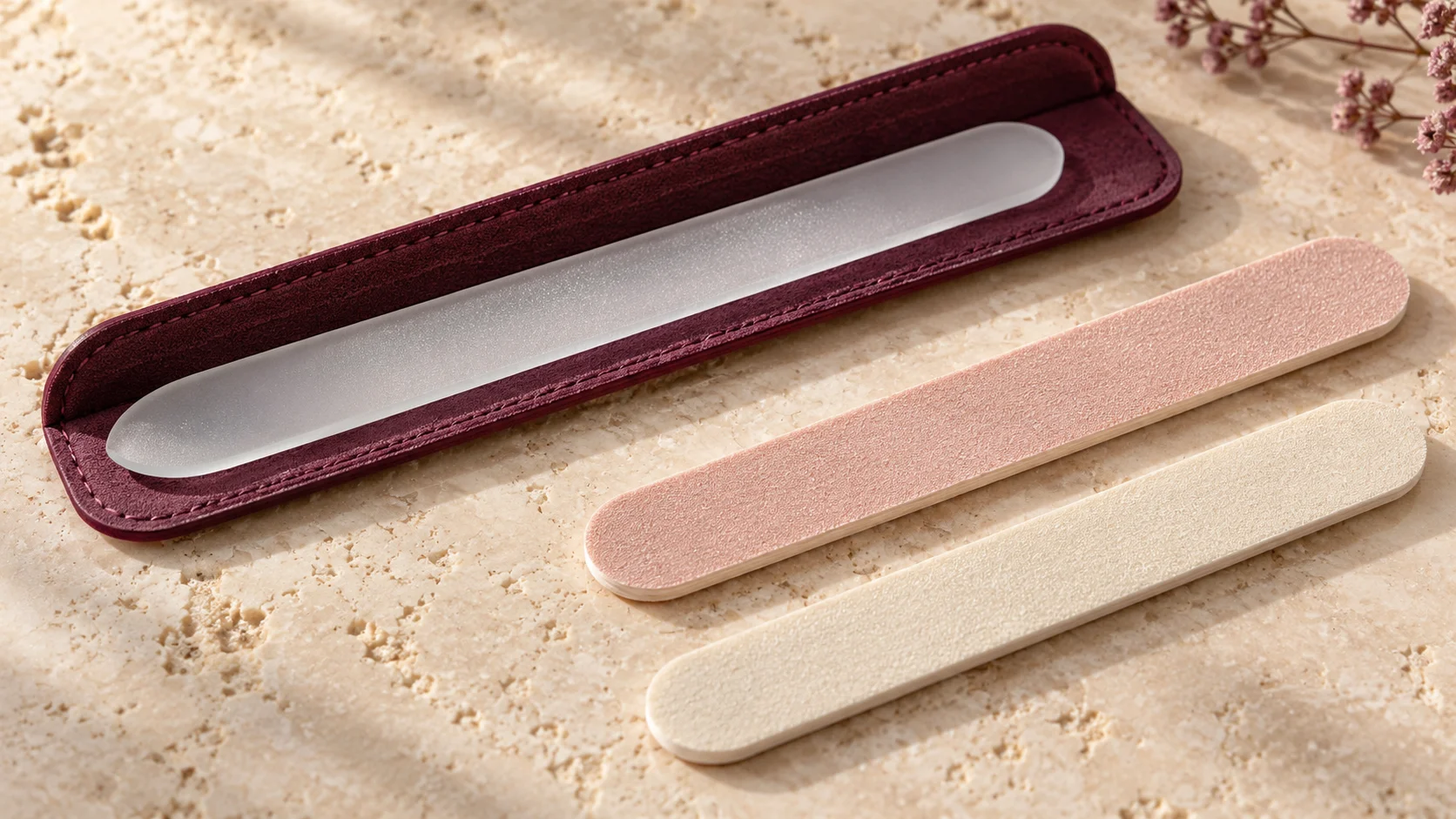
A glass file’s rigid body, surface and shape should be considered together. Check that the listing identifies it for natural nails, describes its intended use and explains how to handle and store it. The word glass alone does not provide all of those details.
Tweezerman’s UK Glass Nail File page describes shaping and smoothing natural nail edges and gives a side-to-centre filing direction. It also warns that the tool needs careful handling and should be disposed of carefully if broken.
That is a useful example of a specific product’s guidance, not a promise that every glass file has the same texture or durability. Look for a protective sleeve or case if that suits your storage needs, and check the tool before use if it has been dropped.
What to inspect on an emery board
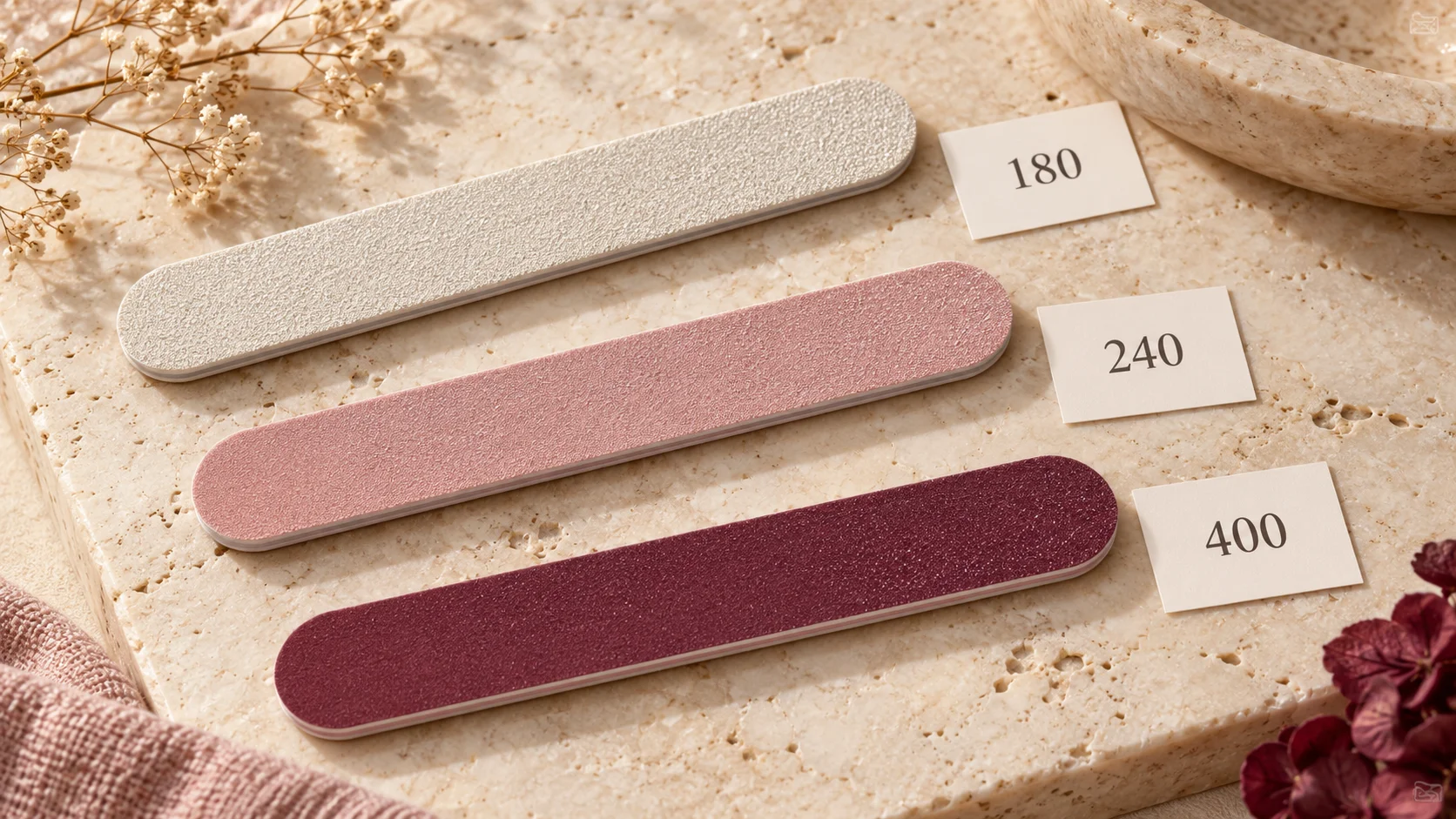
An emery board may have different surfaces on its two sides. Read which side is intended for shaping and which for smoothing rather than assuming the colours or pattern follow a universal code.
Revlon’s Compact Emery Boards are described as double-sided and flexible, with separate shaping and smoothing sides. Its directions call for dry nails and filing in one direction. Those instructions belong to that product.
A different board may state a numerical grit, use another colour scheme or serve a different purpose. Do not infer that a dark side is always a particular coarseness or that a board included in an artificial-nail kit is automatically suitable for every natural nail task.
| Question | For a glass file | For an emery board |
|---|---|---|
| Intended use | Check that natural nail edges are specified | Check the purpose of each side |
| Handling | Consider the rigid body and protective storage | Consider flexibility, size and grip |
| Condition | Inspect for visible chips or breakage | Inspect for worn, peeling or distorted surfaces |
| Care | Follow the exact cleaning and storage instructions | Do not assume it tolerates soaking or disinfectants |
| Claim limits | Material alone does not prove superiority | Low cost or disposability does not establish unsuitable use |
Choose a shape you can control comfortably
Length, width and thickness affect how a tool sits in your hand. A small board may be convenient to carry, while a longer file may give you a grip you prefer at home. Those are practical preferences rather than universal rules about effectiveness.
Look at the shape of the working end and where your fingers will rest. You should be able to follow the intended edge-filing motion without digging into surrounding skin. Do not choose a pointed tool because you plan to use it to scrape beneath the nail.
If a handle or surface feels difficult to control, stop and reconsider the tool. More pressure is not the answer to an awkward grip. A manageable routine depends on both the intended surface and your ability to use it comfortably.
Use the file on the edge, with a clear stopping point
Identify the small area you want to smooth or the shape you want to maintain. Work gradually using the product’s instructions, then look at the edge again. Avoid continuing simply because the tool is new or because another pass seems likely to make the result more perfect.
The AAD’s one-direction guidance is a useful baseline for ordinary edge care. Do not turn a back-and-forth sawing motion into a speed technique. This guide does not prescribe a universal pressure, stroke count or filing duration.
Leave the surrounding cuticle alone. The AAD advises against cutting or pushing it back. An edge-filing task should not expand into removing nearby skin or aggressively working down the side of the nail.
Distinguish preparation advice from a universal wet-or-dry rule
Some general nail-care guidance discusses softening nails before trimming, while an individual file’s instructions may specify dry nails for filing. Those statements refer to different stages or tools and should not be merged into a rule that every file must be used on wet nails.
Read the directions for the file you selected. If the intended routine is unclear, ask the manufacturer rather than guessing from the material. This guide does not claim that all glass tools or all abrasive boards share one preparation requirement.
Keep the task modest when you are maintaining natural nail edges. If the nail is painful, unusually thick or otherwise changed, a more abrasive tool is not a substitute for finding out why the change occurred.
Cleaning instructions are part of the purchase
Before buying, check how the file should be cleaned, dried and stored. A seller’s general statement that a tool is easy to clean does not establish a specific disinfectant concentration, soaking period or professional sterilisation process.
Do not apply cleaning directions for metal clippers to a porous board or assume every glass file tolerates every chemical. Follow the exact manufacturer’s care guidance. If the page does not provide enough detail for your intended use, ask for it.
Keep personal tools separate and do not present this home-care guide as a salon infection-control procedure. Professional settings need their applicable procedures and equipment requirements; a consumer product description does not establish compliance with them.
Replace or retire a tool when its condition calls for it
A glass file is not indestructible. Do not continue using one with visible chips, cracks or breakage. Follow the manufacturer’s handling advice and dispose of broken glass carefully rather than trying to smooth the damaged tool yourself.
For an emery board, look for a peeling abrasive layer, distortion or a surface that no longer works as intended. Do not compensate for wear by pressing harder. Follow any stated replacement guidance instead of inventing a fixed lifespan for every board.
Neither a multi-pack nor a durable-looking case proves how long a particular tool will remain suitable. Condition and care matter alongside the initial purchase. Keep the replacement decision practical rather than turning it into a claim that one material must always be cheaper over time.
Match the tool to the routine
- Define the edge-care task.
- Check the intended nail type and working surface.
- Choose a shape you can control.
- Read cleaning and storage instructions.
- Inspect condition and stop if the tool or nail needs attention.
Explore the Polish & Tools section for further tool-selection guides. The best-informed choice starts with the actual product instructions and your needs, rather than a blanket promise attached to the material.
To compare the connected product and routine choices, read Nail File Grit Numbers: What to Check Before Filing Natural Nails, An At-Home Manicure Toolkit: What to Buy and What You Can Skip and Clean-Up Brushes for Manicures: Shape, Size and Care. For the related care or design question, see How to Trim and File Natural Nails Without Overdoing It.
Common questions
Is a glass file always better than an emery board?
This guide does not establish a universal winner. Compare the exact tool’s intended use, surface, shape and care instructions. Both formats can be sold for natural nail edges, and material alone does not prove superior comfort, hygiene or suitability for every person’s routine.
Can I use the same file to shape edges and buff the surface?
Do not assume those are the same task. Check which part of the nail the tool is intended for and follow its instructions. A file appropriate for maintaining the free edge is not automatically suitable for thinning or polishing the upper nail surface.
Do the colours on an emery board indicate standard grit?
Not universally. A manufacturer may identify different sides by colour, but another board can use a different scheme or purpose. Read the stated side instructions and any grit information instead of inferring a numerical coarseness from a dark, pale or patterned surface.
Should I file back and forth to work faster?
For ordinary edge care, the AAD advises filing in one direction. Follow the selected tool’s handling instructions and work gradually rather than sawing for speed. This guide does not prescribe a universal stroke count or pressure, and discomfort is a reason to stop and reassess.
Can every file be soaked in disinfectant?
Do not assume that cleaning directions for metal tools apply to glass files or porous boards. Follow the exact product’s care instructions and ask the manufacturer if they are unclear. A general easy-to-clean claim does not establish a particular chemical, concentration or soaking time.
What if my glass file is chipped?
Do not continue using a visibly chipped, cracked or broken file. Follow the manufacturer’s handling advice and dispose of broken glass carefully. Do not attempt to repair or smooth the damaged tool yourself; its previous appearance or price does not establish that it remains suitable.
How often should I replace an emery board?
Follow any product-specific guidance and inspect its condition rather than using one universal calendar interval. A peeling surface, distortion or loss of intended effectiveness calls for reassessment. Do not compensate for wear by applying more pressure, and keep cleaning instructions in view.
Should nails be wet or dry when filing?
Read the instructions for the exact tool and distinguish trimming preparation from filing directions. Some guidance discusses softening before clipping, while an individual board may specify dry nails for filing. Do not turn either statement into a rule for every tool, material and stage of care.
Sources and further reading
- American Academy of Dermatology — Trimming nails — checked 2026-10-22
- Tweezerman UK — Glass Nail File — checked 2026-10-22
- Revlon — Compact Emery Boards — checked 2026-10-22